Growth Rate of Bass in Desert Reservoirs
It's a question every passionate Arizona angler has pondered: just how fast do bass actually grow in our desert reservoirs? You pull a feisty young largemouth or a tenacious smallmouth from the clear, warm waters, and you can't help but wonder how long it'll take that fish to become a true trophy. It’s not like fishing a northern lake with consistent cool temperatures; our Arizona environment is a whole different beast. This guide will dive deep into the fascinating factors that influence the growth rate of bass in Arizona's unique desert reservoirs, giving you a clearer picture of what it takes for these fish to reach impressive sizes.
The Unique Environment of Arizona's Desert Reservoirs
Arizona's desert reservoirs aren't your typical fishing holes. They are often deep, steep-sided impoundments carved out of ancient canyons, filled with warm, nutrient-rich water. This environment plays a massive role in how quickly—or slowly—our bass grow. Understanding these nuances is key to appreciating the challenges and opportunities for these fish.
Water Temperature and Its Impact on Metabolism
One of the most significant factors in Arizona's desert reservoirs is the water temperature. Unlike colder climates where fish metabolism slows down considerably during long, harsh winters, our bass often experience extended periods of warm water. Warm water generally means a higher metabolic rate for cold-blooded creatures like fish. This can be a double-edged sword: on one hand, it allows bass to digest food more quickly and potentially grow faster if forage is abundant. On the other hand, it also means they burn more energy, so if food becomes scarce, they can actually lose weight or their growth can stagnate. Think about Lake Havasu or Roosevelt Lake in the summer; the water can be bath-tub warm in the shallows. Bass in these conditions are active and hungry, but they need to eat consistently to sustain that high metabolism.
Forage Availability and Species Diversity
A bass is only as big as its stomach and the food it can find. The availability and diversity of forage in an Arizona desert reservoir are paramount to growth rates. Our lakes are often teeming with various baitfish, most notably threadfin shad and sometimes gizzard shad. These small, schooling fish provide an excellent, high-protein food source that allows bass to put on weight rapidly. When shad populations boom, so do the bass, as they have an easy, plentiful food supply.
Beyond shad, bass also feast on sunfish, bluegill, and even crayfish – sometimes called "desert lobster" for their importance in the bass diet. A reservoir with a healthy, diverse forage base provides consistent nutrition throughout the year, supporting robust growth. For example, a lake that consistently maintains a good population of Threadfin Shad as Forage for Striped Bass will see its black bass populations thrive as well. Conversely, if a lake experiences a significant drop in its forage base, perhaps due to drought or a cold snap that kills off shad, bass growth can slow dramatically, and fish may even appear "skinny" as they struggle to find enough to eat.
Habitat and Structure
The physical layout of our desert reservoirs also impacts bass growth. Many of these lakes lack the extensive, dense vegetation found in some natural lakes elsewhere. Instead, bass often rely on natural rock structures, submerged timber, drop-offs, and canyon walls for cover, ambush points, and protection. Good habitat provides safe havens for young bass to grow without becoming prey themselves, and it also concentrates forage, making it easier for bass to feed efficiently.
Consider a place like Apache Lake, with its sheer cliff faces and rocky points. Bass will hold tight to these structures, ambushing unsuspecting baitfish. A reservoir with ample Deep Water Structure at Roosevelt Lake or even Submerged Timber Spots at Roosevelt Lake offers complex environments where bass can hide, hunt, and conserve energy, all contributing to better growth. Lakes that are more uniform or "bowl-shaped" with less structure might see bass that are more nomadic and expend more energy searching for food, potentially resulting in slower growth rates.
Factors Influencing Bass Growth Rates
Beyond the unique environment, several biological and management factors directly dictate how quickly a bass matures and gains weight. It's a complex interplay, much like watching a garden grow – you control some aspects, but nature always has its say.
Genetics and Species Type Largemouth vs. Smallmouth
Not all bass are created equal, even within the same lake. In Arizona, we primarily focus on largemouth and smallmouth bass. Generally, largemouth bass have the genetic potential to grow larger and reach heavier weights than smallmouth bass. This is largely due to their body structure and preferred diet; largemouth typically have a more robust, deeper body and are adept at swallowing larger prey.
For instance, you might see a 5-pound largemouth in a Central Arizona lake, while a 5-pound smallmouth from Lake Powell is considered an absolute giant. The Largemouth Bass Average Weight in Arizona Lakes will generally trend higher than the Smallmouth Bass Average Weight at Lake Powell over their respective lifespans. This isn't to say smallmouth don't grow large; they do, but their peak size potential is often a bit less than their largemouth cousins. Genetics dictates the maximum potential, but environmental factors determine how close an individual fish gets to that limit.
Age and Size
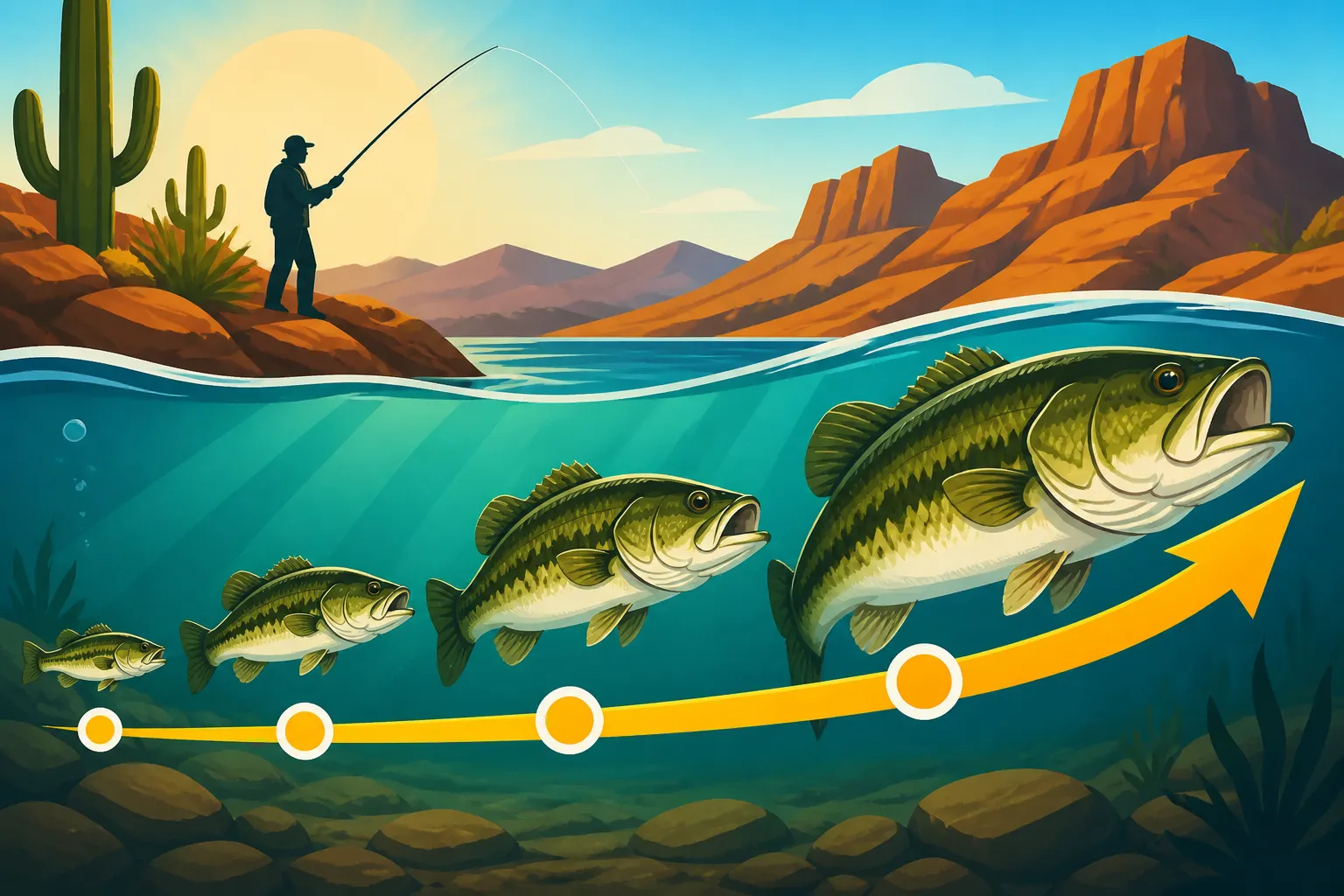
Growth isn't a linear process; it's exponential early on and then tapers off as a fish ages. Young bass grow incredibly fast in their first year or two, especially if food is plentiful. They need to get big enough quickly to avoid being eaten by larger predators, including bigger bass. During this juvenile stage, they might double their size in a single season.
As bass get older and larger, their growth rate slows down. An older, bigger bass still grows, but it might only add a pound or two a year, rather than several pounds. This is partly because they've reached a more efficient size for their environment, and partly because their energy is also directed towards reproduction. Reaching a Trophy Bass Threshold Weight in Arizona often means a fish has survived many seasons, grown consistently, and avoided being caught or has been successfully released. It's a testament to both the fish's resilience and the lake's ability to support such a specimen.
Fishing Pressure and Management
Human factors also play a significant role. Fishing pressure – how often a lake is fished and how many fish are caught – can influence growth rates. In heavily fished waters, anglers might remove many of the larger, older bass, leaving more resources (food, space) for the remaining, smaller fish. This can, in theory, accelerate the growth of the surviving fish. However, sustained heavy pressure might also lead to a decline in the overall average size if too many fish are removed before they reach their full growth potential.
This is where management strategies come into play. Practices like catch-and-release fishing, especially for larger breeding fish, can help sustain healthy populations and allow more bass to reach older, larger sizes. Some Arizona regulations, while not specific numbers here, often include Catch and Release Rules for Arizona Anglers or Bass Size Limit at Arizona Community Fishing Lakes which are designed to protect certain size classes of fish, allowing them to grow and reproduce, thereby contributing to the overall health and size structure of the bass population. A well-managed fishery aims to balance angler opportunity with the biological needs of the fish for sustained growth and reproduction.
Typical Growth Patterns and Expectations in Arizona
So, what can you realistically expect from bass growing in our Arizona waters? While there are always exceptions – some fish are just genetic freaks of nature – there are general patterns we observe.
First Year Growth
In the warm, productive waters of an Arizona desert reservoir, a largemouth bass can grow remarkably fast in its first year. After hatching in the spring, tiny fry quickly transition to feeding on zooplankton and then small insects and other invertebrates. As they mature through the summer, they start to prey on smaller baitfish. By the end of their first year, depending on the forage and warmth of the lake, it's not uncommon for a largemouth bass to reach 8-12 inches in length. Some even exceed that in exceptionally rich environments. Smallmouth bass, while still growing quickly, might be a bit smaller, perhaps 6-10 inches. This rapid initial growth is crucial for survival.
Intermediate Growth and Maturation
After that initial burst, growth continues at a strong pace for the next few years. A 2-year-old largemouth might be anywhere from 12-16 inches, putting on a pound or two. By year three, a bass could be 16-20 inches and weigh 3-5 pounds. This is often when they reach sexual maturity and begin to participate in the annual spawn, which typically occurs when water temperatures hit the sweet spot for Spawning Temperature for Largemouth Bass or Spawning Temperature for Smallmouth Bass.
During these intermediate years, the fish are actively feeding, growing, and solidifying their place in the pecking order of the lake. They're strong, healthy, and a blast to catch. A 4-year-old bass is usually a solid, mature fish, likely in the 4-7 pound range, showing impressive girth and strength.
Trophy Size Attainment
Reaching true "trophy" status in Arizona, often considered anything above 8 pounds for largemouth or 4 pounds for smallmouth, requires a combination of longevity, consistent food availability, and favorable environmental conditions. These fish are usually 5 years old or more. A bass needs to survive multiple seasons of predation, angler pressure, and environmental fluctuations like droughts or extreme temperatures.
For a largemouth to hit the double-digit mark – say, 10 pounds or more – it's typically an older fish, often 7+ years old, that has had a continuous supply of protein-rich forage and managed to avoid major stressors. These fish are rare and highly sought after, but they are absolutely present in some of our top Arizona reservoirs. They are the giants that inspire legends and make every cast worthwhile.
| Bass Species | Typical First-Year Length (inches) | Intermediate Growth (Years 2-4, inches) | Trophy Threshold (pounds) | Primary Forage Impact |
|---|---|---|---|---|
| Largemouth Bass | 8-12 | 12-20 | 8+ | Shad, Sunfish, Crayfish |
| Smallmouth Bass | 6-10 | 10-16 | 4+ | Shad, Crayfish, Insects |
Maximizing Your Chances of Finding Bigger Bass
If your goal is to land one of those impressive, bigger bass, understanding their growth rates is just the beginning. You also need to know where and how to target them. It's a strategic game, much like chess, where patience and knowledge pay off.
Targeting Specific Reservoirs
Not all Arizona reservoirs are created equal when it comes to producing giant bass. While nearly any lake can surprise you, some are historically known for their big fish potential. Lakes like Roosevelt Lake, Lake Pleasant, and Alamo Lake consistently produce substantial largemouth bass due to their vast size, diverse forage bases, and excellent habitat. If you're serious about trophy hunting, these are often the places to start. For example, Alamo Lake Arizona Fishing Guide will often highlight its reputation for producing larger-than-average largemouth. Similarly, Lake Powell is a renowned smallmouth factory, producing exceptional fish that have grown fat on its abundant shad. Researching the Best Bass Fishing Lakes in Arizona will give you a head start on where to focus your efforts for bigger fish.
Understanding Seasonal Movements
Big bass, like all bass, are creatures of habit but those habits change with the seasons. Understanding their seasonal movements is crucial for successful targeting. In spring, as water temperatures rise, bass move to shallower spawning areas, making them more accessible to anglers. This is often a prime time to catch large, pre-spawn females loaded with eggs. During the scorching Arizona summer, bigger bass often retreat to deeper, cooler waters or seek out shade and structure during the day, becoming more active during low-light hours. You'll often find them suspended over deep points or tucked away in dense cover.
Fall brings a feeding frenzy as bass fatten up for the cooler months, often pushing shad to the surface in "boils." Winter sees them slowing down, often holding on deep structure or main lake points. Knowing these patterns, as detailed in guides like Seasonal Movement Patterns of Arizona Bass or specifically Seasonal Movement Patterns of Bass at Roosevelt Lake, allows you to adjust your tactics and find where the bigger fish are holding at any given time of year.
Gear and Techniques for Larger Fish
Catching bigger bass often requires a slightly different approach than simply catching numbers of smaller fish. Larger bass are usually older and wiser, having survived many encounters. This means they can be more finicky and require more specialized gear and techniques. You might need to size up your lures, for example, using larger swimbaits, deep-diving crankbaits, or big jigs to tempt a true lunker. Fishing heavy cover or deep structure also demands more robust gear, such as heavier action rods and stronger fishing lines.
When you're outfitting yourself, think about the durability and strength of your equipment. A strong rod, like those recommended in Best Fishing Rods for Bass in Arizona, paired with a reliable reel, is essential for battling a powerful, heavy bass. You'll also want to make sure your tackle box is stocked with the right heavy-duty lures and terminal tackle. Many anglers find a good selection of quality lures and equipment on platforms like Amazon, offering a wide array of options for targeting those elusive big bass. Don't forget to review Best Lures for Largemouth Bass in Arizona Lakes for some great suggestions on what to tie on. It's about presenting something substantial and convincing a big fish that it's worth the energy to strike.
Ultimately, the growth rate of bass in Arizona's desert reservoirs is a story of environmental adaptation, nutrient availability, and biological potential. While our warm waters can accelerate growth, the journey to becoming a true trophy bass is still a challenging one, requiring a fish to navigate predation, food scarcity, and angling pressure for many years. Understanding these dynamics not only makes you a more knowledgeable angler but also helps you appreciate every fish you catch, regardless of its size.
Disclaimer
This article is for general informational purposes only and does not constitute professional advice. Laws, prices and regulations vary by location and change over time. Consult a qualified professional for guidance on your specific situation.