Spawning Temperature for Smallmouth Bass
Ever been out on an Arizona lake, seeing gorgeous water, but the smallmouth bass just aren't biting like you expected? It can be incredibly frustrating to hit a prime spot and come up empty, especially when you know the fish should be there. Often, the secret to unlocking their activity, particularly during their most vital time of year, lies beneath the surface: in the water temperature. This guide is going to deep dive into the exact spawning temperature for smallmouth bass in Arizona, helping you understand their patterns and drastically improve your chances of a successful outing.
Understanding the Crucial Role of Water Temperature in Smallmouth Bass Spawning
When it comes to the life cycle of smallmouth bass, few factors are as influential as water temperature, especially when it signals the time for reproduction. It's not just a preference; it's a deeply ingrained biological trigger that dictates when these incredible fish will engage in their most important annual ritual. Ignoring this vital piece of information means you're often fishing blind, missing out on prime opportunities or, conversely, trying to catch them when they're simply not interested in feeding.
The Biological Imperative: Why Temperature is Key
Think of water temperature as nature's alarm clock for smallmouth bass. As the sun climbs higher in the spring sky, warming the water, it kickstarts a cascade of physiological changes within the fish. Their metabolism picks up, hormones shift, and an undeniable urge to reproduce begins to dominate their behavior. This isn't just about feeling "warm enough"; it's a precise environmental cue that assures the smallmouth that conditions are optimal for their eggs and fry to survive. If they spawned too early, a late cold snap could wipe out the next generation. Too late, and the intense Arizona summer heat could make survival difficult. So, temperature serves as a critical indicator, ensuring the best chance for their offspring. This biological imperative means that even the most enticing lure won't matter if the water isn't telling them it's time for love, not lunch.
Pinpointing the Ideal Spawning Temperature Range
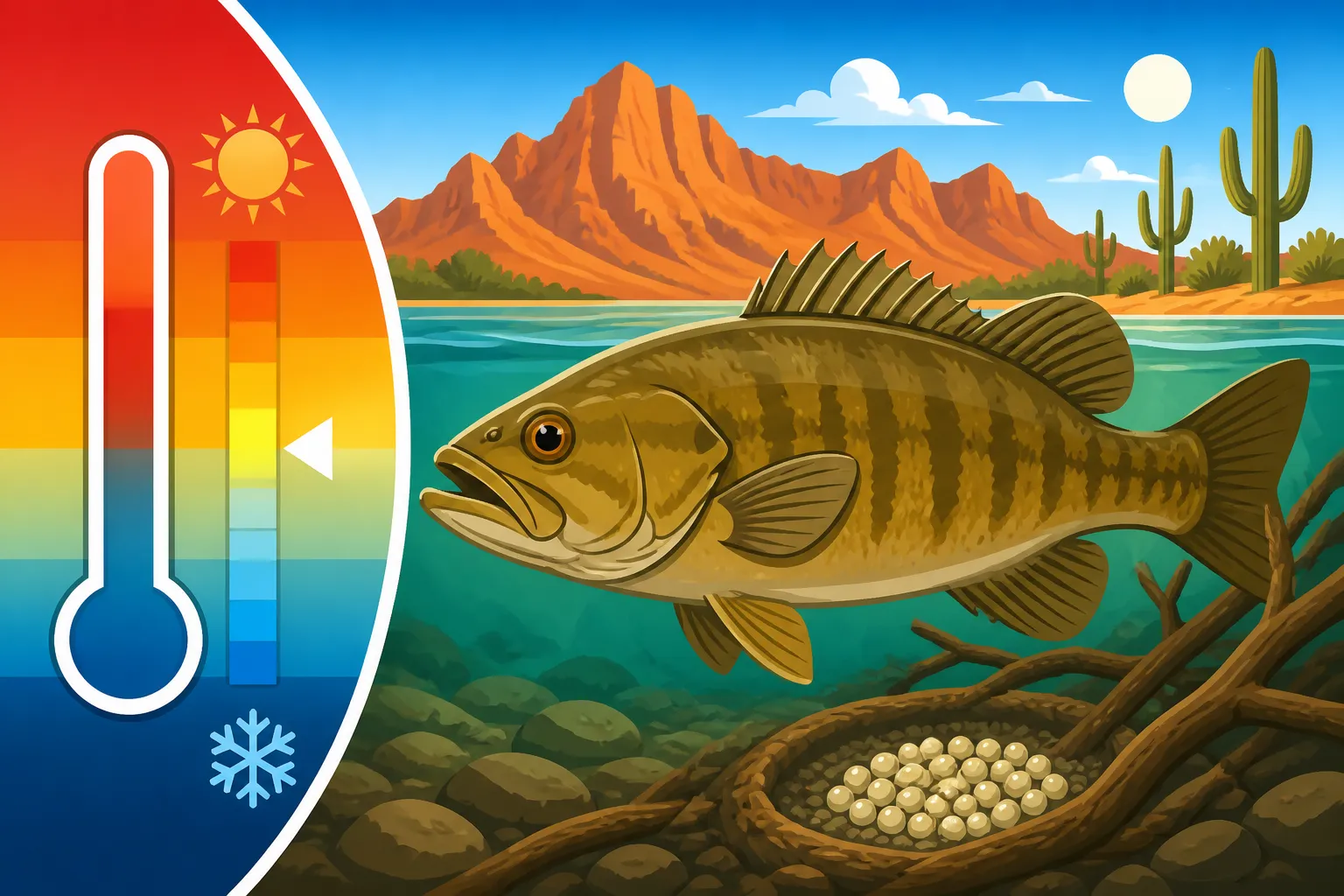
So, what's the magic number, or rather, the magic range? For smallmouth bass, the prime spawning window typically opens when water temperatures consistently settle between 58 to 65 degrees Fahrenheit. Now, "consistently" is the key word here. It's not just about a momentary spike on a warm afternoon. The water needs to maintain these temperatures for several days, sometimes even a week or two, for the bass to fully commit to the spawning process. If the temperature dips back down too sharply, bass might temporarily abandon their nests or delay spawning, which can be frustrating for anglers hoping to capitalize on the action. This temperature range is critical because it ensures the optimal conditions for egg development and the subsequent survival of the newly hatched fry, protecting them from cold shock or disease.
Beyond Temperature: Other Environmental Triggers
While temperature is undeniably the primary driver for smallmouth bass spawning, it's certainly not the only factor influencing when and where they decide to reproduce. The length of daylight, known as photoperiod, also plays a significant, albeit secondary, role. As days grow longer in spring, this increasing light further signals to the bass that it's time to prepare for the spawn, working in conjunction with rising water temperatures. Additionally, the stability of water levels and clarity can influence their timing and location choices. Sudden heavy rains and subsequent muddy runoff can delay spawning, as bass prefer clear water for nest building and guarding. These additional environmental cues collectively assure the smallmouth that not only is the water warm enough, but the overall conditions are favorable for a successful spawn. This holistic environmental assessment is what ultimately dictates their reproductive timeline. You can learn more about how different elements affect fish behavior in our Arizona Fishing Seasons Explained guide.
Deciphering Smallmouth Bass Behavior Across Spawning Phases
Understanding the exact temperature ranges is one thing, but knowing how smallmouth bass behave during these different thermal phases is what really puts you ahead as an angler. Their mood, their location, and their willingness to strike a lure change dramatically from pre-spawn to post-spawn, and being able to read these shifts will make all the difference.
The Energetic Pre-Spawn Build-Up
Before the water hits that prime spawning temperature, usually when it's in the low to mid-50s Fahrenheit, smallmouth bass enter what's called the "pre-spawn" phase. This is arguably one of the most exciting times to target them. During pre-spawn, the bass are on a feeding frenzy, packing on calories and energy for the exhausting process of spawning. They're often found moving from deeper wintering haunts towards shallower staging areas, typically along points, humps, or rocky ledges adjacent to their eventual spawning grounds. They are actively seeking food, making them much more aggressive and willing to chase down a variety of baits. You might find them schooling up more, and when you find one, you're likely to find more. This phase can last a few weeks, offering some of the year's best fishing as they prepare for the big event.
Navigating the Peak Spawning Window
Once the water temperatures consistently hit that sweet spot of 58 to 65 degrees Fahrenheit, the smallmouth are fully engaged in the spawn. Males will move into very shallow, often rocky areas, fanning out circular nests (known as "beds") to entice females. Females visit these nests to lay eggs, and then the males guard the nest aggressively, protecting the eggs and newly hatched fry from predators. During this period, the bass's primary focus is not feeding, but guarding their progeny. This doesn't mean they won't strike a lure; rather, they're more likely to strike out of an instinct to defend their nest from perceived threats. They'll attack anything that gets too close, making target casting to visible nests a common, albeit debated, tactic. Finding these shallow, rocky areas where they prefer to bed is key, often in coves, on points, or along sheltered shorelines.
Post-Spawn Recovery and Dispersal
After the grueling process of spawning is complete, and the water temperatures start to rise above 65 degrees Fahrenheit, smallmouth bass enter the "post-spawn" phase. This is often the toughest time to catch them. The females are exhausted and typically retreat to deeper water to recover, sometimes not feeding actively for a week or more. The males, having guarded the nests until the fry disperse, are also depleted and may stay shallower but are less aggressive than during the spawn. They'll eventually move to deeper summer haunts as well. Finding these fish means looking for transition areas where they can rest and slowly begin to feed again, often relating to submerged cover like brush piles, rock piles, or deeper ledges. They're still vulnerable, but they require a much more subtle approach and often smaller, slower-moving baits during this recovery period.
Locating and Ethically Engaging Spawning Smallmouth in Arizona Waters
Knowing when smallmouth bass spawn is only half the battle. The next crucial step is understanding where they prefer to set up shop in Arizona's diverse waters and how to approach them responsibly once you've found them. Our Smallmouth Bass Fishing Guide for Arizona offers even more insights into these magnificent fish.
Prime Spawning Habitats in Arizona Lakes
Smallmouth bass are particular about their spawning grounds, and for good reason—nest location directly impacts the survival rate of their offspring. In Arizona's lakes, which often feature clear water and abundant rock formations, smallmouth typically seek out hard-bottomed areas. This means you'll want to focus your search on rocky points, gravelly flats, shallow coves protected from the wind, and even along rip-rap shorelines. They prefer areas with a depth of 2 to 10 feet, where the sun can penetrate to warm the substrate, but there's enough water to offer some protection. Places like the upper reaches of Lake Powell's canyons, the rocky shorelines of Apache Lake, or even certain sections of Lake Pleasant can hold significant spawning concentrations when the temperatures are right. The key is finding that combination of firm bottom, appropriate depth, and some degree of shelter from strong currents or heavy wave action.
Signs to Look For: Identifying Active Nests
Once you're in a promising area, your eyes become your most valuable tool. Smallmouth bass nests are typically circular depressions in the substrate, usually about 1 to 2 feet in diameter, meticulously fanned clean of silt by the male. In clear Arizona waters, these "beds" can often be spotted visually from above, especially on calm, sunny days. Look for light-colored circular patches on a darker bottom, often with a dark shadow (the male bass) hovering directly over them. You might see the male darting off and returning, chasing away smaller fish, or actively fanning his fins to keep the eggs oxygenated and clean. Using polarized sunglasses is almost non-negotiable for this type of sight fishing, as they cut glare and allow you to see deeper into the water. Sometimes, you'll see a female cruising nearby, indicating she's either about to lay eggs or has recently done so. Learning to spot these subtle signs is a huge advantage for pinpointing active spawning zones. A good pair of polarized sunglasses can be found on Amazon.
Practicing Responsible Catch-and-Release During the Spawn
Fishing during the spawn is a topic that often sparks debate among anglers, and for good reason. When a male smallmouth is guarding a nest, its primary instinct is protection, not feeding. While you can often trigger a strike by repeatedly casting to a bed, the act of catching a spawning bass, particularly a male, removes him from his nest. Even for a short period, this leaves the eggs and fry vulnerable to predators like sunfish, crayfish, or even other bass. If you choose to fish during this sensitive time, responsible catch-and-release practices are paramount. Minimize handling, get the fish back in the water as quickly as possible, and avoid excessive photo sessions, especially in warm temperatures. Consider using single, barbless hooks to reduce injury. Many anglers opt to leave spawning fish alone entirely, preferring to target them in the more aggressive pre-spawn or recovery phases. The goal should always be to protect the resource for future generations. For more on conservation, check out Catch and Release Rules for Arizona Anglers.
Essential Gear and Monitoring for Smallmouth Spawning Success
Having the right tools and knowing how to use them can significantly improve your chances of locating and successfully fishing for smallmouth bass during the spawning period. It's not just about luck; it's about preparation and paying attention to the details.
Must-Have Tools for Temperature Tracking
You absolutely cannot guess water temperature if you want to dial in the smallmouth spawn. A reliable water thermometer is an angler's best friend. There are several types:
- Probe Thermometers: These are handheld units with a long probe you can dip into the water, often giving quick, accurate readings.
- Boat-Mounted Sensors: Many modern fish finders and depth sounders come with integrated temperature sensors, giving you continuous readings as you move across the lake. These are incredibly convenient.
- Castable Sonar Devices: Smaller, castable units can connect to your smartphone and often provide temperature readings along with depth and fish detection, perfect for bank anglers or kayakers.
Checking the water temperature frequently throughout the day, especially in different areas of the lake (shallower vs. deeper, sunny coves vs. shady banks), will give you a dynamic picture of where the fish might be most active. Remember, a few degrees can make all the difference, moving fish from one phase to another. You can find a wide array of reliable water thermometers on Amazon, ranging from simple handheld models to more advanced, integrated units.
Lure and Bait Choices for Spawning Periods
While smallmouth bass are often less interested in "feeding" during the spawn, they are highly territorial and defensive. This means your lure selection should focus on aggravating them into striking rather than enticing a hunger strike.
- Tube Jigs: These soft plastic baits imitate crayfish, a common nest predator, and are fantastic for skipping into shallow areas or dragging slowly across beds.
- Creature Baits/Soft Plastics: Lizards, small worms, or creature baits presented on a Texas rig or Carolina rig can also provoke strikes from guarding bass. They can be worked slowly and deliberately to invade a nest's perceived space.
- Spinnerbaits/Chatterbaits: While more aggressive, these can sometimes trigger a reaction strike from pre-spawn smallmouth or those defending a broader territory just off the beds.
- Jerkbaits: In the cooler pre-spawn waters, suspending jerkbaits fished with a twitch-twitch-pause retrieve can be deadly as bass are actively hunting.
- Small Swimbaits: For post-spawn fish that are starting to recover and feed, a small, subtle swimbait fished slowly can be very effective without overpowering the still-recovering bass.
The presentation is often as important as the lure itself. Slow, deliberate movements directly into the bass's personal space (the nest) are typically what elicits a defensive strike during the peak spawning window. Experimenting with colors, from natural greens and browns to more aggressive whites and chartreuse, can also make a difference based on water clarity and the bass's mood. Many anglers stock up on these versatile lures before the season by checking out the extensive fishing tackle selection available on Amazon.
| Spawning Phase | Water Temperature (F) | Bass Behavior | Effective Lure/Bait Types |
|---|---|---|---|
| Pre-Spawn | 50-57 degrees | Aggressively feeding, staging in transition areas | Jerkbaits, Spinnerbaits, Crankbaits, Jigs, Swimbaits |
| Peak Spawn | 58-65 degrees | Guarding nests, territorial, less focused on feeding | Tube Jigs, Creature Baits, Soft Plastics (worked slowly on beds) |
| Post-Spawn | 66+ degrees | Recovering, less active, dispersing to deeper water | Small Swimbaits, Drop Shots, Finesse Jigs, Live Bait (shiners, minnows) |
Remember, these are general guidelines, and local conditions in Arizona can always vary. Being adaptable and observing what the fish are telling you on any given day is the true mark of a skilled angler. For more details on what to use, refer to our Best Baits and Lures for Arizona Fishing guide.
Disclaimer
This article is for general informational purposes only and does not constitute professional advice. Laws, prices and regulations vary by location and change over time. Consult a qualified professional for guidance on your specific situation.