Difference Between a Largemouth and Spotted Bass
Have you ever reeled in a beautiful bass from an Arizona lake, only to find yourself scratching your head, wondering if it's a largemouth or something a little different? It’s a common dilemma, especially with the subtle but distinct characteristics of other bass species that call our desert waters home. This comprehensive guide is designed to clear up that confusion, offering clear identification tips to help you confidently tell the difference between a largemouth and a spotted bass the next time you're out fishing.
The Iconic Largemouth Bass: A Familiar Friend
The largemouth bass is arguably the most recognizable and beloved sportfish across Arizona and indeed, the entire country. These powerful predators are what most anglers picture when they think "bass," and for good reason. They grow large, fight hard, and are widely distributed across our state's varied waterways, from the warm desert reservoirs to some of the cooler mountain lakes. Understanding their key features is the first step in distinguishing them from their spotted cousins.
Distinctive Physical Characteristics of Largemouths
When you pull a largemouth bass out of the water, several features typically jump out at you. Their overall body shape is often described as elongated and robust, a true torpedo built for ambush predation. The coloration can vary wildly depending on the lake's water clarity and bottom composition, ranging from a vibrant green with dark blotches in clearer, vegetated waters to a more subdued, almost silvery-green in murkier environments. However, the most consistent and defining characteristic is, of course, their mouth.
The upper jaw of a largemouth bass extends well beyond the rear edge of the eye when its mouth is closed. This is a crucial identifier. Imagine taking a pencil and holding it vertically from the back of the eye down – the largemouth's jawline will stretch noticeably past it. Another key feature is the lateral line, which runs horizontally along the side of the fish. On a largemouth, this line is typically very pronounced, often appearing as a dark, irregular stripe or a series of connected blotches. Many largemouths also exhibit a deep notch in their dorsal fin, almost giving the appearance of two separate fins, although they are connected. You can learn more about where to find these fish in our Largemouth Bass Fishing Guide for Arizona.
Typical Largemouth Habitat and Behavior
Largemouth bass are masters of ambush. They thrive in environments with abundant cover, where they can hide and dart out to snatch unsuspecting prey. In Arizona's desert lakes like Lake Pleasant, Roosevelt Lake, and Apache Lake, this means they'll often be found lurking around submerged brush, standing timber, rock piles, weed beds, and even under docks or overhanging trees. They prefer warmer water temperatures, generally becoming more active when the water hits the 60s and 70s Fahrenheit. During the warmer months, you might find them shallower in the mornings and evenings, retreating to deeper, cooler waters or heavy cover during the intense midday sun.
Their diet is quite diverse, consisting of smaller fish (like shad and sunfish), crayfish, frogs, and even small rodents or birds that fall into the water. This opportunistic feeding behavior is why so many different lures work for largemouths – they're not picky! When fishing for them, understanding their preference for cover and warmer water is key to success. You'll often find anglers targeting them with topwater lures around structure in the early mornings or late evenings, or pitching jigs and Texas-rigged worms into heavy cover during the day. For more on what they eat, check out What Largemouth Bass Eat in Arizona Lakes.
Understanding the Spotted Bass: A Tricky Imitator
Spotted bass, often called "spots" or "Kentucky bass" in other regions, can be a bit of a trickster. They share many similarities with largemouths, which is precisely why identification can be so challenging for even experienced anglers. While not as universally widespread as largemouths in Arizona, they are present in certain drainages and can often be found coexisting with their larger cousins, especially in river systems and reservoirs like the Colorado River.
Key Identifying Marks of Spotted Bass
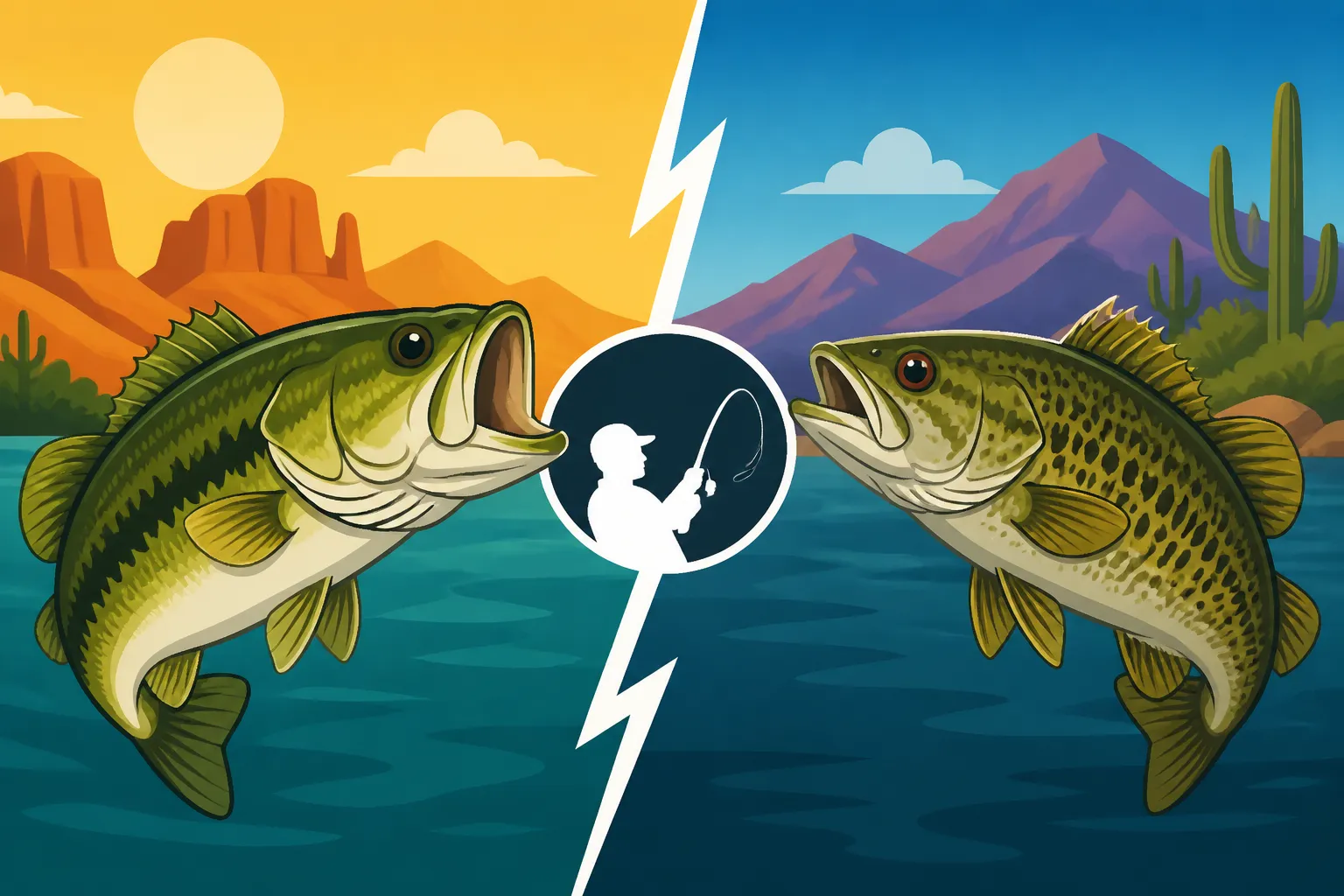
At first glance, a spotted bass might look like a smaller largemouth. However, there are several key differences to look for. The most defining feature of a spotted bass, as its name suggests, is the presence of distinct rows of dark spots on its lower side, below the lateral line. These spots often form noticeable, broken horizontal lines. While largemouths might have some faint blotches, they rarely exhibit these clear, defined rows of spots.
Another crucial differentiator is the jawline. Unlike the largemouth, the upper jaw of a spotted bass typically does not extend past the rear edge of the eye when its mouth is closed. It usually stops right at the back of the eye or just slightly before it. This is a subtle but very consistent trait. Additionally, if you feel along the tongue of a spotted bass, you’ll often find a patch of teeth, which is usually absent in largemouth bass. This "tooth patch" on the tongue is a definitive identifier. Finally, the dorsal fins of a spotted bass are usually more connected, with a less pronounced notch than you'd typically see on a largemouth, making them appear as a single, continuous fin.
Spotted Bass Behavior and Habitat Preferences
Spotted bass tend to prefer clearer, flowing water environments more than largemouths, although they can adapt to reservoir settings too. In Arizona, you might find them more prevalent in sections of the Colorado River system or other clear-water lakes. They often associate with rocky bottoms, submerged ledges, and current breaks, preferring slightly deeper water than largemouths. They are also known to school more readily than largemouths, making them an exciting target if you find a concentration of them.
Their diet is similar to largemouths, primarily consisting of baitfish and crayfish. However, due to their preference for clearer water and rockier structures, they might key in more on crawdads or baitfish that relate to those environments. Anglers often target spotted bass with smaller crankbaits, jigs, and finesse baits, working them along rocky points and ledges. Because they often school, once you catch one, there's a good chance there are more nearby! Exploring species diversity in various Arizona waters can be fascinating, as highlighted in our Fish Species Guide for Arizona Lakes.
Side-by-Side: The Definitive Differences
Now that we've looked at each species individually, let's put them head-to-head. Understanding these distinctions is critical for both anglers who want to accurately identify their catch and those who want to target a specific species. These aren't just academic differences; knowing what you've caught can inform your understanding of the local fishery and even help you follow specific regulations.
Jawline and Lateral Line: The Primary Visual Cues
The most reliable visual cue for differentiating largemouth and spotted bass is the jawline. Remember the pencil test:
- Largemouth Bass: Upper jaw extends past the back of the eye.
- Spotted Bass: Upper jaw typically aligns with or stops just before the back of the eye.
Beyond the jaw, pay close attention to the markings on the side of the fish:
- Largemouth Bass: Often has a prominent, irregular dark stripe or blotches along the lateral line. No distinct rows of spots below the lateral line.
- Spotted Bass: Features distinct, broken horizontal rows of dark spots on the lower half of its body, below the lateral line.
These two features alone will help you correctly identify the vast majority of your bass catches. If you're still unsure, the next set of clues will seal the deal.
Dorsal Fin and Tooth Patch: The Confirmatory Features
Once you've checked the jaw and body markings, these two features are your final confirmation:
- Dorsal Fin:
- Largemouth Bass: Has a deep, obvious notch in the dorsal fin, making it look almost like two separate fins.
- Spotted Bass: The dorsal fin has a much shallower notch, appearing more continuous.
- Tongue Patch:
- Largemouth Bass: Generally has a smooth tongue, without a patch of teeth.
- Spotted Bass: Often has a rough patch of small teeth on its tongue. To check this, gently open the fish's mouth and feel its tongue with your finger (carefully, of course!).
Consider bringing a small, inexpensive mirror from Amazon on your next trip; it can be helpful for a quick check of the tongue patch if you're trying to be super precise without handling the fish excessively. For general fishing gear, Amazon often has great deals on identification charts too.
Habitat and Behavioral Tendencies
While not foolproof for identification, understanding their typical preferences can give you a clue before you even reel them in.
| Feature | Largemouth Bass | Spotted Bass |
|---|---|---|
| Upper Jaw | Extends past the rear edge of the eye | Aligns with or stops before the rear edge of the eye |
| Body Markings | Irregular dark lateral stripe/blotches, no distinct spot rows below lateral line | Distinct rows of dark spots below the lateral line |
| Dorsal Fin Notch | Deep, prominent notch, almost separate fins | Shallow notch, appearing more continuous |
| Tongue Teeth | Generally absent | Often present as a rough patch |
| Preferred Habitat | Heavy cover (weeds, timber, docks), warmer water | Clearer, flowing water, rocky bottoms, current breaks |
| Schooling | More solitary, ambush predator | Tend to school more readily |
| Typical Size | Can grow significantly larger | Generally smaller, but can still be respectable |
This table provides a quick reference guide to help you identify your catch on the water. Remember, these are general rules, and individual fish can sometimes have slight variations, but these characteristics hold true in most cases. Our Arizona Fishing Regulations Explained guide can provide additional context on how these differences might impact specific bag limits or slot sizes, as regulations can sometimes differ slightly between species or body of water.
Why Accurate Identification Matters for Arizona Anglers
You might be thinking, "What's the big deal? A bass is a bass, right?" Not entirely! While many of the techniques you use for one might catch the other, accurate identification is more important than you might realize, especially for responsible angling in Arizona.
Regulation Adherence and Conservation
First and foremost, knowing your species is crucial for adhering to fishing regulations. While both largemouth and spotted bass fall under "bass" category in many Arizona regulations, there might be specific size limits or bag limits for certain species in particular lakes or river stretches. Mistaking a spotted bass for a largemouth (or vice-versa) could lead to accidentally violating a regulation, which nobody wants. Arizona Game and Fish Department (AZGFD) sets these rules with conservation in mind, ensuring healthy fish populations for future generations. Being able to correctly identify your catch is a sign of a responsible angler who cares about the resource. You can always double-check the latest rules on their website or grab a copy of their regulations booklet. Our article on Fishing Bag and Possession Limits Explained offers a general overview of these critical guidelines.
Beyond regulations, proper identification helps us understand the health and dynamics of our fisheries. When anglers accurately report their catches or participate in surveys, it provides valuable data to fisheries biologists. This data helps them make informed decisions about stocking, habitat management, and regulation changes. Each fish you identify correctly contributes to a larger understanding of Arizona's diverse aquatic ecosystems.
Improving Your Fishing Techniques
Knowing the difference between these bass species can also significantly improve your fishing success. As we discussed, largemouths prefer heavy cover and often lurk in shallower, warmer waters, while spotted bass often gravitate towards deeper, clearer water with rocky structure and current. If you're consistently catching one species, you can adjust your techniques, lures, and even your location to target more of that specific fish or switch gears if you're trying to find the other.
For instance, if you're fishing a deep, clear canyon lake like Canyon Lake, and you're consistently catching fish with the jawline and tongue patch of a spotted bass, you might want to focus on dropshot rigs, small jigs, or crankbaits worked along ledges and points. If you're on a shallow, brushy arm of Roosevelt Lake and catching largemouths with their distinctive jaw and no tongue teeth, then pitching Texas-rigged plastics or frog patterns into the thick stuff might be your best bet. Knowing your target helps you choose the Best Baits and Lures for Arizona Fishing for the situation. You might even want to check out various tackle options on Amazon for specific bass species.
Enjoying the Learning Curve
Finally, and perhaps most enjoyably, learning to distinguish between fish species adds another layer of appreciation to your fishing experience. It turns every catch into a mini-science lesson and helps you become a more knowledgeable and observant angler. There’s a real satisfaction in confidently identifying your catch, understanding its habits, and knowing you’re contributing to sustainable fishing practices. It's part of the continuous learning curve that makes fishing such a rewarding pastime. Remember, practicing catch and release is always a great way to ensure these beautiful fish continue to thrive. You can find more about responsible angling in our Catch and Release Rules for Arizona Anglers. Plus, getting familiar with your fish species makes sharing your stories with fellow anglers even more engaging! When you're looking for new gear or books on fish identification, Amazon is a convenient place to browse.
Concluding Thoughts on Bass Identification
The world of bass fishing in Arizona is incredibly rich and diverse, offering thrilling experiences for anglers of all skill levels. While largemouth and spotted bass share a family resemblance, they are distinct species with different preferences and characteristics. By paying close attention to their jawlines, body markings, dorsal fins, and the presence (or absence) of a tooth patch on their tongue, you'll soon become an expert at telling them apart.
Remember, the goal isn't just to label your catch, but to enhance your understanding of Arizona's aquatic ecosystems, fish responsibly, and ultimately, become a more effective and appreciative angler. So, the next time you feel that exciting tug on your line, take a moment before releasing or keeping your fish. Look closely, apply these tips, and enjoy the satisfaction of knowing exactly what kind of magnificent bass you've just landed. Happy fishing, and may your lines be tight and your identifications accurate!
Disclaimer
This article is for general informational purposes only and does not constitute professional advice. Laws, prices and regulations vary by location and change over time. Consult a qualified professional for guidance on your specific situation.