Colorado Pikeminnow Status in Arizona
For many of us who love casting a line in Arizona's diverse waters, the thrill of the catch is paramount. But what happens when that catch isn't one of the usual suspects like a bass or a trout, but something far more rare and protected? It can be a moment of confusion, even anxiety, wondering if you've inadvertently broken a rule or harmed a vulnerable creature. This guide will meticulously break down the current status of the Colorado Pikeminnow in Arizona, helping you understand its critical importance, what protections are in place, and crucially, how you, as a responsible angler, can contribute to its survival and avoid any legal trouble.
Understanding the Colorado Pikeminnow and Its Historical Range in Arizona
Imagine a fish that could easily be mistaken for a small torpedo, a powerful native predator that once dominated the mighty Colorado River system. That's the Colorado Pikeminnow for you. Its story is deeply intertwined with the very landscape of Arizona, a tale of ancient adaptation meeting modern challenges.
What is a Colorado Pikeminnow?
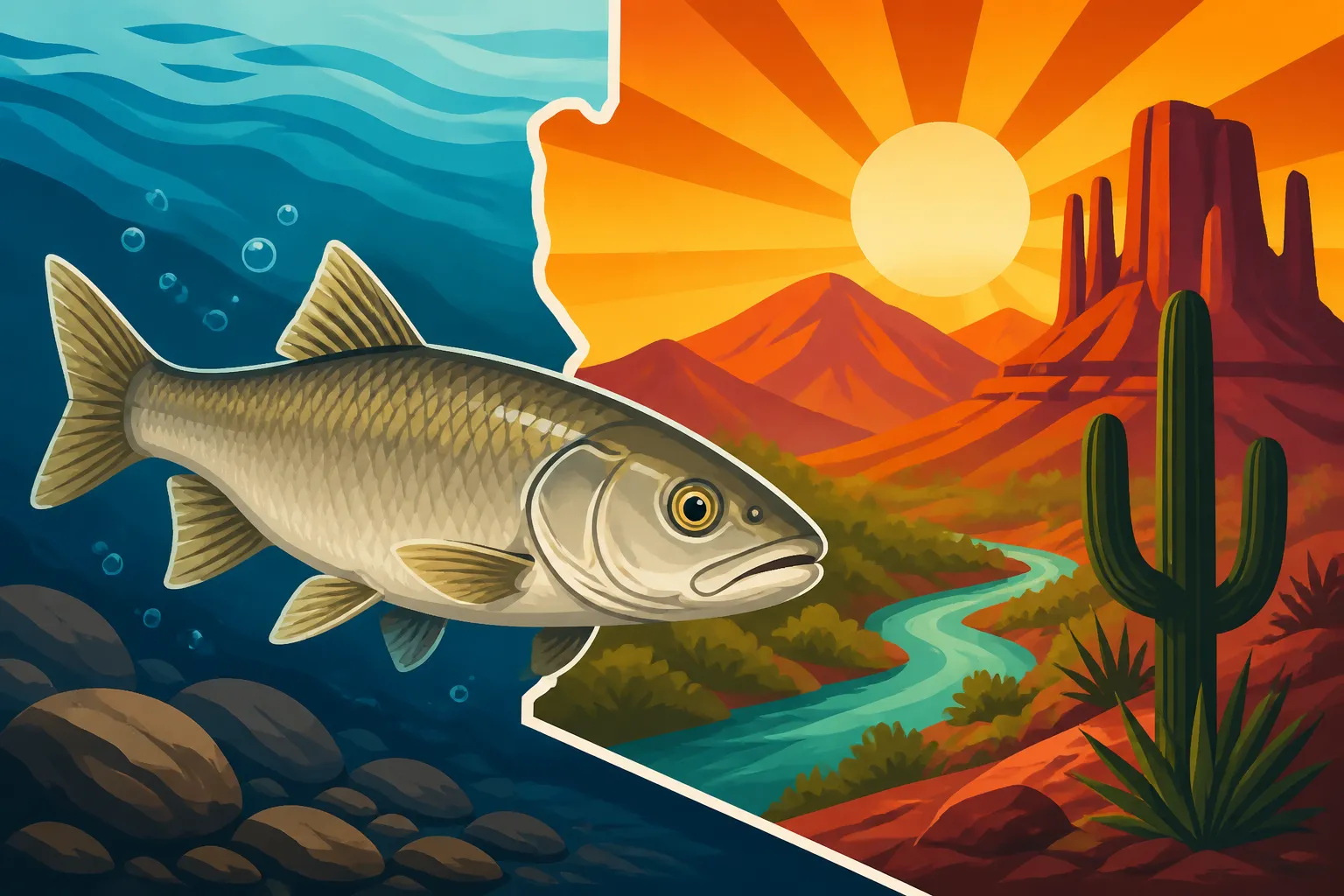
The Colorado Pikeminnow, Ptychocheilus lucius, is a truly unique and impressive fish, often referred to as the "salmon of the Colorado" due to its historical migratory patterns. It's the largest native minnow in North America, with adults historically reaching lengths of up to six feet and weights of nearly 100 pounds, though today, specimens are typically much smaller. They possess a long, slender body, a distinctive blunt snout, and a large mouth, perfectly adapted for preying on smaller fish. Their coloring can vary but often includes shades of olive green to silvery-gold, allowing them to blend seamlessly into their riverine habitats.
These fish are incredibly long-lived, some reaching over 40 years, and they are powerful swimmers, capable of navigating vast stretches of river to spawn. They prefer warm, turbid waters, often found in the larger mainstem rivers and their major tributaries. Their presence is a sign of a healthy, functioning river ecosystem, as they sit at the top of the food chain for native fish. Losing them would mean losing a significant piece of Arizona's natural heritage and a key indicator of ecological health in the Colorado River basin. It's not just another fish; it's a living relic of a wilder Arizona.
Historical Presence and Decline in Arizona
Once upon a time, before the immense dams reshaped our river landscapes, the Colorado Pikeminnow thrived throughout the entire Colorado River basin, stretching from Wyoming down through Utah, Colorado, New Mexico, Nevada, California, and right here into Arizona. Within Arizona, their historical range primarily included the mainstem Colorado River and its lower tributaries, such as the Gila River and Salt River. They undertook incredible spawning migrations, sometimes traveling hundreds of miles upstream to specific breeding grounds before returning to their foraging areas.
However, the 20th century brought significant changes that profoundly impacted this magnificent fish. The construction of large dams like Hoover Dam, Glen Canyon Dam, and others fragmented their once vast habitat, blocking their crucial migratory routes and altering water temperatures and flow regimes. Cold, clear water released from the bottom of deep reservoirs created unsuitable conditions for these warm-water fish, favoring non-native species instead. On top of this, the introduction of numerous non-native fish species, often aggressive predators like bass and catfish or prolific competitors like carp, further decimated pikeminnow populations. These non-native species preyed on young pikeminnow or competed for their food sources, making it incredibly difficult for the native fish to survive and reproduce. The combination of habitat destruction and overwhelming competition from invasive species led to a dramatic and heartbreaking decline, pushing the Colorado Pikeminnow to the brink of extinction.
Current Conservation Status and Protections in Arizona
The precarious state of the Colorado Pikeminnow didn't go unnoticed, and significant legal and scientific efforts have been put in place to try and bring this species back from the edge. It's a complex and ongoing battle, but one that highlights the importance of protecting our native aquatic life.
Federal and State Protections
Due to its drastic population decline, the Colorado Pikeminnow was officially listed as an endangered species under the federal Endangered Species Act (ESA) in 1967. This designation provides the highest level of protection available, making it illegal to harm, harass, collect, or possess these fish without specific permits. In Arizona, the Arizona Game and Fish Department (AGFD) works in conjunction with federal agencies like the U.S. Fish and Wildlife Service to uphold these protections. The AGFD also lists the Colorado Pikeminnow as an endangered species within the state, reinforcing these vital safeguards.
What this means for anglers is extremely clear: you cannot target, keep, or intentionally harm a Colorado Pikeminnow. If you accidentally catch one, it must be immediately released unharmed. The rules surrounding Native Fish Protection Rules in Arizona are very strict, and for good reason – every individual fish is precious to the survival of the species. Enforcement agencies take these regulations seriously, and ignorance is not considered a valid excuse. Understanding these laws isn't just about avoiding a fine; it's about being a responsible steward of Arizona's unique aquatic environment.
Recovery Efforts and Challenges
The road to recovery for the Colorado Pikeminnow has been long and arduous, marked by both successes and persistent challenges. A multi-state, multi-agency effort known as the Upper Colorado River Endangered Fish Recovery Program was established specifically to address the needs of four endangered native fish in the Upper Colorado River basin, including the pikeminnow. Similar, though often smaller, initiatives occur in the Lower Colorado River basin, including areas that affect Arizona. These efforts focus on several key strategies.
One major component is hatchery propagation. Biologists collect wild broodstock, breed them in controlled environments, and then stock thousands of juvenile pikeminnow into suitable river stretches, often with hopes of establishing new populations or bolstering existing ones. Habitat restoration is another critical element, which involves modifying river flows to mimic natural conditions, removing barriers to migration, and restoring riparian vegetation along the banks. Furthermore, control of non-native fish species is a continuous and sometimes controversial effort, as removing or suppressing invasive predators is often necessary to give native fish a fighting chance.
However, the challenges are immense. The sheer scale of the Colorado River system and the ongoing demand for water for agriculture and urban use complicate flow management. Climate change adds another layer of uncertainty, impacting water availability and temperatures. The pervasive presence of established non-native fish populations makes it incredibly difficult to create refuges where pikeminnow can thrive without predation or competition. Despite these hurdles, scientists and conservationists remain dedicated to the goal, understanding that the recovery of the Colorado Pikeminnow is a testament to our commitment to preserving biodiversity.
What Anglers Need to Know: Avoiding Accidental Catches and Legal Ramifications
As an angler, you are on the front lines of conservation. Your actions, or inactions, can have a direct impact on the survival of species like the Colorado Pikeminnow. Knowing how to identify this fish and what to do if you encounter one is not just good practice, it's a legal obligation.
Identifying the Colorado Pikeminnow
Accidental catches are always a possibility when you're fishing in waters where protected species might exist. The key is to be prepared and know what you're looking at quickly. The Colorado Pikeminnow can sometimes be confused with other minnows or even carp, but it has several distinct features.
Look for its torpedo-shaped body and a large, wide mouth that extends to or past the front of the eye. Its head is relatively flattened on top, and it has no barbels (whiskers) around its mouth, which distinguishes it from catfish or some carp. The dorsal fin typically has 8-10 rays, and its anal fin has 7-9 rays. The coloring is usually dark olive on the back, fading to silvery-white on the belly. Younger pikeminnow might have more pronounced dark spots. If you're fishing in the lower Colorado River or its tributaries, it's especially important to be vigilant. Carrying a waterproof fish identification guide, perhaps one you picked up from a reputable seller like Amazon, or having one saved on your phone, can be incredibly helpful for quick reference when you're out on the water. Taking a moment to compare your catch to known images can save you a lot of trouble.
Here’s a quick comparison to help distinguish the Colorado Pikeminnow from other common species:
| Feature | Colorado Pikeminnow | Common Carp | Channel Catfish | Largemouth Bass |
|---|---|---|---|---|
| Body Shape | Long, slender, torpedo-like | Deep-bodied, humped back | Smooth, slender, scaleless | Robust, oval-shaped |
| Mouth | Large, extends to or past eye | Small, protrusible, with 2 pairs of barbels | Large, wide, with prominent barbels (whiskers) | Large, extends past eye |
| Scales | Small, present | Large, prominent | None | Medium-sized, present |
| Dorsal Fin | Single, usually 8-10 rays, no spine | Single, long, with serrated spine | Single, spiny, with adipose fin | Two (spiny and soft-rayed), joined |
| Coloration | Olive to silvery-gold | Bronzy, yellowish | Gray to olive-green, often with spots | Green with dark horizontal stripe |
| Distinguishing | No barbels, large mouth, slender body, native | Barbels present, heavy body, invasive | Barbels, no scales, adipose fin, invasive | Two distinct dorsal fins, no barbels, common |
Best Practices for Anglers
If you find yourself in the rare situation of accidentally catching a Colorado Pikeminnow, your immediate actions are crucial. The overarching rule is: release it quickly and carefully. Do not take photos that delay release, do not put it in a livewell, and certainly do not keep it. Handle the fish as minimally as possible, preferably while it's still in the water. Use wet hands to support its body, avoid squeezing, and remove the hook gently. If the hook is deeply embedded, cut the line as close to the hook as possible rather than tearing the fish’s mouth trying to extract it. Then, allow the fish to swim away on its own power.
It’s vital to be familiar with general Catch and Release Rules for Arizona Anglers, which apply to all species but are especially critical for protected ones. If you have any doubts about identifying a fish, it's always best to err on the side of caution and release it. Intentionally keeping a Colorado Pikeminnow or failing to release it properly can lead to significant consequences. The Penalty for Keeping a Protected Fish in Arizona can include hefty fines, confiscation of gear, and even imprisonment, depending on the severity of the violation. Education is your best defense against such issues. Stay informed about Invasive and Protected Fish Species in Arizona and ensure your angling practices always prioritize the health of our native fish.
The Future of the Colorado Pikeminnow in Arizona
The fate of the Colorado Pikeminnow hangs in a delicate balance, and its future in Arizona, and indeed throughout its range, depends on a continued, concerted effort from scientists, government agencies, and the public, including dedicated anglers like you.
Long-Term Outlook and Continued Conservation Needs
The long-term outlook for the Colorado Pikeminnow is cautiously optimistic, but it requires unwavering commitment. While wild populations are still significantly reduced from historical levels, recovery programs have seen some successes, particularly in certain areas of the Upper Colorado River basin where conditions are more favorable. In Arizona, the presence of the species is much rarer, often limited to specific stretches of the lower Colorado River where suitable habitat persists or where stocked fish have been released.
The greatest conservation needs revolve around habitat connectivity and water management. Restoring natural flow regimes that benefit native fish without negatively impacting human water users is a monumental challenge. Addressing the continued threat of non-native species, which outcompete and prey on pikeminnow, also remains a priority. This might involve selective removal programs or innovative barriers to prevent non-native fish from entering critical native fish habitats. Education, too, is a continuous need – ensuring that everyone, from policymakers to the casual angler, understands the intrinsic value of these unique fish and the importance of their protection.
How Anglers Can Contribute to Conservation
As an angler, you might feel like your individual actions are small, but collectively, they make a huge difference. The most direct contribution you can make is simply by adhering strictly to all fishing regulations, especially those concerning protected species. Knowing the difference between a harmless carp and a rare Razorback Sucker Status in Arizona Rivers or Humpback Chub Habitat in the Grand Canyon is crucial. Always practice responsible catch and release, particularly for any fish you can't positively identify as a non-protected species.
Beyond the immediate act of fishing, you can become an advocate for native fish. Support organizations dedicated to river conservation and native fish recovery. You can report suspicious activities, such as illegal dumping or fishing practices, to the Arizona Game and Fish Department. Educate your fellow anglers on the importance of native species and responsible angling. Consider purchasing outdoor equipment, like those available on Amazon, from brands that demonstrate a commitment to environmental sustainability. Every time you choose to buy a fishing license, you're directly contributing to the funding of these vital conservation programs, including those working to protect the Colorado Pikeminnow and other Endangered Fish Species in Arizona Rivers. Your passion for fishing can be a powerful force for good, ensuring that these incredible native fish have a chance to thrive for generations to come.
Disclaimer
This article is for general informational purposes only and does not constitute professional advice. Laws, prices and regulations vary by location and change over time. Consult a qualified professional for guidance on your specific situation.