Razorback Sucker Status in Arizona Rivers
It's incredibly frustrating when you hear about native fish populations struggling, especially when you love spending time on Arizona's beautiful rivers. You want to enjoy the water and catch some fish, but you also want to be a responsible angler and protect the unique aquatic life that calls these places home. This guide will walk you through the complex situation of the Razorback Sucker, an iconic native fish, in Arizona's rivers, helping you understand its endangered status, the challenges it faces, and most importantly, how you, as an angler, can contribute to its survival.
Understanding the Razorback Sucker and Its Native Habitat in Arizona
When you picture a "sucker" fish, you might not imagine something particularly unique or striking, but the Razorback Sucker is truly one of a kind. This fish is a vital, native component of Arizona's river ecosystems, adapted to thrive in conditions that have dramatically changed over time. Understanding what makes it special and where it historically lived is the first step in appreciating its precarious status today.
What Exactly is a Razorback Sucker?
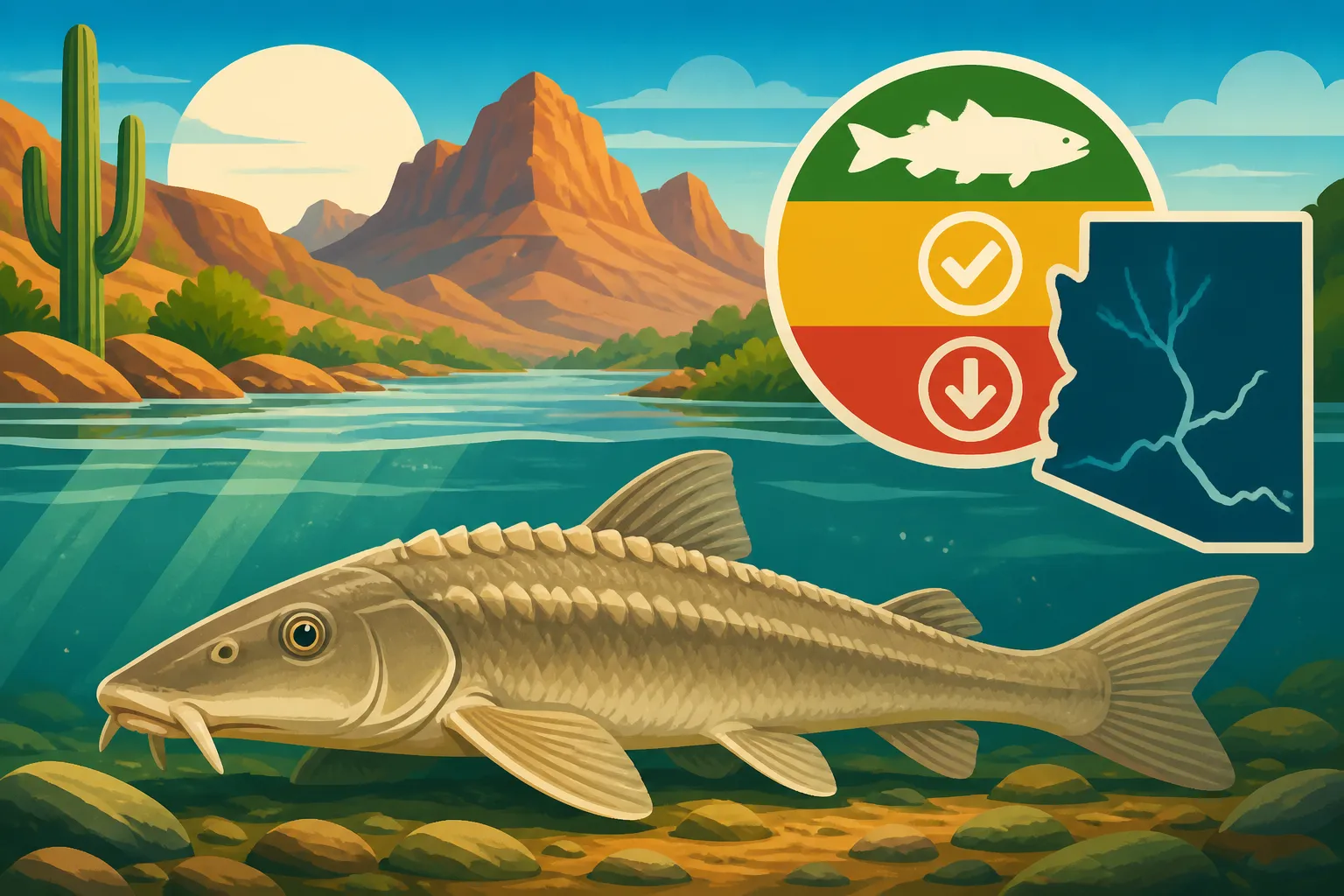
The Razorback Sucker (Xyrauchen texanus) is a large, long-lived bottom-feeding fish easily recognizable by its distinct bony keel, or "razorback," behind its head. This isn't just a cool-looking feature; it's a unique adaptation that helps it navigate its natural river environment. These fish can grow quite large, sometimes reaching up to three feet in length and living for over 40 years! Their coloration often ranges from olive-green to dark brown on their backs, fading to a lighter belly, helping them blend in with the riverbed. They are primarily filter feeders, sifting through muck and gravel for aquatic invertebrates and plant matter, playing a crucial role in cleaning up the river bottom. Imagine spending your days slowly cruising the depths, vacuuming up tiny bits of food – that's the life of a Razorback Sucker. They are incredibly resilient, but their specific needs for spawning and rearing their young make them vulnerable to environmental changes. If you ever get the chance to see one, you'll immediately understand why conservationists are so passionate about protecting them; they're truly magnificent fish.
Historical Range and Importance in Arizona
Historically, Razorback Suckers were widespread throughout the warm-water reaches of the Colorado River basin, which includes large portions of Arizona's major rivers. They were once abundant in the mainstem Colorado River, the Gila River, the Salt River, and the Verde River. These fish were a dominant species in the river systems, forming huge spawning aggregations that were once a common sight. For centuries, they were a significant food source for indigenous peoples along the rivers, and their presence indicated a healthy, functioning river ecosystem. They were part of a unique guild of "big river" native fish, including species like the Colorado Pikeminnow and Bonytail Chub, all adapted to the powerful, silty, and seasonally variable flows of the pre-dammed Colorado River. Their very existence defined the character of these ancient desert rivers, providing a stark contrast to the trout-dominated cold-water streams many anglers associate with fishing. To think of Arizona's rivers before the dams is to imagine a vastly different aquatic world, one where the Razorback Sucker was a silent, but powerful, fixture.
Why They're So Important to Arizona's Ecosystem
These unassuming bottom-dwellers might not be as flashy as a leaping bass or a colorful trout, but their ecological role is absolutely critical. As mentioned, Razorback Suckers are detritivores and herbivores, meaning they feed on decaying organic matter and plant material. This feeding habit helps to process nutrients and keep the riverbed clean, impacting water quality and the overall health of the aquatic environment. They essentially act as the river's vacuum cleaners. Furthermore, their presence is an indicator of a healthy, functioning native river ecosystem. When native species like the Razorback Sucker begin to disappear, it signals a much larger problem within the system, often pointing to issues like poor water quality, altered habitats, or the unchecked spread of invasive species. Protecting the Razorback Sucker isn't just about saving one fish; it's about preserving the intricate web of life that defines Arizona's unique river systems and ensuring that future generations can witness the rich biodiversity these waters once held. For more about their native counterparts, check out Native Fish Species of Arizona.
The Troubled Waters: Factors Leading to the Razorback Sucker's Decline
The story of the Razorback Sucker is unfortunately a classic example of how human development can profoundly impact native wildlife. Over the last century, a combination of factors has pushed this resilient fish to the brink of extinction, turning once-thriving populations into scattered remnants. It’s a somber reminder of the delicate balance in nature and the consequences of altering natural processes.
Habitat Loss and Alteration
The most significant blow to the Razorback Sucker, and indeed many other native Colorado River fish, has been the construction of major dams and water diversion projects. Think about iconic structures like Glen Canyon Dam and Hoover Dam – while they provide crucial water and power, they fundamentally changed the river. Razorback Suckers are adapted to long, free-flowing river stretches with natural cycles of flooding and drying. Dams block their migratory routes to historical spawning grounds, and they transform vast stretches of turbulent, warm-water river into cold, deep, stagnant reservoirs. These new reservoir environments are completely unsuitable for Razorback Sucker reproduction and survival. The natural flow regimes are gone; instead of spring floods that cue spawning and create ideal nursery habitats, we have controlled releases. The natural river channels themselves have also been dramatically altered by channelization, bank stabilization, and agricultural diversions, further fragmenting and degrading the remaining suitable habitats. It's like taking a desert plant and trying to grow it in the arctic – the conditions are just entirely wrong.
The Invasion of Non-Native Species
As if habitat loss wasn't enough, the introduction of non-native fish species has proven to be a devastating double-whammy for the Razorback Sucker. Many of these non-native fish, often introduced for sport fishing or as bait, are voracious predators of native fish eggs and larvae. Bass, catfish, carp, and sunfish now dominate many Arizona rivers and reservoirs, and they simply outcompete native suckers for food and space. When Razorback Suckers do manage to spawn, their vulnerable young become easy prey for these introduced predators, leading to extremely low survival rates. Imagine a tiny, defenseless baby fish hatching into a world full of hungry mouths that never existed in its ancestors' time. Furthermore, some non-native species can introduce diseases that native fish have no natural immunity to. This constant pressure from invaders means that even in areas with suitable habitat, the Razorback Sucker struggles to successfully reproduce and recruit new generations into the population. Anglers can play a role in this by understanding Invasive and Protected Fish Species in Arizona and not moving live bait between waters.
Changing Water Management and Flow Regimes
Beyond the physical barriers of dams, the way water is managed in Arizona's arid environment poses an ongoing challenge for Razorback Suckers. Historically, the Colorado River and its tributaries experienced predictable spring floods from snowmelt, which would inundate floodplains, create shallow backwaters, and warm up the water – perfect conditions for Razorback Sucker spawning and for juvenile fish to grow safely. Today, these natural high-flow events are largely controlled by dam operations, which prioritize human water supply, power generation, and flood control. The river flows are often stabilized, colder, and clearer than historical conditions, which doesn't cue spawning effectively or provide the turbid, warm, slow-moving water that larval and juvenile suckers need to avoid predators and find food. It's a tough balancing act, managing water for millions of people and for the needs of a critically endangered fish. The implications of these changes are profound, impacting everything from water temperature to sediment transport, all of which are vital components of the Razorback Sucker's life cycle.
Current Conservation Status and Efforts in Arizona Rivers
Given the severe decline, the Razorback Sucker has garnered significant attention from conservation agencies. It's an uphill battle, but dedicated efforts are underway to try and bring this unique species back from the brink. These efforts often require complex strategies, a lot of collaboration, and sometimes, a little ingenuity.
Federal and State Protections
Recognizing the dire situation, the Razorback Sucker was listed as an endangered species under the federal Endangered Species Act in 1991. This designation provides critical legal protections, making it illegal to harm, harass, or capture these fish. In Arizona, the Arizona Game and Fish Department (AZGFD) works closely with federal agencies like the U.S. Fish and Wildlife Service, universities, and other stakeholders as part of larger recovery programs for all native Colorado River fish. These protections mean that any large-scale water projects or developments that could impact Razorback Suckers must consider their presence and implement measures to mitigate harm. While federal and state protections are essential, they are just one piece of a much larger and more active conservation puzzle. If you're curious about fishing regulations in general, see Arizona Fishing Regulations Explained.
Active Recovery Programs
One of the most intensive strategies for Razorback Sucker recovery involves active propagation and reintroduction. Fisheries biologists at facilities like the Willow Beach National Fish Hatchery on the Colorado River collect adult Razorback Suckers, spawn them in controlled environments, and raise the young in predator-free ponds or special rearing areas until they are large enough to better withstand predation from non-native species. These "grow-out" facilities provide a crucial head start. Once they reach a certain size, thousands of these hatchery-reared fish are then released into suitable habitats in the Colorado River, Lake Mohave, and other managed areas, often behind fish barriers that prevent non-native fish from entering. Sometimes, experimental "conservation flows" are released from dams to mimic natural flood conditions, hoping to trigger natural spawning and improve nursery habitat. This is a massive undertaking, requiring ongoing scientific research, monitoring, and adapting strategies based on success rates. You can even find specific equipment on Amazon, like scientific netting or telemetry tags used in such studies, though these are for professional use, not casual anglers. These efforts show a dedicated commitment to reversing decades of decline.
How Anglers Can Help Protect This Unique Species
As anglers, we have a vital role to play in the conservation of species like the Razorback Sucker. First and foremost, learn to identify the fish you might encounter. If you're fishing in a river where Razorback Suckers are known to be present (we'll get to those locations next), make sure you know what they look like. You can often find identification guides and resources online or purchase waterproof field guides on Amazon that are great for taking out on the water. If you accidentally catch a Razorback Sucker, it's crucial to release it immediately and with minimal harm. Handle the fish gently, keep it in the water as much as possible, remove the hook quickly (barbless hooks can help with this), and avoid touching its eyes or gills. Catch and Release Rules for Arizona Anglers generally apply. Never illegally harvest a protected species. If you witness someone doing so, report it to the Arizona Game and Fish Department. By practicing responsible angling, educating yourself, and being a good steward of the environment, you become an active part of the solution.
Where Razorback Suckers Can Still Be Found and What That Means for Anglers
While their numbers are a shadow of their former glory, Razorback Suckers haven't completely vanished from Arizona's rivers. Their continued presence, even if in managed populations, offers a glimmer of hope and underscores the importance of ongoing conservation. Knowing where they exist helps responsible anglers fish with greater awareness.
Key Remaining Habitats
Today, the most significant populations of Razorback Suckers in Arizona are found in the lower Colorado River basin, particularly in Lake Mohave and Lake Havasu, and segments of the Colorado River itself. These areas have seen the most intense stocking and monitoring efforts, often due to suitable habitat patches or the ability to create protected rearing areas. Smaller, remnant populations or reintroduction sites might exist in parts of the Gila River or Salt River, often within designated critical habitat zones or areas where invasive species have been aggressively managed. These aren't necessarily places you'd target for a Razorback Sucker fishing trip (as they are protected), but they are areas where you might accidentally encounter one. Anglers fishing for other species in Lake Havasu Arizona Fishing Guide or Colorado River Fishing Guide in Arizona should be particularly vigilant. Remember, these are specific zones where dedicated researchers, often using specialized equipment found on Amazon for data collection, are working tirelessly to give these fish a fighting chance.
Accidental Catch Protocols
Let's be realistic: you're out fishing for bass or catfish, and you might accidentally hook something you don't recognize. If you believe you've caught a Razorback Sucker, the protocol is clear and critical for its survival.
| Step | Action Required | Why It Matters |
|---|---|---|
| 1. Identify Carefully | Quickly confirm it's a Razorback Sucker (look for the prominent keel/razorback). | Misidentification can lead to improper handling or, worse, illegal retention. |
| 2. Keep it Wet | Avoid taking the fish out of the water if possible. | Minimizes stress and damage to delicate gills and protective slime layer. |
| 3. Handle Gently | Use wet hands or a wet, soft-mesh net. Do not squeeze. | Reduces removal of the fish's protective slime coat and internal organ damage. |
| 4. Remove Hook Promptly | Use needle-nose pliers or a de-hooking tool to remove the hook. | Faster removal reduces tissue damage and stress. Barbless hooks are ideal. |
| 5. Cut Line if Necessary | If the hook is deeply swallowed or difficult to remove, cut the line close to the mouth. | Cutting the line is preferable to causing fatal internal damage during hook removal. |
| 6. Release Immediately | Gently place the fish back into the water, allowing it to swim away on its own. | Maximizes survival chances by reducing time out of its natural environment. |
| 7. Report if Possible | Consider reporting the catch to AZGFD, especially if it's a rare encounter. | Provides valuable data for researchers and helps monitor populations. |
It’s important to familiarize yourself with Penalty for Keeping a Protected Fish in Arizona to understand the serious implications of not following these guidelines. Your quick, careful actions can literally save a life.
The Future of the Razorback Sucker
The future of the Razorback Sucker in Arizona rivers is a testament to both the challenges of conservation and the tireless dedication of those working to protect it. While the species faces formidable obstacles from habitat alteration and non-native predators, the ongoing recovery efforts offer a degree of optimism. Hatchery programs, reintroduction initiatives, habitat restoration, and strict protections are all contributing to its survival. However, long-term success hinges on continued research, adaptive management, and fostering a greater public understanding and appreciation for these unique native fish. As anglers, we can be powerful advocates and responsible participants in this journey. By understanding their plight and acting accordingly, we ensure that the Razorback Sucker remains a part of Arizona's aquatic heritage, a symbol of resilience in our desert rivers.
Disclaimer
This article is for general informational purposes only and does not constitute professional advice. Laws, prices and regulations vary by location and change over time. Consult a qualified professional for guidance on your specific situation.