Largemouth Bass Habitat in Arizona Lakes
One of the biggest head-scratchers for any angler hitting an Arizona lake is trying to figure out where the largemouth bass are actually hanging out. It’s not like they have big neon signs pointing to their favorite spots, right? We've all been there, casting fruitlessly into open water, wondering if we’re missing some secret trick. This comprehensive guide will walk you through the key habitat features that attract largemouth bass in our unique desert lakes, helping you understand their patterns and drastically improve your chances of a successful day on the water.
Understanding Largemouth Bass Behavior in Arizona
Largemouth bass are incredible creatures, but they aren't just swimming around aimlessly. Their movements and preferences are deeply tied to a few critical factors, especially here in Arizona where conditions can be quite extreme. If you can get inside their heads a little bit and understand why they do what they do, you'll be miles ahead of the game. It’s all about finding that perfect balance of food, comfort, and safety.
The Impact of Warm Water on Bass
Let's face it, Arizona gets hot. Really hot. And while largemouth bass are known for thriving in warmer waters, there's a limit. Extreme heat can push them deep, making them less active and harder to find. In the scorching summer months, those shallow, sun-baked areas that were buzzing with activity in spring become ghost towns. Bass are cold-blooded, meaning their body temperature mirrors the water around them, which directly affects their metabolism and energy levels.
When surface water temperatures soar into the high 80s or even 90s, largemouth bass aren't necessarily "leaving" the lake, but they are certainly looking for refuge. They'll seek out thermal stratification, often diving down to cooler depths where oxygen levels are still adequate. This is why understanding depth and structure becomes so crucial during our long Arizona summers. You might find them suspended over deep points or tucked into the shaded undersides of thick vegetation. Conversely, in the cooler winter months, they might actually move shallower to absorb more warmth from the sun, especially on those calm, sunny days. This constant adjustment to temperature is a key driver in their habitat choices.
Seasonal Movements and Patterns
Just like us, largemouth bass have distinct seasonal preferences, and these dictate where you'll find them. Spring is often considered the golden age for bass fishing, as they move into shallower waters to spawn. They'll gravitate towards protected coves, sandy flats, and areas with new growth of aquatic vegetation – places where they can build nests and guard their eggs. This is when you'll often find them actively cruising the banks, making them a prime target for shore anglers.
As spring transitions to summer, and water temperatures climb, bass usually retreat to deeper, cooler waters. They'll relate to offshore structure like humps, ledges, and deep points. This is when a good fish finder becomes your best friend, helping you locate those subtle underwater contours where bass are schooling up. How to Read a Fish Finder for Bass is an excellent resource for honing these skills. Come fall, as temperatures begin to cool again, bass become incredibly active, feeding aggressively to bulk up for winter. They often move back into shallower coves and creek arms, chasing baitfish that are also moving. Finally, in winter, they typically settle into deeper main lake areas, suspending over structure or relating to bluff walls, becoming more lethargic but still catchable if you present your bait slowly and accurately. Understanding these Seasonal Movement Patterns of Bass at Roosevelt Lake can give you a significant edge.
Key Habitat Features for Largemouth Bass
If you want to catch largemouth bass consistently, you need to understand what makes a particular spot a "home" for them. It's not just about water temperature; it's about cover, ambush points, and access to food. Arizona's desert lakes, while often stark on the surface, hold a wealth of underwater features that are magnets for these apex predators.
Submerged Vegetation and Aquatic Plants
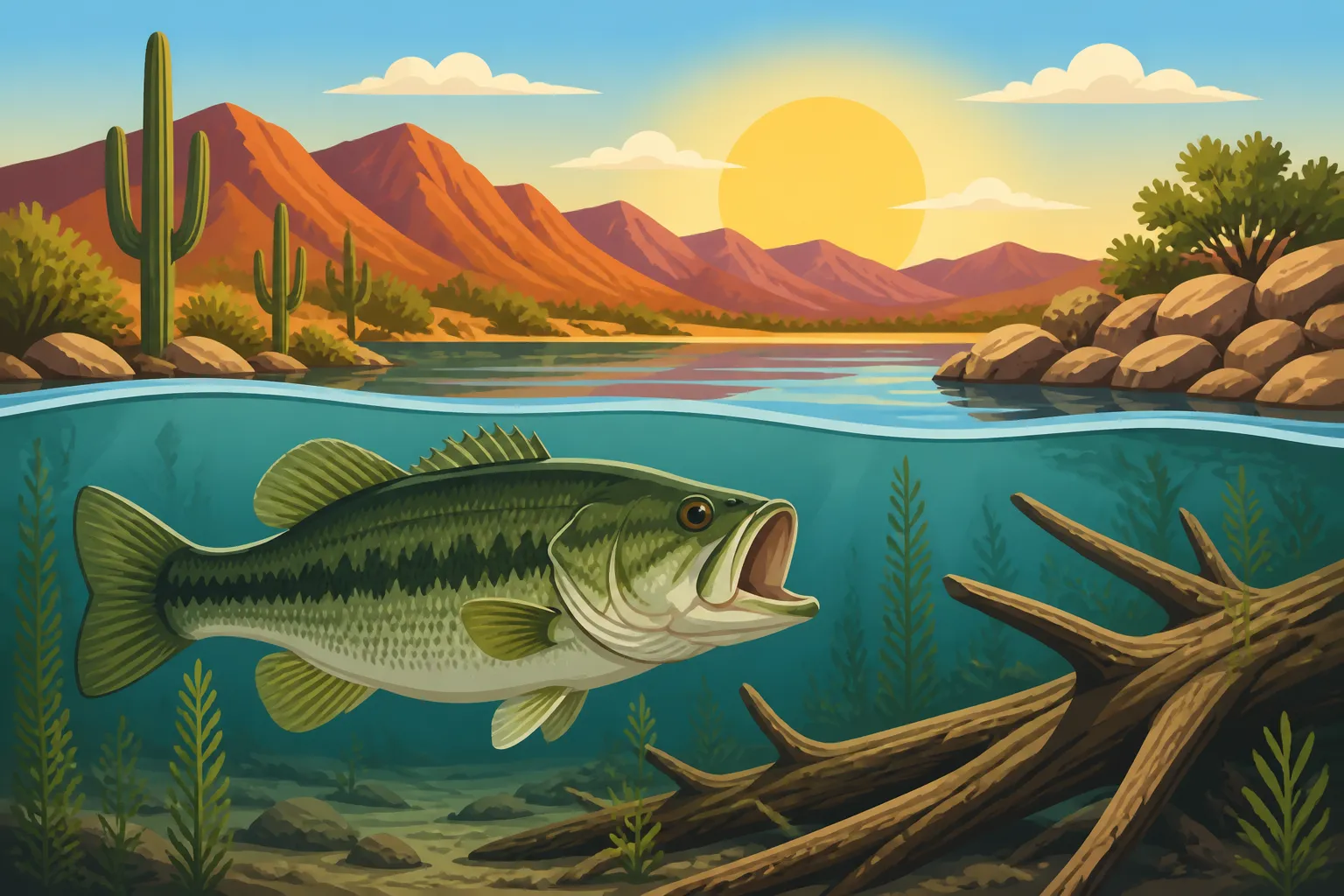
Imagine you’re a bass. What's better than a dense patch of underwater weeds? It’s a perfect hunting ground and a fantastic hideout! Submerged vegetation, whether it's cattails, hydrilla, coontail, or even just thick moss, provides essential cover for largemouth bass. These plant beds offer shade from the intense Arizona sun, keeping the water cooler and more oxygenated. More importantly, they create a bustling ecosystem. Smaller baitfish like shad and sunfish, along with crayfish and insects, thrive within these green jungles, providing a constant buffet for hungry bass.
Fishing around vegetation requires a different approach. You can pitch jigs into pockets, retrieve weedless soft plastics over the tops, or work spinnerbaits along the edges. The key is to find the edges of the vegetation, where bass often position themselves for an ambush. Sometimes, the densest part of the mat can be too thick to fish effectively, but the bass will be lurking right where the plants thin out or meet open water. Look for irregularities in the weed line, small points, or submerged islands of grass – these are often high-percentage spots. Products like weedless hooks and heavier lines, easily found on Amazon, can make fishing these areas much more manageable.
Rock Piles, Ledges, and Other Hard Structure
Beyond the green stuff, hard structure is another prime habitat for largemouth bass. Arizona lakes, being mostly reservoirs, have incredible underwater topography. Think about those steep canyon walls and rocky outcrops you see above the water – they continue below! Rock piles, submerged ledges, bluff walls, and even simply gravel points offer bass a completely different kind of refuge. These structures provide excellent ambush points, hiding bass from both predators and prey. They also absorb and radiate heat differently than softer bottoms, which can be a draw in cooler months.
Bass often relate to the "breaks" or transitions in these structures. For instance, a submerged rock pile that drops off into a deep channel is a classic bass magnet. A ledge where a shallow flat suddenly plunges into deep water creates a highway for bass to move up and down, following bait. Working crankbaits, jigs, or drop shots along these contours can be incredibly effective. Pay attention to how the sun hits these areas; during bright, sunny days, bass might be tucked into the shade of a rock wall, whereas on cloudy days, they might be more willing to roam the top of a rocky point. Many anglers find the best bass at specific rock formations at locations like Lake Pleasant Arizona Fishing Guide.
Standing Timber and Brush Piles
Nothing says "largemouth bass hideout" quite like a good old-fashioned brush pile or standing timber. Many of Arizona's lakes were once canyons and riverbeds, and when they were flooded, vast forests and individual trees were submerged. These underwater trees and brush provide some of the best cover imaginable. They offer vertical structure, which bass absolutely adore, allowing them to suspend at different depths within the water column. The intricate branches create countless ambush points for bass waiting to strike at unsuspecting baitfish or crayfish.
Fishing standing timber and brush piles can be challenging due to snags, but the rewards are often worth it. Jigs, Texas-rigged soft plastics, and spinnerbaits are popular choices. The key is to get your lure right into the heart of the cover without getting hung up. Flipping and pitching techniques are essential here. Bass will often position themselves facing outward from the densest part of the cover, ready to dart out and grab a meal. When water levels fluctuate, timber that was once shallow might now be in deep water, creating even more complex and productive habitat. Don't be afraid to explore these snaggy areas; many trophy bass call them home. You can learn more about specific techniques in our guide, How to Fish Around Submerged Timber.
Arizona's Unique Desert Lake Environment
Fishing in Arizona isn't like fishing in the Midwest or the Southeast. Our desert lakes present their own distinct set of challenges and opportunities when it comes to understanding largemouth bass habitat. The arid climate, fluctuating water levels, and unique food chains all play a significant role. It's crucial to acknowledge these local nuances rather than trying to apply a generic bass fishing strategy.
How Water Levels Affect Bass Habitat
One of the biggest variables in Arizona's desert lakes is the constantly fluctuating water levels. Reservoirs are, by definition, controlled bodies of water, and their levels can change dramatically throughout the year due or even month to month due to irrigation, power generation, and rainfall. A dropping water level can pull bass off shallow cover and force them to deeper structure, while rising water can flood new shoreline vegetation, creating fresh hunting grounds. This can be incredibly frustrating for anglers who scout a spot only to find it completely different a few weeks later.
When water levels are low, previously submerged points and humps become exposed, and bass will concentrate on the remaining available structure and cover in deeper water. They might relate more closely to creek channels and bluff walls. Conversely, when water levels rise, new terrestrial vegetation like mesquite trees, catclaw acacia, and grasses become inundated. This creates an immediate boom in insect activity and provides dense new cover, drawing bass into these freshly flooded areas for feeding and spawning. Staying updated on current lake levels is almost as important as checking the weather forecast here in Arizona. This constant change means you need to be adaptable and ready to fish different depths and types of cover.
The Role of Forage Fish in Habitat Selection
You can't talk about bass habitat without talking about food. Largemouth bass are opportunistic predators, and their presence in a particular area is almost always directly tied to the availability of their preferred forage. In Arizona, the primary food sources for largemouth bass are threadfin shad, gizzard shad, various sunfish (bluegill, green sunfish, redear sunfish), and crayfish. Where these bait species thrive, bass will follow.
Understanding the habits of these forage species is key. For example, threadfin shad often school in open water, moving with the wind and light conditions. When shad are schooling on the surface, you'll often see "boils" where bass are aggressively feeding on them, especially in lakes like Lake Pleasant. Sunfish and crayfish, on the other hand, are more structure-oriented, hiding in vegetation, under rocks, or in brush piles. If you find a dense bed of cattails teeming with bluegill, you can bet there's a largemouth or two lurking nearby. Successful anglers don't just look for bass; they look for signs of baitfish, whether it's nervous surface activity, schools showing up on a fish finder, or simply knowing the preferred habitat of a bass's next meal. The abundance of such forage is a major reason why Best Bass Fishing Lakes in Arizona are so productive.
Here's a quick reference for common habitat types and effective techniques:
| Habitat Type | Typical Location | Key Features | Recommended Techniques |
|---|---|---|---|
| Submerged Vegetation | Shallow to moderate depth coves, flats | Weed lines, grass beds, hydrilla, coontail | Pitching jigs, weedless plastics, spinnerbaits |
| Rock Piles & Ledges | Points, humps, bluff walls, creek channels | Defined drops, hard breaks, scattered boulders | Deep crankbaits, jigs, drop shots, Texas rigs |
| Standing Timber | Flooded riverbeds, canyon arms, old shorelines | Vertical structure, dense branches, shade | Flipping jigs, Texas rigs, swim jigs |
| Brush Piles | Man-made or natural accumulations, coves | Dense cover, ambush points, baitfish magnet | Flipping jigs, weightless worms, shaky heads |
| Open Water (Baitfish) | Main lake, wind-blown flats, large coves | Schooling shad, surface activity, current breaks | Topwaters, swimbaits, deep crankbaits, spoons |
| Bluff Walls | Main lake, canyon sections | Vertical drops, current breaks, shade | Drop shots, shaky heads, deep jigs |
Locating Largemouth Bass in Popular Arizona Lakes
Now that we've covered the general principles, let's get specific about some of Arizona's most beloved bass fishing destinations. Each lake has its own personality, and understanding these nuances can really help you dial in your approach. Whether you're a local or an out-of-state visitor, knowing where to start your search is half the battle.
Lake Pleasant and Roosevelt Lake
These two giants are often at the top of the list when discussing largemouth bass in Arizona, and for good reason. They are both large, diverse reservoirs with different characteristics that appeal to bass.
Lake Pleasant, just north of Phoenix, is a deep, clear desert lake known for its excellent bass fishing, including both largemouth and white bass. Its habitat is characterized by steep rocky points, submerged humps, deep channels, and significant standing timber, particularly in the northern reaches (often called the "trees"). During the cooler months, largemouth bass often relate to the rocky points and humps in the main lake and creek arms, suspending over deeper water or tucked into structure. As temperatures warm, they'll seek out the deeper timber and brush, or patrol the abundant submerged vegetation in protected coves. The presence of robust threadfin shad populations means you'll often find bass schooling in open water, especially early mornings or late evenings, chasing bait. Best Time of Year to Fish Lake Pleasant provides more insight into seasonal patterns here. Many anglers rely on electronics to find those elusive offshore structures and schools of baitfish, often pairing their efforts with quality rods and reels available on Amazon.
Roosevelt Lake, Arizona's largest lake, offers a different kind of bass habitat. While it also has rocky sections and deep channels, it's famous for its extensive areas of submerged timber and brush, particularly in the Tonto Creek and Salt River arms. These areas become prime bass habitat, providing countless places for fish to hide and ambush prey. Roosevelt also sees significant fluctuations in water levels, which can dramatically change the available cover. When levels are high, flooded mesquite trees and grasses create incredible shallow-water flipping and pitching opportunities. When levels drop, bass often pull out to the main lake points and deeper timber lines. Its reputation for big largemouth bass is well-deserved, and understanding its unique timber-laden environment is key. You'll often find bass relating to the deeper main lake humps and channels in summer, while moving shallower into the timber and brush during spring and fall. For more detailed information, check out our Roosevelt Lake Arizona Fishing Guide.
Canyon Lake and Saguaro Lake
Part of the beautiful Salt River Chain, Canyon Lake and Saguaro Lake offer stunning scenery along with fantastic bass fishing. These lakes are typically clearer and deeper than Roosevelt, with a distinct canyon-like appearance.
Canyon Lake is known for its steep, rocky walls, deep coves, and abundant submerged rock formations. Largemouth bass here often relate closely to these vertical structures. You'll find them holding tight to bluff walls, suspended over deep points, or tucked into rocky crevices. The lake also has areas of submerged vegetation, particularly in its shallower coves, which offer another dimension of habitat. Anglers targeting Canyon Lake bass often use techniques like drop shotting, shaky heads, and deep diving crankbaits to probe the deep structure. Early mornings and late evenings can also be prime for topwater action, especially around those rocky points and over submerged brush. For those exploring Canyon Lake, Shore Fishing Access Points at Canyon Lake can be a great starting point, though a boat often unlocks more of its potential.
Saguaro Lake, the closest of the Salt River lakes to Phoenix, provides a mix of habitat types. It features rocky shorelines, coves with submerged vegetation, and some areas of standing timber, particularly in its upper reaches where the Salt River feeds in. Bass here are often found relating to the gradual sloping points, main lake humps, and the plentiful natural rock structure. Like Canyon Lake, Saguaro's clear waters mean bass can be a bit more wary, often requiring finesse presentations. However, during active feeding periods, they can be quite aggressive. Anglers will find success by working jigs and plastics along the drop-offs, using crankbaits on submerged points, and sometimes even seeing topwater action in the early morning around the edges of vegetation. The lake is generally a bit warmer than Canyon, which can influence bass behavior, especially in the cooler months. For a deeper dive into Saguaro, consider reading our Saguaro Lake Arizona Fishing Guide.
Adapting Your Approach to Arizona's Diverse Habitats
Successfully fishing for largemouth bass in Arizona means more than just finding the fish; it means understanding how to present your offerings in a way that appeals to them in their specific habitat. No single bait or technique works everywhere, and adaptability is the hallmark of a skilled angler.
Shoreline vs. Open Water Strategies
The way you approach fishing differs wildly depending on whether you're working the shoreline or targeting fish in open water or offshore structures. Many anglers start their bass journey fishing from the bank, and Arizona's community lakes and some larger reservoirs offer great access. For shoreline fishing, focus on visible cover: fallen trees, docks, weed lines, and rocky outcrops. These are obvious ambush points. Cast parallel to the bank or fan-cast into promising pockets. Lures like spinnerbaits, Texas-rigged worms, and shallow crankbaits are excellent choices for covering water and probing these shallower zones. You'll also want to prioritize stealth, as bass in shallower water are more easily spooked.
When you venture into open water, especially with a boat, your strategy shifts dramatically. Now, you're looking for those subtle underwater features that aren't visible from the surface: humps, ledges, submerged roadbeds, and deep timber lines. This is where a good fish finder becomes indispensable. Once you locate a promising structure or a school of bait, you'll employ deeper-diving crankbaits, jigs, drop shots, or even vertical jigging techniques. Bass in open water often school up, so when you find one, there are often more. Pay attention to the wind, as it can push baitfish and, consequently, bass to one side of a point or structure. For those fishing from a boat, having the right gear, including quality rod and reel combos often purchased from Amazon, makes all the difference when targeting deeper fish.
Reading the Water for Bass Indicators
Beyond understanding explicit habitat features, learning to "read the water" is a skill that will dramatically increase your success. This involves paying attention to subtle clues that tell you where bass might be and what they might be doing. It's like being a detective on the water, piecing together information from various sources.
One of the most obvious indicators is surface activity. Look for schooling baitfish jumping out of the water, often indicative of bass or other predators pushing them from below. These "boils" or "blow-ups" are prime opportunities for throwing topwater lures or fast-moving swimbaits. Pay attention to birds like cormorants or seagulls diving; they often indicate baitfish schools, and where there's bait, there are usually bass. Water clarity is another huge factor. In clear water, bass rely more on sight and might be deeper or require more natural-looking baits. In murky water, they use their lateral line more, making noisy or vibratory lures (like spinnerbaits or rattling crankbaits) more effective.
The presence of current, whether from inflows (like a river feeding into a lake) or wind, can also be a major indicator. Bass often position themselves out of the main current, waiting for food to be swept by. Wind-blown points, for instance, can concentrate baitfish and oxygen, making them excellent spots. Even something as simple as observing the shade lines on bluff walls or under overhanging trees can tell you where bass are seeking thermal refuge. Learning to interpret these visual and environmental cues takes time and practice, but it’s a skill that will make you a much more intuitive and successful angler for any of Arizona's Largemouth Bass Fishing Guide for Arizona trips.
Disclaimer
This article is for general informational purposes only and does not constitute professional advice. Laws, prices and regulations vary by location and change over time. Consult a qualified professional for guidance on your specific situation.