Shore Fishing Access Points at Canyon Lake
Canyon Lake, with its stunning red rock cliffs and inviting clear waters, often lures anglers with the promise of fantastic fishing. However, many shore-bound anglers quickly discover the challenge: finding truly accessible spots along its notoriously steep and rugged perimeter. This guide is dedicated to helping you unlock the best shore fishing access points at Canyon Lake, offering practical advice and detailing where you can cast a line without needing a boat.
The Unique Challenges and Rewards of Canyon Lake Shore Fishing
Canyon Lake, one of the four reservoirs on the Salt River chain, is undeniably beautiful, but its beauty often comes with a bit of a challenge, especially for those who prefer to fish with their feet firmly planted on solid ground. Unlike some of Arizona's more gently sloped lakes, Canyon Lake's shoreline is characterized by dramatic cliffs, hidden coves, and rocky outcrops, making access a real puzzle.
Navigating Canyon Lake's Rugged Shoreline
The very geology that makes Canyon Lake so breathtaking is also what limits easy shore access. Much of the lake is surrounded by steep canyon walls that plunge directly into the water, offering little to no walk-in fishing opportunities. This means that successful shore anglers need to know the specific spots where the terrain relents, providing a flatter, safer area to set up shop. It's not uncommon for eager anglers to arrive at a scenic overlook, only to realize there's no safe way down to the water's edge. This ruggedness necessitates careful planning and often a bit of a hike, so coming prepared with sturdy footwear and minimal gear is often the best approach. Think of it as a small adventure before the fishing even begins!
Species You Can Target from the Bank
Despite the access challenges, Canyon Lake is a thriving ecosystem teeming with various fish species, many of which can be successfully targeted from the bank. The lake is renowned for its largemouth bass, which can grow to impressive sizes, offering thrilling fights. But it's not just about the bass. You'll also find healthy populations of smallmouth bass, particularly in rocky areas, along with crappie, which tend to school around submerged structure. Catfish, including channel and flathead varieties, lurk in deeper pockets and are a popular target for night fishing. And for those looking for a more relaxed experience or introducing kids to fishing, abundant bluegill and other sunfish provide consistent action. Understanding what species are likely to be found in different areas will significantly improve your shore fishing success here. If you're looking for a deeper dive into the variety of fish you might encounter, our Fish Species Guide for Arizona Lakes can be a fantastic resource.
Prime Shore Fishing Access Points at Canyon Lake
Knowing exactly where to go is half the battle when it comes to shore fishing at Canyon Lake. While the lake has several recreation sites, not all offer extensive or easy shore fishing. Here, we'll break down the most reliable and popular spots for bank anglers, highlighting what makes each unique.
Acacia Recreation Site: Family-Friendly Access
The Acacia Recreation Site is often considered one of the most accessible and family-friendly spots for shore fishing on Canyon Lake. Located near the main entrance to the lake, Acacia offers paved parking, restrooms, and relatively flat ground leading to the water's edge. This makes it ideal for anglers with young children or those who prefer not to navigate challenging terrain. The shoreline here is a mix of gravel and small rocks, with some sandy pockets.
The waters around Acacia are quite productive. You can often find schools of bluegill and other panfish close to the bank, especially where there's some submerged vegetation or rocky cover. Largemouth bass will patrol these same areas, particularly during the cooler morning and evening hours, or on overcast days. Catfish are also frequently caught here, especially after dark using cut bait or stink bait. Its ease of access means it can get busy, especially on weekends and holidays, so arriving early is always a good strategy to secure a prime spot. Many anglers find success by casting towards any visible structure or drop-offs just a short distance from shore.
Boulder Creek Recreation Site: Rocky but Rewarding
For those willing to put in a little more effort, the Boulder Creek Recreation Site offers some fantastic, albeit rockier, shore fishing opportunities. This site is known for its more rugged, natural feel, with a shoreline dominated by larger rocks and boulders. While it requires a bit more care navigating the uneven ground, these rocky environments are prime habitat for smallmouth bass and crappie.
Anglers at Boulder Creek often find success by targeting the edges of submerged rock piles and drop-offs. The deeper water close to shore provides excellent cover for predatory fish. During the spring, crappie will move into shallower areas to spawn, making them more accessible to bank anglers using small jigs or minnows under a bobber. For bass, try throwing crankbaits or soft plastics that imitate crayfish, which are abundant in these rocky sections. Parking is available, but walk-in access to the best fishing spots may require a short hike along informal trails. Always be mindful of your footing and wear appropriate shoes.
Palo Verde Recreation Site: Varied Opportunities
Palo Verde Recreation Site offers a diverse fishing experience from the shore. This area provides a mix of terrain, from more gradual slopes to rocky points, giving anglers a variety of options depending on their target species and preferred technique. It's often a bit less crowded than Acacia, offering a more peaceful angling experience.
You'll find good opportunities for largemouth and smallmouth bass here, particularly around the points and coves. The presence of submerged timber and brush in some sections makes it an excellent spot for crappie as well. For catfish, look for the deeper, calmer sections, especially where there's a bit of a current break or natural structure. Many anglers use a variety of baits and lures here, from Texas-rigged worms for bass to live minnows for crappie. The varied nature of Palo Verde means you can experiment with different approaches to see what the fish are biting on. It's also a great spot to explore if you want to understand the different fishing habitats present at Canyon Lake. Check out our Canyon Lake Arizona Fishing Guide for more insights on what makes this specific lake so special.
Other Hidden Gems and Considerations
Beyond these main recreation sites, Canyon Lake does have a few less obvious spots that can offer excellent shore fishing, though they often come with more difficult access. These "hidden gems" usually require a willingness to hike and explore. Some small pull-offs along the scenic drive (State Route 88) may lead to informal trails down to the water, but always be cautious of private property and steep, unstable terrain.
One crucial consideration when exploring Canyon Lake's more remote shorelines is to respect nature and property rights. Stick to designated public access areas, or at least be certain you're not trespassing. Always pack out everything you pack in, leaving no trace behind. The beauty of Canyon Lake is a shared resource, and keeping it pristine ensures everyone can enjoy it. Remember, safety should always be your top priority. Exploring new areas is exciting, but don't take unnecessary risks on steep, slippery, or unstable ground. Consulting guides on platforms like FishingBooker can sometimes reveal insights into less-known local fishing spots shared by experienced guides.
Essential Tips and Gear for Successful Canyon Lake Shore Fishing
Shore fishing at Canyon Lake requires a bit more thought than just tossing a line in. The conditions, terrain, and fish behavior all play a role in your success. Being prepared with the right gear and knowing a few key techniques can make all the difference.
Gearing Up for Canyon Lake's Conditions
When preparing for a day of shore fishing at Canyon Lake, think versatile and durable. A medium-heavy spinning rod, around 6'6" to 7' long, paired with a reliable spinning reel, is a fantastic all-around choice. This setup allows for good casting distance, which is often crucial for reaching productive waters from the bank, and provides enough backbone to handle larger bass or catfish. Spool your reel with 10-15 lb monofilament or fluorocarbon line, or even braided line with a fluorocarbon leader for added sensitivity and strength. Our guide on Best Fishing Rods for Bass in Arizona offers more specific recommendations.
Your tackle box should include a variety of lures and baits. For bass, bring Texas-rigged plastic worms or creature baits, jigs, and some crankbaits that dive to different depths. Smallmouth bass often hit smaller tube jigs or drop-shot rigs. Crappie anglers should have small jigs (1/16 to 1/8 oz) and possibly some live minnows if permitted and available. For catfish, a good supply of punch bait, chicken liver, or hot dogs will usually do the trick. Don't forget essential terminal tackle: hooks (worm hooks, circle hooks for catfish), sinkers (bullet weights, egg sinkers), and swivels. Sun protection is non-negotiable in Arizona – a wide-brimmed hat, sunglasses, and high SPF sunscreen are vital. A small backpack to carry water, snacks, and your gear will also be very helpful for navigating the shoreline. You can find a more extensive list in our Fishing Gear Checklist for Desert Lakes.
Techniques for Bank Anglers
Shore fishing success at Canyon Lake often boils down to a few fundamental techniques and a healthy dose of patience. Since you can't cover as much water as a boat, casting accuracy and thoroughly working an area are paramount.
- Fan Casting: Instead of casting to the same spot repeatedly, make a series of casts in a fan pattern, covering the water directly in front of you. Start close to shore and gradually extend your casts further out.
- Targeting Structure: Look for any visible or suspected structure. This includes submerged rocks, brush, timber, drop-offs, or changes in the bottom contour. Fish, especially bass and crappie, love to ambush prey from cover.
- Slow and Steady Retrieves: Many fish in desert lakes can be finicky. Experiment with your retrieve speed, but often a slower, more deliberate retrieve will draw more strikes, especially when using soft plastics or jigs. Let your bait or lure spend time in the strike zone.
- Bait Fishing: For catfish and panfish, simply casting a baited hook (on a Carolina rig or under a bobber) to deeper holes or near submerged structure and waiting can be highly effective. This is often a great strategy for a relaxing day or when fishing with kids.
- Vary Your Presentation: If one lure or bait isn't working, don't be afraid to change it up. Switch colors, sizes, or types of lures until you find what the fish are reacting to. Consider reading our Best Baits and Lures for Arizona Fishing for more ideas.
Safety and Etiquette on the Shoreline
Fishing in Arizona's desert environment comes with its own set of safety concerns. The intense sun, rocky terrain, and potential for wildlife encounters all warrant attention. Always bring plenty of water, even on cooler days, to stay hydrated. Wear sturdy shoes with good grip to prevent slips and falls on uneven or wet rocks. Be aware of your surroundings; rattlesnakes are present in Arizona and prefer rocky habitats, so watch your step and avoid reaching into blind spots.
Beyond personal safety, practicing good etiquette is crucial for ensuring a pleasant experience for everyone and preserving the environment. Pack out all your trash, including fishing line, bait containers, and food wrappers. Leave the shoreline cleaner than you found it. Be mindful of other anglers and lake users; give others ample space, especially when casting. Keep noise levels down, and respect any posted regulations regarding fire, camping, or specific fishing rules. This ensures that Canyon Lake remains a beautiful and productive fishing destination for years to come. Remember, even if you are having a tough time catching fish, the experience of being out in nature is a reward in itself.
Seasonal Strategies for Maximizing Your Catch
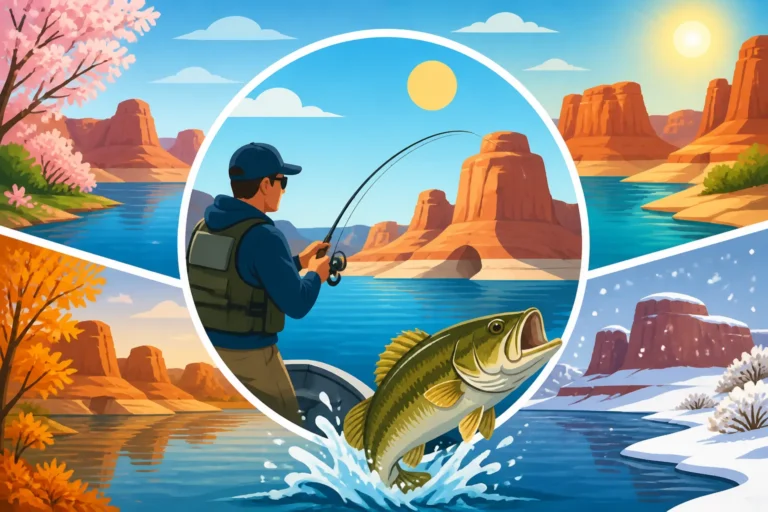
Understanding how fish behave throughout the year at Canyon Lake can significantly boost your shore fishing success. Arizona's distinct seasons, particularly the dramatic shift from mild winters to scorching summers, influence water temperatures, fish activity, and where different species will hold.
Spring and Fall: Peak Opportunities
Spring (March – May): This is arguably the prime time for shore fishing at Canyon Lake. As water temperatures begin to rise into the 50s and 60s Fahrenheit, fish become incredibly active. Largemouth and smallmouth bass move into shallower coves and rocky points to spawn, making them highly accessible to bank anglers. Crappie also follow suit, congregating around submerged brush and timber in shallower water. For bass, focus on reaction baits like crankbaits and spinnerbaits early in the season, transitioning to soft plastics and jigs as the spawn progresses. For crappie, small jigs tipped with a minnow or a Crappie Magnet under a bobber are deadly. Don't overlook catfish, as they'll also be feeding aggressively after their winter sluggishness. Early mornings and late afternoons are usually the most productive periods. Detailed tactics for this season can be found in our Spring Bass Fishing Tactics in Arizona.
Fall (September – November): As the intense summer heat begins to subside and water temperatures cool down into the 70s and 60s, fish enter a "feeding frenzy" to prepare for winter. This pre-winter bite is another fantastic opportunity for shore anglers. Bass will be chasing baitfish actively in shallower to mid-depth ranges. Topwater lures can be incredibly effective during low-light conditions, and spinnerbaits, crankbaits, and swimbaits will all get strikes. Crappie will start schooling up, often relating to baitfish schools. Look for them around deeper brush piles or submerged structure. Catfish will also be very active, particularly at night, as they stock up on calories. Fall often brings more comfortable temperatures for anglers, making it a truly enjoyable time to be on the water.
Summer and Winter: Adapting to the Extremes
Summer (June – August): Arizona summers are brutal, and Canyon Lake is no exception. Surface water temperatures can soar into the 80s and even low 90s, driving most fish into deeper, cooler water during the day. Shore fishing becomes much more challenging during daylight hours. Your best bet is to embrace night fishing for catfish and sometimes even bass. Catfish, in particular, become very active after sunset when temperatures drop. Focus on deep holes, channel swings, and areas with good current flow using cut bait or stink bait. If fishing during the day, target the earliest morning hours (before sunrise) or the very late evening just before dark, casting into the deepest accessible water from shore, or fishing shaded areas along the cliffs. Slow, deep presentations are key. Hydration and sun protection are paramount. You'll find that services like FishingBooker often list guides who specialize in night fishing trips during these hot months.
Winter (December – February): While not as harsh as summer, winter fishing at Canyon Lake requires a slower approach. Water temperatures will drop into the 50s and even 40s. Fish metabolism slows down, and they become less active. Bass and crappie will often suspend over deep water or hold tightly to deep structure. Shore anglers need to adapt by using much slower presentations. Jigs, drop-shot rigs, and slowly retrieved shaky heads are often effective for bass. For crappie, tiny jigs or minnows fished vertically or slowly retrieved near deep brush can produce bites. Catfish are generally less active but can still be caught on cut bait in deeper, warmer areas. Patience is your greatest ally during winter. Focus on sunny days when the water might warm up slightly, and consider fishing mid-day when the sun is highest. For an even more in-depth look at regulatory aspects, our Arizona Fishing Regulations Explained can provide clarity on specific winter rules or special regulation waters.
| Access Point | Primary Target Species | Accessibility Rating (1-5, 5 being easiest) | Key Features |
|---|---|---|---|
| Acacia Recreation Site | Largemouth Bass, Bluegill, Catfish | 5 | Paved parking, restrooms, gentle slope, popular for families. |
| Boulder Creek Recreation Site | Smallmouth Bass, Crappie, Largemouth Bass | 3 | Rocky terrain, good structure, requires careful footing, less crowded. |
| Palo Verde Recreation Site | Largemouth Bass, Smallmouth Bass, Crappie | 4 | Mixed terrain, varied fishing opportunities, good for exploring. |
| Apache Trail Pull-offs | Various (Bass, Catfish) | 1-2 (highly variable) | Remote, rugged, requires hiking, limited facilities, seek local knowledge. |
Disclaimer
The information provided in this guide is for general informational purposes only and is subject to change. Always consult the official Arizona Game and Fish Department regulations for the most current rules and requirements before engaging in any fishing activities. Fishing conditions, access, and fish populations can vary. Exercise caution and prioritize safety when enjoying the outdoors.