Hardest Fish to Catch in Arizona Lakes
Let's be honest, fishing in Arizona can be a test of patience, skill, and sometimes, pure stubbornness. While our desert lakes and mountain streams offer plenty of opportunities to reel in a nice catch, there are always those elusive fish that seem to defy every technique, every lure, and every ounce of your angling wisdom. If you've ever spent a frustrating day on the water wondering why certain species just won't bite, you're not alone. This guide will dive deep into the fish that give Arizona anglers the most trouble and share strategies to increase your chances of landing one of these notorious finned adversaries.
What Makes a Fish Hard to Catch in Arizona?
You might think all fish are created equal when it comes to being caught, but that's simply not true, especially in the unique environments Arizona offers. The challenges here are often magnified by our extreme conditions, the specific characteristics of the fish themselves, and even the sheer number of fellow anglers pursuing the same prize. It's a combination that can turn an ordinary fishing trip into a truly epic quest.
Habitat and Environmental Challenges
Arizona's diverse waters, from the deep, clear impoundments to the shallow, muddy rivers, each present their own set of difficulties. Fish in these environments adapt, becoming tougher to fool.
Our desert lakes, for instance, are often incredibly clear. This means fish have excellent visibility, making them much warier of your presence, your boat, and even your fishing line. If your presentation isn't flawless, they'll often spot you before you even know they're there. Then there's the depth. Many of our lakes, like Lake Pleasant or Roosevelt Lake, feature vast areas of deep water, intricate submerged canyons, and brush piles that offer endless hiding spots. Locating fish in these expansive, complex underwater structures requires specialized electronics and a deep understanding of their movement patterns. And let's not forget the temperature extremes. Fish behavior changes dramatically with water temperature, and understanding these shifts – from a scorching summer day that sends fish deep, to a crisp winter morning that makes them sluggish – is crucial. Trying to tempt a fish that's battling thermal stress is a whole different ballgame.
Behavioral Patterns
Beyond the environment, the inherent nature of certain fish species makes them notoriously tricky. Some fish are simply more intelligent or cautious than others, developing a keen sense of self-preservation that makes them wise to common angling tricks.
Many of the hardest-to-catch species exhibit specific, often fleeting, feeding windows. You might only have a short period at dawn or dusk when they are actively preying, or perhaps during a particular weather pattern. Missing that window means a long, uneventful day. Then there's their sensitivity to pressure. Fish that are frequently targeted by anglers, especially in popular spots, quickly learn to associate certain sounds, shadows, or lure presentations with danger. They become "educated," making them incredibly wary and difficult to trick. Think about a crowded community lake versus a remote backcountry stream; the fish in the former are often much pickier. You'll need to really hone your Beginner Fishing Techniques for Arizona Desert Lakes if you're just starting out.
Pressure from Other Anglers
It's not just the fish, but also the human element that adds to the challenge. Arizona is a popular state for outdoor enthusiasts, and fishing is no exception. This means many of our prime fishing locations see a lot of angler traffic.
When a lake or river section is heavily fished, the resident fish become more accustomed to boats, lines, and lures. This isn't necessarily a good thing for anglers, as it often means the fish become more selective, ignoring anything that doesn't look perfectly natural or move just right. This increased pressure also means prime spots get fished out quickly, or at least the most aggressive fish are removed, leaving only the wariest ones. It can feel like you're constantly competing, not just with the fish, but with everyone else out there. This often forces anglers to explore less accessible areas or employ more nuanced techniques to find success where others have failed.
Arizona's Most Elusive Fin-Fighters
While nearly any fish can be difficult to catch on a bad day, a few species in Arizona consistently rank high on the "hard mode" list for anglers. These are the fish that require a special blend of skill, patience, and often, specialized gear to put in the net.
Flathead Catfish
If you're looking for a true brute that demands respect, look no further than the flathead catfish. These monsters are not your average channel cat; they are apex predators that grow to immense sizes in Arizona's rivers and larger lakes, like the Colorado River or Alamo Lake. What makes them so hard to catch? Their sheer size is one factor – a trophy flathead can easily top 40 pounds, testing the limits of your tackle and your stamina. But it's more than just their power.
Flatheads are primarily nocturnal hunters, preferring to lie in wait in deep, dark holes, submerged timber, or undercuts during the day. This means successfully targeting them often requires night fishing, which comes with its own set of challenges, from navigation to visibility. They are also notoriously picky eaters, almost exclusively preferring live bait. You can't just throw out a piece of cut bait and expect a flathead to pounce; they want a lively bluegill, carp, or sunfish, presented perfectly in their lair. Finding these specific hideouts often means slow, deliberate searching with a boat and quality electronics. Landing one is a battle of wills, often in the dark, and requires a heavy-duty rod, a strong reel, and line that can withstand their powerful runs and abrasive mouths. For more about these river giants, check out Flathead Catfish Average Weight on the Colorado River.
Smallmouth Bass in Clear, Deep Lakes
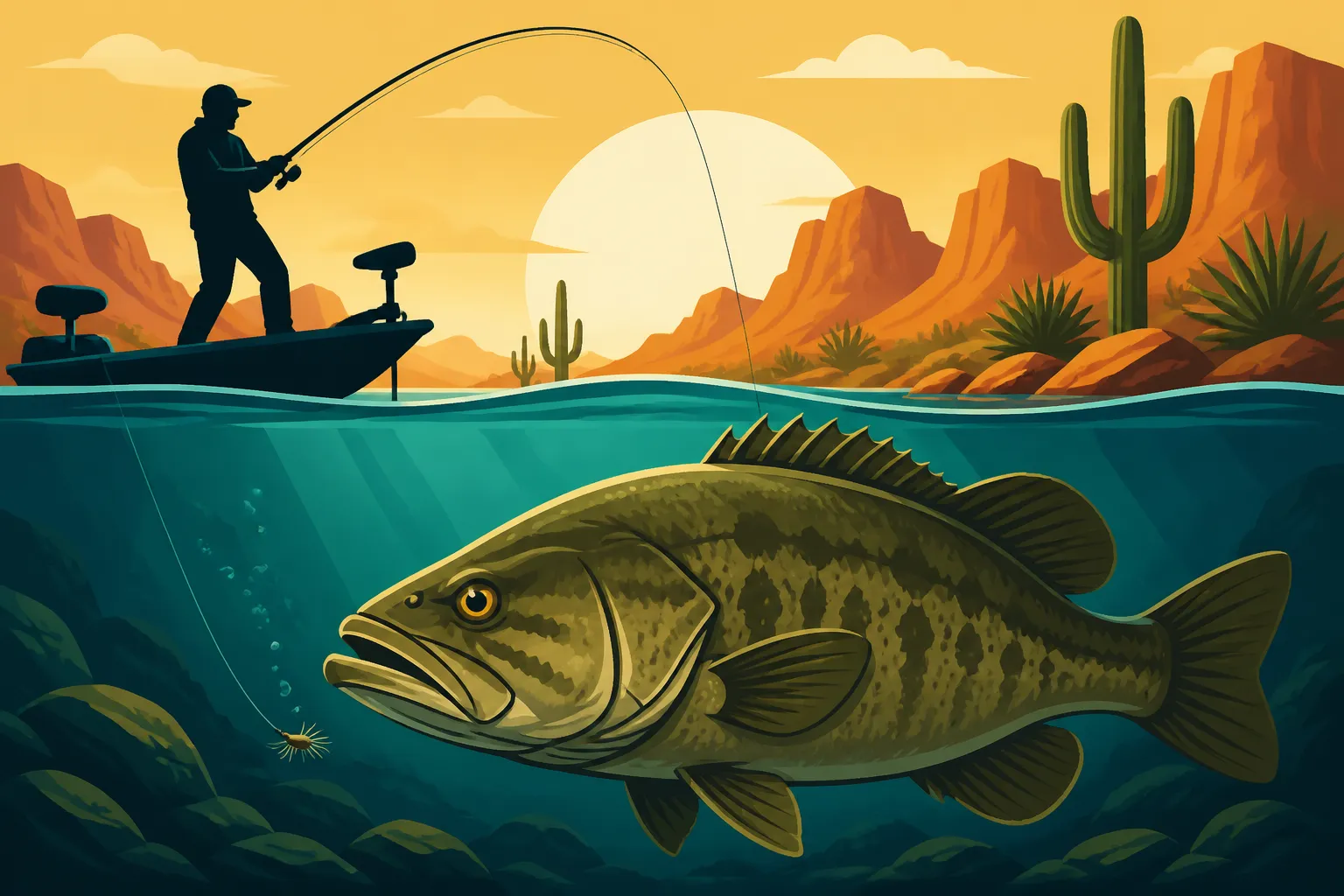
While largemouth bass are common throughout Arizona, their smaller, feistier cousins, the smallmouth bass, present a unique challenge, especially in clear, deep, rocky environments like Lake Powell or certain sections of the Colorado River. Smallmouth are incredibly visual predators, and their acute eyesight makes them extremely wary of anything that looks unnatural.
In the crystal-clear waters they inhabit, they can spot your line, your lure, and even you from a considerable distance. This often necessitates the use of very light lines, fluorocarbon leaders, and subtle, finesse presentations. Unlike largemouth that might ambush from heavy cover, smallmouth often patrol rocky points, ledges, and drop-offs, making them more exposed and easily spooked. They are also known for their aggressive, acrobatic fights once hooked, often jumping and trying to throw the lure, which can lead to heartbreaking losses if your knots aren't perfect or your drag isn't set just right. Mastering techniques like drop-shotting or working small jigs meticulously along deep structure is often key. You can find out more about what they like to eat here: What Smallmouth Bass Eat in Arizona Lakes.
Trophy Striped Bass in Large Reservoirs
Striped bass, particularly the truly massive ones found in vast reservoirs like Lake Powell, are another formidable challenge. While smaller stripers can be caught relatively easily during a "boil" (when they push baitfish to the surface), consistently targeting and landing trophy-sized fish is a whole different ballgame.
These larger fish are often nomadic, covering vast distances in search of schools of baitfish like threadfin shad. Locating them can be like finding a needle in a haystack across hundreds of square miles of water. They require powerful gear to fight their long, sustained runs, and they can be incredibly finicky about presentation, especially when not actively feeding. When a striper boil occurs, it can be chaotic and exciting, but landing the biggest fish often involves specialized techniques like deep trolling with large swimbaits or using live bait presented at specific depths. Their massive size and sheer power mean a long, grueling fight, and if you're not prepared, they'll snap your line or straighten your hooks in a heartbeat. For insights into their impressive growth, see Why Striped Bass Grow So Large at Lake Powell.
Apache Trout and Gila Trout
Our native trout species, the Apache Trout and Gila Trout, are arguably some of the most difficult fish to catch in Arizona, not necessarily due to their fighting prowess, but because of their rarity, protected status, and the remote, challenging environments they inhabit. Both species are subject to strict conservation efforts and often reside in designated "special regulation" waters, which might include fly-fishing-only rules, artificial-lures-only mandates, or catch-and-release requirements.
To even get to these fish, you often need to undertake significant hikes into high-elevation streams in the White Mountains or other remote areas. The fish themselves are often small but incredibly beautiful, and their wild nature makes them very sensitive to disturbance. They require a delicate presentation with light tackle, tiny flies, or micro-lures. The true challenge lies in the effort required to reach them, understanding and adhering to their specific regulations, and the satisfaction of connecting with a truly wild, native Arizona fish. They embody the spirit of conservation angling. Further reading on their habitats can be found in Apache Trout Range in Arizona and Gila Trout Range in Arizona.
Strategies for Tackling Arizona's Toughest Catches
So, you're up for the challenge? Great! Catching these elusive fish isn't about luck; it's about preparation, knowledge, and adapting your approach. You can't just throw out a worm and a bobber and expect to land a trophy flathead or a wary smallmouth. It takes a strategic mindset and a willingness to learn.
Understanding Fish Behavior and Habitat
The first step to catching a difficult fish is to truly understand it. This means becoming a student of the species you're targeting. Where do they live? What do they eat? When are they most active? What kind of structure do they prefer?
For deep-dwelling fish like flatheads or stripers, investing in a quality fish finder is non-negotiable. Learning How to Read a Fish Finder for Structure will help you pinpoint those subtle changes in bottom contour, submerged timber, or baitfish schools that indicate a prime ambush point. You also need to pay close attention to seasonal patterns. Fish move and feed differently in spring, summer, fall, and winter. For example, smallmouth bass will be shallower during their spawn, then retreat to deeper ledges as temperatures rise. Studying Seasonal Movement Patterns of Bass at Roosevelt Lake or understanding Deep Water Structure Fishing Techniques can give you a significant edge. Observation is key: watch for signs of baitfish activity, diving birds, or even subtle surface disturbances that might hint at feeding fish below. Don't be afraid to try different depths and areas until you find where they are holding.
Specialized Gear and Techniques
You wouldn't use a fly rod to land a marlin, and similarly, you won't land Arizona's hardest-to-catch fish with inadequate gear. Each species often demands a specific tackle setup and specialized techniques.
- For Flathead Catfish: Think heavy-duty. A robust baitcasting rod (7-9 feet, heavy power), a reel capable of holding hundreds of yards of strong braided line (50-80 lb test), and large, sharp circle hooks are essential. Your technique will often involve presenting live bait on the bottom, near deep holes or heavy cover. Patience is your best friend when catfishing. You can often find heavy-duty catfish rigs and specialized lines on platforms like Amazon.
- For Smallmouth Bass: Finesse is often the name of the game. Light spinning rods (6'6" to 7' medium-light power), small spinning reels, and fluorocarbon line (4-8 lb test) or leaders are ideal for invisibility. Techniques like drop-shotting, Ned rigs, shaky heads, or small jigs worked slowly along rocky contours are highly effective. Stealth is crucial, so minimize noise and movement in the boat. If you need new gear, browsing Amazon's fishing section can yield some great finds for specific finesse setups.
- For Trophy Striped Bass: You'll need gear that can handle power and speed. Medium-heavy casting rods, large capacity baitcasting or spinning reels, and 20-40 lb test braided line with a fluorocarbon leader are common. Trolling with large swimbaits or crankbaits, jigging heavy spoons in deep water, or using live bait where legal, are popular approaches. Keep an eye out for surface activity – known as "boils" – where stripers are actively chasing bait. For deep water trolling, a good selection of diving crankbaits can be found on Amazon.
- For Apache and Gila Trout: Ultra-light gear is usually required. A 0-3 weight fly rod for fly fishing, or a very light spinning rod (4-5 feet, ultra-light power) with 2-4 lb test line, is appropriate. Small dry flies, nymphs, tiny spinners, or micro-spoons are the lures of choice. Delicate presentation and quiet movement along the stream banks are paramount. These species often require catch and release, so barbless hooks are usually mandatory. Make sure to review Catch and Release Rules for Arizona Anglers before heading out.
| Fish Species | Preferred Habitat | Key Challenge | Recommended Gear Strategy |
|---|---|---|---|
| Flathead Catfish | Deep holes, submerged timber, murky rivers | Nocturnal, live bait preference, immense power | Heavy-duty baitcasting rod/reel, 50-80lb braid, large circle hooks, live bait |
| Smallmouth Bass | Rocky points, ledges, clear deep water | Visual acuity, easily spooked, finesse required | Light spinning rod/reel, 4-8lb fluorocarbon, small jigs, drop-shots, subtle lures |
| Trophy Striped Bass | Open water, deep channels, baitfish schools | Nomadic, powerful runs, locating schools | Medium-heavy casting/spinning, 20-40lb braid, large swimbaits, deep crankbaits, electronics |
| Apache/Gila Trout | High-elevation streams, remote areas | Rarity, protected status, delicate presentation | Ultra-light spinning or fly rod, 2-4lb line/tippet, tiny flies/lures, barbless hooks |
Patience and Persistence
Ultimately, catching the hardest fish in Arizona comes down to a healthy dose of patience and unwavering persistence. These fish aren't caught by accident very often. You will have days where you don't even get a bite, and that's okay. Every experienced angler knows the sting of a skunked day. The key is to learn from each outing, adjust your approach, and not give up.
It might mean spending hours meticulously covering a single piece of structure for smallmouth, or waiting through a long, dark night for a flathead to pick up your bait. It means being willing to hike miles to a remote trout stream or spending a day searching vast open water for signs of a striper boil. The mental game of fishing is just as important as the physical skills and the gear. Trust your instincts, but also be willing to experiment. Sometimes, a slight change in retrieve speed, a different lure color, or even moving to a completely new spot can make all the difference. Remember, the journey and the effort are often as rewarding as the catch itself.
When the Challenge Becomes a Reward
There's a unique satisfaction that comes from outsmarting a truly challenging fish. It's more than just a notch on your belt; it's a testament to your growing skill, your dedication, and your respect for the pursuit.
The Thrill of the Chase
The harder the fight, the sweeter the victory. When you finally feel that powerful tug on your line, knowing it's one of those elusive fish you've been pursuing, the adrenaline rush is incredible. The battle that ensues, the careful maneuvering, the precise drag adjustments – it all culminates in that moment when you finally bring it to the boat or bank. It’s not just about the size of the fish, but the story behind it, the lessons learned, and the sheer joy of achieving a difficult goal. That feeling is why so many of us keep coming back, trip after trip, even after countless empty days.
Conservation and Respect
When you do manage to land one of Arizona's hardest-to-catch fish, especially our native species like Apache or Gila Trout, the moment is often tinged with a deep sense of responsibility. These fish are challenging partly because they are precious resources. This means prioritizing their well-being. Practicing proper catch-and-release techniques is vital, ensuring the fish has the best chance of survival to be caught another day, or to reproduce and sustain the population. Minimize handling time, use wet hands, and release them gently.
For any fish you intend to keep, be sure to understand and adhere to all Arizona Fishing Regulations Explained, including specific bag and possession limits for each species and location. Being an ethical angler means not only respecting the fish but also the environment and your fellow anglers. The reward isn't just in the catch, but in contributing to the health and future of Arizona's incredible fisheries.
Disclaimer
This article is for general informational purposes only and does not constitute professional advice. Laws, prices and regulations vary by location and change over time. Consult a qualified professional for guidance on your specific situation.