Deep Water Structure Fishing Techniques
It’s a common scenario for Arizona anglers: you’re out on a beautiful desert lake, the sun is shining, and you know the fish are somewhere, but they just aren't biting in the shallows. The truth is, during much of the year, especially when our Arizona sun is beaming or the water is particularly cold, bass and other sport fish retreat to the cooler, more stable conditions of deep water structure. This guide is all about equipping you with the knowledge and techniques to effectively locate and catch those elusive deep-dwelling fish, transforming your frustration into triumph.
Understanding Deep Water Structure in Arizona Lakes
Arizona's lakes are unique, often acting more like large, deep canyons filled with water rather than typical Midwestern reservoirs. Because of this, understanding the hidden underwater landscape is paramount to successful deep water structure fishing. It's not just about "deep water" but about the specific features within that deep water that attract and hold fish.
What Constitutes Deep Water Structure?
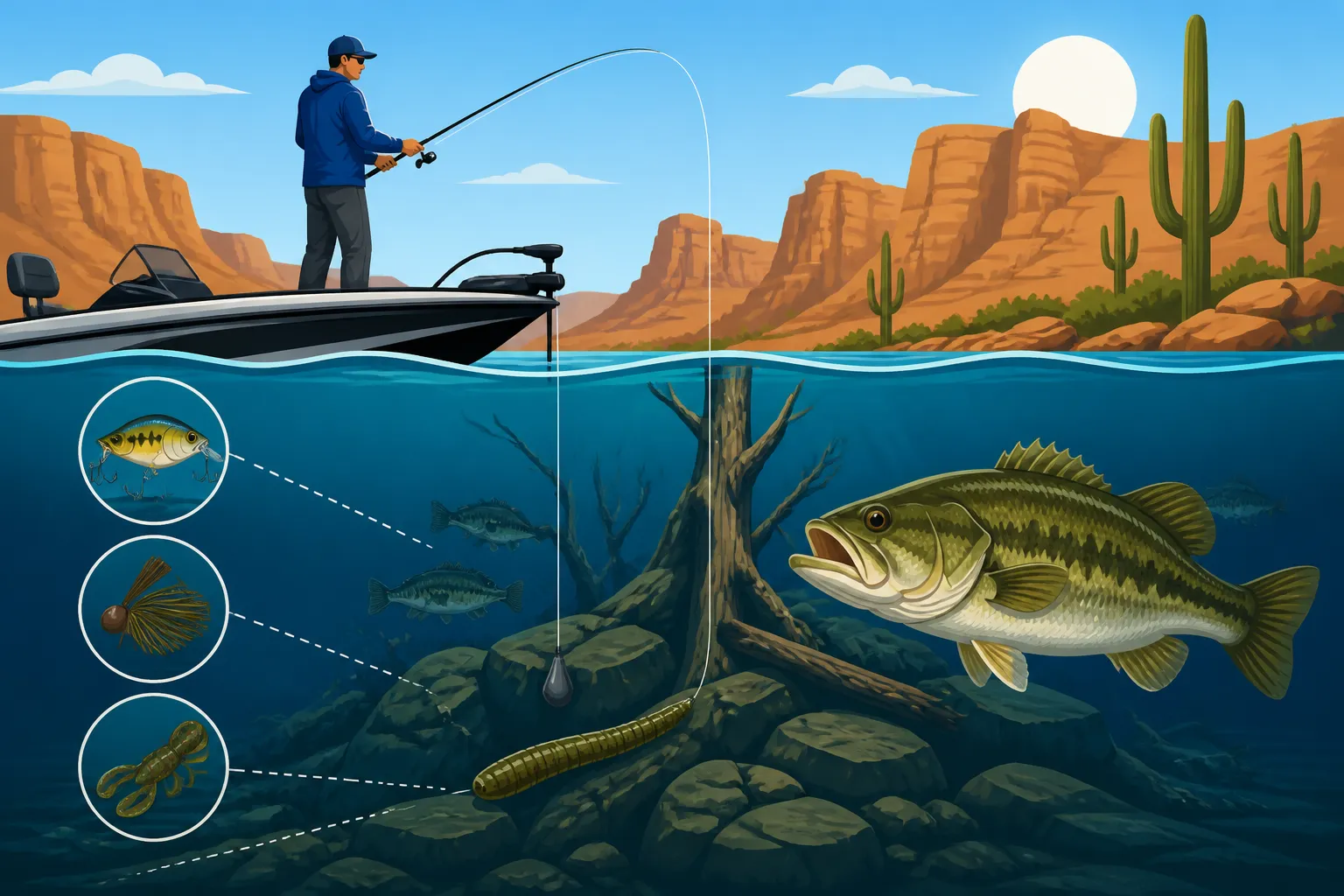
When we talk about deep water structure, we’re referring to any change in the bottom contour or any submerged object that provides shelter, ambush points, or concentrates baitfish. In Arizona, this can look incredibly diverse. Naturally, you'll find submerged creek beds, often the original paths of rivers before the lakes were formed, which provide clear travel lanes and holding areas. Humps—underwater hills that rise from the bottom—are prime locations, especially if they’re capped with rock or brush. Ledges and sharp drop-offs, like those found at Lake Havasu or Canyon Lake, offer vertical relief where fish can move up and down easily to adjust to conditions or ambush prey.
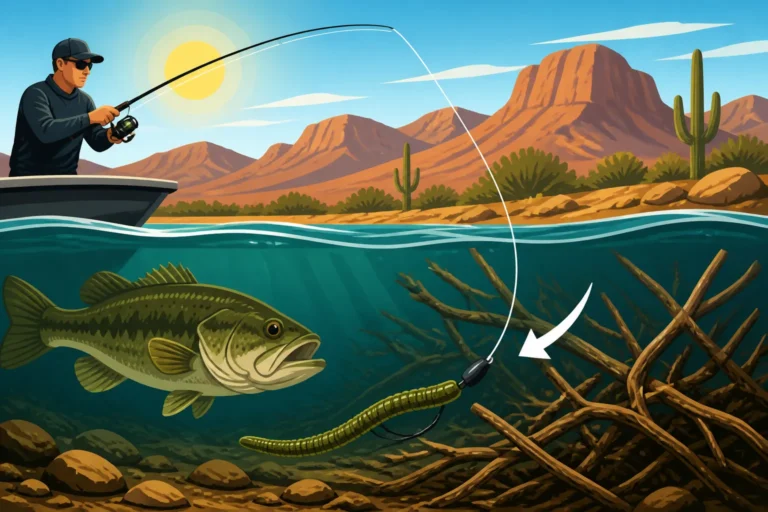
Then there are the man-made structures, which are particularly abundant in many of our impoundments. Think about old roadbeds that traversed the desert before the lake filled, or the foundations of homesteads and towns that were submerged. Bridge pilings, especially on lakes like Roosevelt Lake, act like vertical reefs, attracting baitfish and predators alike. And let's not forget the intentional or unintentional timber that provides vital cover; dense brush piles, standing timber from flooded forests, or even individual large stumps can be magnets for fish, especially crappie and bass. These features are essentially the underwater equivalent of cover and food sources you'd find on land, creating essential habitat in what might otherwise be a featureless deep expanse.
Why Fish Move to Deep Water
The decision for fish to move deep isn't arbitrary; it's a matter of survival and comfort, heavily influenced by Arizona’s often extreme climate. One of the primary drivers is water temperature. During the scorching Arizona summers, surface temperatures can become unbearable, driving fish down to the thermocline (the layer where water temperature changes rapidly), where they find cooler, more oxygenated water. Conversely, in the winter, when shallows can get quite cold, deeper waters offer a more stable, slightly warmer environment. This thermal refuge is critical for fish metabolism and overall well-being.
Light penetration is another huge factor. Our desert sun is intense, and shallow waters can become very bright and exposed, making fish feel vulnerable to predators, including anglers. Moving deeper offers them protection from direct sunlight, allowing them to feel more secure. Foraging opportunities also play a significant role. Baitfish, like threadfin shad, will often congregate around deep structure, seeking plankton or their own forms of shelter. Where the baitfish go, the predatory game fish follow. Finally, fishing pressure from boats and anglers can push wary fish deeper. They learn to associate shallow water activity with danger, making the peace and quiet of deeper structure a safe haven. Understanding these motivations helps you predict where the fish will be, even before you cast a line.
Essential Gear for Deep Water Structure Fishing
Successfully tackling deep water structure in Arizona demands a specific approach to your tackle. It's not just about having any rod and reel; it's about having the right tools that offer the sensitivity to detect subtle bites and the power to extract fish from their deep, snag-laden homes.
Rods, Reels, and Line Choices
When it comes to rods, you'll generally want something longer and more powerful than what you might use for shallow finesse techniques. A medium-heavy to heavy action rod, typically in the 7-foot to 7-foot 6-inch range, is often ideal. This length provides better casting distance, crucial for covering expansive deep zones, and also improves your leverage when fighting a fish that might be pulling against significant water pressure. The added power helps you set the hook effectively over long distances and muscle larger fish away from potential snags. Many anglers consider a high-quality graphite rod to be essential for the sensitivity it provides, allowing you to feel the faintest peck or the subtle change in bottom composition.
For reels, high-capacity baitcasting reels are often the workhorse for deep water presentations. They handle heavier lines better and allow for longer casts and deeper drops without running out of spool. A reel with a good, smooth drag system is non-negotiable, as those deep-water battles can be intense. For lighter, more finesse-oriented deep techniques, a sturdy spinning reel can be very effective, especially when paired with lighter lines. Speaking of lines, your choice can make or break your success. Fluorocarbon line is a favorite for deep water due to its low stretch, which translates to excellent sensitivity and better hook sets, and its near-invisibility underwater. Many anglers opt for 12-20 pound test fluorocarbon for their main line, or use it as a leader when paired with braided line. Braided line, with its zero stretch and incredible strength-to-diameter ratio, is fantastic as a main line. It offers unparalleled sensitivity, letting you feel every bump and tick, and its strength is invaluable when retrieving baits from brush piles or rocks. You can find excellent deals on sensitive fluorocarbon line on Amazon, which is crucial for feeling those subtle deep bites, especially when the fish are less active.
Electronics and Navigation Tools
In the world of deep water structure fishing, your eyes below the surface are your electronics. Trying to fish deep structure effectively without a good fish finder is like trying to navigate a maze blindfolded. Modern fish finders are incredibly sophisticated, offering multiple viewing options that unveil the underwater world in stunning detail. Traditional 2D sonar is excellent for showing you the water column directly beneath your boat, helping you identify baitfish, fish arches, and significant changes in depth. However, for truly picking apart deep structure, side imaging and down imaging are game-changers.
Side imaging allows you to literally "see" out to the sides of your boat, revealing submerged trees, rock piles, ledges, and even individual fish that are off to your port or starboard. This is invaluable for locating subtle transitions or isolated pieces of cover that a 2D sonar might miss. Down imaging provides a photographic-like view directly beneath your boat, offering incredible detail in distinguishing different types of structure and fish. Many anglers find a wide selection of specialized deep water tackle, including advanced fish finders, on Amazon. Beyond simply seeing, GPS is your best friend. It allows you to mark specific waypoints on those brush piles, rock humps, or submerged roadbeds you discover. This precision is vital for returning to productive spots and making accurate casts. High-definition mapping chips, often available for various Arizona lakes, further enhance your navigation by providing detailed bathymetric maps that show contours, creek channels, and even specific types of bottom composition, giving you a significant advantage before you even launch your boat. You can study these maps at home, pre-plan your attack, and load key waypoints into your GPS for efficient on-the-water execution.
Top Deep Water Structure Fishing Techniques
Once you've geared up and understood the "why" behind deep water fishing, it's time to dive into the "how." These techniques are proven performers for coaxing bites from fish hunkered down on deep structure.
Drop Shot Rigging
The drop shot rig is a finesse technique that has become a staple for deep water anglers, especially when fish are pressured or lethargic. Its genius lies in its ability to present a soft plastic bait tantalizingly in the strike zone, suspended above the bottom, while the weight maintains contact with the structure below. To set it up, you tie a hook directly to your main line using a Palomar knot, leaving a long tag end. The tag end is then tied to a specialized drop shot weight (usually cylindrical or tear-shaped to minimize snags), allowing the bait to float freely at a predetermined distance above the bottom. The hook itself is usually a small, thin-wire hook, often a size 1 or 2, wacky-rigged or nose-hooked through a small soft plastic bait.
This technique shines in clear water lakes like Lake Powell or certain parts of the Colorado River, where fish rely heavily on sight and can be finicky. The presentation is incredibly subtle. You cast out, let the weight hit bottom, and then gently shake your rod tip, imparting action to the suspended bait while the weight stays put. This mimics a baitfish or insect struggling in place. When you feel a bite, you simply lift the rod tip and reel down, rather than a hard "sweep" set, to drive the small hook home. This subtle approach is incredibly effective when fish are holding tight to a specific piece of structure, like a rock ledge or the top of a deep hump, and won't chase a moving bait. It’s also a fantastic way to fish vertically directly over structure you’ve identified with your fish finder.
Carolina Rigging
If the drop shot is for pinpoint finesse, the Carolina rig is for covering ground and presenting a bait with a bit more "swagger" across varied deep structure. It's often called a "ball and chain" because of its distinct heavy weight and long leader. The setup typically starts with a heavy bullet or egg sinker (½ oz to 1 oz or more) threaded onto your main line, followed by a bead (to protect your knot) and then a barrel swivel. To the other end of the swivel, you tie a fluorocarbon leader, usually 2 to 4 feet long, which then leads to your hook and soft plastic bait. The long leader allows the bait to waft enticingly behind the heavier weight as you drag it along the bottom.
This rig excels at prospecting large areas of deep water, especially over rocky points, submerged creek channels, or long tapering flats on lakes like Lake Pleasant or Alamo Lake. The heavy weight helps you maintain bottom contact and feel every rock, stump, or shell bed. The beauty of the Carolina rig is its ability to imitate a crawfish scuttling along the bottom or a baitfish struggling just above it. You typically make a long cast, let it sink, and then slowly drag the weight with long sweeps of your rod, pausing occasionally. Most bites will feel like a dull thump or just added weight. You simply reel down and sweep set hard into the fish. This method is excellent for targeting bass that might be scattered or cruising over a wider area of deep structure, providing a slightly more aggressive, yet still subtle, presentation than a deep crankbait.
Jig Fishing and Deep Crankbaits
When it's time to get aggressive or cover water quickly in the depths, jigs and deep crankbaits step up to the plate. Jig fishing in deep water typically involves heavy football jigs or stand-up jigs, often paired with bulky plastic craw or creature baits. The heavy head design allows these jigs to maintain contact with the bottom, making them ideal for crawling over rocky terrain, shell beds, or the tops of deep humps. You can fish them by pitching them to specific targets, hopping them along the bottom, or slowly dragging them, mimicking a crawfish or other bottom-dwelling prey. These are incredibly versatile, offering both a reaction strike when hopped aggressively and a more subtle presentation when slowly dragged. When fishing brush piles or standing timber, a weedless jig with a sturdy brush guard is non-negotiable to prevent snags.
Deep crankbaits are the power fishing tool for deep structure. These lures are designed with long bills that allow them to dive quickly and reach impressive depths, often 15 to 25 feet or more, depending on the model. Key is to "deflect" them off structure – that moment when the bill grinds against a rock or a log, causing the bait to suddenly change direction, is often when a predatory strike occurs. Varying your retrieve speed, throwing in pauses, and understanding how different crankbaits dive at different rates are crucial. Lipless crankbaits can also be effective in deep water, especially when "yo-yoed" over schooling fish or dropped into vertical cover. While jigs offer a more precise, target-oriented approach, deep crankbaits allow you to cover vast stretches of deep structure rapidly, triggering reaction strikes from active fish and helping you locate concentrations of bass quickly on Arizona's expansive reservoirs.
Reading the Water and Identifying Productive Spots
Fishing deep water structure isn't just about the techniques; it's about accurately interpreting what's beneath the surface. Being able to read your electronics and understand seasonal fish movements are critical skills for consistently finding fish.
Interpreting Sonar Readings
Your fish finder is your window into the underwater world, but it’s only as good as your ability to interpret its readings. Learning to distinguish between fish, bait balls, and various types of structure is a skill that comes with practice. On a traditional 2D sonar, fish often appear as arches, while baitfish will show up as dense clouds. Understanding the size and shape of these arches can give you clues about the species and size of the fish. When you see baitfish near structure, that’s a huge indicator that predatory game fish like bass or crappie are likely nearby.
Modern units with side and down imaging offer even more detail. Down imaging provides a photo-like view directly below, allowing you to clearly see individual logs, rock piles, or even fish nestled within cover. Side imaging is revolutionary for covering broad areas; you can spot submerged creek channels, humps, and isolated brush piles hundreds of feet to either side of your boat. For example, on a large lake like Roosevelt, you might find an old submerged roadbed or a cluster of standing timber off to your side that would be completely missed by 2D sonar alone. Pay close attention to the bottom composition: hard, rocky bottom often appears as a thicker, brighter return on sonar, while soft, muddy bottom will be thinner and duller. Fish often prefer harder bottom areas for spawning or foraging. Mastering these interpretations allows you to not just find structure, but to understand what kind of structure it is and whether it's holding fish.
Seasonal Considerations for Deep Water Fishing
Fish don't stay in one place year-round, and their depth preferences change dramatically with the seasons in Arizona. Understanding these patterns is key to predicting where they’ll be on deep structure.
Summer: This is arguably the most crucial time for deep water fishing in Arizona. As the brutal heat drives surface temperatures into the 80s and 90s, fish seek thermal refuge in the cooler, deeper water. During summer bass fishing tactics in Arizona, you'll often find them congregated around the thermocline, typically 15-30 feet deep depending on the lake. Prime spots include main lake points that extend into deep water, deep ledges, offshore humps, and the cool shade provided by deep standing timber. Fish will often suspend just above the thermocline or relate tightly to structure found at those depths. The fishing can be phenomenal, but it demands precise presentations.
Winter: While not as extreme as summer, Arizona winters can still see cold surface temperatures. Fish again seek stability, and deep water offers just that. They'll often move to even deeper humps, channel swings, and steep bluffs that absorb and radiate heat. Their metabolism slows, so winter bass fishing tactics in Arizona require slower, more methodical presentations like a jig or a slow-dragged Carolina rig. Look for them to be tightly grouped, often in the deepest parts of the lake where they can find stable temperatures and concentrate on baitfish.
Transition Seasons (Spring and Fall): Spring sees fish begin to move shallower for spawning, but deep structure still plays a vital role as their "highway." Main lake points, especially those with access to deep water, become staging areas where fish gather before moving to the banks. During the fall, as water temperatures begin to cool, fish follow baitfish that are pushed towards the surface, but they'll often retreat to deep structure during periods of inactivity or after cold fronts. They use these deep features as temporary havens, moving between shallow feeding grounds and deeper holding areas. Learning to connect these seasonal movements with the specific deep water structures on your favorite lake is a continuous, rewarding process.
Advanced Tactics and Common Mistakes
Moving beyond the basics of deep water structure fishing involves understanding the nuances of presentation and avoiding common pitfalls that can cost you bites.
Finesse vs. Power Fishing Deep
Deep water fishing isn't a one-size-fits-all endeavor; conditions and fish mood dictate whether a finesse or power approach will be most effective.
Finesse fishing in deep water is all about subtlety and precision. Techniques like the drop shot, Ned rig, or small jigs paired with lightweight plastics are the stars here. This approach is ideal for clear water lakes, when fish are highly pressured, or when they are lethargic due to cold fronts or post-spawn blues. The key is slow, deliberate retrieves and small, natural presentations that don't spook wary fish. For example, if you’re fishing a deep brush pile at Lake Pleasant and your electronics show fish tucked right into the cover but unwilling to chase, dropping a small, nose-hooked worm on a drop shot rig for smallmouth bass might be the only way to get a bite. The bait hovers in front of their faces, tempting even the most finicky fish. It requires patience and a keen eye on your electronics to put the bait precisely where the fish are holding, often resulting in more bites, albeit from potentially less aggressive fish.
Power fishing deep, on the other hand, is about covering water, generating reaction strikes, and enticing aggressive fish. This means employing deep crankbaits, heavy football jigs, large swimbaits, or even substantial spoons. This approach shines when fish are active, when you're trying to locate concentrations of fish over vast areas, or when the water has some stain that reduces visibility. For instance, if you're working a deep channel swing on Roosevelt Lake and your graph shows a school of fish suspending, burning a deep-diving crankbait through the school can trigger multiple strikes in short order. The goal isn't to be subtle, but to be noticed. Larger profiles, faster retrieves, and baits designed to deflect off structure create an erratic action that often triggers an impulse strike. The choice between finesse and power often comes down to experimentation, observing how fish react to different presentations, and adapting your strategy on the fly.
Avoiding Common Deep Water Pitfalls
Deep water fishing, while rewarding, presents its own set of challenges, and it's easy to fall into common traps that hinder your success.
One of the most frequent mistakes is fishing too fast or too slow. While power fishing can be fast, even then, the pauses can be critical. Conversely, when finesse fishing, trying to rush a presentation will often result in missing bites. You need to constantly experiment with retrieve speeds until you find what the fish prefer on that particular day. Another critical error is not using enough weight. In deep water, especially with wind or current, insufficient weight prevents your bait from reaching the bottom efficiently or maintaining consistent contact with the structure. If you can't feel the bottom, you can't feel the fish or the structure they're relating to. Don't be afraid to size up your weights, especially for Carolina rigs or jigs. You can find a variety of weights suitable for different depths and techniques on Amazon.
Ignoring wind and current is another major pitfall. Wind makes boat control difficult, causing you to drift quickly off your target. Current, especially in riverine lakes or those with active dam releases, will pull your line and bait away from the strike zone. Learning to use your trolling motor effectively to combat these forces and maintain your boat's position over structure is crucial. Many experienced anglers also neglect to mark waypoints once they find a productive area or catch a fish. Modern electronics make this incredibly easy. If you catch a fish off a specific rock pile or submerged tree, mark it immediately. This allows you to return to that exact spot, often to catch more fish. Finally, and perhaps most importantly, is a lack of patience. Deep water fishing often requires meticulous dissection of an area, making many casts, and waiting for subtle bites. It's not always about run-and-gun. Those who stick with it, adjust their approach, and meticulously work productive deep areas are often the ones who find consistent success. The Best Fishing Rods for Bass in Arizona article has some great suggestions for rods that offer the sensitivity needed for these deep water techniques.
Comparing Deep Water Techniques
| Technique | Ideal Depth Range | Primary Bait Type(s) | Action/Presentation | Pros | Cons |
|---|---|---|---|---|---|
| Drop Shot Rig | 10-50+ feet | Small soft plastics, worms | Suspended, subtle shaking, vertical | Excellent for finicky fish, precise, snag-resistant | Slower pace, smaller baits, not for covering vast areas |
| Carolina Rig | 10-40 feet | Craws, lizards, soft plastics | Dragged, swept, bottom-contact | Covers ground, good feel for bottom, versatile | Can be slow, prone to snags in heavy cover |
| Deep Jig | 15-60+ feet | Jig & soft plastic trailer | Hopping, dragging, pitching, contact | Mimics craws, good for heavy cover, strong hooksets | Slower than crankbaits, can get snagged |
| Deep Crankbait | 10-30+ feet | Hard plastic crankbaits | Fast retrieve, deflection, reaction | Covers water quickly, triggers reaction bites | Can get snagged easily, not for finicky fish |
Deep Water Structure: A Year-Round Strategy
Mastering deep water structure fishing in Arizona is a skill that will profoundly impact your success on the water. It’s not just a summer strategy; fish relate to these hidden underwater highways and havens throughout the year, adapting their depth and behavior based on factors like temperature, light, and forage. From the clear waters of Lake Powell to the brush-laden depths of Roosevelt Lake, understanding how to read your electronics, choose the right gear like those sensitive rods and reels available on Amazon, and execute precise techniques will unlock a whole new dimension of fishing.
Remember that patience and a willingness to adapt are your greatest assets. What works one day might not work the next, but the underlying principles of deep water fishing remain constant. Keep an eye on Arizona Fishing Seasons Explained to help predict fish movements, and continuously refine your approach. With practice, you'll be confidently targeting those deep-water giants that many anglers overlook, turning what seems like an empty expanse into a productive fishing ground.
Disclaimer
Fishing involves inherent risks, including but not limited to drowning, injury from hooks or equipment, and exposure to the elements. Always prioritize safety, wear appropriate personal flotation devices, and be aware of your surroundings. Fishing regulations in Arizona are subject to change; always consult the latest Arizona Game and Fish Department regulations before fishing. This guide is for informational purposes only and does not constitute professional advice.