Ice-Free Winter Fishing Techniques
When most people think of winter fishing, their minds immediately conjure images of ice shanties, frozen lakes, and bundling up in layers so thick you can barely cast. It’s a common misconception, especially if you're picturing the colder states. But here in Arizona, winter often means some of the most comfortable and productive fishing you can find, with plenty of open water and active fish. This guide is all about embracing those unique, ice-free winter opportunities, helping you adapt your techniques to land fish when others have hung up their rods.
Embracing Arizona's Unique Winter Fishing Conditions
For many anglers, the idea of "winter fishing" brings a shiver, but in Arizona, it's a completely different ballgame. Our winters, particularly across the central and southern parts of the state, are mild, offering a fantastic escape from the snow and ice that blankets much of the country. This means you don't have to contend with drilling through thick ice or risking hypothermia. Instead, you're looking at cool, crisp mornings, comfortable afternoons, and lakes that are wide open and often less crowded. It's truly a hidden gem of a season for fishing, but it does require a shift in your approach compared to the scorching summer months.
The Myth of Hibernating Fish in Mild Winters
It’s easy to assume that fish just stop biting when the weather gets cold. While it’s true that fish metabolism slows down significantly in colder water, they don't exactly hibernate in our Arizona lakes. They still need to eat, albeit less frequently and often in different locations. The key is understanding where they go and what they're willing to bite on. You won't find them shallow and aggressive like during the spawn, but they're absolutely still catchable. In fact, many species can be quite active, especially on warmer winter days or during specific parts of the day.
This seasonal shift means you might need to adjust your expectations about rapid-fire bites. Instead, focus on patience and precision. A fish that might have chased a fast-moving lure in July will likely need a slower, more deliberate presentation in January. This is where the subtle nuances of technique really shine. Think of it as a slower, more thoughtful dance with the fish, rather than a high-energy chase.
Key Differences from Summer Fishing in Arizona
The contrast between summer and winter fishing in Arizona is stark, mainly due to water temperature. In the summer, our desert lakes can heat up dramatically, pushing fish deep into thermoclines or to shaded areas during the hottest parts of the day. Fish are often highly active during dawn and dusk. In winter, those dynamics flip. The surface water cools, but deeper water often remains more stable, and fish might move shallower during the warmest part of the day to absorb some sun or target baitfish doing the same.
Another major difference is angler traffic. Summer and spring see heavy recreational use on many popular lakes like Lake Pleasant or Roosevelt Lake, with jet skis, wakeboarders, and pleasure cruisers dominating the scene. Winter, however, brings a peaceful tranquility. You’ll find fewer boats on the water, less competition at popular fishing spots, and a much more serene experience. This can make a huge difference in your ability to access prime areas and avoid spooking fish. This calmer environment is a significant advantage, often leading to better catches for those willing to brave the cooler air.
Prime Fish Species for Winter Angling in Arizona
Even with cooler water temperatures, several species thrive and remain active enough to be excellent targets for Arizona anglers during the winter months. Knowing which fish to target can significantly increase your chances of success and help you tailor your techniques. It’s not about just hoping for a bite; it’s about strategically pursuing species that are known to be catchable when the air gets crisp.
Largemouth and Smallmouth Bass
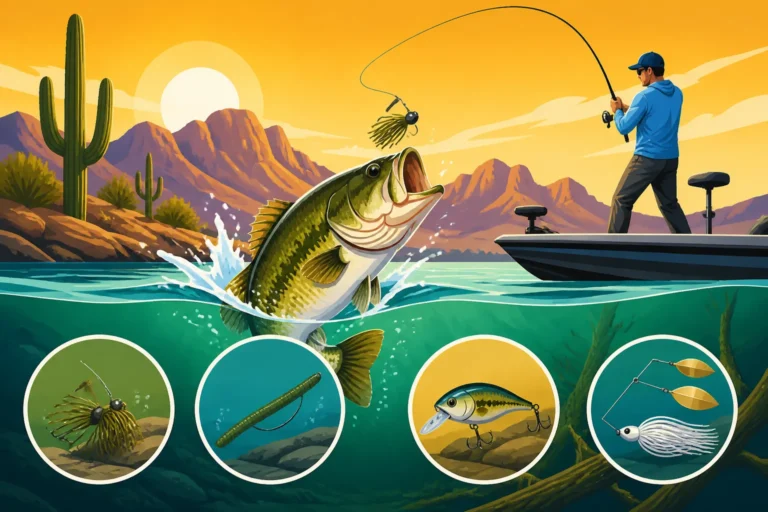
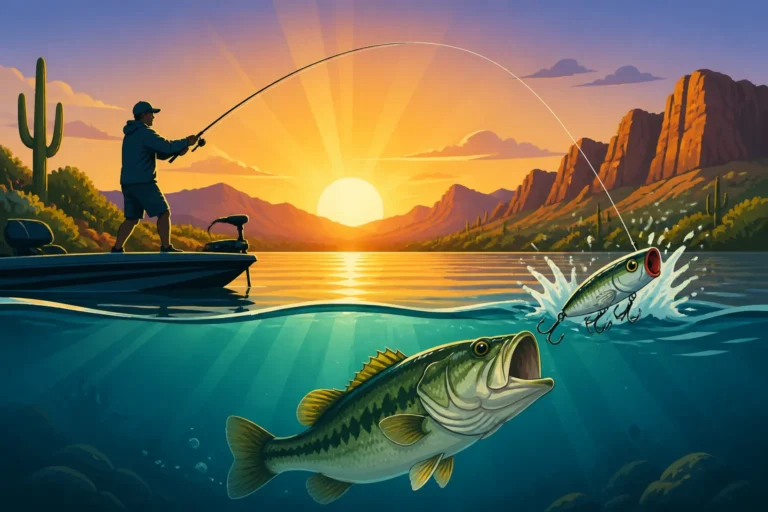
Bass fishing doesn't shut down in Arizona during winter; it simply changes character. Largemouth bass, while less aggressive, are still catchable, often congregating in deeper channels, around submerged structure, or on south-facing banks that get more sun exposure. They're looking for stable temperatures and easy meals. For smallmouth bass, especially in lakes like Lake Powell, the winter months can actually be fantastic. These hard-fighting fish often relate to rocky points, ledges, and deep main lake structure, sometimes schooling up in impressive numbers.
Finding these winter bass often means focusing on structure, whether it's a deep creek bed, a submerged brush pile, or rock outcroppings. The key is to present your lures slowly and precisely. They're not going to chase a fast-moving bait far, but they will inhale something that looks like an easy, slow meal right in front of their faces. Consider working areas where the sun can penetrate deeper into the water, as these spots tend to warm up a bit more and can attract baitfish, and in turn, bass. If you're wondering about optimal times, check out our guide on Winter Fishing Strategy for Desert Lakes for more in-depth tips.
Trout and Other Cold-Water Fish
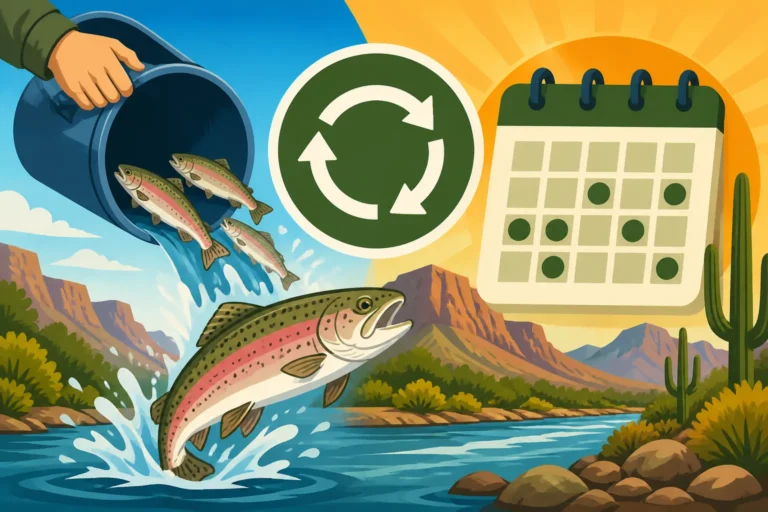
Winter is prime time for trout fishing in Arizona, especially in the state's urban lakes and rivers. The Arizona Game and Fish Department (AZGFD) conducts its major trout stocking programs during the cooler months, transforming community lakes like those found in the Phoenix and Tucson areas into fantastic trout fisheries. These stocked rainbow trout are often quite eager to bite as they adapt to their new environment. Higher elevation lakes, if they remain ice-free, also offer excellent opportunities for rainbow, brown, and brook trout.
Beyond the urban lakes, the Lower Salt River and portions of the Verde River also receive regular trout stockings, providing excellent opportunities for wade fishing. These cold-water species thrive when the water temperatures drop, offering a refreshing alternative to bass fishing. Often, you'll find other panfish like bluegill and crappie also active, though typically holding to deeper structure than in warmer months. Knowing the Trout Stocking Season in Arizona can help you plan your trips around the best opportunities.
Catfish and Crappie Opportunities
While often associated with warmer water, both channel catfish and crappie can offer good winter fishing in Arizona, albeit with adjusted tactics. Catfish, particularly channel cats, are still present and can be caught on traditional baits like cut bait or worms, often found in deeper holes or areas with a steady current. They won't be as aggressive as during the summer, so a patient, still-fishing approach is usually best.
Crappie, on the other hand, tend to school up tightly in winter, often relating to deep submerged structure like brush piles, standing timber, or old river channels. If you can locate a school, you can have an incredible day, but finding them can be the biggest challenge. Vertical jigging small jigs or using live minnows directly over these schools is typically the most effective method. They might not bite as hard as in spring, so a sensitive rod is key to detecting those subtle taps. For those who typically target these species at night, keep in mind that Catfish Night Fishing Techniques might need a slight tweak for cooler temperatures, focusing on deeper, warmer water pockets.
Essential Gear Adjustments for Cold Water
When you're out on the water in the cooler Arizona winter, your gear choices become even more critical than during the summer. It's not just about comfort; it's about optimizing your tackle for the less aggressive bites and the deeper water presentations that are often necessary. A few thoughtful adjustments can significantly improve your success rate and overall enjoyment.
Rods, Reels, and Line for Winter Success
For winter fishing, a more sensitive rod is your best friend. Fish bites can be incredibly subtle in cold water – sometimes just a slight weight on the line or a tiny tick. A medium-light to medium power spinning rod with a fast action tip, around 6'6" to 7' feet long, is ideal for most applications, especially for detecting those finicky trout and crappie bites, or the hesitant nudges of a winter bass. For reels, a smooth spinning reel in the 2000-3000 size range is perfect, allowing for precise casts and smooth retrieves. Brands like Shimano or Daiwa offer excellent options that perform well in cooler temps.
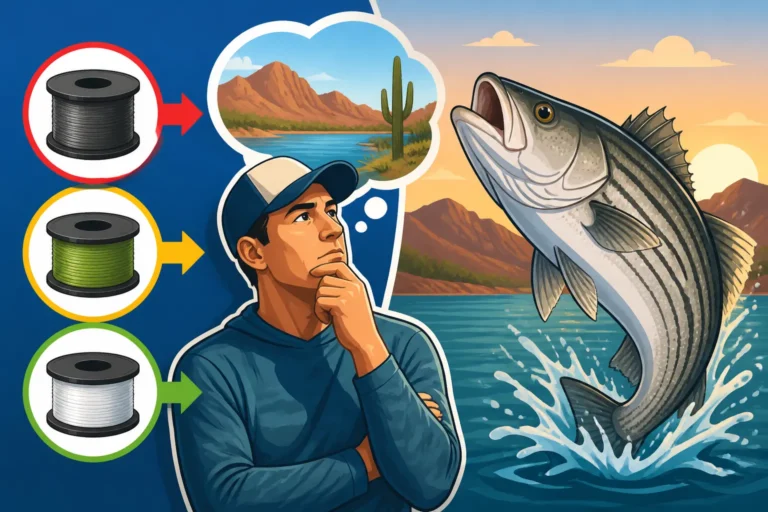
Line choice is also crucial. Fluorocarbon line is a popular choice for winter bass fishing due to its low visibility and minimal stretch, which translates to increased sensitivity. For trout or panfish, a light monofilament or braided line with a fluorocarbon leader (especially if you find a good deal on braid from places like Amazon) offers a good balance of castability, sensitivity, and strength. Think about reducing your line size slightly too; a 6-8lb test fluorocarbon for bass or a 4lb test mono for trout can make a big difference in presentation and bite detection.
Lures and Baits That Shine in Cooler Water
In cold water, fish are often sluggish, so your lure selection should reflect that. Subtlety and slower presentations are key.
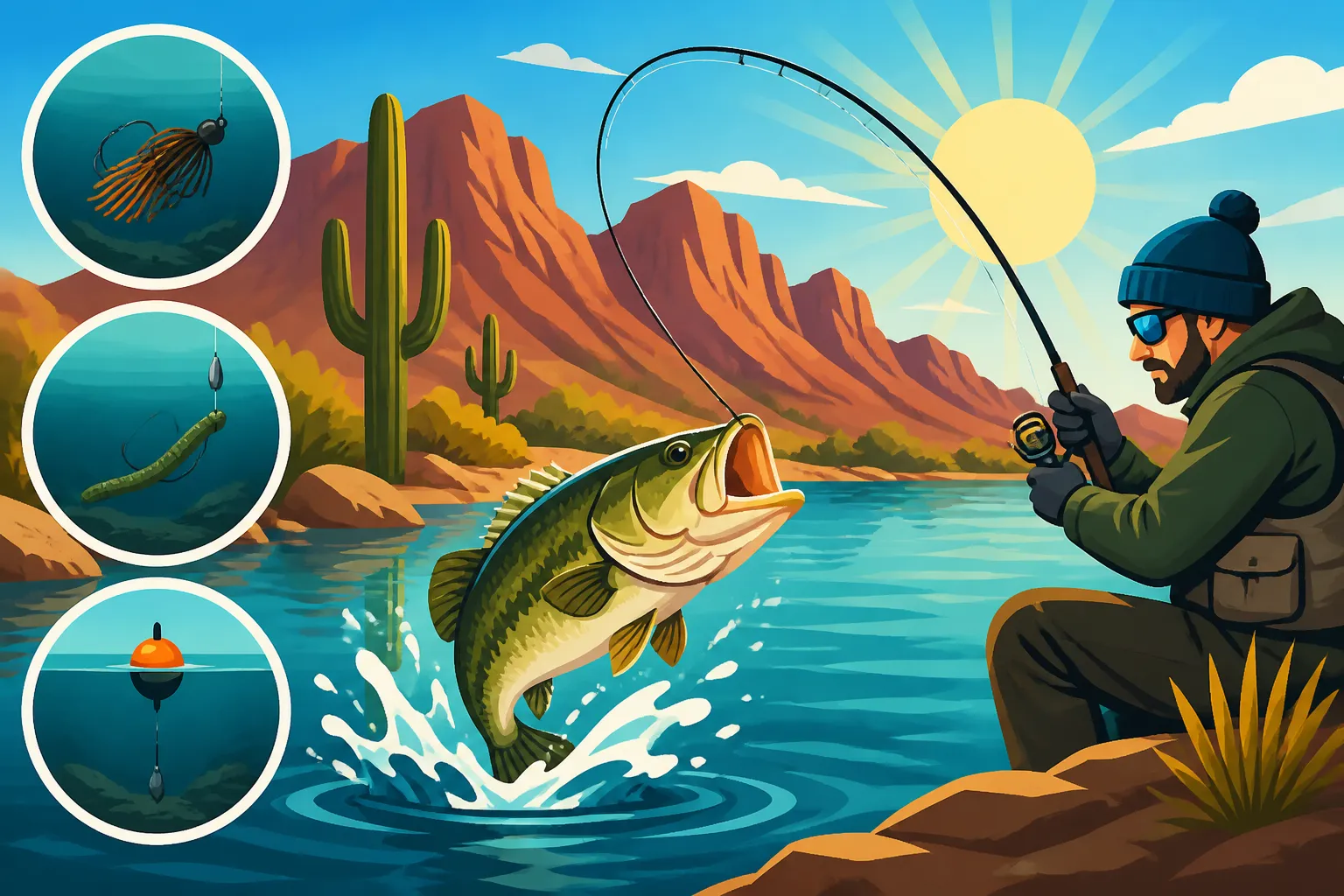
- Jigs: Small jigs (1/8 to 1/4 ounce) in darker colors like black, blue, or purple, or natural baitfish colors, are incredibly effective for bass, crappie, and even trout. Tipping them with a small plastic trailer or a live minnow can be deadly.
- Drop Shots: The drop shot rig is a winter bass killer. It allows you to present a small, soft plastic bait at a precise depth, keeping it suspended in the fish's strike zone for extended periods without movement. This is perfect for inactive fish.
- Blade Baits and Spoons: These can be great for vertical jigging over deeper schools of bass or stripers. Their flash and vibration can trigger reaction strikes from otherwise lethargic fish.
- Live Bait: For trout, powerbait, corn, or small worms fished on a Carolina rig or under a bobber are classic go-tos. For crappie and catfish, live minnows are often irresistible.
- Small Crankbaits and Jerkbaits: Occasionally, on warmer winter days, a slow-retrieved, deep-diving crankbait or a suspending jerkbait with long pauses can entice a bass. These work well when fish move up onto slightly shallower points.
Choosing the right bait for the conditions is paramount. While summer fishing allows for more aggressive presentations, winter fishing demands a more finesse approach. If you're targeting bass, consider how Best Bass Fishing Techniques for Arizona Lakes adapt to these colder temperatures, emphasizing slower retrieves.
Comfort and Safety Essentials
Don't let the "ice-free" part fool you; Arizona winters can still be chilly, especially early mornings or if a cold front pushes through. Dressing in layers is absolutely essential. Start with a moisture-wicking base layer, add insulating layers like fleece, and finish with a waterproof and windproof outer shell. A good quality beanie or warm hat, gloves, and warm socks will make a huge difference in your comfort. Hand warmers, often available in bulk on Amazon, can also be a lifesaver.
Beyond staying warm, safety is paramount. The water temperature, even if the air is mild, can be dangerously cold. If you're boating, always wear a life jacket, especially if you're alone or fishing small waters. Inform someone of your float plan, and carry essential safety gear like a fully charged phone, a first-aid kit, and enough water and snacks. Unlike the Heat Safety Tips for Summer Fishing in Arizona, winter safety is more about preventing hypothermia and staying dry.
Strategic Techniques for Deeper, Slower Fish
Winter fishing isn't about covering vast amounts of water quickly. It's about precision, patience, and understanding that fish are moving slower and reacting differently than they would in warmer conditions. You're trying to appeal to a more lethargic appetite, making your presentation as easy a meal as possible.
Slowing Down Your Presentation
This is perhaps the most critical adjustment for winter fishing. Forget fast retrieves and aggressive jerks; think deliberate, almost painfully slow movements.
- Vertical Jigging: When you've located fish on your sonar (a good quality fish finder, which you can often find great deals on, is invaluable here) in deeper water, vertical jigging is incredibly effective. Drop a spoon, blade bait, or jig directly down to them, lifting and dropping it just enough to impart action without moving it too far away. Let it sit, then lift again. The idea is to keep the bait in their strike zone for as long as possible.
- Drag and Pause: For soft plastics like Texas-rigged worms or jigs, instead of hopping and reeling, try a slow drag along the bottom with long pauses. Sometimes, the fish will hit it when it's completely still. Envision how a crawfish might slowly scuttle along the bottom in cold water, barely moving.
- Suspending Baits: Jerkbaits that suspend at a certain depth are phenomenal in winter. Cast them out, crank them down to their maximum depth, and then pause them. And when I say pause, I mean long pauses – 5 to 15 seconds, sometimes even longer. The erratic action followed by complete stillness can trigger a strike from an otherwise uninterested fish.
The slower metabolism of fish means they're not expending much energy to chase food. Your presentation needs to cater to this, putting the meal right in front of them without requiring much effort.
Targeting Deep Water Structure
In many Arizona lakes, fish retreat to deeper water during the colder months where water temperatures are more stable. This means your focus should shift from shallow coves to main lake points, submerged humps, deep creek channels, and significant drop-offs. These areas offer both stability and access to different depths, allowing fish to move up or down with slight temperature changes.
Learning to effectively fish deep water requires a good understanding of electronics. A quality fish finder can show you not only the depth but also identify structure, baitfish schools, and even individual fish. Once you've identified a promising area, use your sensitive rods and slow presentation techniques to thoroughly work the zone. This might involve anchoring up and casting around a single point, or slowly trolling with deep-diving crankbaits if permitted. If you're not familiar with how to do this, our guide on Deep Water Structure Fishing Techniques can provide a great foundation.
Adjusting to Changing Light and Temperature
Even in winter, the daily cycle of light and temperature influences fish activity. While prime fishing times might still be early morning and late afternoon, the middle of the day can also be highly productive, especially on sunny, warmer days when fish might move shallower to sun themselves or feed on baitfish doing the same. Conversely, after a cold front, fish might clamp down and become even more finicky, retreating to the deepest cover.
Pay attention to subtle environmental cues. A slight warming trend, a few hours of direct sunlight on a particular bank, or a break in the wind can all stimulate a bite. Don't be afraid to experiment with different depths and retrieve speeds throughout the day. What works at 8 AM might not work at noon. Being adaptable and observant is the mark of a truly successful winter angler.
Finding Productive Winter Fishing Spots
Knowing where to go is half the battle when it comes to successful winter fishing in Arizona. While many of our lakes are productive year-round, certain areas or types of water bodies really shine when the temperatures drop. It’s about leveraging the unique conditions to your advantage.
High-Elevation vs. Desert Lakes
Arizona offers a tale of two winters: the higher elevations in the northern part of the state often see snow and sometimes even ice cover on lakes like Big Lake or Lake Mary. However, even there, many streams and smaller lakes can remain fishable. But for true ice-free winter fishing, your best bet is generally the desert lakes and urban community ponds.
- Desert Lakes: These are your bread and butter for year-round fishing. Lakes like Roosevelt Lake, Lake Pleasant, Apache Lake, Canyon Lake, Bartlett Lake, and Saguaro Lake are typically ice-free through the entire winter. They hold a diverse population of bass, crappie, catfish, and sometimes even stocked trout. The key here is to focus on deep water structure, channel swings, and main lake points where fish can find stable temperatures. Our guide to the Best Fishing Lakes in Arizona provides a great overview, and for more specific details, check out Best Bass Fishing Lakes in Arizona.
- Urban Community Lakes: Managed by the Arizona Game and Fish Department's Community Fishing Program, these lakes are consistently stocked with trout during the cooler months, making them easily accessible and incredibly popular for families and beginners. Locations like Tempe Town Lake, Chaparral Park Lake in Scottsdale, or Kennedy Lake in Tucson are fantastic options for a quick, productive winter outing.
- Lower Elevation Rivers: The Lower Salt River, below Saguaro Lake, is a fantastic winter trout fishery, thanks to regular stockings. The Verde River also offers some great opportunities. These flowing waters tend to maintain more stable temperatures and oxygen levels.
Targeting Community Fishing Program Waters
The Arizona Game and Fish Department's Community Fishing Program is a gem for winter anglers, especially those looking for trout. These urban and community lakes are specifically managed for recreational fishing and receive regular stockings of rainbow trout from November through March. This means consistent opportunities to catch fish without venturing far from metropolitan areas.
When fishing these waters, look for areas around aerators, deeper sections of the lake, or any submerged structure that might offer cover. A simple setup with light line, a small hook, and PowerBait or worms fished off the bottom, or a small spinner/jig, can be incredibly effective. These spots are fantastic for beginners, families, and anyone looking for a relaxed, productive day on the water. For more information on the stocking schedule and specific rules, you can often find details on the AZGFD website.
| Arizona Winter Fishing Spot Type | Target Species | Key Characteristics | Ideal Tactics |
|---|---|---|---|
| Desert Reservoirs | Bass, Crappie, Catfish | Large, deep, extensive structure (points, humps, channels) | Slow presentations, deep jigging, drop shots, spoons |
| Urban Community Lakes | Trout, Panfish, Catfish | Smaller, accessible, regularly stocked with trout | Bait fishing (PowerBait, worms), small spinners/jigs |
| Lower Elevation Rivers | Trout, Bass, Catfish | Moving water, colder temperatures, often wadeable | Fly fishing, drift fishing, small spinners, live bait |
| Colorado River | Striped Bass, Catfish, Bass | Vast, varying depths, current, major structures (dams, canyons) | Trolling, deep jigging, cut bait, large swimbaits, spoons |
Safety and Comfort for Winter Fishing
Even though we're talking about ice-free fishing, winter in Arizona still presents unique challenges, primarily related to cooler temperatures and potentially unpredictable weather. Being prepared ensures your trip is not only successful but also safe and enjoyable.
Dressing for Success and Staying Warm
Layers, layers, layers! I can't stress this enough. Even if the forecast says 60 degrees, the early morning chill on the water, or a sudden gust of wind, can feel much colder.
- Base Layer: Start with a moisture-wicking layer, like merino wool or synthetic performance fabric. This keeps sweat away from your skin, which is crucial for staying warm.
- Mid-Layers: Add insulating layers such as fleece jackets or down vests. These trap warm air close to your body.
- Outer Layer: Finish with a waterproof and windproof jacket and pants. This protects you from spray, rain (rare, but it happens!), and biting winds. I always recommend Gore-Tex or similar technology.
- Extremities: Don't forget a warm hat (you lose a lot of heat through your head!), insulated gloves, and warm socks. Wool socks are fantastic for keeping your feet toasty, even if they get a little damp. Many anglers swear by insulated rubber boots for boat or shore fishing, keeping their feet dry and warm.
It’s always better to overdress and shed layers than to underdress and be miserably cold. Consider bringing a thermos with hot coffee, tea, or soup; it can be incredibly comforting on a chilly morning.
Boating and Water Safety Considerations
Just because there's no ice doesn't mean you can ignore water safety. Cold water is a significant hazard. If you fall in, hypothermia can set in quickly, even in Arizona's milder winters.
- Wear a Life Jacket: Always wear a PFD (Personal Flotation Device), especially if you're boating alone or in a small craft like a kayak. A self-inflating PFD is a great choice as it's less bulky but provides crucial safety. If you are kayak fishing, be mindful of your Kayak Registration Rules in Arizona and ensure you comply with all local regulations.
- Tell Someone Your Plan: Let a friend or family member know where you're going, when you expect to be back, and what type of boat you're in.
- Check Weather Forecasts: Arizona weather can be fickle. A beautiful morning can quickly turn windy or rainy. Be aware of changing conditions and be prepared to cut your trip short if necessary. Pay close attention to wind advisories on larger lakes.
- Carry Essential Gear: A fully charged cell phone (in a waterproof bag), a first-aid kit, a whistle, a rescue throw bag, and a marine radio (if applicable) are all crucial. Make sure your boat's navigation lights are working, especially if you plan to be out around dawn or dusk.
Understanding the Arizona Boating Safety Course Requirements can also be incredibly helpful, even if not strictly required for your specific vessel, as they provide invaluable information for safe operation on the water.
Planning for the Unexpected
Even the best-laid fishing plans can go awry. Being ready for the unexpected can save your trip, or even your life.
- Vehicle Preparedness: Ensure your vehicle is in good working order, especially your tires and battery, as cold weather can exacerbate problems. Carry jumper cables, a spare tire, and basic tools. If you're heading to more remote locations, make sure someone knows your route.
- Extra Supplies: Always pack more water and snacks than you think you'll need. A small emergency blanket, a flashlight, and a fire starter (even if you don't plan to build a fire) are good additions to your vehicle's emergency kit.
- Adaptability: Be willing to change your plans. If the weather turns nasty, or your chosen spot isn't producing, don't be afraid to try a different location or even call it a day. Fishing should be enjoyable, not a test of endurance against miserable conditions. Being adaptable and having a few backup spots, perhaps different types of fishing, will make your winter outings much more successful and less frustrating.
Taking these precautions means you can focus on the fishing itself, enjoying the crisp air and the peace of an Arizona winter lake.
Disclaimer
Please remember that fishing regulations, conditions, and fish stocking schedules can change. Always consult the latest Arizona Game and Fish Department regulations before heading out on your fishing trip. Stay safe and happy fishing!