Trout Stocking Frequency on the Lower Salt River
One of the most common questions I hear from fellow anglers, especially those new to Arizona, is about trout stocking. There's nothing quite as frustrating as planning a fishing trip, driving out to your favorite spot on the Lower Salt River, only to find out it hasn't been stocked in weeks, or worse, the water is too warm for trout to thrive. You want to know when and how often those beautiful, feisty rainbow trout are dropped into the river so you can maximize your chances of a successful day. This guide will dive deep into the trout stocking frequency on the Lower Salt River, helping you understand the patterns, the factors at play, and how you can stay informed to hit the water at just the right time.
Understanding Arizona's Trout Stocking Program
The Arizona Game and Fish Department (AZGFD) plays a monumental role in creating and sustaining fishing opportunities across our diverse state, and their trout stocking program is a cornerstone of that effort. It's not just about tossing fish into a lake or river; it's a carefully planned initiative designed to provide recreational angling for species that might not naturally thrive in some of our unique desert environments, especially during certain times of the year.
Why Arizona Stocks Trout
You might wonder why Arizona, a state known for its scorching desert heat, focuses so much on stocking cold-water fish like trout. The answer lies in angler demand and the desire to create diverse fishing experiences. Many of our urban lakes and accessible rivers, like the Lower Salt, simply don't have the consistently cold water temperatures needed for trout to survive and reproduce year-round. By stocking these areas during cooler months, AZGFD provides a fantastic opportunity for anglers to target trout close to home, introducing many to the joy of fishing, especially younger generations. It's about accessibility and providing a catchable population for recreational purposes. Without stocking, these waters would offer very limited trout fishing, if any, for a significant portion of the year. This also means you can often find good trout fishing even near major metropolitan areas like Phoenix, thanks to this proactive management.
The Role of Water Temperature and Seasonality
Water temperature is the absolute king when it comes to trout stocking in Arizona. Rainbow trout, the primary species stocked in places like the Lower Salt River, are cold-water fish. They generally prefer water temperatures between 50-68 degrees Fahrenheit (10-20 degrees Celsius). Once the water gets much warmer than that, they become stressed, lethargic, and can even die. This is why you'll notice a very distinct seasonality to trout stocking in most lower elevation Arizona waters. As our desert warms up from late spring through early fall, trout stocking in these areas grinds to a halt. The fish simply wouldn't survive, and it would be a waste of resources. Conversely, when cooler temperatures prevail from late fall through early spring, these waters become prime candidates for stocking. Understanding Arizona Fishing Seasons Explained can give you a broader picture of how different fish species are managed throughout the year.
Specifics of Lower Salt River Trout Stocking
The Lower Salt River, flowing through the heart of the Valley, is a special case. It's a highly accessible waterway, making it a favorite for many local anglers. But its trout fishery is almost entirely dependent on stocking, directly influenced by those crucial water temperatures.
Typical Stocking Schedule and Species
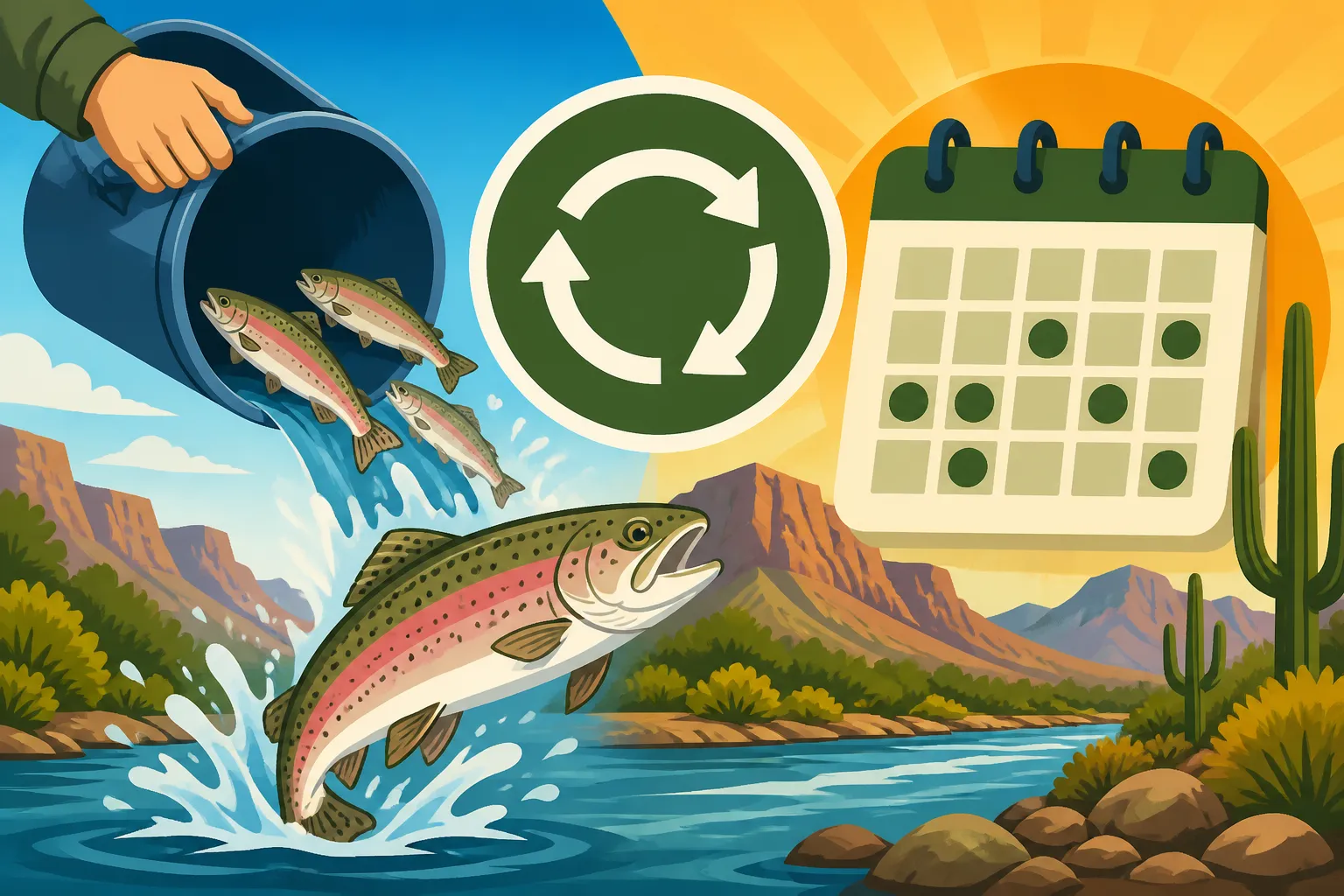
Generally, the Lower Salt River receives regular trout stockings from about November through March, and sometimes into early April if the weather stays unusually cool. During these cooler months, the AZGFD aims for a consistent stocking schedule, often every 1-2 weeks, to maintain a catchable population for the high angler demand. The species stocked is predominantly Rainbow Trout. These fish are typically catchable size, meaning they're ready to be targeted as soon as they hit the water. It's a fantastic fishery for families and beginners, offering a relatively high chance of success. This consistency during the colder parts of the year makes it a reliable destination for those seeking a trout fix without driving up to the high country. For those curious about all the possibilities, you can explore the various Fish Species Guide for Arizona Lakes.
Factors Influencing Stocking Frequency
While the general rule is "cooler months = more stocking," several factors can influence the exact frequency and timing:
- Water Levels and Flow: Heavy rains or upstream dam operations can significantly impact river flow and turbidity. If the water is too high, too fast, or too muddy, stocking might be delayed or adjusted for angler safety and fish survival. AZGFD wants to ensure the fish have a good chance to disperse and acclimate, and that anglers can safely access the river.
- Fish Availability: Hatchery production schedules and health can sometimes lead to slight variations. While AZGFD works diligently to ensure a steady supply, unforeseen circumstances can occur.
- Budget and Resources: Like any public program, stocking is subject to available funding and staffing. These resources are allocated strategically across the state's many waters.
- Angler Pressure: Areas with high angler pressure, like the Lower Salt River, tend to receive more frequent stockings during their prime season to keep up with demand. This ensures that even with many people fishing, there are still plenty of opportunities to catch fish.
- Special Events: Occasionally, stocking schedules might be adjusted around fishing clinics, youth events, or other community programs to enhance participation and success.
It's a dynamic system, and while there's a general pattern, flexibility is key for the department to manage the fishery effectively.
How to Stay Informed About Stocking Schedules
Waiting for word-of-mouth or hoping for the best isn't the most effective strategy for hitting a freshly stocked river. Thankfully, AZGFD provides excellent resources to keep anglers in the know.
Official AZGFD Resources
The Arizona Game and Fish Department is your primary and most reliable source for stocking information.
- Website Stocking Schedule: The AZGFD website features a dedicated "Fish Stocking Schedule" page. This is usually updated weekly, providing a projected schedule for the coming days. It's not always 100% precise down to the hour, but it will give you a clear indication of which waters are expected to receive trout. I always recommend checking this page the day before or the morning of your planned trip. You might also find a wealth of information about Arizona Fishing Regulations Explained on their site, which is crucial before heading out.
- Weekly Fishing Report: In addition to the stocking schedule, AZGFD often publishes a weekly fishing report. This report not only confirms recent stockings but also provides valuable insights into fishing conditions, hot spots, and recommended baits or lures for various locations, including the Lower Salt River. It's an invaluable tool for planning.
- Email Notifications and Social Media: Many anglers sign up for AZGFD's email newsletters, which often include stocking updates. Following their official social media channels (Facebook, X, etc.) is another great way to get real-time announcements. Sometimes, they'll post photos or videos of the stocking events, which can be a fun way to feel connected to the process.
Making it a habit to check these official channels can drastically improve your timing and success rate.
Community and Local Bait Shops
While official channels are paramount, local bait and tackle shops can be a treasure trove of information and local insight.
- Local Knowledge: Shop owners and staff often have direct relationships with local AZGFD staff or hear rumors and confirmations from anglers who were just on the water. They can tell you if the stocking truck was seen, what anglers are reporting, and even offer advice on what's biting.
- Equipment and Bait Availability: These shops are also excellent places to pick up local favorites for bait and lures. They'll know exactly what the freshly stocked trout are hitting. While you can find a vast array of fishing gear on Amazon, sometimes getting that hyper-local, "this-just-worked-yesterday" recommendation from a bait shop can make all the difference. For stocking up on general supplies, checking for fishing essentials on Amazon before your trip is always a good idea too.
- Connecting with Other Anglers: Striking up conversations at the bait shop or on the riverbank can also provide intel. Most anglers are happy to share their experiences and tips, especially when it comes to recent stocking activity.
Remember, a combination of official sources and local intelligence will give you the most comprehensive picture.
Maximizing Your Catch After a Trout Stocking
So, you've checked the schedule, and you know the Lower Salt River just received a fresh batch of trout. Now what? These newly stocked fish often behave differently from wild, river-born trout. They're typically eager to bite, but there are still strategies you can employ to increase your chances.
Best Baits and Lures for Fresh Stock
Stocked rainbow trout are often raised on pellet feed, so their initial instincts aren't always geared towards natural river forage. This makes them relatively easy to catch on common baits and lures.
- PowerBait and Dough Baits: These are arguably the most popular and effective baits for freshly stocked trout. They come in various colors and scents, mimicking the hatchery feed or providing an irresistible aroma. Chartreuse, rainbow, and corn-scented options are perennial favorites. You can rig them on a small hook with a sliding sinker setup to keep the bait suspended just off the bottom.
- Worms: Good old nightcrawlers or mealworms are always a solid choice. Trout, even hatchery-raised ones, have a natural instinct to hit worms. A small piece on a hook, fished with or without a bobber, can be incredibly effective.
- Small Spinners and Spoons: Lures like Panther Martins, Mepps, or small Kastmaster spoons can be deadly. The flash and vibration mimic small baitfish or insects, triggering an aggressive strike. Cast upstream and retrieve slowly, letting the current work the lure. You can find a wide selection of these versatile lures on Amazon, making it easy to experiment with different patterns.
- Inline Spinners: These simple, effective lures are fantastic for trout. The spinning blade creates flash and vibration that stocked trout find irresistible. Brands like Rooster Tail are highly popular. They are especially good if the trout are active and chasing. You can find a good Best Lures for a Trout Tackle Box guide for more ideas.
Experiment with different colors and retrieve speeds until you find what the trout are keying in on that day. Sometimes, a subtle change can make all the difference.
Optimal Fishing Techniques and Gear
Beyond bait choice, your technique and gear setup can greatly influence your success when targeting newly stocked trout.
- Light Tackle is Key: Stocked trout aren't usually giants, so light spinning gear is ideal. A light to ultra-light rod, paired with a small spinning reel spooled with 4-6 pound monofilament or fluorocarbon line, will give you excellent casting control and sensitivity. For beginners, a simple rod and reel combo is often sufficient. Consider exploring options for Best Fishing Reels for Beginner Anglers in Arizona.
- Floating Bait Rigs: A common and effective setup is a light line, a small split shot or two a foot or so above a small hook, and a floating bait like PowerBait. This keeps your bait drifting naturally near the bottom, where trout often congregate after stocking.
- Drifting with the Current: On the Lower Salt River, the current is your friend. Cast your bait or lure slightly upstream and allow it to drift naturally downstream through promising pools and eddies. This simulates natural food sources drifting with the flow.
- Targeting Deep Pools and Structure: Look for deeper pools, slower currents, and any kind of structure like submerged rocks, fallen trees, or undercut banks. These provide cover and a sense of security for newly introduced fish. After stocking, trout often tend to hold in these areas for a bit before dispersing. You might also want to read up on Best Trout Fishing Techniques for Arizona Waters for more detailed strategies.
- Patience and Observation: Sometimes, it takes a little while for the trout to settle in and start feeding actively. Observe other successful anglers, pay attention to where they're casting, and what they're catching fish on. Remember, you can often catch multiple species in one trip at a community lake, and the same can sometimes be true for river systems like the Salt if you adjust your techniques.
Seasonal Considerations for Lower Salt River Trout
While the stocking season is largely confined to the cooler months, even within this window, there are nuances. Early in the stocking season (November-December), the water might still be a bit warmer, and trout might be more active throughout the day. As winter progresses (January-February), colder water can make fish more lethargic. They might prefer deeper, slower pools, and bites can be more subtle. During these colder times, fishing during the warmest part of the day (mid-morning to late afternoon) can be most productive. For a general overview of when trout are most active, you might consider When to Fish Arizona Lakes by Month, as many of the principles apply to rivers too.
When the transition to warmer weather begins in March and April, stocking might become less frequent, and the window of comfortable water temperatures for trout narrows. Early morning fishing becomes paramount as the water warms rapidly throughout the day. It's also worth noting that the Lower Salt River falls under the general Arizona fishing regulations, but always check for specific area rules. While the Lower Salt River is not typically considered an "urban lake," its stocking program shares similarities with the Trout Stocking Frequency at Urban Lakes in Arizona regarding seasonal dependency and angler accessibility. Don't forget, if you plan to keep any trout, you'll need to know about Trout Stamp Requirements in Arizona.
Below is a table summarizing the general stocking patterns and considerations for the Lower Salt River:
| Season | Months | General Stocking Frequency | Water Temperature Trend | Angler Advice |
|---|---|---|---|---|
| High Stocking | November – February | Weekly to Bi-Weekly | Cooling to Cold | Trout are most active; fish throughout the day, focus on common baits/lures. Good for beginners. |
| Transition | March – Early April (variable) | Less frequent / Tapering off | Warming | Fish early mornings; target deeper, cooler pockets. Be prepared for warmer water species to become more active. |
| Low Stocking | Late April – October | None | Warm to Hot | Trout survival is low; focus on warm-water species like bass and catfish. |
Armed with this information, you're much better prepared to plan your next trout fishing adventure on the Lower Salt River. Tight lines!
Disclaimer
This article is for general informational purposes only and does not constitute professional advice. Laws, prices and regulations vary by location and change over time. Consult a qualified professional for guidance on your specific situation.