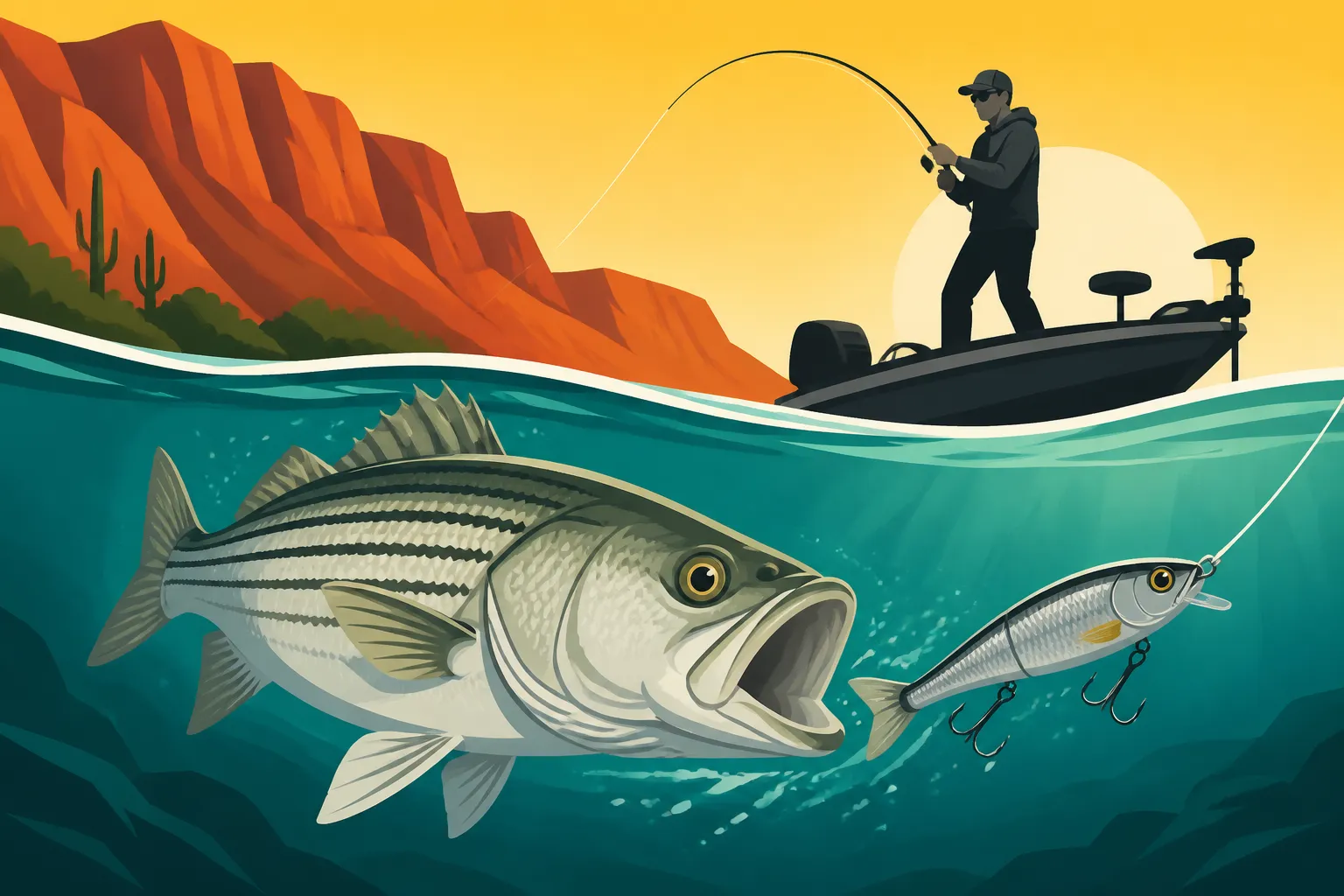
How to Fish a Swimbait for Striped Bass
There's nothing quite like the electrifying jolt of a striped bass hitting your lure. These powerful, aggressive predators are a true prize in Arizona's desert lakes, but boy, can they be elusive! Many anglers, myself included, have spent countless hours casting, only to come up empty-handed. It's frustrating when you know they're there, but you just can't crack the code. This guide is all about equipping you with the knowledge to consistently connect with these hard-fighting fish, specifically by mastering the art of swimbait fishing. We're going to dive deep into everything from choosing the right bait to perfecting your retrieve, turning those frustrating days into epic stories.
The Allure of Swimbaits for Arizona Striped Bass
When you think about the top predatory fish in Arizona's larger reservoirs like Lake Powell and Lake Pleasant, striped bass are right at the top of the list. They’re built for speed and aggression, constantly chasing down baitfish. This relentless pursuit is exactly why swimbaits have become such a game-changer for serious striper anglers.
Why Swimbaits are So Effective for Stripers
Swimbaits, at their core, are designed to imitate the natural prey of game fish with incredible realism. For striped bass, this often means mimicking threadfin shad, which are abundant in many of Arizona's premier striper lakes. Unlike traditional hard baits that might have a more erratic or mechanical action, quality swimbaits move through the water with a fluid, lifelike swimming motion that's hard for a hungry striper to resist.
Imagine a school of shad darting through the water. A well-designed swimbait perfectly replicates that subtle tail kick, the natural wobble, and even the flash of a real baitfish. This realism is key. Stripers are highly visual hunters, and when they see a swimbait that looks, moves, and even feels like a struggling or unaware meal, their predatory instincts kick in hard. It's not just about the look, either; the vibration created by the tail action can be felt by fish from a distance, drawing them in even in murky conditions or low light. Plus, swimbaits allow you to cover a lot of water efficiently, making them ideal for locating those fast-moving schools of hungry stripers that might be scattered across vast open waters. If you're looking to consistently hook into these powerful fish, understanding How to Fish for Striped Bass effectively often starts with a good swimbait presentation.
Understanding Striped Bass Behavior in Arizona Lakes
To truly excel with swimbaits, you need to think like a striper. These fish are nomadic, often traveling in schools, constantly on the hunt for food. In Arizona, lakes like Lake Powell Arizona Fishing Guide and Lake Pleasant Arizona Fishing Guide are renowned for their striped bass populations. What drives their behavior? Primarily, it's the availability of baitfish, mainly threadfin shad. Stripers will follow these schools, pushing them to the surface in what anglers call "boils" or driving them into coves and against ledges.
Their predatory nature means they're opportunistic feeders. They love to ambush, but they're also not afraid to chase down a meal. This means your swimbait presentation needs to cater to both scenarios. Sometimes, a slow, methodical retrieve will tempt a lurking striper, while other times, a fast, erratic retrieve mimics a panicked baitfish, triggering a violent strike. Water temperature plays a huge role, too. In warmer months, stripers tend to be more active and feed aggressively, often closer to the surface during low light or during those exciting boils. In colder months, they'll usually suspend deeper, requiring a different approach to get your swimbait down to their level. Knowing these patterns and adapting your swimbait technique is crucial to success. The Striped Bass Fishing Guide for Arizona offers more insights into their habits.
Selecting the Perfect Swimbait for Your Striper Hunt
Walking into a tackle shop or browsing online for swimbaits can be overwhelming. There's an endless array of choices, and it's easy to get lost in the options. But for Arizona stripers, we can narrow it down to a few key types and characteristics that consistently produce results.
Types of Swimbaits and Their Applications
Swimbaits generally fall into two main categories: hard-bodied and soft-bodied. Both have their place in your tackle box, depending on the situation.
-
Soft Plastic Swimbaits: These are arguably the most popular for striped bass. They consist of a soft, flexible plastic body, often with a paddle tail or boot tail design that provides a natural swimming action with minimal effort. You can rig them in various ways:
- Jig Head: This is the most common. A soft plastic swimbait is threaded onto a lead jig head, creating a versatile lure that can be cast and retrieved, vertically jigged, or even trolled. The weight of the jig head dictates the sink rate and depth.
- Weighted Swimbait Hook: Some soft swimbaits come with an internal weight or are rigged on a hook with a weight on the shank. This setup is great for fishing around cover or when you want a more weedless presentation, as the hook point can be skin-hooked into the body of the plastic.
- Line-Thru Swimbaits: These unique soft plastics have a channel through which your fishing line passes, with the hook typically hanging freely below or attached to a small wire leader. The advantage here is that when a striper hits, the bait slides up the line, preventing the fish from using the leverage of the bait to throw the hook.
-
Hard-Bodied Swimbaits: These are typically multi-jointed lures made of hard plastic or resin, designed to mimic a swimming baitfish with a very realistic profile and action. They often come pre-rigged with treble hooks. While less common for the fast-paced boil fishing of stripers, they can be deadly for targeting larger, more solitary fish or when stripers are less aggressive, offering a slower, more deliberate presentation. Their durable construction also stands up well to repeated strikes from toothy predators.
For general Arizona striper fishing, especially when fish are schooling or feeding aggressively, soft plastic swimbaits on jig heads are your bread and butter. You can find a vast selection of these versatile lures on platforms like Amazon, making it easy to experiment with different brands and styles.
Key Factors: Size, Color, and Weight
Choosing the right swimbait isn't just about the type; it's about matching the conditions.
-
Size: This is paramount. The general rule is "match the hatch" – meaning, match the size of the baitfish stripers are currently feeding on. Most often, this will be threadfin shad. Common sizes range from 3 to 6 inches for everyday striper fishing in Arizona. If you're seeing smaller baitfish, downsize; if you're targeting trophy stripers or noticing larger prey, don't hesitate to go up to 7 or 8 inches. Remember that Threadfin Shad as Forage for Striped Bass are crucial to their diet, so knowing their typical size will help you immensely.
-
Color: Natural colors like pearl, white, silver, and various shades of grey and blue are usually most effective, especially when trying to mimic shad. If the water is clear, stick to more transparent or natural hues. In murkier water or during low light conditions (dawn, dusk, overcast), baits with a bit of chartreuse, darker backs, or even a subtle glitter can help with visibility. Don't be afraid to experiment, but always start with natural shad patterns.
-
Weight: The weight of your swimbait (or the jig head you're using with a soft plastic) dictates how deep and fast it sinks, and how easily you can cast it.
- Lighter Weights (1/4 to 1/2 oz): Ideal for shallower water, topwater "boils" where stripers are pushing bait to the surface, or when you want a slower, more suspended retrieve.
- Medium Weights (1/2 to 1 oz): Your versatile go-to for most situations, allowing for good casting distance and reaching fish in the middle water column.
- Heavier Weights (1 oz+): Essential for deep water presentations (20+ feet), fishing strong currents, or getting your lure down quickly to fast-moving schools.
A great place to stock up on a variety of sizes, colors, and jig head weights is, again, through online retailers like Amazon, or by visiting a local tackle shop in Phoenix or Mesa.
Essential Gear for Swimbait Fishing
Having the right rod, reel, and line setup can make a huge difference in your ability to cast, present, and ultimately land those powerful stripers.
-
Rod: A medium-heavy to heavy power casting rod, typically 7 to 7.6 feet long, is ideal. The longer rod aids in casting distance, which is often critical when chasing boils or covering vast expanses of water. A fast action tip will give you the sensitivity to feel subtle bites and the backbone to drive hooks home and control big fish. You'll want a rod strong enough to handle baits up to 2 ounces comfortably. For more general advice, you might find Best Fishing Rods for Bass in Arizona helpful, as many of those principles apply to stripers too.
-
Reel: A baitcasting reel with a gear ratio around 6.4:1 to 7.1:1 is a good choice. This provides a good balance of power for reeling in big fish and speed for burning your swimbait back or quickly taking up slack. Ensure it has a strong drag system that can withstand the powerful runs of a striper. For smooth casting and retrieving, look for reels with a good bearing count.
-
Line: For the main line, 30-50 lb braided line is highly recommended. Braid offers incredible sensitivity, zero stretch for solid hooksets, and excellent casting distance. Due to the high visibility of braid, and to provide some shock absorption, always tie on a fluorocarbon leader. A 15-25 lb fluorocarbon leader, about 2-4 feet long, is generally sufficient. Fluorocarbon is nearly invisible underwater and has excellent abrasion resistance, which is vital when fishing around rocks or against a striper's rough mouth. You can get quality braided and fluorocarbon lines from reputable brands on Amazon.
Advanced Techniques for Swimbait Presentation
Once you've got your gear sorted and your swimbait chosen, it's time to talk about presentation. This is where the magic really happens, transforming a piece of plastic into an irresistible meal.
Mastering the Retrieve: Speed, Depth, and Cadence
The retrieve is everything with swimbaits. It's how you bring your lure to life and entice those stripers.
-
The Steady Retrieve (Slow Roll): This is your bread and butter. After casting, let your swimbait sink to your desired depth, then begin a slow, steady retrieve. The goal is to get the swimbait's tail kicking naturally, mimicking a cruising baitfish. This is incredibly effective when stripers are suspended deeper or when you're simply trying to cover water. It’s a good starting point when you're not sure how aggressive the fish are.
-
Stop-and-Go: Introduce pauses into your retrieve. After a few cranks, stop reeling for 1-3 seconds, letting the swimbait flutter or sink slightly, then resume your retrieve. This often triggers reactionary strikes, as the sudden change in motion makes the bait appear injured or disoriented – an easy target for a predator. This technique is particularly effective when fish are somewhat lethargic or following the bait without committing.
-
Erratic Retrieve (Burn and Kill): When stripers are actively chasing or during a full-blown boil, a faster, more erratic retrieve can be deadly. Reel quickly for a few seconds, then suddenly stop, perhaps adding a twitch or two, then burn it again. This imitates a panicked baitfish trying to escape, and it can ignite aggressive strikes from competitive stripers. This is where you might be chasing those exciting How to Find Striper Boils on Lake Powell moments.
-
Vertical Jigging: Don't forget this technique, especially when you mark fish on your fish finder in deep water directly below your boat. Drop your swimbait down to their depth, then use sharp lifts and drops of your rod tip to make the swimbait dart and fall. This is highly effective when stripers are holding tight to structure or deep ledges.
| Retrieve Speed | Application | Swimbait Action | Best Conditions |
|---|---|---|---|
| Slow & Steady | General search, suspended fish | Subtle tail kick, natural glide | Cooler water, less active fish, deep water |
| Stop-and-Go | Reaction strikes, hesitant fish | Flutter on pause, sudden restart | Moderately active fish, searching structure |
| Erratic/Fast | Chasing boils, aggressive feeders, covering water | Rapid darting, fleeing baitfish mimicry | Active surface feeding, warm water, chasing schools |
| Vertical Jig | Deep suspended fish, structure fishing | Aggressive dart & fall | Fish directly below boat, deep ledges, colder water |
Targeting Stripers in Different Water Depths and Structures
Striped bass will relate to different areas depending on the season, time of day, and baitfish activity.
-
Open Water Boils: This is the Holy Grail of striper fishing. When you see a "boil" – stripers actively pushing shad to the surface, creating a churning, splashing frenzy – cast your swimbait beyond the action and quickly reel it through the edges or directly into the boil. Don't cast directly into the center and spook the school. Use a lighter jig head (1/4 to 1/2 oz) for surface action or just below. These intense feeding frenzies are often found in areas like Lake Powell.
-
Deep Points and Ledges: Stripers frequently congregate around underwater points, humps, and ledges, especially when not actively chasing bait on the surface. These structures offer ambush points and hold schools of baitfish. Cast your heavier swimbait (1 oz+) to the deepest part of the structure and slowly retrieve it up the incline, or allow it to fall along the face of a drop-off. Pay close attention as your lure descends; many strikes occur on the fall.
-
Submerged Timber and Brush Piles: While not always as common for stripers as for bass, in some lakes, stripers will relate to deeper submerged timber, especially if baitfish are holding there. Use a weedless soft plastic swimbait or a line-thru swimbait to minimize snagging. Work these areas slowly, using a stop-and-go retrieve to allow the bait to drop into pockets within the structure.
Reading the Water and Adjusting Your Approach
Being a successful swimbait angler means being an adaptable angler. No two days on the water are exactly alike.
- Water Temperature: This is a huge factor. In colder water (below 55°F), stripers are often deeper and less active, requiring slower retrieves and baits presented closer to the bottom or suspended fish. As water warms up (60-75°F), they become more active, and you can speed up your retrieve and target shallower areas or surface boils.
- Water Clarity: In crystal clear water, natural, translucent colors are often best, and you might need to use a longer fluorocarbon leader. In murky or stained water, brighter colors (like chartreuse accents) or darker baits that provide a strong silhouette can be more effective. The vibrations from a paddle tail become even more important here.
- Wind and Current: Wind can be your friend or foe. A light chop can break up the water's surface, making your presence less obvious to fish, and can also concentrate baitfish. Strong winds make casting and boat control difficult. Current, whether from inflows or dam releases, can position stripers in predictable ambush points. Cast upstream and allow your swimbait to drift naturally with the current, then begin your retrieve.
- Baitfish Presence: Always keep an eye out for signs of baitfish – flickers on the surface, birds diving, or schools showing up on your fish finder. Find the bait, and you'll find the stripers. Adjust your swimbait size and color to match what they're eating.
Maximizing Your Chances: Tips and Troubleshooting
Even with the right gear and techniques, fishing can sometimes feel like a puzzle. Here are some extra tips and common pitfalls to help you stay on track.
Timing Your Swimbait Attack
Striped bass are creatures of habit to some extent, and knowing the best times to target them can dramatically improve your success rate.
- Dawn and Dusk: These low-light periods are prime time for striper activity, especially during warmer months. The reduced light gives stripers a predatory advantage, and they'll often move shallower to feed. This is when those surface boils are most likely to occur.
- Overcast Days: Cloudy days often mimic low-light conditions, encouraging stripers to feed throughout the day rather than just at the edges of dawn and dusk.
- Seasonal Patterns: The Best Season for Striped Bass at Lake Powell is typically spring and fall when water temperatures are comfortable, and baitfish are abundant and active. In spring, stripers move shallower to spawn and feed aggressively. In fall, they go on a major feeding binge to prepare for winter. While you can catch them in summer, it often means going deeper or targeting early mornings and late evenings to avoid the intense Arizona heat. Winter fishing can also be productive, but generally requires slower presentations in deeper water.
Common Mistakes to Avoid
We all make mistakes, and learning from them is part of becoming a better angler.
- Too Fast a Retrieve: This is a classic. Many anglers reel too fast, especially when excited. Remember, sometimes a slow, methodical presentation is exactly what's needed, particularly when fish are less aggressive or in colder water. Let the swimbait do its work.
- Wrong Size/Color: Not matching your swimbait to the prevalent baitfish can lead to frustration. If you're not getting bites, try changing sizes or colors before switching to a different lure type entirely.
- Lack of Depth Control: If stripers are at 30 feet and you're only fishing your swimbait at 10 feet, you're not going to catch them. Pay attention to your fish finder and adjust your jig head weight or retrieve to get your bait into the strike zone.
- Ignoring Subtle Bites: Stripers can hit like a freight train, but sometimes they'll just "thump" or feel like you've snagged a weed. Don't ignore these subtle indications. If something feels off, set the hook!
- Inadequate Gear: Trying to fish heavy swimbaits with a light spinning rod is a recipe for disaster. You won't cast effectively, and you'll struggle to set the hook or fight a strong striper. Invest in appropriate gear.
- Lack of Patience: Sometimes, the fish just aren't biting right away. Keep moving, keep trying different retrieves and depths, and maintain a positive attitude. The bite can turn on in an instant.
Safety and Ethical Considerations
Fishing in Arizona can be an incredible experience, but it's important to do it safely and responsibly.
- Heat Safety: Arizona summers are no joke. Always carry plenty of water, wear sun-protective clothing, a wide-brimmed hat, and quality sunglasses. Plan your trips for early morning or late evening to avoid the midday sun.
- Boating Safety: If you're using a boat, ensure all safety equipment is on board and functional. Always check weather forecasts, especially for sudden monsoon storms that can kick up dangerous winds and waves.
- Fish Handling: Striped bass are powerful fish, and handling them carefully is important for both your safety and the health of the fish, especially if you plan to release them. Use a landing net to bring them in, and if you're taking photos, support their body weight horizontally. Avoid touching their gills.
- Regulations: Always be aware of the current Arizona Fishing Regulations Explained. These cover everything from bag limits and size restrictions to specific rules for certain lakes or species. Ignorance of the law is no excuse, and wardens are out there to ensure compliance and protect our fisheries.
By understanding the behavior of striped bass, selecting the right swimbait for the conditions, and employing effective retrieval techniques, you'll be well on your way to enjoying some incredible fishing adventures in Arizona. Good luck out there, and tight lines!
Disclaimer
Please remember that fishing conditions, regulations, and fish behavior can change. Always consult the latest Arizona Game and Fish Department regulations before heading out. Safety should be your top priority on the water.