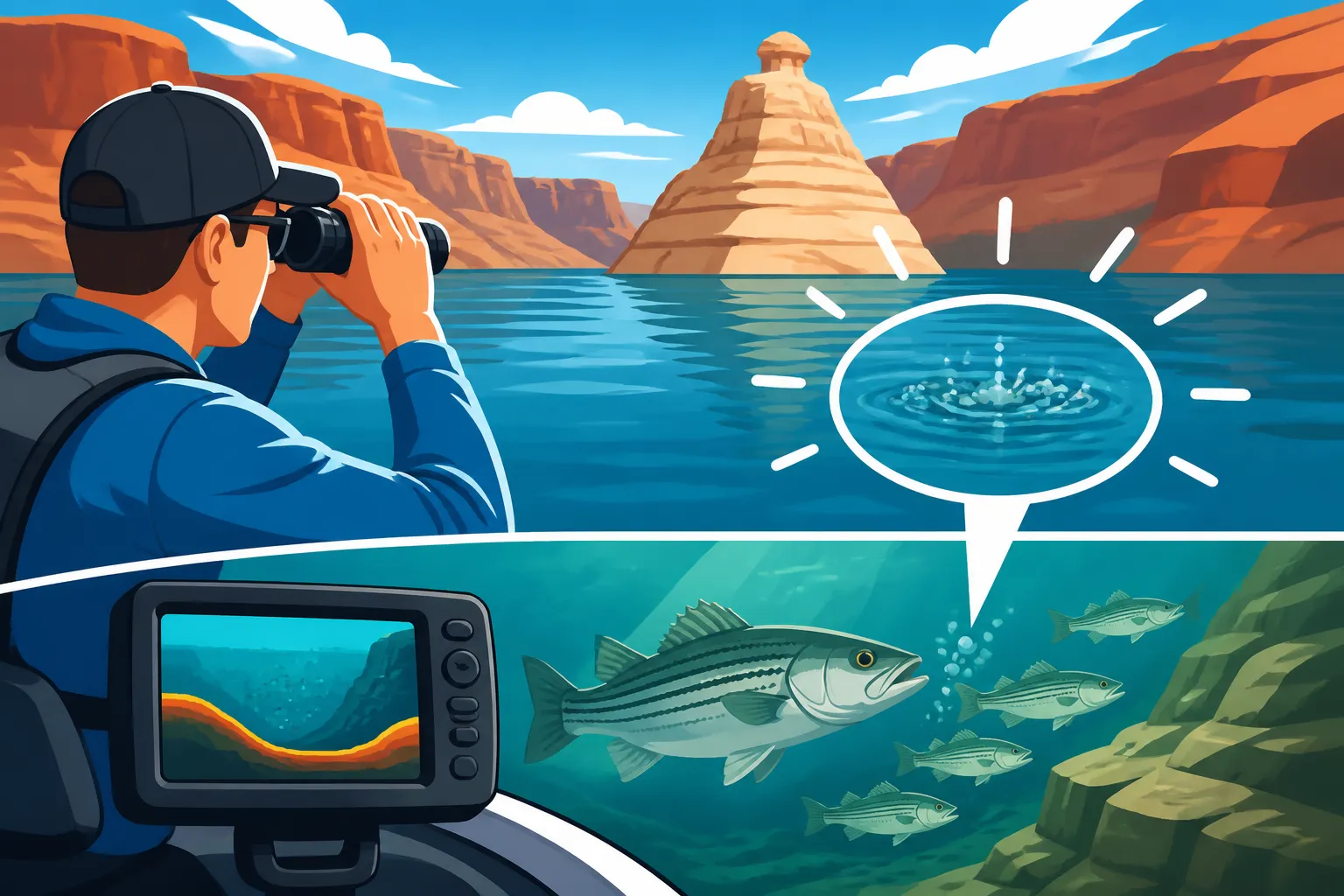
How to Find Striper Boils on Lake Powell
The sheer thrill of seeing the water explode with thrashing striped bass, a full-blown "striper boil" on Lake Powell, is an experience every angler dreams of. It's exhilarating, a chaotic symphony of nature, but actually finding these elusive, fast-moving feeding frenzies can feel like searching for a needle in a vast, blue haystack. This guide is here to demystify the process, helping you understand how to pinpoint these incredible events and turn that dream into a reel-screaming reality.
Decoding the Phenomenon: What Are Striper Boils?
Before you can find them, it’s crucial to understand what a striper boil is and why it happens. Lake Powell’s immense size and deep, clear waters hide an intricate ecosystem, and boils are a spectacular manifestation of the food chain at work.
The Biology Behind the Frenzy
At its core, a striper boil is a coordinated feeding attack by a large school of striped bass on their primary forage fish, often threadfin shad. These bass are highly pelagic, meaning they live in the open water column, constantly chasing baitfish. When a large school of shad gets trapped near the surface by a coordinated group of hungry stripers, the ensuing melee creates a "boil." The shad have nowhere to go but up, and the stripers follow, breaking the surface in a frantic display of feeding. It's a high-energy, high-reward situation for the bass, allowing them to gorge themselves on easily accessible prey. This intense activity also attracts other predators, like birds, which can be key indicators for us anglers.
The health of the shad population directly impacts the frequency and intensity of these boils. Lake Powell, a vast and complex reservoir, supports a thriving shad population, which in turn fuels its renowned striped bass fishery. Understanding this dynamic is your first step to anticipating where and when boils might occur. It's not just random chaos; it's a predictable, albeit challenging, natural event driven by the basic need to eat.
Seasonal and Daily Patterns for Lake Powell Stripers
Striper boils aren't a year-round, all-day phenomenon. They are largely influenced by water temperature, light conditions, and the behavior of their prey. Knowing these patterns will dramatically increase your chances of being in the right place at the right time.
During the warmer months, especially from late spring through early fall, is prime time for striper boils on Lake Powell. The metabolism of striped bass is higher, and shad are more active near the surface as they feed on plankton. This period, roughly April through October, sees the most consistent and explosive boil activity. As the water cools in late fall and winter, boils become rarer and less intense, as shad move deeper and stripers become less active, often feeding on individual baitfish rather than large schools. For a deeper dive into optimal timing, check out our guide on the "Best Season for Striped Bass at Lake Powell".
Daily patterns are equally important. The best times to find boils are typically during low-light conditions: early morning, right after sunrise, and late evening, as the sun begins to set. During these times, the shad feel safer closer to the surface, and the stripers use the reduced light to their advantage, ambushing their prey. Mid-day boils are less common, especially in the intense Arizona summer heat, but they can still happen, often in shaded canyons or during overcast weather. Keep in mind that a sudden change in weather, like an approaching storm front, can also trigger a feeding frenzy at any time of day. This is when you want to be out there!
Your Eyes and Ears on the Water: Spotting the Action
Finding a striper boil is a multi-sensory experience. You need to constantly scan the horizon, listen for tell-tale sounds, and sometimes even rely on technology to give you an edge. The vastness of Lake Powell means you'll spend a lot of time searching, but patience and keen observation pay off.
Reading the Surface: Visual Cues
The most obvious sign of a striper boil is, well, the boil itself! Look for agitated water, violent splashes, and stripers breaking the surface as they chase shad. These can range from small, localized disturbances to massive explosions covering acres of water. Often, the water will appear "churned up" or "frothy." Keep an eye out for patches of darker water that might indicate a dense school of baitfish just below the surface, or even the distinct torpedo-like shape of a striper cutting through the water.
But beyond the immediate boil, there are other crucial visual indicators. Birds are your best friends when it comes to spotting boils. Look for seagulls, terns, or even ospreys circling, diving, and feeding on the frantic shad. If you see a cluster of birds acting erratically or diving into the water, head that way immediately! They're often on the scene even before the fish fully break the surface, acting as nature's most reliable fish finders. A good pair of polarized sunglasses, available on Amazon, can also dramatically cut through the glare on the water, helping you spot subtle surface disturbances from a distance. Scanning with binoculars, also easy to find on Amazon, can extend your visual range significantly, especially in Lake Powell's wide-open basins.
Listening and Watching for Clues
Sometimes, you'll hear a boil before you see it. The sounds of hundreds, or even thousands, of fish splashing and crashing on the surface can carry across the water, especially in the quiet canyon settings of Lake Powell. Listen for distinct splashing, chirping sounds from birds, or even the subtle "pop" of individual fish breaking the surface.
Beyond the visible boils and bird activity, pay attention to the overall environment. Are you in an area with steep canyon walls where shad might be concentrated? Are there large submerged structures or points where baitfish could be holding? Stripers often herd shad against these natural barriers. Also, keep an eye on your boat's electronics. Even if fish aren't boiling, your fish finder might show massive schools of baitfish or larger arcs indicating stripers in the upper water column. If you see these signs, it's worth slowing down and thoroughly investigating the area, as a boil could erupt at any moment.
Leveraging Technology to Pinpoint Schools
Modern fishing electronics can be invaluable tools for locating potential striper activity, even when no boils are visible. A good quality fish finder is essential on Lake Powell.
How Your Fish Finder Can Help:
- Locating Baitfish Schools: Look for large, dense clouds or balls on your sonar screen, often suspended in the water column. These are almost certainly shad, and where the bait is, the stripers usually aren't far behind.
- Identifying Predatory Fish: Stripers will appear as larger, elongated arcs or marks, often directly below or on the edges of these baitfish schools. Sometimes you'll see them streaking through the bait, indicating active feeding.
- Understanding Depth: Your fish finder tells you the depth at which the bait and stripers are holding. While boils happen on the surface, understanding the typical depth of active fish in an area can help you refine your search when they're not visible. For more on using these tools, check out "How to Read a Fish Finder for Bass".
Even if you don't have the latest fancy electronics, a basic fish finder can still alert you to significant baitfish concentrations. Many anglers use a combination of old-school observation and new-school tech to maximize their chances. Don't be afraid to circle back to areas where you've marked bait or seen a single bird, even if no boil materialized immediately. Persistence is key on a lake as vast as Powell.
The Approach and Engagement: Maximizing Your Boiled Success
Finding a boil is only half the battle; knowing how to approach it without spooking the fish and then effectively present your lure is crucial for actually landing those stripers. Boils can be short-lived, so quick and decisive action is often required.
Stealthy Approaches to Active Boils
Once you spot a boil, the adrenaline starts pumping, but don't just mash the throttle and charge in! A reckless approach will send the stripers deep and shut down the boil instantly.
Key Steps for a Successful Approach:
- Observe First: Take a moment to gauge the size and direction of the boil. Is it moving? Is it stationary? How many boats are already there (if any)?
- Maintain Distance: Try to stay at least 100-200 yards away initially. You want to get close enough to cast, but not so close that your boat's noise and shadow spook the fish. Stripers can be surprisingly sensitive to pressure.
- Approach Upwind/Upcurrent: If possible, approach from upwind or upcurrent. This allows your boat to drift naturally into casting range without needing to use your motor, minimizing noise.
- Quiet Motors: If you must use your motor, keep it at idle speed or use your trolling motor if you have one. Some anglers even shut off their main engine well outside the boil and let the wind or momentum carry them.
- Look for Edges: Often, the most active fish are on the edges of the main boil, or just a bit ahead of where the main school is moving. Avoid plowing right through the middle if possible.
Remember, the goal is to get into a position to make a cast without disturbing the feeding activity. Once you're in range, that's when the real fun begins!
Lure Selection and Presentation During a Boil
When stripers are actively boiling, they're in a highly aggressive feeding mood, but they can also be focused on specific bait sizes and profiles. Having the right lure and presenting it effectively is paramount.
Top Lure Choices:
- Topwater Plugs: Pencil poppers, walking baits, and chuggers are absolute killers during a boil. They mimic injured shad on the surface and the visual explosion of a striper smashing a topwater lure is unparalleled. Brands like Heddon and Rapala make excellent options available on Amazon.
- Swim Baits: Soft plastic swimbaits, often on a jig head, are incredibly effective. They perfectly imitate the profile and swimming action of a shad. Look for 3-5 inch swimbaits in white, chrome, or natural baitfish colors. You can find a wide variety of these on Amazon.
- Spoons: Casting spoons, particularly chrome or silver ones, can imitate wounded baitfish sinking through the water. They are excellent for reaching deeper fish in a boil or when the fish are just below the surface.
- Grub Tails/Jigs: Simple lead-head jigs with a white, clear, or chartreuse grub tail can also be very productive, especially if the fish are not fully breaking the surface but are still actively feeding.
Presentation is Key:
- Cast Beyond, Reel Through: Cast your lure beyond the boil and retrieve it through the active fish. This prevents the lure from startling the school and allows it to appear as a natural, escaping baitfish.
- Vary Retrieve Speed: Start with a fast, erratic retrieve, mimicking a panicked shad. If that doesn't work, slow it down. Sometimes a short pause can trigger a strike.
- Match the Hatch: Pay attention to the size of the shad you see jumping or being spit up by the stripers. Try to match your lure size to the prevalent baitfish.
- Quick Re-Casts: Boils can move quickly or disappear. Be ready to make rapid, accurate casts to stay on the active fish. For more on specific techniques, our "How to Fish During a Striper Boil" guide has even more tips.
Here’s a quick overview of common lures for Lake Powell striper boils:
| Lure Type | Best Application | Common Colors | Typical Size | Advantages | Disadvantages |
|---|---|---|---|---|---|
| Topwater Plugs | Active surface boils, low light | White, chrome, bone | 3-6 inches | Exciting visual strikes, draws fish from afar | Less effective if fish are deeper |
| Soft Swimbaits | All boil conditions, mimicking shad | White, silver, clear | 3-5 inches | Versatile, natural presentation | Can be easily lost to snags or strikes |
| Casting Spoons | When fish are deeper in boil, long casts | Chrome, silver | 1/2 – 1 oz | Good for distance, sinks quickly | Less natural action, can twist line |
| Jig with Grub Tail | Subsurface feeding, when boils are less intense | White, chartreuse | 1/4 – 1/2 oz | Simple, effective, good action | Not ideal for surface explosions |
Always have a few different options rigged and ready, so you can quickly switch if one lure isn't producing.
After the Frenzy: What to Do When the Boils Subside
The excitement of a striper boil is often fleeting. They can last minutes or, if you're lucky, maybe half an hour before the fish dive deep or move on. But just because the boil ends doesn't mean the fishing has to! Stripers rarely travel alone, and their appetites often linger.
Searching for Deeper Striper Schools
When a boil subsides, those stripers don't just disappear into thin air. They typically follow the shad back down into the water column. This is when your fish finder becomes crucial again. Immediately after a boil, start scanning the area for deeper schools of fish.
Often, you'll find them suspended anywhere from 20 to 60 feet down, still actively feeding, but in a less aggressive, more dispersed manner. Mark these schools on your GPS if you have one, or simply idle around the last known location of the boil. Once you locate them, you'll need to adjust your tactics. Vertical jigging with spoons or heavy swimbaits can be incredibly effective. Drop your lure directly into the school you see on your screen. Trolling a deep-diving crankbait or a swimbait at the depth where you marked fish can also be a successful strategy. Our "Trolling Techniques for Striped Bass" article can offer more in-depth advice on this. Don't be afraid to experiment with different depths and retrieves until you find what triggers a bite.
Adapting Your Tactics for Finicky Fish
Sometimes, even if you mark fish after a boil, they might be more reluctant to strike. This is where patience and subtle adjustments come into play.
Tips for Finicky Stripers:
- Downsize Your Lure: If they're not hitting larger baits, try a smaller swimbait or grub.
- Slow Your Presentation: An injured, slowly sinking lure can sometimes be more appealing than a fast-moving one.
- Change Colors: If natural baitfish colors aren't working, try a brighter "attractor" color like chartreuse or pink, especially in deeper, darker water.
- Go Deeper: Sometimes the fish just move a bit deeper than you'd expect. Continue to experiment with different depths until you get a response.
- Try Live Bait: If all else fails, and it's legal in your area, live shad (if you can catch them) can be irresistible to reluctant stripers. A simple hook through the nose or back, fished on a weighted line into a school, can often produce strikes when artificials won't.
Lake Powell's striper fishery offers incredible opportunities, and mastering the art of finding and fishing boils is a lifelong pursuit. With these strategies, keen observation, and the right gear from places like Amazon, you'll be well on your way to experiencing the unparalleled thrill of a Lake Powell striper boil. For general information on fishing this incredible body of water, our "Lake Powell Arizona Fishing Guide" is a great resource.
Disclaimer
Please note that fishing regulations can change. Always consult the latest Arizona Game and Fish Department regulations before heading out on the water to ensure you are in compliance with all current laws and limits.