How to Choose Line Weight for Trout
It's a classic angler's dilemma, isn't it? You're geared up for a beautiful day of trout fishing in Arizona, ready to cast your line into those pristine waters, but then you wonder: "Did I choose the right line weight?" It's a question that can haunt even experienced anglers, because the truth is, trout can be incredibly finicky. Pick a line that's too heavy, and you might as well be trying to catch them with a rope. Too light, and that trophy could snap you off in a flash. This guide is all about helping you confidently select the perfect fishing line weight to maximize your success in Arizona's diverse trout fisheries.
Understanding the Fundamentals of Fishing Line for Trout
Before we dive into specific recommendations, let's take a moment to understand why line weight is such a critical consideration when you're pursuing trout. It's not just about strength; it's a delicate balance of stealth, presentation, and the ability to handle a spirited fight.
Why Line Weight Matters for Trout Fishing
Trout, especially in the typically clear waters of Arizona's high-country streams and stocked lakes, possess incredible eyesight. They are constantly on the lookout for anything that seems out of place or unnatural in their environment. A fishing line that's too thick or too visible can instantly put them on high alert, causing them to shy away from your bait or lure. Imagine trying to tempt a wary brown trout in a glassy stream – if your line looks like a clothesline, they're simply going to ignore your offering, no matter how enticing it might be.
Beyond visibility, line weight significantly impacts your presentation. Lighter lines allow for more subtle, natural drifts of bait or flies, which is often key to fooling a cautious trout. They also facilitate longer, more accurate casts with lightweight lures and small flies, ensuring your presentation reaches the fish without splashing down like a cannonball. Conversely, a line that's too heavy can make even the most delicate lure plummet unnaturally or drag against the current in a way that screams "fake." However, going too light presents its own challenges. Trout, particularly larger specimens or those in strong currents, can put up a surprisingly powerful fight. An under-matched line can easily snap during a sudden run or if the fish decides to wrap you around an underwater snag. It’s a constant tightrope walk between subtlety and strength.
Monofilament, Fluorocarbon, or Braided?
The material your fishing line is made from plays just as big a role as its weight. Each type has distinct properties that make it better suited for certain situations when you're targeting trout. Knowing the differences can truly elevate your fishing game.
Monofilament (Mono) has been the workhorse of fishing lines for decades, and for good reason. It's affordable, easy to tie knots with, and offers a good amount of stretch. This stretch is a double-edged sword: it acts as a shock absorber, helping to prevent hooks from tearing out of a trout's mouth and reducing the chance of a sudden snap, especially for beginners who might set the hook too aggressively. However, that same stretch can reduce sensitivity, making it harder to feel subtle bites, and it retains "memory," meaning it can develop coils from being on the reel, leading to tangles. Monofilament also tends to be more visible in water compared to fluorocarbon. For general trout fishing, especially with bait or small spinners, mono is a forgiving and reliable choice. You'll find many reliable mono lines on Amazon from brands like Stren or Berkley that perform admirably.
Fluorocarbon (Fluoro) is often considered the stealth bomber of fishing lines. Its refractive index is very close to that of water, making it virtually invisible underwater. This is a huge advantage for spooky trout in clear Arizona lakes and streams. Fluoro also offers excellent sensitivity due to its low stretch, allowing you to feel even the slightest tap. It's more abrasion-resistant than mono, which is helpful when fishing around rocks or submerged timber. The downsides? It's typically more expensive, can be a bit stiffer and harder to tie knots with, and its lower stretch means less shock absorption, requiring a lighter touch on the hookset. Many anglers use fluorocarbon as a leader material, connecting a short section to a main braided line to get the best of both worlds.
Braided Line is exceptionally strong for its diameter, has virtually no stretch, and casts incredibly far. These qualities make it fantastic for feeling every bump and bite. However, its high visibility and tendency to "cut" through soft-mouthed fish like trout make it less than ideal as a main line directly to your lure or hook. Instead, braid shines when used as your main line, with a fluorocarbon leader tied to the end. This setup gives you the casting distance and sensitivity of braid, combined with the invisibility and finesse of fluoro. It's a powerful combination for many fishing situations, though perhaps a bit overkill for a simple day of bait fishing for stocked trout at a community lake.
Ideal Line Weights for Different Arizona Trout Scenarios
Arizona offers a diverse range of trout fishing experiences, from tranquil urban ponds stocked weekly to remote mountain streams holding wild browns. Your choice of line weight should adapt to these different environments and the size of the fish you're hoping to catch.
Light Tackle for Stocked Urban Lakes and Small Streams
When you're heading to one of Arizona's popular Community Fishing Program lakes, like Tempe Town Lake or one of the many urban ponds around Phoenix and Tucson, you're primarily targeting stocked rainbow trout. These fish, while fun to catch, are generally on the smaller side, usually in the 10-14 inch range, and aren't typically known for their tackle-busting power. For these waters, a light line is not just recommended, it's almost essential for success.
A 2-pound test line is often considered the sweet spot for these scenarios. It's incredibly subtle, nearly invisible in the clear water, and allows for superb presentation of small baits like PowerBait, corn, or tiny spinners. With a light line, you can cast those tiny offerings a surprising distance, and the delicate nature of the line ensures your bait drifts naturally, enticing wary trout. You'll definitely want to check out the "Trout Stocking Frequency at Urban Lakes in Arizona" to plan your trips for when the fish are most active. Many anglers also find 4-pound test to be a good compromise, offering a bit more breaking strength while still maintaining excellent stealth. This slightly heavier option can be beneficial if you're introducing a younger angler to the sport or just feel more comfortable with a little extra cushion. However, anything heavier than 4-pound test often proves to be too visible and reduces your bite count significantly in these clear, often pressured environments. Remember, the goal is to fool fish that see a lot of angler activity!
Medium Tackle for Larger Trout and Challenging Waters
Stepping up from urban ponds, Arizona also boasts stunning mountain lakes and streams, particularly in the White Mountains and along the Mogollon Rim, where you might encounter larger rainbow trout, feisty brown trout, or even the native Apache trout. Waters like Big Lake, Show Low Lake, or certain stretches of the Rim Lakes often hold bigger, wilder fish that require a bit more backbone from your line.
In these more challenging environments, where trout might be larger, currents stronger, or there's a higher chance of encountering submerged structure, a 4 to 6-pound test line becomes a more appropriate choice. A 6-pound test, particularly in fluorocarbon, provides that crucial balance of strength and near invisibility. This allows you to stand a better chance against a hefty brown trout that decides to dive into a logjam, or to maintain control of a hard-fighting rainbow in a swift current. It also handles slightly heavier lures, such as small spoons or Rapalas, which can be effective for bigger fish. If you're targeting larger specimens specifically, say for a "Rainbow Trout Fishing Guide for Arizona" adventure in a deeper lake, a high-quality 6-pound fluorocarbon main line, or a 4-pound fluorocarbon leader on a braided mainline, will give you the confidence to battle bigger fish. When you're fishing in areas with more vegetation or rocky bottoms, the increased abrasion resistance of fluorocarbon in these medium weights can truly save your day from frustrating line breaks.
Specialized Situations: Fly Fishing and Ultralight
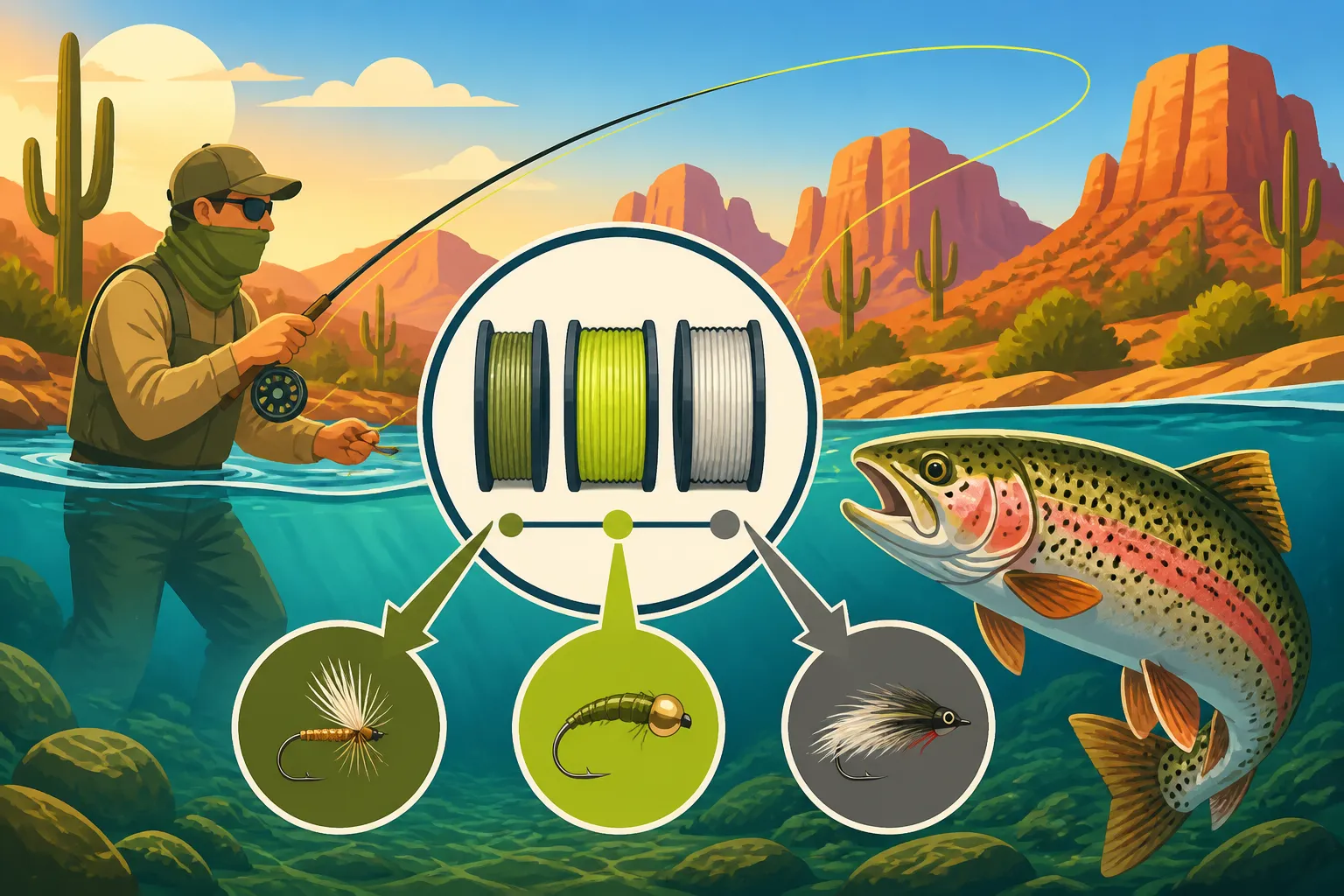
While "line weight" in fly fishing refers to the actual weight of the fly line itself (which is used to cast the virtually weightless fly), the connection to the fly is made with a leader and tippet. For trout, tippet sizes typically range from 6X (around 3 lbs) down to 7X or 8X (as low as 1 lb) for extremely delicate presentations. This ultralight approach is all about minimizing visibility and maximizing the natural drift of the fly. If you're exploring "Fly Fishing Techniques for Trout" in Arizona, you'll quickly learn the importance of matching your tippet to your fly size and the wariness of the fish.
For spin fishing, the concept of "ultralight" truly embraces minimal line weight. Some dedicated ultralight anglers will even venture into 1-pound test territory, using micro-lures and targeting the smallest of panfish or incredibly spooky trout. While this can be exhilarating, it demands exceptional angling skill, a perfectly tuned drag, and a very gentle hand. It's not usually recommended for beginners, but for those seeking the ultimate challenge and maximum sport from smaller trout, ultralight lines can be incredibly rewarding. Just be prepared for potential heartbreak if a surprisingly large fish decides to bite!
Factors Influencing Your Line Weight Decision
Choosing the perfect line weight isn't a one-size-fits-all equation. It's a dynamic decision that changes with the environment, the fish you're targeting, and even the weather. Consider these factors before you spool up your reel.
Water Clarity and Conditions
Arizona's waters, especially its mountain lakes and streams, are renowned for their stunning clarity. This crystal-clear water, while beautiful, is also your biggest challenge when fishing for trout. Fish can see your line, your knots, and even your movements much more easily. In these pristine conditions, lighter line weights are paramount. Think of it this way: if you can clearly see the bottom in 10 feet of water, the trout can definitely see your 8-pound monofilament. Opting for 2-4 pound test in mono or fluorocarbon will significantly increase your chances of a bite.
However, conditions aren't always perfect. A monsoon downpour can temporarily muddy up creeks or river sections, or a windy day might churn up some sediment in a lake. In these less-than-clear conditions, trout might be slightly less line-shy. You might be able to get away with a slightly heavier line (like a 6-pound test) without scaring them off, especially if the water has a noticeable tint. Always assess the water clarity when you arrive at your fishing spot; it's one of the quickest ways to dial in your gear. Remember, even on a cloudy day, clear water still demands stealth.
Target Trout Size and Species
Are you heading out for a casual day of catching recently stocked rainbow trout for dinner, or are you on a quest for a trophy brown trout in a remote wilderness stream? Your target species and their typical size will heavily influence your line choice. As we discussed, "Average Size of Stocked Trout in Arizona" is usually on the smaller side, making 2-4 pound test perfectly adequate. These fish often bite readily and don't put up an extended, brutal fight.
However, if you're venturing into areas known for larger, wilder trout, such as some of the deeper mountain lakes or the legendary waters of Lees Ferry, you might want to consider bumping up your line strength a notch. A 5 or 6-pound test fluorocarbon can provide that extra insurance when a 20-inch brown trout makes a powerful run for cover. Larger fish have more body mass and leverage, and they can snap lighter lines with surprising ease. Understanding the typical size and fighting characteristics of the species you're targeting is crucial. A small rainbow can be handled with light tackle, but a big cutthroat or brown trout demands respect and a line that can withstand its strength.
Cover, Structure, and Casting Distance
The environment you're fishing in – specifically the amount of cover and structure present – is another key factor. Are you fishing an open lake with a relatively clean bottom, or are you casting into a brush-choked creek or a rocky river with lots of snags? Fishing around heavy cover like submerged trees, rock piles, or dense aquatic vegetation dramatically increases the risk of abrasion and getting hung up. In these situations, some anglers might be tempted to go with a heavier line for increased abrasion resistance. However, often a strong, thin fluorocarbon leader can offer both stealth and decent abrasion resistance.
If you consistently find yourself battling snags, a slightly heavier line might offer more peace of mind, but remember the trade-off in visibility. Alternatively, if you need to make long casts to reach distant feeding fish, particularly with very light lures, a lighter diameter line will typically cast farther with less effort. However, if you're using a heavier lure that needs more power behind the cast, a slightly stronger line can prevent snap-offs during the casting motion itself. It's all about matching your line to the particular challenges of your fishing spot and how you intend to present your bait or lure.
Trout Fishing Line Recommendations at a Glance
To help simplify your decision, here’s a quick overview of recommended line types and weights for various Arizona trout fishing scenarios. This table should serve as a helpful guide, but always remember to adjust based on the specific conditions you encounter.
| Scenario | Primary Target (Species/Size) | Recommended Line Type (Main Line) | Recommended Line Type (Leader) | Recommended Weight (Main Line) | Recommended Weight (Leader/Tippet) | Key Advantage | Considerations |
|---|---|---|---|---|---|---|---|
| Stocked Urban Lakes/Ponds | Small to Medium Rainbow Trout (8-14") | Monofilament | (N/A) | 2-4 lb | (N/A) | Stealth, delicate presentation | Very clear water, sensitive fish; good for "How to Choose Line Weight for Trout" beginners |
| Small Mountain Streams | Small to Medium Wild Trout (6-12") | Monofilament / Fluorocarbon | Fluorocarbon | 2-4 lb | 2-4 lb (4X-7X tippet) | Stealth, natural drift | Often requires longer casts, delicate approach; consider "Best Trout Fishing Spots in Arizona" |
| Larger Lakes/Reservoirs | Medium to Large Rainbow/Brown Trout (12-20"+) | Braided | Fluorocarbon | 6-10 lb | 4-6 lb | Sensitivity, casting distance, strength | Potential for larger fish, deeper water; "Rainbow Trout Fishing Guide for Arizona" |
| Rivers (Moderate Current) | Medium to Large Trout (10-18") | Monofilament / Braided | Fluorocarbon | 4-8 lb | 4-6 lb | Abrasion resistance, sensitivity | Current demands stronger line; know your "Arizona Fishing Regulations Explained" |
| Ultralight Finesse | Any Trout, maximum sport | Fluorocarbon | (N/A) | 1-2 lb | (N/A) | Extreme stealth, sensitivity | Requires skilled angler, perfect drag setting; advanced "How to Choose Line Weight for Trout" |
| Fly Fishing | All Trout Species | Fly Line | Nylon/Fluorocarbon | Matched to Rod Weight | 1-6 lb (2X-7X tippet) | Delicate fly presentation | Tippet size crucial for fly size & water; check "Trout Stamp Requirements in Arizona" |
Choosing the right line weight for trout in Arizona is truly about thoughtful preparation and adapting to the moment. There's no single perfect answer, but by understanding the nuances of different line types, their weights, and how they interact with the specific conditions you'll encounter, you'll be well on your way to a successful and enjoyable day on the water.
Disclaimer
Fishing involves inherent risks, and conditions can change rapidly. Always prioritize your safety and adhere to all local, state, and federal fishing regulations and laws. This guide is for informational purposes only and does not guarantee fishing success or personal safety. Always wear appropriate safety gear, be aware of your surroundings, and consult official Arizona Game and Fish Department resources for the most up-to-date rules and stocking information.