How to Fish Cut Bait for Striped Bass
Chasing striped bass in Arizona can be incredibly rewarding, but it often leaves anglers frustrated, especially when those schooling fish decide to ignore your lures. Many of us have spent countless hours casting artificial baits with little success, wondering if there's a more reliable way to entice these powerful predators. This comprehensive guide is dedicated to unlocking the secret of cut bait fishing for Arizona's striped bass, providing you with detailed strategies and techniques to turn those slow days into memorable catches.
Why Cut Bait is a Game Changer for Arizona Stripers
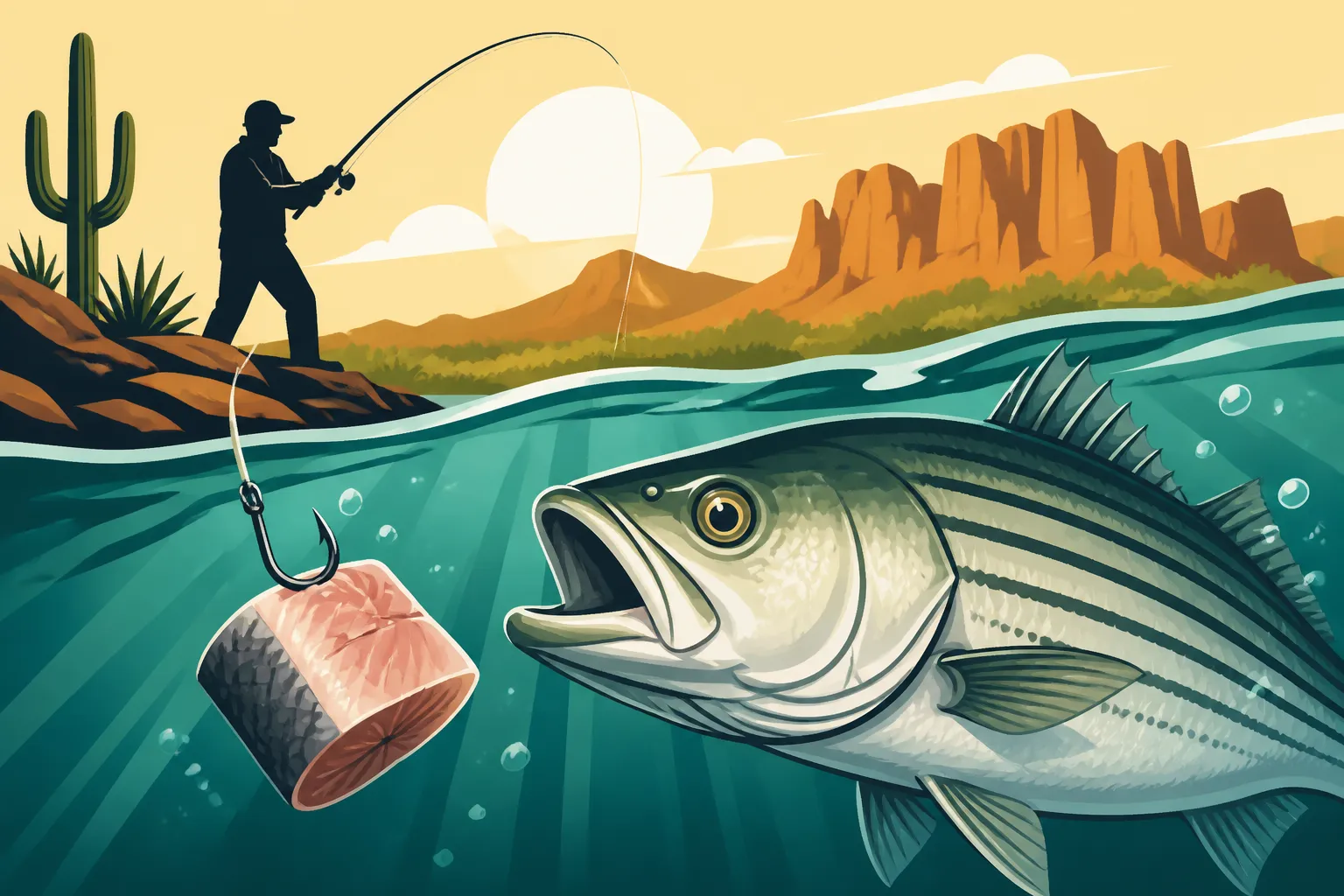
When it comes to tempting big, wary striped bass, especially in the deep, clear waters of Arizona's reservoirs, sometimes you need to offer something they can't refuse. While artificial lures have their place, nothing quite mimics the natural scent and appeal of a freshly cut piece of bait. This method taps into a striper's fundamental instinct to feed on injured or easy prey, making it an incredibly effective technique, particularly when the fish are scattered or not actively chasing fast-moving lures.
The Natural Appeal of Cut Bait
Striped bass are voracious predators with an incredible sense of smell and a keen ability to detect vibrations in the water. Cut bait exploits both of these senses to its fullest. When you slice open a baitfish, you're releasing a potent oil slick and a strong scent trail that can travel significant distances, drawing in stripers from afar. Unlike artificial baits, which rely on flash and movement, cut bait presents an irresistible, easy meal that requires minimal energy expenditure from the fish. This makes it particularly effective during slower feeding periods, in deeper water where visibility is limited, or when fish are less aggressive.
Think about it: a live baitfish might swim away, but a piece of cut bait just sits there, oozing deliciousness. This passive presentation often triggers a different kind of bite – a more confident, committed take – from stripers that might otherwise ignore a flashy lure whizzing by. It's especially useful when targeting larger, more lethargic fish that prefer a stationary meal. For those looking to master how to fish for striped bass, understanding the power of cut bait is crucial.
When and Where to Deploy Cut Bait
Cut bait isn't a one-size-fits-all solution, but it shines in specific scenarios and locations across Arizona. It's incredibly effective in large, open bodies of water like Lake Powell and Lake Pleasant, where stripers can roam vast areas and suspend at various depths. You'll find it particularly useful when fishing over deep structure, along ledges, or in submerged creek channels where stripers are known to hold.
- Deep Water: When stripers are holding in 30, 50, or even 100 feet of water, the scent trail of cut bait is often the most reliable way to get their attention. The oils disperse through the water column, broadcasting a dinner invitation to any passing fish.
- Night Fishing: After the sun goes down, stripers rely even more heavily on their sense of smell. This makes cut bait a prime choice for night fishing expeditions, especially for those trophy-sized flatheads and channel catfish that often share the same waters.
- Slow Periods: If you're on the water and the fish aren't schooling or chasing surface baits, deploying cut bait on the bottom or suspended at depth can often turn a frustrating day into a productive one. It gives lethargic fish an easy target.
- Anchored Fishing: Whether you're in a boat or fishing from shore, cut bait excels when you can stay in one spot and let the scent plume do its work. This is particularly useful when targeting concentrations of fish found with your fish finder.
- Current Areas: While Arizona lakes don't have strong natural currents like some rivers, wind-driven currents or areas near dam outflows can help carry the scent of your cut bait further, increasing its effectiveness.
Consider using cut bait when fishing around prominent points, submerged islands, or deep drop-offs that often hold suspended schools of stripers. Mastering the art of when to deploy this tactic can significantly improve your success rate on Arizona's diverse waterways. For more insights on the best spots, check out our guide on the Best Bass Fishing Lakes in Arizona.
Essential Gear and Bait Preparation for Success
Successful cut bait fishing for striped bass requires a specific setup to handle the powerful fights these fish put up and to effectively present your bait. It's not just about tossing a chunk of fish in the water; it's about optimizing your entire system.
Rods, Reels, and Line for Striper Fishing
Your tackle needs to be robust enough to handle the hard runs and surprising strength of a striper, which can often exceed 10-15 pounds in Arizona's prolific waters like Lake Powell.
- Rods: Opt for a medium-heavy to heavy action casting or spinning rod, typically 7 to 8 feet in length. This provides the backbone needed to cast heavier weights and fight strong fish, while the length helps with longer casts and keeping line out of the water column. A good quality fiberglass or composite rod offers excellent sensitivity and durability. For those who frequently pursue larger fish, a sturdy striper-specific rod from brands like Ugly Stik or Penn is a solid investment you can often find on Amazon.
- Reels: A high-capacity baitcasting reel (size 300-400) or a large spinning reel (size 5000-8000) is ideal. Look for reels with a smooth, powerful drag system, which is critical for preventing break-offs when a striper makes a strong initial run. Brands like Penn, Daiwa, and Shimano offer excellent options. The reel should be able to hold at least 200-250 yards of your chosen line.
- Line: This is where opinions can vary, but a strong, abrasion-resistant line is non-negotiable.
- Main Line: 20-40 lb monofilament or fluorocarbon is a popular choice for its shock absorption and knot strength. However, many experienced anglers prefer 30-50 lb braided line for its incredible sensitivity, thin diameter (allowing for more line on the spool), and zero stretch, which helps with feeling subtle bites in deep water. If you go with braid, consider adding a 2-3 foot fluorocarbon leader.
- Leader Material: A 20-40 lb fluorocarbon leader is highly recommended. It's nearly invisible underwater, more abrasion-resistant than mono, and provides a crucial buffer against sharp rocks or zebra mussels that might be present in some Arizona lakes.
Remember, the goal is to have a balanced setup that allows for effective casting, solid hooksets, and the power to control a surging striper. You can find many reliable fishing line options, including fluorocarbon and braided line, on Amazon with various strengths.
Choosing and Preparing Your Cut Bait
The type and quality of your cut bait can make a huge difference. Freshness is paramount; if it smells bad to you, it probably smells bad to the fish in the wrong way!
-
Best Baitfish: The best cut bait mimics the natural forage of striped bass in Arizona's lakes.
- Threadfin Shad and Gizzard Shad: These are natural food sources for stripers in many Arizona lakes like Roosevelt and Pleasant. If you can catch them fresh, they are unbeatable.
- Tilapia: Commonly found in urban lakes and reservoirs, tilapia makes excellent cut bait. They're oily and their flesh is tough enough to stay on the hook.
- Carp: Readily available and quite oily, carp can be a decent substitute, especially for larger chunks targeting bigger fish.
- Mackerel or Sardines: While not native forage, these oily saltwater fish can be purchased frozen and offer a strong scent trail that stripers often find appealing, particularly for non-local species or when local bait is scarce.
-
Preparation is Key:
- Freshness: Use the freshest bait possible. If buying frozen, thaw it slowly in a cooler, not in direct sunlight. Keep it chilled until use.
- Cutting: How you cut the bait matters.
- Steaks: For larger baits, cut perpendicular "steaks" about 1-2 inches thick from the body. These offer a substantial profile and a large surface area for scent release.
- Fillets/Strips: For smaller baits or when targeting more aggressive fish, fillet the sides and cut them into strips, ensuring each strip has some skin to help it stay on the hook.
- Head/Tail: Don't discard the head and tail sections. The heads are especially oily and can be great for big stripers or catfish.
- Scent Enhancement (Optional): Some anglers like to enhance their cut bait with commercial fish attractants or by soaking it in garlic oil. While not strictly necessary, it can sometimes give you an edge, especially in stained water.
- Storage: Keep your prepared cut bait on ice in a separate container to maintain freshness and prevent contamination with your other tackle.
Always be aware of local regulations regarding bait use. For instance, in some Arizona waters, using live baitfish might be restricted to certain species or areas. Always check the current Arizona Fishing Regulations Explained before heading out.
Proven Rigging Techniques for Arizona Striped Bass
Choosing the right rig is just as important as the bait itself. The rig determines how your cut bait is presented, how it moves, and ultimately, how easily a striper can find and get hooked by it. Here, we'll focus on two highly effective and versatile rigs for cut bait.
The Carolina Rig: A Bottom-Fishing Classic
The Carolina rig is a staple for bottom fishing across many species, and it's particularly effective for stripers holding near the lakebed or around structure. Its design allows the bait to move naturally while keeping the weight on the bottom.
-
Components:
- Egg Sinker: 1/2 oz to 2 oz, depending on depth and current. Use heavier weights for deeper water or windy conditions.
- Plastic Bead: Protects your knot from the sinker.
- Barrel Swivel: Connects your main line to your leader, preventing line twist and allowing the sinker to slide freely.
- Fluorocarbon Leader: 18-36 inches of 20-40 lb fluorocarbon. The length can vary; a shorter leader keeps the bait closer to the weight, while a longer leader allows for more natural movement.
- Hook: A sharp, strong hook is essential. Octopus hooks (sizes 3/0-7/0) or circle hooks (sizes 4/0-8/0) are excellent choices. Circle hooks are highly recommended for beginners as they typically result in corner-of-the-mouth hooksets, minimizing gut-hooking and making catch-and-release easier.
-
Assembly:
- Thread your main line through the egg sinker.
- Slide a plastic bead onto the main line, after the sinker.
- Tie the main line to one end of the barrel swivel using a strong knot like a Palomar or Uni knot.
- Tie your fluorocarbon leader to the other end of the barrel swivel.
- Tie your chosen hook to the end of the leader.
-
Fishing with the Carolina Rig: Cast your rig out and let it sink to the bottom. Keep a relatively tight line, allowing you to feel bites. Stripers often pick up cut bait and move off slowly. With a circle hook, just let the fish take the bait and swim away for a few seconds, then slowly reel down until the line tightens and the hook sets itself. Avoid a hard "sweeping" hookset with circle hooks; gentle pressure is all it takes. This rig is fantastic for targeting stripers that might be hugging the contours of the lakebed, perhaps near points or submerged humps in lakes like Lake Pleasant.
The Slip Sinker Rig: Versatility for Varying Depths
The slip sinker rig, sometimes called a slip bobber rig when used with a float, offers incredible versatility for presenting cut bait at precise depths, whether on the bottom or suspended in the water column. This rig is particularly useful when stripers are suspended at a specific depth rather than directly on the bottom.
-
Components:
- Slip Sinker: A bank sinker or pyramid sinker, usually 1-3 oz, depending on depth, wind, and current. The sinker slides freely on your main line.
- Heavy Duty Swivel: Connects your main line to your leader.
- Fluorocarbon Leader: 12-36 inches of 20-40 lb fluorocarbon.
- Hook: Again, a sharp 3/0-7/0 octopus or 4/0-8/0 circle hook.
- Bobber Stopper (Optional): If you want to suspend your bait at a specific depth off the bottom, a bobber stopper (or even a small split shot crimped on the line) can be used above the sinker to stop its travel.
-
Assembly:
- Thread your main line through the eye of the slip sinker.
- Tie the main line to one side of the heavy-duty swivel.
- Tie your fluorocarbon leader to the other side of the swivel.
- Tie your hook to the end of the leader.
- If suspending bait, you'll need to add a bobber stopper above the sinker on your main line. This stopper allows you to set the depth at which the sinker (and thus your bait) will stop.
-
Fishing with the Slip Sinker Rig:
- Bottom Presentation: Let the rig sink until the weight hits the bottom. The leader allows the bait to drift naturally near the lakebed. This is very similar to the Carolina rig but can be more robust for heavier weights.
- Suspended Presentation: Use your fish finder to locate schools of stripers. Set your bobber stopper to the desired depth, ensuring your bait hovers right in front of the fish's noses. The free-sliding sinker takes the bait down quickly, and then the stopper prevents it from going deeper than intended. This is an excellent technique for Lake Powell Arizona fishing guide when stripers are suspended in the vast open water.
- With a Float (Slip Bobber): For shallow to moderate depths, you can add a slip bobber above your bobber stopper. This allows you to drift your cut bait over submerged structure or along shorelines, presenting it at a consistent depth.
Hooking your cut bait correctly is vital. For fillets or strips, thread the hook through the skin side multiple times, leaving the hook point exposed. For chunk baits, pass the hook through once or twice, ensuring the point and barb are completely clear. This maximizes your hook-up ratio.
Mastering Your Approach: Casting, Presentation, and Hookset
You've got the gear, the bait, and the rig. Now comes the art of fishing: putting it all into action effectively. Striped bass are powerful and can be finicky, so refining your approach will make a world of difference.
Strategic Casting and Presentation
Unlike active lure fishing, cut bait often requires a more patient, strategic approach. You're trying to put the scent in the water and let the fish come to you.
- Location, Location, Location: Use your electronics to find structure, baitfish schools, or concentrations of stripers. Look for points, humps, submerged channels, or even just open water where stripers are known to cruise. Remember, stripers are often found near their food source, so if you see bait schools on your fish finder, cast nearby.
- Fan Casting (From Shore or Anchored Boat): If you're not seeing fish on your electronics or are fishing a broad area, make a series of casts in a fan pattern, covering a wide swath of water. This helps you locate where the fish might be holding. Once you get a bite, focus your subsequent casts in that general area.
- Drifting (From a Boat): A highly effective method is to drift slowly over promising structure or along ledges. This allows you to cover more water with your cut bait, letting the scent trail naturally disperse as you move. Ensure your sinker maintains bottom contact (if targeting bottom fish) or that your suspended bait stays at the desired depth. You can use your trolling motor or a drift sock to control your speed.
- Stealth and Patience: Stripers can be skittish, especially in clear water. Minimize noise on your boat and avoid excessive movement. Once your bait is in the water, resist the urge to constantly reel in and re-cast. Give the scent time to work. Patience is truly a virtue when fishing with cut bait.
- Multiple Rods: If legal in Arizona, using multiple rods (often two or three per angler) can significantly increase your chances. Set them up with different rigs (e.g., one Carolina rig, one slip sinker rig) and at varying depths or distances to pinpoint where the fish are active.
Keep an eye on any changes in wind direction or speed, as this can affect your drift or where your scent plume is traveling. Adjust your presentation accordingly to keep your bait in the most productive zones.
Detecting Bites and Executing the Hookset
Striped bass bites on cut bait can range from a subtle tap to a rod-bending yank. Knowing how to interpret these signals and when to set the hook is crucial.
-
Bite Detection:
- Rod Tip: Pay close attention to your rod tip. A light tap, a steady bend, or a rhythmic pulsing can all indicate a bite.
- Line Movement: Watch your line where it enters the water. A sudden twitch, slackening, or a steady pull can signal a fish taking the bait.
- Clicker/Alarm: If using a baitcasting reel, engage the clicker and lighten your drag. The sound of the clicker going off can be a clear indicator of a run. Shore anglers often use bite alarms or bells on their rod tips.
- Feel: With braided line, you'll often feel the distinct "thump" of a fish picking up the bait before you even see the rod tip move.
-
The Hookset (Critical Difference for Circle Hooks):
- J-Hooks/Octopus Hooks: If you're using traditional J-hooks or octopus hooks, wait for the fish to make a solid run with the bait. Once the rod loads up, reel down quickly to take up any slack, then deliver a firm, sweeping hookset. Don't yank straight up; a sideways sweep is often more effective.
- Circle Hooks: This is where many anglers go wrong. With circle hooks, do not set the hook aggressively. The design of the circle hook is meant to allow the fish to swallow the bait and then, as the line tightens and the fish turns away, the hook slides out of the gullet and catches in the corner of the mouth. When you feel a bite, resist the urge to jerk. Instead, slowly and steadily reel in until your line comes tight and the rod loads up, then apply gentle, continuous pressure. The hook will typically find its mark. This method results in fewer gut-hooked fish, which is great for the fish's survival, especially if you plan on catch and release. This is important for understanding Catch and Release Rules for Arizona Anglers.
Once hooked, be prepared for a strong fight. Stripers are powerful and can make blistering runs. Keep your drag set properly – tight enough to tire the fish but loose enough to prevent line breaks. Work the fish steadily, using the rod's parabolic bend to your advantage, and reel in line when the fish allows it. Bringing a large net is highly recommended for safely landing these big fish. Many anglers find durable landing nets for stripers on Amazon, often with extendable handles.
Here’s a quick overview of different cut bait choices and their best applications:
| Cut Bait Type | Best For | Key Characteristics | Best Rigging | Notes |
|---|---|---|---|---|
| Threadfin Shad | Stripers, Catfish | Natural forage, oily, strong scent. | Steaks, strips | Extremely effective when fresh; often hard to get live. |
| Gizzard Shad | Large Stripers, Catfish | Larger, very oily, tough skin. | Steaks, heads | Excellent for trophy fish due to size and oil content. |
| Tilapia | Stripers, Catfish | Good oil content, tough flesh, readily available in AZ. | Steaks, fillets | Holds up well on the hook, strong natural scent. |
| Carp | Catfish, Large Stripers | Oily, strong scent, good for big chunks. | Steaks, large chunks | Can be a less preferred option if shad or tilapia are available. |
| Mackerel/Sardine | Stripers, Catfish | Very oily, powerful scent, readily available frozen. | Fillets, chunks | Excellent "backup" bait, especially when local bait is scarce. |
Remember that local fish behavior can vary. For more specific seasonal insights, consider checking out our article on When to Fish Arizona Lakes by Month. Enjoy the chase, and tight lines!
Disclaimer
Fishing regulations can change. Always consult the latest Arizona Game and Fish Department regulations before heading out on the water. This guide is for informational purposes only and does not supersede official regulations.