How to Rig a Drop Shot for Smallmouth Bass
It can be incredibly frustrating when you're out on the water, targeting those feisty smallmouth bass in Arizona's clear lakes, and they're just not biting your usual lures. Whether they're pressured, deep, or just plain finicky, sometimes traditional retrieve methods fall short. This comprehensive guide is here to walk you through the subtle yet incredibly effective technique of rigging a drop shot for smallmouth bass, helping you land more fish even when conditions are tough.
Understanding the Drop Shot Advantage for Smallmouth
The drop shot rig isn't just another way to present a bait; it's a finesse technique that often shines when other methods fail, particularly for smallmouth bass. Arizona's lakes, with their often crystal-clear waters and challenging rocky structures, provide the perfect proving ground for this versatile setup. It allows for an unparalleled subtle presentation that can tempt even the most hesitant fish.
Targeting Finicky Fish in Clear Water
Smallmouth bass, especially in heavily fished or extremely clear waters common in places like Lake Havasu or the main body of Lake Powell, can become incredibly wary. They've seen every crankbait, jig, and spinner imaginable. The drop shot rig allows your bait to suspend naturally at a specific depth, just above the bottom, giving it a weightless, almost ethereal appearance. This subtle, unencumbered movement is often the key to triggering bites from finicky fish that might ignore a heavier, less natural presentation. When those bass are suspended over deep structure or hunkering down on shelves, a drop shot gets right into their strike zone without spooking them with a heavy plop.
Vertical Presentation Benefits Over Structure
One of the biggest headaches when fishing Arizona's desert lakes is navigating all that submerged rock, brush, and uneven bottom. Traditional Texas rigs or jigs can get snagged constantly, costing you precious fishing time and expensive tackle. The drop shot flips this problem on its head. By having your weight at the very bottom, and your hook tied a foot or two above it, your bait stays suspended above the snags while the weight itself acts as a feeler, bouncing off rocks without getting stuck. This vertical presentation is phenomenal for working ledges, steep drops, and rock piles, allowing you to thoroughly probe key smallmouth habitats. It lets you maintain contact with the bottom, understanding the contours, while keeping your offering in the fish's face for longer. This technique is particularly effective in spots detailed in our Canyon Ledge Fishing Techniques guide.
Adapting to Arizona's Diverse Lake Depths
Arizona's fisheries range from shallow, brushy coves to deep, expansive reservoirs with depths exceeding hundreds of feet. The beauty of the drop shot is its incredible adaptability to these varied conditions. You can quickly adjust the length of your leader (the distance between the hook and the weight) to target fish at virtually any depth off the bottom. If the smallmouth are holding tight to submerged trees in 20 feet of water, you can rig your bait 18 inches off the weight. If they're suspended over a 60-foot rock pile, you might go with a 3-foot leader to keep the bait higher. This flexibility is invaluable, especially when you're trying to figure out the fish's preferred depth zone, which can change throughout the day and with the seasons, as outlined in our Deep Water Structure Fishing Techniques article.
Essential Gear for Your Arizona Drop Shot Rig
Having the right equipment makes all the difference when you're trying to master a finesse technique like the drop shot. Using gear that's too heavy or too light can hinder your ability to feel subtle bites and properly present your bait. For smallmouth bass, especially, you want a balanced setup that offers sensitivity and control.
Rod and Reel Selection for Finesse
When it comes to drop shotting, a sensitive rod is your best friend. You're often dealing with light bites and need to feel every tap on your line.
- Rod: Look for a spinning rod between 6'6" and 7'6" in length with a medium-light to medium power and a fast or extra-fast action. The fast tip allows for excellent sensitivity to detect those faint smallmouth pecks, while the moderate backbone provides enough power to set the hook and fight fish. Brands like St. Croix, G. Loomis, or even more budget-friendly options found on Amazon from brands like Ugly Stik or Berkley offer great choices. For more recommendations, check out our Best Fishing Rods for Bass in Arizona guide.
- Reel: A lightweight spinning reel in the 2000-3000 size range is ideal. It should have a smooth drag system, which is crucial for fighting strong smallmouth on lighter line. Good quality reels from Shimano, Daiwa, or Pflueger are excellent, providing the smoothness and reliability you need. If you're new to fishing, our Best Fishing Reels for Beginner Anglers in Arizona offers some great starting points.
Line Choices: Braided Mainline with Fluorocarbon Leader
The right fishing line setup is absolutely critical for drop shot success. You need a combination that provides strength, sensitivity, and invisibility.
- Mainline (Braid): Spool your spinning reel with 8-15 lb braided line. Braid has no stretch, which gives you incredible sensitivity to feel the lightest bites, even in deep water. It also offers superior casting distance and strength. The bright colors of braid don't matter because you'll be tying a leader.
- Leader (Fluorocarbon): Tie a 6-12 lb fluorocarbon leader to your braided mainline using a reliable knot like the FG knot or an Albright knot. Fluorocarbon is nearly invisible underwater, which is a huge advantage in Arizona's clear lakes where smallmouth bass have excellent eyesight. It also has a bit of stretch, acting as a shock absorber during the fight. The length of your leader can vary, but generally 4 to 8 feet is a good starting point. Understanding How to Choose Line Weight for Smallmouth Bass is essential for this setup. For general advice on lines, see our Best Line for Bass Fishing article.
Hooks, Weights, and Baits for Drop Shotting
The terminal tackle for a drop shot is surprisingly simple, but each component plays a vital role.
- Hooks: You'll primarily use either a small, straight-shank worm hook (size 1 or 2) or a specialized drop shot hook (size 1 to 2/0). The key is to keep it small and light to maintain the bait's natural presentation. Many anglers prefer octopus-style hooks for their wide gap and ability to hold plastics securely.
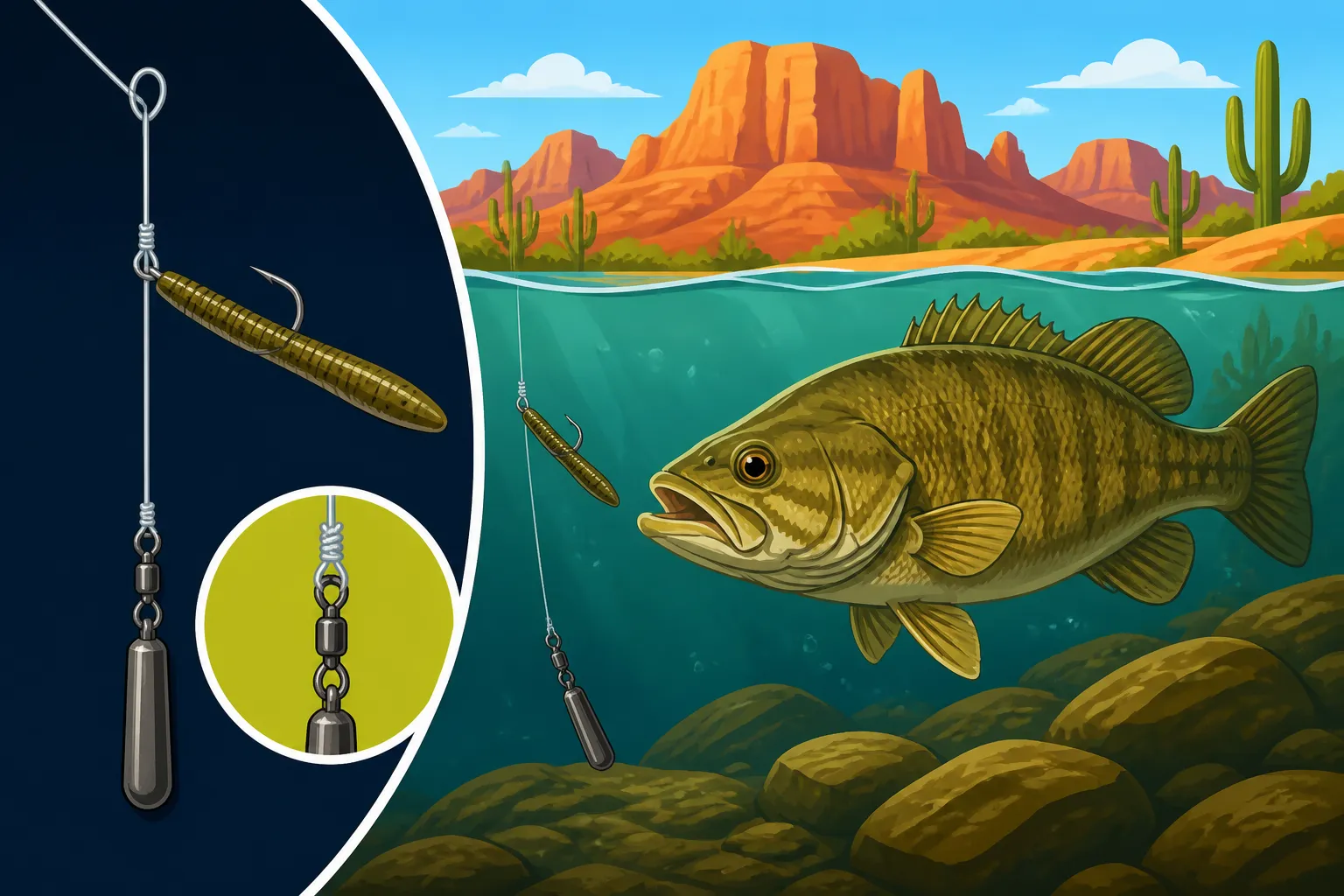
- Weights: Drop shot weights are distinct, typically cylindrical or tear-drop shaped with a line clip or swivel at the top. This allows you to quickly change weights without retying. Weights typically range from 1/8 oz to 1/2 oz. The depth you're fishing and current will dictate the size; lighter weights for shallower, calmer water, heavier for deep or windy conditions. You can find a good variety of these on Amazon.
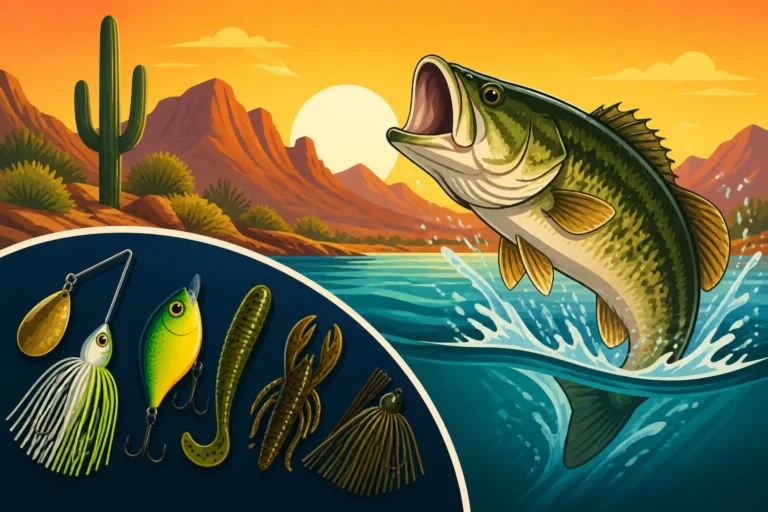
- Baits: The sky's the limit here, but finesse plastics shine. Think small worms (3-6 inches), soft jerkbaits (flukes), creature baits, or even small crawfish imitations. Popular options for smallmouth include the Roboworm Straight Tail Worm, Strike King Dream Shot, or Z-Man Trick ShotZ. Colors like natural shad, green pumpkin, or watermelon are consistently effective in Arizona's waters. For general bait advice, explore our Best Baits and Lures for Arizona Fishing guide.
Here's a quick reference table for common drop shot components:
| Component | Recommended Type/Size | Purpose |
|---|---|---|
| Rod | 6'6" – 7'6" M-L to M Power, Fast Action | Sensitivity, casting, hookset |
| Reel | 2000-3000 Spinning Reel | Smooth drag, line capacity |
| Mainline | 8-15 lb Braided Line | Sensitivity, strength, casting |
| Leader | 6-12 lb Fluorocarbon | Invisibility, shock absorption |
| Hook | Size 1 to 2/0 Drop Shot or Straight-Shank | Secure bait, maximize hookups |
| Weight | 1/8 oz to 1/2 oz Drop Shot Style | Anchor rig, transmit feel, quick adjustment |
| Baits | 3-6" Finesse Worms, Small Jerkbaits | Natural presentation, enticing action |
Step-by-Step Drop Shot Rigging Guide
Now that you have all your gear, let's get down to the actual rigging. It's a straightforward process, but getting the knots right and the components in the correct order is crucial for an effective presentation. Don't worry, it's easier than it sounds!
Attaching Your Hook with a Palomar Knot
The Palomar knot is arguably the best knot for drop shotting, as it's incredibly strong and ensures your hook sits perpendicular to the line, allowing your bait to suspend naturally.
- Thread the line: Start by taking your fluorocarbon leader and folding about 6-8 inches of it in half, creating a loop. Pass this loop through the eye of your drop shot hook.
- Tie an overhand knot: With the doubled line, tie a simple overhand knot, leaving a large enough loop to pass the hook through later. Don't pull it tight yet.
- Pass the hook through the loop: Carefully pass the hook (and your bait if it's already on, though typically you bait after tying) through the large loop you just created.
- Pull tight: Moisten the line and pull both ends of the main line (the tag end and the standing line) simultaneously, cinching the knot down onto the eye of the hook. Ensure it tightens neatly.
- Orient the hook: Here's the critical part for drop shot: Take the tag end of your fluorocarbon leader (the one that will go to your weight) and pass it back through the eye of the hook from the top down. This is what makes the hook stand out horizontally, presenting your bait perfectly. This step often gets overlooked but is essential for the rig's effectiveness.
Adding the Leader and Weight
Once your hook is securely tied and oriented, it's time to add the weight. This is where you determine the critical distance your bait will suspend off the bottom.
- Measure your leader length: Decide how far off the bottom you want your bait to be. This length will be your tag end from the hook down to the weight. For general smallmouth fishing in Arizona, start with 12-24 inches, but be prepared to adjust. If fish are hugging the bottom, go shorter (6-10 inches); if they're suspended higher, go longer (2-4 feet).
- Attach the weight: Take your drop shot weight and simply clip your tag end into the swivel or clamp at the top of the weight. The beauty of these weights is that they're designed for quick adjustments. If you want to change the depth of your bait, just slide the line through the clip up or down, or swap out the weight entirely. This quick-change feature is a lifesaver when you're trying to dial in the bite, saving you from retying knots constantly.
Securing Your Bait for Maximum Action
The way you rig your soft plastic bait on a drop shot hook can significantly impact its action and effectiveness. You want a presentation that looks natural and enticing.
- Nose hooking: This is the most common and often most effective method. Simply thread the very tip of the bait's nose onto the hook point, exposing the rest of the hook. This gives the bait maximum freedom of movement, allowing it to quiver and undulate with the slightest rod tip movement or water current. This is fantastic for finesse worms or small flukes.
- Wacky rigging (less common but effective): For some baits, especially senko-style worms, you can wacky rig them by hooking them through the middle. This creates a different, more horizontal fall and quiver that can sometimes trigger bites. However, it's more prone to snags and less typical for the drop shot's vertical presentation.
- Texas rigging (for heavy cover): If you're fishing exceptionally heavy cover and need to be more weedless, you can Texas rig your bait on a drop shot hook. However, this largely defeats the purpose of the natural, weightless presentation. Only use this when snags are an absolute deal-breaker and you're willing to sacrifice some action. Typically, a simple nose hook on a small finesse bait is all you need for Smallmouth Bass Fishing Guide for Arizona outings.
Mastering the Retrieve and Presentation
Once your drop shot is rigged, the real art begins with how you present it to the smallmouth. This technique is all about subtle movements and patience. Arizona's clear waters and distinct structures demand precision, and a practiced hand with a drop shot can make all the difference.
Reading the Water and Structure for Smallmouth
Before you even make your first cast, understanding where smallmouth bass are likely to be holding is crucial. Smallmouth love rocky areas, ledges, points, humps, and submerged timber. In lakes like Lake Powell, the steep canyon walls and rocky shelves are prime territory.
- Use your electronics: If you have a fish finder, use it to locate baitfish, structure, and suspended bass. Look for schools of fish or isolated arches near sharp drop-offs, underwater points, or even standing timber. Our guide on How to Read a Fish Finder for Bass can help you interpret what you see.
- Fan casting: When you find a promising area, start with long casts and fan them out, covering different angles. Let your weight sink to the bottom, ensuring it makes contact. Pay attention to how the weight feels as it drops – subtle changes in texture can tell you a lot about the bottom composition.
- Focus on transitions: Smallmouth often relate to changes in depth or bottom type. Look for areas where rock transitions to sand, or where a flat suddenly drops into deeper water. These transition zones are often ambush points for feeding bass.
Subtle Shakes and Pauses for Enticement
The retrieve for a drop shot is unlike many other techniques. It's not about big sweeps or fast reeling; it's about subtle manipulation.
- Maintain slack: After your weight hits bottom, reel up any slack until your line is taut, but don't pull the weight off the bottom. Your rod tip should be pointed down, parallel to the water, or slightly up, depending on the depth and wind.
- Micro-shakes: The primary retrieve involves imparting very small, quivering motions to your rod tip. Think of it as barely shaking your hand, just enough to make the bait suspended above the weight dance and quiver. This is where your sensitive rod comes in handy. These subtle movements imitate a struggling baitfish or insect, a perfect trigger for smallmouth.
- Long pauses: Don't be afraid to pause your retrieve for several seconds, or even up to 30 seconds or more, especially in cold water or when fish are lethargic. Often, the bite will come on the pause as the bait slowly settles or slightly drifts. Many times, you won't feel a distinct "thump" like with a jig; instead, it might be a feeling of "mushiness," added weight, or simply your line moving sideways.
- Slow drag: Every so often, subtly drag the weight a few inches across the bottom before continuing your shaking and pausing. This allows you to cover ground slowly and methodically, making sure you don't miss any structure. This technique can be especially effective when combined with others discussed in Jig Fishing Techniques for Bass.
Common Mistakes to Avoid with the Drop Shot
Even seasoned anglers can make errors with the drop shot, but knowing what to look out for can save you a lot of frustration.
- Over-working the bait: This is perhaps the most common mistake. Resist the urge to aggressively twitch or move your rod tip too much. The drop shot is a finesse technique; subtle is key. Big movements will pull your weight off the bottom too much and make the bait look unnatural.
- Using too heavy a line/rod: While you need strength, going too heavy on your fluorocarbon leader or using a stiff rod will significantly reduce your sensitivity, making it hard to feel those delicate smallmouth bites. Stick to the recommended line and rod powers for optimal performance.
- Incorrect hook orientation: As mentioned earlier, if your hook isn't pointing horizontally away from the line, your bait won't suspend correctly. Always double-check this after tying your Palomar knot.
- Not feeling the bottom: If you're not making consistent contact with the bottom via your weight, you're not truly drop shotting. The weight is your anchor and your sensor. Adjust your weight size to ensure you're maintaining contact, especially in windy conditions or strong currents. Remember, lakes like those in our Lake Powell Arizona Fishing Guide can have significant wind and deep areas.
- Fishing too fast: Patience is a virtue with the drop shot. It's a slow, deliberate technique designed to tempt wary fish. Don't rush your retrieve or move on too quickly from a promising spot. Sometimes, just leaving your bait sitting there for an extended period is all it takes for a smallmouth to commit.
By honing your rigging skills and mastering the subtle presentation, the drop shot can become an indispensable tool in your Arizona smallmouth arsenal, helping you unlock more consistent success on the water.
Disclaimer
Fishing conditions and regulations in Arizona can change. Always consult the latest Arizona Game and Fish Department regulations before heading out. This guide is for informational purposes only and does not supersede official rules or local advisories.