Best Line for Bass Fishing
Deciding on the best fishing line for bass in Arizona can feel like trying to navigate a maze blindfolded. With so many options out there – monofilament, fluorocarbon, braid, different weights, colors, and features – it's easy to get overwhelmed and wonder if you're making the right choice for our unique desert lakes. This guide is here to untangle the confusion, breaking down everything you need to know to pick the perfect line for your Arizona bass fishing adventures.
Understanding the Basics: What Makes a Good Bass Fishing Line?
Before we dive into the specifics of each line type, let's talk about the fundamental characteristics that really matter when you're targeting bass in the Grand Canyon State. Arizona's lakes present their own set of challenges, from crystal-clear mountain reservoirs to murky, timber-laden desert impoundments, and understanding these basics will help you make an informed decision for any situation.
Strength and Abrasion Resistance: Battling Arizona's Tough Conditions
When you're reeling in a feisty largemouth or smallmouth bass, especially around the kind of structure we have here in Arizona, line strength is paramount. You need a line that can withstand sudden powerful runs, the initial shock of a hook set, and the sheer pulling power required to extract a big fish from heavy cover. Nobody wants to lose a trophy bass because their line snapped at the critical moment, especially after spending a long day under the desert sun.
Beyond just sheer breaking strength, abrasion resistance is a huge factor in our local waters. Imagine fishing a place like Roosevelt Lake with its countless submerged trees and rocky bottom, or the canyon walls of Lake Powell. Your line is constantly rubbing against jagged rocks, abrasive brush piles, sharp branches, and even the rough scales of the fish itself. A line with poor abrasion resistance will fray quickly, weaken, and inevitably break, often leading to heartbreaking losses. Good abrasion resistance means your line can take a beating and still hold up, giving you confidence when you're working a jig through a dense mesquite bush or dragging a Texas rig across sharp ledges.
Sensitivity and Stretch: Feeling the Faint Bites
Bass fishing, particularly with finesse techniques or when fish are finicky, often comes down to detecting the most subtle takes. Sometimes, a bass won't aggressively strike your lure; instead, it might just "mouth" it, feeling like a slight tick or a bit of added weight on your line. This is where line sensitivity truly shines. A sensitive line transmits these faint signals directly to your rod tip and into your hands, allowing you to react quickly and set the hook before the bass spits the bait.
Stretch, or the lack thereof, plays a significant role in sensitivity. Monofilament lines, for instance, have a good deal of stretch, which can act like a shock absorber when a fish strikes violently. This can be beneficial in certain situations, preventing hooks from tearing out of a fish's mouth. However, too much stretch can dampen sensitivity, making it harder to feel those light bites, and it can also hinder a solid hook set, especially on long casts or in deep water. Fluorocarbon and braided lines, on the other hand, have very low to almost no stretch, offering maximum sensitivity and direct contact with your lure. It's a delicate balance, and the "right" amount of stretch often depends on your specific fishing technique and the conditions you're facing.
Visibility and Diameter: The Stealth Factor
Have you ever fished one of Arizona's high-country lakes like Big Lake or a clear desert lake like Lake Pleasant on a calm, sunny day? The water can be incredibly clear, and bass in these conditions can be exceptionally wary. This is where line visibility becomes a critical consideration. If a bass can easily see your line, it might shy away from your lure, no matter how perfectly presented it is. Anglers often opt for lines that are either camouflaged, clear, or incredibly thin to minimize their presence in the water.
Line diameter, while related to strength, also impacts visibility and overall lure presentation. A thinner diameter line will be less visible underwater and will also allow your lure to have a more natural action, especially smaller, lighter baits. It also helps with casting distance, as there's less air resistance. However, a thinner line generally means less strength and abrasion resistance, so it's a constant trade-off. You need to consider what pound test is appropriate for the size of bass you're targeting and the cover you're fishing, then choose the thinnest diameter line that still provides the necessary strength and durability. Finding that sweet spot is key to increasing your hook-up ratio. Best Fishing Rods for Bass in Arizona will often pair perfectly with the right line diameter.
Monofilament: The All-Around Workhorse
Monofilament line, often just called "mono," has been a staple in fishing for decades, and for good reason. It's likely the first type of line many of us ever spooled onto a reel, and it still holds a revered place in many bass anglers' arsenals, even with newer technologies on the market.
Pros and Cons for Arizona Bass Fishing
Monofilament offers a fantastic balance of qualities that make it incredibly versatile. On the "pro" side, it's generally very affordable, making it a budget-friendly option for re-spooling frequently, which is a good habit to maintain. It also has excellent shock absorption due to its inherent stretch. This means when a big bass makes a sudden run or you make a hard hook set, the line acts like a rubber band, cushioning the blow and often preventing the hook from tearing out of the fish's mouth. This stretch can also be helpful when fighting fish that jump and thrash, reducing slack and keeping tension. Mono is also very easy to handle and cast, less prone to wind knots than braid, and typically holds knots very well. Its buoyancy means it floats, which is a huge advantage for topwater presentations.
However, mono does come with some "cons." Its significant stretch can reduce sensitivity, making it harder to detect subtle bites, especially when fishing deeper water or making very long casts. This stretch can also make for less powerful hook sets. Mono is also known for its memory, meaning it retains the shape of the spool, leading to coils and kinks, particularly in heavier weights or after being on the reel for a while. This can affect casting distance and create tangles. Finally, monofilament is susceptible to UV degradation from the sun, which can weaken it over time, meaning frequent re-spooling is a must, especially with Arizona's intense sunshine.
Ideal Applications and Techniques
Given its characteristics, monofilament shines in several specific bass fishing scenarios, especially in Arizona. Its buoyancy makes it the perfect choice for fishing topwater lures like poppers, walking baits, and buzzbaits. The line helps keep these lures riding high on the surface, allowing them to perform their intended action effectively. Imagine working a popper across a calm cove at Lake Bartlett at sunrise – mono keeps that lure dancing right where you want it.
The stretch of monofilament is also an advantage when fishing reaction baits like crankbaits and spinnerbaits. When a bass slams a fast-moving crankbait, the shock absorption of mono helps prevent the fish from throwing the treble hooks during the fight. It also allows the fish to inhale the lure more completely before feeling the resistance. If you're burning a spinnerbait through grass lines at Alamo Lake, the forgiveness of mono can be a real asset. For general-purpose casting and situations where a little stretch is desired for fighting fish, mono is still a fantastic option. When considering Best Lures for Largemouth Bass in Arizona Lakes, many of the topwater and moving baits pair well with monofilament.
Maintenance and Longevity Tips
To get the most out of your monofilament line, especially under the harsh Arizona sun, a little maintenance goes a long way. The biggest enemy of mono is UV light, which breaks down the polymer chains, leading to weakened line over time. To combat this, store your spools out of direct sunlight and consider using a line conditioner. These conditioners not only protect against UV damage but also reduce line memory, making it smoother and more manageable.
Frequent re-spooling is another key tip. Depending on how often you fish and the conditions, plan to change your mono line every few months, or at least once a season. The first 50-100 feet of line gets the most abuse from casting, retrieving, and fighting fish, so if a full re-spool isn't feasible, you can cut off a significant portion and tie on new line, or simply reverse the line on your spool if it hasn't been used too heavily. Always check your line for nicks, abrasions, and knots after each fishing trip. A small nick can turn into a lost fish very quickly.
Fluorocarbon: The Stealthy Sinker
Fluorocarbon line, often abbreviated to "fluoro," has revolutionized bass fishing since its widespread adoption. It offers a unique set of properties that make it incredibly effective, especially in the clear waters found throughout much of Arizona. Many anglers now consider it indispensable for certain techniques.
Why Fluoro Excels in Clear Arizona Waters
The standout feature of fluorocarbon is its near-invisibility underwater. It has a refractive index very close to that of water, meaning light passes through it rather than reflecting off it, making it incredibly difficult for fish to see. This stealth factor is absolutely critical in clear lakes like Lake Havasu or Canyon Lake, where bass can be highly visual predators and easily spooked by visible line. Using fluoro can significantly increase your bites in these challenging conditions.
Beyond stealth, fluorocarbon boasts low stretch, which translates directly into superior sensitivity. You'll feel every subtle bump, tick, and change in bottom composition, as well as the lightest of bites. This sensitivity is a game-changer when working bottom-contact baits. Fluoro also offers excellent abrasion resistance, often superior to monofilament, making it well-suited for fishing around rocky structures, gravel beds, and submerged wood without fraying as quickly. Finally, its higher density causes it to sink, which is an advantage when you want your bait to get down quickly and stay in the strike zone, especially with jigs or worms.
Best Techniques for Fluorocarbon
Given its unique properties, fluorocarbon excels in finesse and bottom-contact presentations where sensitivity and invisibility are paramount. It's the go-to line for jigs, whether you're pitching a heavy jig into brush piles or dragging a football jig across a rocky point at Lake Pleasant. The low stretch allows you to feel the jig ticking off rocks and detect the often subtle "thump" of a bass inhaling it, while the sinking property helps the jig maintain better contact with the bottom.
Fluorocarbon is also the top choice for Texas rigs, Carolina rigs, and drop shots. For instance, when you're working a drop shot rig on deep ledges at Lake Powell, the line's sensitivity allows you to feel the lightest bite, and its sinking nature keeps your weight on the bottom while your bait hovers enticingly. Drop Shot Techniques for Smallmouth Bass relies heavily on the characteristics of fluorocarbon to be effective. It's also fantastic for jerkbaits and deep-diving crankbaits, where the sinking nature helps them reach maximum depth and the low stretch enhances feel.
Addressing the Challenges: Cost and Knot Tying
While fluorocarbon offers significant advantages, it does come with a couple of notable challenges. The first is typically its higher cost compared to monofilament. Quality fluorocarbon can be a significant investment, which is why many anglers opt to use it primarily as a leader material rather than spooling an entire reel with it (more on leaders in a bit). However, many anglers feel the benefits in terms of stealth and sensitivity justify the expense for critical techniques. You can find a good selection of quality fluorocarbon options at retailers like Bass Pro Shops or on Amazon.
The second challenge can be knot tying. Fluorocarbon can be a bit stiffer and less forgiving than mono, and if not tied properly, knots can slip or break. It's crucial to use knots designed for fluorocarbon and to moisten them thoroughly before cinching them down. Knots like the Palomar knot or the improved clinch knot, when tied carefully, work very well. Take your time, lubricate the line with saliva before tightening, and ensure the knot cinches down smoothly and evenly to prevent line failure. Practice makes perfect, and a properly tied fluoro knot is incredibly strong.
Braided Line: The Powerhouse Performer
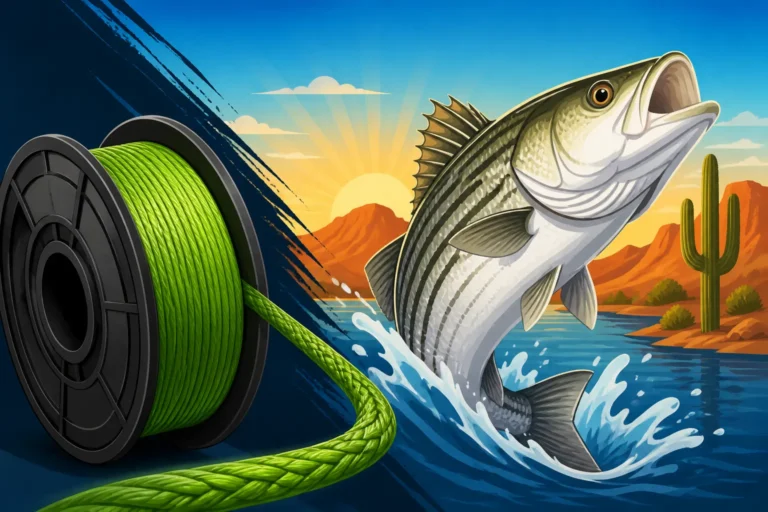
Braided fishing line, often just called "braid," represents another distinct category with its own set of advantages, particularly for power fishing and situations requiring maximum strength and feel. It's constructed from multiple strands of synthetic fibers woven together, giving it a textile-like feel and incredible performance.
Unmatched Strength and Sensitivity
The biggest selling point of braided line is its incredible strength-to-diameter ratio. For a given breaking strength (pound test), braided line is significantly thinner than monofilament or fluorocarbon. This means you can spool much heavier line onto your reel, or achieve longer casts with a lighter setup. This extreme strength is crucial when you're trying to pull a big bass out of dense cover, like cattails at a community fishing lake or heavy timber at Apache Lake.
Perhaps even more critical for many anglers is braid's zero stretch. This characteristic translates into unmatched sensitivity, even more so than fluorocarbon. You feel everything that's happening at the end of your line, from the most delicate tap to the slightest change in bottom composition. This direct connection to your lure also results in incredibly powerful and efficient hook sets, allowing you to drive the hook home even on long casts or in deep water. When you combine this with its strength, braid becomes an unstoppable force for certain techniques.
When to Reach for Braid in Arizona
Braided line truly excels in situations where you need raw power, maximum sensitivity, and the ability to cut through heavy cover. It's the undisputed king for flipping and pitching into dense vegetation, brush piles, or flooded timber – think of the heavy cover you might find at Roosevelt Lake or the Salt River chain lakes. The braid slices through weeds and brush much better than mono or fluoro, and its strength ensures you can muscle a bass out of that snag.
It's also ideal for frogging over matted grass and punching through thick vegetation, common techniques in some of Arizona's more fertile waters. When a bass blows up on a frog or pulls your punching rig deep into a mat, the zero stretch of braid allows for instant, powerful hook sets. Furthermore, braid is an excellent choice as a mainline for deep water jigging or spooning where maximum sensitivity to detect light bites in deep zones is paramount. Many anglers also use braid as a mainline with a fluorocarbon or monofilament leader attached, combining the best of both worlds. This setup allows you to leverage braid's strength and casting ability while offering the stealth of a leader (more on leaders next). For example, mastering How to Fish a Texas Rig Around Brush becomes much easier with braid's power.
Potential Downsides and Workarounds
Despite its impressive advantages, braided line isn't without its quirks. The most common downside is its visibility. Braid typically comes in opaque colors (like green, yellow, or white), and it's highly visible underwater. This can be a significant deterrent for wary bass in clear water, which is why the braid-to-leader setup is so popular.
Another challenge can be its tendency to dig into itself on the spool under heavy load, especially if not spooled tightly enough, which can lead to frustrating backlashes or knotting when casting. Older, rougher braids could also sometimes damage rod guides, but modern braids are much smoother and generally less abrasive. Wind knots, those annoying tangles that form unexpectedly, can also be an issue if you're not careful with your casting technique or if your spool isn't filled correctly.
The primary workaround for visibility is, as mentioned, using a fluorocarbon or monofilament leader. This provides the stealth near your lure while retaining braid's benefits on your main spool. To prevent digging in and wind knots, ensure your reel is spooled properly and tightly, and be mindful of not overfilling the spool. Modern braided lines from reputable brands available at places like Bass Pro Shops are far more refined and mitigate many of these older issues.
Leaders: The Best of Both Worlds
When it comes to optimizing your fishing line setup, especially for bass in Arizona, the concept of a leader is absolutely critical. It's where you combine the strengths of different line types to create a highly effective and versatile system.
Why Leaders are Crucial for Versatility
The beauty of using a leader lies in its ability to give you the best qualities of two different fishing lines on a single setup. Typically, this involves spooling your reel with a strong, sensitive, and long-casting braided mainline, and then attaching a shorter section of fluorocarbon or monofilament as your leader.
This hybrid approach allows you to harness the incredible strength, zero stretch, and casting distance of braid while benefiting from the invisibility of fluorocarbon or the shock absorption of monofilament right at your lure. Imagine needing to punch a heavy Texas rig into thick grass mats (requiring braid's power) but then wanting to fish a weightless worm in open, clear water nearby (requiring fluoro's stealth). Instead of respooling your entire reel, a leader system allows for a quick change to meet the conditions, providing unparalleled versatility for the varied fishing environments we encounter in Arizona. It means you can tackle heavy cover with confidence, yet still present your lure subtly in clear water.
Choosing the Right Leader Material and Length
The choice between a fluorocarbon or monofilament leader depends on your specific fishing situation:
- Fluorocarbon Leaders: These are almost always the preferred choice for maximum invisibility and sensitivity with bottom-contact baits. If you're fishing jigs, Texas rigs, shaky heads, or drop shots in clear Arizona waters, a fluorocarbon leader is your best friend. Its sinking property also helps your bait get down and stay down.
- Monofilament Leaders: While less common with braid, a monofilament leader can be advantageous for topwater presentations or crankbaits when you want a little more stretch for shock absorption and buoyancy to keep your lure riding high. It's often used with techniques where maximum invisibility isn't as critical as natural lure action or shock absorption.
Leader length is another important consideration. Generally, a leader of 3 to 6 feet is a good starting point for most bass fishing applications. In extremely clear water or when fish are very spooky, you might extend it to 8-10 feet. However, remember that the knot connecting your mainline to your leader needs to pass smoothly through your rod guides when casting. Too long a leader, and this knot can cause snags or reduce casting distance. Finding the right balance that suits your rod, reel, and casting style is key.
Knot Tying Essentials for Leaders
The connection between your braided mainline and your leader is the most critical knot in this entire system, as it's often the weakest point. A poorly tied knot here will lead to heartbreak. Several knots are popular for this purpose, each with its own benefits:
- FG Knot: This knot is often considered the gold standard by many experienced anglers. It's incredibly strong, very slim, and passes through rod guides exceptionally smoothly. It can be a bit tricky to learn initially, but once mastered, it's a game-changer.
- Uni-to-Uni Knot (Double Uni Knot): This is a very common and reliable knot, relatively easy to tie, and provides excellent strength. It's a bit bulkier than the FG knot but still passes through most guides well enough.
- Alberto Knot: Another strong and fairly slim knot that's a good alternative to the FG knot, often considered easier to learn for some.
Regardless of the knot you choose, proper tying technique is paramount. Always moisten the line with saliva before cinching the knot down to prevent friction damage and ensure it tightens smoothly. Pull on both the mainline and leader to thoroughly test the knot's strength before making your first cast. Re-tie your leader regularly, especially after catching several fish or if you notice any fraying near the knot. A strong, confident knot will keep you connected to that trophy bass.
Matching Line to Lure and Conditions
Choosing the "best" line isn't a one-size-fits-all decision, especially in a state with such diverse fishing opportunities as Arizona. The ideal line setup changes dramatically depending on the lure you're throwing, the specific conditions of the water you're fishing, and even the time of year.
Line Weight Considerations for Arizona Bass
Line weight, or "pound test," refers to the breaking strength of the line. Choosing the right pound test is a crucial decision that directly impacts your success.
- Light Line (6-10 lb test): This is typically reserved for finesse techniques with smaller, lighter lures. Think about fishing a shaky head in incredibly clear, pressured waters like certain coves on Lake Pleasant or working small grubs in a high-country stream. Lighter line allows for a more natural presentation, longer casts with light baits, and can entice bites from finicky bass. However, it requires a more delicate touch and care when fighting fish, especially around cover.
- Medium Line (12-17 lb test): This is the all-around workhorse for many bass fishing applications. It's great for medium-sized crankbaits, spinnerbaits, jerkbaits, and general purpose casting in moderate cover. This range provides a good balance of casting distance, strength, and relative invisibility for most situations in Arizona's desert lakes or urban community ponds.
- Heavy Line (20-65 lb test): When you're power fishing or dealing with heavy cover, you need heavy line. This includes pitching jigs into dense mesquite at Roosevelt Lake, punching through thick mats of vegetation, or frogging over lily pads. For these applications, braid in the 30-65 lb range (or even higher for extreme punching) is often preferred, allowing you to muscle fish out of snags. Fluorocarbon in the 17-25 lb range is also used for heavy jigs or Carolina rigs where stealth and abrasion resistance in cover are key.
Always consider the potential size of the fish and the amount of cover present. It's generally better to err slightly on the side of heavier line if you're unsure, as a lost fish due to snapped line is always a bummer.
Adjusting for Water Clarity and Structure
Arizona's lakes range from gin-clear mountain reservoirs to turbid, muddy desert impoundments, and the water you're fishing dictates your line choice significantly.
- Clear Water: In extremely clear waters, such as Lake Mohave, parts of Lake Havasu, or many of our trout-stocked lakes, invisibility is paramount. This is where fluorocarbon mainlines or fluorocarbon leaders shine. A clear or light-green monofilament can also work for topwater if fish aren't too spooky. The goal is to make your line as undetectable as possible. How Water Clarity Affects Lure Choice is directly tied to line selection.
- Stained or Murky Water: In waters with lower visibility, such as after heavy rains or in some of the shallower, muddier sections of our larger reservoirs, line visibility becomes less of an issue. Here, you can lean more heavily on the strengths of braided line without worrying as much about fish seeing it. The direct connection and power of braid are excellent for these conditions.
- Heavy Cover and Structure: Fishing around submerged timber, rock piles, brush, or thick vegetation (like at Apache Lake or the Tonto Creek arm of Roosevelt Lake) demands maximum abrasion resistance and strength. Braided line is king here, as it cuts through weeds and is incredibly tough. Heavy fluorocarbon is a close second due to its excellent abrasion qualities, making it ideal for dragging baits over rocky bottoms. The key is to choose a line that won't fray and break when it comes into contact with sharp edges or abrasive surfaces. When you're fishing Best Bass Fishing Lakes in Arizona, you'll encounter a wide variety of cover, so be prepared to adapt.
Seasonal Line Choices
Just like bass change their behavior with the seasons, your line choices might also need to adapt throughout the year in Arizona.
- Spring: As bass move shallow for the spawn, you'll often be targeting them around cover. This means a mix of heavy braid for flipping and pitching jigs or soft plastics into visible cover, and fluorocarbon for slower, more subtle presentations like shaky heads or Ned rigs in clearer areas. A medium-weight monofilament can still be great for early season crankbaits.
- Summer: Arizona summers mean hot water, and bass often retreat to deeper, cooler water or seek refuge in dense shade and thick cover. This is a prime time for heavy braid when punching mats, frogging, or flipping docks. When targeting deep-holding bass with deep diving crankbaits or heavy jigs, fluorocarbon's sinking properties and sensitivity are invaluable. Remember Summer Bass Fishing Tactics in Arizona often involves fishing at dawn, dusk, or even at night.
- Fall: As temperatures cool, bass become more active and start feeding aggressively for winter. This is a highly versatile time. You might be throwing topwater early (mono), cranking open water (mono or fluoro), or jigging deep structure (fluoro or braid-to-fluoro leader). It's a great season to experiment and have a few setups ready.
- Winter: Cold water often means slower, more lethargic bass. Finesse techniques become paramount, demanding maximum sensitivity and stealth. This is where fluorocarbon truly shines for small jigs, drop shots, and spoons. Light monofilament can also be used for suspending jerkbaits, as its stretch can help prevent tearing hooks out of cold, sluggish fish. Check out Winter Bass Fishing Tactics in Arizona for more on this. Understanding Seasonal Movement Patterns of Arizona Bass will further refine your line choices throughout the year.
Comparative Table of Bass Fishing Line Types
To help you visualize the differences and make informed decisions, here's a quick comparison of the three main line types for bass fishing in Arizona:
| Feature | Monofilament | Fluorocarbon | Braided Line |
|---|---|---|---|
| Material | Single nylon strand | Extruded fluoropolymer | Woven synthetic fibers |
| Visibility (Underwater) | Medium (can be seen) | Very Low (nearly invisible) | High (visible) |
| Stretch | High (good shock absorption) | Low (some shock absorption) | None (direct contact) |
| Sensitivity | Low | High | Very High |
| Abrasion Resistance | Moderate | High | Moderate to High (can fray) |
| Buoyancy | Floats | Sinks | Floats |
| Knot Strength | Excellent (easy to tie) | Good (requires proper knots) | Excellent (can cut itself) |
| Casting Distance | Good | Good (stiffer than mono) | Excellent (thin diameter) |
| Cost | Low | High | Medium to High |
| Best Uses in Arizona | Topwater, crankbaits, spinnerbaits | Jigs, Texas rigs, drop shots, finesse, clear water | Flipping, pitching, frogging, heavy cover, braid-to-leader setups |
Conclusion
Choosing the "best" line for bass fishing in Arizona isn't about finding one magical spool that does it all, but rather understanding the strengths and weaknesses of each type and how they apply to the diverse conditions we face. Whether you're working a topwater lure across a glass-smooth desert lake at sunrise or punching a jig into dense timber, having the right line on your reel is a game-changer. Don't be afraid to experiment with different setups, especially using leaders, to find what works best for your style of fishing and the specific waters you're exploring. The more you fish, the more intuitive these choices will become, and the more bass you'll be able to bring to the boat.
Disclaimer
This article is for general informational purposes only and does not constitute professional advice. Laws, prices and regulations vary by location and change over time. Consult a qualified professional for guidance on your specific situation.