Drop Shot Techniques for Smallmouth Bass
Catching finicky smallmouth bass, especially in the notoriously clear and often deep lakes here in Arizona, can feel like an impossible puzzle. You throw everything in your tackle box at them, only to watch them ignore your offerings or simply vanish into the depths. This frustration is real, and it’s why so many anglers turn to one of the most effective finesse techniques out there: drop shot fishing. This guide is dedicated to breaking down everything you need to know to master the drop shot and consistently put smallmouth in your net across Arizona's diverse waterways.
The Unbeatable Edge of Drop Shot Fishing for Arizona Smallmouth
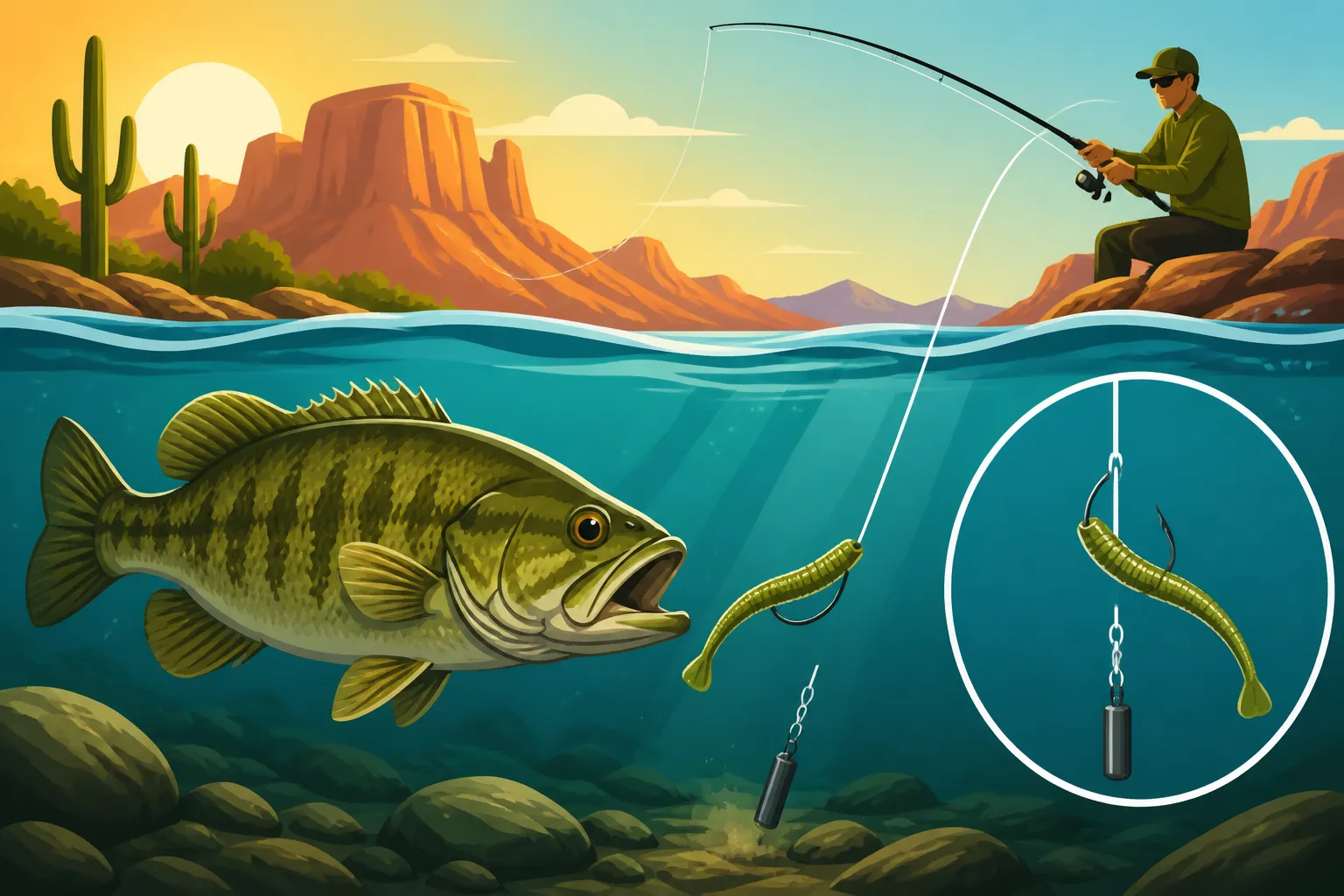
The drop shot rig might look a little unconventional at first glance, but once you understand its mechanics, you'll see why it's a secret weapon for targeting smallmouth bass. Unlike traditional setups where your weight is at the end of your line, with a drop shot, your hook is tied directly to the main line, and a small weight hangs below it. This simple reversal changes everything, allowing for a presentation that's incredibly natural and irresistible to wary fish. It’s perfect for those days when the bass are suspended, glued to structure, or just plain not in the mood to chase.
Understanding the Drop Shot Advantage
The primary advantage of the drop shot is its ability to present a soft plastic bait horizontally and perfectly still at a specific depth, just off the bottom. Think about it: a bait on a jig head or Carolina rig often dives into the muck or lays flat. The drop shot keeps your bait hovering enticingly, mimicking a natural forage fish or invertebrate suspended in the water column. This subtle, almost weightless presentation is exactly what smallmouth often key in on, especially in the ultra-clear waters we frequently encounter in Arizona's desert lakes. It also allows you to impart minimal action to the bait, letting it quiver and shake with the slightest rod tip movement, which can be the trigger for a lethargic smallmouth.
One of the biggest frustrations for anglers targeting smallmouth in deep lakes is getting their bait into the strike zone and keeping it there. Traditional Texas rigs or even jig heads can be difficult to maintain at a precise depth without constantly moving. The drop shot solves this by allowing you to plumb the depths directly beneath your boat or from the shore, maintaining contact with the bottom via the weight while your bait dances enticingly above it. This vertical control is paramount when fish are holding tight to specific depth contours or rock piles, making it an indispensable tool for precision fishing.
Why Smallmouth Bass Can't Resist a Drop Shot
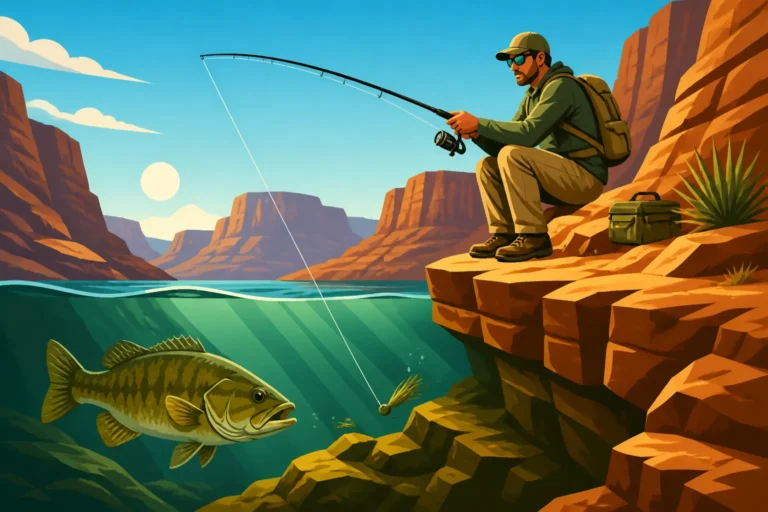
Smallmouth bass are known for their preference for rocky, clear water environments and their keen eyesight. They often relate to vertical structure like bluff walls, submerged timber, and deep rock piles. The drop shot rig perfectly exploits these preferences. A small plastic worm or creature bait suspended tantalizingly near a rocky ledge at Lake Powell, or over a deep hump at Lake Pleasant, looks exactly like a vulnerable baitfish or a crayfish peeking out from cover. Because the hook is tied above the weight, the bait appears weightless, allowing it to flutter and vibrate with the smallest twitch, which smallmouth find incredibly difficult to ignore.
Their predatory instincts, combined with their sometimes finicky nature, make them perfect candidates for this technique. Unlike largemouth that might ambush a fast-moving crankbait, smallmouth often prefer to inspect their food before committing. The drop shot allows them to do just that. You can hold the bait perfectly still for long periods, giving even the most cautious smallmouth ample time to approach, examine, and eventually inhale the offering. This patient approach often pays dividends when other power fishing techniques fail to produce. For more on these fascinating fish, check out our comprehensive Smallmouth Bass Fishing Guide for Arizona.
Common Frustrations This Technique Solves
Many anglers experience the disappointment of seeing bass on their fish finder but being unable to elicit a bite. This is a common frustration, particularly when fish are suspended or hugging deep structure in clear water. A traditional jig might pass right by them, or a crankbait might be too aggressive. The drop shot offers a solution to this exact scenario. Because you can precisely control the depth of your bait, you can literally present it directly at eye level with suspended fish. If you see a school of smallmouth hovering 20 feet down over a 40-foot bottom, you can set your leader length to put your bait right in front of their faces.
Another significant frustration is dealing with snags. Fishing rocky bottom or submerged brush with conventional weighted lures often results in lost tackle. The drop shot, while not entirely snag-proof, significantly reduces this problem. The small, often lead-free drop shot weights are designed to slip through cracks and over rocks. If it does get stuck, a gentle tug usually breaks the light line connecting the weight, saving your hook and bait. This makes it far less costly to fish in high-percentage, snaggy areas where smallmouth love to hide, allowing you to focus more on fishing and less on re-tying.
Gearing Up for Drop Shot Success on Arizona Waters
The right gear can make all the difference when it comes to finesse fishing, and drop shotting for smallmouth bass is no exception. While you might already have some suitable equipment, optimizing your setup for sensitivity and stealth will drastically improve your success rate. This isn't about buying the most expensive gear, but choosing components that work in harmony to give you the best feel for those subtle smallmouth bites.
Selecting the Right Rod and Reel Combo
For drop shot fishing, sensitivity is king. You're often dealing with light bites in deep water, so a rod that transmits every bump and subtle tap is crucial. I generally recommend a spinning rod between 6'6" and 7'6" in length, with a light to medium-light power and a fast or extra-fast action. The fast tip allows for precise casting and excellent bite detection, while the backbone provides enough power to fight a feisty smallmouth without overpowering your light line. A good example would be a 6'10" medium-light, extra-fast spinning rod, which offers a great balance of sensitivity and control.
Pairing this rod with a quality spinning reel in the 1000 to 2500 size range is ideal. Look for a reel with a smooth drag system and minimal play in the handle. A smooth drag is paramount when fighting strong smallmouth on light line, preventing break-offs, especially during their powerful runs and headshakes. Brands like Shimano, Daiwa, and Abu Garcia offer excellent options in this category. For more specific recommendations, you might want to check out our guides on Best Fishing Rods for Bass in Arizona and Best Fishing Reels for Beginner Anglers in Arizona.
Line Choices: The Critical Link to Sensitivity
Your fishing line is the direct link between you and the fish, and nowhere is its importance more apparent than in drop shot fishing. I highly recommend a braided main line with a fluorocarbon leader. A good 8-10 lb braided line offers superior sensitivity due to its lack of stretch, allowing you to feel even the slightest tap. It also casts exceptionally well and provides strength for fighting fish and pulling your weight free from snags.
Attached to your braid, you'll want a 6-8 lb fluorocarbon leader, typically 6-10 feet long. Fluorocarbon is nearly invisible underwater, which is a massive advantage in the clear waters of Arizona lakes like Lake Havasu or the Colorado River. It also has less stretch than monofilament and excellent abrasion resistance, which is crucial when fishing around rocky structure. The combination of braid for feel and fluoro for stealth is a winning ticket for smallmouth. For a deeper dive into line selection, consider our article on How to Choose Line Weight for Smallmouth Bass.
Essential Weights, Hooks, and Soft Plastics
The terminal tackle for drop shotting is relatively simple but specific. For weights, pencil or cylindrical drop shot weights are preferred because their narrow profile helps them slip through rocks and cover with minimal snagging. You'll want a variety of sizes, typically ranging from 1/8 oz to 1/2 oz, depending on depth, wind, and current. Lighter weights (1/8-1/4 oz) are great for shallower water or calm conditions, while heavier weights (3/8-1/2 oz) are necessary for deeper water, windy days, or when current is present, ensuring your bait gets down quickly and stays put. You can often find multi-packs of these weights on Amazon for convenience.
| Weight Size | Optimal Depth Range (Feet) | Conditions | Notes |
|---|---|---|---|
| 1/8 oz | 0-15 | Calm, shallow | Max sensitivity, slow fall |
| 3/16 oz | 10-25 | Light breeze, moderate depth | Good all-rounder for subtle presentations |
| 1/4 oz | 20-40 | Moderate wind/current, deeper water | Most versatile size |
| 3/8 oz | 30-50+ | Windy, strong current, very deep | Fast descent, maintains bottom contact |
| 1/2 oz | 40-60+ | Extreme wind/current, current fishing | For heavy conditions or vertical jigging |
For hooks, offset shank hooks like a #1 or #2 Gamakatsu Drop Shot/Split Shot hook or a similar VMC model are popular. These hooks are designed to keep your soft plastic bait perfectly horizontal and offer a good hook-up ratio. Some anglers prefer straight shank hooks or even small wacky hooks for certain presentations.
When it comes to soft plastics, the options are endless, but a few categories consistently perform for Arizona smallmouth. Small finesse worms (4-6 inches) like the Yamamoto Senko (cut down), Roboworm Straight Tail Worms, or various drop shot minnows are staples. Creature baits like small tubes or craws can also be highly effective, especially when smallmouth are feeding on crayfish. Colors often depend on water clarity and forage, but natural greens, browns, and baitfish patterns (like clear with silver flake) are always a good starting point. You can find a huge selection of these specific baits and more generic options for Best Baits and Lures for Arizona Fishing online.
Mastering the Art of Rigging a Drop Shot
Setting up your drop shot rig correctly is paramount. A poorly tied knot or an incorrectly rigged bait can completely undermine the effectiveness of this finesse technique. Don't skip these crucial steps, as they are the foundation for a successful day of smallmouth fishing. Getting this right means your bait will present naturally, and you'll have the confidence that your knots will hold when a big Arizona smallmouth decides to strike.
Step-by-Step Drop Shot Knot Tying
The most popular and effective knot for tying your hook to a drop shot rig is the Palomar knot. It’s incredibly strong and ensures your hook stands out horizontally from the main line, which is critical for the bait’s action.
Here's how to tie it properly:
- Double the line: Take your fluorocarbon leader and double about 6-8 inches of it to create a loop.
- Pass through hook eye: Pass the doubled line through the eye of your drop shot hook.
- Tie an overhand knot: Form a simple overhand knot with the doubled line, ensuring the hook hangs freely in the middle of the loop you've created. Don't tighten it yet.
- Pass loop over hook: Bring the large loop of doubled line back over the entire hook. This is the crucial step that makes the Palomar knot so strong and ensures the hook eye faces upwards.
- Moisten and tighten: Moisten the knot with saliva, then pull both tag end and main line simultaneously to cinch the knot down firmly against the hook eye.
- Attach the weight: Now, here's the kicker for a drop shot: take the long tag end of your line (the one hanging down from the hook) and tie your drop shot weight to it. You can use a simple overhand knot or a clinch knot, depending on the weight's attachment point. The length of this tag end determines how far off the bottom your bait will be. I usually start with 12-18 inches and adjust based on fish activity and structure.
It's tempting to use a quick-clip for the weight, but a direct knot is often more secure, especially in snaggy areas where the weight might need to break free. Practicing this knot at home will build muscle memory, allowing you to tie it quickly and reliably on the water, minimizing downtime when the fish are biting.
Choosing and Rigging Your Soft Plastics
The choice of soft plastic and how you rig it greatly influences its presentation and effectiveness. While many baits work, finesse worms and small minnow imitations are staples for smallmouth drop shotting. For instance, a 4-inch Roboworm or a similar straight-tail worm, or perhaps a small Amazon brand minnow imitation, can be incredibly productive.
The most common way to rig these baits is by nose-hooking them. This involves simply pushing the hook point through the very tip of the bait's nose. This leaves the entire body of the plastic free to move and quiver with the slightest rod twitch or current. It offers a very natural, life-like action that smallmouth find irresistible. For smaller, more delicate baits, this also ensures the bait itself doesn't interfere with the hook set.
Another method, less common but sometimes effective, is wacky rigging the bait on the drop shot hook. This involves hooking a soft plastic worm through its center, allowing both ends to wiggle freely. This can create a very different, undulating action that can trigger bites from particularly stubborn fish. However, wacky rigging tends to be more prone to snags and can tear baits more easily. Experimentation is key; sometimes a subtle change in bait profile or rigging style is all it takes to turn a slow day into a stellar one. Remember to inspect your bait regularly for tears or misalignment, as a damaged bait will not present as effectively.
Finesse Presentations: How to Fish the Drop Shot
Once your rig is perfectly set up, the real magic begins with how you present it. Drop shot fishing is all about finesse and subtle movements. You're not trying to aggressively rip the bait through the water; instead, you're coaxing the smallmouth into biting with gentle enticing motions. This is particularly effective in clear water environments where bass have ample time to scrutinize your offering.
Subtle Movements and Detecting Bites
The beauty of the drop shot is its ability to suspend your bait in the strike zone with minimal effort. The most common presentation is simply dropping the rig to the bottom, letting the weight settle, and then reeling in any slack until your line is taut to the weight. Your rod tip should be held at a slight angle, giving you direct contact with the weight and the ability to feel the bottom. The key here is to keep just enough tension to feel the weight on the bottom, but not so much that you're pulling the bait away from its intended depth.
From this position, the main goal is to impart subtle action to the bait without moving the weight. This is achieved through tiny twitches of the rod tip, often just an inch or two, or by simply holding the rod still and letting the natural movement of the boat or currents create a slight shimmy in the bait. Envision a small baitfish or insect struggling gently. After a series of subtle twitches, let the bait rest perfectly still for several seconds. Often, the bites will come during this pause, or just as you begin to twitch again. You might feel a light tap, a spongy feeling, or sometimes your line will just go slack or move sideways. Set the hook with a gentle sweep of the rod, rather than a powerful, snapping jerk, as the hooks are typically small and sharp.
Adapting to Different Depths and Conditions
The drop shot is incredibly versatile and can be adapted to various depths and environmental conditions found across Arizona's diverse fishing landscapes, from the deep canyons of Lake Powell to the shallower rock piles of Roosevelt Lake. When fishing deeper water, heavier weights become necessary to ensure your rig gets down quickly and maintains bottom contact, especially if there's wind or current. For example, if you're targeting smallmouth 40 feet deep at Lake Powell, you might start with a 3/8 oz or 1/2 oz weight. In shallower areas, say 15-20 feet, a 1/8 oz or 3/16 oz weight might be perfect, offering a slower fall and more natural presentation.
Wind can be a major challenge for any finesse technique, making it hard to feel subtle bites and maintain control. On windy days, heavier weights will help you keep your bait in the strike zone and maintain better line contact. You might also want to position your boat to drift with the wind, allowing you to cover water efficiently while presenting your drop shot vertically. Conversely, on calm days with clear water, you can opt for lighter weights and a longer fluorocarbon leader to maximize stealth. The depth of your bait off the bottom is also crucial; if fish are suspended, you can increase your leader length to place the bait higher in the water column. If they're hugging the bottom, shorten the leader.
Effective Boat and Bank Fishing Strategies
Whether you're fishing from a boat or the bank, the drop shot can be highly effective. From a boat, the primary advantage is mobility. You can easily position yourself directly over promising structure or follow contour lines. Using your electronics to identify humps, ledges, and schools of fish, you can drop your rig precisely into the strike zone. Drifting slowly with a trolling motor over a productive area, making short casts or simply vertical jigging beneath the boat, can be incredibly productive. When you get a bite, mark the spot on your GPS!
For bank anglers, the drop shot is also a powerful tool, especially on lakes with steep drop-offs or accessible rocky points. You can make long casts, let your weight sink to the bottom, and then slowly drag and twitch the rig back to you. The key is to find areas where deep water is accessible from the shore. This is often the case in many of Arizona's desert reservoirs. Pay close attention to rocky points, submerged structure, or areas where the bank drops off steeply into deeper water. Cast your drop shot to these areas, let it settle, and then use the subtle twitching motion, reeling in just enough slack to maintain contact as you work it back. The ability to pause the bait indefinitely is a huge advantage for bank anglers who might be working a specific piece of cover.
Locating Arizona Smallmouth Bass with Drop Shots
Finding smallmouth bass in Arizona often means understanding their preference for clear water and rocky environments. These fish are creatures of habit and will often relate to specific types of structure throughout the year. Knowing where to look and how to adapt your drop shot presentation will significantly increase your success on our desert lakes.
Targeting Structure in Clear Desert Lakes
Arizona's clear desert lakes, like Lake Powell, Lake Pleasant, and Roosevelt Lake, are prime smallmouth habitats. Smallmouth bass thrive in these environments because they offer abundant rocky structure, deep water, and good visibility for foraging. When targeting smallmouth with a drop shot, focus on these key structural elements:
- Deep Ledges and Drop-offs: Smallmouth love the edges where shallow water transitions into deep. These ledges provide ambush points and easy access to different depths. Fish your drop shot along these contour changes, letting your weight tap the bottom as your bait suspends just above.
- Rocky Points and Humps: Any rocky protrusion extending into deeper water is a smallmouth magnet. Cast your drop shot onto the shallower part of the point and work it down the slope, or position your boat over a submerged hump and fish it vertically.
- Bluff Walls and Canyons: Lakes like Powell are famous for their sheer rock walls. Smallmouth will often suspend along these vertical structures. The drop shot is perfect for fishing these areas, allowing you to precisely target suspended fish or those tucked into small crevices.
- Submerged Timber and Brush Piles: While primarily associated with largemouth, smallmouth will also use submerged trees and brush for cover, especially if it's near deeper water and rocky bottom. The drop shot's weedless potential with certain hook styles makes it viable here.
Understanding the Smallmouth Bass Habitat in Arizona Lakes will give you a significant edge, as these fish often show predictable patterns of where they hold based on the available structure.
Seasonal Tactics for Consistent Bites
Smallmouth bass behavior in Arizona changes significantly with the seasons, largely influenced by water temperature. Adapting your drop shot approach to these seasonal patterns is crucial for consistent success.
- Spring (Pre-spawn & Spawn): As water temperatures rise into the 50s and 60s Fahrenheit, smallmouth move shallower to spawn. They'll still relate to rocky areas, but often in 5-20 feet of water. This is a fantastic time for drop shotting, as fish are aggressive but might still be finicky. Keep your bait in potential bedding areas or staging points.
- Summer (Post-spawn & Deep Water): When the scorching Arizona summer hits, smallmouth often retreat to deeper, cooler waters, often 20-50+ feet deep. They'll relate to deep structure, bluff walls, and thermoclines. This is when the drop shot truly shines, allowing you to precisely target fish in the depths. Early mornings and late evenings might see them venture shallower, but mid-day requires deep water tactics. You can learn more about this by exploring Seasonal Movement Patterns of Smallmouth Bass at Lake Powell.
- Fall (Feeding Frenzy): As temperatures cool, smallmouth become highly active, feeding heavily in preparation for winter. They'll often be found transitioning between shallow and deep water, chasing baitfish. The drop shot remains effective, especially on clear days, but you might also mix in more aggressive techniques if the fish are willing to chase.
- Winter (Slow & Deep): In the cooler winter months, smallmouth become more lethargic and often hold in deep, stable water. Bites will be extremely subtle. The drop shot's natural presentation and ability to be fished almost motionless is invaluable here. Target the deepest rocky points, humps, and channel swings. You can read more about specific strategies in our Winter Bass Fishing Tactics in Arizona guide.
Lake-Specific Considerations
Arizona offers a variety of smallmouth fisheries, each with its unique characteristics.
- Lake Powell: Known for its vast, deep canyons and incredibly clear water, Lake Powell is a smallmouth paradise. Drop shotting here is almost a necessity, especially when targeting fish suspended along vertical rock walls, over submerged brush, or near deep ledges. The larger lake size often means more current in certain areas, potentially requiring heavier weights. Consider deeper diving drop shot presentations here. For more details, see our Lake Powell Arizona Fishing Guide.
- Lake Pleasant: Closer to Phoenix, Lake Pleasant also holds a healthy population of smallmouth. While not as deep as Powell, it still features extensive rocky structure, humps, and points where smallmouth congregate. The water clarity here can vary, but generally favors finesse techniques. Pay attention to main lake points and underwater islands.
- Roosevelt Lake: Roosevelt is a massive reservoir that primarily caters to largemouth, but it does have good smallmouth fishing, particularly in its clearer, rockier upper sections and main lake points. Look for hard bottom areas, especially where rocks meet brush or timber. The drop shot is effective for picking off those less aggressive fish that might not commit to a reaction bait.
Always check local regulations for specific lakes, as some may have different size and bag limits for smallmouth bass.
Advanced Strategies and Overcoming Drop Shot Challenges
Even with the perfect rig and an understanding of smallmouth behavior, you'll still encounter days when the bite is tough. That's when advanced strategies and troubleshooting come into play. Leveraging your electronics and knowing how to adjust your approach can turn a frustrating day into a productive one.
Leveraging Electronics for Precision Fishing
Modern fish finders are an invaluable tool for drop shot fishing, allowing you to identify structure and even locate individual fish before you ever make a cast. Knowing How to Read a Fish Finder for Structure is crucial.
- Side Imaging/Down Imaging: These technologies allow you to scan wide areas for humps, rock piles, ledges, and submerged timber. Once you identify a promising piece of structure, you can mark it with a waypoint and then approach it to fish vertically.
- 2D Sonar: Your traditional sonar will show you depth changes and, crucially, fish arches. When you see a fish arch or a school of baitfish, you can adjust your drop shot's leader length to put your bait exactly at that depth. This is especially effective for suspended smallmouth.
- Mapping: Detailed lake maps (Navionics, Lowrance Insight Genesis, Garmin Quickdraw Contours) are essential for identifying contour lines, humps, and channels where smallmouth are likely to hold. Use these maps to plan your attack before you even launch the boat. When you find a productive spot, mark it on your GPS so you can return.
Being able to "see" what's below the surface takes the guesswork out of drop shotting. You can quickly eliminate unproductive water and focus your efforts on areas where fish are actively holding. Without a good fish finder, drop shotting becomes a lot more about blind luck; with one, it becomes a precise, surgical strike.
Troubleshooting When the Bite is Tough
We all have those days when the fish seem to have lockjaw. When your usual drop shot techniques aren't producing, it's time to troubleshoot.
- Change Leader Length: If you're not getting bites, try adjusting how far your bait is off the bottom. Smallmouth might be tight to the bottom one day (short leader, 6-8 inches) and suspended a few feet higher the next (longer leader, 2-3 feet).
- Vary Bait Size and Color: Sometimes a subtle change is all it takes. Go smaller (2-3 inch micro baits) or try a different color. Natural colors like green pumpkin, watermelon, or brown typically work well, but don't be afraid to experiment with brighter colors if the water is murky or the bite is aggressive. Check out Best Lures for Smallmouth Bass at Lake Powell for more ideas.
- Alter Your Action: Are you twitching too much, or not enough? Try holding the bait perfectly still for longer periods, or introduce a very slow, subtle drag. Sometimes a slight shake of the rod tip, just enough to make the bait quiver, is the only action needed.
- Experiment with Weight: Lighter weights offer a slower, more natural fall, while heavier weights get your bait down faster and help maintain bottom contact in wind or current. If you're using too heavy a weight, your presentation might be too aggressive. If too light, you might not be reaching the fish's depth effectively.
- Check Your Line and Leader: Nicks or abrasions in your fluorocarbon leader can weaken it and make it visible. Re-tie frequently, especially if fishing around sharp rocks. Ensure your knots are perfect. Even the most seasoned angler can forget to check their line, but it’s a small detail that makes a huge difference.
Remember, persistence and patience are key in finesse fishing. The drop shot is designed for challenging conditions, so don't get discouraged if the bites are light or infrequent. Keep experimenting, stay confident, and you'll soon unlock the smallmouth code.
Disclaimer
Fishing conditions and regulations in Arizona can change. Always consult the latest Arizona Game and Fish Department regulations before heading out on the water. This guide is for informational purposes only and does not supersede official regulations.