Do You Need Heavy Line for Flathead Catfish?
Oh, the age-old question that keeps many a seasoned angler up at night, especially after that one fish got away! You know the feeling – you set the hook, feel that undeniable thumping power, and then… snap. The line breaks, and your trophy flathead catfish swims off to tell its friends about the amateur angler it just outsmarted. It's frustrating, disheartening, and often leads us to wonder: do I really need heavier line for these Arizona flathead monsters? This guide is going to dive deep into exactly that, helping you understand the raw power of these fish and how to choose the right line to bring them to the net.
The Unforgiving Power of Arizona Flathead Catfish
Arizona's waters, from the mighty Colorado River to the sprawling desert lakes like Roosevelt and Bartlett, hold some truly incredible fish. Among them, the flathead catfish stands out as a brute, a true apex predator that demands respect not just from its prey, but from us anglers too. These aren't your average panfish; they are built for power, stealth, and a fight that can test even the most experienced fisherman.
Why Flatheads Demand Respect and Heavy Gear
Flathead catfish are built like underwater bulldozers. Their broad, flattened heads give them their name, but it's their muscular bodies and formidable tails that generate incredible pulling power. When you hook into a sizable flathead, especially in the swift current of a river or near heavy cover in a lake, it's not just a tug-of-war; it's often a test of pure will. They don't give up easily, making furious runs, trying to bury themselves in structure, or simply holding their ground with surprising stamina.
Many anglers learn this lesson the hard way. You might be targeting channel catfish with a lighter setup, feeling confident, only for a flathead to engulf your bait and quickly expose any weaknesses in your gear. Their initial surge can be so violent that it feels like you've hooked a submerged log that suddenly came to life. This raw power is precisely why the question of "heavy line" isn't just an option, it's often a necessity if you want to consistently land these magnificent fish. If you're looking for more general information on these incredible fish, check out our Flathead Catfish Fishing Guide for Arizona.
Their Preferred Haunts: Structure, Snags, and Submerged Timber
Flathead catfish are ambush predators. They love to lie in wait in places where they can surprise their meals, and that means structure, structure, and more structure. Think fallen trees, submerged brush piles, rocky ledges, deep holes with current breaks, and even old tires or debris. These are their hunting grounds, but they are also incredibly effective escape routes when they're hooked.
When a flathead feels the hook, its first instinct is almost always to head straight for the nearest cover. A fish that might weigh 20, 30, or even 50 pounds can leverage that structure against your line with shocking efficiency. They'll rub your line against sharp rocks, saw it across abrasive wood, or simply wrap it around an underwater snag, giving them the undeniable advantage. If your line isn't tough enough to withstand this abuse, it's game over. This is where the concept of "heavy line" starts to make even more sense – it's not just about breaking strength, but about surviving the gauntlet of their habitat.
Arizona's Big Catfish Potential: How Large Can They Get?
Arizona's waters are renowned for producing some truly massive flathead catfish. While you might routinely catch smaller "eaters" in the 5-15 pound range, the potential for giants is always there. It's not uncommon to hear tales, or see photos, of flatheads pushing 40, 50, or even 60 pounds from lakes like Lake Pleasant or Roosevelt Lake. The Arizona Flathead Catfish Record is a testament to the colossal size these fish can achieve here. On the Colorado River Fishing Guide in Arizona stretches, particularly in areas like the lower Colorado, these fish grow to incredible proportions, with many anglers reporting regular catches of fish in the 30-pound class, and giants well over that.
When you're dealing with fish that can reach the size of a small child, a line that's barely adequate for smaller species simply won't cut it. The sheer weight and muscle mass of a trophy flathead require a line that can withstand immense pressure and prolonged fights. Imagine hooking into a 70-pound fish – every ounce of that fish's power will be transmitted through your line, and you'll need the confidence that your tackle can handle the strain. If you're curious about typical sizes, you can also look into the Flathead Catfish Average Weight on the Colorado River.
Demystifying "Heavy Line": What You Really Need to Know
When anglers talk about "heavy line," it's not always just about the pound test. While breaking strength is certainly a critical factor, the actual performance of your line against a flathead involves a combination of factors. It's about finding the balance between brute strength and other essential qualities like abrasion resistance and visibility, all while considering the type of line material.
Breaking Strength Isn't the Only Story: Abrasion Resistance is Key
Yes, a higher pound test means a line can withstand more direct pulling force before snapping. For flatheads, a breaking strength of at least 20-30 pounds is often considered a minimum, with many dedicated flathead anglers opting for 40-80 pound test or even higher, depending on the scenario. However, a line rarely breaks from pure tensile strength in a real fishing situation. More often, it's due to abrasion.
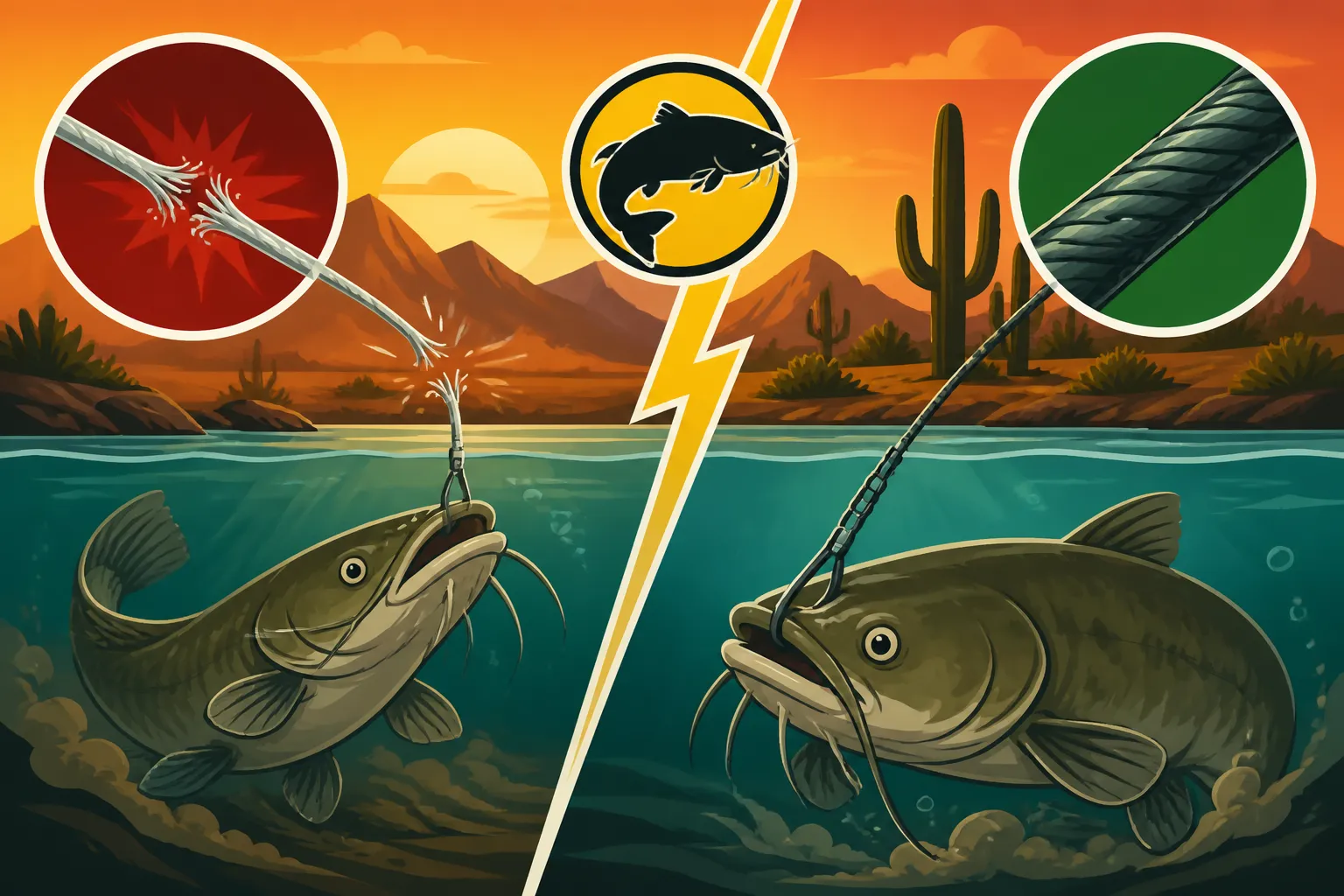
A flathead running into a submerged tree, dragging your line over jagged rocks, or swimming through thick weeds can quickly fray and weaken even a strong line. A 50-pound test line with poor abrasion resistance will fail faster than a 30-pound line with excellent abrasion resistance when rubbed against a sharp object. Therefore, when choosing a "heavy line" for flatheads, you absolutely must prioritize lines known for their toughness and ability to withstand nicks and scrapes. Think about lines designed for saltwater fishing or heavy cover applications; they often possess the characteristics needed for big Arizona flatheads.
The Line-Up: Braided, Monofilament, and Fluorocarbon for Flatheads
Each type of fishing line brings its own set of advantages and disadvantages to the flathead battle. Understanding these can help you decide what "heavy line" means for your specific approach.
- Braided Line: This is often the first choice for serious flathead anglers, and for good reason. Braided line offers incredible strength-to-diameter ratio, meaning you can have a much higher pound test (e.g., 50-80 lb) on a relatively thin line. Its lack of stretch provides excellent sensitivity, allowing you to feel subtle bites, and it offers superior hook-setting power. Critically, many braided lines have excellent abrasion resistance. The main drawback is its visibility in clear water and its tendency to "dig in" on some reels under extreme pressure if not spooled tightly. However, for sheer power and durability against flatheads, it's hard to beat.
- Monofilament Line: Monofilament, or "mono," is the classic fishing line. It's more affordable than braid or fluoro, has good knot strength, and its stretch can act as a shock absorber during violent runs, which can save your rod tip. However, its diameter is much thicker for the same breaking strength compared to braid, and its abrasion resistance, while decent, generally can't compare to heavy-duty braid or some fluorocarbons. Mono can also suffer from memory, causing coils, and it's more susceptible to UV degradation over time. Some anglers use heavy mono (30-50 lb) as their main line, especially if they prefer its shock-absorbing qualities.
- Fluorocarbon Line: Fluorocarbon has very low visibility underwater, making it a fantastic leader material. It also boasts excellent abrasion resistance, often superior to monofilament, and has very little stretch. However, it can be stiffer and more difficult to tie knots with, and it's generally more expensive. While some anglers might use heavy fluorocarbon as a main line (e.g., 20-40 lb test), its cost and stiffness usually make it a better choice for leaders, especially in clear water conditions where flatheads might be a bit more finicky.
For a deeper dive into specific recommendations, our guide on Best Line for Catfish Fishing offers a comprehensive breakdown.
Matching Line to Conditions: Water Clarity, Cover, and Bait
Your decision on "heavy line" isn't just a blanket choice; it should be adapted to the specific conditions you're fishing in.
- Water Clarity: In murky or stained water, common in many Arizona river sections and after heavy rains, line visibility is less of a concern. Here, you can confidently spool up with heavy braided line without worrying about spooking fish. In clearer lakes or calmer river pools, a fluorocarbon leader is a smart choice to reduce visibility, even if your main line is braid.
- Cover Density: If you're fishing areas with extremely heavy cover – dense brush, thick timber, or large rock fields – you absolutely need the heaviest, most abrasion-resistant line you can comfortably fish. This is where 60-80 pound braid shines, giving you a fighting chance to pull a flathead out of its sanctuary before it can break you off. In more open water with less structure, you might be able to get away with slightly lighter line, but it's often better to err on the side of caution with flatheads.
- Bait Size: Flatheads are opportunistic predators and often prefer large, live baits. If you're using big bluegill, carp, or even small suckers, you'll need a line strong enough to handle casting these hefty offerings without snapping. The weight of the bait itself, combined with the force of the cast, can put significant strain on lighter lines. This often goes hand-in-hand with heavier rods and reels, creating a balanced system. Our Best Bait for Catfish in Arizona guide has more insights on this.
Crafting Your Flathead Catfish Line Strategy for Arizona Waters
Now that we've explored the why and what, let's talk about the how. Building an effective line strategy for Arizona flathead catfish involves selecting the right breaking strength and material, understanding how to use leaders, and knowing where to source quality gear.
Recommended Line Weights for Arizona's Diverse Flathead Spots
The ideal line weight will often depend on where in Arizona you're fishing and the size of flathead you expect to encounter.
- For Smaller Flatheads (under 20 lbs) or Light Cover: If you're targeting flatheads in urban lakes or areas with minimal snags, a heavy monofilament of 20-30 pounds, or braided line in the 30-40 pound range, can be sufficient. This allows for a bit more finesse and lighter tackle, but still offers a significant upgrade from standard bass setups.
- For Mid-Range Flatheads (20-40 lbs) or Moderate Cover: This is where most serious flathead anglers find their sweet spot. A braided mainline of 50-65 pounds is highly recommended. It offers the power needed for these hard-fighting fish and enough abrasion resistance for most moderate cover scenarios. If you prefer mono, look for heavy-duty options in the 40-50 pound test range.
- For Trophy Flatheads (40+ lbs) and Heavy Cover: When you're specifically targeting those monster flatheads in snag-infested river sections or deep, timber-rich lake spots, you need to go all out. Braided line of 80-100 pounds test is not overkill here; it's practically essential. This gives you the best chance to winch a big fish out of thick cover. While such heavy line might seem excessive, remember the potential for the Trophy Catfish Threshold Weight in Arizona and the kind of structure they inhabit. For an idea of what kind of gear to pair this with, check out Best Rod for Catfish.
| Line Type | Recommended Pound Test (General) | Pros | Cons | Ideal Scenario for Flatheads |
|---|---|---|---|---|
| Braided | 50-80 lbs (main line) | High strength-to-diameter, no stretch, excellent sensitivity, good abrasion resistance. | Visible, can dig into spools, more expensive. | Heavy cover, strong current, targeting trophy fish. |
| Monofilament | 30-50 lbs (main line) | Affordable, good knot strength, stretch acts as shock absorber. | Thicker diameter, less abrasion resistance than braid/fluoro, memory. | Open water, moderate cover, anglers preferring shock absorption. |
| Fluorocarbon | 20-40 lbs (leader) | Low visibility, excellent abrasion resistance, low stretch. | Stiff, expensive, can be difficult to knot as main line. | Leaders in clear water, high abrasion areas (rocks). |
The Crucial Role of Leaders and Terminal Tackle
Even if you spool up with 80-pound braided line, your setup is only as strong as its weakest link. This often comes down to your leader material and knots.
- Leader Material: Many flathead anglers use a leader, especially with braided main lines. A monofilament or fluorocarbon leader of 30-80 pounds test (matched to your main line and target size) serves several purposes:
- Abrasion Resistance: A heavy mono or fluoro leader can offer even better resistance against sharp teeth (yes, flatheads have small, raspy teeth that can abrade line) and sharp cover right at the point of contact.
- Visibility: Especially with braided line, a fluorocarbon leader can make your bait presentation less visible in clear water.
- Sacrificial Element: If you get snagged, you might only lose your leader and hook, saving your main line.
The length of your leader can vary, but 2-4 feet is a common starting point. You'll attach your leader to your main line using a strong knot like a FG knot, Alberto knot, or uni-to-uni knot, ensuring it's tied perfectly to maintain maximum strength.
- Terminal Tackle: Don't skimp on hooks, swivels, and weights! Use robust, high-quality components.
- Hooks: Large, strong circle hooks (5/0 to 10/0 depending on bait size) are popular for flatheads because they're designed to hook in the corner of the fish's mouth, minimizing harm and making unhooking easier. Look for heavy-gauge wire hooks that won't straighten under pressure.
- Swivels: Heavy-duty barrel or ball-bearing swivels (rated for 100+ lbs) prevent line twist, especially when fishing live baits that might spin.
- Weights: Use enough weight to keep your bait on the bottom in current or wind. Common choices include flat sinkers, no-roll sinkers, or heavy egg sinkers. For a full breakdown on setting up your rig, check out How to Set Up a Bottom Rig for Catfish.
Where to Find Your Battle-Ready Catfish Line (Including Amazon)
Finding quality fishing line designed for heavy-duty applications is easier than ever these days. Local bait and tackle shops are always a fantastic resource, as their staff often have firsthand knowledge of what works best in specific Arizona waters. You can find high-quality monofilament, fluorocarbon, and braided lines from reputable brands at these shops.
For convenience and selection, online retailers are incredibly popular. Amazon is a great place to browse a huge variety of brands and line types, often at competitive prices. You can read reviews from other anglers, compare specifications, and have your line delivered right to your door. Just make sure you're selecting line specifically designed for heavy-duty fishing or known for its abrasion resistance, not just the cheapest option. Brands like PowerPro, Sufix, Berkley, and Seaguar are often favored by serious catfish anglers and are readily available online. Whether you're refreshing your spools at home or stocking up on new leader material before a big trip, a quick search on Amazon will yield plenty of robust options to choose from. Don't forget, if you're gearing up for night fishing specifically, having strong line is crucial when visibility is low. Our guide on Catfish Night Fishing Techniques has more tips.
Beyond the Line: Pairing Your Gear for Flathead Success
Choosing the right line is undoubtedly crucial, but it's just one part of the puzzle. To consistently land those powerful Arizona flathead catfish, your entire setup needs to be harmonious and capable of handling the extreme forces involved. A weak rod, a slipping reel, or poor knots can negate all the advantages of even the heaviest, most advanced fishing line.
Rods and Reels: The Foundation of a Strong Flathead Setup
Think of your rod and reel as the engine of your flathead fishing machine. They need to work in concert with your heavy line to absorb shock, apply pressure, and ultimately bring the fish to the net.
- Rods: For flathead catfish, you'll want a heavy-action or extra-heavy-action rod, typically 7 to 10 feet long. The length provides leverage for casting heavy baits and controlling big fish, while the heavy action gives you the backbone to turn a flathead away from structure. Look for rods with a strong blank and sturdy guides, often rated for 20-80 pound line or more. A medium-heavy rod might suffice for smaller flatheads in open water, but if you're serious about trophy fish in thick cover, don't compromise on rod power. Our Best Rod for Catfish guide provides more in-depth recommendations.
- Reels: Your reel needs a strong drag system and enough line capacity to hold a substantial amount of your chosen heavy line.
- Conventional (Baitcasting) Reels: These are often preferred for flathead fishing due to their robust construction, powerful gearing, and excellent drag systems. They are designed to handle heavy lines and deliver immense cranking power. Look for models with a smooth, consistent drag that won't falter under the sustained pressure of a big flathead.
- Heavy-Duty Spinning Reels: While less common for dedicated flathead setups, large, well-built spinning reels can also do the job, especially for lighter flathead applications or if you prefer the ease of casting a spinning reel. Ensure it has a high maximum drag rating and a sturdy construction.
- Regardless of type, ensure your reel's drag is properly set before you start fishing. A drag that's too tight will lead to snapped lines, while one that's too loose won't give you the power to control the fish. Our Best Reel Drag Setting for Big Catfish has practical advice on this.
Mastering the Fight: Techniques to Land a Monster
Having heavy line and robust gear is one thing; using it effectively is another. Landing a big flathead is a skill that develops with experience, but some fundamental techniques can significantly increase your success rate.
- Lean into the Fight: When you hook a flathead, don't shy away from putting pressure on it. Your heavy line and rod are designed for this. Your goal is to turn the fish's head and keep it from burying itself in structure. Keep your rod tip up and maintain constant tension.
- Pump and Reel: This classic technique is essential. Instead of simply cranking the reel handle, lift the rod tip up to gain line, then lower it smoothly while reeling in the slack. This uses your rod's power to tire the fish and retrieve line more efficiently.
- Anticipate Runs: Flatheads are known for powerful, sudden runs. Be prepared to let the drag do its job. Don't try to stop a screaming run by tightening the drag; that's a surefire way to snap your line. Let the fish run, but keep constant pressure, and try to steer it away from snags. If you want to dive deeper into fighting strategies, our How to Fight a Big Flathead Catfish article is a must-read.
- Patience is a Virtue: Big fish take time to land. Don't rush the fight, especially when the fish is still green. Let it make its runs, keep steady pressure, and wait for it to tire. Only when it's clearly exhausted should you attempt to bring it closer for landing.
The Unsung Heroes: Knots and Rigging Integrity
You can have the best heavy line in the world, but if your knots are poorly tied, it's all for naught. Knots are the weakest points in any fishing setup, and for flathead fishing, knot strength is paramount.
- Learn Strong Knots: Master a few reliable knots and tie them meticulously. For tying hooks and swivels to your leader/main line, knots like the Palomar knot, improved clinch knot, or Snell knot (especially for circle hooks) are excellent choices. For joining lines (main line to leader), the FG knot, Alberto knot, or blood knot are highly effective.
- Moisten Your Knots: Always moisten your knots with saliva before tightening them. This lubricates the line, allowing the knot to cinch down properly and preventing friction heat that can weaken the line.
- Trim Tag Ends: Trim tag ends closely but not so close that the knot can unravel. A small tag end can sometimes help prevent the knot from slipping.
- Check Your Rigging Regularly: Before and during your fishing session, inspect your line, knots, and leader for any signs of fraying, nicks, or weakness. Even a small abrasion can lead to a heartbreaking break-off. It's always better to retie a knot or replace a section of line than to lose a potential trophy fish. Remember, safety isn't just for you; it's for handling the fish too. Our Are Flathead Catfish Dangerous to Handle? guide can help you prepare.
Ultimately, the answer to "Do you need heavy line for flathead catfish?" is a resounding yes. It's not about being overkill; it's about being prepared for a powerful adversary that lives in unforgiving environments. By investing in quality, heavy line, pairing it with appropriate rods and reels, and mastering your fighting techniques and knots, you'll dramatically increase your chances of landing those incredible Arizona flathead catfish.
Disclaimer
This article is for general informational purposes only and does not constitute professional advice. Laws, prices and regulations vary by location and change over time. Consult a qualified professional for guidance on your specific situation.