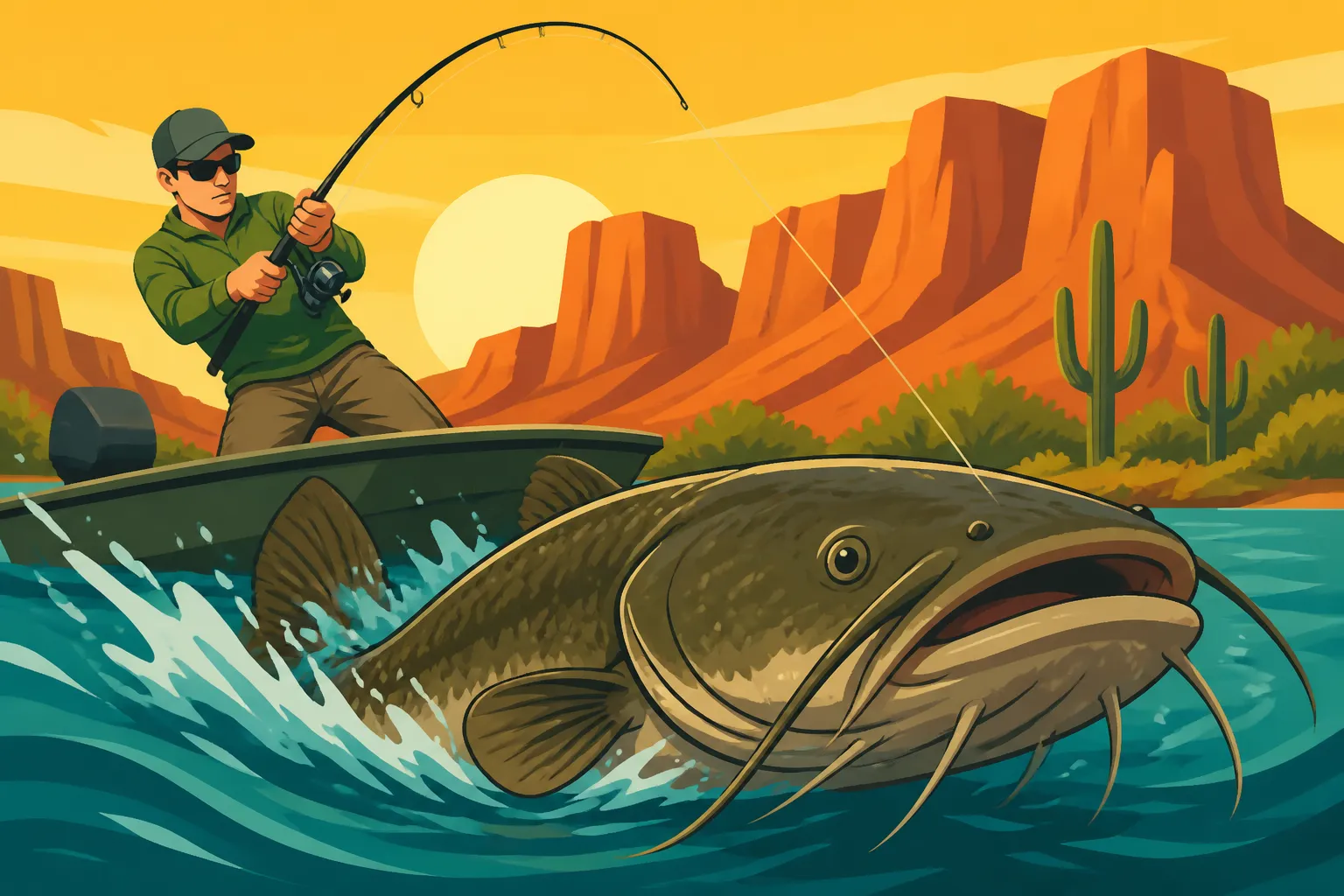
How to Fight a Big Flathead Catfish
Hooking into a big flathead catfish in Arizona is an experience unlike any other in freshwater fishing. These aren't your typical channel cats; flatheads are the undisputed heavyweights of our desert waters, famous for their brutal, stubborn fights that can leave even seasoned anglers with shaking arms and snapped lines. If you've ever felt that soul-crushing disappointment of a sudden slack line after what felt like a freight train hit your bait, then you know the challenge. This guide is all about equipping you with the knowledge and techniques to not just hook, but successfully land, one of these magnificent, hard-fighting fish.
Understanding the Flathead Catfish Fight: A True Test of Strength
Let's be real, many fish put up a good fight, but a big flathead catfish is in a league of its own. They don't jump, they don't make blistering runs across the lake like a striper. Instead, they harness sheer, unadulterated power to dive, hold bottom, and wrestle with a primal intensity that’s both frustrating and exhilarating. It's less a sprint and more a tug-of-war with a very large, very angry log.
The Flathead's Unique Fighting Style
When you hook a flathead, especially a big one, the initial sensation often feels like you've snagged a submerged stump. They’ll just sit there, absorbing the shock, and then – bam! – they unleash a slow, powerful dive. Their broad, flat head and massive tail are designed for leverage, allowing them to cling to the bottom or dive deep into cover with incredible force. Unlike a channel catfish that might make a few quick, erratic runs, a flathead's runs are often slower, more deliberate, and incredibly powerful, aimed at reaching the nearest structure. They're not trying to run away; they're trying to hide or wedge themselves into a safe spot. You might think you're making progress, only for them to suddenly peel off another 30 yards of line with shocking ease. It’s a game of inches, and they’re playing for keeps.
Why Flatheads are So Challenging to Land
The difficulty in landing a big flathead isn't just about their strength; it's also about their environment and their physiology. These fish prefer rocky bottoms, submerged trees, brush piles, and undercut banks – basically, anything that can spell disaster for your line. When a flathead feels the hook, its first instinct is to dive headfirst into the thickest cover it can find. If you're not ready, or your gear isn't up to snuff, it's game over. Their thick, bony heads and powerful jaws make it tough for hooks to penetrate deeply, and their sandpaper-like mouths can wear through lighter lines surprisingly fast. Plus, their broad, muscular bodies create immense drag in the water, turning every foot of retrieved line into a hard-earned victory. Losing a big flathead to a snag or a pulled hook is a rite of passage for many Arizona anglers, but with the right approach, you can turn those defeats into triumphs.
Essential Gear for Conquering a Big Flathead Catfish
Before you even think about battling one of these giants, you need to ensure your tackle is up to the task. Skimping on gear when targeting large flatheads is a surefire way to end up with a heartbreaking story of "the one that got away." Think heavy-duty, robust, and reliable.
Rods and Reels Built for Battle
For flathead catfish, you need a rod with serious backbone. Look for heavy or extra-heavy power rods, typically 7 to 9 feet long, with a moderate-fast action. This combination provides the power to turn a fish away from structure and the flexibility to absorb powerful head shakes. Fiberglass rods are often preferred for their durability and parabolic bend, which helps cushion against strong runs. Some popular choices include Ugly Stik Catfish rods or similar heavy-duty models.
Your reel is arguably even more critical. A conventional baitcasting reel is almost mandatory for heavy flathead fishing, offering superior cranking power and drag strength compared to spinning reels. Look for reels with a high line capacity (at least 200 yards of 20-30 lb mono or 50-80 lb braid) and a smooth, powerful drag system capable of delivering 20+ pounds of drag pressure. Brands like Penn, Abu Garcia, and Shimano make excellent reels suitable for this kind of brutal fishing. If you're looking for a new reel, checking options on Amazon can give you a wide selection to compare features and prices.
Line, Hooks, and Terminal Tackle
This is no place for flimsy fishing line. For serious flathead fishing, you'll want to go with either heavy monofilament (25-40 lb test) or braided line (65-100 lb test). Braided line offers superior strength, sensitivity, and abrasion resistance, which is invaluable when fishing around submerged timber or rocky areas. However, its lack of stretch can be unforgiving if your drag isn't set perfectly, potentially leading to pulled hooks or snapped lines. Many anglers opt for a heavy monofilament leader (50-80 lb test) with braid to provide a bit of shock absorption and increased abrasion resistance. For more details, check out our guide on the best fishing line for catfish fishing.
When it comes to hooks, stout is the name of the game. Circle hooks are highly recommended, typically in sizes 7/0 to 10/0, especially when fishing with live bait. They are designed to hook fish in the corner of the mouth, reducing gut-hooking and making releases easier. Just remember, with circle hooks, you don't set the hook; you simply reel until the line comes tight, and the hook does the work. When targeting these big fish, having the right tackle makes all the difference, so ensure you have strong swivels and heavy-duty sinkers as well. You can find many of these specific items, from hooks to leaders, readily available on Amazon.
| Gear Category | Recommended Specifications | Why It Matters for Flatheads |
|---|---|---|
| Rod | Heavy/Extra-Heavy Power, 7-9 ft, Moderate-Fast Action Fiberglass | Power to turn fish from snags, absorbs shocks |
| Reel | Conventional Baitcaster, High Line Capacity (200+ yds), 20+ lb Drag | Superior cranking power and drag, holds enough heavy line |
| Main Line | 65-100 lb Braided Line OR 25-40 lb Monofilament | Strength, abrasion resistance, sensitivity (braid) or stretch (mono) |
| Leader | 50-80 lb Monofilament or Fluorocarbon | Extra abrasion resistance, shock absorption, stealth |
| Hooks | 7/0 – 10/0 Circle Hooks (Stout Wire) | Prevents gut-hooking, reliable mouth corner hooksets |
| Sinkers | 2-8 oz No-Roll, Pyramid, or Flat River Sinkers | Keeps bait on bottom in current, prevents rolling |
The Initial Hookset and First Moments of the Fight
You’ve got your heavy gear, your live bluegill or carp is on the bottom, and then it happens: the rod tip dips, slowly, deliberately, then just holds steady with immense pressure. This is often the tell-tale sign of a flathead. Don’t get too excited yet; the real battle is just beginning.
The Power of a Solid Hookset
With circle hooks, as mentioned, the hookset is different. You feel that pressure, slowly pick up the rod, and reel, reel, reel until the line comes tight and the rod loads up. The fish will often start moving away with the bait, and that's when the hook finds its mark. It takes patience not to rear back and try to set the hook like you would with a J-hook. If you are using J-hooks (though less common for flatheads to avoid gut-hooking), a powerful, sweeping hookset is necessary to drive the point through their tough mouths. A weak hookset will almost certainly result in a pulled hook.
Once you're hooked up, immediate action is crucial. The flathead's first instinct is to dive into heavy cover. You need to react quickly and forcefully to steer it away. Keep your rod tip high, pointed at the fish, and maintain as much line angle as possible to direct its movement. This is where your heavy rod's backbone comes into play – you're essentially trying to bulldog the fish away from disaster. For more insights on where these beasts roam, check out our Flathead Catfish Fishing Guide for Arizona.
Controlling the First Run and Avoiding Snags
That initial run can be terrifying. A large flathead can pull line off a tightly set drag with surprising ease. This is why a smooth, reliable drag is so important. Let the fish take line when it absolutely demands it, but apply as much pressure as your line and rod can safely handle. Don't overtighten your drag to the point of breaking your line, but don't let it run freely either. Your goal is to turn its head and keep it moving away from submerged trees, rocky ledges, or whatever gnarly structure is nearby.
If you're fishing from a boat, immediately fire up the trolling motor or outboard and follow the fish, trying to stay directly over it or slightly ahead of its path. This reduces line drag in the water and gives you a better angle to control its direction. If you're bank fishing, you have less mobility, making gear choice and brute force even more critical. You might need to walk the bank, keeping pace with the fish to maintain a favorable angle and steer it away from hazards. This is especially true on rivers like the Colorado River, where currents and debris can add to the challenge.
The Mid-Fight Battle: Pumping and Pushing the Limits
Once the initial adrenaline rush of the hookset and first run subsides, you'll settle into the grinding work of fighting the flathead. This is where the battle of wills truly begins, and your technique and endurance are put to the test.
The Art of Pumping and Reeling
The "pump and reel" technique is your best friend when fighting a big flathead. It's a fundamental tactic that maximizes your leverage and conserves your energy. Here's how it works:
- Lift: With your rod tip pointed at the fish, slowly and steadily lift the rod from a low position (around 45 degrees) straight up to about 75-80 degrees. You're using the rod's power to pull the fish towards you, gaining several feet of line.
- Reel Down: As you lower the rod back to its starting position, quickly reel in the slack line you just gained.
- Repeat: Continuously repeat this motion – lift, then reel down.
This technique uses the mechanical advantage of the rod to move the fish without constantly grinding the reel, which can overheat the drag or tire you out quickly. Remember, flatheads often use their broad bodies to catch the current or dig into the bottom. The pump and reel helps break that suction and keep them moving towards you.
Maintaining Constant Pressure
One of the biggest mistakes anglers make with flatheads is allowing slack in the line. A flathead's thick, rubbery mouth can sometimes allow a hook to slip out if there's no tension. They also love to "sulk" – just sitting on the bottom, seemingly motionless. This is often a tactic to tire you out or give them a chance to rub the hook out on a rock or log. Even if it feels like you're pulling against a rock, keep that constant, unyielding pressure. If the fish stops, keep the rod loaded, and try to apply side pressure, pulling the fish to the left or right to disorient it and get it moving again. This persistent pressure often convinces them that they can't simply wait you out.
Remember that flathead catfish can grow to incredible sizes, particularly in a body of water like the Colorado River. Knowing how big do flathead catfish get on the Colorado River can give you an idea of the kind of power you're up against!
Reading the Fish and Adjusting Your Strategy
Every flathead fight is a little different, and learning to "read" the fish will significantly increase your success rate. Pay attention to the subtle cues:
- Head Shakes: Violent head shakes usually mean the fish is close to a snag or trying to throw the hook. Increase your pressure and try to turn its head.
- Sudden Surges: If the fish suddenly pulls harder, it might be feeling a renewed burst of energy or has spotted nearby cover. Be ready to give a little line if necessary, but keep the pressure on.
- Lack of Resistance: If the fish suddenly feels lighter or comes up easily, it might be swimming towards you or has changed direction. Quickly reel in any slack.
- Depth: If it's constantly diving, it's likely trying to get to structure. Keep the rod high and apply maximum safe pressure.
Adjust your drag as needed throughout the fight. As the fish tires and gets closer, you might be able to tighten the drag slightly to gain more control, but always be prepared to loosen it if the fish makes a sudden, powerful run. This adaptive strategy is key to winning the prolonged battle against a strong flathead.
Bringing the Flathead to Hand (or Net): The Final Challenge
You've fought hard, your arms are aching, and you can finally see the dark, broad silhouette of your flathead near the surface. But don't celebrate yet – the final moments are often the most critical, and many fish are lost right at the boat or bank.
The Final Circles and Head Shakes
As the flathead nears the surface, it will often make desperate, powerful circles. These "death circles" are their last-ditch effort to escape. They'll also unleash powerful head shakes, trying to dislodge the hook. It's vital to maintain your composure and keep constant pressure. Don't rush these last moments. Keep the rod tip high and continue to pump and reel, patiently working the fish into landing range. If the fish makes another run, let it, but quickly regain the lost line.
Landing with a Net vs. Grips
For truly large flatheads, a sturdy, oversized landing net is almost a necessity. Ensure it has a wide opening and a deep, rubberized mesh to protect the fish's slime coat. You want to lead the fish headfirst into the net, then quickly scoop it up, making sure it's fully submerged in the net before lifting. Trying to hoist a massive flathead by the line or even just by hand can lead to lost fish, broken lines, or injury.
Alternatively, some experienced anglers use lip grippers (like a BogaGrip) or tailing gloves for larger fish, especially if they are going for a quick photo and release. If using lip grippers, always support the fish's body with your other hand, especially for larger fish, to avoid damaging its jaw. Tailing involves grabbing the fish firmly by the base of the tail and sliding it onto a mat or into the boat. Regardless of the method, prioritize the fish's safety and your own.
Safe Handling and Release
Once the flathead is landed, move quickly but carefully. These fish are incredibly strong, even out of the water, and can thrash violently. If you're planning to release, minimize its time out of the water. Have your camera ready, quickly take any photos, and unhook the fish with pliers. If the hook is deeply set, consider cutting the line as close to the hook as possible.
When releasing, support the fish gently in the water, holding it upright by the tail and under the belly, allowing water to flow over its gills. Sometimes, you'll need to slowly move it back and forth to get water moving. Wait until the fish shows signs of strength, like firm tail kicks, before letting it go. A successful catch and release ensures these magnificent fish can continue to thrive in Arizona's waters for future generations of anglers. Remembering proper catch and release rules for Arizona anglers is important for conservation.
Learning how to fight a big flathead catfish is a skill that comes with practice, patience, and a bit of a workout. But when you finally land one of these powerful, whiskered giants, the satisfaction is truly unmatched.
Disclaimer
Fishing conditions and regulations in Arizona can change. Always check the latest Arizona Game and Fish Department regulations before heading out on the water. This guide is for informational purposes only and does not constitute official advice.