How to Set the Hook on a Striped Bass
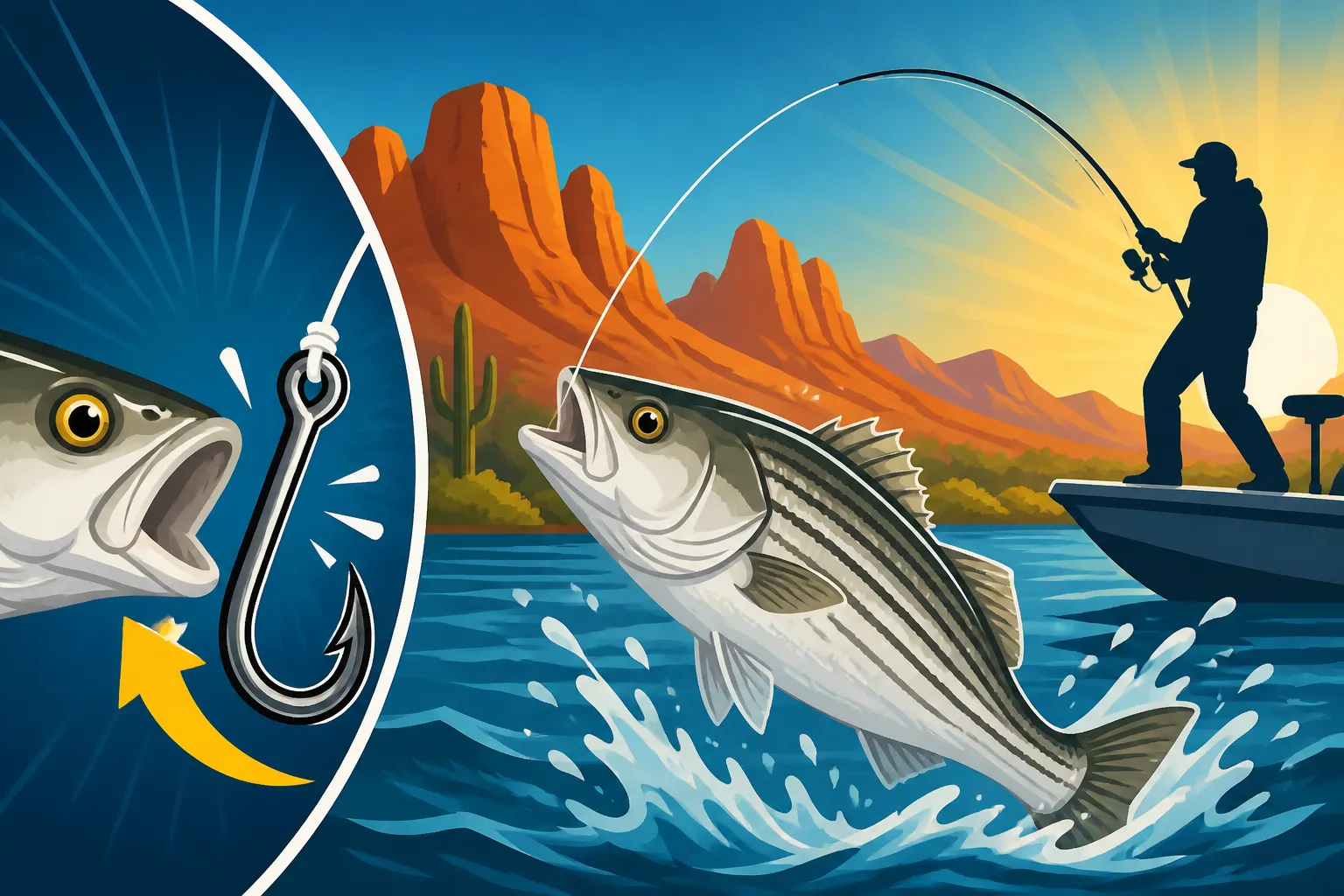
Few things are more frustrating in fishing than feeling that electrifying strike from a powerful striped bass, only to have them throw the hook before you can truly get them to the boat. Stripers are legendary for their aggressive takes and formidable fighting ability, but their bony mouths and often hard-hitting strikes require a very specific, confident hookset to turn those thrilling moments into landed fish. This comprehensive guide will walk you through everything you need to know to properly set the hook on a striped bass, helping you dramatically increase your success rate on the water.
Understanding the Striped Bass Bite and Anatomy
Before you can master the hookset, it’s crucial to understand the very fish you’re targeting. Striped bass are unique in how they feed and the physical structure of their mouths, both of which heavily influence the effectiveness of your hooksetting technique.
The Aggressive Nature of a Striper Strike
When a striped bass decides to eat, it’s rarely a subtle affair. You’ll often feel a sudden, violent jolt – sometimes described as a freight train hitting your line or a jarring thud that nearly rips the rod from your hands. This isn't your average panfish nibble or even a gentle bass take; stripers are built for ambush and pursuit, and their feeding behavior reflects this predatory instinct.
This aggressive strike is born from their schooling nature and competitive feeding. When a school of stripers zeroes in on a bait ball, they create a chaotic feeding frenzy, often called a "boil." In these situations, they're not just eating; they're competing fiercely for every morsel, which leads to incredibly forceful, often reckless, strikes. While exhilarating, this initial aggression can sometimes lead anglers to believe the fish is firmly hooked when it's only temporarily holding the lure or bait, making the hookset even more critical.
The immediate reaction to this jolt is vital. Many anglers hesitate, wondering if it's truly a fish or just a snag. With stripers, that hesitation is often the difference between a hookup and a missed opportunity. You need to be ready to react instantaneously, transforming that initial jolt into a decisive action. Don't mistake the fish's initial hold or a head shake for a solid hookset; the real work often begins after that first thrilling explosion of power.
It's easy to get fooled by the sheer force of a striper's initial hit. The fish might feel "on" for a split second, only to shake its head violently, and suddenly, your line goes slack. This often happens because the hook hasn't fully penetrated the tough parts of its mouth. Your hookset needs to ensure that the point digs deep enough to hold, rather than just snagging superficially.
Striped Bass Mouth Structure
A striped bass’s mouth is a formidable challenge for any hook. Unlike many freshwater species that have relatively soft mouth tissue, stripers possess an incredibly bony and tough jaw structure. Anglers frequently describe the feeling of a hook attempting to penetrate a striper’s mouth as trying to drive a nail into concrete. This inherent toughness is precisely why a weak or half-hearted hookset often results in a lost fish.
The key to successful hook penetration lies in understanding where the "softer" spots are. Generally, the corners of a striper's mouth, or sometimes the roof, offer the best chance for a solid, deep hookset. The center of their upper or lower jaw is particularly hard, and hooks often glance off or simply don't penetrate adequately in these areas. Your hookset strategy needs to aim for these more vulnerable points to ensure maximum holding power.
This tough mouth structure directly influences your choice of hook and tackle. Flimsy, thin-wire hooks designed for smaller fish will either straighten out, break, or simply fail to penetrate a striper's jaw. You need sharp, strong, heavy-gauge hooks that can withstand immense pressure and drive deep. Brands like Gamakatsu, Owner, or Mustad are renowned for producing hooks that meet these stringent requirements.
Consider the implications for different lure types. Artificial lures often employ treble hooks, which can increase the chances of catching some part of the fish's mouth. However, a proper hookset is still necessary to ensure one or more of those hook points dig in deeply. For larger swimbaits or single-hook applications, the precision of your hookset becomes even more critical, as you only have one point to drive home.
Mastering the Hookset Techniques
With a clear understanding of how striped bass bite and the structure of their mouths, let's dive into the actual techniques for effectively setting the hook. Different scenarios and bait types call for slightly varied approaches.
The Sweeping Hookset for Artificial Lures
When you're fishing with artificial lures – especially fast-moving ones like crankbaits, topwaters, lipless cranks, or swimbaits – the sweeping hookset is your best friend. This technique is designed to capitalize on the aggressive reaction strike that stripers often deliver to these moving baits. The goal isn't a sharp, vertical jerk, but a powerful, continuous sideways motion.
To execute a proper sweeping hookset, as soon as you feel that initial strike or see your line twitch, immediately reel down any slack line until you feel direct contact with the fish. Then, with a firm and fluid motion, sweep your rod tip horizontally, usually towards your dominant side (e.g., from 12 o'clock to 9 o'clock or 3 o'clock, depending on your stance and the fish’s direction). It's not a twitch; it's a powerful, smooth sweep that covers about a quarter to a third of a circle, maintaining constant pressure.
The critical element here is the elimination of slack. If there’s any bow in your line when you attempt to set the hook, a significant portion of your force will be absorbed by that slack, preventing the hook from penetrating fully. You need to feel the weight of the fish before initiating your sweep. It often feels like the fish is already pulling, and you're just adding to that pressure. When fishing with braided line, which has virtually no stretch, this feel is much more direct, giving you a distinct advantage. If you're looking for quality braided line, you can find excellent options from brands like PowerPro or Sufix on Amazon.
For particularly large stripers or when fishing with bigger, heavier lures that might have more give, some anglers employ a "double hookset." This involves performing the initial sweeping hookset, and then immediately following it with a second, equally powerful sweep. This ensures that if the first attempt didn't fully bury the hook, the second might drive it deeper or catch another hook point, securing your fish. Learning Swimbait Techniques for Striped Bass often emphasizes this robust approach.
The Reel-Down and Lean for Live Bait and Softer Bites
While stripers are known for their violent strikes, there are situations, particularly when using live bait or dead bait, where the bite might be more of a "take" than an explosive hit. In these scenarios, especially if you're using circle hooks, the "reel-down and lean" technique is far more effective and less likely to pull the bait away from the fish. This approach requires a bit more patience but results in incredibly solid hookups in the corner of the mouth.
With live bait, such as a Gizzard Shad or a large minnow (understanding How to Rig a Live Minnow for Bass is helpful here), allow the fish to take the bait and swim with it. Resist the urge to yank immediately. Instead, slowly and steadily reel in your line, applying gentle, increasing pressure. As you reel, you’ll feel the line tighten and your rod tip begin to load, bending under the fish’s weight.
Once you feel solid, continuous pressure and the rod is fully loaded, instead of jerking, simply lean into the fish with your entire body. Pull the rod smoothly and steadily in the direction the fish is moving, or sweep it slightly to the side, maintaining that constant pressure. The beauty of a circle hook is that it's designed to rotate into the corner of the fish's mouth as pressure is applied, effectively setting itself without requiring a sharp, aggressive jerk from the angler.
The "loading" of the rod is paramount here. It gives the circle hook time to pivot and find its purchase in the fish's jaw. A premature, hard jerk with a circle hook will almost always pull the bait right out of the striper’s mouth, as the hook design is not meant for direct, piercing force. These hooks, often used for live bait for species like catfish or stripers, need sustained pressure to work. Top brands like Gamakatsu and Owner offer excellent circle hooks specifically for larger game fish.
Essential Gear and Common Hookset Mistakes
Your fishing gear plays a monumental role in your ability to successfully set the hook on a striped bass. Even the best technique will fail if your equipment isn't up to the task. Conversely, understanding and avoiding common hookset errors can dramatically improve your success rate.
Choosing the Right Rod, Reel, and Line
For striped bass, you absolutely need tackle that can handle the power and tenacity of these fish. A medium-heavy to heavy action rod, typically 7 to 8 feet in length, is ideal. The "action" refers to where the rod bends, and "power" refers to its lifting strength. A fast action tip will provide the sensitivity you need to feel subtle bites, while the robust backbone of a medium-heavy or heavy power rod provides the leverage and force required to drive a hook into a striper’s bony jaw. When considering new gear, check out guides like Best Fishing Rods for Bass in Arizona for specific recommendations.
Your reel needs to match the rod's power and be capable of handling powerful runs. A spinning reel in the 4000-6000 series or a baitcasting reel with a robust drag system is appropriate. A smooth, consistent drag is non-negotiable, as it will prevent break-offs once the fish is hooked. A faster gear ratio (e.g., 7.1:1 or higher for baitcasters, or higher inches per turn for spinning reels) can help you quickly pick up slack, which is crucial before a hookset. For those looking to upgrade, our guide on Best Fishing Reels for Beginner Anglers in Arizona offers some solid starting points.
Line choice is perhaps one of the most critical factors for successful striper hooksets. Braided line, with its near-zero stretch, transmits every bump and bite directly to your hands and ensures that every ounce of your hookset force is transferred to the hook point. For stripers, a braided line between 30 to 65 pounds is common, depending on the size of fish and density of cover. Tying a fluorocarbon or monofilament leader (20-40lb test) to your braid can offer invisibility and abrasion resistance. Understanding How to Choose Line Weight for Striped Bass will refine your setup even further. You can find a vast selection of high-quality fishing lines on Amazon to suit your needs.
Finally, and perhaps most overlooked, are the hooks themselves. Regardless of the lure or bait, ensure your hooks are razor-sharp. Dull hooks will skid across a striper’s jaw instead of penetrating. Carry a hook sharpener and routinely check your hook points throughout the day, especially after hitting rocks or snags. Replacing dull or bent hooks is a small investment that pays huge dividends in hookup ratios.
Avoiding Common Hookset Errors
Even with the right gear and knowledge, anglers still fall prey to common hookset errors that lead to lost fish. Being aware of these pitfalls can help you consciously correct your technique.
The single most common mistake is not reeling down all the slack before setting the hook. If there’s a significant bow in your line, the energy you put into the hookset is largely wasted, simply pulling the slack out of the line rather than driving the hook into the fish. Always feel the weight of the fish and remove any visible slack before you commit to your sweep or lean.
Another prevalent error is performing a weak or hesitant hookset. Many anglers, especially newer ones, are afraid of pulling the lure away from the fish or over-setting. However, with stripers, a timid hookset is almost always a missed opportunity. You need to be confident and decisive. Commit fully to the sweep; it should be a powerful, deliberate motion.
Setting the hook straight up (overhead) is another frequent misstep, especially for those accustomed to bass fishing. While it can work in some situations, a straight vertical pull often extracts the hook straight back out of the fish's mouth, particularly if the fish is moving away or down. A sideways sweep provides better leverage, allowing the hook to dig into the corner of the mouth and providing a more secure hold against the fish's powerful head shakes.
Lastly, using the wrong hook type or size for the bait/lure and target species is a critical error. Trying to use tiny, thin-wire hooks on a large striper will inevitably lead to straightened hooks or poor penetration. Similarly, attempting a sharp, jerking hookset with a circle hook (designed for a steady lean) will almost guarantee a missed fish. Ensure your tackle matches the challenge; for more general boating considerations when targeting larger fish, remember to check out Boating Safety Gear Requirements in Arizona.
Real-World Scenarios and Advanced Tips
Applying these hookset principles in real-world fishing situations can vary slightly depending on where and how you're targeting striped bass. Plus, continuous learning is key to becoming a master angler.
Hooksetting in Different Striper Scenarios
Topwater strikes from striped bass are arguably the most exciting bites in freshwater fishing, but they are also notorious for missed hooksets. The fish often explode on the surface, creating a huge splash and commotion. Your instinct might be to react immediately to the visual spectacle. Resist this urge. Wait until you actually feel the weight of the fish on your line, then perform your sweeping hookset. Setting on the splash alone almost always pulls the lure away before the fish has a chance to fully engulf it. It's a frustrating waiting game, but essential for success.
When deep water jigging for stripers, often in places like Lake Powell, the longer line out means more stretch, even with braided line. This requires a much more pronounced and powerful hookset. Instead of a side sweep, a very strong, vertical snap or rip of the rod is needed to overcome the line stretch and drive the hook home. You'll typically feel a distinct "thump" or a sudden weight added to your line; that's your cue to set with authority. This is a common technique used for a deep bite when fishing Lake Powell Arizona Fishing Guide.
Trolling for striped bass is a different beast altogether. Often, when a fish hits a trolled lure, the forward momentum of the boat can help to set the hook initially. However, don't rely solely on this. When you feel that rod bend violently, grab it, reel down any slack created by the fish surging forward, and then add a firm, sweeping hookset to ensure deeper penetration. This helps secure the hook further and prepares you for the fight. For more insights on this technique, review Trolling Techniques for Striped Bass.
Finally, during striped bass boils, where fish are actively crashing bait on the surface, the action can be chaotic and incredibly fast-paced. Your casting accuracy and quick reaction time are paramount. Get your lure into the boil quickly, retrieve it erratically, and as soon as you feel a strike, execute a swift, confident sweeping hookset. The competition among stripers in a boil often leads to very aggressive takes, so be prepared for immediate and powerful resistance.
Practice Makes Perfect and Ongoing Learning
Like any skill, mastering the striper hookset comes with practice. You don't always need to be on the water to hone your technique. Dry practice at home, visualizing a strike and practicing your sweeping motion or reel-down-and-lean, can build muscle memory. Pay attention to your rod tip angle and body position; maintaining a low rod tip before the strike allows for a more powerful, upward or sideways sweep.
Paying attention to your body position and rod angle is crucial. Keep your rod tip pointed generally towards your lure or bait. This ensures direct line contact and minimizes slack. When you sweep, use your core and shoulders, not just your arms. A strong, balanced stance translates to more power in your hookset, which is absolutely necessary for driving hooks into a striper’s tough mouth.
Learning from missed fish is perhaps the most valuable form of practice. When a fish throws the hook, take a moment to analyze what went wrong. Did you feel slack in the line? Was your hookset weak? Did you set too quickly, before the fish had fully taken the bait? Was your hook dull? Each missed opportunity is a lesson that refines your technique. Many anglers keep a fishing journal to track these details and learn from them over time.
Finally, continue to learn and absorb information from experienced anglers and various resources. Watching videos, reading articles on platforms like Arizona Fishing Seasons Explained or comprehensive guides such as Striped Bass Fishing Guide for Arizona, and even joining local fishing forums can provide invaluable tips and insights. The world of fishing is constantly evolving, and staying informed will only make you a better angler. Remember that even the smallest details, like using the right line, can make a significant difference.
| Hookset Technique | Best For | Rod Action/Power | Recommended Line Type | Key Action | Common Mistake |
|---|---|---|---|---|---|
| Sweeping Hookset | Reaction Bites, Artificial Lures (Crankbaits, Topwaters, Swimbaits, Jigs) | Medium-Heavy to Heavy, Fast Action | Braided | Powerful, fluid sideways sweep (12 to 9 or 3 o'clock) | Setting too early on the splash, too much slack |
| Reel-Down and Lean | Live Bait, Dead Bait, Circle Hooks, Softer Takes | Medium to Medium-Heavy, Moderate Action | Mono/Fluorocarbon | Reel down until firm tension, then steady lean | Jerking the rod, not allowing hook to rotate |
| Vertical Snap (Deep) | Deep Jigging, Vertical Presentations, Heavy Cover | Heavy to Extra-Heavy, Fast Action | Braided | Hard, sharp upward snap or rip | Insufficient force due to line stretch, no slack removed |
Disclaimer
Fishing inherently carries risks. Always prioritize your safety, adhere to all local fishing regulations, and be mindful of your surroundings. This guide provides general information and best practices, but conditions and individual experiences may vary. Always check current Arizona Game and Fish Department regulations before heading out.