Fall Fishing Strategy for Desert Lakes
As the scorching Arizona summer sun finally begins its retreat, many anglers breathe a collective sigh of relief. If you've spent the last few months struggling with finicky bass hiding in the deepest, coolest pockets, or just plain avoiding the midday heat yourself, you know the frustration. Fall isn't just a reprieve; it's a true rebirth for fishing on our desert lakes, offering some of the most consistent and exciting action of the year. This guide will walk you through developing a killer fall fishing strategy for Arizona's desert lakes, helping you understand how fish behavior shifts and how to adapt your tactics for success.
Understanding the Fall Transition in Arizona's Desert Lakes
Fall in Arizona's desert lakes isn't like fall in other parts of the country with vibrant foliage and crisp air. Here, it’s a more subtle, yet profound, transformation beneath the surface. The extreme heat of summer gradually gives way to cooler evenings and milder days, triggering significant changes in the aquatic environment. Understanding these shifts is absolutely crucial for dialing in your fishing strategy. If you try to fish fall like you did summer, you're going to be scratching your head.
Water Temperature Changes and Fish Behavior
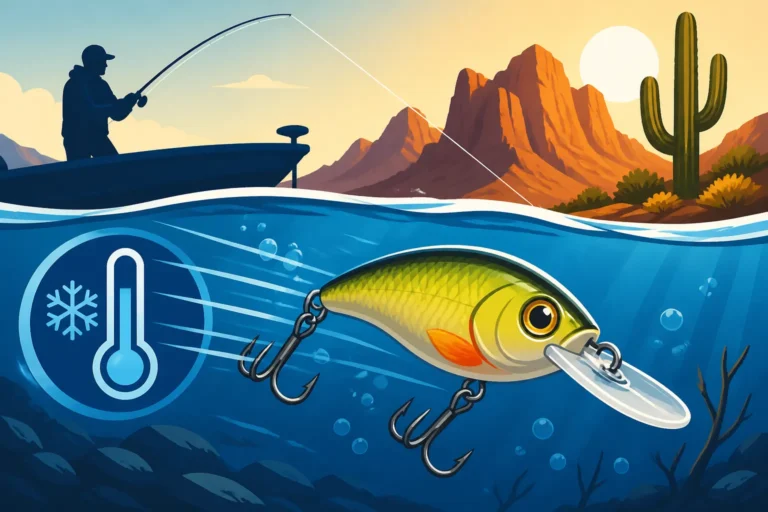
The most impactful change, hands down, is the water temperature. Throughout the long summer, our desert lakes stratify, meaning they form distinct layers of water with different temperatures. The top layer, or epilimnion, gets super warm, while the deeper water, the hypolimnion, stays cooler and often holds less oxygen. Fish like bass often hunker down in a comfortable thermal band, usually deeper, to escape the heat and find more oxygen.
As fall progresses, especially from late September through November, the air temperature drops. This cools the surface water, making it denser. Eventually, this cooler, denser surface water sinks, mixing with the deeper, warmer water in a process called "turnover." This can temporarily make fishing tough, as fish scatter and are disoriented by the mixing water and shifting oxygen levels. But once the lake settles, usually within a week or two, the water column becomes more uniform in temperature and oxygen. This means fish are no longer confined to narrow bands and can roam more freely. They become more active, feeding heavily in preparation for the upcoming cooler months. It's a fantastic time because fish start to spread out, moving into areas they avoided during the oppressive summer heat, which can really change up your usual spots. You might find fish in depths you'd never dream of them being in during July.
Seasonal Forage Availability
Just as game fish are reacting to the changing water, so too are their prey. Baitfish, like shad and sunfish, are also affected by cooling water temperatures. Instead of scattering, they often begin to school up more tightly, migrating towards warmer areas, often in the backs of coves or along main lake points where they can find cover and food. This schooling behavior is a huge boon for anglers, as it makes these baitfish an easier target for predatory species like bass and crappie. When you find the bait, you're often finding the predators.
This shift in forage availability also means you should be adjusting your lure choices. If you've been throwing big, slow-moving baits in the summer, now might be the time to switch to lures that mimic schools of baitfish. Think about lipless crankbaits, spinnerbaits, and swimbaits that can cover water quickly and imitate a frantic school of shad. The bass are looking to pack on the pounds, and they won't pass up an easy meal. Furthermore, if you're targeting specific species, knowing their preferred fall forage will guide your selection. For instance, understanding the Crappie Diet and Feeding Habits can significantly improve your fall crappie catch rates.
Prime Fishing Locations and Structure in Fall
With the water cooling and turnover potentially occurring, fish are on the move. They are transitioning from their deep summer haunts to areas where they can actively feed and build up reserves. This means your summer spots might be dead zones, and new areas will become prime real estate. It's all about finding those transition points where fish feel safe but can easily ambush prey.
Transition Zones and Main Lake Points
One of the most consistent patterns in fall fishing is focusing on transition zones. These are areas where the lake bottom changes abruptly, or where deep water quickly gives way to shallower areas. Think about long, tapering main lake points that extend out into the reservoir. During the day, bass might be holding deeper on the sides of these points, but as baitfish move shallower to feed, the bass will follow. These points offer them a highway to move up and down in the water column as conditions change throughout the day.
When you're out on the water, whether you're using a fancy fish finder or just your eyes, look for these natural "travel corridors." Main lake points, particularly those with a mix of rock, brush, or submerged timber, are fantastic starting points. Cast across the point, letting your lure work down the breaks. Pay attention to any isolated cover on these points too, like a single palo verde tree that's fallen into the water. Bass love to ambush from these spots. These areas are key to understanding Seasonal Movement Patterns of Arizona Bass as they prepare for winter.
Deep Water Humps and Ledges
While fish are moving shallower, don't completely abandon the deeper stuff, especially early in the fall or during periods of stable weather. Deep water humps and ledges, particularly those that top out in 15-30 feet of water, can hold large schools of fish. These structures act like underwater magnets, attracting baitfish and, consequently, the predators that feed on them. Bass, stripers, and even catfish will use these features to suspend and feed.
This is where your electronics truly shine. Learning How to Read a Fish Finder for Bass becomes an invaluable skill. You’re not just looking for fish arcs; you're looking for bait balls, submerged brush piles, and changes in bottom contour that indicate a good holding spot. Once you mark fish or bait, experiment with different presentations. Sometimes a slow-falling jig is key, while other times a spoon or a deep-diving crankbait will trigger strikes from suspended fish. Don't be afraid to target these deeper structures; often, the biggest fish of the day come from these overlooked spots.
Shallow Coves and Creek Channels
On warmer fall days, or after a period of stable, mild weather, don't neglect the shallower areas. The backs of coves and old creek channels can warm up faster in the sun, attracting baitfish and subsequently drawing in bass and other species. These areas can be particularly productive later in the afternoon as the sun has had a chance to penetrate the water. Look for remaining vegetation, such as hydrilla or cattails, as these offer excellent cover and ambush points for predatory fish.
When fishing these shallow areas, stealth is key. Avoid making too much noise with your boat or by stomping around on the bank. Use lures that mimic baitfish darting through cover, like shallow-running crankbaits, spinnerbaits, or even topwater lures during low-light conditions. Sometimes, a simple Texas-rigged plastic worm fished slowly around structure can be incredibly effective. These spots are often overlooked by anglers who assume all the fish have gone deep, but they can be goldmines, especially if you're looking for Best Bass Fishing Lakes in Arizona that offer varied depths.
Effective Fall Techniques and Baits
Fall is a season of abundance, and fish are often more willing to chase a meal. This opens up a wide array of techniques, from aggressive power fishing to subtle finesse presentations. Having a diverse approach in your tackle box will make you more adaptable to the changing conditions you'll encounter on Arizona's desert lakes.
Power Fishing for Active Fish
When fish are actively feeding, especially during those glorious stretches of stable weather, power fishing is your friend. This involves using lures that allow you to cover a lot of water quickly, searching for those aggressive biters. Crankbaits are a top choice. Depending on the depth the fish are holding, you can use shallow, medium, or deep divers. Casting a Crankbait Fishing Techniques for Bass around main lake points and ledges can elicit vicious strikes. Focus on mimicking the size and color of the local baitfish.
Spinnerbaits are another excellent power fishing tool, particularly when fished along rocky banks, around submerged timber, or through sparse vegetation. The flash and vibration can trigger reaction strikes from fish that might not be actively feeding. Don't forget topwater lures, especially on calm mornings or evenings. Walking baits, poppers, and even buzzbaits can produce explosive strikes as bass gorge on baitfish near the surface. The key is to keep moving until you find an active school. Remember, the goal is to cover water, not just soak a bait.
Finesse Tactics for Finicky Biters
Even in fall, there will be days when fish are less aggressive or heavily pressured. This is when finesse tactics truly shine. These techniques rely on subtle presentations and smaller baits to tempt finicky fish. The drop-shot rig is a fantastic choice for targeting bass suspended over deeper humps or ledges, or when they are holding tight to vertical structure. The bait is presented horizontally, making it look natural and easy to eat. Mastering Drop Shot Techniques for Smallmouth Bass can make a huge difference when the bite is tough.
Another highly effective finesse presentation is the Ned rig. This small, mushroom-head jig paired with a short, buoyant soft plastic bait stands straight up on the bottom, mimicking a foraging baitfish or crawfish. It's incredibly effective when fished slowly along rocky bottoms, subtle depth changes, or around scattered cover. Jigs, especially football jigs or skirted jigs, are also excellent for slowly working deeper structure or flipping into cover. These baits appeal to the bass's predatory instincts, suggesting an easy, protein-packed meal without requiring a lot of energy to chase.
| Technique | Best Conditions | Lure Examples | Target Areas |
|---|---|---|---|
| Power Fishing | Active fish, searching, covering water quickly | Crankbaits, Spinnerbaits, Topwater, Swimbaits | Main lake points, ledges, creek channels, coves |
| Finesse Fishing | Finicky fish, pressured waters, slower bite | Drop-shot, Ned rig, Jigs, Texas-rigged plastics | Deep humps, vertical structure, rocky bottoms |
| Live Bait | Tough bite, targeting specific species (e.g., catfish) | Live minnows, worms, shad, cut bait | Anywhere fish are holding, especially deeper |
Live Bait and Scent Strategies
While artificial lures are incredibly effective, sometimes nothing beats the real thing. Live bait can be a game-changer, especially on those colder fall days or when targeting less aggressive species like catfish. Live minnows, worms, and even shad (where legal) can be fished on simple setups under a bobber, on a Carolina rig, or just on a plain hook and sinker. The natural movement and scent are often irresistible to hungry fish. Remember to always check the Arizona Fishing Regulations Explained for rules on live bait usage and species.
Even if you prefer artificials, incorporating scent can significantly increase your bites. Many soft plastic baits come pre-scented, or you can add liquid or gel scents to your lures. In cooler water, a fish's metabolism slows down, and they might not be as eager to chase. A strong scent can entice them to hold onto the bait longer, giving you more time to set the hook. This is particularly useful when you're fishing slowly with finesse presentations. Sometimes, a tiny dab of scent is all it takes to turn a "follow" into a "bite."
Essential Gear and Safety Tips for Fall Fishing
Fall fishing can be incredibly rewarding, but it still demands the right gear and a keen awareness of safety, especially as conditions can fluctuate rapidly. Don't let the beautiful weather lull you into complacency; preparation is key.
Tackle Adjustments for Cooler Water
Just like fish, your tackle choices should evolve with the seasons. While some of your Best Fishing Rods for Bass in Arizona will remain reliable year-round, you might want to consider some adjustments. For finesse techniques, a longer, lighter-action spinning rod with lighter fluorocarbon line (6-10 lb test) will give you better sensitivity and casting distance for smaller baits. For power fishing, medium-heavy casting rods with braided or monofilament line (12-20 lb test) are still ideal for handling larger crankbaits and spinnerbaits.
Consider your terminal tackle too. As water clears in fall, fish can become more line-shy. Using fluorocarbon leaders, even with braided mainline, can make a difference. Also, check your hooks. Sharp hooks are always important, but even more so when fish might be biting subtly. Many anglers find themselves adjusting their Best Baits and Lures for Arizona Fishing during this transition, adding more natural colors or slightly smaller profiles.
Weather Awareness and Layering
Arizona fall weather is notoriously tricky. You can wake up to chilly mornings in the low 40s or 50s, only for the midday sun to blast temperatures into the 80s. The biggest mistake you can make is underdressing or overdressing. Layering is absolutely essential. Start with a moisture-wicking base layer, add a fleece or insulating layer, and top it off with a windproof and water-resistant outer shell. You can shed or add layers throughout the day as temperatures change.
Always check the forecast before heading out, paying close attention to wind speed and direction, as well as any potential for sudden rain. Remember that the water temperature will also be cooler, so if you happen to take an unexpected dip, hypothermia can become a real concern. Being prepared for varying conditions ensures comfort and safety, allowing you to focus on the fishing rather than shivering or sweating. Staying informed on Arizona Fishing Season Dates and Limits can also help plan your trips around optimal weather.
Boat and Shore Fishing Considerations
Whether you're fishing from a boat or the bank, fall presents unique considerations. For boat anglers, cooler mornings mean condensation and potentially slippery decks, so watch your footing. As boat traffic tends to decrease after summer, you might have more open water to explore, but always be mindful of other anglers. If you're running a boat, check your battery life and ensure all safety equipment, including lights and throwable PFDs, are in good working order. With less daylight, you might find yourself out on the water longer or returning in the dusk. Consider reviewing Boating Safety Gear Requirements in Arizona if you're new to the waters.
Shore anglers often find fall to be an excellent time. As fish move shallower to feed, they become more accessible from the bank. Look for areas with good bank access that are near those key transition zones – points, coves, or creek channels. Pack a fishing backpack with essentials, including water, snacks, sunscreen, and a small first-aid kit. Even though the heat isn't as intense, dehydration can still sneak up on you, so keep a bottle of water handy. If you're planning on Night Fishing Techniques and Safety, ensure you have adequate lighting and are aware of your surroundings, as temperatures can drop significantly after dark.
Disclaimer
This article is for general informational purposes only and does not constitute professional advice. Laws, prices and regulations vary by location and change over time. Consult a qualified professional for guidance on your specific situation.