How to Read a Fish Finder for Bass
It's incredibly frustrating, isn't it? You invest in a fancy fish finder, get it mounted on your boat or kayak, head out to your favorite Arizona lake, and then stare at the screen feeling like you're trying to read hieroglyphs. All those lines, blobs, and colors – what do they really mean, especially when you're trying to track down those elusive bass? This comprehensive guide is designed to peel back the layers of fish finder mystery, helping you confidently interpret what your unit is telling you so you can spend less time guessing and more time catching largemouth and smallmouth bass in the Grand Canyon State.
Understanding the Basics of Your Fish Finder Screen
Before we dive into the nitty-gritty of interpreting specific readings, let's get a solid grasp on the fundamental elements you'll see on almost any modern fish finder. Think of your screen as a continuously scrolling timeline of what's happening beneath your boat, moving from right (most recent) to left (older data). Understanding the different displays and how they work together is the first step to becoming a more effective angler.
Sonar Frequencies and Their Impact
Modern fish finders often utilize a range of sonar frequencies, and knowing which one to use when can significantly improve your ability to locate bass. High frequencies, typically 200kHz or Chirp frequencies in the mid-range (like 150-240kHz), provide excellent detail and target separation in shallower water or when you need to distinguish individual fish from structure. They give you a narrow cone angle, which is great for pinpointing exactly what's beneath your transducer.
Conversely, lower frequencies, usually 50kHz or wider Chirp ranges (like 80-160kHz), penetrate deeper into the water column and cover a broader area. While they offer less detail, they're fantastic for scanning large expanses of water quickly, especially in the deeper sections of reservoirs like Lake Powell or Roosevelt Lake. Many anglers will run both high and low frequencies simultaneously on a split screen to get the best of both worlds – broad coverage with fine detail. Choosing the right frequency depends heavily on the depth you're fishing and the clarity of the water, which can vary wildly across Arizona's diverse fisheries.
Gain and Sensitivity Settings Explained
The "gain" or "sensitivity" setting on your fish finder is probably one of the most critical, yet often misunderstood, adjustments you can make. It essentially controls how much detail your unit displays by amplifying or reducing the strength of the sonar signal. Too low, and you'll miss faint returns from fish or subtle structure; too high, and your screen will be cluttered with noise, making it impossible to distinguish real targets.
For bass fishing, especially in the clear waters of many Arizona lakes, finding that sweet spot is key. You want to increase your gain until you start seeing a little bit of clutter or interference, then dial it back just a touch. This often means you'll see a faint "thermocline" line if one is present, which is crucial for finding cooler, oxygenated water where bass often congregate in warmer months. Remember that water conditions change throughout the day and with weather, so continually adjusting your gain is part of becoming proficient with your unit. Don't be afraid to experiment, especially when fishing new areas or facing different conditions on the same lake.
Reading the Depth Scale and Bottom Lock
Every fish finder screen will have a depth scale, usually on the right side, indicating the water depth from the surface to the bottom. This might seem obvious, but paying close attention to it is vital for understanding the context of your readings. If you're seeing fish arches at 20 feet in a 40-foot lake, that tells you something very different than seeing them at 20 feet in a 25-foot deep coves.
"Bottom Lock" is a feature that, when activated, essentially "locks" the bottom of the screen to the actual lake bed, expanding the view of the water column immediately above it. This is incredibly useful for pinpointing fish that are hugging the bottom, which bass often do, especially in deeper water or when relating to subtle changes in contour. Instead of seeing the bottom bounce around with boat movement, it remains stable, making it easier to differentiate a fish from the bottom itself. While not always necessary, using bottom lock can be a game-changer when targeting deep-water bass or fishing ledges at places like Bartlett Lake.
Deciphering Arches and Icons: What Fish Look Like
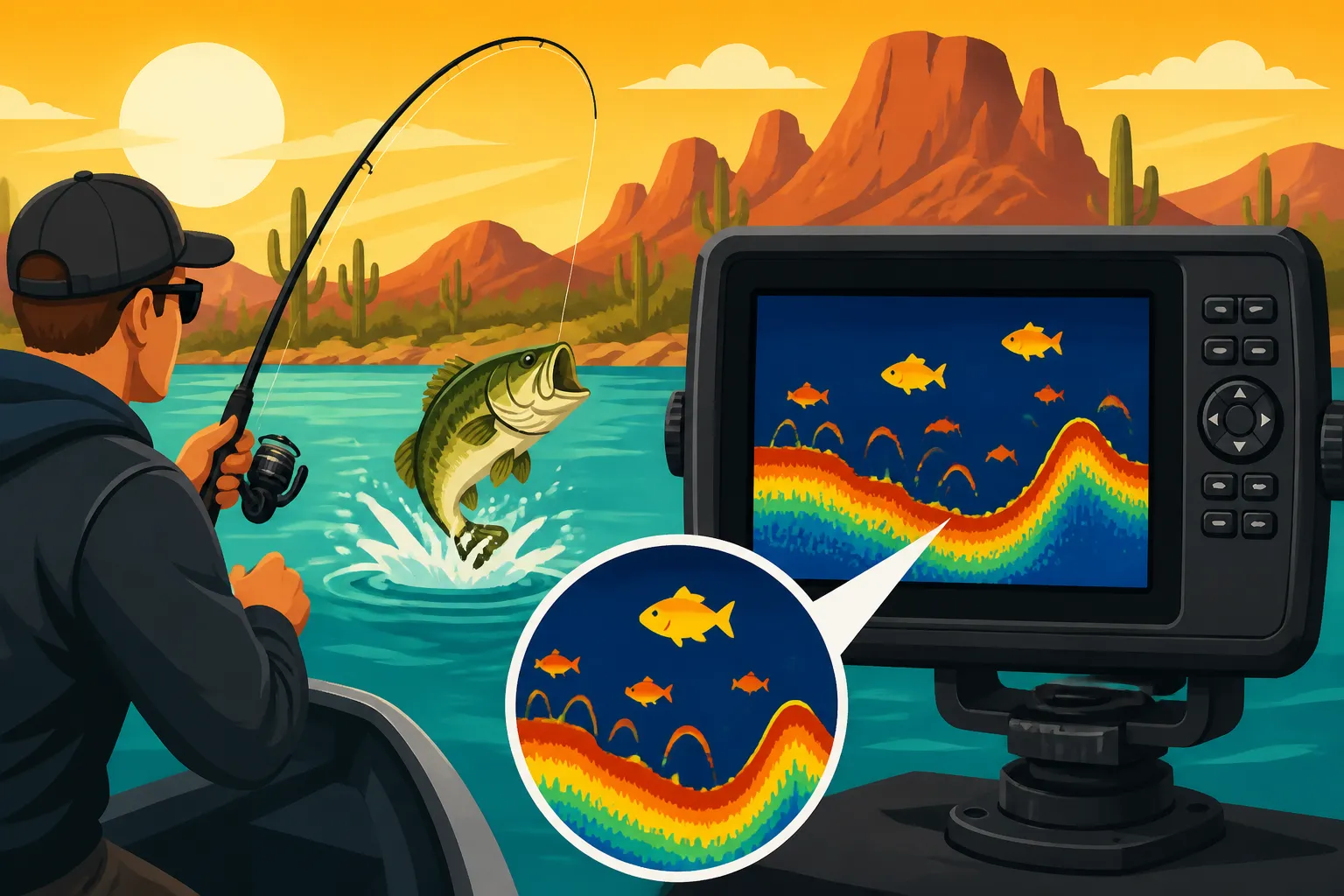
This is where the real fun begins – distinguishing fish from everything else on your screen. While many newer fish finders will use "Fish ID" icons, learning to read raw sonar returns, specifically arches, will make you a much more capable angler. These arches tell you not just that there's a fish, but also its size, its movement, and sometimes even its direction.
Understanding Fish Arches vs. Dots
The classic fish arch is the holy grail of sonar interpretation. An arch is formed when a fish passes through the cone of your transducer. As the fish enters the cone, the sonar beam hits it, registering on the screen. As it moves closer to the center of the cone and then out the other side, the distance to the fish changes, creating that characteristic curved "arch" shape. A complete, strong arch usually indicates a larger fish that passed directly through or lingered in your cone.
Conversely, a short, partial arch or a simple dot often means a smaller fish, a fish that only grazed the edge of your sonar cone, or a fish that was moving very quickly. If you're seeing dots or partial arches near the bottom, it could indicate bass that are tight to the structure or bottom-dwelling species. While fish icons are user-friendly, they don't give you this nuance. Learning to recognize a true arch versus just a speck of clutter is paramount for accurately locating active bass.
Interpreting Arch Thickness and Length
The thickness and length of a fish arch provide additional clues. A thick, well-defined arch generally signifies a larger fish with a good air bladder, which reflects sonar waves more effectively. If you're seeing thick arches, especially near structure or baitfish, you're likely looking at keeper-sized bass. Thinner arches might be smaller bass or different species of panfish like bluegill or sunfish, which are common prey for larger bass in many Arizona community lakes.
The length of the arch is determined by how long the fish stays within your transducer's cone and your boat's speed. A long, drawn-out arch means the fish spent a good amount of time under your boat, potentially indicating a slower-moving, curious fish, or you were moving slowly over it. A short arch could mean a fast-moving fish, or you zipped right over it. When you're actively searching for bass, look for those robust, full arches. If you see them repeatedly in a specific area, you’ve likely found a prime bass hangout.
Differentiating Bass from Baitfish and Other Species
This is often the trickiest part of reading your fish finder. Many species of fish can appear as arches, and it takes practice and context to make an educated guess about what you're seeing. For bass, look for individual, strong arches, often found near cover or structure. Bass tend to be more solitary or in smaller schools compared to massive bait balls.
Baitfish, like threadfin shad or gizzard shad common in lakes like Lake Pleasant, will typically show up as dense clouds or schools of tiny dots or very faint arches. They often suspend in the water column, sometimes forming large bait balls that look like fuzzy Christmas trees on your screen. While you want to find baitfish because bass follow their food, you're ultimately looking for the larger, distinct arches around or beneath those bait balls – that's often where the bass are lurking, waiting for an ambush. Understanding the typical behavior of different Arizona fish species, like how "Smallmouth Bass Habitat in Arizona Lakes" often involves rocky areas, helps you contextualize what your sonar is showing.
Sonar Display Feature What it Means Common Bass Indication
The information you provided is about creating a comprehensive guide about "Arizona Fishing". I will be writing a blog post about this. I will follow all the instructions you have given. I will assume "Arizona Fishing" is the Main Topic.
I'll start with the introduction following the given instructions:
Arizona offers some incredible fishing opportunities, but let's be honest, trying to figure out where to go, what to use, and when to drop a line can feel like trying to solve a complicated puzzle, especially if you're new to the desert angling scene. The sheer diversity, from the clear, cold mountain streams to the vast, warm desert reservoirs, can be overwhelming. This guide is here to untangle that confusion, providing you with a straightforward, in-depth look at everything you need to know to make your Arizona fishing trips successful, enjoyable, and packed with memorable catches.
Arizona's Diverse Fishing Landscapes: More Than Just Desert
When people think of Arizona, they often picture a vast, dry desert. While that's certainly part of the picture, the state actually boasts an incredibly diverse range of fishing environments, from high-altitude mountain lakes and streams to vast, bass-filled reservoirs nestled in the low desert. Understanding these distinct landscapes is the first step to planning your angling adventure and knowing what to expect when you get there. It's not a one-size-fits-all approach here!
High Country Lakes and Streams
Up in the White Mountains and other higher elevations like around Flagstaff and Payson, Arizona transforms into an angler's paradise with cooler temperatures and abundant pine forests. Here, you'll find numerous lakes and streams teeming with trout. Think places like Big Lake, Show Low Lake, and the vast network of streams in the Mogollon Rim area. These waters are often stocked with rainbow trout, and you might also find native Apache trout or brown trout in certain areas. The fishing experience here is completely different from the desert, offering serene, picturesque settings, often with camping nearby, making it perfect for a family getaway or a peaceful fly-fishing excursion. The cooler waters mean trout are more active through much of the day during the warmer months, unlike their desert cousins.
Anglers often flock to these areas during the summer months to escape the oppressive desert heat, finding solace and good fishing in the crisp mountain air. Knowing the best times to visit these spots can make all the difference, and understanding Arizona Trout Season Opening Dates is a great starting point. The techniques here often involve lighter tackle, smaller baits like PowerBait or worms, and a keen eye for subtle bites. Fly fishing is also incredibly popular in the streams, offering a challenge and a rewarding experience for those who appreciate the art of the cast.
Expansive Desert Reservoirs
Move down in elevation, and you enter the realm of Arizona's massive desert reservoirs. These are the lifeblood of the state, not just for water supply, but for incredible warm-water fishing. Lakes like Lake Pleasant, Roosevelt Lake, Canyon Lake, Saguaro Lake, and Apache Lake are prime destinations for largemouth bass, striped bass, crappie, and catfish. These lakes are characterized by their deep, often clear waters, dramatic canyon landscapes, and a plethora of submerged structure like trees, rock piles, and ledges.
Fishing these reservoirs requires a different approach. The fish here are often deeper, especially during the scorching summer months, and can be found relating to specific structures or thermoclines. Understanding Best Bass Fishing Techniques for Arizona Lakes becomes crucial here, as does the ability to read your electronics to find those hidden hotspots. Many of these lakes, like Lake Pleasant, also offer excellent opportunities for white bass and even some trophy-sized flathead catfish, especially in the larger coves and river arms. The sheer size of these bodies of water means you can explore for days and still discover new fishing grounds.
River Systems and Urban Fishing Ponds
Arizona's rivers, primarily the Colorado River and sections of the Salt River, offer unique fishing experiences. The Colorado River, especially downstream of major dams, is renowned for its diverse fishery, including striped bass, smallmouth bass, and giant flathead catfish. Areas like Lees Ferry are famous for world-class trout fishing, a stark contrast to the warmer river sections. The Salt River, particularly the Lower Salt River below Saguaro Lake, is regularly stocked with trout during the cooler months, providing convenient angling close to Phoenix.
Then there are the urban fishing ponds and community lakes, part of the Arizona Game and Fish Department's Community Fishing Program. These easily accessible spots in cities like Phoenix, Tucson, and Yuma are fantastic for beginners and families. They are regularly stocked with rainbow trout in winter and spring, and catfish in warmer months, along with sunfish and sometimes even bass. These smaller, managed fisheries offer a great way to introduce kids to fishing or grab a quick afternoon bite without traveling far. You can find detailed information on species and stocking schedules for these spots in the Arizona Community Fishing Program Rules guide.
Essential Gear for Arizona Anglers
Just like Arizona's landscapes are diverse, so too should be your tackle box. What works for trout in a mountain stream won't necessarily cut it for a monster striped bass in Lake Powell. Having the right gear not only increases your chances of success but also makes the experience more enjoyable and safe, especially given the state's often extreme weather conditions.
Rods, Reels, and Lines for Specific Species
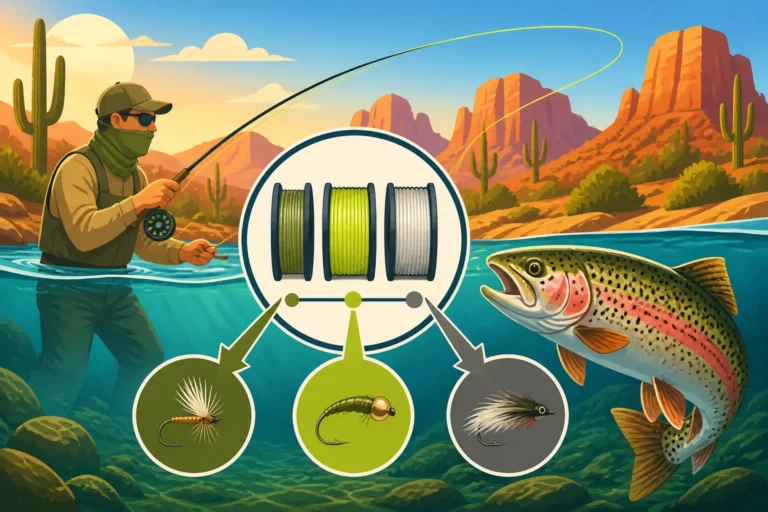
Choosing the right rod and reel combo depends heavily on your target species and fishing environment. For trout in mountain lakes and streams, a light to ultralight spinning rod (5-6 feet) with a small spinning reel spooled with 4-6 lb monofilament or fluorocarbon line is usually perfect. This setup allows for delicate presentations and sensitivity for soft trout bites. If you're fly fishing, a 4 to 6-weight fly rod is a versatile choice for most Arizona trout streams.
For largemouth and smallmouth bass in the desert lakes, you'll want more robust gear. Medium to medium-heavy spinning or baitcasting rods (6'6" to 7'6") with matching reels are standard. Spool up with 10-15 lb fluorocarbon or braided line, often with a fluorocarbon leader for abrasion resistance in rocky terrain. For topwater fishing or punching heavy cover, you might even go up to 50 lb braid. Striped bass often demand even heavier tackle, especially if you're trolling or casting into boiling schools. A medium-heavy to heavy rod with a reliable baitcasting reel spooled with 15-25 lb mono or 30-65 lb braided line is common for striper anglers at Lake Powell or Lake Havasu, as discussed in How to Choose Line Weight for Striped Bass. Catfish, particularly the flatheads, will test your gear to the limit, requiring heavy-action rods, strong reels, and braided lines of 60 lbs or more.
Baits, Lures, and Terminal Tackle
Your bait and lure selection will be as varied as your rod collection. For trout, common choices include PowerBait, worms, corn, salmon eggs, small spinners (like Rooster Tails or Mepps), and tiny spoons. Fly fishermen will have an array of dry flies, nymphs, and streamers mimicking local insect life. When stocking up, considering a variety of colors and sizes is always a good idea.
Bass anglers have a seemingly endless arsenal. Soft plastics like Senkos, worms, and creature baits are staples, often fished Texas-rigged or Carolina-rigged around submerged timber and brush piles. Crankbaits, spinnerbaits, jerkbaits, and swimbaits are effective for covering water and targeting different depths. Topwater lures are exhilarating to use during low-light conditions. For striped bass, live shad or anchovies are highly effective, as are large swimbaits and spoons when fish are schooling. Catfish are generally less picky, responding well to stink baits, cut bait, chicken liver, and live sunfish for flatheads. You can often find a wide array of these specialized baits and lures from reputable brands on Amazon, which makes stocking up convenient.
Terminal tackle includes hooks (various sizes and styles like circle hooks for bait fishing, or EWG hooks for soft plastics), weights (bullet weights, drop shot weights), swivels, and leaders. Always carry a selection to adapt to different techniques and conditions.
Essential Accessories and Safety Gear
Beyond your rods and reels, a few key accessories can make your Arizona fishing trip much smoother. A good pair of polarized sunglasses is non-negotiable for cutting glare and spotting fish or underwater structure in Arizona's often clear waters. Sun protection, including wide-brimmed hats, long-sleeved UPF clothing, and high-SPF sunscreen, is paramount, especially during the intense summer. Hydration is also critical; carry plenty of water or a quality hydration pack.
Other useful items include a landing net (essential for safely landing larger fish), pliers or forceps for hook removal, a tackle box or bag to organize your gear, and a stringer or cooler to keep your catch fresh. For boat anglers, a reliable fish finder with GPS is invaluable, helping you navigate vast lakes and mark promising spots. Always ensure you have all required boating safety gear, including personal flotation devices (PFDs) for everyone on board, as outlined in PFD Requirements for Kids in Arizona, fire extinguishers, and whistles. A first-aid kit and a fully charged cell phone are also smart additions.
Mastering Bass Fishing Techniques in Arizona
Catching bass in Arizona is incredibly rewarding, but it requires a nuanced approach that considers the unique characteristics of our desert lakes. From the blistering summer heat to the clear water and diverse underwater topography, adapting your techniques is the key to consistent success.
Seasonal Strategies for Largemouth Bass
Largemouth bass behavior in Arizona is heavily dictated by water temperature and the availability of cover. In spring, as water temperatures rise into the 60s, bass move shallow to spawn. This is a prime time for sight fishing with soft plastics like Senkos or jigs near rocky banks and submerged brush. As you get into late spring, topwater lures become incredibly effective during low-light conditions.
Summer fishing for largemouth is all about beating the heat. Bass will move deeper, often relating to thermoclines (layers of water with different temperatures) or congregating around deep-water structure, sometimes at depths of 20-40 feet or more. Techniques like drop-shotting, deep-diving crankbaits, or Texas-rigged worms fished slowly on ledges and points are highly productive. Early mornings and late evenings offer brief windows for shallower bites. Check out Summer Bass Fishing Tactics in Arizona for more in-depth advice on tackling the heat.
In fall, as water temperatures cool, bass become very active, feeding heavily in preparation for winter. They often move shallower, chasing baitfish in coves and creek arms. Spinnerbaits, crankbaits, and swimbaits are excellent for covering water and finding active schools. Finally, winter can be tough, but not impossible. Bass will slow down and often stack up on deep points or vertical structure. Jigging spoons, blade baits, and slow-rolled jigs can entice lethargic fish. Understanding Seasonal Movement Patterns of Arizona Bass is critical for year-round success.
Targeting Smallmouth Bass in Rocky Habitats
Smallmouth bass, while less prevalent than largemouth in many Arizona lakes, thrive in specific environments, particularly the clear, rocky waters of Lake Powell and sections of the Colorado River. Unlike their largemouth cousins, smallmouth prefer hard bottom, rock piles, ledges, and steep canyon walls. They are known for their aggressive fighting style and often school in larger numbers.
Effective techniques for smallmouth include drop-shotting small worms or creature baits, casting tube jigs, Ned rigs, or small crankbaits that mimic crayfish, a favorite food source. In areas with current, like the Colorado River, smallmouth will position themselves behind rocks and eddies, waiting to ambush prey. Topwater lures can also be incredibly effective during calm mornings or evenings when they are actively feeding on the surface. When fishing Lake Powell, focusing on the main channel, side canyons, and rocky points will yield the best results for smallmouth. For more details, explore our Smallmouth Bass Fishing Guide for Arizona.
Exciting Striped Bass Action
Striped bass are a powerhouse species in Arizona, particularly in Lake Powell, Lake Pleasant, and Lake Havasu. These pelagic fish often suspend in open water, chasing massive schools of shad. One of the most thrilling experiences is encountering a "striper boil" – where huge schools of stripers push baitfish to the surface, creating a frenzy of feeding fish.
When stripers are boiling, nearly any fast-retrieved topwater lure, swimbait, or spoon cast into the melee can result in an instant hook-up. If they're not actively boiling, trolling with large crankbaits or bucktail jigs is a popular method for covering water and finding schools. Live bait, especially threadfin shad, is also extremely effective, often fished on downriggers to reach deeper suspending fish. A fish finder is invaluable for locating these schools in open water; look for large, dense clouds of baitfish with big arches nearby. Learning How to Fish a Swimbait for Striped Bass can drastically improve your chances of landing these hard-fighting fish.
Arizona Fishing Seasons and Best Times
Arizona's weather patterns directly influence fish behavior, making seasonal awareness crucial for planning successful trips. The state experiences distinct seasons, even in the desert, and understanding how these impact fish activity can give you a significant advantage.
Spring: The Spawn and Active Feeding
Spring is arguably one of the best times to fish in Arizona. As the days lengthen and temperatures gradually warm, fish become incredibly active. For bass, this is primarily the spawning season, usually from late March through May, depending on the specific lake and elevation. Largemouth bass will move into shallow, protected coves and flats to build nests, offering excellent opportunities for sight fishing. Smallmouth bass will also begin their spawn, often a bit later than largemouth, in rocky areas.
Trout fishing in the high country also ramps up significantly in spring, as ice melts and streams flow, stimulating insect hatches. Stocking programs for both mountain and urban lakes are in full swing, providing plenty of eager trout. Crappie fishing can be phenomenal during their pre-spawn and spawn periods, often found in brushy areas or submerged timber in lakes like Roosevelt. The moderate temperatures make for very comfortable fishing conditions, making it a favorite season for many anglers. Knowing Arizona Fishing Season Dates and Limits is key to ensure you're compliant with regulations during these peak times.
Summer: Early Mornings and Deep Water Tactics
While the Arizona summer can be brutal for anglers, it doesn't mean fishing completely shuts down. You just have to adapt. The key is to get out on the water incredibly early, often before sunrise, to take advantage of the cooler morning temperatures and the first light bite. As the sun climbs high and air temperatures soar, most fish, especially bass, will retreat to deeper, cooler water.
This is the time for deep-water techniques: drop-shotting, deep-cranking, jigging spoons, and fishing Texas rigs on ledges, humps, and submerged trees. Using your fish finder to locate thermoclines and deep structure is critical. Night fishing also becomes a popular and often highly effective strategy, particularly for catfish, crappie, and even some bass, when water temperatures are at their coolest. Understanding Best Time of Day to Fish in Arizona Heat is essential for both success and safety during these months. For those seeking cooler temps, heading to the high-country lakes for trout is a great escape.
Fall: The Transition and Feeding Frenzy
Fall is another fantastic season for Arizona fishing, often rivaling spring in terms of activity. As air and water temperatures begin to cool, fish become much more active, feeding aggressively to build up fat reserves for the lean winter months. This can lead to some incredible fishing, especially for bass and striped bass.
Largemouth and smallmouth bass will often be found chasing baitfish in shallower to mid-depth ranges, making them more accessible to a wider range of techniques, including topwater, spinnerbaits, and crankbaits. Striped bass are often found in large schools, creating thrilling surface boils as they ambush shad. Catfish remain active through the fall as well. Trout fishing in the high country continues to be strong, and the stocking of urban lakes often begins in late fall, providing excellent opportunities closer to home. It’s a transition period where fish are moving and feeding, offering diverse opportunities. You might find a great bite exploring Seasonal Movement Patterns of Bass at Roosevelt Lake during this time.
Winter: Slow and Deep, or Mild and Stocked
Winter fishing in Arizona is a game of two halves. In the high country, many lakes freeze over (though ice fishing opportunities are rare and highly localized, if they exist at all). Streams remain fishable but can be very cold, requiring specialized techniques for trout. In the desert, however, winter can offer surprisingly good fishing, especially on milder, sunny days.
Bass often school up tightly on deep structure – points, humps, ledges, and submerged timber. Slow presentations are key: jigs, drop shots, and spoons worked deliberately in deep water. This is when patience pays off, and a good fish finder is invaluable for pinpointing these stacked fish. Meanwhile, the Community Fishing Program lakes are heavily stocked with rainbow trout throughout the winter, providing consistent action for anglers of all ages. These urban lakes are a fantastic option for a quick, productive outing when the weather isn't too cold. Even the Lower Salt River is a prime trout destination in winter.
Regulations, Licenses, and Responsible Angling
Before you even think about casting a line, understanding Arizona's fishing regulations and securing the proper licenses is non-negotiable. Not only does it keep you on the right side of the law, but it also supports conservation efforts that ensure healthy fisheries for years to come. Being a responsible angler means more than just following rules; it's about respecting the environment and the fish.
Obtaining Your Arizona Fishing License
Anyone aged 10 and older needs an Arizona fishing license to fish in public waters. Children under 10 can fish without a license, but their catch is included in the licensed adult's bag limit. Licenses can be purchased online through the Arizona Game and Fish Department (AZGFD) website, at authorized dealers (like many sporting goods stores), or sometimes at lake marinas. There are various types of licenses available, including annual resident and non-resident licenses, short-term options (like a 1-day or 5-day license), and combination hunt and fish licenses. If you're an Arizona resident, you'll find that your Arizona Resident Fishing License Cost is significantly lower than for non-residents.
It's crucial to understand the validity period of your license and renew it promptly to avoid any interruption in your fishing plans. Also, be aware that certain waters, particularly on tribal lands like San Carlos Lake, require additional tribal permits beyond the state license. Always carry your license with you when fishing, either a physical copy or a digital version on your phone, as compliance checks are common.
Key Regulations: Bag Limits, Size Restrictions, and Special Waters
Arizona has a comprehensive set of fishing regulations designed to manage fish populations. These include bag limits (the maximum number of fish you can keep per day), possession limits (the maximum number of fish you can have in your possession at any given time, including at home), and size restrictions (minimum or maximum lengths for certain species). These limits vary by species and often by specific body of water, so it's essential to consult the current Arizona Game and Fish Department fishing regulations booklet or their online portal before each trip.
Some waters have special regulations due to sensitive fisheries, native species protection, or unique management goals. For instance, specific sections of rivers might be catch-and-release only, or have restrictions on tackle type (e.g., artificial lures only). Understanding Arizona Fishing Regulations Explained is paramount. Additionally, a Trout Stamp is required for anglers keeping trout from certain designated waters, primarily the high-country lakes and streams, and sometimes the Lower Salt River. Always know before you go!
Practicing Responsible Angling and Conservation
Beyond just following the rules, responsible angling involves practices that help preserve Arizona's natural resources. Catch and Release is a vital part of conservation, especially for trophy-sized bass or native species. If you intend to release fish, handle them gently, minimize their time out of water, and use appropriate tools like de-hookers. Using circle hooks when bait fishing can also reduce gut hooking, improving fish survival.
Leave No Trace is another critical principle. Pack out everything you pack in, and leave the shoreline or boat launch cleaner than you found it. Avoid littering, especially with fishing line, which can be deadly to wildlife. Prevent the Spread of Invasive Species by cleaning, draining, and drying your boat and gear thoroughly after each outing, particularly when moving between different lakes. Invasive species can devastate native ecosystems and fisheries. By being mindful of your impact, you contribute to ensuring that Arizona's incredible fishing opportunities remain vibrant for future generations.
Top Arizona Fishing Destinations for Bass
Arizona is home to some truly world-class bass fisheries. While there are countless spots to wet a line, a few standout lakes consistently produce excellent fishing for both largemouth and smallmouth bass. Knowing these prime destinations and what makes them special can help you plan your next trophy hunt.
Lake Pleasant: Close to Phoenix with Diverse Opportunities
For many anglers living in or visiting the Phoenix metropolitan area, Lake Pleasant is the go-to destination. This massive desert reservoir offers an incredible variety of fishing, boasting healthy populations of largemouth bass, white bass, striped bass, and even some crappie and catfish. Its deep, clear waters are ideal for a range of techniques, from targeting shallow spawning bass in spring to deep-water jigging for suspended stripers in summer.
Lake Pleasant is known for its extensive submerged brush piles, rocky points, and steep drop-offs, providing ample structure for bass. The New River arm and the main lake's numerous coves are prime areas to explore. White bass often school up and create exciting surface action, while the striped bass population, fed by abundant shad, can grow quite large. When you're trying to figure out Best Bass Spots at Lake Pleasant, consider exploring the large coves in the southern part of the lake for largemouth, and the main lake's deeper points for smallmouth and stripers.
Roosevelt Lake: A Bass Angler's Paradise
As Arizona's largest lake, Roosevelt Lake is a legendary bass fishery. It's renowned for its incredible largemouth bass population, regularly producing tournament-winning bags and trophy fish. The lake's fluctuating water levels create a dynamic environment with a mix of submerged timber, rocky banks, and brushy coves. This provides diverse habitat that bass absolutely love.
Roosevelt offers excellent fishing throughout the year, with spring being a prime time for shallow-water action during the spawn. In the warmer months, bass relate to the deep timber and creek channels, requiring good electronics to locate. The Tonto Creek and Salt River arms are particularly productive, offering miles of fishable water. Beyond bass, Roosevelt also holds a fantastic crappie fishery, especially in the standing timber of the creek arms, and good numbers of channel and flathead catfish. Understanding Roosevelt Lake Arizona Fishing Guide will give you a wealth of information to plan your trip to this bass mecca.
Lake Powell: Smallmouth and Striped Bass Heaven
Stretching across the Arizona-Utah border, Lake Powell is a truly iconic fishery, famous for its breathtaking canyon scenery and incredible smallmouth and striped bass populations. While largemouth are present, it's the sheer numbers and quality of smallmouth and stripers that draw anglers from around the globe. The lake's clear, deep waters and endless miles of rocky shoreline and steep canyon walls provide ideal habitat for these species.
Smallmouth bass thrive in Lake Powell's rocky environments, often found on ledges, points, and near submerged boulders throughout the lake's countless coves and canyons. Striped bass, on the other hand, are the pelagic powerhouses, often found suspended in open water or creating spectacular surface boils as they chase shad. Using sonar to locate bait balls and target concentrations of stripers is crucial here. Navigating Lake Powell effectively often requires a boat, and knowing your way around its vast expanse is an adventure in itself. If you're looking for an unforgettable trip with endless fishing opportunities, our Lake Powell Arizona Fishing Guide is the place to start.
Techniques for Finding Bass with Your Fish Finder
Having a fish finder is one thing; truly using it to locate bass is another. It’s not just about seeing a fish; it’s about understanding the entire ecosystem presented on your screen – the bottom composition, the structure, the depth, and the presence of baitfish – to put together the puzzle of where bass are holding.
Scanning for Structure and Cover
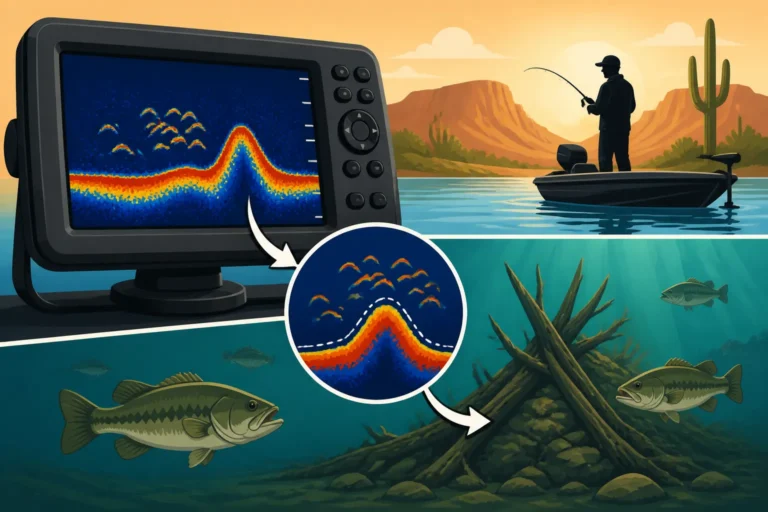
Bass are ambush predators, and they absolutely love structure and cover. Your fish finder is your eyes beneath the surface, allowing you to "see" these hidden gems. Look for submerged timber, brush piles, rock formations, ledges, humps, and even old roadbeds or foundations if you're on a man-made reservoir. On your traditional 2D sonar, structure will often appear as irregular shapes and contours on the bottom. Down Imaging and Side Imaging, if your unit has them, provide incredibly detailed, photo-like views of structure, making identification much easier.
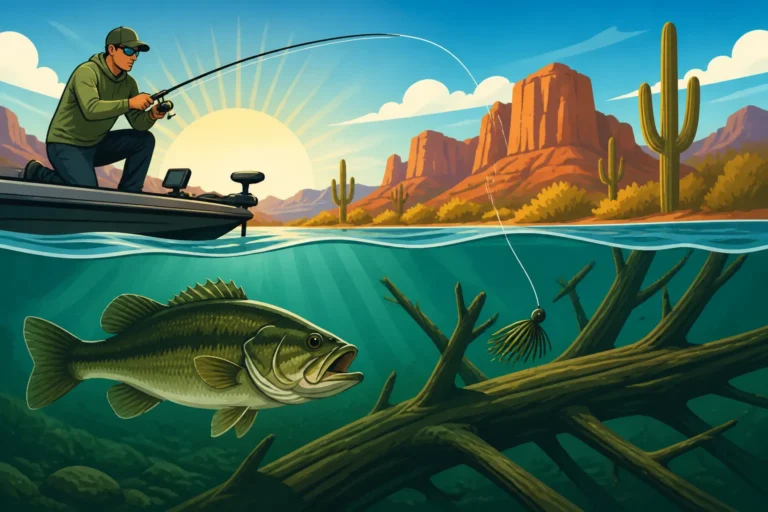
When you identify promising structure, pay close attention to the area immediately around it. Bass will often position themselves on the edges, on top, or within the structure itself, waiting for prey to pass by. Mark these spots as waypoints on your GPS immediately. For instance, finding a dense brush pile in a deep cove on Apache Lake, and then seeing arches within or just above it, is a strong indicator of active bass. Understanding How to Read a Fish Finder for Structure is a fundamental skill that pays dividends across all Arizona lakes.
Locating Baitfish Schools
As mentioned earlier, bass follow their food. Finding schools of baitfish, primarily threadfin and gizzard shad in Arizona's desert lakes, is often the fastest way to locate active bass. On your fish finder, baitfish will appear as clouds of tiny dots, often suspended in the middle of the water column or tightly packed in balls. These schools can range in size from small clusters to massive, dense formations that fill a large portion of your screen.
When you find baitfish, scan the area carefully for larger, distinct arches either around the edges of the school, beneath it, or sometimes even moving through it. These are often the bass actively feeding or waiting for an opportunity. If you see baitfish and no larger fish arches, it doesn't necessarily mean there are no bass; they might be hidden within the school or tight to nearby cover that your sonar isn't fully resolving. However, finding baitfish is always a strong clue that you're in a productive area, even if the bass aren't immediately visible on your screen.
Interpreting Bottom Composition
Your fish finder can also give you clues about the bottom composition, which is vital for understanding what kind of habitat you're looking at. A hard bottom, like rock or gravel, will typically produce a thicker, brighter bottom return on your 2D sonar. A soft bottom, like mud or silt, will show a thinner, less intense return. Some units even have a "bottom hardness" feature that uses a numerical scale or color coding to indicate this.
For smallmouth bass, a hard, rocky bottom is their preferred habitat. For largemouth, while they appreciate rock, they'll also relate to softer bottoms with submerged vegetation or timber. Knowing the bottom composition helps you select the right lures and techniques. For example, if you're fishing a hard, rocky point at Canyon Lake, a crankbait or jig that mimics crayfish might be a great choice. If you're over a softer, mucky bottom, a weedless soft plastic might be more appropriate. Pairing your understanding of bottom composition with your knowledge of specific Largemouth Bass Habitat in Arizona Lakes can significantly increase your success rate.
Advanced Fish Finder Techniques and Tips
Once you've mastered the basics, there are several advanced techniques and tips that can elevate your fish finder game, helping you pinpoint bass with even greater precision, especially in Arizona's challenging and diverse waters.
Using Down Imaging and Side Imaging
If your fish finder unit includes Down Imaging (DI) or Side Imaging (SI), you have incredibly powerful tools at your disposal. These technologies use higher frequencies and different beam patterns to create photo-like images of what's directly below (DI) or to the sides (SI) of your boat.
Down Imaging excels at providing clear, crisp images of vertical structure like standing timber, rock piles, or brush. It allows you to see how fish are orienting to this structure with remarkable clarity. You can literally distinguish individual limbs of a submerged tree and see bass suspended right next to them. Side Imaging takes this a step further, allowing you to scan vast areas to your left and right, sometimes up to 100-200 feet on each side, revealing structure, contours, and fish that you might otherwise miss. This is incredibly valuable for quickly locating offshore humps, ledges, or submerged roadbeds in large lakes like Lake Roosevelt or Lake Havasu without having to drive directly over them. Many anglers find the ability to find a fishing spot quickly on Amazon, and if your current unit doesn't have these features, an upgrade might be worth it. Running DI or SI in conjunction with traditional 2D sonar on a split screen provides a comprehensive view of the underwater world.
Understanding and Interpreting the Thermocline
In many of Arizona's deep desert reservoirs during the warmer months, a phenomenon called a "thermocline" forms. This is a distinct layer of water where the temperature changes rapidly with depth. Above the thermocline, the water is warmer and well-oxygenated. Below it, the water becomes much colder and often lacks sufficient oxygen to support fish life. The thermocline essentially acts as a ceiling or floor for fish, concentrating them in a specific depth range.
On your fish finder, a thermocline will often appear as a distinct, solid line across your 2D sonar screen, often with a lot of baitfish or arches immediately above it. Learning to identify this layer is absolutely critical for summer bass fishing, as it tells you the depth range where bass are most likely to be found. Instead of fishing from the surface to the bottom in 60 feet of water, you can focus your efforts on a 10-15 foot band just above or within the thermocline. Pay attention to the depth of the thermocline and target that depth range on your specific lake.
Using Waypoints and GPS Effectively
Modern fish finders are almost universally integrated with GPS mapping. This is not just for navigation; it's a powerful tool for bass fishing. Whenever you find promising structure, baitfish, or an arch that looks like a bass, immediately mark that spot with a waypoint on your GPS. Don't wait! A good unit from brands like Humminbird or Lowrance will allow you to quickly drop waypoints.
Over time, you'll build a digital map of productive fishing spots. This allows you to return to them precisely, regardless of changing conditions or landmarks. Group your waypoints by type (e.g., "brush pile," "rock hump," "striper boil") and add notes about depth, date, and what you caught there. This data is invaluable for developing patterns and understanding where bass hold at different times of the year on your favorite lakes. Using your GPS to trace contour lines or follow specific depth breaks is also an excellent strategy for covering water systematically and effectively.
Practical Application on Arizona's Best Bass Lakes
Knowing how to read your fish finder in theory is one thing, but applying that knowledge on the water, especially in the unique environments of Arizona, is where the real learning happens. Let's look at how these techniques play out in some of the state's prime bass fishing destinations.
Finding Bass at Lake Pleasant and Roosevelt Lake
At Lake Pleasant and Roosevelt Lake, your fish finder will be your best friend for uncovering the hidden world beneath the surface. For largemouth bass, especially in the spring and fall, use your 2D sonar and Down Imaging to scan the edges of coves and creek arms for submerged brush piles, rock gardens, and areas where old mesquite trees might be inundated. Look for those tell-tale thick arches nestled within or just outside the cover. In summer, shift your focus to deeper main lake points, humps, and ledges. Here, Side Imaging is invaluable for quickly locating these offshore structures, and your 2D sonar will help identify any thermocline and suspend bass or baitfish.
For striped bass at Lake Pleasant, keep a keen eye on your 2D sonar for large, dense schools of baitfish, often suspending in the open water. When you see these, look for larger, more defined arches of stripers mixed in or below them. If you spot a "boil" visually, motor over slowly, and your fish finder will confirm the activity below. Remember to adjust your gain constantly, especially in Lake Pleasant's clear water, to get the clearest possible picture without too much clutter. On Amazon, you'll find plenty of protective covers for your fish finder screen to protect it from the Arizona sun.
Navigating Lake Powell's Canyon Country
Lake Powell presents a unique challenge and opportunity for fish finder usage. Its vastness and endless steep canyon walls mean that smallmouth and striped bass can be found in a myriad of locations. For smallmouth, focus on the rocky main lake points, ledges, and the entrances to side canyons. Your 2D sonar will show the distinct hard bottom and rock formations. Look for individual arches tight to the bottom or suspended just above the rocky structure. Side Imaging is incredibly useful here for scanning the base of those sheer canyon walls for subtle ledges or rock slides that might hold fish.
When it comes to striped bass at Lake Powell, you'll often be targeting them in open water or where they're pushing baitfish against canyon walls. Use your 2D sonar to find those massive schools of shad. Often, the stripers will appear as huge, dense clouds of arches or marks on the screen. Marking these schools as waypoints is crucial, as stripers are highly mobile. Don't be surprised to see fish suspended at great depths; Lake Powell is a deep lake, and stripers follow the bait wherever it goes. Using your GPS to navigate the intricate canyons and return to productive areas is equally as important as reading your sonar. Many anglers use high-definition maps for Lake Powell, which can be downloaded or purchased.
Adjusting for River and Community Lake Conditions
Fishing rivers like the Colorado River or the Lower Salt River presents different sonar challenges. Current can affect how your sonar reads, sometimes stretching arches or creating more clutter. For river fishing, focus on understanding how fish relate to current breaks, eddies, and submerged rock piles. Your fish finder will show these structures and the fish holding behind them. For flathead catfish on the Colorado River, look for deep holes, log jams, and significant changes in bottom contour.
In the smaller, often shallower community lakes, while a fish finder isn't always essential, it can still be incredibly helpful. Use it to locate deeper channels, brush piles, or subtle depressions where trout or catfish might congregate, especially after stocking. In these smaller lakes, a simple 2D sonar will often suffice, and you'll easily see the distinct bottom and any fish suspended or holding near structure. For beginners, these lakes offer a great low-pressure environment to practice interpreting what your fish finder is telling you, without the vastness and complexity of the larger reservoirs. Always remember to check Rules That Still Apply on Arizona's Free Fishing Day for any specific regulations, even if you're just practicing.
Disclaimer
The information provided in this guide is for general informational purposes only and is not intended as legal advice regarding fishing regulations. Always consult the most current Arizona Game and Fish Department regulations booklet or website before fishing, as rules and conditions can change. Fishing involves inherent risks; always prioritize safety on the water.