Seasonal Movement Patterns of Arizona Bass
It can be incredibly frustrating to hit your favorite Arizona fishing spot, whether it's the vast expanse of Lake Pleasant or a quiet coves on Roosevelt, only to find the bass have seemingly vanished. One day they're biting everything in sight, the next it's crickets. This often comes down to understanding the seasonal movement patterns of Arizona bass, a crucial piece of the puzzle for consistent angling success. This guide will dive deep into how these incredible fish adapt their behavior and location throughout the year in our desert lakes, helping you anticipate their moves and put more fish in your boat or on your bank.
Spring Bass Movements: The Pre-Spawn and Spawn Frenzy
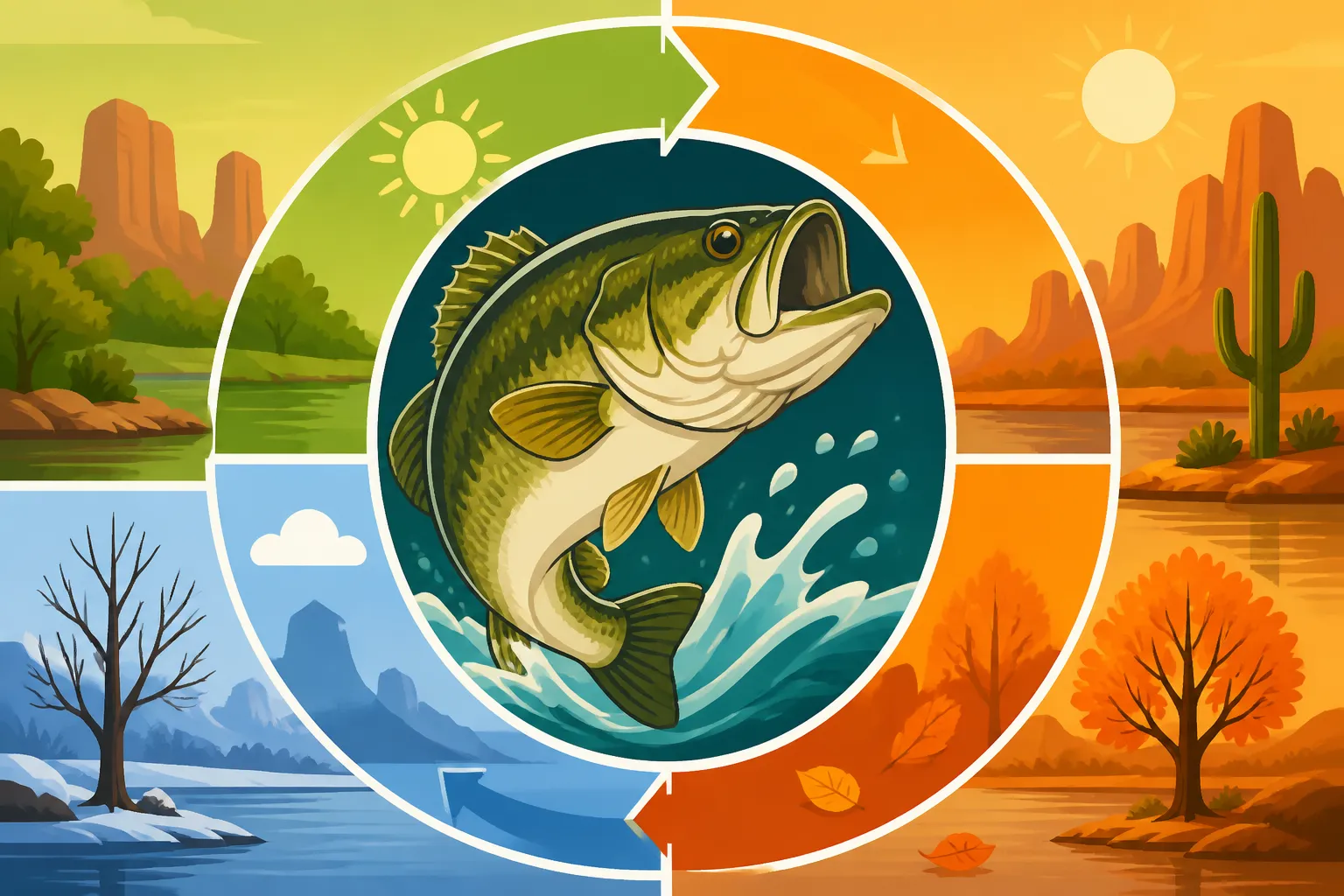
Spring in Arizona is arguably the most exciting time to chase bass. As the harsh chill of winter fades, and the sun begins to warm the waters, a primal urge kicks in for both largemouth and smallmouth bass. This period is a whirlwind of activity, marked by distinct phases that dictate where bass can be found and what they're willing to bite. Ignoring these patterns is a surefire way to miss out on some of the year's best fishing.
Pre-Spawn Staging: Where to Find Them Getting Ready
Before bass even think about spawning, they enter a "pre-spawn" phase where their primary focus is fueling up. Think of it as an all-you-can-eat buffet before a marathon. Water temperatures typically need to reach the high 50s to low 60s Fahrenheit, depending on the species and the specific lake, to really kick this off. During this time, bass will begin to move out of their deep winter haunts and congregate in transitional areas.
These staging areas are usually deeper structures adjacent to shallower spawning flats. Look for points, humps, rock piles, submerged timber, or even deep creek channels that offer easy access to both deep water safety and shallower feeding grounds. They'll be feeding aggressively, trying to pack on as much weight as possible. This is a fantastic time for power fishing with crankbaits, spinnerbaits, or even larger swimbaits that mimic the baitfish they are gorging on. You might find huge schools of them stacked up on a single point, waiting for the water to warm just a few more degrees.
The Spawn: Nests and Nurturing
Once water temperatures consistently hit the mid-60s to low 70s Fahrenheit, the spawn is on. This is when bass move into very shallow water to build and protect their nests. They're looking for firm bottoms like gravel, sand, or hard clay, often near some sort of cover—be it a submerged bush, a rock, or even a dock piling. These nests are typically in 1 to 5 feet of water, making them visible in clear conditions.
During the spawn, male bass are primarily on the nests, guarding the eggs and fry, while females move in and out to lay their eggs. While they are very aggressive in defending their nests from perceived threats, they may not be actively feeding in the traditional sense. This is where sight fishing comes into play. If you can spot a bass on a nest, pitching small baits like Texas-rigged lizards, finesse worms, or jigs directly onto the bed can often provoke a strike. It's a challenging but rewarding technique, and understanding the ethics of fishing the spawn is important for conserving our bass populations. For more details on this crucial period, check out our guide on Water Temperature for Bass Spawning.
Post-Spawn Recovery: Dispersal and Regrouping
Immediately following the spawn, bass enter a "post-spawn" funk. They're exhausted from the spawning process, often skinny, and not particularly interested in chasing down a meal. This can be one of the tougher times to locate and catch them. Females especially will retreat to slightly deeper water to recover, often suspending over structure or moving to the first available cover away from the beds.
Over a week or two, as they regain their strength, bass will begin to disperse and regroup. They often move to secondary points, creek channel edges, or submerged brush piles adjacent to the spawning areas. They'll still be near structure but typically in slightly deeper water than during the spawn itself. They might be more receptive to slower presentations with finesse worms, drop shots, or small jigs. As the water continues to warm into late spring, they'll gradually move towards their deeper summer haunts, preparing for the Arizona heat. Understanding Spring Bass Fishing Tactics in Arizona can really make a difference during this tricky transition.
Summer Bass Behavior: Deep and Nocturnal Strategies
Arizona summers are no joke, and our bass feel the heat just as much as we do. When lake surface temperatures soar, bass have a couple of primary strategies to cope: go deep where the water is cooler and more oxygenated, or become nocturnal. Anglers who stick to shallow water during the day are often left wondering where all the fish went.
Seeking Cooler Waters: Depth and Shade
As the summer sun beats down relentlessly, bass will retreat from the scorching shallows to deeper, cooler water. This often means moving to the main lake points, submerged humps, deep rock piles, and creek channels, sometimes as deep as 20-50 feet or more in larger reservoirs like Lake Powell or Roosevelt Lake. They're looking for that optimal comfort zone, typically around 70-75 degrees Fahrenheit.
Beyond just depth, shade becomes paramount. Look for bass relating to deep docks, bridge pilings, large rock formations that cast shadows, or dense submerged brush. They'll use these features to ambush baitfish that might stray too close. Vertical jigging spoons, drop shots, deep-diving crankbaits, and heavy Carolina rigs are excellent choices for targeting these deep-water fish. Many anglers use fish finders to locate these deep structures and identify schools of bass suspended over them. Learning about Deep Water Structure Fishing Techniques can significantly improve your summer success.
Night Fishing Opportunities: Escaping the Heat
For many Arizona anglers, summer means night fishing. As the sun sets, surface temperatures drop, and bass feel more comfortable moving into shallower water to feed. This opens up an entirely new world of opportunities. Bass will often move onto shallow flats, points, and even shorelines that were too hot to fish during the day.
Night fishing can be incredibly productive for both largemouth and smallmouth bass. Topwater lures, spinnerbaits, and dark-colored jigs or worms fished slowly along shallow cover can be deadly. The key is to remember that bass rely more on their lateral line and sense of smell at night, so lures that create vibration or have a strong scent can be particularly effective. Just be sure to bring plenty of light, bug spray, and stay hydrated, even at night! A good quality headlamp, like those you can find on Amazon, is an absolute necessity for retying knots or navigating in the dark. Our detailed guide on Night Fishing Techniques and Safety offers more comprehensive tips for after-dark angling.
Oxygen Levels and Thermoclines: Key to Summer Success
Understanding dissolved oxygen levels and the thermocline is critical for summer bass fishing in Arizona's deeper lakes. As water stratifies in summer, a distinct thermocline forms – a layer where the water temperature rapidly changes. Below this thermocline, especially in the deepest parts of the lake, oxygen levels can plummet, making it uninhabitable for bass.
Bass will typically hold just above or within the thermocline, as this zone offers the coolest water with sufficient oxygen. Your fish finder can be a powerful tool to locate the thermocline; it often appears as a distinct band on the screen. Knowing this depth helps you narrow down where bass can be found, allowing you to focus your efforts more efficiently. If you're fishing a lake with clear water, observing the habits of baitfish also gives clues; if baitfish are suspended at a certain depth, bass are likely nearby.
Fall Bass Fishing: The Feeding Blitz Before Winter
Just as spring sees bass gorging before the spawn, fall triggers another intense feeding period. As water temperatures begin to cool from the summer highs, bass sense the approaching winter and start to aggressively feed to build up fat reserves. This "fall turnover" can be a fantastic time to catch active fish.
The Fall Turnover: Changing Water Conditions
The "fall turnover" is a crucial event in many deeper lakes, typically occurring when surface water temperatures cool enough to match the temperature of deeper water. This causes the entire water column to mix, redistributing oxygen and nutrients. While this can temporarily make fishing tough due to disoriented fish and changing water clarity, it's quickly followed by a period of excellent fishing.
Once the lake stabilizes after the turnover, bass become very active. They'll be on the move, chasing baitfish that are also schooling up in preparation for winter. This often means bass will be found more shallow than in summer, but deeper than during the peak spawn, often in that 10-25 foot range depending on the specific lake and conditions. Look for them on main lake points, humps, and the backs of coves where baitfish are abundant.
Following the Baitfish: Aggressive Feeding
The absolute biggest key to fall bass fishing is locating the baitfish. Whether it's threadfin shad, gizzard shad, or even smaller sunfish, bass will be glued to these schools. They are in a full-on feeding frenzy, trying to consume as much as possible before winter slows their metabolism. This makes for some incredibly exciting fishing, often with multiple fish caught in quick succession once a school is located.
Crankbaits, spinnerbaits, chatterbaits, and swimbaits that imitate baitfish are incredibly effective during this period. When you see surface activity, like baitfish flickering or bass busting the surface, throw topwater lures for an adrenaline-pumping strike. This aggressive feeding pattern often brings bass out of deeper cover and into more open water, making them easier to target. Many anglers find great success covering a lot of water with these lures until they run into a school of hungry bass. If you're heading out this season, our Fall Bass Fishing Tactics in Arizona article has some great tips.
Transition to Winter Holds: Deeper Prep
As fall progresses and water temperatures continue to drop, bass will gradually transition from their aggressive feeding patterns to more stationary, deeper holding spots for winter. This transition can be a bit of a moving target, depending on how quickly the cold weather sets in. Initially, they might still be chasing bait in creek channels or along main lake points, but they'll start to spend more time closer to deep cover.
They'll begin to seek out vertical structure such as bluff walls, deep timber, or very pronounced drop-offs that offer quick access to different depths. Their metabolism starts to slow, and while they'll still feed, it won't be with the same frantic energy as earlier in the fall. Slow-rolling spinnerbaits, jigs, or even finesse baits can still pick off these fish as they prepare for the coldest months. Think about the deepest part of the cove where the baitfish were in early fall, and the bass likely aren't far from that area as they seek their winter sanctuaries.
Winter Bass Patterns: Slow and Deep, But Still Catchable
Winter in Arizona is often overlooked for bass fishing, but it can be incredibly productive for patient anglers. While the fish are certainly less active, they are still catchable if you understand their behavior and present baits appropriately. The key is to slow down, fish deep, and hit those key areas where bass conserve energy.
Deep Water Holds: Conserving Energy
When water temperatures drop into the 40s and low 50s Fahrenheit, bass go into a semi-dormant state to conserve energy. They'll move to the deepest, most stable water they can find, often congregating in large schools. Look for them in deep creek channels, on bluff walls, steep main lake points, and around significant submerged structure like standing timber or rock piles that offer vertical relief.
These fish won't be chasing baits actively, so you need to put the lure right in front of their faces. They'll often hug the bottom or suspend tightly around cover. A good fish finder is invaluable here for locating these schools. Once you find them, precise casting and presentation become critical. Our guide on Winter Bass Fishing Tactics in Arizona goes into great detail on how to approach these chilly conditions.
Slow Presentations: Tempting the Lethargic Bass
With their metabolism slowed by the cold, bass are not going to expend much energy for a meal. This means your presentations need to be extremely slow and subtle. Think finesse fishing at its finest. Drop shots with small worms, football jigs dragged slowly along the bottom, shaky heads, and blade baits are all excellent choices. The goal is to make the bait look like an easy, irresistible meal that requires minimal effort to consume.
Experiment with pauses in your retrieve, sometimes letting the bait sit motionless for several seconds. Often, the strike will feel like a slight "thump" or just added weight on your line, rather than an aggressive tug. It takes patience, but when you hit it right, you can often pull multiple bass from a single deep-water school. Sometimes, a high-quality fishing line, like fluorocarbon which is nearly invisible underwater, can make a significant difference, and you can find a wide range of options on Amazon.
Warm Water Discharges and Thermal Refuges
While most bass will seek the stability of deep water in winter, there's a notable exception: warm water discharges. Some lakes in Arizona, particularly those associated with power plants, may have areas where warmer water is released. These "thermal refuges" can attract significant numbers of bass, as well as baitfish, making them hotspots even in the dead of winter.
Bass in these areas will be more active than their deep-water counterparts and might even be found shallower. They'll still appreciate a slower presentation, but you might get away with slightly more aggressive retrieves than in other cold-water scenarios. Rivers or canals that receive groundwater inflow can also offer slightly warmer conditions that concentrate fish. Always check local regulations, as these unique areas sometimes have special rules.
Factors Influencing Bass Movement Beyond Season
While the seasons provide a general framework, bass movement isn't solely dictated by the calendar. Many other environmental factors constantly influence where these fish are found and how they behave. Ignoring these can lead to a frustrating day on the water, even if you're fishing in the "right" season.
Water Temperature: The Ultimate Driver
If there's one single factor that drives bass behavior more than any other, it's water temperature. Bass are cold-blooded, meaning their body temperature is the same as the water around them, and their metabolism is directly tied to it. Optimal ranges for feeding, spawning, and overall activity are relatively narrow. When the water gets too hot or too cold, they seek refuge and slow down.
Monitoring water temperature with a thermometer or your fish finder is one of the most important things you can do as an angler. Slight changes in temperature can trigger significant movements. For example, a warm front in winter might push bass shallower for a brief feeding window, while a cold snap in spring can send them retreating to deeper staging areas. Learning the ideal Water Temperature for Bass Spawning and feeding can revolutionize your approach.
Forage Availability: Where the Food Goes, So Go the Bass
Bass are apex predators in most Arizona lakes, and their movements are heavily influenced by the presence and movement of their prey. If the baitfish (like shad, sunfish, or crayfish) are schooling in a certain area or depth, you can bet the bass won't be far behind. This is especially true during the fall when baitfish are abundant and bass are actively pursuing them.
Using your electronics to locate bait balls is an excellent strategy, regardless of the season. If you find a dense school of shad in open water, there's a high probability that bass, especially striped bass or aggressive largemouth, are either feeding on them or waiting for an opportunity. In areas with abundant crayfish, bass will often be found near rocky bottoms where these crustaceans live. Our Best Baits and Lures for Arizona Fishing guide offers tips on matching the hatch for different forage.
Weather Patterns and Barometric Pressure
Sudden changes in weather can have a profound impact on bass behavior. Fronts, whether warm or cold, and changes in barometric pressure, are known to affect fish activity. A falling barometer (indicating an approaching storm) often correlates with increased feeding activity, as fish instinctively feed before adverse conditions set in. Conversely, a rising barometer after a storm can sometimes make fishing tougher.
Wind is another critical factor. A consistent breeze can create current, push baitfish against certain banks or points, and oxygenate the water, often triggering feeding activity. It also breaks up the surface, making it harder for bass to spot you and less intimidating for them to move shallower. However, too much wind can make boat control and accurate casting a nightmare. Always pay attention to the forecast and observe how recent weather changes might be influencing the fish.
Arizona Bass Seasonal Movement Patterns Overview
To give you a clearer picture of these seasonal shifts, here's a quick reference table summarizing typical bass locations and behaviors throughout the year in Arizona's desert lakes.
| Season | Water Temperature Range | Primary Depth Range (approx.) | Key Locations | Behavior | Effective Baits/Techniques |
|---|---|---|---|---|---|
| Spring | 55-70°F | 1-20 feet | Spawning flats, points, creek channel edges, cover | Pre-spawn feeding, spawning, post-spawn recovery | Crankbaits, jigs, spinnerbaits, soft plastics, topwater |
| Summer | 75-90°F+ | 15-50+ feet (day); 5-15 feet (night) | Deep humps, points, submerged timber, shaded areas; Shallow flats, points (night) | Retreat to cool/oxygenated water; nocturnal feeding | Deep cranks, jigs, drop shots, spoons, topwater (night) |
| Fall | 60-75°F | 5-30 feet | Main lake points, creek channels, schooling baitfish, coves | Aggressive feeding, following baitfish | Crankbaits, spinnerbaits, swimbaits, jigs, topwater |
| Winter | 45-55°F | 20-60+ feet | Deep channels, bluff walls, steep points, thermal discharges | Slowed metabolism, schooling, energy conservation | Drop shots, jigs, shaky heads, blade baits, spoons |
Remember, these are general guidelines, and specific conditions at individual lakes (like Lake Pleasant or Roosevelt Lake) can always vary. Being adaptable and willing to experiment with different depths, lures, and presentations is key to success on the water. A diverse tackle box, easily stocked from retailers like Amazon, allows you to switch tactics quickly.
Conclusion
Mastering the seasonal movement patterns of Arizona bass is an ongoing journey, but understanding these fundamental shifts will drastically improve your catch rates. Bass aren't just randomly distributed throughout the lake; they have predictable behaviors driven by instinct, water temperature, and the availability of food. By knowing what they're doing and where they're likely to be during each season, you can spend less time guessing and more time reeling in those beautiful Arizona bass. So, get out there, pay attention to the cues the lake is giving you, and enjoy the incredible fishing opportunities our state has to offer, year-round! For specific advice on different bass species, you might find our Smallmouth Bass Fishing Guide for Arizona particularly helpful.
Disclaimer
Fishing regulations and conditions can change rapidly. Always check the latest Arizona Game and Fish Department regulations before heading out. This guide is for informational purposes only and does not constitute official advice. Always prioritize safety on the water.