Best Season to Catch Crappie at Roosevelt Lake
Trying to figure out the best time to chase crappie at Roosevelt Lake can feel like a real puzzle, especially with Arizona's crazy weather swings. You hear whispers about spring, but then someone swears by fall, leaving you wondering when you should really plan your trip for the best chance at a full livewell. This guide is all about breaking down the crappie seasons at Roosevelt Lake, helping you understand their patterns so you can hit the water with confidence, no more guessing games!
Understanding Crappie Seasons at Roosevelt Lake
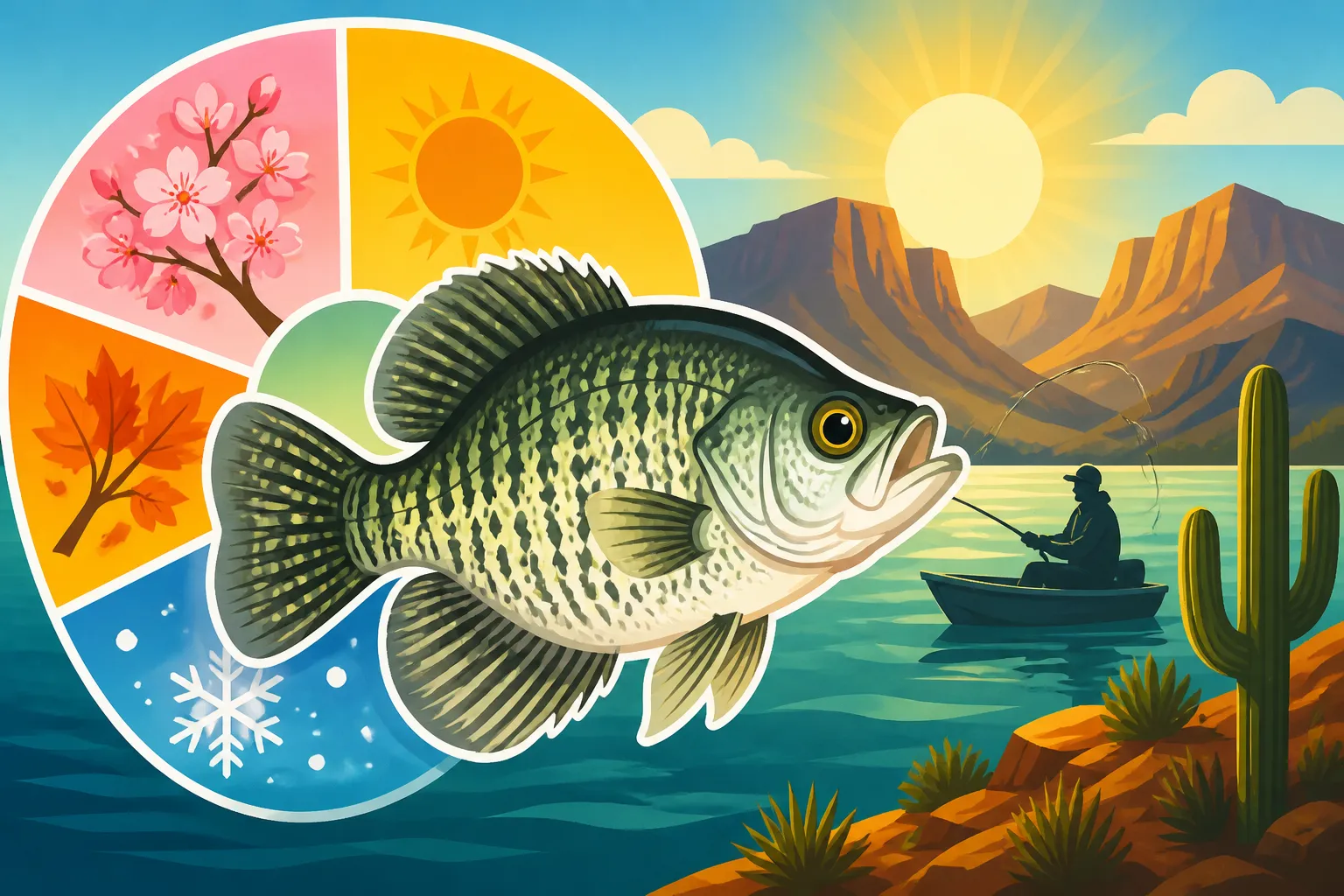
Roosevelt Lake, a true Arizona gem, is renowned for its fantastic crappie fishing. But these elusive panfish don't just bite consistently all year long. Their behavior is heavily dictated by water temperature and their natural spawning cycles, which means understanding the seasonal changes is key to consistent success. Each season offers unique opportunities and challenges for anglers targeting crappie.
The Spring Spawning Frenzy March – May
Ah, spring! This is often heralded as the best season to catch crappie at Roosevelt Lake, and for good reason. As the lake water begins to warm up, typically reaching into the high 50s and 60s Fahrenheit, crappie start to move from their deeper winter haunts into the shallower coves and flats. This migration is all about their reproductive cycle, making them highly concentrated and aggressive.
During this period, male crappie establish nests in shallow water, often just 2-10 feet deep, around submerged brush, timber, or rocky areas. The females will move in to spawn, and then both sexes remain in the vicinity, guarding the eggs and fry for a period. This makes them relatively easy to locate and tempt with a variety of baits and lures. Anglers often find success casting small jigs, like Bobby Garland's Itty Bit Swim'R or similar micro-plastics, into visible cover. Live minnows suspended under a bobber are also incredibly effective. You'll want to focus on areas with protected coves, creek channels, and standing timber, especially on the northern and western arms of the lake, which tend to warm faster. The sheer volume of fish moving into these areas can lead to some truly unforgettable days on the water.
Summer's Deepwater Challenge June – August
Once the scorching Arizona summer sun takes hold and water temperatures climb into the 70s and 80s, crappie at Roosevelt Lake tend to retreat from the shallow banks. They seek refuge in deeper, cooler water, often suspending over channel edges, submerged humps, or congregating around significant structure like old bridge pilings or deep timber. This doesn't mean crappie fishing stops, but it definitely becomes more of a deepwater challenge.
During these hot months, the crappie's metabolism remains high, so they are still feeding, but they're often found in specific, hard-to-reach spots. Early mornings and late evenings offer the best bite windows when the surface temperatures are slightly cooler and baitfish are more active. Look for schools of crappie on your fish finder, often suspending 15-30 feet deep over even deeper water. Vertical jigging with small spoons or blade baits, or slow trolling with jigs or live minnows, are effective strategies. Patience and good electronics become your best friends. Dealing with the intense Arizona heat is also crucial; make sure you're well-hydrated and protected from the sun if you're out during these months. For more general advice on fishing Arizona's summer heat, check out our guide on Best Time of Day to Fish in Arizona Heat.
Fall's Feeding Frenzy September – November
As summer's intense grip loosens and cooler temperatures begin to arrive in September, Roosevelt Lake crappie start to make a noticeable move. The lake water begins to cool down from its summer highs, triggering a "second bite" that many seasoned anglers eagerly anticipate. This period offers fantastic opportunities, often rivaling spring in terms of action, as crappie transition from their deep summer haunts and begin to feed aggressively to prepare for winter.
Transitioning Fish and Cooling Waters
The cooling water temperatures in fall encourage crappie to become more active and start moving back towards shallower to mid-depth ranges, typically 10-25 feet. They're often chasing schools of shad and other baitfish that are also moving into these areas. You'll find them concentrating around creek channels, points, and areas with submerged brush and rock piles. The key here is to follow the bait. If you can locate schools of threadfin shad on your fish finder, there’s a good chance crappie are lurking nearby, ready to ambush. This fall transition can last well into November, offering consistent fishing opportunities as long as the weather remains stable. The fish are less pressured than during the spring spawn, making for a more relaxed, yet highly productive, fishing experience.
Prime Locations and Lures
In the fall, focus your efforts on the mouths of major creeks and tributaries, as well as main lake points that extend into deeper water. Crappie will often stage in these areas before moving fully shallow or using them as ambush points. For lures, small jigs continue to be king. You can experiment with different colors, but shad imitations, white, chartreuse, and black/chartreuse are often reliable producers. Spider rigging, where you fish multiple rods with jigs or minnows at various depths, can be highly effective for covering water and finding the depth where crappie are most active. For those who prefer a more active approach, casting and retrieving small crankbaits or swimbaits can also draw strikes from aggressive, feeding crappie. Don't forget that live minnows are always a top choice, especially when fish are finicky. Many anglers find great deals on a variety of crappie jigs and minnow buckets on Amazon to stock up for the fall season.
Winter's Subtle Approach December – February
Winter crappie fishing at Roosevelt Lake can be a bit more challenging, demanding patience and precision, but it can also yield some of the largest crappie of the year. During these colder months, typically from December through February, crappie's metabolism slows down significantly, and they generally congregate in large schools in deep water. The bites will be much more subtle, sometimes feeling like just a slight pressure or a tick on your line.
Slow and Deep
Crappie in winter will hold tight to deep structure, often in 30-60 feet of water, sometimes even deeper. They prefer areas with standing timber, deep brush piles, and rock ledges near the main river channel or major creek beds. Their movements are minimal, and they're conserving energy, so presenting your bait directly to them is paramount. Think slow, methodical presentations. You'll need to drop your lure right into their strike zone and keep it there. This isn't the season for aggressive retrieves; instead, a slow lift and drop or simply holding the bait still can be what triggers a bite.
Vertical Jigging and Electronics
This is where a good fish finder becomes an indispensable tool. You'll want to spend time idling over potential crappie habitat, scanning for those tell-tale arches or bait balls. Once you locate a school, precise boat positioning is crucial for keeping your bait in front of them. Vertical jigging is the name of the game, using tiny jigs (1/32 to 1/16 ounce) tipped with a small plastic grub or a live minnow. Some anglers even use light spoons or blade baits. For more on advanced fish-finding techniques, consider our guide on How to Read a Fish Finder for Bass (many principles apply to crappie too!).
The best technique involves dropping your lure directly onto the fish you see on your screen. Watch your line closely for any unusual movement, as a winter crappie bite can be incredibly light. Many anglers also use a two-rod setup, allowing them to present different baits or fish at slightly different depths simultaneously. This technique is especially effective for finding out what the crappie are most interested in on a given day.
Essential Gear and Tactics for Roosevelt Lake Crappie
Crappie fishing at Roosevelt Lake, regardless of the season, requires specific gear and tactics to maximize your chances of success. It's not just about having a rod and reel; it's about having the right rod and reel, paired with the perfect lure, and knowing how to use them effectively in this unique desert lake environment.
Rods, Reels, and Line Choices
For crappie, light tackle is generally preferred. A fast-action, ultralight spinning rod, typically 5 to 7 feet in length, is ideal. This setup provides the sensitivity needed to detect those subtle crappie bites, especially during colder months. Paired with a small spinning reel (size 1000 or 2000), you’ll have a balanced setup that makes casting small jigs effortless. For line, 4 to 6-pound monofilament or fluorocarbon is excellent. Monofilament offers a bit of stretch, which can be forgiving on light bites, while fluorocarbon provides less stretch and better sensitivity, which can be advantageous when fishing deep or in windy conditions. Braided line can also be used, especially in heavier cover, but consider adding a fluorocarbon leader for stealth. You can find a fantastic selection of suitable rods and reels for crappie fishing on Amazon. For more specific recommendations, our guide on Best Rods for Crappie has detailed insights.
Bait and Lure Selection
When it comes to tempting crappie at Roosevelt, variety is your friend, but some staples consistently produce.
- Live Minnows: These are often considered the gold standard, especially for finicky crappie. Hooked lightly through the lips or dorsal fin and suspended under a bobber or fished on a drop-shot rig, live minnows are hard for crappie to resist. You can learn more about proper rigging in our How to Rig a Live Minnow for Crappie guide.
- Jigs: Small plastic jigs (1/32 to 1/8 ounce) are incredibly versatile. Paddle-tail grubs, tube jigs, and spider jigs in various colors (chartreuse, white, black/chartreuse, pink, and shad patterns) are all highly effective. Experiment with different colors and tail actions until you find what the crappie prefer on a given day.
- Micro Crankbaits and Blade Baits: These can be deadly, especially in fall and early summer when crappie are actively chasing baitfish. Small crankbaits that dive to the depth where crappie are holding can be trolled or cast. Blade baits are excellent for vertical jigging in deep water, mimicking dying baitfish.
- Spoons: Tiny Kastmasters or similar jigging spoons are fantastic for vertical presentations in deep water, particularly during winter.
Keep a variety of these baits and lures in your tackle box, readily available from your local tackle shop or Amazon, so you can adapt to changing conditions and crappie preferences.
Locating Crappie Hotspots
Finding crappie at Roosevelt Lake is often about locating their preferred habitat, which changes with the seasons. They are structure-oriented fish, meaning they'll relate to anything that provides cover or ambush points.
- Standing Timber and Brush Piles: Roosevelt Lake is famous for its submerged forests and brush, which provide ideal habitat year-round. Crappie will suspend in the branches or hold tight to the trunks. Learning How to Fish a Brush Pile for Crappie is an essential skill here.
- Creek Channels and Ledges: These are natural highways for crappie, especially during transition periods. Fish will often stage along the edges of these channels.
- Humps and Points: Submerged humps and points that extend into deeper water offer crappie excellent ambush positions and thermal refuge.
- Rocky Banks and Riprap: Especially during the spawn, crappie will use these areas for nesting.
Investing in a quality fish finder with side-imaging or down-imaging capabilities can drastically improve your ability to locate these hidden hotspots. Scan areas thoroughly, marking any schools of fish or significant structure you encounter. Knowing the lake's topography and understanding the seasonal movement patterns of crappie at Roosevelt Lake will give you a huge advantage.
Crappie Limits and Regulations at Roosevelt Lake
Before you head out to Roosevelt Lake with dreams of a cooler full of crappie, it’s absolutely vital to be familiar with the current Arizona fishing regulations. These rules are put in place to ensure the sustainability of our fisheries, and ignoring them can lead to hefty fines or even loss of your fishing privileges. You can find a comprehensive breakdown in our Arizona Fishing Regulations Explained guide.
While general statewide regulations apply, specific water bodies like Roosevelt Lake might have unique rules, especially concerning bag and possession limits for certain species. For crappie, the statewide daily bag limit is generally 25 fish, with a possession limit of 50. However, always double-check the latest Arizona Game and Fish Department (AZGFD) regulations booklet or their website before each trip, as rules can change. This booklet, which you can usually pick up at any license dealer, will clearly outline any length restrictions or special regulations specific to Roosevelt Lake. It’s your responsibility as an angler to know and follow these rules.
| Season | Typical Months | Water Temperature Range (F) | Primary Locations | Effective Techniques | Key Baits/Lures |
|---|---|---|---|---|---|
| Spring Spawn | March – May | 58-68 | Shallow coves, brush, standing timber | Casting, bobber fishing | Live minnows, small jigs (chartreuse, white) |
| Summer Deep | June – August | 75-85+ | Deep channels, submerged humps, timber | Vertical jigging, slow trolling | Small spoons, blade baits, deep jigs, live minnows |
| Fall Feeding | September – November | 65-75 | Creek mouths, main lake points, structure | Spider rigging, casting | Jigs (shad, black/chartreuse), small crankbaits, live minnows |
| Winter Slow | December – February | 50-60 | Deep timber, rock ledges, channel drops | Vertical jigging, slow drops | Tiny jigs (dark colors), small spoons, live minnows |
Disclaimer
Fishing conditions and regulations in Arizona can change. Always consult the latest Arizona Game and Fish Department regulations before heading out. This guide is for informational purposes only and should not replace official sources. Always prioritize safety on the water.