Best Bass Spots at Lake Pleasant
Trying to navigate the immense waters of Lake Pleasant to find that perfect bass fishing spot can feel like searching for a needle in a haystack, especially when you're faced with its ever-changing water levels and diverse underwater terrain. It's a huge lake, and figuring out where the bass are holding, let alone what they're biting on, is a challenge many anglers, even seasoned ones, grapple with. This guide is here to cut through the confusion, offering a detailed breakdown of Lake Pleasant's best bass spots and how to tackle them throughout the year.
Understanding Lake Pleasant's Bass Dynamics
Lake Pleasant, a true gem in the Arizona desert, is a fantastic fishery, but its sheer size and unique characteristics mean that understanding the bass here requires more than just a quick look at a map. We're talking about a lake that experiences significant water level fluctuations, boasts varied underwater topography, and supports a thriving population of different bass species. Getting to grips with these dynamics is your first step toward consistent success.
The Diverse Bass Population: Largemouth, Smallmouth, and White Bass
When you talk about bass fishing at Lake Pleasant, you're not just talking about one type of fish. This lake is a fantastic multi-species fishery, offering opportunities for three distinct bass species, each with its own preferences and behaviors.
Largemouth Bass: The Classic Desert Lake Fighter
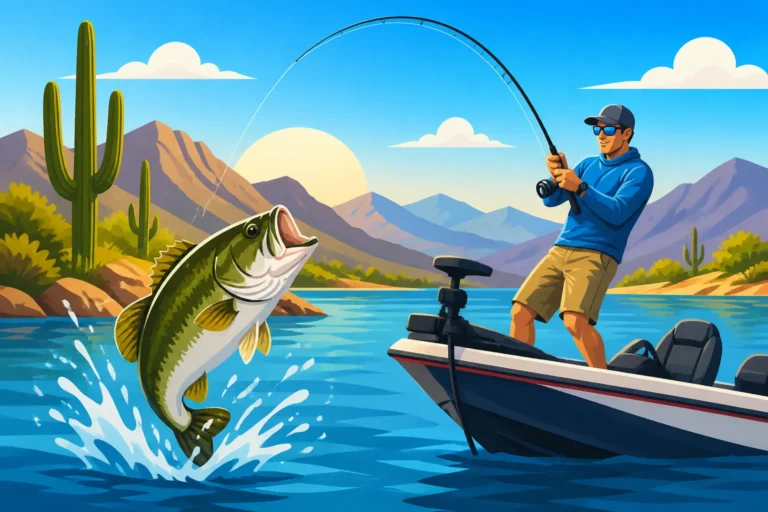
Largemouth bass are the most sought-after species for many anglers at Lake Pleasant, and for good reason. They grow big, fight hard, and are often found in areas with cover and structure. You'll typically find largemouth bass around submerged brush, rocky points, deep coves, and areas where there's a good transition from shallow to deeper water. They love to ambush their prey, so look for them lurking near structure that provides cover. When the water levels are high, new brush and vegetation become submerged, creating a temporary haven for these fish. Conversely, when water levels drop, the remaining deep structure, like old creek channels and rock piles, becomes critical. Understanding their habitat preferences, as outlined in our comprehensive Largemouth Bass Fishing Guide for Arizona, is key to consistently hooking these chunky fish.
Smallmouth Bass: The Rocky Bottom Enthusiast
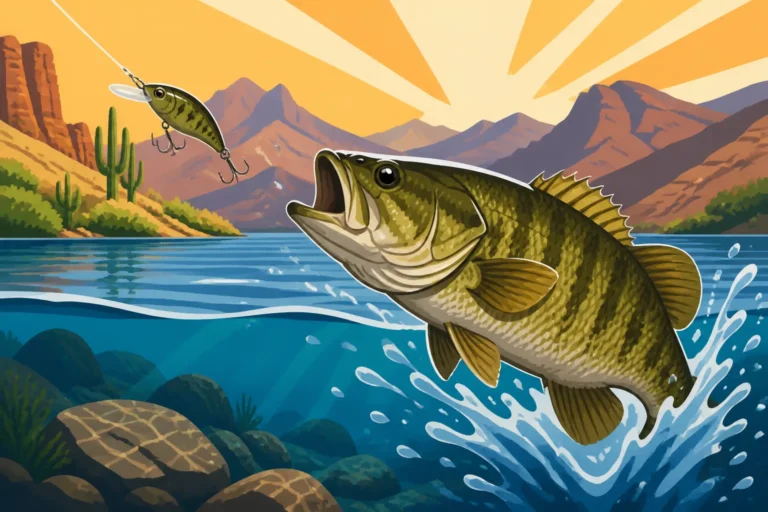
While not as prevalent as largemouth, smallmouth bass have a strong presence in Lake Pleasant, particularly in the clearer, rockier areas of the lake. These bronze bombers prefer cooler water and are often found relating to rocky main lake points, sheer canyon walls, and offshore humps. They're known for their powerful runs and aerial acrobatics, making them a thrilling catch. Smallmouth bass typically feed on crayfish and small baitfish, so lures that mimic these forage items are often highly effective. If you're looking to specifically target these hard-fighting fish, paying close attention to the rocky, deeper structure, especially on the main body of the lake or near the dam, will increase your chances. For more on these incredible fighters, check out our Smallmouth Bass Fishing Guide for Arizona.
White Bass: The Schooling Powerhouses
Don't overlook the white bass at Lake Pleasant! These schooling fish offer some of the most exciting action, especially when they're actively feeding. White bass are pelagic, meaning they often suspend in open water, chasing schools of shad. You'll typically find them in the main lake body, often indicated by "boils" on the surface where they're actively herding and devouring baitfish. When you find a school, the action can be fast and furious, with multiple hookups common. They are fantastic table fare, too. These fish are less structure-oriented than largemouth or smallmouth but are highly dependent on baitfish movements and water temperature. Knowing how to locate and capitalize on these schooling events, as detailed in our guide on White Bass Fishing at Lake Pleasant, can lead to some unforgettable days on the water.
The Impact of Water Levels and Structure
Lake Pleasant's water levels are famously dynamic, fluctuating significantly throughout the year and across seasons due to its role in municipal water supply. This isn't just a minor detail; it dramatically impacts where bass hold and how you should approach fishing.
High Water: New Opportunities and Challenges
When the lake is at higher levels, typically after strong winter rains or deliberate releases, vast new areas of shoreline vegetation and terrestrial features become submerged. This influx of new cover—mesquite trees, brush, and grasses—creates fantastic shallow-water ambush points for largemouth bass, especially during the spring spawn and post-spawn periods. Bass will move into these newly flooded areas, often quite shallow, to feed and spawn. The challenge here is that the bass can be spread out across a much larger area, making them harder to pinpoint. However, finding those key submerged bushes or tree lines can be incredibly rewarding.
Dropping Water: Concentrating the Fish
Conversely, when water levels drop, bass tend to concentrate around established, deeper structures that remain submerged. Old roadbeds, main lake points, humps, creek channels, and rock piles become prime real estate. The bass don't just disappear; they simply relocate to the most stable and productive deep-water cover available. This can make them easier to locate, as they're congregated in fewer, more defined areas. It also means that anglers need to shift their focus from shallow cover to deep-water presentations like jigs, deep crankbaits, or drop-shot rigs. A good fish finder becomes an invaluable tool during these periods to locate those submerged features that are now holding fish. For a deeper dive into seasonal patterns, our guide on Arizona Fishing Seasons Explained can offer broader context.
Prime Bass Fishing Hotspots on Lake Pleasant
Lake Pleasant is a big body of water, but over the years, certain areas have consistently proven to be bass magnets. Knowing these key zones and understanding why they attract fish will significantly boost your success. It’s not just about where to go, but what makes that spot special.
The Productive Northern Coves and Creek Channels
The northern arm of Lake Pleasant is often a go-to for many anglers, and for good reason. It's fed by the Agua Fria River and offers a diverse range of habitats.
Castle Creek and Humbug Creek
These two major creek arms, found in the northern reaches of Lake Pleasant, are absolute hotspots, especially when water levels are high. When the lake fills up, these creeks become vast, intricate networks of flooded brush, trees, and subtle channel swings. Largemouth bass absolutely thrive in these environments, using the newly submerged cover for spawning, feeding, and protection.
- Spring and Early Summer: This is prime time for Castle Creek and Humbug. Bass move shallow to spawn, and you can find them tucked into the flooded mesquite trees and brush lines. Targeting these areas with Texas-rigged plastics, jigs, or even topwater lures early and late in the day can be incredibly effective. Look for pockets of clear water amidst the brush, or areas where the creek channel comes close to the bank.
- Tactics: Flipping and pitching baits into the heavy cover is a primary technique. Also, keep an eye out for open lanes between brush where a spinnerbait or swim jig can draw strikes. As the water warms, the bass might move slightly deeper, but still relate to the abundant cover. If you're a beginner, our Beginner Fishing Techniques for Arizona Desert Lakes offers practical starting points.
Cole's Bay and Other Smaller Coves
Just south of the main creek arms, you'll find numerous smaller coves like Cole's Bay. These areas often feature a mix of rocky banks, some brush, and gradual slopes. They can be excellent transition zones, where bass move in and out of the deeper main lake.
- Year-Round Potential: These coves can hold bass throughout the year. In cooler months, deeper coves can offer protection and stable water temperatures. In warmer months, the points leading into these coves can be productive early in the morning or late in the evening as bass move up to feed.
- Tactics: Carolina rigs, shaky heads, or deep crankbaits fished along points and submerged humps within these coves can be very effective. Don't forget to explore any secondary points or small feeder creeks that might be present. The specific types of lures and baits you choose, which we cover extensively in our Best Baits and Lures for Arizona Fishing guide, will make a big difference.
Mid-Lake Points, Humps, and Submerged Islands
As you move out into the main body of Lake Pleasant, the focus shifts from dense shallow cover to deeper, more pronounced structural features. These offshore spots are goldmines for bass, especially when the fish aren't holding shallow.
The Famous Roadbed and Submerged Humps
Lake Pleasant was formed by damming the Agua Fria River, and remnants of the old landscape, like roads and foundations, now lie submerged. The "roadbed" is a particularly famous structure, offering a long, distinct travel corridor and ambush point for bass. Submerged humps and islands are also critical, providing vertical relief in an otherwise flatter bottom.
- Strategic Importance: These features act as highways and feeding stations for bass, especially for smallmouth and deeper-holding largemouth. Bass will often position themselves on the windward side or along the edges of these structures, waiting for baitfish to pass by.
- Tactics: Vertical jigging, drop-shotting, and deep cranking are incredibly effective here. Use your fish finder to locate the contours and any schooling baitfish. Once you find a productive hump or section of the roadbed, work it thoroughly from different angles. This is also where you might find schooling white bass chasing shad. Sometimes, finding a reputable guide through services like FishingBooker can give you an immediate advantage by pinpointing these less obvious offshore structures.
Rocky Points Leading into Open Water
Throughout the lake, particularly on the western and eastern shores, you'll find numerous rocky points that extend out into deeper water. These points are classic bass holding areas.
- Current and Baitfish: Points are exposed to currents and waves, which often push baitfish past them. Bass will stage on these points, particularly on the deeper breaks, to ambush passing meals. Smallmouth bass often prefer these rocky, exposed points.
- Tactics: Vary your retrieve and lure selection. Spinnerbaits and crankbaits worked over the top and along the sides of the point can draw aggressive strikes. For deeper fish, try football jigs or a shaky head worm. Look for transitions where rock gives way to sand or gravel, as these can be key feeding zones.
Targeting Bass Near the Main Lake Points and Dam Area
The southern end of Lake Pleasant, closer to the main dam and recreation areas, presents different opportunities, often characterized by deeper water and steeper rocky banks.
The Main Dam and Riprap Sections
The riprap along the dam face and other engineered shorelines provides excellent habitat. The large rocks create countless crevices and ambush points, and the deep water adjacent to them offers stable temperatures.
- Winter and Summer: These areas can be very productive in both the coldest and hottest months. In winter, bass might suspend along the dam face or tuck into deep rock crevices to find stable, slightly warmer water. In summer, the deep water provides a thermal refuge, and bass will move up to feed along the riprap during low light conditions.
- Tactics: Finesse techniques like drop-shotting or dart-heading small worms are excellent for picking off suspended or rock-hugging bass. Deep diving crankbaits can also be effective when retrieved parallel to the riprap. Be mindful of potential snags in the rocky bottom.
Deeper Coves and Bluff Walls
Around the lower portion of the lake, you'll find coves with steep bluff walls that plunge into significant depths. These vertical structures are ideal for smallmouth bass and deeper-holding largemouth.
- Vertical Presentation: The key here is to fish vertically or parallel to the bluff. Bass will often relate directly to the wall, suspended at various depths.
- Tactics: Spoons, vertical jigs, and drop-shot rigs are perfect for exploring these deep walls. Pay attention to your fish finder for any irregularities or concentrations of baitfish. Sometimes, a subtle change in the rock face or a small ledge can hold a group of bass. Remember to always understand the Arizona Fishing Regulations Explained to ensure you're fishing legally in these areas.
Seasonal Strategies for Lake Pleasant Bass
Lake Pleasant is a year-round fishery, but the bass behaviors change dramatically with the seasons. What works in spring won't necessarily work in summer, and adapting your approach is critical for consistent success.
Spring Spawning Action and Pre-Spawn Feeds
Spring is arguably the most exciting time to target bass at Lake Pleasant. As water temperatures rise, the bass become incredibly active, first fattening up for the spawn and then moving to shallower waters to reproduce.
Pre-Spawn Build-Up: Feeding Frenzy
Once water temperatures climb into the 50s and low 60s Fahrenheit, bass begin their pre-spawn ritual. They move from their deeper winter haunts towards shallower staging areas, gorging themselves to build energy for the spawn.
- Where to Look: Focus on main lake points, secondary points within larger coves, and the mouths of creek arms. These are transitional areas where bass will stage before moving to actual spawning flats. Submerged humps and rock piles near these areas are also prime.
- Effective Baits: This is a great time for moving baits. Crankbaits that dive to the depth of the staging areas, spinnerbaits, and even jerkbaits can be incredibly effective. Larger profile jigs and Texas-rigged creature baits can also entice a big bite. Early mornings might see some topwater action, particularly on warmer days. Our guide to Spring Bass Fishing Tactics in Arizona offers a wealth of detail for this season.
The Spawn: Protecting the Nests
As water temperatures reach the mid-60s, bass move into sheltered, shallower areas to spawn. This typically happens in protected coves, flats with submerged brush, or areas with a hard bottom.
- Where to Look: Look for visible beds in clear water or target areas with abundant submerged brush and tree lines in the northern coves (Castle Creek, Humbug Creek) or protected pockets around the mid-lake region. Bass will be guarding their nests, making them aggressive.
- Effective Baits: Sight fishing for bedding bass with soft plastics like lizards, tubes, or senkos can be very effective. Pitching jigs or creature baits into heavy cover where beds are likely, but not visible, also works. Be mindful of ethical fishing practices during the spawn; catch and release is highly encouraged to protect the future of the fishery.
Summer Deep Water and Early Morning/Late Evening Bites
Arizona summers mean scorching temperatures, and Lake Pleasant is no exception. The bass adapt by moving deeper during the day and becoming more active during low-light periods.
Mid-Day Deep Water Tactics
When the sun is high and temperatures soar, bass seek refuge in cooler, deeper water. This doesn't mean they stop feeding; they just change their location and sometimes their feeding windows.
- Where to Look: Concentrate on main lake points, deep humps, submerged creek channels, and the edges of steep bluff walls. Bass will suspend over deep water or hug bottom structure in 20-50 feet of water, sometimes even deeper. Your fish finder is your best friend here.
- Effective Baits: Drop-shot rigs with small worms, deep-diving crankbaits, heavy football jigs, and large spoons are excellent for targeting these deep-water bass. Fishing these vertically or slow-rolling them along the bottom can elicit strikes. For deeper insights, consult our Summer Bass Fishing Tactics in Arizona article.
Low-Light Topwater and Shad Boils
As the sun begins to set or before it fully rises, bass will often move shallower or come up in the water column to feed, particularly white bass and striped bass (though less common for stripers in Pleasant).
- Where to Look: Early mornings and late evenings are prime for topwater action, especially around main lake points, shallow flats adjacent to deep water, and the mouths of coves. Keep an eye out for "boils" where white bass are actively pushing shad to the surface; these can occur almost anywhere on the main lake body.
- Effective Baits: Topwater lures like poppers, walking baits, and buzzbaits can produce explosive strikes at dawn and dusk. For schooling white bass, small Kastmasters, spoons, or small swimbaits thrown into the boils are deadly. Remember, if you're looking for a guided trip during these intense summer periods, using a service like FishingBooker can help you connect with local experts who know exactly when and where these boils are happening.
Fall Feeding Frenzies and Transition Zones
Fall is another fantastic time to fish Lake Pleasant for bass, often marked by a dramatic increase in feeding activity as fish prepare for winter. The cooling water temperatures signal an end to the summer lethargy, and bass become highly aggressive.
Aggressive Feeding and Schooling
As ambient temperatures drop and water cools, baitfish become more active, and bass follow suit, chasing schools of shad throughout the lake. This leads to some of the most consistent and exciting fishing of the year.
- Where to Look: Bass will be found ambushing baitfish in transition areas, such as points leading into coves, creek channels, and submerged humps. Largemouth will often be shallower than in summer, but still relating to structure. White bass will form large schools, often busting bait on the surface, especially in the main lake.
- Effective Baits: Moving baits truly shine in the fall. Spinnerbaits, chatterbaits, lipless crankbaits, and shallow-to-mid diving crankbaits can all be highly productive. Jerkbaits are also excellent for suspended bass around points. Topwater can still be good on warmer days, particularly during overcast conditions. Our Fall Bass Fishing Tactics in Arizona dives deep into these patterns.
Following the Bait
The key to fall bass fishing is finding the bait. If you locate schools of shad, bass won't be far behind. Use your electronics to find bait concentrations, or look for visual cues like diving birds or surface activity.
- Tactics: Cover water efficiently. Trolling spinnerbaits or small crankbaits can be effective for covering large areas and finding active schools of white bass. For largemouth, target visible cover, but also explore offshore humps and points where baitfish are congregating.
Winter Slow Rolls and Deep Structure Fishing
Winter fishing at Lake Pleasant can be challenging but incredibly rewarding for those willing to adapt to the slow pace. Bass metabolism slows down, and they become less active, often holding tight to deep structure.
Deep and Stable Locales
During the coldest months, bass seek out the most stable water temperatures, which usually means deep water. They often congregate in large schools, making them hard to find but easy to catch once located.
- Where to Look: Focus on the deepest parts of the main lake, particularly around the dam area, deep creek channels, bluff walls, and prominent offshore humps and ledges. Bass will often suspend directly over these features or cling tightly to them.
- Effective Baits: Finesse presentations are typically king in winter. Drop-shot rigs with small worms, football jigs dragged slowly along the bottom, shaky heads, and small spoons are all highly effective. Very slow-rolled deep diving crankbaits can also draw strikes. The retrieve needs to be painstakingly slow to entice these lethargic fish.
- Tactics: Use your fish finder extensively to mark schools of bass. Once you find them, stay on top of them. Vertical presentations are key. These bass often won't chase, so your bait needs to be presented directly in front of them. Our Winter Bass Fishing Tactics in Arizona guide provides more expert tips for this season. A guided trip through FishingBooker can often be a great way to learn these precise winter techniques from local pros.
| Season | Primary Bass Species | Typical Locations | Recommended Baits/Lures | Notes |
|---|---|---|---|---|
| Spring | Largemouth, Smallmouth | Northern coves, protected flats, main lake points | Jigs, Texas Rigs, Spinnerbaits, Crankbaits, Senkos | Pre-spawn to spawn. Look for shallow cover. |
| Summer | Largemouth, White Bass | Deep points, humps, creek channels (day); Shallower points, coves (low light) | Drop-shot, Deep Cranks, Jigs, Topwater, Spoons | Focus on deep structure or early/late surface. |
| Fall | Largemouth, Smallmouth, White Bass | Main lake points, creek channels, humps (following bait) | Spinnerbaits, Lipless Cranks, Jerkbaits, Swimbaits | Fish aggressively, follow bait schools. |
| Winter | Largemouth, Smallmouth | Deepest sections, dam area, bluff walls, offshore humps | Drop-shot, Football Jigs, Spoons, Small Plastics | Slow presentations, target deep, stable water. |
Essential Gear and Techniques for Success
Having the right gear and knowing how to use it effectively can make all the difference at Lake Pleasant. Given its size and diverse fishing conditions, a versatile approach to tackle and navigation is key.
Lures, Baits, and Tackle for Each Bass Species
No single lure will catch every bass, every time, but having a well-stocked tackle box tailored to Lake Pleasant's conditions will set you up for success.
Largemouth Bass Essentials
For largemouth, you'll want to cover various depths and cover types.
- Soft Plastics: Texas-rigged worms (like a Senko or creature bait) are indispensable for pitching into brush, working through rock piles, or fishing around submerged trees. Colors like green pumpkin, junebug, and black/blue are always reliable. Drop-shot rigs with smaller worms or finesse plastics work well in clear, deeper water.
- Jigs: Flipping jigs (for heavy cover) and football jigs (for dragging along deep bottoms) are crucial, especially in cooler water or when bass are holding tight to structure. Match jig colors to the local forage, like brown and green for crayfish.
- Crankbaits: A selection of crankbaits that dive to different depths (shallow, medium, deep) is vital for covering water and targeting bass at various depths. Shad patterns, crawfish patterns, and firetiger are popular.
- Spinnerbaits & Chatterbaits: Excellent for covering water, especially in stained water or around sparse cover. White, chartreuse, and baitfish patterns are good starting points.
- Topwater: Poppers, walking baits, and buzzbaits for low-light conditions, especially in spring and fall.
Smallmouth Bass Specialties
Smallmouth have a slight preference for different presentations, often more finesse-oriented and mimicking crayfish or smaller baitfish.
- Finesse Jigs: Small football jigs or Ned rigs are killer for smallmouth around rocky points and humps.
- Drop-Shot Rigs: A small worm or minnow imitation on a drop-shot rig is incredibly effective for vertical presentations over deep rock structure.
- Jerkbaits: Especially in cooler water, suspending jerkbaits can be deadly when retrieved with a twitch-pause retrieve around main lake points.
- Crayfish Imitations: Small crankbaits or soft plastics designed to mimic crayfish are highly effective when smallmouth are feeding on them.
White Bass Tactics
White bass are usually less picky when they're actively feeding, but certain lures are more efficient for these schooling fish.
- Small Spoons & Kastmasters: When white bass are busting on the surface or suspended, these are irresistible. Silver and white are common colors.
- Small Swimbaits: Small paddle tail swimbaits retrieved quickly through schools can draw multiple strikes.
- Rooster Tails/Spinners: Can be effective for casting into boils or retrieving through suspected areas.
- Cut Bait: Though less common for active schooling fish, small pieces of cut bait fished on the bottom can attract white bass, especially if they're not actively busting bait. Check our Best Baits and Lures for Arizona Fishing for even more detailed recommendations.
Navigating and Finding Fish on Lake Pleasant
Lake Pleasant is vast, and simply showing up with a rod and reel won't guarantee success. Effective navigation and fish-finding techniques are paramount.
The Power of Modern Electronics
A good quality fish finder or sonar unit is not just a luxury; it's a necessity for efficiently finding bass on Lake Pleasant, especially when they're holding deep or relating to submerged structure.
- Side Imaging/Down Imaging: These technologies are invaluable for scanning large areas, identifying submerged brush piles, old roadbeds, rock humps, and schools of baitfish quickly. They allow you to "see" structure away from directly under your boat, saving you countless casts.
- 2D Sonar & GPS: Traditional 2D sonar helps you mark individual fish or schools, while GPS allows you to mark waypoints for productive spots, navigate safely, and return to hotspots with precision. Mark specific points, humps, or even a particular tree that produced a fish.
- Interpreting the Screen: Learning to interpret what you see on your fish finder screen is an art. Look for hard bottom, changes in contour, vertical lines indicating trees, and arches or blobs representing fish. Pay attention to baitfish schools; bass are rarely far from their food source.
The Value of Local Knowledge and Guides
For newcomers or those looking to jumpstart their learning curve, nothing beats local knowledge. Lake Pleasant is complex, and conditions can change rapidly.
- FishingBooker and Local Guides: Engaging a local fishing guide through platforms like FishingBooker can be an excellent investment. These guides spend countless hours on the water, understand the seasonal patterns, know the secret spots (like the exact coordinates of a productive submerged hump), and can teach you the specific techniques that are working right now. A guide provides not just a fishing trip, but a hands-on learning experience that can shave years off your learning curve. They'll also ensure you're compliant with all Arizona Fishing Regulations Explained and have the proper Arizona Fishing License Guide.
- Online Forums and Local Bait Shops: While not as direct as a guide, checking local online fishing forums or visiting bait and tackle shops around the Lake Pleasant area can provide current fishing reports, water conditions, and tips on what's biting and where. Don't underestimate the wisdom of the folks behind the counter!
Remember, success on Lake Pleasant often comes down to adaptability. The bass are there, in good numbers and sizes, but they require a thoughtful approach and a willingness to change tactics based on the conditions and the specific species you're targeting. Enjoy the challenge, and tight lines!
Disclaimer
Fishing conditions, regulations, and fish behavior can change rapidly. Always consult the latest Arizona Game and Fish Department regulations before heading out. This guide provides general information and recommendations, but local conditions may vary. Adhere to all safety guidelines and practice responsible angling.