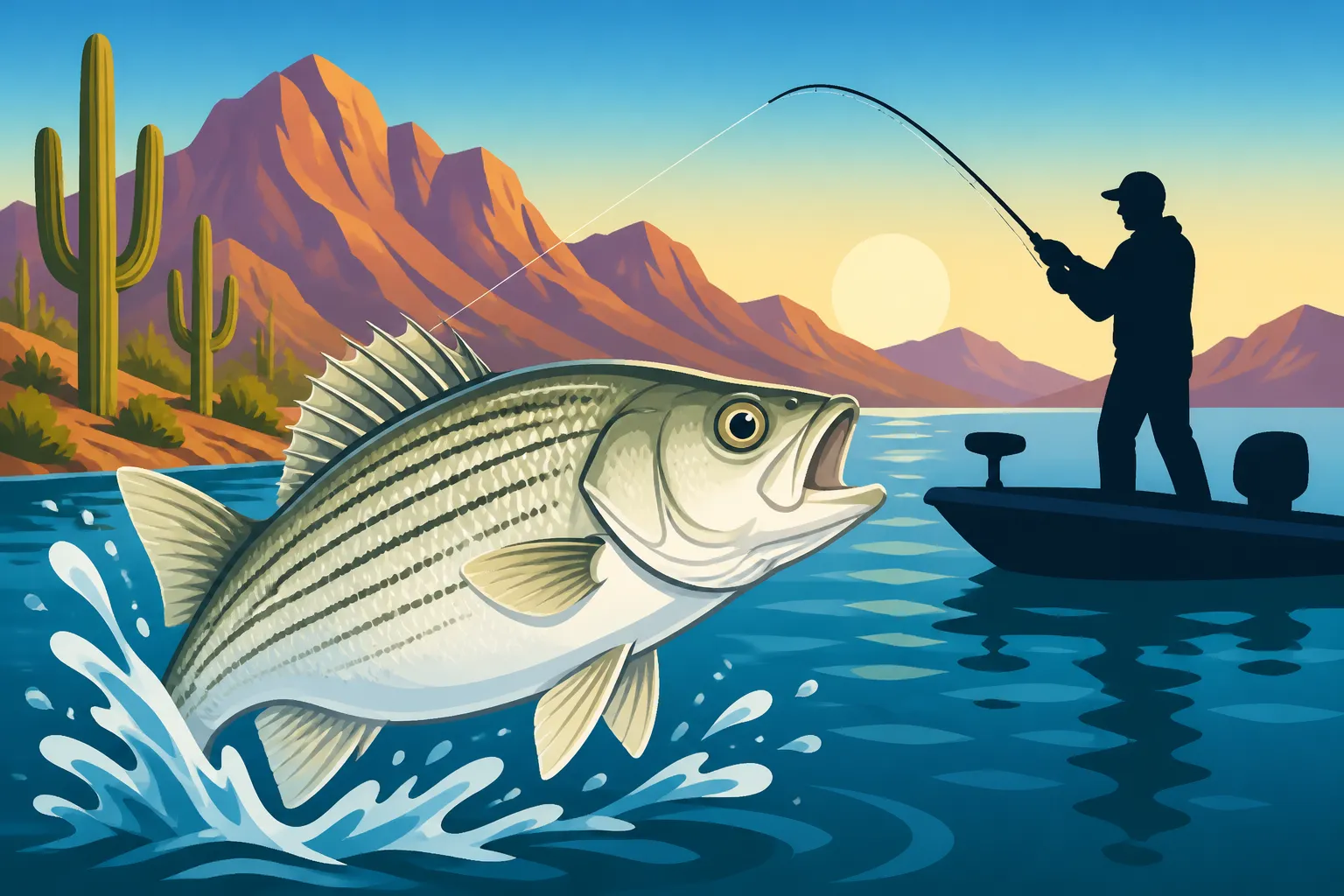
White Bass Fishing at Lake Pleasant
Many anglers hit the water dreaming of those electrifying moments when fish are aggressively striking, making for truly unforgettable experiences. But let's be honest, trying to pinpoint active, schooling species like white bass in a vast expanse like Lake Pleasant can sometimes feel like an overwhelming challenge, especially if you're not sure where to begin. This comprehensive guide is designed to cut through the guesswork, providing you with the essential knowledge and practical tips needed to locate and successfully catch white bass at Lake Pleasant.
Understanding White Bass in Lake Pleasant
White bass are a phenomenal sport fish, widely celebrated for their powerful strikes and spirited fights, often found congregating in large schools across open waters. Lake Pleasant, being a crown jewel among Arizona's fishing destinations, boasts a thriving population of these tenacious fighters. This makes it a top-tier location for anglers seeking consistent action. But what exactly are white bass like, and what makes Lake Pleasant such an ideal habitat for them?
White Bass Characteristics and Behavior
White bass (scientific name: Morone chrysops) are easily identifiable by their sleek, silvery bodies adorned with several distinct dark stripes running horizontally along their sides. They belong to the temperate bass family, which also includes their larger cousins, striped bass, and the hybrid wiper. What truly sets them apart and makes them so captivating to pursue is their strong schooling instinct. You'll frequently find them hunting baitfish in coordinated groups, often leading to exciting phenomena known as "boils" or "feeding frenzies" at the water's surface. When you're lucky enough to encounter a boil, it's not uncommon to land a fish on almost every cast for a thrilling, albeit sometimes brief, period. This intense feeding behavior is typically spurred by their need to rapidly consume calories, particularly during key seasons. As opportunistic predators, their diet primarily consists of threadfin shad, which are incredibly abundant in Lake Pleasant.
Beyond their appearance and feeding habits, grasping their typical behavior patterns is crucial for consistent success. White bass are migratory within the lake, often transitioning from deeper, open water areas to shallower coves and feeder creeks during their annual spawning season. They show a preference for clear water but are quite adaptable and can thrive in slightly turbid conditions. During the peak summer months, they generally retreat to deeper sections of the water column where temperatures are more stable and comfortable. However, the cooler temperatures of early mornings and late evenings frequently draw them closer to the surface to feed. Being mindful of these general movement patterns can prevent wasted effort and significantly increase your chances of finding the action.
Why Lake Pleasant is a Prime Spot for White Bass
Lake Pleasant, situated a short drive northwest of Phoenix, is much more than just a scenic reservoir; it's a vibrant ecosystem that robustly supports a healthy white bass fishery. Its expansive surface area, diverse depths, and a plentiful supply of forage, predominantly threadfin shad, conspire to create an optimal environment for white bass to flourish. The lake's clear, deep waters, combined with numerous coves, points, and intricate submerged structures, offer ample habitat for white bass throughout every stage of their life cycle. Moreover, the diligent stocking efforts by the Arizona Game and Fish Department (AZGFD) are instrumental in maintaining a strong population, ensuring that anglers consistently have opportunities to pursue these fish.
The continuous influx of water from the Central Arizona Project (CAP) also plays a vital role in this aquatic prosperity. This inflow introduces essential nutrients and oxygen, which bolsters the entire food chain, from microscopic plankton to the shad that form the backbone of the white bass diet. This nutrient-rich environment means that white bass in Lake Pleasant often achieve respectable sizes and are present in considerable numbers. Unlike some other more elusive species, white bass in Lake Pleasant are generally eager to bite once you successfully locate their schools. It's an exceptionally rewarding experience, whether you're a seasoned angler with years of experience or just embarking on your fishing adventures in Arizona.
Best Times and Seasons for White Bass
When it comes to white bass fishing, especially at Lake Pleasant, timing is absolutely everything. Their activity levels, preferred locations, and most aggressive feeding periods fluctuate significantly with the changing seasons and even the time of day. Having a solid understanding of these patterns will dramatically enhance your prospects for a successful outing. It's not just about showing up; it's about arriving at the optimal moment.
Seasonal Patterns and Spawning Runs
Without a doubt, the most exhilarating period for white bass fishing at Lake Pleasant occurs in the spring, typically spanning from March through May, when these fish undertake their annual spawning migration. During this critical time, substantial schools of white bass move into the shallower coves and the various creek arms of the lake, such as the Agua Fria River arm, to reproduce. They become incredibly active and notably aggressive, making them considerably easier to target. This is the season when you are most likely to witness those thrilling surface "boils" as they aggressively chase shad, either in preparation for spawning or while recuperating afterward. It's genuinely an unparalleled time to be out on the water, offering some of the most consistent action of the year.
As the intense Arizona summer heat sets in, usually from June through September, white bass tend to retreat to deeper, cooler sections of the lake. They will still maintain their schooling behavior, but you'll need to adjust your tactics to target them with deeper presentations, often around distinct submerged structures, steep ledges, or prominent main lake points. During these scorching months, early mornings and late evenings become absolutely crucial for finding active fish near the surface. In the fall, typically October and November, as ambient temperatures gradually begin to drop, white bass once again increase their activity, actively pursuing shad in open water, much like they do in the spring, though usually without the same concentrated spawning migration. During winter, from December through February, they are typically found in deeper water and are somewhat more lethargic, requiring slower, more deliberate presentations. However, they can still be caught if you manage to pinpoint their schools in the deeper basins. For a more comprehensive overview of when to plan your trips, you might find our guide on the Best Time of Year to Fish Lake Pleasant incredibly helpful.
Optimal Time of Day and Weather Conditions
Even within the most productive seasons, specific times of day and particular weather conditions can significantly influence your success. For white bass, the periods of early morning and late evening are almost always prime fishing times, especially during the warmer months. This is when the light is low, and the water temperature is more agreeable for them to feed closer to the surface. You might be treated to spectacular "boils" where the surface of the water churns vigorously with hundreds of fish actively chasing bait. It's a truly mesmerizing sight and an incredible opportunity for non-stop action.
Overcast days can also be exceptionally productive for white bass fishing. The reduced light penetration makes the fish feel more secure feeding higher in the water column throughout the day, rather than retreating to deeper cover. A slight chop on the water, often caused by a gentle breeze, can also work in your favor. This surface disturbance breaks up the water, making it more challenging for baitfish to detect approaching predators and easier for white bass to launch ambushes. Conversely, calm, intensely sunny days typically push the fish deeper, necessitating a shift in your fishing strategies. Always keep a close eye on the weather forecast; understanding how prevailing conditions influence fish behavior is a critical skill for any successful angler.
Essential Gear and Techniques for Success
Equipping yourself with the correct tools and possessing the know-how to employ them effectively is absolutely paramount to consistently catching white bass. While these fish are often known for their aggressive nature, a thoughtful and strategic approach to selecting your gear and refining your technique will undoubtedly lead to a greater number of hookups and more enjoyable moments on the water. Don't simply cast haphazardly; approach your setup and strategy with purpose!
Recommended Rods, Reels, and Line
For targeting white bass, you generally won't need an excessively heavy-duty tackle setup. A medium-light to medium action spinning rod, typically ranging from 6 to 7 feet in length, usually proves to be perfect for the task. This rod length strikes an excellent balance, offering sufficient casting distance while maintaining enough sensitivity to detect those quick, subtle strikes, and possessing adequate backbone to effectively handle a feisty, hard-fighting fish. Pair this with a 2000 or 2500 series spinning reel. You can spool it with 6 to 10 lb monofilament or fluorocarbon line, or opt for a light braided line with a fluorocarbon leader for added advantages. Monofilament provides a bit more stretch, which can be forgiving when dealing with aggressive strikes, while fluorocarbon is nearly invisible underwater and boasts superior sensitivity. Braided line, on the other hand, offers exceptional casting distance and heightened sensitivity, which can be a significant advantage for detecting subtle bites, particularly when the fish are holding in deeper water. For more specific recommendations that can be adapted for white bass, our guide on Best Fishing Rods for Bass in Arizona provides some excellent foundational principles.
When selecting your reel, it's crucial to ensure it features a smooth and reliable drag system. While white bass might not reach colossal sizes, they can certainly put up a surprisingly strong fight, especially when you've hooked into a school. A dependable drag is essential for preventing line breaks and managing the excitement if you're fortunate enough to hook multiple fish simultaneously. The overarching goal is a well-balanced setup that facilitates long, accurate casts, provides excellent control during the fight, and ultimately contributes to a highly enjoyable fishing experience.
Top Baits and Lures for White Bass
White bass are famous for their willingness to strike a diverse array of lures, particularly those that effectively imitate their primary food source: threadfin shad. Here are some of the most consistently effective options for fishing in Lake Pleasant:
- Small Spoons: Chrome, silver, or white casting spoons (such as a Kastmaster or Hopkins Shorty) are absolutely deadly, especially when white bass are actively schooling or relentlessly chasing bait. Their flashy, erratic wobbling action perfectly mimics a distressed shad, making them irresistible. Cast these out, allow them to sink to your desired depth, and retrieve with a vigorous jigging motion.
- Small Crankbaits: Shad-colored crankbaits, especially those designed to dive to specific depths, are remarkably effective. Opt for shallow-diving models during the spring spawn and switch to deeper-diving versions during the summer months. A rapid, erratic retrieve often proves to be the most effective trigger for strikes.
- Inline Spinners: Brands like Rooster Tail or Mepps, in colors such as white, silver, or chartreuse, can be incredibly productive. Their flashing blade and pulsating hackle create an enticing presentation that white bass simply can't resist. Simply cast them out and retrieve them at a steady, consistent pace.
- Soft Plastics: Small grubs, swimbaits, or flukes rigged on a lightweight jig head (typically 1/8 to 1/4 ounce) offer incredible versatility. They perform exceptionally well with a steady retrieve, a subtle twitch-and-pause action, or even when vertically jigged when the fish are holding deeper.
- Jigs: Small bucktail jigs or plastic jigs featuring a paddle tail or curly tail, in colors like white, chartreuse, or pearl, are excellent choices for targeting white bass, particularly when they are holding deeper or exhibiting less active behavior. Experiment with varying your retrieve speed and depth until you pinpoint what they are actively responding to.
- Live Bait: While artificial lures often provide a more dynamic and exciting fishing experience, live shad or small minnows fished under a bobber or on a drop-shot rig can be exceptionally effective, especially when the bite is challenging. However, it is absolutely essential to always confirm the latest Arizona Fishing Regulations Explained concerning the use of live bait to ensure full compliance.
Maintaining a diverse selection of these lures and baits in your tackle box will adequately prepare you for a wide range of conditions and varying fish moods. Never hesitate to experiment with different presentations! For more general guidance on what tackle to consider, our Best Baits and Lures for Arizona Fishing article is an excellent resource.
Effective Fishing Strategies and Locating Schools
The cardinal rule for successful white bass fishing can be summed up simply: "find the bait, find the bass." White bass are almost invariably engaged in actively chasing and feeding on schools of shad. Keep a keen eye out for visual indicators such as diving birds, disturbances on the water's surface (those aforementioned "boils"), or even concentrations of other fishing boats in a particular area. Once you pinpoint such activity, direct your casts into the heart of the action.
When the fish are not actively schooling on the surface, you'll need to rely more heavily on your electronic equipment and your understanding of underwater structure. Concentrate your efforts on main lake points that feature a gradual drop-off into deeper water, especially those that incorporate submerged humps or rocky formations. These areas serve as prime ambush points for white bass as schools of shad migrate along them. Utilize a fish finder to actively locate schools of baitfish and the larger, arch-shaped returns that indicate the presence of predator fish, such as white bass, often lurking in close proximity.
Once you've marked fish on your electronics, consider vertical jigging with spoons or soft plastics directly over their position. Trolling small crankbaits or spoons at various depths can also be a highly efficient method for covering expansive areas of water and effectively locating active schools, particularly in the larger, open sections of the lake. Experiment by varying your trolling speed and the depth of your lure until you elicit a strike. Importantly, don't be reluctant to relocate if you're not getting bites; white bass are continuously on the move, so your strategy should reflect that dynamic behavior!
Navigating Lake Pleasant for White Bass Hotspots
Lake Pleasant is an immense body of water, covering well over 10,000 acres at its full capacity, and boasts an incredible amount of shoreline and complex underwater structure. Knowing precisely where to concentrate your fishing efforts for white bass can be the crucial differentiator between a truly memorable day on the water and one filled with frustration.
Key Areas and Structures to Target
When you're out exploring Lake Pleasant, certain areas consistently yield productive white bass fishing. During the pivotal spring spawn, the Agua Fria River arm and the various northern coves of the lake emerge as prime locations. The steady inflow of water from the river naturally attracts schools of baitfish, and the shallower, warmer water provides ideal conditions for spawning activity. You'll frequently observe anglers lining the banks or diligently working these areas from boats, often with great success. As the seasons progress and ambient temperatures steadily climb, the focus of white bass activity gradually shifts towards the main body of the lake.
Direct your attention to main lake points that feature steep drop-offs into deeper water, particularly those that incorporate distinct submerged humps or prominent rocky structures. These geological features serve as natural ambush points for white bass, enabling them to intercept schools of shad as they navigate along these underwater contours. Submerged islands and isolated humps situated in the expansive open water are also exceptionally productive targets, as are the intricate deep creek channels that meander across the lakebed. The expansive area immediately surrounding the New Waddell Dam can similarly hold significant numbers of fish, owing to its deeper water and the presence of localized currents. Do not overlook large coves that feature extensive flats where shad are prone to gathering; white bass will inevitably be found in close pursuit. A detailed topographical map or highly accurate charts displayed on your fish finder will prove to be an invaluable asset for effectively identifying these critical structures. For a more general overview of fishing this remarkable reservoir, you might want to delve into our comprehensive Lake Pleasant Arizona Fishing Guide.
Using Technology to Your Advantage
In a lake as vast and deep as Lake Pleasant, modern fishing electronics are not merely a convenient luxury; they are an absolutely essential tool for successful white bass fishing. A high-quality fish finder equipped with robust sonar and detailed mapping capabilities can literally reveal the precise locations where fish are congregating. Look for dense schools of baitfish, which typically appear as "clouds" or clusters on your screen, and the larger, more distinct arched returns that unequivocally indicate the presence of predator fish, such as white bass, often lurking in close proximity.
Actively utilize your GPS and mapping functions to accurately mark productive fishing spots, meticulously track your trolling paths, and efficiently navigate back to known structures that have yielded fish in the past. Reputable brands such as Humminbird and Lowrance offer an array of excellent units that provide incredibly detailed visualizations of the underwater environment. When you successfully mark fish or schools of bait, pay very close attention to the indicated depth; this provides a crucial clue regarding how deep you should present your lures. If you are genuinely serious about efficiently locating and catching fish, investing in a good fish finder and dedicating time to learning how to accurately interpret its readings will be an absolute game-changer for your fishing success. Our guide on Best Fish Finders for Bass Fishing in Arizona offers some fantastic advice that directly applies to tracking down elusive white bass schools.
It's also worth highlighting that if your goal is to maximize your valuable time on the water or to quickly learn the intricate ropes from an expert, platforms like FishingBooker can effectively connect you with highly experienced local fishing guides who possess intimate knowledge of Lake Pleasant's every nuance. These professional guides typically operate with state-of-the-art electronics and bring years of invaluable experience in precisely pinpointing white bass schools, offering an unparalleled learning opportunity and significantly increasing your chances of a successful and memorable outing.
Seasonal White Bass Fishing at Lake Pleasant
| Season | Primary Location | Recommended Lures | Best Technique | Notes |
|---|---|---|---|---|
| Spring | Shallow coves, creek arms (Agua Fria), main lake points | Small crankbaits, inline spinners, jigs | Casting & retrieving, trolling, vertical jigging | Spawning run, highly active, look for surface boils |
| Summer | Deeper main lake points, submerged humps, ledges | Spoons, deep-diving crankbaits, soft plastics | Vertical jigging, deep trolling, drop-shot | Early morning/late evening best, target cooler depths |
| Fall | Main lake, open water, creek mouths | Spoons, inline spinners, crankbaits | Casting & retrieving, trolling, drift fishing | Active feeding, chasing shad, similar to spring but less concentrated |
| Winter | Deep basins, main lake channels | Jigs, slow-retrieved spoons | Vertical jigging, slow trolling | Fish are lethargic, slower presentations required, patience is key |
Before you even think about heading out, remember that securing your Arizona Fishing License Guide is the absolute first step to legally enjoying all the incredible fishing opportunities that Lake Pleasant and the entirety of Arizona have to offer. For ultimate convenience, you can even learn How to Buy an Arizona Fishing License Online before you ever leave your home. Furthermore, it's critically important to familiarize yourself with the current Fishing Bag and Possession Limits Explained specifically for white bass, to ensure that you are fully compliant with all local and state fishing regulations.
Disclaimer
Fishing conditions and regulations across Arizona are subject to change without prior notice. It is your personal responsibility to always consult the most current Arizona Game and Fish Department regulations and advisories before embarking on any fishing trip. This guide is provided for general informational purposes only and does not guarantee fishing success. Always prioritize safety, exercise responsible angling practices, and savor every moment of your time on the water!