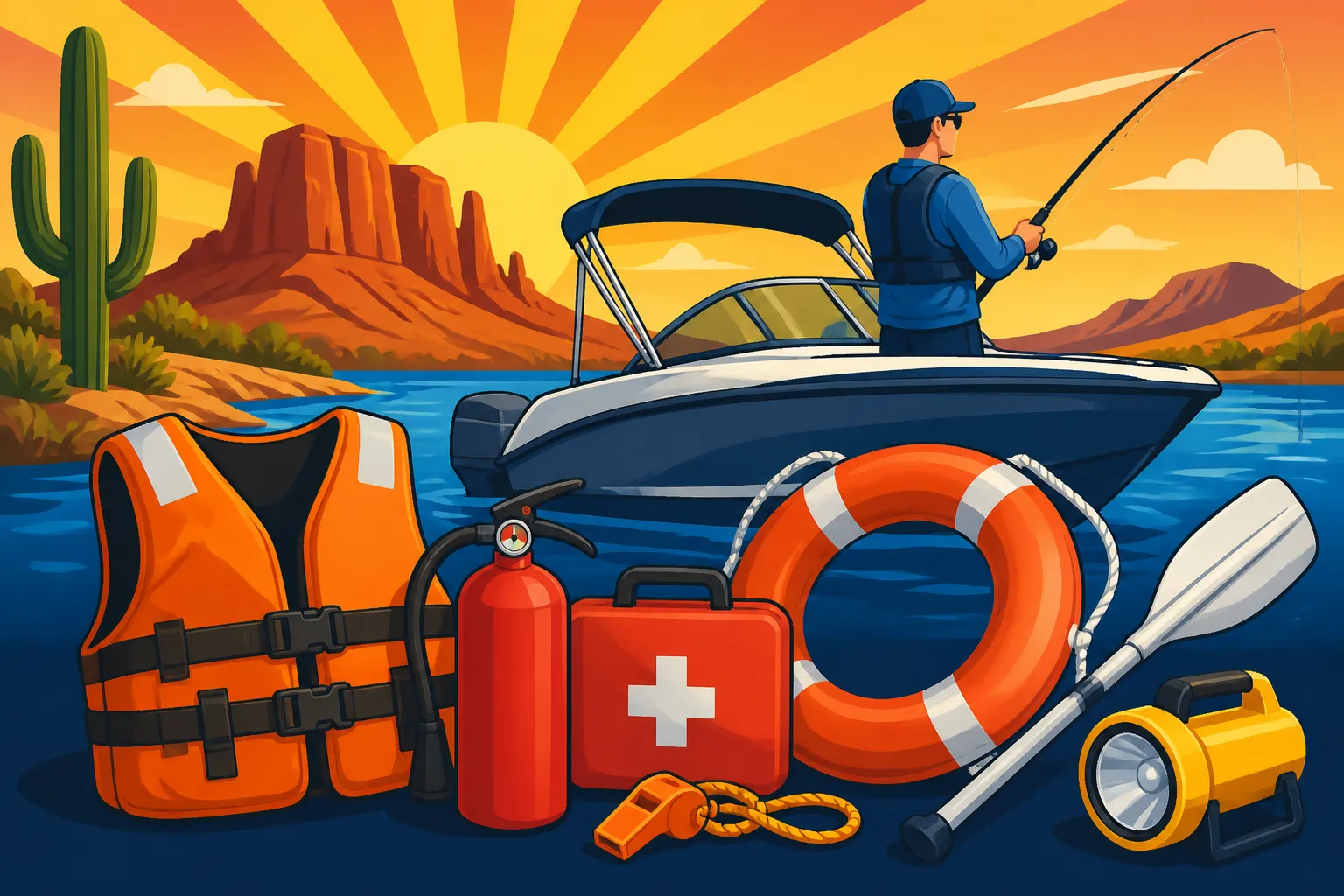
Boating Safety Gear Requirements in Arizona
There's nothing quite like the feeling of being out on Arizona's beautiful waters, whether you're chasing trophy bass on Lake Pleasant, cruising the expansive depths of Lake Powell, or enjoying a peaceful day on one of our many smaller reservoirs. But let's be honest, the thought of all the rules and regulations can sometimes feel like a heavy anchor dragging you down before you even cast off. Nobody wants to be caught off guard by a safety inspection, especially when you're just trying to relax. This comprehensive guide is designed to cut through the confusion and clearly outline all the essential boating safety gear requirements in Arizona, helping you stay compliant, safe, and stress-free on your next aquatic adventure.
Understanding Arizona's Boating Safety Mandates
Before we dive into the specifics of what you need to have on board, it's crucial to understand why these regulations exist and who sets them. It’s not just about ticking boxes; it’s about preventing tragedies and ensuring everyone can enjoy our waterways responsibly. Many boaters, especially newcomers, often feel overwhelmed by the sheer volume of information, and sometimes, the frustration comes from simply not knowing where to look or who to trust for the correct interpretation of the rules.
Why Safety Regulations Matter on Arizona Waters
Imagine a perfect day turning sour because of an unexpected storm, an engine malfunction, or a minor collision. In these moments, the safety gear you have on board isn't just a legal requirement – it's your lifeline. Arizona's lakes and rivers can be vast and remote, with sudden changes in weather or water conditions that can catch even experienced boaters off guard. These regulations are designed to ensure that if something goes wrong, you have the basic tools to protect yourself and your passengers, and that rescue efforts can find you more easily. It's about preparedness, not punishment. We're all out there to have a good time, and a big part of that is knowing you're ready for whatever the water throws at you.
Beyond personal safety, these mandates protect the entire boating community. When every vessel is equipped with the right gear, it reduces the risk of incidents and creates a safer environment for everyone. Think of it as a collective responsibility; your adherence to safety standards contributes to the overall well-being of others enjoying the same beautiful lake. It’s also about preserving the natural beauty of Arizona's waterways by minimizing the impact of accidents and ensuring responsible recreational use.
The Role of Arizona Game and Fish Department (AZGFD)
The Arizona Game and Fish Department (AZGFD) is the primary authority responsible for overseeing boating safety, education, and enforcement on most of Arizona's public waters. They're the ones who publish the detailed regulations, conduct safety inspections, and generally keep our waterways as safe as possible. While some might view them solely as "the law," their role is far more expansive, focusing heavily on education and outreach to make sure boaters have the knowledge they need.
AZGFD officers are frequently out on the water, not just looking for violations but also offering assistance and answering questions. They conduct routine safety checks to ensure boats are properly equipped and that operators are following safe boating practices. It's their mission to protect both people and wildlife, which means they're not just concerned with your life jacket, but also with how you interact with the environment. Staying informed through their official channels is your best bet for accurate and current information.
Consequences of Non-Compliance
Ignoring boating safety regulations isn't just risky; it can lead to some pretty significant headaches and expenses. Nobody wants their relaxing day on the water interrupted by a law enforcement stop, but it happens. If you're found to be missing required safety gear or operating your vessel unsafely, you could face fines, citations, or even have your trip cut short. These consequences are in place to strongly encourage compliance and underline the serious nature of boating safety.
Beyond the immediate legal repercussions, consider the potential impact on your insurance. In the event of an accident, if you were found to be non-compliant with safety gear requirements, your insurance claim could be affected. More importantly, and far more tragically, the greatest consequence of non-compliance is the increased risk of injury or fatality for you, your passengers, or others on the water. It's a sobering thought, but it's why these rules are non-negotiable.
Essential Personal Flotation Devices PFDs: Your Life's First Line of Defense
When we talk about boating safety, the first thing that usually comes to mind are Personal Flotation Devices (PFDs), or life jackets. And for good reason! These are, without a doubt, the most critical piece of safety equipment you'll have on board. The water in Arizona, even on the hottest days, can be surprisingly cold below the surface, and strong currents or unexpected falls can disorient anyone. Having the right PFDs and knowing how to use them is literally life-saving.
Types of PFDs and When to Wear Them
Not all PFDs are created equal, and understanding the different types is key to selecting the right ones for your boating activities. The U.S. Coast Guard classifies PFDs into different "Types" based on their design and intended use. While the specific numerical types (I, II, III, IV, V) are still commonly referenced, the emphasis has shifted slightly towards categories like "inherently buoyant" (foam-filled) and "inflatable" PFDs, and their performance level (e.g., Level 50, 70, 100, 150, 275, corresponding to increasing buoyancy).
For recreational boating in Arizona, you'll most commonly encounter inherently buoyant PFDs, which are ready to go the moment you put them on. These are reliable and require no action from the wearer to inflate. Inflatable PFDs, while often more comfortable and less bulky, require conscious activation or automatic inflation upon immersion. These are generally recommended for adults who are comfortable in the water, as they require maintenance and awareness. It’s a good idea to research Best Life Jackets for Anglers if you spend a lot of time fishing.
The "when to wear them" part is just as important as the "what type" part. While regulations often state that PFDs must be available for all persons on board, common sense and a strong commitment to safety dictate that certain situations demand wearing them at all times. This includes when you're navigating rough waters, during cold weather boating, or whenever children are on deck. Even strong swimmers can be incapacitated by a sudden fall or impact, making a PFD essential.
Sizing, Fit, and Condition Requirements
Having enough PFDs on board isn't enough; they also need to be the right size, fit properly, and be in good, serviceable condition. An ill-fitting PFD is almost as bad as no PFD at all. One that's too loose can ride up around your ears, making it difficult to keep your head above water, while one that's too tight can be uncomfortable and restrict movement. Always check the manufacturer's label for weight and chest size recommendations.
Beyond sizing, the condition of your PFDs is paramount. They should be free from rips, tears, or excessive sun damage that can compromise their buoyancy. Check the straps, buckles, and zippers to ensure they are all in good working order. If you have inflatable PFDs, ensure they are properly armed with a CO2 cylinder and that the inflation mechanism is functioning correctly. Periodically test your PFDs in a controlled environment, like a swimming pool, to ensure they perform as expected.
Special PFD Rules for Children
Arizona has specific and non-negotiable rules when it comes to children and PFDs. This is an area where enforcement is very strict, and rightly so. Children are often less predictable and more vulnerable on the water, and a proper PFD can make all the difference in an emergency. It's a parent's responsibility to ensure these rules are followed, and frankly, it's just good parenting.
In Arizona, any child 12 years of age or younger must wear a U.S. Coast Guard-approved PFD whenever they are on board a vessel that is underway. This means if the boat is moving, even slowly, that child needs to have their life jacket on and properly fastened. This rule applies to all vessels, from kayaks to large motorboats. There are no exceptions for strong swimmers or calm water. It’s non-negotiable. For a deeper dive, check out PFD Requirements for Kids in Arizona.
Visual Distress Signals: Ensuring You're Seen When Trouble Strikes
Being stranded on a vast lake or a remote stretch of river is a scenario no boater wants to face. When your engine dies, or you find yourself in distress, having a way to signal for help is absolutely critical. Visual distress signals are designed to catch the eye of other boaters, passing aircraft, or rescue services, increasing your chances of a timely rescue. For new boaters, this can sometimes feel like an afterthought, but it's just as important as your PFDs.
Daytime vs. Nighttime Visual Signals
The type of visual distress signal you need often depends on whether you're operating during the day or at night. Many signals are effective only in specific conditions, so a comprehensive setup includes options for both. For daytime use, a distress flag or an orange smoke signal is highly effective. The bright orange flag (specifically, a square flag with a black square over a black circle, indicating distress) provides a stark contrast against the blue sky or water, making it easily visible from a distance. Orange smoke signals, while temporary, create a highly noticeable plume of smoke, making them excellent for pinpointing your location.
For nighttime, pyrotechnic signals like flares are indispensable. These produce a bright, intense light that can be seen for many miles. There are handheld flares that burn for a short duration, and rocket-propelled flares that launch high into the air before descending, providing a broader visibility range. It's essential to have a combination of these, ensuring you're prepared for any time of day or night. Just remember, these are for genuine emergencies only!
Storage, Accessibility, and Expiration Dates
Having visual distress signals tucked away in some hard-to-reach locker defeats their purpose. They need to be stored in an easily accessible location, preferably near the helm or in a readily available dry bag. In an emergency, every second counts, and fumbling around for a flare is the last thing you want to be doing. Keeping them dry is also paramount, as moisture can degrade their effectiveness, especially pyrotechnic signals.
One of the most overlooked aspects of visual distress signals, particularly flares, is their expiration date. Pyrotechnic flares typically have a shelf life of three years from the date of manufacture. Using expired flares is dangerous and unreliable; they may not ignite or perform as expected when you need them most. Always check the expiration dates annually and replace any expired signals. Many marine supply stores, like Bass Pro Shops, offer disposal programs or trade-in incentives for old flares.
When and How to Use Visual Distress Signals
Knowing when to use a visual distress signal is as important as knowing how. These are not toys or celebratory devices. They are for serious emergencies only when you are in need of immediate assistance and believe you are in danger. Falsely activating a distress signal can lead to severe penalties and wastes valuable rescue resources.
When a genuine emergency strikes, remain calm. For daytime signals, deploy your distress flag where it can be seen from all directions. If using a smoke signal, consider the wind direction to ensure the smoke plume is visible and doesn't obscure your own view or drift back into your boat. For nighttime flares, always point them away from your body and your vessel, ensuring a clear path upwards and outwards. Fire them one at a time, spaced out, to give rescuers time to spot and home in on your location. It's a good idea to practice a dry run of the deployment procedure with non-expired signals if possible, or at least familiarize yourself thoroughly with the instructions.
Sound-Producing Devices: Getting Attention on the Water
Imagine you're navigating a blind turn on the Colorado River, or a sudden fog rolls in across Lake Havasu. How do you let other boats know you're there if they can't see you? This is where sound-producing devices become absolutely vital. They are your auditory alarm system, preventing collisions and signaling danger, even when visibility is poor or you need to get someone's attention quickly.
Types of Sound Devices and Their Use
Sound-producing devices can range from the simplest whistle to elaborate air horns on larger vessels. For smaller boats, kayaks, and paddleboards, a simple U.S. Coast Guard-approved whistle is often sufficient to meet the minimum requirements. These are small, inexpensive, and easily attached to a PFD or lanyard, making them readily accessible. They're surprisingly loud and effective over short distances.
As you move up in vessel size, the requirements for sound devices become more substantial. Larger recreational boats often require a horn or a bell. Mechanical horns, powered by a battery or compressed air, produce a much louder and more sustained sound, capable of traveling further across the water. Bells are typically used on larger vessels for specific signaling purposes, especially when anchored or aground. Understanding the different "rules of the road" for sound signals is crucial to communicating effectively with other boaters and avoiding misunderstandings.
Requirements for Different Vessel Sizes
The specific type of sound-producing device required depends directly on the length of your vessel. This is a common point of confusion for boaters, as what's legal for a small fishing boat might not cut it for a larger cruiser.
For vessels less than 39.4 feet (12 meters) in length, a U.S. Coast Guard-approved whistle or horn is required. This means pretty much any personal watercraft, kayak, canoe, or small fishing boat needs at least a whistle. It needs to be capable of producing a blast of 2 seconds or more and be audible for at least half a nautical mile. For larger vessels, typically those 39.4 feet (12 meters) up to 65.6 feet (20 meters), a horn or whistle and a bell are usually required. The bell must be at least 7.87 inches (200 mm) at its mouth. Always consult the latest AZGFD regulations for precise specifications, as these can be updated.
Situations Requiring a Sound Signal
Knowing when to use your sound device is as important as having one. Sound signals aren't just for emergencies; they're an integral part of navigation and collision avoidance. The "Rules of the Road" dictate specific sound signals for various situations, such as indicating your intent to pass another vessel, signaling danger, or making your presence known in restricted visibility.
For example, a short blast (approximately 1 second) might indicate "I intend to leave you on my port side," while a prolonged blast (4-6 seconds) is often used in situations of restricted visibility, like fog, to warn other vessels of your presence. Five or more short blasts, rapidly repeated, is a universal danger signal. It's truly worth your time to familiarize yourself with these signals, perhaps by taking an Boating Safety Course Requirements in Arizona. Understanding this nautical "language" makes you a more competent and safer boater, ensuring that your message is understood by everyone on the water.
Fire Extinguishers: Protecting Against the Unforeseen
The thought of a fire on a boat is terrifying. You're surrounded by water, yes, but also by fuel, oil, and electrical systems, all of which can turn a small spark into a major catastrophe very quickly. That's why marine-rated fire extinguishers are an absolute must-have for many vessels in Arizona. Don't assume that just because you're on the water, fire isn't a threat; it's a very real danger that requires specific preparation.
When is a Fire Extinguisher Required?
The requirement for a fire extinguisher largely depends on the type and construction of your vessel. Generally, any vessel with an enclosed engine compartment, permanent fuel tanks, double bottoms not sealed to the hull, enclosed living spaces, or other similar features that can trap flammable vapors, will require a fire extinguisher. Open boats with outboard engines, like many smaller fishing boats or pontoon boats, may not need one if they don't have any of these "enclosed" spaces.
However, even if not legally required, having at least one readily accessible fire extinguisher is simply smart boating. Many boaters choose to carry one regardless of vessel size, understanding that the small investment provides immense peace of mind. A simple electrical short or an overflowing fuel tank during refueling can create a dangerous situation in an instant.
Types, Placement, and Maintenance
Marine fire extinguishers are typically "B-I" or "B-II" rated, meaning they are designed to combat flammable liquids (like gasoline or oil) and electrical fires, which are the most common types encountered on boats. A B-I extinguisher is smaller, typically a 2.5 lb dry chemical extinguisher, while a B-II is larger, often 10 lbs or more. You'll need more B-I units, or fewer B-II units, depending on the requirements for your boat's length.
Placement is critical: extinguishers must be readily accessible, not buried under gear or in a locked compartment. Many boaters mount them near the helm, in the galley, or near the engine compartment, wherever a fire is most likely to originate or where it can be reached quickly from the cockpit. They should be secured in a bracket to prevent them from rolling around.
Regular maintenance is key to ensuring your extinguisher works when you need it. Check the pressure gauge periodically to ensure it's in the "green" zone, indicating it's fully charged. Inspect the hose and nozzle for any blockages or damage. Dry chemical extinguishers should be inverted and shaken monthly to prevent the powder from compacting, which can render them ineffective. If your extinguisher shows any signs of damage, loss of pressure, or if it's past its service date, replace it immediately. You can often find suitable marine fire extinguishers at retailers like Bass Pro Shops or on Amazon.
How to Use a Marine Fire Extinguisher
Knowing the "P.A.S.S." method is crucial for effectively using a fire extinguisher:
- Pull the pin: This unlocks the operating lever.
- Aim the nozzle: Direct it at the base of the fire, not the flames.
- Squeeze the lever: This discharges the extinguishing agent.
- Sweep side-to-side: Move the nozzle across the base of the fire until it appears to be out.
Always remember your priorities: first, ensure the safety of yourself and your passengers. If the fire is small and contained, attempt to extinguish it. If it's growing rapidly, or you feel unsafe, prioritize getting everyone into PFDs and prepare to abandon ship, signaling for help with your visual distress signals. Never put yourself in undue danger trying to fight a fire that's beyond your control.
Navigation Lights: Guiding Your Way Safely After Dark
There’s a unique tranquility to being on the water after sunset in Arizona, with the stars overhead and the gentle lapping of the waves. But boating at night also brings a heightened level of risk, especially concerning visibility. That’s why proper navigation lights are not just a recommendation; they are a legal requirement and an absolute necessity for safe nighttime operation. Getting this wrong can lead to dangerous, even fatal, collisions.
Understanding Basic Navigation Light Configurations
Navigation lights serve a critical purpose: they tell other vessels your position, direction of travel, and size, even in complete darkness. The standard configuration for most powerboats includes several distinct lights:
- Sidelights: These are red on the port (left) side and green on the starboard (right) side, visible from the front and sides. They indicate which side of your boat is facing another vessel.
- Masthead Light: A white light positioned on the fore and aft centerline of the vessel, showing an unbroken light over an arc of 225 degrees (from directly ahead to 22.5 degrees abaft the beam on either side). This is typically required on power-driven vessels and must be visible for at least 2 miles.
- Sternlight: A white light placed as nearly as practicable at the stern, showing an unbroken light over an arc of 135 degrees (from directly astern to 67.5 degrees on either side). This light is visible only from behind the vessel.
- All-Round White Light: On smaller powerboats (typically less than 65.6 feet or 20 meters), the masthead light and sternlight are often combined into a single, all-round white light, visible for 360 degrees. This light serves as both an anchor light when stationary and a running light when underway, provided it's the highest light on the boat.
For sailboats, kayaks, and paddleboards, the requirements can differ slightly, often allowing for a single all-around white light when under sail or propulsion at night, or a flashlight/lantern for smaller, non-powered vessels. But the general principle remains: you must be visible.
Importance of Proper Functionality and Visibility
Having the correct lights is one thing; ensuring they work and are visible is another. Before any nighttime excursion, always perform a thorough check of all your navigation lights. Flick them on and off, walk around your boat, and even ask someone to observe from a distance to confirm they are all functioning correctly and are not obstructed by gear, flags, or even a dirty lens.
Proper visibility also means ensuring your lights are bright enough and positioned correctly according to regulations. Faded bulbs, corroded contacts, or improperly installed lights can significantly reduce their range and effectiveness, making them useless when you need them most. It's not uncommon for boaters to accidentally block a sternlight with a fishing rod or a wakeboard, completely unaware they've made themselves invisible from behind.
Avoiding Common Lighting Mistakes
One of the most frequent mistakes boaters make is thinking that deck lights or interior cabin lights can substitute for navigation lights. They cannot. While useful for tasks on board, these lights can actually impair the visibility of your proper navigation lights by creating glare or confusing other boaters about your vessel's true orientation. Keep them off or dimmed when underway at night.
Another common issue is using the all-round white light on smaller boats when tied up to a dock. While it functions as an anchor light when anchored, when docked, it's unnecessary and can be a nuisance for other boaters. Only use your navigation lights when you are underway or anchored in an area where you might pose a collision risk. Always double-check the Arizona Fishing Regulations Explained for any specific lighting requirements on certain waterways, as local rules can sometimes add layers to federal guidelines.
Additional Safety Equipment You Should Always Carry (Beyond the Mandates)
While adhering to the letter of the law for required safety gear is paramount, savvy boaters know that minimum compliance isn't always maximum safety. Arizona's waters, especially our vast desert lakes like Lake Powell or Roosevelt, can be incredibly remote, and relying solely on mandated gear might leave you underprepared for real-world scenarios. Think of this as your "peace of mind" checklist – items that can turn a bad day into merely an inconvenience, rather than a full-blown emergency.
Anchors, Oars, and First-Aid Kits
These are items that aren't always legally required for every vessel, but they are undeniably critical. An anchor with sufficient rode (rope) is invaluable. If your engine dies, or you need to hold position against wind or current, an anchor prevents you from drifting into dangerous territory. Imagine trying to stay put on a windy day without one! It's also a common courtesy to be able to anchor when appropriate, rather than constantly motoring.
Oars or a paddle might seem quaint on a powerboat, but if your engine fails and you're far from shore, they could be your only means of propulsion. Even a small auxiliary motor might fail. Having a pair of sturdy oars, appropriate for your boat's size, can be a lifesaver, allowing you to paddle to safety or at least a more favorable position.
A well-stocked first-aid kit is non-negotiable for any outdoor activity, and boating is no exception. Cuts from hooks, scrapes from boat surfaces, sunburn, or minor sprains are common occurrences. Your kit should include basic wound care, pain relievers, seasickness medication, and any personal medications. Consider adding a snake bite kit if you're exploring areas with shore access. A small first aid kit easily fits in a waterproof bag and can make a huge difference in managing minor injuries until you can get back to shore.
Communication Devices and Emergency Preparedness
In today's world, our cell phones often feel like our primary communication tool, but on many remote Arizona lakes, cellular service can be spotty or nonexistent. That's why dedicated marine communication devices are so important. A VHF marine radio allows you to communicate with other boats and with Coast Guard search and rescue directly, even if you don't have cell service. It's designed for marine environments and is often more reliable for emergency communication.
Beyond a VHF radio, consider carrying an Emergency Position Indicating Radio Beacon (EPIRB) or a Personal Locator Beacon (PLB), especially for longer trips or remote areas. These devices, when activated, transmit a distress signal via satellite, providing your precise location to rescue services. They are an investment but offer an unparalleled level of emergency preparedness.
Finally, think about a tool kit for minor repairs. Pliers, screwdrivers, duct tape, spare fuses, and basic engine repair items can help you fix a small issue before it becomes a big problem. And always, always let someone on shore know your float plan – where you're going, with whom, and when you expect to return. This simple act can dramatically reduce search time if you don't check in.
The Value of a Comprehensive Boating Safety Checklist
With all these requirements and recommendations, it's easy to forget something. That's why a comprehensive boating safety checklist is your best friend. Before every outing, especially if it's been a while since your last trip, run through your list. It takes just a few minutes, but it can prevent a citation, a breakdown, or even a disaster.
Here’s a simplified checklist, but consider creating your own detailed version based on your specific boat and typical activities. Many seasoned boaters laminate a copy and keep it near the helm. Taking a moment to tick these boxes ensures you've got everything covered, so you can truly relax and enjoy the water without unnecessary worries. You can even find great pre-made checklists or create your own using resources you might find on Amazon.
| Item Type | Required (Most Vessels) | Recommended (Enhanced Safety) |
|---|---|---|
| Personal Flotation Devices | 1 per person, accessible, proper size/condition; Children 12 & under must wear. | Extra PFDs for guests, throwables, spare inflatables. |
| Visual Distress Signals | Day & Night signals for coastal waters; varies by vessel length & type. | EPIRB/PLB, signal mirror, bright colored cloth. |
| Sound-Producing Device | Whistle/horn for most vessels; bell for larger vessels. | Air horn, fog bell. |
| Fire Extinguisher | Required for vessels with enclosed compartments/fuel tanks. | 1-2 units regardless of requirement, accessible. |
| Navigation Lights | Red/Green sidelights, white stern/masthead (or all-round white) for night. | Spare bulbs/LEDs, battery-powered backup lights. |
| Backfire Flame Arrestor | On gasoline engines (if required by design). | N/A |
| Ventilation System | For enclosed engine/fuel tank spaces (if required by design). | N/A |
| First-Aid Kit | Not always required, but essential. | Comprehensive, waterproof, updated regularly. |
| Anchor & Rode | Not always required, but essential. | Sufficient length for depth, spare anchor. |
| Oars/Paddle | Not always required, but essential for smaller boats. | Sturdy, accessible, securely stored. |
| Manual Bailing Device | Not always required, but essential. | Bucket, bilge pump (manual or electric). |
| Spare Fuel | Not required. | Small emergency tank, fuel additive. |
| Tool Kit | Not required. | Basic repair tools, spare parts (fuses, hose clamps). |
| Communication Device | Not always required (cell phone often fails). | VHF radio, satellite messenger, fully charged phone. |
| Sun Protection | Not required. | Sunscreen, hats, sunglasses, long-sleeve shirts. |
| Plenty of Water | Not required. | Cooler with ample drinking water for all. |
Staying Informed and Up-to-Date: Your Ongoing Responsibility
Boating regulations aren't static. Just like driving laws, they can evolve to address new safety concerns, technology, or environmental changes. As a responsible boater in Arizona, your commitment to safety shouldn't end with equipping your boat; it needs to extend to staying informed. The frustration of trying to keep up with rule changes is real, but thankfully, there are clear paths to ensure you're always in the know.
Where to Find the Latest AZGFD Regulations
The absolute best and most reliable source for current Arizona boating safety regulations is the Arizona Game and Fish Department (AZGFD) itself. They publish comprehensive handbooks and guides that are updated regularly. You can typically find these resources on their official website, often in a downloadable PDF format, or pick up a physical copy at one of their offices or at various marinas and sporting goods stores like Bass Pro Shops.
Don't rely solely on word-of-mouth or outdated online forums. Always go straight to the source. The AZGFD website will also often post news releases or alerts about specific temporary regulations or changes that might affect your immediate plans, such as Arizona Fishing Season Closures or Special Regulation Waters in Arizona. Making it a habit to check their site annually before the start of your main boating season is a simple, effective strategy.
Boating Safety Courses and Education
One of the most valuable investments you can make in your boating safety is time spent on education. Taking a certified boating safety course goes far beyond simply memorizing gear requirements. These courses, often offered by the AZGFD, the U.S. Coast Guard Auxiliary, or the U.S. Power Squadrons, cover everything from navigation rules and emergency procedures to proper vessel operation and environmental stewardship.
Many of these courses are available online or in person, offering flexibility to fit different schedules. Not only do they make you a more confident and competent boater, but completing a course can also sometimes lead to discounts on your boat insurance. It’s a win-win scenario: you gain invaluable knowledge, enhance your safety, and potentially save some money. For details on local classes, look up Boating Safety Course Requirements in Arizona.
Understanding Reciprocity with Other States
Arizona's waters, especially the Colorado River, border other states like California and Nevada. This can lead to a common point of confusion: "Do Arizona's rules apply if I cross into Nevada waters?" Generally, states have reciprocity agreements, meaning if your boat is legally registered and equipped according to your home state's laws, it will be recognized by other states. However, it's not always a straightforward answer, and there can be nuances.
For example, while your Arizona registration is likely valid on the Nevada side of Lake Mead, specific local laws, such as speed limits or restricted areas, might still apply from the state you are physically in. The safest approach when boating near state borders is to be aware of the regulations for both states. When in doubt, err on the side of caution and adhere to the stricter of the two sets of rules. This vigilance ensures a seamless and legal boating experience, no matter which state's jurisdiction you momentarily enter.
Disclaimer
This article is for general informational purposes only and does not constitute professional advice. Laws, prices and regulations vary by location and change over time. Consult a qualified professional for guidance on your specific situation.