Trolling Techniques for Striped Bass
Chasing striped bass in Arizona's vast lakes can sometimes feel like trying to find a needle in a haystack, especially when they're schooling deep or scattered across miles of open water. It’s frustrating when you know they’re out there, but you just can't seem to connect with them. That's where mastering trolling techniques comes in – it’s a game-changer for consistently finding and catching these powerful fish, helping you cover more water and present your lures right in their strike zone.
Understanding Striped Bass Behavior for Effective Trolling
Before you even think about dropping a lure in the water, it's incredibly helpful to get into the mind of a striped bass. These aren't your typical ambush predators lurking in the weeds; they're often pelagic, meaning they live in open water, constantly on the move, hunting baitfish. Understanding their habits is the first step to truly effective trolling.
Seasonal Movement Patterns
Striped bass, often simply called "stripers," are creatures of comfort, and their movements are heavily dictated by water temperature and the availability of their favorite food: shad. What works in the spring won't necessarily be effective in the scorching Arizona summer, and vice-versa.
In the spring, as water temperatures begin to rise from their winter lows, stripers become more active and start to move into shallower coves and creek arms. This is often their pre-spawn period, and they're aggressively feeding to bulk up. Trolling at shallower depths, typically 10-30 feet, near points, humps, and submerged timber can be highly productive. They're often chasing schools of shad that are also moving shallower to spawn.
Come summer, the heat of Arizona drives stripers much deeper. They seek out cooler, more oxygenated water, often congregating around the thermocline (the layer where warm surface water meets cooler deep water). This is when deep-water trolling becomes absolutely crucial. You'll often find them suspended anywhere from 40 to 100+ feet down, following massive schools of baitfish. This is also the time when explosive "boils" can occur, where stripers push bait to the surface in a feeding frenzy, but deep trolling remains a reliable strategy even when those aren't happening.
Fall sees a resurgence of activity as water temperatures cool down, but before they get too cold. Stripers go on a serious feeding binge, trying to pack on calories for the leaner winter months. They might be found across a wider range of depths, from shallower coves in the mornings and evenings to deeper main lake points during the day. This can be a fantastic time for trolling, as fish are aggressive and widely dispersed, giving you more targets.
Finally, in winter, stripers generally slow down and become more lethargic. They'll often school tightly in deep water, usually over main lake basins, river channels, or near significant submerged structure. While their metabolism slows, they still need to eat. Trolling slower and presenting your lures precisely at their depth is key to triggering a strike during these colder months. Your electronics will be your best friend in locating these deep, tight schools.
Preferred Habitats and Forage
Stripers are primarily open-water predators. They love to patrol vast expanses of water, using their keen eyesight and lateral lines to detect schools of baitfish. You'll frequently find them near main lake points, where underwater structure funnels bait, along the edges of old river channels, or suspended over deep water where baitfish are abundant. Areas with submerged islands, humps, and ledges can also hold significant numbers of stripers as they wait to ambush passing prey.
Their diet consists almost entirely of baitfish, with threadfin shad and gizzard shad being the primary forage in many Arizona lakes like Lake Powell and Lake Mead. They'll also eat other small fish, and occasionally crayfish, but it's the schools of shad that really drive their movements and feeding frenzies. Understanding that they are constantly pursuing these baitfish helps you determine where to troll and what kind of lures or baits to use. If you can locate the bait, you're usually not far from the stripers.
Reading Water Conditions
Water conditions are like a secret language for anglers, telling you where fish might be and how they might react. For stripers, temperature, clarity, wind, and current all play a significant role.
Water temperature is paramount, as we discussed with seasonal patterns. Monitoring your water temperature gauge is essential, especially when looking for that crucial thermocline in summer. Small changes in temperature can push fish deeper or shallower. Water clarity also affects how stripers feed and what lures they'll react to. In clearer waters, like those often found in the depths of Lake Powell, stripers can be sight-feeders, making natural colors and subtle presentations effective. In murkier water, brighter, more contrasting colors and lures with strong vibrations become more productive.
Wind and current also factor in. Wind can create chop on the surface, which can disorient baitfish and create a low-light environment that stripers appreciate, often pushing them shallower. A strong wind can also create a surface current that concentrates baitfish in certain areas, making them prime trolling targets. In river sections or areas with noticeable current, stripers will often face upstream, waiting for food to drift by. Trolling with or against the current, or across it, will affect your lure's presentation and speed, and sometimes just a slight adjustment in angle can make all the difference.
Essential Gear for Trolling Striped Bass in Arizona
Trolling for striped bass isn't just about throwing a line out and hoping for the best. It's a calculated technique that benefits greatly from specialized gear. Having the right tools makes a monumental difference in your success, allowing you to present your baits effectively and withstand the powerful runs of a big striper.
Rod and Reel Setups
For trolling, you're going to need robust tackle that can handle strong fish and the constant pull of lures through the water. This isn't light finesse fishing.
Your rods should typically be medium-heavy to heavy action, ranging from 7 to 9 feet in length. The extra length helps spread lines when you're running multiple rods, and the moderate to fast action provides enough backbone to fight a powerful striper while still having enough flex to absorb sudden jolts without tearing the hook out. Look for rods designed specifically for trolling or live bait fishing. A good example might be a durable Ugly Stik or a similar brand known for strength and sensitivity.
When it comes to reels, levelwind baitcasting reels are the standard for trolling. They offer excellent line capacity, which is crucial for deep trolling or when a big striper decides to make a long run. A good, smooth drag system is non-negotiable – you need to be able to tire out a fish without snapping your line. Many anglers prefer reels with a line counter, like those from Daiwa or Penn, as they allow for precise depth control, letting you know exactly how much line you have out and helping you replicate successful presentations. You can find many reliable models on Amazon that fit this bill.
Line choice is also critical. Many anglers start with monofilament for its stretch and forgiveness, which can be helpful when a fish strikes aggressively. It's also more affordable. However, braided line has become very popular due to its zero stretch, providing incredible sensitivity to detect even the slightest bite, and its superior strength-to-diameter ratio, allowing for more line on the spool. If using braid, a fluorocarbon leader is highly recommended. Fluorocarbon is nearly invisible underwater and offers good abrasion resistance, which is great around rocky structures. A 20-30 lb mainline with a 15-25 lb fluorocarbon leader is a common setup for stripers.
Lures and Baits for Trolling
The type of lure or bait you choose, and how you present it, can be the deciding factor in a successful trolling trip. Stripers are opportunistic predators, but they often key in on specific forage.
Deep-diving crankbaits are workhorses for striper trolling. Lures like the Rapala Down Deep Husky Jerk, Strike King XD series, or even larger Berkley Flicker Shads, are designed to reach impressive depths on their own, mimicking baitfish perfectly. Colors should often imitate the local forage, so natural baitfish patterns like chrome, blue/silver, or shad are excellent choices. However, don't be afraid to experiment with brighter colors like firetiger or chartreuse, especially in lower light conditions or stained water.
Swimbaits are incredibly effective, particularly when deployed on umbrella rigs or individual jig heads. An umbrella rig, also known as an Alabama rig, simulates a school of baitfish, which can be irresistible to schooling stripers. Soft plastic swimbaits, such as those from Keitech or Bass Pro Shops XPS, rigged on jig heads ranging from 1/2 oz to 2 oz depending on depth and desired sink rate, are versatile. These can be trolled individually or as part of a larger rig.
Spoons, like the classic Kastmaster or Dardevle, can also be trolled, especially when weighted or used with downriggers. Their fluttering action mimics a dying baitfish, which is an easy meal for a hungry striper. They are often best for vertical presentations but can be effectively trolled at various depths.
For a more natural approach, live bait or cut bait is often irresistible. Threadfin shad, gizzard shad, anchovies, or even larger minnows can be incredibly effective when trolled behind a downrigger or on weighted lines. The movement and scent of live or cut bait can often entice strikes when artificial lures are ignored. Just be sure to check current Arizona fishing regulations regarding the use of live bait.
Specialized Trolling Equipment
Beyond rods, reels, and lures, several specialized pieces of equipment can significantly boost your trolling game.
Downriggers are essential for precise depth control, especially when stripers are holding deep around a specific thermocline. These devices use a heavy weight (called a cannonball) to carry your line and lure down to a precise depth, releasing the line when a fish strikes. You can choose between mechanical (manual crank) or electric models. Brands like Scotty and Cannon are well-regarded. An electric downrigger, while an investment, can make deploying and retrieving lines much easier, especially when fishing solo.
Planer boards allow you to spread your lines out horizontally from the boat, covering a much wider swath of water than you could by just running lines directly behind the boat. This is particularly useful in open water when fish are scattered. In-line planer boards attach directly to your fishing line, while mast systems run multiple lines off a central mast mounted on your boat. Companies like Offshore Tackle and Church Tackle make popular planer board systems.
A reliable trolling motor is a must-have for maintaining precise speeds and steering, especially when trying to follow subtle contours or stay on a bait school. Electric bow-mount trolling motors, from brands like Minn Kota or MotorGuide, offer excellent control and quiet operation, allowing you to sneak up on fish without spooking them. For larger boats, a small kicker motor might also be used for primary propulsion while trolling, with the main engine off.
Finally, a high-quality fish finder or sonar unit is indispensable. Modern units with side imaging and down imaging capabilities, from brands like Humminbird, Lowrance, or Garmin, allow you to literally "see" bait schools, individual fish, and submerged structure with incredible detail. Being able to identify bait balls or schools of stripers before you even troll over them gives you a huge advantage. These units can often be found on Amazon, offering a wide range of features to suit different budgets and needs. Learning how to effectively read a fish finder for bass or for specific structures is a skill that pays dividends.
Mastering Trolling Techniques for Arizona Stripers
Having the right gear is only half the battle; knowing how to use it effectively is where the real mastery lies. Trolling for stripers is an art form that blends precision, patience, and constant adjustment.
Depth Control and Presentation
The cardinal rule of striper trolling is simple: put your lure at the depth where the fish are holding. Stripers are often found in very specific depth zones, especially during the summer when they seek cooler water.
To achieve this, your depth control needs to be spot-on. If you're using deep-diving crankbaits, understand their diving curves – different lures will reach different depths at different speeds with specific line types. Line counters on your reels are invaluable here, allowing you to replicate successful presentations precisely. For deeper fish, downriggers are unparalleled. They allow you to drop your lure to an exact depth, say 60 feet, and keep it there regardless of your boat speed. You can also experiment with lead core line, which is designed to sink at a certain rate per color segment, providing another method for reaching specific depths without additional weights.
Speed control is just as important as depth. Generally, slower speeds (1.5-2.5 mph) are better for colder water or less active fish, allowing them more time to react to your lure. When fish are aggressive or chasing fast-moving bait, increasing your speed (2.5-4 mph or more) can trigger reaction strikes. Pay attention to how your lure is performing at different speeds – you want it to have its natural, enticing action. Your electronics, specifically your speed gauge, will be crucial for maintaining consistency.
Trolling Patterns and Strategies
Just driving in a straight line isn't always the most effective way to troll. Varying your trolling patterns can trigger strikes from hesitant fish and help you locate scattered schools.
Contour trolling is a highly effective strategy, especially along ledges, points, and humps. Instead of straight-lining, you follow the underwater contours, keeping your lures in the "strike zone" longer where fish are likely to ambush bait. This works exceptionally well on lakes like Lake Pleasant with varied bottom structure. When you find a productive depth, try to stay on it.
For open-water stripers, especially when they are schooling, open water trolling is key. This is where you might cover vast areas, using your sonar to locate bait balls and then making passes through them. If you spot a surface boil, don't necessarily drive straight into it. Instead, troll around the edges or a little deeper than the surface activity, as the biggest stripers might be lurking below, cleaning up the scraps.
Adding S-turns and zig-zags to your trolling path can be incredibly effective. When your boat turns, the lures on the inside of the turn slow down and drop, while the lures on the outside speed up and rise. This change in speed and depth can often be the trigger for a strike, making your lure appear injured or escaping. Regularly varying your boat's direction can turn a slow day into a productive one.
Finally, don't be afraid to run multiple lines with different depths, lures, and colors. This allows you to experiment and quickly figure out what the stripers are keying in on. Just be mindful of tangles and local regulations regarding the number of rods allowed per angler.
Reading Your Electronics and Water
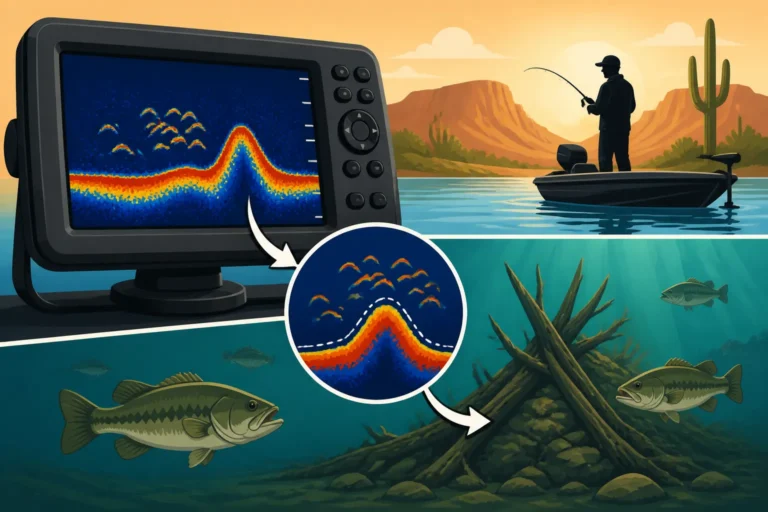
Your fish finder is more than just a depth gauge; it's your window into the underwater world. Learning to interpret sonar readings is paramount for successful trolling. Look for bait balls—dense clusters of small dots—as these are striper magnets. Once you locate bait, look for larger arches or individual marks beneath or around them, which signify the stripers themselves. Pay attention to the depth at which the fish are holding.
Identifying the thermocline on your sonar is particularly important in summer. This appears as a distinct band on your screen where the water temperature changes rapidly. Stripers will often suspend just above, in, or just below this layer, where cooler, oxygenated water meets their temperature preference. Trolling your lures directly at or slightly above this layer can be deadly. You can enhance your understanding by referencing guides on how to read a fish finder for bass or other species.
Beyond your electronics, always keep an eye on the water's surface. Bird activity, especially gulls diving, can signal a surface boil where stripers are pushing bait to the top. If you see this, approach cautiously from upwind or upcurrent, cut your engine, and cast into the frenzy, or troll lures around the periphery. While surface boils are exciting, remember that a consistent deep troll often yields bigger fish.
Where and When to Troll for Striped Bass in Arizona
Arizona might be a desert state, but it boasts some truly incredible lakes for striped bass fishing. Knowing which waters to target and when to hit them can significantly increase your chances of success.
Top Arizona Lakes for Trolling Stripers
When you think of striped bass in Arizona, a few names immediately come to mind, each offering unique opportunities for trollers.
Lake Powell is undoubtedly the crown jewel for striped bass fishing in Arizona, shared with Utah. This massive reservoir, stretching for hundreds of miles, is famous for its incredible striper populations and the sheer size some of these fish can reach. Trolling is a hugely popular and effective method here, especially in its vast open water bays and along the main channel. Areas like Padre Bay, Wahweap, and the San Juan arm are notorious for holding large schools of stripers. The sheer size of Lake Powell means you can spend days just exploring different trolling runs, targeting deep-water giants. For specific guidance, consult a Lake Powell Arizona Fishing Guide.
Further west, Lake Mead, another colossal reservoir on the Colorado River, also holds a substantial population of striped bass. While it's seen fluctuating water levels over the years, the striper fishing, particularly for those willing to troll the deeper sections, can be fantastic. The areas near the Hoover Dam and the main basin often hold dense schools. Trolling here can yield numerous fish, sometimes providing non-stop action.
While perhaps not as widely known for trophy stripers as Powell, Lake Havasu offers clear waters and a healthy population of striped bass that respond well to trolling. Located on the Colorado River, its clear depths make precise depth control and lure selection even more critical. You'll often find stripers relating to submerged structure and drop-offs here.
Closer to the Phoenix metro area, Lake Pleasant is a popular destination and offers good opportunities for striped bass, as well as its smaller cousin, the white bass. While the stripers here might not reach the same sizes as those in Powell, they are abundant and aggressive. Trolling the main lake basin, especially around the deeper channels and points, can be very productive. It's a great option for a day trip and an excellent place to practice your Trolling Techniques for Striped Bass.
Best Times of Day and Year
Timing is everything, and this holds true for striper trolling. In Arizona's often intense climate, the best times of day are typically early morning, from first light until the sun gets high, and then again in the late evening as the sun begins to set. During these periods, stripers often move shallower to feed, and the lower light conditions make them less wary. In the summer, these low-light periods are even more critical, as the mid-day heat pushes fish deep.
Looking at the best times of year, fall and spring generally offer the most consistent action. As mentioned earlier, spring sees fish becoming active and moving shallower, while fall triggers a strong feeding instinct. Even in the heat of summer, deep-water trolling remains highly effective, especially for larger fish that prefer the cooler depths. Winter can also be surprisingly good, particularly on a sunny day, when stripers might rise a bit in the water column to feed, or when you can effectively locate their deep, tightly schooled concentrations. Knowing Arizona Fishing Seasons Explained can help you plan your trips.
Monsoon Season and Weather Considerations
Arizona's monsoon season, typically from July through September, brings dramatic thunderstorms and heavy rainfall. This can have a significant impact on fishing. While the cooler temperatures and cloud cover can sometimes trigger a bite, the sudden storms can be dangerous, bringing high winds, lightning, and torrential downpours.
It's crucial to prioritize safety precautions during the monsoon season. Always check the weather forecast before heading out, and if storms are predicted, consider postponing your trip. If you're caught on the water, seek shelter immediately. Strong winds can make trolling difficult, pushing your boat off course and making it hard to maintain consistent speed and depth.
From a fishing perspective, the heavy rains can sometimes muddy up certain areas of the lake, especially creek arms and shorelines. While stripers generally prefer clearer water, a slight tint or cloudiness can sometimes improve the bite by offering them more cover to ambush prey. However, a drastically muddy lake can turn them off. After a monsoon, as the water clears, fishing can rebound strongly. Adjust your lure colors to brighter, more contrasting options in stained water, and be ready to adapt your trolling speed.
Advanced Tips and Troubleshooting
Even with the best gear and a solid understanding of striper behavior, trolling isn't always straightforward. There will be days when the fish are elusive, and that's when a few advanced tips and troubleshooting strategies can turn things around.
Fine-Tuning Your Spread
A "spread" refers to the arrangement of your lines and lures behind the boat. A well-tuned spread covers more water, presents a variety of options, and minimizes tangles.
Don't be afraid to experiment with lure combinations and colors. If you're running multiple lines, try different diving crankbaits, swimbaits, or even an umbrella rig on different rods. This allows you to quickly identify what the stripers are responding to on that particular day. One day they might want a chartreuse crankbait, the next a natural shad pattern. You can also vary the size of your lures, especially if you're targeting specific size classes of fish.
Adjusting leader lengths is another subtle but important tweak. Sometimes a longer fluorocarbon leader (4-6 feet) can make your lure appear more natural and less connected to your main line, especially in clear water. Other times, a shorter leader might provide better sensitivity to strikes.
The "sweet spot" of speed is something you often have to find through trial and error each day. While general guidelines exist (1.5-4 mph), fish activity levels can change. Try varying your speed by half-mile-per-hour increments. A slight acceleration or deceleration can sometimes be enough to trigger a strike from a hesitant fish. Pay attention to your rod tips – they should have a consistent wobble, indicating your lure is running true. If a rod stops wobbling, check for weeds or a fouled lure.
Dealing with Strikes and Landing Fish
When a striper hits a trolled lure, it's often a jarring experience. Unlike a light tap, a trolling strike can bend your rod double.
When you get a strike on a trolling rod, resist the urge to immediately reel in. Instead, grab the rod, hold it firm, and let the boat's momentum help set the hook. The fish will typically hook itself against the tension of the moving boat. Once the fish is solidly hooked, you can begin the fight. If you're running multiple lines, try to clear the other lines to avoid tangles, especially if it's a big fish making long runs.
Fighting big stripers requires patience and a good understanding of your drag. These fish are powerful, known for their strong, sustained runs. Let the drag do its job. If you try to horse a big striper in too quickly, you risk pulling the hook, breaking your line, or tiring yourself out unnecessarily. Keep constant pressure on the fish, pump the rod to gain line, and reel down when the rod is lowered. Prevent line twists by ensuring your lure is running true and not spinning excessively.
When the fish is near the boat, have a net ready. A large, rubber-coated landing net is ideal, as it's gentler on the fish (if you're practicing catch and release) and prevents hooks from getting tangled in the mesh. Bring the fish's head up to the surface, and once it's tired, smoothly scoop it headfirst into the net. Avoid wild lunges, as that's often when fish make a final escape.
Maintaining Your Trolling Gear
Your trolling gear takes a beating, especially in the harsh Arizona environment. Regular maintenance is crucial to ensure it performs when you need it most.
Regular inspection of lines, leaders, and knots is paramount. Check your main line for nicks, abrasions, or sun damage, especially the first 50-100 feet that are most exposed. Re-tie knots regularly, especially after catching several fish or if they've been subjected to heavy strain. Fluorocarbon leaders can get scuffed on rocks, so inspect them frequently and replace as needed.
Cleaning and lubricating reels after each trip, or at least regularly, will extend their lifespan significantly. Salt and grit can get into the mechanisms, causing corrosion and stiffening the drag. A quick rinse with fresh water and a light application of reel lubricant on moving parts will keep them running smoothly. You can find specialized reel lubricants and cleaning kits on Amazon.
Don't forget to service your downriggers and trolling motors. Check the cables on your downriggers for fraying and ensure the clutches are working correctly. For electric trolling motors, inspect the propeller for any damage, keep the battery terminals clean, and regularly charge your batteries to ensure they hold a charge for a full day on the water. Proactive maintenance prevents frustrating breakdowns when you're out on the lake.
| Lure Type | Primary Depth Range | Ideal Trolling Speed (MPH) | Common Applications | Best Conditions |
|---|---|---|---|---|
| Deep-Diving Crankbaits | 15-50+ feet | 2.0-4.0 | Open water, contour trolling, targeting thermocline | Varied, good for active fish, locating schools |
| Swimbaits (on jigheads) | 10-60 feet | 1.5-3.0 | Trolling main lake points, over submerged structure | Clearer water, mimicking natural forage |
| Umbrella Rigs (A-Rigs) | 10-40 feet | 2.0-3.5 | Mimicking bait balls, open water, active feeding | When stripers are schooling, aggressive fish |
| Spoons (weighted) | 20-80+ feet | 1.5-3.0 | Deep vertical presentations, following contours | Less active fish, targeting specific deep spots |
| Live Bait (shad, anchovy) | 10-100+ feet (with downrigger) | 0.5-2.0 | Natural presentation, enticing hesitant fish | All conditions, especially for finicky fish |
Disclaimer
Fishing conditions and regulations in Arizona can change. Always consult the latest Arizona Game and Fish Department regulations before heading out on the water. This guide is for informational purposes only and should not replace official guidelines. Be aware of weather conditions and always prioritize safety on the water.