Best Tackle for a First Fishing Trip
Stepping into the world of fishing for the very first time can feel like walking into a foreign country where everyone speaks a different language. You glance at the seemingly endless aisles of rods, reels, lures, and gadgets, and your head starts to spin. It’s easy to feel overwhelmed and discouraged before you even cast your first line, wondering where to even begin and what you really need to catch a fish in Arizona. This guide is here to cut through the noise, helping you understand the absolute essential tackle for a successful and enjoyable first fishing trip in our beautiful state, so you can spend less time stressing and more time reeling.
The Absolute Essentials: Rod, Reel, and Line – Your Foundation
Think of your rod, reel, and line as the core building blocks of your fishing adventure. Without these, you’re just standing by the water looking pretty. For a first-timer, simplicity and versatility are key. You want gear that's easy to use, forgiving of mistakes, and capable of catching a variety of fish that call Arizona's waters home.
Getting Started with a Spinning Combo
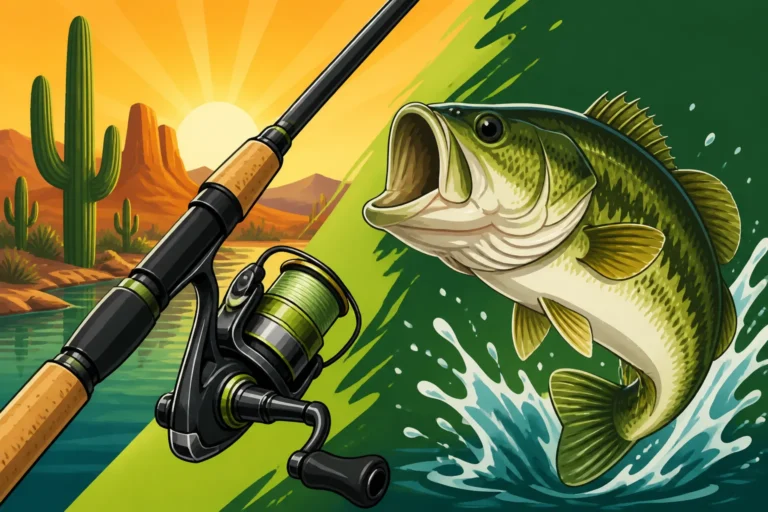
For beginners, a spinning rod and reel combo is hands-down the best way to go. These setups are designed for ease of use, making casting simple and straightforward, which is crucial when you're just learning the ropes. The reel sits underneath the rod, and the open-face design means fewer tangles and snags compared to baitcasting reels, which have a steeper learning curve.
When choosing a combo, look for a rod that's about 6 to 7 feet long. This length offers a good balance between casting distance and control, which is perfect for covering most of the fishing situations you’ll encounter in Arizona, whether you’re fishing from shore at a community lake or a boat on one of our larger reservoirs. The "action" of the rod, which describes how much it bends, should be somewhere in the medium-light to medium range. This flexibility allows you to feel lighter bites from smaller panfish but still have enough backbone to handle a feisty bass or a decent-sized catfish. A medium action rod is often robust enough for the common species found in places like Lake Pleasant or Roosevelt Lake. You can often find excellent starter combos at stores like Bass Pro Shops, which cater to a wide range of anglers.
The reel size is also important. For an all-around Arizona fishing setup, a 2500 to 3000 series spinning reel is ideal. This size is big enough to hold sufficient line for larger fish, yet not so bulky that it feels cumbersome to cast all day. It strikes a great balance, making it suitable for everything from panfish and trout in urban lakes to bass in our desert reservoirs. You'll find that many beginner combos come pre-spooled with line, which is a fantastic convenience for your first outing. This means you can pretty much buy it, tie on a hook, and get straight to fishing.
Practical Considerations for Arizona: Line Choice and Local Species
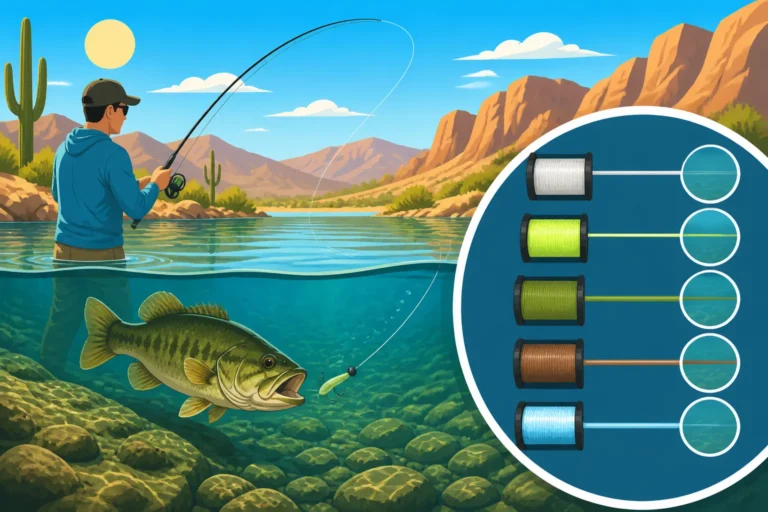
Arizona presents some unique fishing challenges, mainly our intense sun and the diverse range of fish species. Your fishing line needs to be versatile enough to handle both. For a first fishing trip, monofilament line is your best friend. It's inexpensive, easy to tie knots with, and offers a bit of stretch, which can be forgiving when a fish makes a sudden run or if your drag isn't perfectly set. This flexibility helps prevent break-offs, especially for beginners who are still getting a feel for fighting a fish.
A good starting point for monofilament line strength is anywhere from 6 to 10-pound test. This range is strong enough to handle most panfish, trout, and average-sized bass or catfish you'll encounter in places like our community fishing program lakes or the lower Salt River. It's also thin enough to allow for good casting distance and less visibility in our often clear desert waters. As you gain experience, you might experiment with braided or fluorocarbon lines, but for now, keep it simple with mono. Remember, the Arizona Fishing License Guide is your first stop before buying any gear, as you'll need that before you even cast a line.
Considering the specific fish species you're likely to target in Arizona, your tackle should be adaptable. Our community lakes are regularly stocked with trout during the cooler months and are home to year-round populations of bass, catfish, and various sunfish. Larger reservoirs like Lake Havasu or Alamo Lake hold formidable largemouth bass, while Lake Powell is famous for its striped bass and smallmouth bass. A medium-action spinning combo with 8-pound monofilament is surprisingly effective across many of these scenarios. It's truly an "all-purpose" choice that won't leave you feeling under-gunned for typical catches.
Essential Terminal Tackle: Hooks, Sinkers, and Bobbers
Once you have your rod, reel, and line, you'll need the bits and pieces that connect your line to the fish – what we call "terminal tackle." These are often small but absolutely critical components that dictate how your bait is presented and how you hook a fish. Don't worry, you don't need a whole tackle store's worth for your first trip.
Hooks for Versatility
The right hook is paramount. For a beginner, a small assortment of general-purpose bait holder hooks is perfect. These hooks usually have one or two small barbs on the shank (the straight part of the hook) that help keep your bait from sliding off. Sizes ranging from 6 to 2 are excellent for a variety of baits and fish. A size 6 hook is great for small worms or corn targeting panfish and smaller trout, while a size 2 is more suited for larger worms or cut bait for bass and catfish.
If you plan on targeting catfish, especially if you want to practice catch and release, consider adding a few circle hooks (sizes 1/0 to 3/0) to your kit. Circle hooks are designed to hook fish in the corner of their mouth, which reduces gut-hooking and makes releasing the fish much easier and safer for them. It takes a little practice to get used to not "setting" the hook aggressively with a circle hook – instead, you simply reel tight when you feel a bite, and the hook does the work. No matter the type, always ensure your hooks are sharp! Dull hooks are a common reason for missed bites. You can check the sharpness by lightly touching the point to your fingernail; if it digs in, it's sharp.
Weighting Your Line: Sinkers and Their Purpose
Sinkers are weights that help cast your bait farther and get it down to where the fish are. For your first fishing trip, you'll want two main types: split shot sinkers and egg sinkers. Split shot sinkers are small, round weights that you can crimp directly onto your line. They come in various tiny sizes and are perfect for adding just a little weight to a light bait or for balancing a bobber. They're great for fishing shallow water or when you want your bait to drift naturally with a very slow descent.
Egg sinkers, as the name suggests, are egg-shaped and have a hole through the middle. These are typically used for bottom fishing, especially for species like catfish or larger bass that might be holding near the bottom. You thread your line through the egg sinker, then tie a swivel and your hook below it. This "Carolina rig" style allows the line to slide freely through the sinker, so a fish can pick up your bait without feeling the weight of the sinker, which can make them drop the bait. A small assortment of 1/8 oz to 1/2 oz egg sinkers will cover most needs for still waters or light currents in Arizona's Best Fishing Lakes in Arizona.
The Simple Pleasure of Bobbers
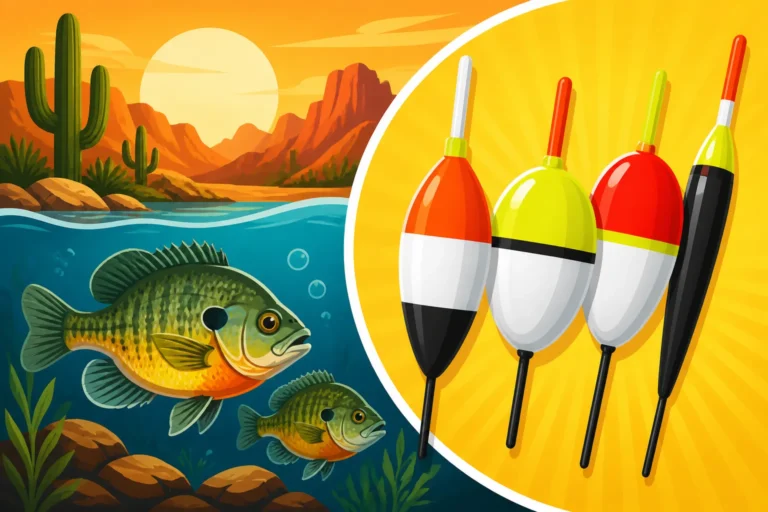
Bobbers are fantastic tools for beginner anglers, especially when fishing with kids. They serve two main purposes: they keep your bait at a specific depth off the bottom, and they visually signal when a fish is biting by dipping or pulling under the water. There are two common types: clip-on (or snap-on) bobbers and slip bobbers.
Clip-on bobbers are the easiest to use. They clip directly onto your line and are ideal for shallower water, typically less than 5-6 feet deep. They're great for panfish and trout in community ponds. Slip bobbers, however, are a bit more versatile for deeper water. With a slip bobber, your line runs through the center of the bobber, and you set a small bobber stop knot on your line to determine how deep your bait will sit. This allows you to cast a rig set to fish 10, 15, or even 20 feet deep without having to manage a long length of line dangling from your rod tip. Both types of bobbers, used with natural bait, are excellent for Beginner Fishing Techniques for Arizona Desert Lakes. You can often pick up a basic kit of hooks, sinkers, and bobbers for just a few dollars at retailers like Amazon or any local tackle shop.
Basic Baits and Lures for Arizona Waters
What you put on your hook is just as important as the hook itself. For a first trip, you want baits and lures that are proven fish-catchers and relatively easy to use. No need for complex presentations or highly specialized techniques just yet.
Natural Baits: The All-Around Winners
When in doubt, go natural! Live or natural baits are often the easiest way to get a bite, as fish instinctively recognize them as food.
- Worms (Nightcrawlers): These are the universal fishing bait. Almost every freshwater fish species will eat a worm. They’re readily available at bait shops, sporting goods stores, and even many convenience stores. You can fish them whole, cut them into smaller pieces, or use just a portion. Hook them so they dangle naturally for maximum appeal. They are fantastic for bass, catfish, trout, and sunfish.
- Corn: Believe it or not, canned corn is a secret weapon for stocked trout and panfish in Arizona's urban lakes. It’s cheap, easy to use, and many fish are conditioned to eat it. Just put a few kernels on a small hook (size 8 or 6) and fish it under a bobber.
- Dough Baits: Brands like PowerBait or similar dough baits are specifically designed for stocked trout and are incredibly effective. They come in various colors and scents and are simply molded onto a hook. These are a must-have if you're targeting rainbow trout in cooler months at places like Tempe Town Lake or the Lower Salt River.
- Cut Bait: For catfish, particularly larger channel cats and flatheads, cut bait is often irresistible. You can use pieces of hot dogs, chicken livers, or even cut up smaller fish (check local regulations for legality of using baitfish). The strong scent released by cut bait really draws in catfish, especially when fishing at night.
For a comprehensive look at what fish are biting on, check out our guide on Best Baits and Lures for Arizona Fishing.
Simple Lures to Start With
While natural baits are a great starting point, introducing a few simple lures can also be very rewarding. Lures mimic prey animals and require you to "work" them to entice a bite, which adds another dimension to fishing.
- Spinnerbaits: These are fantastic for bass. They have a lead head, a skirt that flows in the water, and one or more spinning blades that create flash and vibration. They're relatively weedless and can be cast and retrieved in a straight line, making them easy for beginners. A 1/4 oz or 3/8 oz spinnerbait in white, chartreuse, or a natural baitfish color is a great addition.
- Inline Spinners: Think classic Rooster Tails or Mepps spinners. These small lures are deadly for trout and panfish. They consist of a weighted body and a blade that spins as you retrieve it. Cast them out and reel them in steadily. Sizes between 1/16 oz and 1/8 oz in silver, gold, or brass are excellent.
- Soft Plastic Worms (Texas Rig): A simple 4-inch or 5-inch soft plastic worm (like a senko or straight tail worm) rigged "Texas style" is a classic bass catcher. This involves threading the hook point into the worm's head and then embedding the hook point back into the body, making it weedless. It's a versatile presentation for bass and is surprisingly easy to learn. Colors like green pumpkin, watermelon, or black and blue are popular choices for Arizona's clear waters.
When it comes to lures, less is more for a first trip. Focus on learning how to cast and retrieve one or two types effectively before expanding your collection.
Important Accessories: Beyond the Basics for a First Trip
Beyond the core fishing tackle, there are a few essential accessories that will make your first Arizona fishing trip safer, more comfortable, and more successful. Don't overlook these items; they can truly make or break your experience, especially in our unique desert environment.
Safety and Comfort First
Arizona fishing often means dealing with intense sun and heat, so prioritizing safety and comfort is crucial.
- Sun Protection: This is non-negotiable. A wide-brimmed hat, sunglasses (polarized ones are fantastic as they cut glare and help you see into the water), and high-SPF sunscreen are absolute must-haves. Dehydration is a serious risk in Arizona, so bring plenty of water, even more than you think you'll need.
- First Aid Kit: Accidents happen, especially when handling sharp hooks and slippery fish. A small, basic first aid kit with bandages, antiseptic wipes, and pain relievers is wise to have.
- Pliers/Forceps: These are invaluable for removing hooks from fish, cutting line, and crimping split shot sinkers. Trying to remove a hook by hand is a recipe for a painful accident. Look for multi-tool fishing pliers, often found near the checkout at Bass Pro Shops or on Amazon.
- Fishing License: While not "tackle," it's the most important piece of paper you'll need. You cannot legally fish in Arizona without a valid fishing license (unless you fall under specific exemptions like Arizona Free Fishing Day Rules or age requirements). Make sure you understand Arizona Fishing Regulations Explained before you go.
The Practical Side
These items might seem secondary, but they significantly improve your fishing experience.
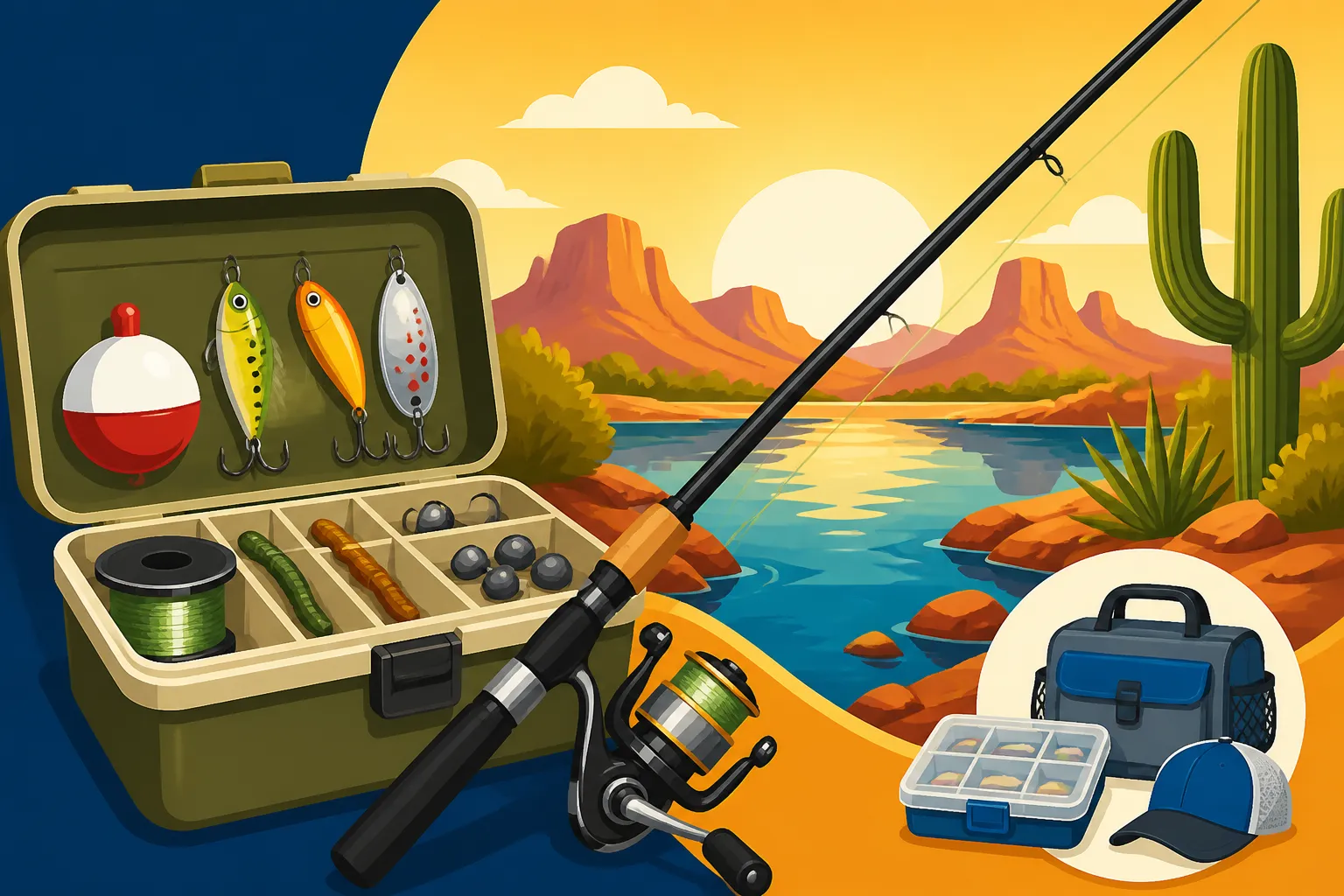
- Small Tackle Box or Bag: You'll need somewhere to store your hooks, sinkers, and lures. A small, organized tackle box or a compact fishing bag will keep everything tidy and easily accessible. A soft-sided bag is great for shore fishing, while a small hard-sided box works well for boat fishing. Check out our guide on Essential Tackle Box Setup for Arizona Beginners for more ideas.
- Stringer or Small Cooler: If you plan on keeping any fish (and are within the Fishing Bag and Possession Limits Explained), you'll need a way to keep them fresh. A simple stringer allows you to keep fish in the water, or a small cooler with ice will do the trick, especially in Arizona's heat.
- Small Net: A landing net can be incredibly helpful, especially for larger fish. It reduces the chance of losing a fish at the very last moment, and it helps you handle the fish more safely for both you and the fish. A small, rubberized net is gentle on fish if you plan to release them.
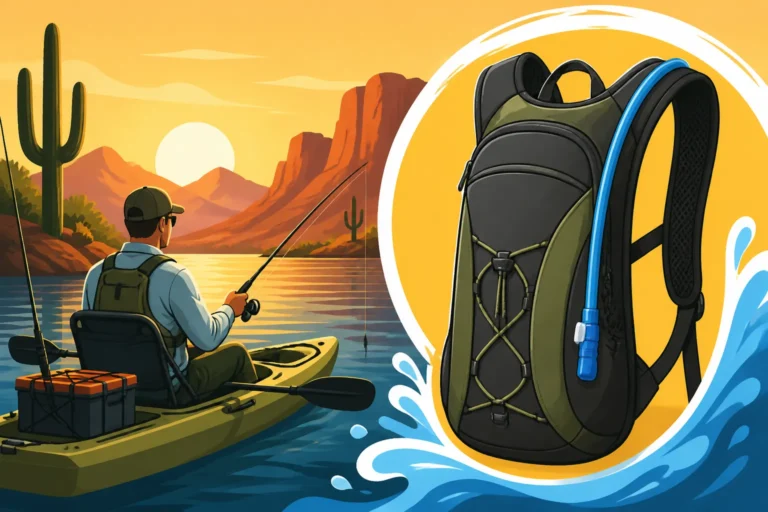
- Water Bottle or Hydration Pack: Again, don't underestimate Arizona's sun. Staying hydrated is paramount, especially during those long, enjoyable days by the water. You can find excellent insulated water bottles that keep ice cold all day, or even a small hydration pack for longer hikes to remote fishing spots.
Here's a quick checklist to make sure you're covered for your first trip:
| Category | Essential Item | Notes |
|---|---|---|
| Rod & Reel | Spinning Rod & Reel Combo | 6-7 ft rod, medium action, 2500-3000 size reel. Great for Best Fishing Reels for Beginner Anglers in Arizona. |
| Monofilament Fishing Line | 6-10 lb test, spooled on reel. | |
| Terminal Tackle | Assorted Bait Holder Hooks | Sizes #6 to #2 (for general use). |
| Circle Hooks | Sizes #1/0 to #3/0 (optional, good for catfish). | |
| Split Shot Sinkers | Small assortment for light weighting. | |
| Egg Sinkers | 1/8 oz – 1/2 oz assortment for bottom fishing. | |
| Clip-on or Slip Bobbers | For visual bite detection and depth control. | |
| Baits & Lures | Nightcrawlers (live or artificial) | Universal bait for many species. |
| Canned Corn | Excellent for trout and panfish in urban lakes. | |
| Trout Dough Bait (e.g., PowerBait) | Essential if targeting stocked trout. | |
| Spinnerbait (1/4 – 3/8 oz) | Simple bass lure. | |
| Inline Spinners (1/16 – 1/8 oz) | Great for trout and panfish. | |
| Accessories | Arizona Fishing License | Required by law! See Arizona Fishing License Costs. |
| Pliers/Forceps | For hook removal, line cutting, etc. | |
| Sunscreen | High SPF, for skin protection. | |
| Wide-brimmed Hat & Polarized Sunglasses | Essential for sun protection and visibility. | |
| Drinking Water | Plenty of it, especially in Arizona heat. | |
| Small Tackle Box or Bag | To organize and carry your gear. | |
| First Aid Kit | For minor cuts and scrapes. | |
| Stringer or Small Cooler | To keep your catch fresh. | |
| Small Landing Net | Helps land fish safely. |
With this basic tackle setup, you'll be well-prepared for your first Arizona fishing trip. Remember, fishing is about enjoying the outdoors, learning, and having fun, not about having the most expensive gear. Start simple, learn the basics, and you'll be well on your way to becoming a seasoned angler in no time.
Disclaimer
This article is for general informational purposes only and does not constitute professional advice. Laws, prices and regulations vary by location and change over time. Consult a qualified professional for guidance on your specific situation.