Best Bobber Style for Windy Days
There's nothing quite as frustrating as heading out to your favorite Arizona lake, ready for a peaceful day of fishing, only for the wind to pick up and turn your bobber into a miniature sailboat, dragging your bait far from your intended spot. Many of us have experienced this, constantly recasting, re-adjusting, and wondering if it's even worth it. This guide is here to tackle that exact problem, helping you understand which bobber styles are best suited for windy conditions and how to adapt your techniques to keep your bait where the fish are biting.
The Windy Day Challenge: Why Your Bobber Behaves Like a Wild Child
Anyone who's spent time fishing in Arizona knows that the weather can be a bit… temperamental. One minute it's glassy calm, and the next, a stiff breeze whips across the water, turning an otherwise perfect fishing day into a test of patience. When that wind starts gusting, your regular, lightweight bobber can become a major headache.
The Physics of Frustration: How Wind Affects Your Float
Imagine casting your bait to that promising drop-off where you know the crappie are hiding, or near those reeds where a largemouth might be lurking. You watch your bobber intently, hoping for that tell-tale dip. But then, a gust of wind hits, and suddenly your bobber isn't just sitting there; it's drifting, pulling your bait out of the strike zone. This isn't just annoying; it’s genuinely detrimental to your success. Wind creates currents on the surface that can be surprisingly strong, moving lightweight objects with ease. Your line, especially if it's floating monofilament, also acts like a sail, catching the wind and further dragging your bobber. Before you know it, your perfectly placed bait is now in open water, far from any cover or structure, and you're left reeling in, only to repeat the futile exercise. It’s a common frustration that many anglers face, particularly on larger, more exposed lakes like Lake Pleasant or Roosevelt Lake, where the wind can really pick up.
The Impact on Your Presentation and Bite Detection
Beyond simply drifting your bait away, wind messes with your entire fishing presentation. A bobber that's constantly being pushed around doesn't look natural to the fish below. Your bait might be skipping, tumbling, or just moving too fast, signaling to wary fish that something isn't quite right. Moreover, trying to detect a subtle bite when your bobber is already dancing across the water due to wind becomes incredibly difficult. Was that a fish gently mouthing the bait, or just another ripple? The ambiguity leads to missed strikes and a general sense of unease. You might set the hook on nothing, or worse, miss the actual bite because you dismissed it as a wind-induced movement. This added layer of uncertainty can really take the fun out of a day on the water. It forces you to constantly re-evaluate, often leading to premature hook sets or missed opportunities, impacting your overall catch rate.
Decoding Bobber Types: Not All Floats Are Created Equal
Before we dive into the best choices for windy conditions, let's quickly review the common types of bobbers out there. Understanding their design and how they interact with the water is crucial for making the right choice when the breeze kicks up.
Fixed vs. Slip Bobbers
These are the two fundamental categories, and each has its place, though one clearly shines in windy scenarios.
Fixed Bobbers: The Simple and Straightforward Choice
Fixed bobbers, as the name suggests, are attached directly to your fishing line at a set depth using springs, clips, or a peg. They're incredibly simple to use and are often the first type of bobber a new angler encounters. Think of those classic red and white plastic floats—that’s a fixed bobber. They're fantastic for fishing in shallow water, or when you know the fish are suspended at a specific depth that's not too far down, usually within a few feet of the surface. Their simplicity makes them great for kids or when you just want to set it and forget it in calm conditions. However, their fixed nature means that if you want to fish deeper than your rod length, casting becomes a real challenge, as the bobber is set high up on your line. In windy conditions, their often-buoyant, lightweight design, and the fact that they sit high on the surface, make them prime targets for being pushed around. The wind has a large surface area to act upon, and they offer little resistance to surface currents.
Slip Bobbers: The Depth-Defying Innovator
Slip bobbers are a game-changer, especially for deeper water and, as we'll soon discover, for windy days. Instead of being fixed, a slip bobber has a small hole running through its center, allowing your line to "slip" through it freely. You control the depth of your bait with a small bobber stop, which is a knot or small piece of material tied onto your main line. This stop then prevents the bobber from sliding further down the line than your desired depth. The genius of the slip bobber is that it allows you to reel your lure and bobber all the way up to your rod tip, making casting incredibly easy, even when you're fishing ten, fifteen, or twenty feet deep. This ability to cast smoothly to deep spots is a major advantage. Furthermore, many slip bobbers have a more streamlined, elongated shape, or are designed to present less surface area to the wind compared to their fixed counterparts, which already gives them an edge.
Battling the Breeze: Top Bobber Styles That Stand Their Ground
When the wind starts to howl across the desert lakes of Arizona, you need a bobber that isn't going to surrender easily. Here are the top styles that offer superior performance when battling the elements.
The Workhorse: Pencil and Stick Bobbers (Slip and Fixed)
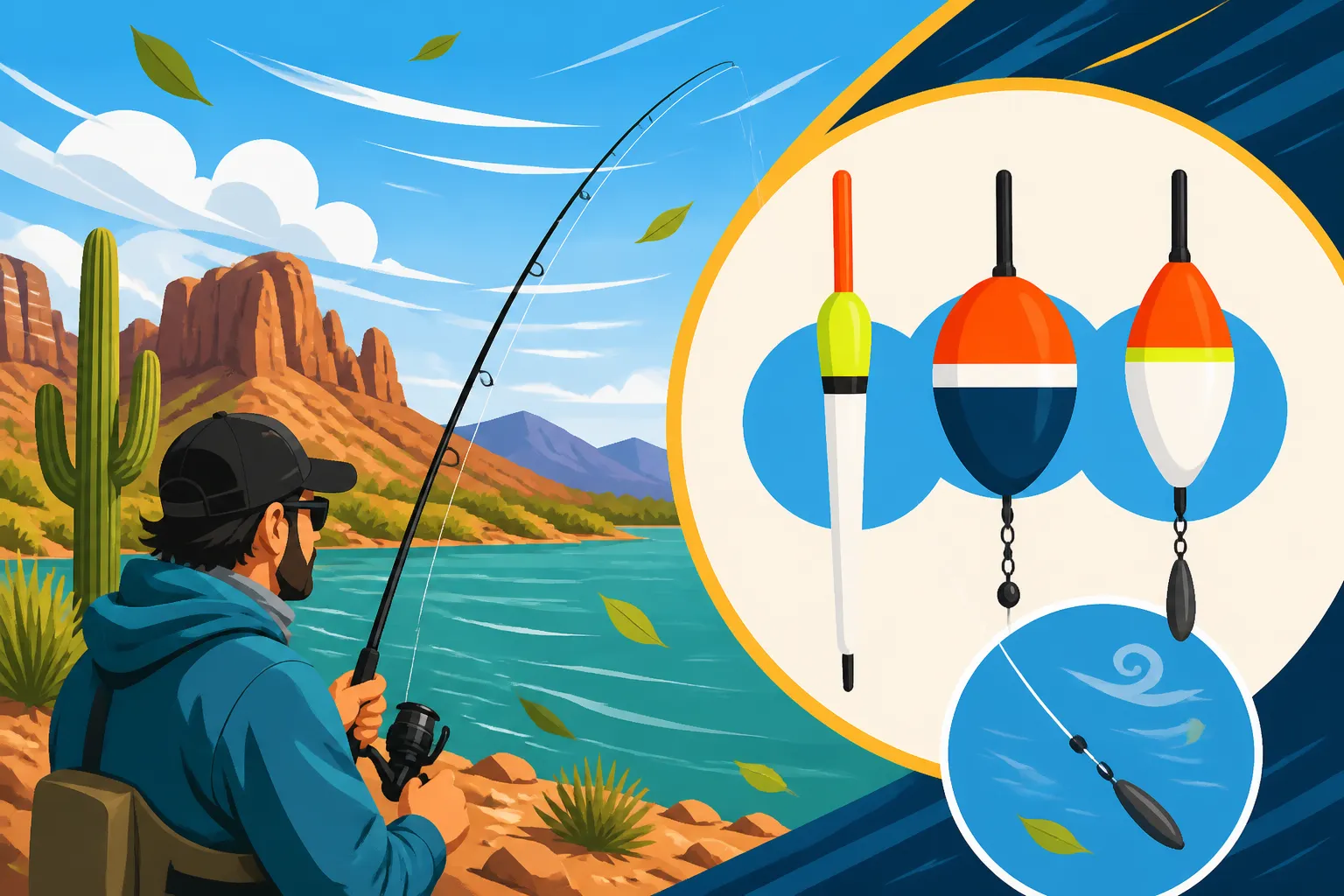
Pencil and stick bobbers, whether fixed or slip, are often long and slender, resembling… well, a pencil or a stick. Their streamlined shape is their secret weapon against the wind. Unlike rounder, more bulbous bobbers, a pencil bobber presents a much smaller surface area to the wind and current.
They are designed to stand upright in the water, with only a small tip protruding above the surface. This minimal exposure reduces the amount of wind resistance dramatically. When using a fixed pencil bobber, you’ll want to ensure your setup is balanced properly with enough weight (split shot or jig head) to make it stand up straight without pulling it under. For windy conditions, especially when fishing from the bank on lakes like Tempe Town Lake or the Community Fishing Program ponds, a slip pencil bobber is often superior. It allows for longer casts and ensures your bait gets down to the desired depth quickly, piercing through any surface chop. Because of their sensitivity, they can still detect light bites, even when the wind is causing some minor movement. You might find a good variety of these, sometimes called "waggler" floats, on sites like Amazon or at your local Bass Pro Shops, where anglers are often looking for refined options for specific conditions. Best Bobbers for Panfish are often of this sensitive, slender variety.
The Heavy Hitter: Weighted Slip Bobbers
When the wind is truly relentless, a standard slip bobber might still get pushed around. That's where weighted slip bobbers come into their own. These bobbers have weight built directly into their base, which serves a couple of crucial purposes.
First, the added weight helps the bobber sit lower in the water column, even with minimal rigging. This low profile reduces the surface area exposed to the wind, making it less susceptible to drifting. Second, this weight helps the bobber and your bait sink faster and stay put, cutting through any surface chop or current. The additional mass anchors your setup more effectively. When you're fishing for larger species like bass or catfish in deeper, wind-swept reservoirs like Lake Havasu or Alamo Lake, a weighted slip bobber provides stability and confidence. You can cast further, your line settles faster, and your bait remains in the strike zone longer. When selecting a weighted bobber, consider the amount of weight already in the bobber and how it will balance with your bait and any additional split shot you add. Too much weight can make the bobber lay flat, while too little defeats its purpose. It's a balance you'll learn to fine-tune with practice, but the concept is sound: a heavier base means a steadier float in a chop.
The Stealth Operator: Thill Nite Brite and Similar Compact Floats
While not specifically designed for wind, certain compact, balanced floats can perform surprisingly well because of their smaller size and thoughtful design. Brands like Thill offer various bobbers, including some designed for night fishing (Thill Nite Brite), which often have a more compact, aerodynamic shape and are meant to be highly sensitive yet stable.
These bobbers typically have a small, streamlined profile, minimizing their exposure to wind. Their balanced design means they sit cleanly in the water, offering less resistance than bulky round floats. While they may not have the built-in weight of a dedicated weighted bobber, their overall efficiency makes them a strong contender for moderate wind conditions. They are also incredibly sensitive, which is a huge plus when the fish are biting subtly. You might choose these when you need sensitivity for light-biting panfish or trout in community lakes that can still get breezy. The key is their lack of unnecessary bulk, reducing the overall "sail" effect of the bobber on the water. Pairing these with a slightly heavier-than-normal sinker can enhance their stability in a breeze without sacrificing much sensitivity. Essential Tackle Box Setup for Arizona Beginners should definitely include a few versatile bobbers like these.
Here's a quick comparison of bobber styles and their wind performance:
| Bobber Style | Primary Attachment | Wind Performance | Key Feature | Best Use Case |
|---|---|---|---|---|
| Fixed Round | Fixed | Poor to Fair | Simple, highly visible | Calm, shallow water; casual panfishing |
| Fixed Pencil/Stick | Fixed | Fair to Good | Slender profile | Moderate wind, shallow to mid-depth; sensitive bites |
| Slip Round/Oval | Slip | Fair | Versatile for depth | Moderate wind, variable depths |
| Slip Pencil/Stick | Slip | Good | Streamlined, minimal drag | Moderate to high wind, variable depths; sensitive |
| Weighted Slip | Slip | Excellent | Built-in weight, low profile | High wind, deep water, strong currents; larger baits |
| Compact/Balanced | Fixed/Slip | Good (with proper rigging) | Small, sensitive, efficient | Moderate wind, sensitive bites, versatile |
Beyond the Bobber: Techniques and Gear for Windy Arizona Waters
Choosing the right bobber is just one piece of the puzzle. To truly conquer windy conditions, you'll need to employ smart techniques and consider your other gear choices.
Mastering Your Cast and Line Management
Wind often makes casting a nightmare, sending your bait off course or creating horrible tangles. A few adjustments can make a world of difference. When casting into a headwind, a lower, more powerful sidearm cast can help your lure cut through the air rather than getting caught by it. If the wind is at your back, you might be able to achieve impressive distances, but control can be tricky. Always try to cast with the wind when possible, or at least at an angle that minimizes its impact.
Once your bait is in the water, line management becomes paramount. Excess slack line is the wind's best friend. It acts like a sail, catching the breeze and dragging your bobber and bait. Reel in any slack until you have a direct connection to your bobber, without pulling it out of its natural position. If you're using a slip bobber, let the weight of your bait and sinkers pull the line straight down, keeping it taut. Consider using fluorocarbon line, which sinks, or a co-polymer line with less memory. Unlike floating monofilament, sinking lines will get below the surface current and reduce wind drag significantly. This can be a game-changer on larger, more open lakes where the wind can create strong surface currents. Best Line for Bass Fishing often includes fluorocarbon options for this very reason.
Adding Weight to Stabilize Your Setup
Even the best bobber can struggle in extreme wind if not properly weighted. Adding extra split shot sinkers or choosing a heavier jig head for your bait can dramatically improve stability. The goal is to get your bait down quickly and keep your bobber sitting low and steady in the water.
When adding weight, distribute it smartly. Instead of one large sinker, try a few smaller split shot spaced out a foot or so above your bait. This provides a more natural fall and still helps to anchor your bobber. For slip bobbers, sufficient weight ensures the line slides through the bobber smoothly and quickly to the bobber stop, reducing the time your line is exposed to surface drift. If you're fishing live bait like a worm or a minnow, ensure the added weight doesn't restrict its natural movement too much. Sometimes, a slightly heavier hook or a small, cone-shaped sinker directly above the bait can be enough to achieve the desired stability without over-powering your delicate presentation. Best Sinkers for Bottom Fishing can also give you ideas for heavier weights, even if you're not strictly bottom fishing.
Finding Shelter and Reading the Water
Sometimes, the best bobber in the world won't save you if you're fishing in the wrong spot. On truly windy days, look for areas that offer natural protection. These could be coves, points that block the wind, or areas near tall cliffs or dense vegetation. These sheltered spots often have calmer water, making bobber fishing much more manageable.
Furthermore, learn to "read" the water. Observe how the wind is affecting the surface. Are there eddies behind structures? Is there a calmer seam where two currents meet? Fish often congregate in these less turbulent areas, making them prime targets. The wind can also push baitfish into certain coves or against particular banks, and where the baitfish go, the predatory fish often follow. So, instead of fighting the wind, sometimes it's smarter to use it to your advantage by locating these natural wind-driven feeding lanes. Pay attention to ripple patterns; a calmer patch amidst the chop could indicate a sheltered pocket where fish are comfortable. When exploring new spots, Shore Fishing Techniques for Beginners emphasizes the importance of observation, which is doubly true in windy conditions.
Essential Gear Upgrades for Wind
Having the right rod and reel can make a noticeable difference when trying to cast and control your line in windy conditions.
Rod and Reel Considerations
For bobber fishing in the wind, a longer rod (7 to 8 feet) can give you better line control and allow for longer casts. The extra length acts as a lever, helping you manage slack line more effectively and keep your line off the water's surface as much as possible, thus reducing wind interference. A medium-light or medium action rod with a sensitive tip is usually ideal, as it provides the backbone for casting heavier bobber rigs while still allowing you to feel delicate bites.
Pair this with a spinning reel that has a smooth drag and spools line efficiently. A good quality reel will help reduce line twists, which are amplified in windy conditions, and ensure your retrieve is consistent. When you're constantly fighting the wind, having reliable gear from brands like those found at Bass Pro Shops or online through Amazon can significantly reduce fatigue and frustration. Consider a reel with a slightly faster retrieve ratio to quickly pick up slack line when your bobber drifts or a fish takes off.
Line Choice: The Unsung Hero
As mentioned earlier, your choice of fishing line is crucial. While monofilament is popular, its floating nature can be a liability in windy conditions. Fluorocarbon line, with its higher density, sinks in water, getting your line below the wind-affected surface currents. This results in less drag on your bobber and a more direct connection to your bait, leading to better bite detection. Braided line is another option, known for its incredible strength and minimal stretch, which offers excellent sensitivity. However, braid is very light and can also catch the wind above the water, creating a large bow in your line. If you opt for braid, consider using a fluorocarbon leader to help sink the terminal end of your line and offer better abrasion resistance. The key is to minimize the amount of line exposed to the wind's force on the water's surface. Best Line for Trout Fishing often highlights fluorocarbon for its stealth and sinking properties.
Practical Tips for Anglers
Even with the best gear and techniques, windy days can still be tough. Here are a few final practical tips to help you make the most of it:
- Adjust Your Expectations: Some days, the wind wins. Don't let it ruin your outing. Focus on refining your technique, enjoy the fresh air, and appreciate the challenge.
- Safety First: High winds can create dangerous conditions on the water, especially for smaller boats or kayaks. Always prioritize safety. Boating Safety Gear Requirements in Arizona are essential to review.
- Wear Appropriate Clothing: Wind can make even a warm Arizona day feel chilly, especially on exposed lake shores. Dress in layers to stay comfortable.
- Carry a Spare Bobber: Losing a bobber to a snag or an errant cast in the wind is frustrating. Keep a few extra of your preferred wind-fighting bobber styles in your tackle box.
- Experiment: Every windy day is a little different. Don't be afraid to try different bobber sizes, weights, or even casting angles until you find what works best for that specific situation. Sometimes, just changing the depth by a foot can make all the difference.
Embracing the challenge of windy day fishing with the right bobber and a few tactical adjustments can turn a frustrating experience into a rewarding one. With practice, you’ll be accurately placing your bait and detecting bites even when the Arizona breeze is trying its best to foil your plans.
Disclaimer
This article is for general informational purposes only and does not constitute professional advice. Laws, prices and regulations vary by location and change over time. Consult a qualified professional for guidance on your specific situation.