Best Kayak Anchors for Still Fishing
There’s nothing quite as frustrating as finding that perfect fishing spot on one of Arizona’s stunning lakes, casting your line with anticipation, only to feel your kayak slowly but surely drift away. Whether it's a gentle breeze on Lake Pleasant, a subtle current on the Lower Salt River, or just the wake from a passing boat, maintaining your position for "still fishing" can be a real challenge. This comprehensive guide is dedicated to helping you understand and choose the best kayak anchors to keep you exactly where you want to be, maximizing your time on the water and your chances of a great catch.
Why Kayak Anchors Are Essential for Still Fishing in Arizona
Arizona's diverse waterways, from the vast open expanses of Lake Powell to the narrower stretches of the Colorado River and smaller community lakes, all present unique challenges for kayak anglers. Still fishing, the art of staying put to target specific structure or allow your bait to soak, is often the key to success, especially when you’re after those elusive bass, catfish, or crappie that like to hug cover. Without a reliable anchoring system, you're constantly fighting the elements, paddling back into position, and disrupting your fishing rhythm.
The Problem of Drift and Current
Imagine you’ve just located a submerged brush pile at Roosevelt Lake, a known hotspot for crappie, or perhaps a rocky ledge where smallmouth bass are hiding out at Lake Havasu. You carefully cast your line, feeling the subtle tap of the bottom, only for your kayak to begin slowly turning and drifting with the wind or a hidden current. Suddenly, your perfect cast is no longer perfect, your bait isn't where it needs to be, and you're expending precious energy trying to correct your position instead of focusing on the bite. This constant battle against drift isn't just annoying; it directly impacts your fishing success.
Furthermore, in Arizona, strong winds can whip up quickly, especially on larger reservoirs like Lake Pleasant or the chain of lakes. Even a slight breeze can make a lightweight kayak spin like a top, making precise presentations nearly impossible. When you're trying to fish vertical structures, troll a specific contour line, or simply stay within casting distance of a promising bank, an anchor transforms your experience from a frustrating struggle to a controlled, productive session. It allows you to stay stealthy, blend into the environment, and present your offerings naturally without scaring off wary fish.
Maximizing Your Fishing Opportunities
Having a dependable anchor isn't just about preventing drift; it's about unlocking new fishing strategies and opportunities. When you can confidently hold your position, you can thoroughly work an area, experimenting with different lures or baits, and really learning the structure beneath you. Think about fishing a specific weed line for largemouth bass, or perhaps trying to catch trout in a deep hole at one of the Best Trout Fishing Spots in Arizona. Without an anchor, you might only get one or two casts before you're out of position, missing out on potential bites that happen after a few repeated presentations.
For those who enjoy using fish finders, an anchor becomes an indispensable tool. You can scan an area, mark a promising school of fish or piece of structure, drop anchor directly above or near it, and then meticulously fish that exact spot. This precision is invaluable, especially when fish are holding tight to cover or are spread out over a specific depth. It also makes for safer fishing, allowing you to secure your kayak when you need to re-tie a knot, grab a drink, or handle a fish without the worry of being blown into hazards or far from your target area. In essence, an anchor gives you control and confidence on the water.
Types of Kayak Anchors: A Deep Dive
When it comes to anchoring your kayak, you've got more options than just a heavy brick on a rope! The best choice really depends on the kind of fishing you do, the types of bottoms you typically encounter, and the conditions you expect on Arizona's diverse waters. Let's break down the most popular and effective types.
Grapple Anchors and Folding Anchors
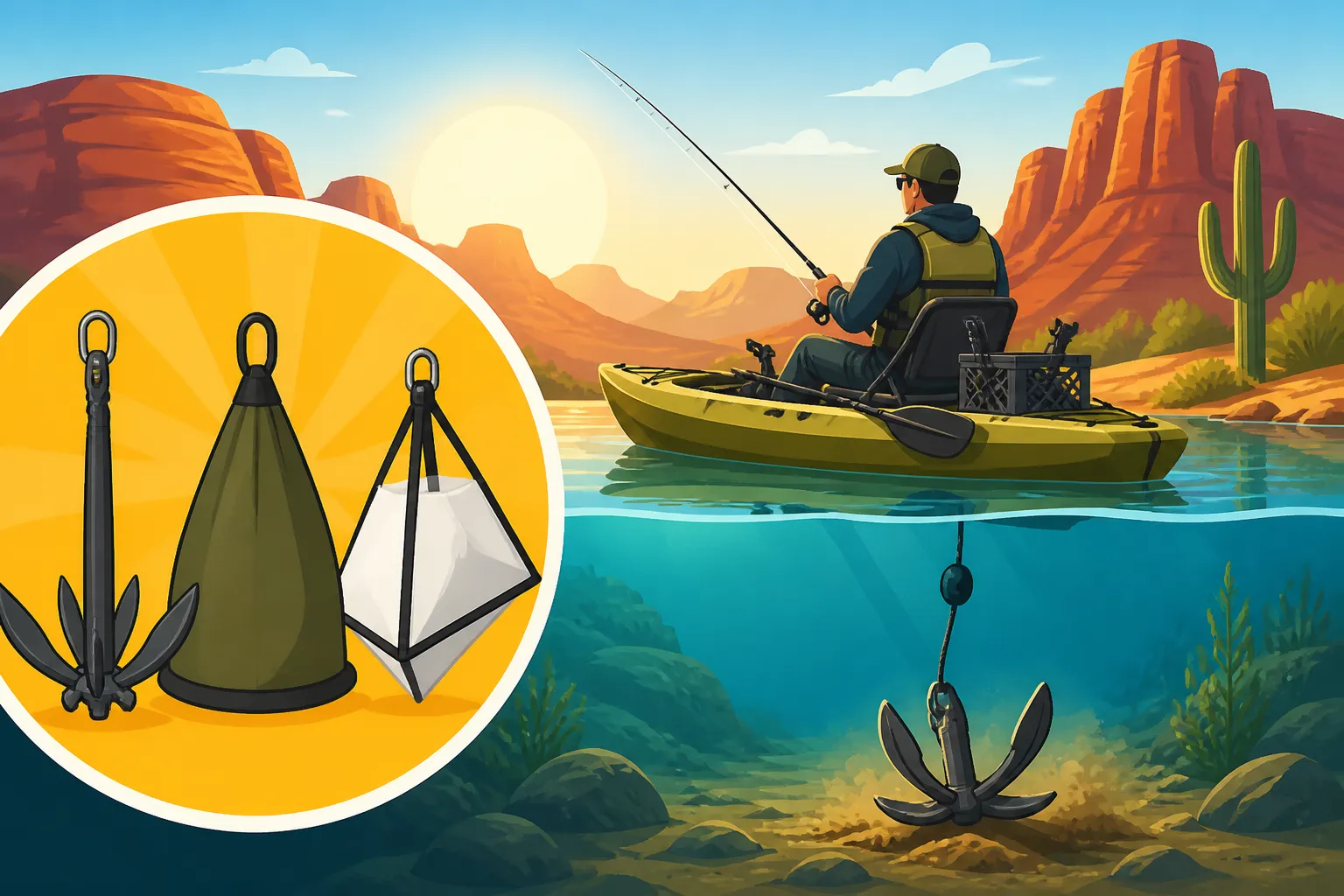
These are probably the most common and versatile anchors you'll see for kayaks. A grapple anchor, sometimes called a folding grapnel, features several prongs (usually four) that fold out, allowing it to "grab" onto rocks, roots, or other underwater structure. When not in use, the prongs fold in, making it compact and easy to store in a small kayak. They are a fantastic all-around choice for many of Arizona's lakes and rivers.
- When to Use Them: Grapple anchors excel in areas with rocky bottoms, gravel, or submerged timber—think of the deeper sections of Canyon Lake or Apache Lake, or even parts of the Colorado River where the bottom isn't pure sand. The prongs dig in and provide excellent holding power. They are less effective in soft, muddy bottoms where they might just drag, but for most hard-bottomed Arizona lakes, they’re a solid performer. A typical kayak grapple anchor weighs between 1.5 to 3 pounds, which is usually enough to hold a kayak in moderate conditions. Many anglers swear by these for their versatility, easily picking one up from Bass Pro Shops or browsing a wide selection on Amazon.
Mushroom Anchors
Mushroom anchors get their name from their distinctive mushroom-cap shape. They are designed to sink into soft bottoms, creating suction that helps hold your kayak in place. Unlike grapple anchors, they don't have prongs to catch on things.
- When to Use Them: If you frequently fish community lakes or quieter coves with silty, muddy, or sandy bottoms, a mushroom anchor can be incredibly effective. Imagine fishing for catfish in the calmer, shallower parts of some of Arizona's urban lakes or trying to stay put in a soft-bottomed bay at Lake Pleasant. Their design allows them to burrow into soft substrate, providing a surprising amount of holding power for their weight. However, they are generally not suitable for rocky or hard bottoms, as they won't have anything to "grab" onto and will simply slide. They typically weigh a bit more than grapple anchors for equivalent holding power, often in the 3 to 5-pound range, to create enough suction.
Stake-Out Poles and Drags
While not strictly anchors in the traditional sense, stake-out poles and drag chains serve similar purposes for kayak anglers, particularly in specific shallow-water scenarios. A stake-out pole is a sturdy, usually fiberglass or aluminum, pole that you push directly into the bottom to secure your kayak.
- When to Use Them: Stake-out poles are a dream come true for shallow-water anglers, especially those exploring the reedy edges of smaller ponds, shallow coves, or backwaters where the water is only a few feet deep. They're silent, incredibly easy to deploy and retrieve, and leave no anchor rope to get tangled. You simply push the pointed end into the mud or sand, secure your kayak to it, and you’re rock solid. You might use these for sight fishing in clear, shallow waters, or when targeting spawning bass in springtime. Their main limitation is depth; they’re useless in deep water. For deeper fishing, you might need a different system entirely.
- Drag Chains/Drift Chutes: These are worth mentioning, though they don't provide "still fishing" in the same way. A drag chain is exactly what it sounds like – a heavy chain that you drag behind your kayak to slow your drift, rather than stopping it completely. Drift chutes (also known as drift socks or sea anchors) are essentially underwater parachutes that deploy to create drag, again, slowing your drift. While they don't anchor you in place, they offer controlled drift, which can be fantastic for covering water slowly when fishing long flats or open areas. They're often used by those who don't want to be completely stationary, but rather want to move at a slow, consistent pace.
Choosing the Right Anchor for Arizona's Diverse Waters
Arizona's fishing landscapes are incredibly varied, from high-country lakes with rocky bottoms to desert reservoirs with mixed terrain, and community ponds often featuring soft, silty beds. The "best" anchor isn't a one-size-fits-all solution; it’s about matching your gear to the environment you'll be fishing in. Thinking about where you'll spend most of your time on the water will guide your decision.
Considerations for Lake Types and Bottom Conditions
When picking out an anchor, the first thing to consider is the typical bottom composition of your favorite fishing spots. Are you usually on big, open reservoirs like Lake Powell or Lake Havasu, which often have rocky shelves, gravel beds, and scattered submerged timber? Or do you prefer the calmer, often shallower, community lakes and ponds in Phoenix or Tucson, which tend to have softer, muddier bottoms?
- Rocky/Gravel Bottoms (e.g., Lake Powell, Saguaro Lake, Canyon Lake): For these types of environments, a grapple anchor is your best friend. Its folding prongs are designed to hook onto rocks and other irregular structures, providing excellent holding power. A 1.5 to 3-pound grapple anchor should be sufficient for most kayaks in these conditions. When retrieving, you might need to give it a few tugs to unhook, but its ability to bite into solid ground is unmatched here. You definitely don't want a mushroom anchor where there's nothing for it to suction to.
- Soft/Silty/Muddy Bottoms (e.g., Community Lakes, certain coves on larger lakes): If you're targeting areas with soft, mucky bottoms, a mushroom anchor will shine. Its wide, concave shape creates suction, embedding itself into the sediment. A 3 to 5-pound mushroom anchor is a good starting point to ensure adequate holding. These are perfect for quietly holding your position without snagging on unseen debris in the muck. You might also consider a stake-out pole if the water is consistently shallow (under 8-10 feet), as it provides instant, silent anchoring directly into the soft bottom. This can be particularly effective when fishing for sunfish or smaller bass in calmer waters.
Understanding Kayak Size, Weight, and Environmental Factors
Your kayak's size and weight play a significant role in how much anchor power you need. A larger, heavier fishing kayak, especially one laden with gear for a full day on the water, will require a heavier anchor or one with superior holding capabilities compared to a smaller, lighter recreational kayak. It's simply more mass to hold against the forces of nature.
- Wind and Current: Arizona can be surprisingly windy, especially on the larger, open lakes. Wind creates drag on your kayak's hull and superstructure, pushing you around. Strong currents, particularly in river sections like the Lower Salt or parts of the Colorado River, also demand robust anchoring. If you frequently fish in windy conditions or areas with noticeable current, opting for an anchor on the heavier side of the recommended range, or one known for its superior holding power (like a properly deployed grapple on rock, or a mushroom anchor well-seated in mud), is wise. Don't forget that a Boating Safety Gear Requirements in Arizona review suggests that heavier gear sometimes needs more consideration.
- Safety and Retrieval: Always ensure your anchor rope is strong and long enough. A good rule of thumb is to have at least 3 to 5 times the maximum depth you plan to anchor in. So, for a 20-foot deep lake, you’d want 60-100 feet of rope. This allows the anchor line to lay at a shallow enough angle for the anchor to bite effectively. Retrieving a snagged anchor can be a hassle and sometimes leads to lost gear. Some anglers add a small zip tie to the shank of their grapple anchors, attaching the rope to the bottom of the anchor instead of the top, and running a weaker line up the shank. If it gets snagged, a strong pull can break the zip tie, allowing you to pull the anchor out backward. This trick can save your anchor from being left behind on the bottom of a lake like Bartlett.
Here's a quick comparison of common kayak anchor types:
| Anchor Type | Best For | Typical Weight (Kayaks) | Pros | Cons |
|---|---|---|---|---|
| Grapple/Folding | Rocky, gravel, structured bottoms | 1.5 – 3 lbs | Versatile, compact, good holding | Less effective in soft mud/sand |
| Mushroom | Soft, silty, muddy bottoms | 3 – 5 lbs | Excellent suction in soft bottom | Poor holding on hard/rocky bottoms |
| Stake-Out Pole | Very shallow water (<10 ft), soft bottom | Length/Material Dependent | Silent, instant, no rope, light | Limited to shallow water, can get stuck |
| Drag Chain | Slowing drift, controlled movement | 3 – 10 lbs | Simple, cheap, slows drift | Doesn't stop drift, can snag |
Remember, you might even consider carrying two different types of anchors if you fish a wide variety of Arizona's waterways. For instance, a small grapple anchor for those river trips and a stake-out pole for the quiet backwaters of a community fishing pond.
Anchor Rigs and Deployment Strategies for Kayak Anglers
Having the right anchor is only half the battle. Knowing how to rig it properly and deploy it safely and effectively is just as crucial. A poorly deployed anchor can be ineffective, create a safety hazard, or even cause you to lose valuable fishing time. Especially in a kayak, where space is limited and stability is key, a well-thought-out anchoring system can make all the difference.
The Importance of the Anchor Trolley System
For serious kayak anglers, an anchor trolley system is often considered a game-changer. It's essentially a line that runs along the side of your kayak, from bow to stern, through a series of pulleys. Your anchor rope clips onto this trolley line. This simple but ingenious setup allows you to deploy your anchor from anywhere along the side of your kayak, and then slide the anchor line attachment point forward or backward without having to retrieve your anchor.
- How it Works and Why it's Great: Imagine you've dropped anchor off the bow of your kayak. The wind shifts, and now you're facing the wrong direction, making it hard to cast effectively to your target. Without a trolley, you'd have to pull up your anchor, paddle around, and re-deploy. With a trolley, you simply release the clip on the trolley line, slide it to the stern, and re-clip it. Your kayak will then pivot, and you'll be facing the opposite direction, all while remaining anchored. This is incredibly useful for adjusting to wind shifts, current changes, or simply working different angles on a piece of structure without disturbing the water or your fishing spot. It also allows you to anchor off the bow or stern for maximum stability, or even mid-ship to pivot. Many anglers consider a good Kayak Fishing Techniques for Desert Lakes incomplete without discussing an anchor trolley. You can find comprehensive anchor trolley kits at Bass Pro Shops or explore various components for a DIY setup on Amazon.
Safe and Effective Deployment Techniques
Deploying your anchor might seem straightforward, but there are some critical safety and effectiveness tips, especially for kayaks. Always prioritize safety, as getting tangled in an anchor line or rope in moving water can be extremely dangerous.
- Preparation is Key: Before you even launch, ensure your anchor line is neatly coiled or stored in an anchor bag, free of tangles. Attach a brightly colored float to your anchor line, just above the anchor, so if you ever have to quickly cut your line in an emergency (e.g., snagging in dangerous current), you can come back for your anchor.
- Depth and Scope: As mentioned, your anchor line needs enough "scope"—the ratio of rope length to water depth. A good starting point is a 3:1 ratio (3 feet of rope for every 1 foot of depth), but in windy or current-heavy conditions, you might need 5:1 or even 7:1. This ensures the anchor is pulling horizontally along the bottom, allowing it to dig in properly, rather than pulling straight up and dislodging.
- Controlled Deployment: Never just "drop" your anchor. Lower it gently, feeding the line out as your kayak drifts backward (or forward, depending on which end you're anchoring from) until the anchor touches the bottom and begins to hold. This prevents loud splashes that could scare fish and allows the anchor to settle more effectively. If you're using an anchor trolley, deploy the anchor from one end, then slide the attachment point to your desired position (bow, stern, or mid-ship).
- Check the Hold: Once you think your anchor has set, give a few gentle tugs on the line. Feel for resistance. If you feel it dragging, slowly let out more line until it digs in. If it still won't hold, you might need to retrieve it and try a slightly different spot or adjust your scope.
- Retrieval: When retrieving, pull your kayak slowly towards the anchor point while reeling or coiling the line. Try to pull the anchor directly up from above it to minimize snags. If it’s stuck, a few sharp tugs might free it. If you've used the zip-tie trick on a grapple anchor, now's when it comes in handy!
Learning to manage your anchor and anchor trolley effectively takes a little practice, but once you get the hang of it, you’ll wonder how you ever fished without it. It truly transforms your kayak into a stable fishing platform.
Maintenance and Storage for Longevity
Your kayak anchor and its associated rigging are tools, and like any tools, they perform best and last longest with proper care. Neglecting your anchor line or letting your anchor rust can lead to premature failure, frustrating snags, or even safety issues out on the water. Given Arizona's often harsh sun and dry climate, a little attention to detail goes a long way.
Cleaning and Inspecting Your Gear
After every outing, especially if you've been in muddy or silty water, it's a good habit to give your anchor a quick rinse with fresh water. This removes any mud, grime, or abrasive particles that can accelerate wear and tear.
- Anchor Body: Check the anchor itself for any signs of rust, especially on folding mechanisms of grapple anchors. A light coating of a marine-grade lubricant or rust inhibitor on moving parts can extend its life. For mushroom anchors, ensure there's no buildup of mud that could harden and make it less effective next time. If you notice any bent prongs on a grapple anchor, try to straighten them out carefully.
- Anchor Line: This is arguably the most critical component. Inspect your anchor line thoroughly for any fraying, nicks, or weak spots. Pay particular attention to the first few feet of line closest to the anchor, as this area often takes the most abuse from rubbing against the bottom or sharp rocks. UV exposure from the Arizona sun can also degrade rope over time, making it brittle and weak. If you see significant damage, it's far better to replace the section or the entire line than risk losing your anchor or, worse, drifting into danger.
- Trolley System (Pulleys, Rings, Cleats): If you're using an anchor trolley, check all the components. Ensure the pulleys spin freely and aren't corroded. The rings and cleats should be secure and free of sharp edges that could fray your anchor line. A little freshwater rinse and occasional lubrication will keep them running smoothly.
Proper Storage Techniques
How you store your anchor and line is just as important as how you deploy them. Tossing a wet, muddy anchor and tangled rope into a hatch is a recipe for disaster and can reduce the lifespan of your gear.
- Clean and Dry: Always store your anchor and line clean and dry. Moisture trapped in a kayak hatch can lead to mold, mildew, and corrosion. Hang your anchor line to air dry completely before coiling it for storage.
- Coiling and Bags: The best way to store your anchor line is to neatly coil it or, even better, use an anchor bag. An anchor bag, often made of mesh, allows the line to dry, prevents tangles, and keeps everything contained. This makes for quick and easy deployment on your next trip. Storing your anchor in a dedicated bag also protects your kayak's hull from scratches and dings caused by a loose, heavy anchor bouncing around. Consider a small waterproof bag for your Essential Tackle Box Setup for Arizona Beginners to keep small anchor components safe.
- Sun Protection: When not in use, store your anchor and line out of direct sunlight. Constant UV exposure, like what we experience here in Arizona, is one of the quickest ways to degrade ropes and plastics. Keep them in a garage, shed, or covered area.
By taking these simple steps for maintenance and storage, you'll ensure your kayak anchor system is always ready when you are, providing reliable holding power and peace of mind on all your Arizona fishing adventures. It means less time troubleshooting gear and more time enjoying the beautiful waters and, hopefully, reeling in some great fish!
Beyond the Basics: Advanced Kayak Anchoring Tips
Once you've mastered the fundamentals of kayak anchoring, there are a few extra tips and techniques that can elevate your game, especially when dealing with specific challenges on Arizona's diverse waterways. These aren't strictly necessary for every trip, but they can be invaluable in certain situations, making your time on the water even more productive and enjoyable.
Using Two Anchors for Maximum Stability
While one anchor is usually sufficient for most kayak fishing, there are times when deploying two anchors can provide unparalleled stability and control. This technique is particularly useful in strong winds, swift currents, or when you need to precisely position your kayak for a specific fishing strategy.
- The "Fore and Aft" Method: This involves deploying one anchor off the bow and another off the stern. This locks your kayak into place, preventing it from swinging side-to-side (known as "yawing") or spinning. This can be incredibly helpful when you're targeting a very specific piece of structure, like a submerged tree stump, and need to maintain a consistent casting angle. It also creates a more stable platform for standing if your kayak allows, or for handling larger fish. You might consider this approach when fishing a deep brush pile at Roosevelt Lake in breezy conditions, where even a slight swing could move your bait out of the strike zone. Just make sure your Best Kayak Fishing Accessories include enough rope for two anchors!
- Using a Stake-Out Pole and a Traditional Anchor: In shallower conditions, you can combine a stake-out pole (pushed into the bottom off one end of your kayak) with a grapple or mushroom anchor deployed from the other end. This offers the silent, instant hold of the stake-out pole with the added security of a second anchor, especially if the current or wind is pushing you hard. This setup is excellent for fishing shallow flats near deeper water, giving you versatility in your approach.
Dealing with Snags and Retrieving Lost Anchors
One of the most frustrating aspects of anchoring, especially with grapple anchors in rocky areas, is getting snagged. It happens to the best of us, but there are ways to minimize the risk and improve your chances of retrieval.
- The "Breakaway" Method: This is a popular trick for grapple anchors. Instead of tying your anchor rope directly to the top ring of the anchor, you tie it to the bottom of the anchor, near the prongs. Then, you use a weak link—a thin piece of cord, a small zip tie, or even a few strands of fishing line—to attach the rope to the top ring. If your anchor gets hopelessly snagged, a hard pull will break the weak link, allowing you to pull the anchor out backward, prongs first, usually freeing it. You'll sacrifice the weak link, but save your anchor. This is a brilliant strategy for fishing the rocky depths of a lake like Powell or anywhere with heavy submerged structure.
- Anchor Retractor Systems: Some anglers use specialized anchor retractor systems that allow the anchor to be pulled up quickly and easily with the press of a button or lever, reducing the risk of snags during retrieval. These are often used with smaller anchors and can be a convenient addition to your Best Kayak Anchors for Still Fishing setup.
- The "Anchor Ring" Technique: If you're using a single anchor with an anchor trolley and get snagged, try using your trolley to move the attachment point of your anchor line to the opposite end of your kayak from where you initially set it. Then, pull hard from this new angle. Often, changing the angle of pull can dislodge the anchor from its snag.
By employing these advanced tips, you'll be better prepared for a wider range of anchoring challenges on Arizona's diverse fishing grounds, giving you even more control and confidence in your kayak.
Disclaimer
This article is for general informational purposes only and does not constitute professional advice. Laws, prices and regulations vary by location and change over time. Consult a qualified professional for guidance on your specific situation.