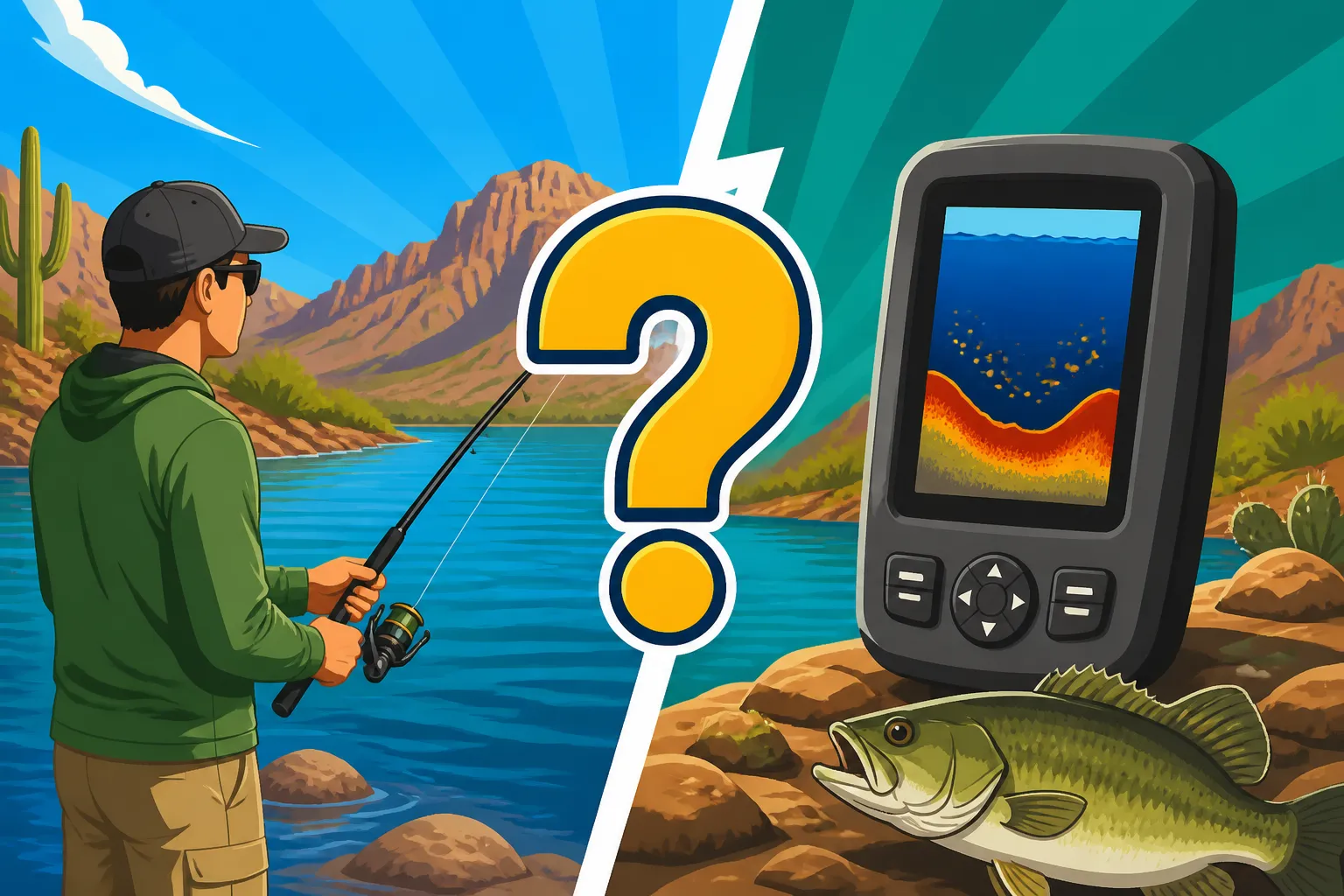
Do You Need a Depth Finder for Shore Fishing?
For many Arizona anglers, the thought of a depth finder immediately conjures images of expensive bass boats, high-tech dashboards, and deep-water trolling. You’re standing on the bank, maybe at Tempe Town Lake or the Lower Salt River, and you wonder: could a depth finder actually help me find fish from shore, or is it just another piece of gear designed for those with a boat? This guide will dive deep into whether these devices can truly benefit your shore fishing adventures here in the Grand Canyon State.
The Traditional View of Depth Finders and Shore Angling
Let's be honest, for decades, depth finders were firmly in the realm of boat fishing. They were bulky, required a transom-mounted transducer, and needed a power source that your average shore angler just didn’t have handy. The idea of hauling one down to the edge of Lake Pleasant or Canyon Lake for a day of bank fishing seemed, well, absurd. This historical context has shaped a common misconception that if you’re not on a boat, a depth finder is useless.
The Boat-Centric Mindset
When you picture a fishing boat, you probably envision a bright screen displaying a detailed underwater landscape: schools of baitfish, rocky points, submerged trees, and maybe even a big ol' bass hiding in the brush. These units help boat anglers understand the lake's topography, locate structure where fish might hide, and track their depth in real-time. It’s a powerful tool for covering large expanses of water and identifying prime fishing spots quickly. The investment in a high-quality unit is substantial, making it a serious piece of equipment for those serious about boat-based fishing.
Why Shore Anglers Felt Excluded
For a long time, if you were a dedicated shore angler, you relied on different methods. You’d read the water, observe changes in vegetation, look for obvious drop-offs, or simply cast a weighted lure out to feel the bottom. Many of us learned to use marker buoys to pinpoint a productive spot after a lucky catch. There was a sense that shore fishing was more about patience and intuition, rather than technology. The heavy, battery-draining, and expensive marine electronics simply weren't practical for someone walking the bank or wading into the shallows. The frustration was real – you knew those boat anglers had an edge, but the tools they used just didn't translate to your style of fishing.
How Portable Depth Finders are Changing the Game for Shore Anglers
The landscape has dramatically shifted in recent years, thanks to advancements in technology. Today, there's a whole new class of depth finders designed specifically with the shore angler in mind. These portable, often castable, units are a game-changer, breaking down the barrier between boaters and bank fishers when it comes to understanding what lies beneath the surface.
The Rise of Castable Sonar Units
These days, you don't need a boat to "see" underwater. Castable sonar units, which are small, spherical, or egg-shaped devices, can be tied to your fishing line and cast out just like a lure. Once in the water, they wirelessly transmit sonar data via Bluetooth or Wi-Fi directly to your smartphone or tablet. Imagine standing on the shore of Lake Havasu, casting one of these out, and getting a real-time map of the bottom contour, water depth, temperature, and even fish arches, all on your phone screen! It's like having X-ray vision for the lakebed, and it's incredibly empowering. You can retrieve it slowly, mapping a wide arc in front of you, or let it sit to scan a specific area. How to Read a Fish Finder for Bass can become a skill for you too, not just boat owners.
Many companies offer these, and you can often find a good selection, along with customer reviews, on platforms like Amazon or in a dedicated fishing store like Bass Pro Shops. They're typically rechargeable, compact, and designed to withstand the elements, making them perfect for a rugged Arizona fishing trip.
Handheld and Mountable Portable Units
Beyond castable sonar, there are also compact, handheld depth finders that utilize a smaller transducer on a pole or flotation device. Some are even designed to be temporarily mounted to a kayak or inflatable boat, giving them versatility if you occasionally venture out on the water. While not always as convenient as the castable units for pure shore fishing, they offer another option for exploring deeper water from a fixed position, like a pier or a rocky outcrop. These can be particularly useful if you're exploring areas with steep drop-offs where casting a traditional lure might snag. They provide a more robust screen and dedicated controls, which some anglers prefer over constantly checking a smartphone.
The Information Advantage
The key advantage these portable units offer is information. No longer are you guessing about the depth just beyond your casting range, or wondering if that promising-looking point extends into a weed bed or a rocky shelf. You get hard data:
- Accurate Depth Readings: Know precisely how deep the water is at various distances and locations from shore.
- Bottom Composition: Many units can distinguish between hard bottom (rock, gravel), soft bottom (silt, mud), and even vegetation. This is vital for choosing the right bait and technique.
- Structure Identification: Pinpoint submerged brush piles, rock formations, ledges, and other features that attract fish. These are the fish magnets!
- Water Temperature: Often overlooked, water temperature is a huge factor in fish behavior. Knowing the temperature at different depths can help you target specific species or understand why fish are or aren't biting.
- Fish Arches: While not always 100% accurate in identifying species, seeing "arches" on your screen confirms the presence of fish, letting you know you're in a productive zone.
Equipped with this knowledge, you can make more informed decisions, choose more effective presentations, and ultimately, increase your chances of success. It changes shore fishing from a game of chance to a game of strategy.
Practical Ways a Shore Angler Can Use a Depth Finder
So, how exactly does this translate to putting more fish on the bank? It's not just about seeing pretty pictures on a screen; it's about using that information to adapt your strategy and find the fish that others miss.
Mapping the Underwater Landscape
One of the most valuable uses of a portable depth finder is to create a mental (or even digital, with some apps) map of the underwater terrain directly in front of you. Instead of blindly casting, you can systematically scan an area.
Imagine you're fishing at Roosevelt Lake, known for its submerged timber. You cast your portable sonar unit out, let it drift and scan as you slowly reel it back. Your phone lights up, showing a sudden drop-off from 5 feet to 15 feet, followed by a cluster of jagged lines indicating submerged trees. Now you know exactly where to cast that Texas-rigged plastic worm or jig. Without the depth finder, you might have spent hours casting into the shallow, barren water, completely unaware of the honey hole just a few yards further out. This kind of systematic scanning helps you understand Seasonal Movement Patterns of Bass at Roosevelt Lake and other species.
Locating Fish-Holding Structure
Fish, especially bass, crappie, and catfish, are almost always associated with some kind of structure or cover. From shore, it can be incredibly difficult to identify these hiding spots. A depth finder makes it easy.
Consider fishing a community lake in Phoenix. You might see a visible weed line, but what about the structure under the water? You cast your sonar unit parallel to the bank. Suddenly, a distinct hump appears on your screen, with some fish arches nearby. This could be an old submerged culvert, a rocky mound, or a transition zone between different bottom types. Now, instead of casting aimlessly along the entire weed line, you can focus your efforts directly on that productive structure. This is especially useful in lakes like Tempe Town Lake, where understanding man-made underwater features can be key. For catfish, finding deep holes or channel edges can be crucial, and a portable depth finder helps pinpoint those areas even from shore. Catfish Night Fishing Techniques often involve targeting these specific types of submerged structures.
Identifying Depth Changes and Drop-Offs
Fish often position themselves along depth changes, such as ledges, humps, or the edge of a submerged creek channel. These transitions provide easy access to different depths for feeding or seeking comfort from temperature changes. From shore, these subtle changes are virtually invisible.
Let's say you're fishing a popular bank spot at Bartlett Lake. You've always fished the visible bank, but your castable sonar reveals a significant drop-off 20 yards out, going from 8 feet down to 20 feet. More importantly, you see fish congregated right at the edge of that drop-off. You now have a prime target. You can adjust your casting distance and retrieve to keep your lure precisely in that transition zone. This is a far more effective approach than simply casting as far as you can.
Understanding the Importance of Water Temperature
Many portable units also provide water temperature readings. This might seem minor, but it’s huge! Fish are highly sensitive to temperature. For instance, in colder months, bass will often seek out the warmest available water, while trout prefer colder zones.
If you're fishing in the winter, and your depth finder shows that the water in the shallows is 45 degrees, but drops to 40 degrees at 15 feet, you know fish aren't likely to be deep and lethargic. Conversely, in the Arizona summer heat, if the surface water is scorching, but you find a slightly cooler thermocline at a certain depth, that's where the fish will be. Armed with this knowledge, you can choose appropriate baits and depths, rather than wasting time in unfavorable conditions. It's a key factor for Ice-Free Winter Fishing Techniques in Arizona's desert lakes.
Comparing Portable Depth Finders for Shore Anglers
To help you decide which type of portable depth finder might be best for your shore fishing adventures, here's a quick comparison:
| Feature/Type | Castable Sonar Unit | Handheld/Pole-Mounted Unit |
|---|---|---|
| Portability | Extremely portable; fits in tackle box/pocket. | Very portable; often carried in a fishing backpack. |
| Deployment | Cast with fishing rod; floats on surface. | Lowered by hand from pier/bank, or pole-mounted. |
| Data Display | Transmits wirelessly to smartphone/tablet. | Dedicated screen on the unit itself. |
| Range/Coverage | Can scan wide areas with multiple casts; maps contours. | Best for scanning directly below/around the unit. |
| Power Source | Rechargeable internal battery (USB). | Rechargeable internal battery or standard batteries. |
| Ease of Use | Very simple, app-driven; requires smartphone. | Straightforward controls on the unit. |
| Best For | Scouting new areas, mapping bottom structure from bank. | Pier fishing, fixed position scouting, basic depth. |
| Cost | Generally accessible, with varying feature sets. | Can range from entry-level to more advanced. |
When considering a purchase, think about where you primarily fish and what kind of information you prioritize. If you're constantly on the move, exploring different banks, a castable unit might be ideal. If you frequent piers or stable positions, a handheld unit could give you a larger, dedicated display. You can find a good range of options, from basic to feature-rich, whether you're browsing Bass Pro Shops or looking for deals on Amazon.
Weighing the Pros and Cons: Is It Right for Your Shore Fishing?
So, after all this, the big question remains: do you need a depth finder for shore fishing? The answer, as with most fishing questions, isn't a simple yes or no. It really boils down to your personal fishing style, your goals, and your budget.
The Advantages for Shore Anglers
The benefits of incorporating a portable depth finder into your shore fishing arsenal are undeniable.
- Increased Efficiency: No more guessing games. You spend less time fishing unproductive water and more time in areas where fish are likely to be. This means more casts in the strike zone, which translates to more bites.
- Enhanced Understanding: You’ll develop a much deeper understanding of the underwater environment. This knowledge is invaluable and carries over to all your fishing trips, even without the device. Learning about Deep Water Structure Fishing Techniques becomes possible even from the bank.
- Targeted Approach: Instead of a general approach, you can tailor your bait, lure, and technique to the specific structure, depth, and temperature you identify. This precision fishing often yields better results.
- Access to Hidden Spots: You can discover previously unknown ledges, humps, or brush piles that traditional shore fishing methods would never reveal. Think of it as uncovering secret spots right under your nose.
- Confidence Booster: Knowing that you’re casting into prime fish-holding territory significantly boosts your confidence, making your time on the water more enjoyable and productive.
For anyone who feels frustrated by inconsistent results from the bank, or who simply wants to take their shore fishing to the next level, a portable depth finder can be a fantastic investment. It truly democratizes information that was once exclusive to boat owners.
The Potential Downsides and Considerations
Of course, no tool is without its drawbacks, and it's important to have a realistic view before you invest.
- Cost: While portable units are generally much more affordable than their boat-mounted counterparts, they still represent an investment. Budget entry-level models are available, but higher-end units with more features will naturally cost more. You'll need to weigh this against your overall fishing budget and how often you'll use it.
- Reliance on Technology: Some anglers prefer a more "primitive" connection to nature, relying solely on their senses and experience. Constant screen-gazing might detract from that experience for some.
- Battery Life: These units are battery-powered, and while many offer decent run times, you'll need to remember to charge them. Carrying a portable power bank can extend your use, especially for long days on the water.
- Smartphone Dependency (for castable units): If you're using a castable unit, you need a smartphone or tablet, and that device needs battery life too. Dropping your phone in the lake while fishing can be a major bummer!
- Learning Curve: While generally user-friendly, there's a slight learning curve to interpreting the sonar readings and understanding how to effectively use the device to your advantage. It's not just a magic "fish-finding" button.
Ultimately, whether you "need" a depth finder for shore fishing depends on your goals. If you're content with casting and seeing what happens, and enjoy the simplicity of traditional bank fishing, then you might not feel the need. However, if you're looking to gain an edge, understand the water better, and significantly increase your chances of finding and catching fish from shore, then a portable depth finder could be one of the best investments you make for your Arizona fishing adventures. It can help you make sense of areas like Fishing Access at Tempe Town Lake or explore new waters with confidence.
Conclusion: Making an Informed Choice for Your Fishing Style
The evolution of fishing technology means that the tools once reserved for boat owners are now readily available and practical for the dedicated shore angler. Portable depth finders, especially castable sonar units, offer an unprecedented view into the underwater world, allowing you to identify structure, depth changes, and even fish from the bank.
While not strictly "necessary" to catch fish—after all, anglers have been successful for centuries without them—these devices undoubtedly provide a significant advantage. They turn guesswork into knowledge, and random casting into targeted strategy. If you're an Arizona shore angler looking to elevate your game, increase your understanding of the lakes and rivers you fish, and ultimately, put more fish on the line, exploring the world of portable depth finders is definitely worth your time. Consider your fishing habits, your budget, and how much you value the information a depth finder can provide. It might just be the secret weapon you've been missing for your next trip to Lake Pleasant Arizona Fishing Guide or any of our amazing Arizona waters.
Disclaimer
This article is for general informational purposes only and does not constitute professional advice. Laws, prices and regulations vary by location and change over time. Consult a qualified professional for guidance on your specific situation.