Best Sunglasses for Sight Fishing
Oh, the Arizona sun! It's glorious for soaking up warmth, but when you're out on the water, that dazzling glare can turn a beautiful fishing day into a frustrating guessing game. Trying to spot cruising bass in the shallows of Lake Pleasant or subtle trout movements in a clear mountain stream becomes nearly impossible when the water's surface acts like a mirror. This guide is all about cutting through that shimmer, enhancing your vision, and ultimately helping you see more fish and enjoy your time on the water, starting with the absolute best sunglasses for sight fishing.
Why Sunglasses Are Non-Negotiable for Arizona Sight Fishing
Let's be real, you wouldn't head out on a scorching summer day without a wide-brimmed hat, right? Well, good fishing sunglasses are just as crucial, especially here in Arizona where the sun is practically a year-round constant. They're not just a fashion statement; they're a vital piece of fishing gear that can make or break your day on the water.
The Glare Problem on Desert Lakes
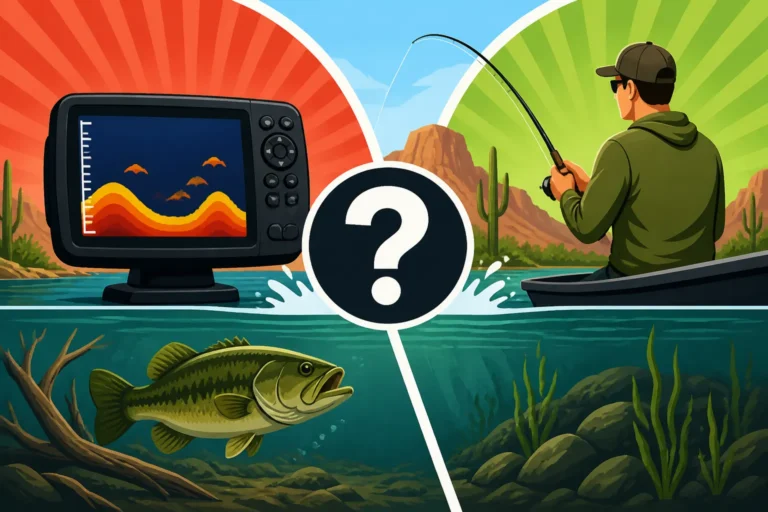
Imagine you're at Roosevelt Lake, the sun high in the sky, trying to peer into that tantalizing brush pile near the shore. All you see is a blinding white reflection bouncing off the water. That's glare, and it's the arch-nemesis of every sight fisherman. Our desert lakes, like Canyon Lake, Saguaro Lake, and even our urban community ponds, often have clear water, which intensifies glare. This makes it incredibly difficult to distinguish structure, follow your lure, or, most importantly, spot a fish holding near cover. Without the right eyewear, you're essentially fishing blind in the most critical zone.
Enhancing Vision and Spotting Fish
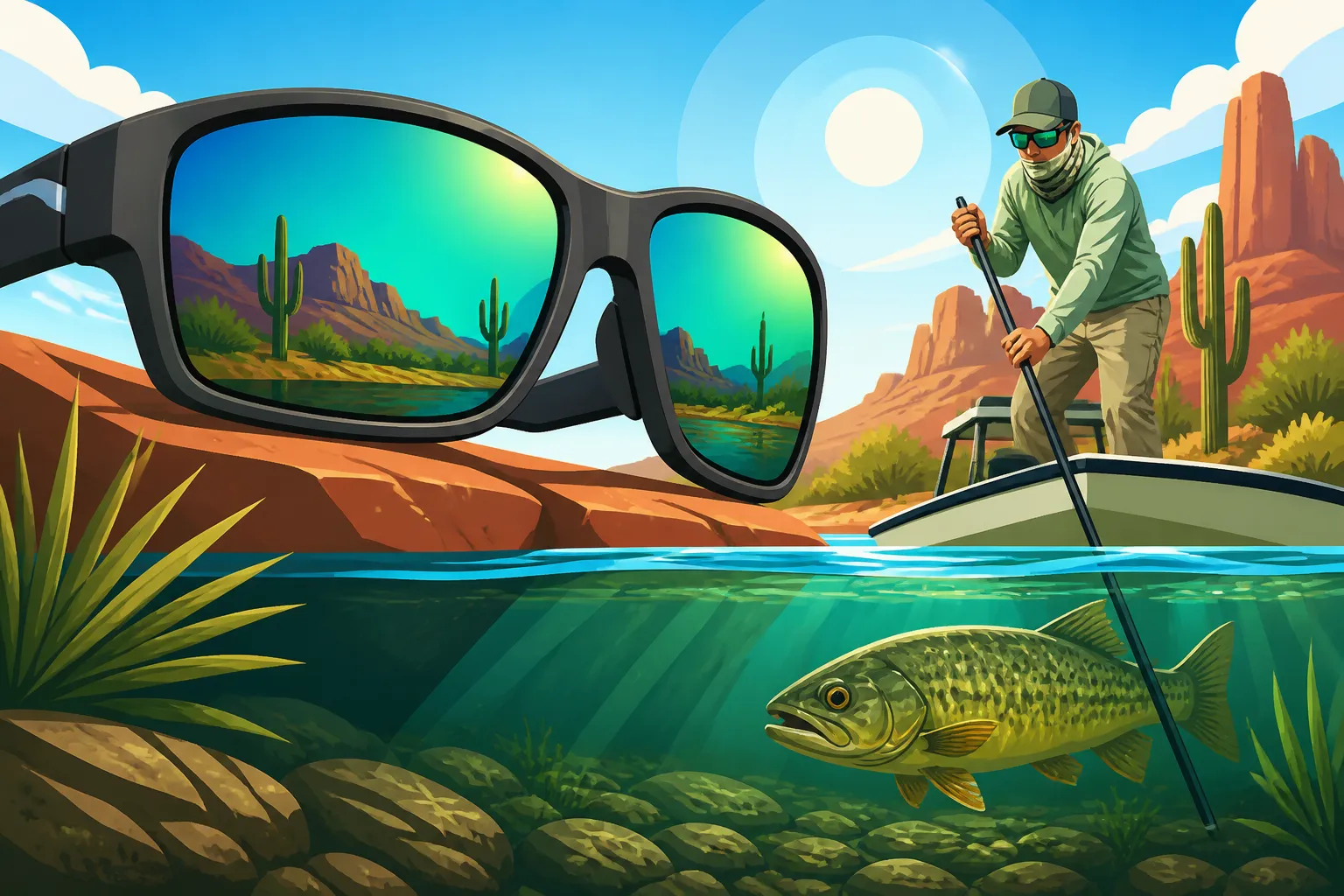
This is where the magic happens. With the right pair of sunglasses, that glaring surface transforms. Suddenly, you can see past the reflections, into the water column. You might spot the dark silhouette of a Largemouth Bass Fishing Guide for Arizona cruising the flats, the subtle flash of a Smallmouth Bass Fishing Guide for Arizona tucked against a rock, or even the outline of submerged vegetation that you never knew was there. This isn't just about seeing a fish; it's about seeing how they're relating to their environment, which is key to successful angling. It helps you make more accurate casts and understand where the fish are hiding, giving you a massive advantage whether you're fly fishing for Rainbow Trout Fishing Guide for Arizona or pitching jigs for bass.
Protecting Your Eyes from Harmful UV Rays
Beyond the immediate fishing benefits, let's talk about long-term health. The Arizona sun, while beautiful, bombards us with intense ultraviolet (UV) radiation. Extended exposure without proper protection can lead to serious eye issues, including cataracts and macular degeneration. Your eyes are precious, and good sunglasses act as a shield, blocking those harmful UVA and UVB rays. Think of them as sunscreen for your eyeballs – an absolute must for anyone spending hours under the desert sky. It's an investment in both your fishing success and your overall well-being.
Understanding Polarized Lenses: The Angler's Secret Weapon
If there's one non-negotiable feature for fishing sunglasses, it's polarization. Non-polarized sunglasses might reduce brightness, but they won't cut the glare that prevents you from seeing into the water. For an angler, polarization is the game changer.
How Polarization Works to Cut Glare
So, how does this "polarization" thing actually work? When sunlight hits a flat surface like water, it bounces off in all directions. Some of this light travels horizontally, creating that intense, blinding glare you see. Polarized lenses have a special filter that's designed to block this horizontal light while allowing vertical light waves to pass through. It's like a tiny venetian blind for your eyes. The result? The glare is dramatically reduced, and your vision penetrates the water's surface, allowing you to see what's beneath. This is crucial for Beginner Fishing Techniques for Arizona Desert Lakes and seasoned pros alike, allowing you to see the actual fish, rocks, and weed lines instead of just reflections.
Differences Between Lens Materials
Not all lenses are created equal, and the material they're made from impacts durability, clarity, and even weight.
- Polycarbonate Lenses: These are a popular choice for anglers because they are incredibly lightweight and highly impact-resistant. If you're prone to dropping your glasses or accidentally stepping on them in the boat, polycarbonate offers excellent shatter protection. They're also generally more affordable. The downside is they can be more susceptible to scratching than glass, and some argue they offer slightly less optical clarity compared to high-end glass.
- Glass Lenses: For the ultimate in optical clarity and scratch resistance, glass lenses are often considered the top tier. They offer a crisper, distortion-free view, which can be a real advantage when you're trying to spot subtle movements in the water. However, they are heavier than polycarbonate and, as you might guess, can shatter if dropped on a hard surface. They also tend to be on the higher end of the price spectrum.
- Trivex Lenses: Falling somewhere in between, Trivex lenses offer a great balance. They are lighter than glass, more impact-resistant than glass (though not quite as tough as polycarbonate), and provide excellent optical clarity. They often come with a slightly higher price tag than polycarbonate but deliver a premium experience.
When considering lens material, think about your fishing style. If you're active, hiking into remote spots, or fishing from a kayak where gear gets bumped around, polycarbonate might be your best bet for durability. If you're a serious sight fisherman who demands the absolute clearest view from a stable boat, investing in glass lenses could be worthwhile.
Common Lens Colors and Their Best Uses
Lens color isn't just about aesthetics; it plays a critical role in how well you see in different light conditions and environments. Choosing the right color can significantly enhance contrast and reduce eye strain.
- Brown, Copper, or Amber Lenses: These are arguably the most popular and versatile choice for general freshwater fishing in Arizona. They excel in bright to medium light conditions, enhancing contrast and depth perception, which is fantastic for spotting fish against rocky bottoms or submerged timber. They're great for bass fishing on sunny days at places like Lake Pleasant or the Salt River chain lakes.
- Gray or Smoke Lenses: If you want a lens that provides the most natural color perception, gray is your go-to. It's excellent for very bright, sunny days, reducing overall brightness without altering colors. While it doesn't offer the same contrast enhancement as brown or amber, it's perfect for cutting glare on wide-open lakes or during overcast conditions where you need accurate color representation.
- Yellow or Rose Lenses: These lighter tints are designed for low-light conditions, such as dawn, dusk, or heavily overcast days. They boost contrast dramatically, making it easier to see in murky water or when fishing in shadows. While not ideal for bright midday sun, they can be fantastic for those prime early morning or late evening bites.
The "best" color often comes down to personal preference and the specific conditions you fish most often. Many serious anglers even keep a couple of pairs with different lens colors to adapt to changing light.
Key Features to Look For in Fishing Sunglasses
Beyond just polarization and lens material, a truly great pair of fishing sunglasses will have several other features that contribute to comfort, performance, and longevity. Don't overlook these details!
Frame Fit and Comfort
You're going to be wearing these glasses for hours, potentially in the intense Arizona heat. Comfort is paramount.
- Wraparound Styles: These frames offer maximum coverage, blocking light from entering through the sides or top. This is incredibly important for reducing peripheral glare, which can still be distracting even with polarized lenses. The wraparound design also helps keep dust and wind out of your eyes, which is a bonus on a windy lake day. Look for frames that fit snugly but without pinching, often with rubberized nose pads and temple tips to prevent slipping when you sweat.
- Lightweight Construction: A heavy pair of glasses will quickly become uncomfortable, especially if they're constantly sliding down your nose. Lightweight frames, often made from durable nylon or other composite materials, will feel much better over a long day.
- Ventilation: Some frame designs incorporate subtle vents to prevent fogging, which can be a real issue when transitioning from a cool boat cabin to the warm, humid air of the lake.
Think about how the glasses feel on your face during a test run. Do they pinch? Do they slide? Can you wear them with a hat comfortably? These small details make a big difference in the real world.
Durability and Scratch Resistance
Let's face it, fishing gear takes a beating. Your sunglasses are no exception. They'll get dropped, splashed, and potentially scraped against tackle boxes or boat railings.
- Robust Frame Materials: Look for frames made from tough, flexible materials that can withstand accidental bending or impacts without breaking. Nylon and various plastic composites are common and effective.
- Scratch-Resistant Coatings: While glass lenses are inherently more scratch-resistant, most modern polycarbonate and Trivex lenses come with advanced scratch-resistant coatings. This is a must-have, as even a small scratch can distort your vision and ruin an otherwise perfect pair of lenses. Always clean your lenses with a microfiber cloth and appropriate cleaner, never dry cloth or your shirt, to avoid scratching those precious coatings.
Investing in a pair with good durability will save you money in the long run by not having to replace them constantly.
Hydrophobic and Oleophobic Coatings
These fancy-sounding coatings are incredibly practical for anglers.
- Hydrophobic Coatings: A hydrophobic (water-repelling) coating makes water bead up and roll right off the lens surface. This is a lifesaver when you're dealing with boat spray, rain, or even just sweat dripping down from your brow. Instead of water smudging and obscuring your view, it clears quickly, keeping your vision sharp.
- Oleophobic Coatings: An oleophobic (oil-repelling) coating helps repel oils, such as those from your skin (fingerprints!) or sunscreen. This makes cleaning much easier, as smudges wipe away without leaving streaks. For those of us who are constantly touching our faces or applying sunscreen, this is a huge benefit.
These coatings significantly reduce the need for constant cleaning and keep your lenses clearer, allowing you to focus on the fish, not the smudges.
UV Protection Ratings
We touched on this earlier, but it bears repeating: proper UV protection is critical. Look for sunglasses that clearly state "100% UV protection" or "UV400." This means they block 100% of both UVA and UVB rays up to 400 nanometers. Don't settle for anything less, as reduced glare without adequate UV protection is a false economy for your eye health. This is one feature where there's no compromise.
Choosing the Right Lens Color for Arizona Conditions
Arizona's diverse fishing environments, from the sun-drenched desert reservoirs to the shaded mountain streams, mean that one lens color might not be optimal for every situation. Understanding the strengths of each color can help you pick the best tool for the job.
Brown/Copper/Amber: Versatile for Bright, Sunny Days
These warm-toned lenses are truly the workhorses for most Arizona anglers. They excel when the sun is bright, which is, let's be honest, most of the time here!
- Ideal Conditions: Bright sunshine, clear to partly cloudy skies. Great for open desert lakes like Lake Pleasant Arizona Fishing Guide, Roosevelt Lake, or the larger stretches of the Colorado River.
- Benefits: They significantly enhance contrast, making it easier to distinguish structure, like rock piles, humps, or submerged timber, against the water's background. This is invaluable when you're trying to pinpoint where that trophy Catfish Fishing Guide for Arizona might be lurking or tracking a crankbait. The heightened depth perception also helps with casting accuracy. They also tend to be very comfortable on the eyes for extended periods in strong light.
- Best for: Bass fishing (largemouth, smallmouth, striped), crappie, and catfish in typical Arizona desert lake conditions. If you're only going to own one pair, a brown or copper polarized lens is a fantastic starting point.
Gray/Smoke: Best for Overcast or Low Light, Natural Colors
While not as popular as brown for pure sight fishing, gray lenses have their place, especially when you need true color representation or are dealing with specific light conditions.
- Ideal Conditions: Extremely bright, intense sun on wide-open bodies of water (like the middle of Lake Powell on a cloudless day), or conversely, overcast days where light is flat but you still have glare.
- Benefits: Gray lenses offer the most natural color perception, meaning what you see through the lenses is very close to what it would look like without them, just less bright. They reduce overall light transmission evenly across the spectrum. This can be beneficial if you're trying to identify subtle color variations in fish or lure presentations. They're also excellent for reducing eye fatigue on those exceptionally bright, long days.
- Best for: Anglers who prefer natural colors or who are fishing vast, open waters with intense, unfiltered sunlight. While not always the first choice for picking out individual fish, they're superb for comfort and general glare reduction.
Yellow/Rose: Enhancing Contrast in Murky or Dawn/Dusk Conditions
These lighter, higher-contrast lenses are specialized tools for specific situations where light is scarce or visibility is poor.
- Ideal Conditions: Overcast days, early morning or late evening (dawn/dusk), fishing in heavily shaded areas, or in waters that are naturally murky or stained. Think shaded canyons on the Colorado River or a muddy pond after a monsoon.
- Benefits: Yellow and rose tints dramatically increase contrast, making objects pop out against a flat background. They literally make things "brighter" by filtering out blue light, which can be fantastic for spotting subtle movements or submerged structure in low-visibility situations. They are particularly useful for those early morning topwater bites or late evening crappie runs.
- Best for: Specific low-light or low-visibility scenarios. While not a primary, all-day lens for bright Arizona days, having a pair of yellow or rose lenses in your Essential Tackle Box Setup for Arizona Beginners can be a game-changer when conditions aren't ideal. They allow you to extend your fishing day into those prime low-light hours.
Here's a quick comparison table to help you decide:
| Lens Color | Best Light Conditions | Key Benefits | Ideal for Arizona Fishing Situations |
|---|---|---|---|
| Brown/Copper | Bright sun, clear to partly cloudy | High contrast, enhanced depth perception, reduced eye strain | Most desert lakes (Roosevelt, Pleasant, Canyon) on sunny days, general bass, crappie, catfish fishing |
| Gray/Smoke | Extremely bright sun, open water, or uniformly overcast days | Natural color perception, excellent glare reduction, comfortable for long days | Large open lakes (Lake Powell), bright midday sun, subtle color identification |
| Yellow/Rose | Low light, dawn/dusk, overcast, murky water, heavy shade | Dramatically boosts contrast, brightens surroundings | Early morning/late evening bites, murky community ponds, fishing shaded canyons |
Top Brands and Where to Find Quality Fishing Sunglasses
When it comes to fishing sunglasses, you generally get what you pay for. Investing in a quality pair from a reputable brand will ensure you're getting effective polarization, durable construction, and excellent optical clarity.
Reputable Brands Known for Angler-Specific Optics
There are several brands that have built their reputation on providing top-tier eyewear specifically for anglers. These companies understand the unique demands of fishing in terms of glare, light conditions, and durability.
Many dedicated anglers swear by brands like Costa Del Mar, Maui Jim, and Oakley. These companies typically offer a wide range of frame styles, lens materials (including glass for superior clarity), and specialized lens tints designed to enhance vision on the water. They often incorporate features like advanced hydrophobic and oleophobic coatings right into their standard offerings. You'll find their products at specialized outdoor retailers and sometimes in larger sporting goods stores like Bass Pro Shops. While they represent a significant investment, the clarity, comfort, and durability often make them worth every penny for serious anglers.
You'll also find excellent options from brands like Huk, Simms, and Strike King, which cater directly to the fishing market and understand the needs of anglers. Even brands like Native Eyewear or Smith Optics offer high-quality polarized options that are popular among outdoor enthusiasts, including fishermen.
Shopping for Value: What to Expect Price-Wise
The price range for quality fishing sunglasses can vary wildly, from entry-level options to premium, high-performance pairs.
- Entry-Level ($30-$100): You can find perfectly functional polarized sunglasses in this range, especially from online retailers like Amazon or in general sporting goods stores. These often feature polycarbonate lenses and basic frames. They're a great starting point for casual anglers or those on a tighter budget, but might not offer the same level of optical clarity, durability, or advanced coatings as more expensive options. They'll certainly cut the glare, which is the most important factor.
- Mid-Range ($100-$250): This is where you start getting into more specialized features. Brands in this range often offer better frame materials, enhanced lens coatings (scratch-resistant, hydrophobic), and superior optical quality. You'll find a broader selection of lens colors and frame styles, and the overall fit and finish tend to be more robust. Many anglers find this price point to offer the best balance of performance and value.
- Premium ($250+): At the top end, you're paying for the absolute best in optical clarity (often glass lenses), cutting-edge frame technology, superior durability, and brand-specific advancements in lens science. These sunglasses are built to withstand the harshest conditions and provide the clearest, most comfortable vision possible. They are an investment for dedicated anglers who spend a lot of time on the water and demand peak performance.
When shopping, it's wise to consider your frequency of fishing and the intensity of your conditions. If you're out every weekend, hitting various Best Fishing Lakes in Arizona, a more durable and feature-rich pair will serve you well. If you only fish a few times a year, a solid mid-range option might be all you need. Always check product reviews, especially from other anglers, to gauge real-world performance. Places like Bass Pro Shops often have displays where you can try on different frames and even look through various lens colors to get a feel for them before committing.
Maintenance and Care for Longevity
Even the best sunglasses won't last if you don't take care of them. A little routine maintenance goes a long way.
- Always Use a Case: When your sunglasses aren't on your face, they should be in a hard case or at least a soft pouch to protect them from scratches and impacts. Don't just toss them onto the boat console or into your tackle box unprotected.
- Clean Properly: Use a lens cleaning solution specifically designed for optics (often available at optical shops or even where you buy your sunglasses). Spray it on, and then gently wipe with a clean, soft microfiber cloth. Avoid using paper towels, your shirt, or harsh chemicals, as these can scratch lenses or degrade coatings. For quick cleanups on the water, many anglers carry a small spray bottle and a dedicated cloth.
- Rinse After Saltwater Exposure: If you happen to fish in areas with brackish water or just experience heavy spray, it's a good idea to rinse your glasses with fresh water afterward to remove salt residue, which can be corrosive over time.
- Avoid Extreme Heat: Leaving your sunglasses on the dashboard of your car in the Arizona summer sun is a recipe for disaster. The extreme heat can warp frames and damage lens coatings.
By treating your sunglasses with care, they'll provide you with clear vision and eye protection for many fishing seasons to come, allowing you to focus on the thrill of the catch rather than squinting through glare. Fishing Gear Checklist for Desert Lakes should always include proper eyewear care.
Disclaimer
This article is for general informational purposes only and does not constitute professional advice. Laws, prices and regulations vary by location and change over time. Consult a qualified professional for guidance on your specific situation.