Best Setup for Bottom Fishing for Catfish
There's nothing quite like the anticipation of a big bite from a hard-fighting catfish, especially when you're fishing the diverse waters of Arizona. But let's be honest, it can be incredibly frustrating when your bait just won't stay put, or you're constantly snagging, leaving you wondering if you're even fishing where the catfish are. This guide is here to take the guesswork out of it, showing you the absolute best setup for bottom fishing for catfish in Arizona, ensuring your rig is perfectly suited to entice those whiskered giants right off the lake or riverbed.
Understanding Arizona Catfish and Their Bottom-Dwelling Habits
Before we even talk about specific gear, it's crucial to understand why bottom fishing is so effective for catfish here in Arizona. Catfish, whether we're talking about channel cats, flatheads, or even bullheads, are primarily bottom feeders. They cruise along the lakebed or river bottom, using their highly sensitive barbels to detect food through scent and touch, even in murky water or low light conditions.
Why Catfish Stay on the Bottom
Catfish species like the Channel Catfish and Flathead Catfish are perfectly designed for life on the bottom. Their mouths are generally subterminal (meaning they face downwards), making it easy for them to scoop up prey from the substrate. They often seek out structure like submerged timber, rock piles, or ledges, which provide cover and ambush points for their meals. In Arizona's desert lakes, these structures are abundant, from the flooded creek beds of Roosevelt Lake to the rocky points of Lake Pleasant. They're not chasing baitfish near the surface like a bass might; they're down where the decaying organic matter, insects, and smaller bottom-dwelling creatures live. This behavior dictates our entire approach to gear and presentation.
Imagine a scorching Arizona summer day. The surface water might be bathwater warm, but just a few feet deeper, especially near an old river channel or a deep pocket, the water is cooler and more oxygenated. Catfish will retreat to these deeper, cooler zones during the heat of the day, only moving shallower to feed during dawn, dusk, or nighttime. A successful bottom fishing setup places your bait directly in these cooler, deeper holding patterns, or along the paths they travel during their feeding excursions. Understanding this behavior is the first step to figuring out your Best Catfish Fishing Spots in Arizona.
Prime Bottom Fishing Locations in Arizona
Arizona offers a fantastic array of waters where catfish thrive, and understanding their preferred bottom habitats is key to your success. In our larger reservoirs like Lake Pleasant, Roosevelt Lake, and Bartlett Lake, look for old submerged river channels, deep coves with plenty of debris, and rocky ledges that drop off quickly. These areas provide both cover and food sources. Flathead catfish, in particular, love heavy cover, so don't be afraid to target areas with standing timber or large rock piles.
When fishing rivers like the lower Colorado River or the Gila River, focus on deeper holes, outside bends where currents create scour pockets, and areas downstream from snags or fallen trees. These spots offer current breaks and concentrate food. Even in our urban community fishing lakes, you'll find catfish congregating in the deeper sections, near aerators, or close to submerged brush and culverts. Knowing these specific types of bottom structure will give you a significant advantage, ensuring you're not just casting blindly but targeting areas where catfish are actively foraging.
Essential Rod, Reel, and Line Setup for Arizona Catfish
Now that we know where to fish, let's talk about the tools that will get your bait down there and bring those hard-fighting catfish back to shore or boat. The right rod, reel, and line are critical components of any effective bottom fishing setup.
Choosing the Right Rod for Catfish
For bottom fishing for catfish, you need a rod that can handle heavy weights, powerful casts, and the brute strength of a large cat. I typically recommend a medium-heavy to heavy power rod, usually between 7 to 9 feet long. This length gives you excellent casting distance, which is often crucial for reaching those deeper channels or far-off bottom structures. It also provides leverage when you're battling a big fish, keeping its head up and away from snags.
A rod with a moderate-fast action is ideal. This means the rod bends mostly in the upper third, offering enough sensitivity to detect subtle bites (which can be common with catfish, especially flatheads) but still having plenty of backbone in the middle and lower sections to set the hook firmly and muscle in a heavy fish. Brands like Ugly Stik offer incredibly durable and affordable rods perfect for this kind of abuse, widely available at Bass Pro Shops. For those looking for more specialized gear, there are also dedicated catfish rods designed with extra-long handles for two-handed casting and fighting leverage. For more options, check out our Best Rod for Catfish guide.
Selecting a Dependable Reel
Paired with your sturdy rod, you'll need a reel that can withstand the demands of catfish angling. Both spinning and baitcasting reels can work, but for serious bottom fishing with heavy lines and baits, many anglers gravitate towards baitcasting reels.
A conventional baitcasting reel or a robust spinning reel in the 4000-6000 size range is a good starting point. Look for a reel with a strong drag system – this is non-negotiable for catfish. A high-quality drag will smoothly release line under pressure, preventing break-offs when a big cat makes a powerful run. Gear ratio is less critical for bottom fishing than for active lure presentations, but something in the 4.0:1 to 5.2:1 range will give you enough torque to pull in heavy sinkers and fighting fish. You'll want a reel with a large line capacity to hold plenty of heavy line, especially if you're fishing large bodies of water like Lake Powell or targeting deep sections of the Colorado River. You can find excellent options for all budgets online at Amazon or at your local tackle shop.
The Importance of Strong Fishing Line
This is where many anglers make a mistake, going too light and paying the price. Catfish live in abrasive environments, and their mouths are tough. You need line that can handle rough structures, powerful runs, and sudden surges.
For bottom fishing for catfish, I strongly recommend a monofilament line in the 15-30 pound test range, or braided line in the 30-65 pound test range.
- Monofilament offers good abrasion resistance and a bit of stretch, which can be forgiving during a hard fight. It's also typically less expensive.
- Braided line has virtually no stretch, providing excellent sensitivity to feel bites and superior power to set hooks. Its thin diameter for its strength also allows for better casting distance and less resistance in current. However, it's more visible and can be prone to wind knots if not spooled correctly. If you're using braid, consider adding a monofilament or fluorocarbon leader to provide a bit of shock absorption and make your terminal tackle less visible. For a comprehensive look at your options, see our article on Best Line for Catfish Fishing.
Terminal Tackle: Hooks, Sinkers, and Swivels for Success
This is where the rubber meets the road – or rather, where your bait meets the bottom. A well-constructed bottom rig is the cornerstone of effective catfish fishing.
Choosing the Right Hooks
Catfish have tough, bony mouths, so you need strong, sharp hooks that can penetrate and hold. The size and style of hook will depend largely on the size of the bait you're using and the size of the catfish you expect to catch.
For general catfish bottom fishing, particularly for channel cats, a circle hook in sizes ranging from 2/0 to 8/0 is an excellent choice. Circle hooks are designed to hook fish in the corner of the mouth, which is not only better for the fish if you plan to release it, but also results in fewer gut hooks and solid hook sets once the fish applies pressure. You typically don't need to "set the hook" with a circle hook; just let the fish take the bait and swim away, then reel in smoothly until the hook engages. For larger flatheads or if you prefer a more traditional hookset, a Kahle hook or a J-hook in similar sizes (3/0 to 10/0) can also be effective. Always opt for heavy-gauge, high-carbon steel hooks for maximum strength. You can often find multi-packs of these essential hooks at fishing supply stores like Bass Pro Shops or specialty tackle sites. For deeper insights, read Best Hooks for Live Bait Fishing.
Sinkers: Getting Your Bait Down and Keeping It There
The sinker is perhaps the most crucial component for bottom fishing, as it dictates how effectively your bait reaches and stays on the bottom. The weight of your sinker will depend on current, wind, and depth.
- Pyramid Sinkers: Excellent for soft or sandy bottoms, as their shape helps them "dig in" and resist rolling with current.
- Egg Sinkers: These are often used in slip-sinker rigs, allowing the line to run freely through them, so a biting fish doesn't feel the weight of the sinker. This is fantastic for shy biters.
- Flat/No-Roll Sinkers: As the name suggests, these are designed not to roll in current, making them ideal for river fishing or windy conditions on large lakes.
In Arizona, with our varying lake depths and river currents, carrying a selection of sinker weights from 1/2 ounce up to 4 ounces is a good idea. On windy days or in strong currents (like sections of the Colorado River), you might even need more weight. Experimentation is key to finding the minimum weight required to hold your bait firmly on the bottom without it drifting. When you're fishing over rocky bottoms, you might want to use a lighter sinker that’s designed to snag less, or a Carolina rig that keeps the sinker separate from the hook. Read more about specific types in Best Sinkers for Bottom Fishing.
Swivels and Leaders: The Unsung Heroes
Don't overlook the importance of swivels and leaders.
- Swivels: A good quality barrel swivel or ball-bearing swivel (size 1/0 to 3/0) placed between your main line and leader will prevent line twist, which can be a nightmare, especially when using cut bait or fishing in current. It also acts as a strong connection point for your leader.
- Leaders: A fluorocarbon or heavy monofilament leader (15-40 lb test, 12-24 inches long) is highly recommended. Fluorocarbon is nearly invisible underwater and incredibly abrasion-resistant, offering an extra layer of protection against sharp teeth and rough bottom structures. It also provides a sacrificial point; if you get snagged, you'll likely only lose your hook and leader, not your entire main line and expensive braid.
Here's a quick reference for common bottom fishing rig components:
| Component | Recommended Type | Common Sizes/Weights | Purpose |
|---|---|---|---|
| Rod | Medium-Heavy to Heavy | 7-9 feet | Power for casting, fighting big fish |
| Reel | Baitcasting or Spinning | 4000-6000 size | Strong drag, high line capacity |
| Main Line | Monofilament or Braided | 15-30lb Mono, 30-65lb Braid | Strength, abrasion resistance |
| Leader | Fluorocarbon/Monofilament | 15-40lb (12-24 inches) | Abrasion resistance, stealth, shock absorber |
| Hooks | Circle or Kahle | 2/0 – 8/0 | Secure hook-sets, reduce gut hooking |
| Sinkers | Pyramid, Egg, No-Roll | 1/2 oz – 4 oz+ | Get bait to bottom, hold in current |
| Swivel | Barrel or Ball-Bearing | 1/0 – 3/0 | Prevent line twist, connect main line/leader |
Popular Bottom Fishing Rigs for Arizona Catfish
Now let's put it all together. There are a few tried-and-true rigs that excel for bottom fishing catfish in Arizona. Each has its strengths, depending on the conditions you face.
The Basic Carolina Rig
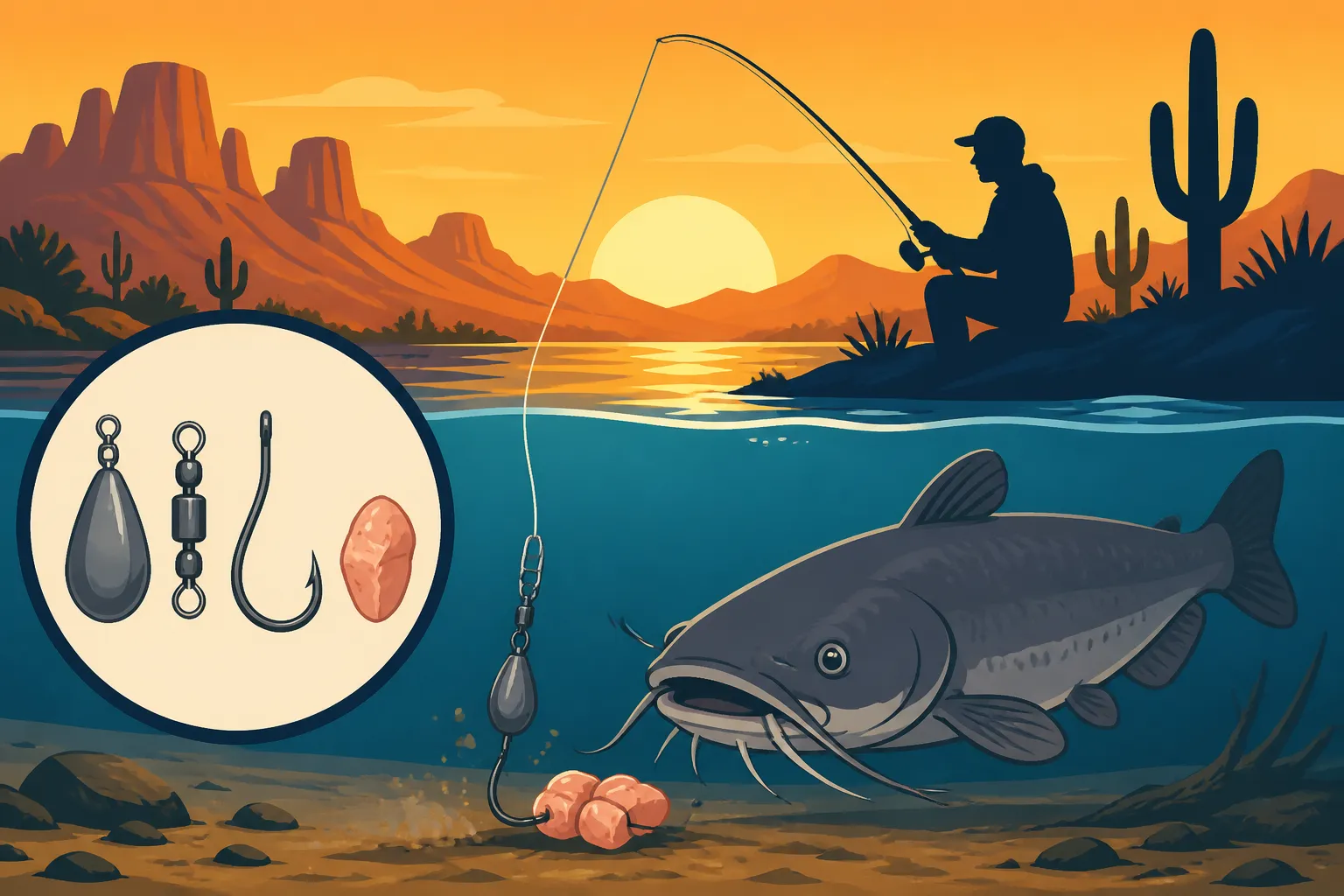
The Carolina rig is probably the most popular and versatile bottom fishing rig for catfish. It allows a fish to pick up the bait without immediately feeling the weight of the sinker, often resulting in a more confident bite.
How to Tie It:
- Thread an egg sinker onto your main line.
- Tie a barrel swivel onto the end of your main line. The sinker should slide freely on the main line above the swivel.
- Tie a fluorocarbon or monofilament leader (12-24 inches) to the other end of the barrel swivel.
- Tie your circle or Kahle hook to the end of the leader.
This rig is excellent for most situations, from still water to moderate current. The free-sliding sinker allows the bait to move more naturally with the current, while the fish can pick up the bait without resistance, making it perfect for targeting larger catfish that might be more wary. It's particularly effective when Fishing Around Submerged Timber or rocky structures where a fixed weight might snag more easily.
The Santee Cooper Rig
An evolution of the Carolina rig, the Santee Cooper rig is fantastic for keeping your bait slightly elevated off the bottom, making it more visible and preventing it from being buried in silt or mud.
How to Tie It:
- Tie a Carolina rig as described above (egg sinker, barrel swivel, leader, hook).
- The key difference is adding a small peg float (or crappie float) on the leader, about 2-6 inches above the hook. This float suspends your bait just above the bottom.
This rig is incredibly effective in murky water, over soft muddy bottoms, or when fishing near submerged grass or moss where your bait might otherwise disappear. The float acts like a little billboard, presenting your bait clearly to any cruising catfish. Many anglers find this setup invaluable in lakes like Alamo Lake or San Carlos Lake, which can have significant muddy or silty areas.
The Three-Way Swivel Rig
Also known as a bell sinker rig, this setup is excellent for fishing in strong currents, deeper water, or when you want to present multiple baits.
How to Tie It:
- Tie your main line to one eye of a three-way swivel.
- Tie a short leader (6-12 inches) with a heavy sinker (like a bell sinker or pyramid sinker) to the bottom eye of the swivel.
- Tie a longer leader (12-36 inches) with your hook to the remaining eye of the swivel.
This rig keeps your bait off the bottom while the heavy sinker anchors it firmly. It's very popular for river fishing, such as sections of the Salt River or the Colorado River, where currents can be a real challenge. You can even experiment with two separate hook leaders from the three-way swivel, offering different baits or presentations. Just be mindful of snagging if fishing in heavy cover.
Best Baits and How to Present Them for Bottom Fishing
No matter how perfect your rig is, it's only as good as the bait on the hook. Catfish are opportunistic scavengers and predators, and they have an incredible sense of smell.
Top Baits for Arizona Catfish
When bottom fishing in Arizona, you've got a fantastic array of bait options that catfish simply can't resist.
- Cut Bait: This is a classic for a reason. Shad, carp, bluegill, or even hot dogs cut into chunks release a strong scent that catfish home in on. Fresh cut bait is usually best, and if you can use baitfish from the water you're fishing, even better. For larger flatheads, a whole live bluegill or small carp might be more appealing.
- Prepared "Stink" Baits: There are many commercially available prepared baits, often in dip or punch bait forms, that are formulated with powerful scents designed to attract catfish. Brands like Catfish Charlie or Sonny's Super Sticky are popular. These are great for channel catfish, especially in urban community lakes.
- Worms: Nightcrawlers or even red worms can be very effective, especially for smaller channel cats and bullheads. A big juicy gob of worms on a hook can be irresistible.
- Hot Dogs/Chicken Livers: These common household items are surprisingly effective and very easy to come by. Chicken livers are especially good for scent dispersion but can be tricky to keep on the hook. Curing them in advance or wrapping them with a little bit of fishing thread can help.
For a comprehensive guide, be sure to check out Best Bait for Catfish in Arizona. When selecting your bait, always consider the size of the hook and the general size of the catfish you're targeting.
Effectively Presenting Your Bait
Presentation is just as vital as bait choice.
- Keep it on the Bottom: This is fundamental. Ensure your sinker is heavy enough to hold your bait securely on the bottom, especially in wind or current.
- Scent Trail: Catfish rely heavily on their sense of smell. Cast your bait upstream (if in current) or upwind to allow the scent to drift naturally through the water column, attracting fish to your offering. Don't be afraid to occasionally move your bait a few feet to refresh the scent trail.
- Check Your Bait Regularly: Unlike bass fishing where you might retrieve and recast frequently, bottom fishing for catfish often involves letting your bait sit. However, checking your bait every 20-30 minutes is a good practice to ensure it's still on the hook, hasn't been picked clean by smaller fish, or isn't covered in weeds.
- Patience is a Virtue: Catfish bites can range from subtle taps to aggressive runs. Don't be too quick to set the hook, especially with circle hooks. Let the fish take the bait and move off before applying steady pressure. Many experienced anglers fishing for larger catfish will even use a rod holder and wait for the rod tip to bend hard or the line alarm to sound, indicating a serious bite. For night fishing, consider using glow sticks attached to your rod tip to help you see those bites. Our Night Fishing Techniques and Safety guide has more tips for after-dark angling.
When you've got your rod securely in a holder, the waiting game begins. This is where the right setup truly shines, allowing you to relax, knowing your bait is precisely where it needs to be, doing its job.
Advanced Tips for Maximizing Your Bottom Fishing Success
Once you've mastered the basic setup, there are always ways to refine your technique and increase your chances of landing more and bigger catfish in Arizona.
The Art of Scouting and Location
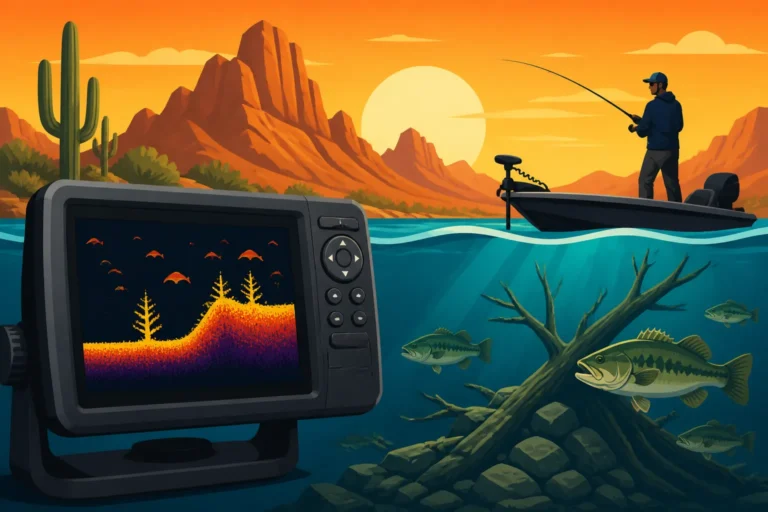
Even with the perfect rig, fishing in the wrong spot yields no results. Before you cast, spend some time scouting. If you're on a boat, use your fish finder to locate deep channels, submerged structure like old tree stumps or rock piles, and abrupt depth changes. These are prime holding areas for catfish. Pay attention to temperature breaks too; in hot Arizona summers, catfish will often seek out cooler, deeper water.
From shore, look for points that extend into deeper water, areas around bridge pilings, or sections where the bank has eroded, creating natural ledges and drop-offs. If you see signs of baitfish, catfish won't be far behind, as they are part of their diet, especially for flatheads. Even in our community lakes, look for aerators or deeper channels that provide cooler water and structure. Learning the seasonal movement patterns of catfish will give you an edge, as their locations change throughout the year.
Fine-Tuning Your Presentation
Sometimes, it's the little things that make a big difference. For example, if you're getting short strikes or your bait is being picked off, try increasing your bait size or switching to a tougher bait like a whole live bluegill for flatheads. If the current is strong, don't be afraid to increase your sinker weight to ensure your bait stays anchored. Conversely, in very still water, a lighter sinker and a longer leader might allow for a more natural bait presentation.
Consider the time of day and year. Catfish are often more active at night or during low light conditions, especially in the warm Arizona months. During these times, their guard is down, and they're more willing to cruise shallower areas to feed. For more specific methods, our Bottom Fishing Techniques for Catfish article can provide additional insights. Always be ready to adapt to the conditions you face, as no two fishing days are exactly alike.
Utilizing Scent and Attractants
Catfish have an incredibly powerful sense of smell, making scent a huge factor in their attraction. Beyond using naturally smelly baits like chicken livers or cut bait, you can enhance your presentation with commercial scent attractants. These often come in gels, sprays, or liquids that you can apply directly to your bait or even to a scent sponge on your rig.
When you're fishing a stationary bottom rig, the constant release of scent creates a "scent trail" that can draw catfish in from a distance. Reapply these attractants periodically, especially after a prolonged period in the water or if you've retrieved and recast. Think of it as leaving a breadcrumb trail in the water, guiding those whiskered warriors right to your hook.
Disclaimer
This article is for general informational purposes only and does not constitute professional advice. Laws, prices and regulations vary by location and change over time. Consult a qualified professional for guidance on your specific situation.