Best Setup for Drop Shot Fishing
There's nothing more frustrating than knowing bass are holding deep, perhaps hugging a submerged rock pile or hovering just off a steep ledge, and you just can't get your bait in front of them effectively with traditional methods. Arizona's desert lakes often present crystal-clear waters and pressured fish that demand a subtle, precise approach. This comprehensive guide will walk you through building the ultimate drop shot fishing setup, specifically tailored to help you pinpoint and entice those wary Arizona bass and other species.
The Art of Drop Shot Fishing in Arizona: Why It Works So Well
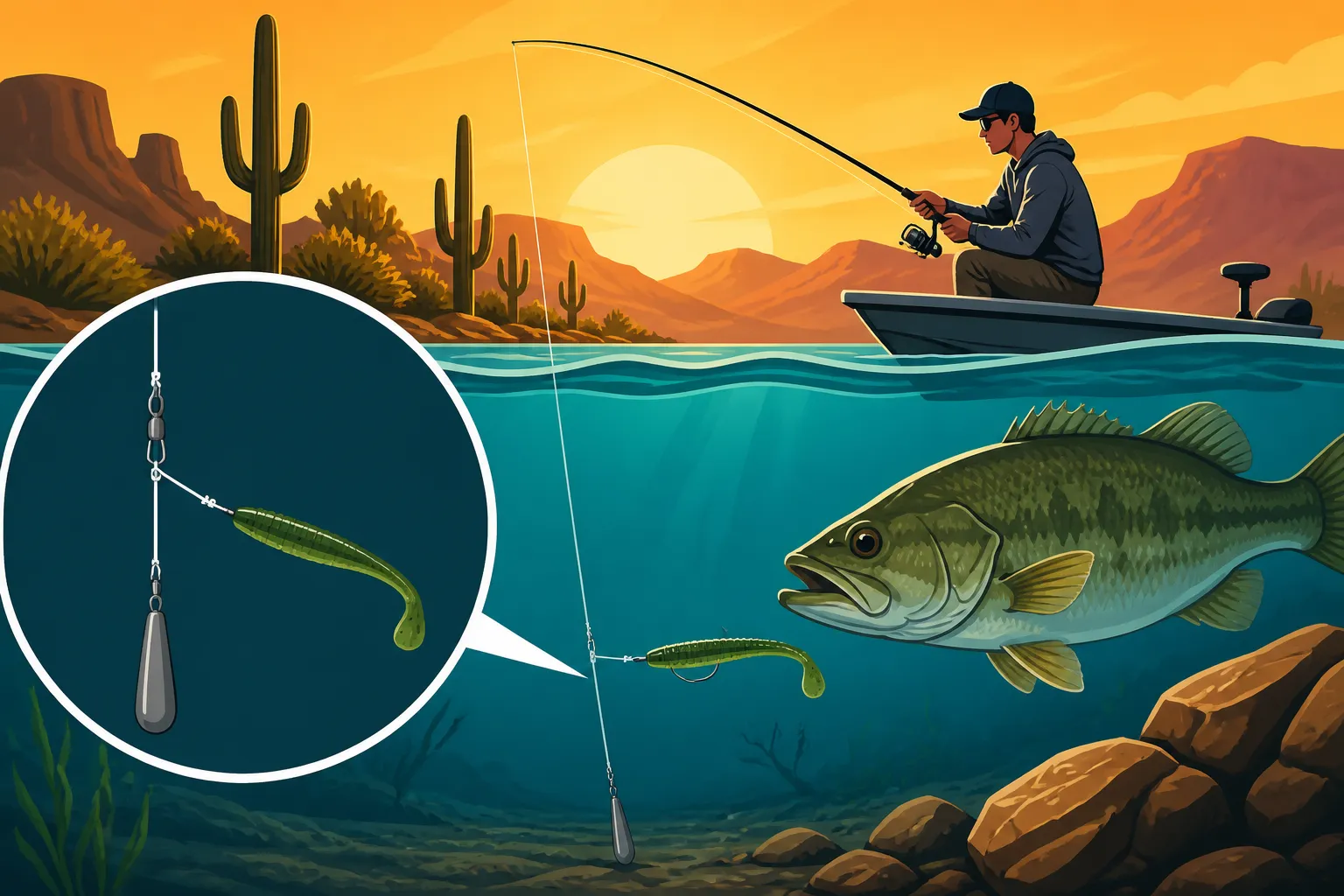
Drop shot fishing is a finesse technique that has truly revolutionized how anglers target bass, particularly in challenging conditions. Unlike a traditional Texas rig or Carolina rig where the weight is at the bottom and the hook is above it, the drop shot rig positions your weight below the hook, allowing your bait to suspend freely at a specific depth off the bottom. This might sound like a minor detail, but it makes a world of difference when you're trying to fool finicky fish.
Understanding the Drop Shot Advantage
The primary advantage of the drop shot rig lies in its ability to present a soft plastic bait in a completely natural, horizontal orientation. When you shake your rod tip, that bait quivers and dances in place, mimicking a dying or injured baitfish or an insect struggling in the water column. The weight keeps the bait precisely where you want it, even in current or wind, while allowing it maximum freedom of movement. This suspension often triggers strikes from fish that are otherwise uninterested in a bait dragging along the bottom. For species like smallmouth bass at Lake Powell or even largemouth bass holding on deep structure in places like Lake Pleasant, this subtle presentation is often the key to success. You're giving the fish an easy meal that doesn't look like it's fleeing, which can be irresistible.
Consider a scenario where bass are suspended 15 feet down over 30 feet of water, feeding on schools of shad. A jig might fall too quickly past them, and a crankbait might not reach that precise depth. With a drop shot, you can drop your weight to the bottom, reel up to the 15-foot mark, and fish that exact water column with surgical precision. This is particularly effective in Arizona's Best Bass Fishing Lakes in Arizona where fish often relate to vertical structure or thermoclines during hotter months.
When and Where to Use Drop Shot in Arizona
The versatility of the drop shot rig means it's effective in a wide range of Arizona fishing scenarios. It truly shines when targeting bass that are:
- Deep: If you're marking fish on your How to Read a Fish Finder for Structure at 20-50 feet, a drop shot is your best friend. The quick sink rate of the weight gets your bait down fast, and you can maintain contact even in windy conditions.
- Suspended: Fish that are not actively holding on the bottom but are instead hanging out in the middle of the water column are prime drop shot targets. Think of those offshore humps or brush piles in Roosevelt Lake where bass might be suspended just above the cover.
- Relating to Vertical Structure: Steep canyon walls at Canyon Lake or the vertical ledges of Lake Powell are perfect drop shot territory. You can slowly work your bait down the face of the structure, keeping it in the strike zone longer.
- Fussy or Heavily Pressured: In clear, often heavily fished lakes, bass can become extremely wary. The subtle, finesse presentation of a drop shot often tempts these fish when power fishing techniques fail.
- Cold Water Conditions: During the winter months, when bass are sluggish and less willing to chase, a slow, subtle drop shot can be incredibly effective. The bait just sits there, an easy target. Winter Bass Fishing Tactics in Arizona often revolve around this precise presentation.
You'll find the drop shot particularly useful at spots like Lake Havasu for smallmouth, or even the deeper sections of Apache Lake for largemouth. It’s a technique that demands patience but often delivers when other methods fall short, making it an indispensable part of your Best Bass Fishing Techniques for Arizona Lakes arsenal.
Assembling Your Perfect Drop Shot Arsenal
To truly excel at drop shot fishing, having the right gear is crucial. It's not about brute force, but about sensitivity, balance, and the ability to detect the slightest tap. Investing in quality components will significantly improve your success rate. Many of these items can be found readily at stores like Bass Pro Shops or through online retailers such as Amazon.
Rod and Reel Selection: The Foundation
Your rod and reel are the direct connection to your bait, so sensitivity is paramount.
The Ideal Drop Shot Rod
For drop shot fishing, a spinning rod is almost universally preferred due to its lighter line capabilities and superior casting distance with lighter baits and weights. You'll want a rod that is:
- Length: Typically, 6'6" to 7'6" is ideal. A longer rod provides better line control, longer casts, and more leverage when fighting a fish, which can be crucial when trying to get a bass out of Deep Water Structure Fishing Techniques.
- Power: Medium-Light (ML) to Medium (M) power is the sweet spot. This allows you to cast light weights and baits while still having enough backbone to drive the hook and control a decent-sized bass.
- Action: A Fast or Extra-Fast action tip is essential. This means the rod bends mostly in the tip section, giving you incredible sensitivity to feel those subtle bites and allowing for quick, precise hooksets. The fast tip also helps impart that delicate quiver to your bait.
Think of rods from brands known for their finesse applications. You might find a great selection of these at Bass Pro Shops, or by browsing online at Amazon. Remember, the goal is feel – you want to feel every pebble, every blade of grass, and certainly every bite. For more options, check out our guide on Best Fishing Rods for Bass in Arizona.
The Perfect Drop Shot Reel
Pair your sensitive rod with a high-quality spinning reel.
- Size: A 2000-series to 3000-series spinning reel is generally perfect. This size offers a good balance of line capacity, comfortable retrieve speed, and light weight, which contributes to the overall balance and sensitivity of your setup.
- Gear Ratio: A medium gear ratio, around 5.0:1 to 6.2:1, is versatile for drop shotting. You don't need a super-fast retrieve, as drop shotting is often a slow, methodical presentation.
- Smooth Drag: A super smooth drag system is critical. You'll be using lighter lines, so a sticky drag can lead to break-offs, especially when a good fish surges.
Look for a reel known for its smooth operation and reliability. Shimano and Daiwa are popular choices for finesse techniques, and both are widely available. You can compare models and read reviews on Amazon, or get hands-on advice at a local Bass Pro Shops. Don't forget to learn about Best Fishing Reels for Beginner Anglers in Arizona if you're just starting out.
Line Choices: Stealth and Strength
Line choice for drop shot fishing is a bit of a nuanced topic, as it largely depends on water clarity and the density of cover you're fishing.
Mainline: Braided or Fluorocarbon?
- Braided Line (Preferred for Mainline): Many anglers opt for 10-15 lb test braided line as their mainline. Braid offers incredible sensitivity (no stretch!), excellent casting distance with light lures, and superior knot strength. Its primary drawback is visibility, which is why a leader is almost always used.
- Fluorocarbon Line (Alternative Mainline): In extremely clear water with no abrasion, some anglers will use 6-8 lb test fluorocarbon directly as their mainline. Fluorocarbon is nearly invisible underwater and sinks, helping the bait get down. However, it has some stretch, which can reduce sensitivity, and it's more prone to wind knots on spinning reels if not spooled correctly.
Leader Material: The Stealth Connection
Regardless of your mainline choice, a fluorocarbon leader is almost non-negotiable for drop shot fishing in Arizona's often clear waters.
- Fluorocarbon Leader: Tie a 6-10 lb test fluorocarbon leader (generally 4-8 feet long) to your braided mainline using a strong knot like an FG knot or an Albright knot. Fluorocarbon's low visibility and abrasion resistance are perfect for presenting your bait naturally and protecting against sharp rocks or zebra mussels. The length of your leader can vary; a longer leader offers more invisibility, while a shorter one is easier to cast and manage.
For general advice on line choices, including specific brands and types suitable for various techniques, refer to our guide on Best Line for Bass Fishing.
Hooks, Weights, and Baits: The Business End
These are the components that directly interact with the fish and are vital for an effective presentation.
Drop Shot Hooks
The right hook is crucial for a good hookset and keeping the fish pinned.
- Aberdeen/Finesse Hooks: These are thin-wire hooks, usually size 1 to 4, with a wider gap. They are perfect for small, delicate plastics and typically hook fish cleanly in the lip, making for easy release. Brands like Gamakatsu and Owner make excellent finesse hooks.
- Wide Gap Hooks (Wacky/Neko Hooks): For slightly bulkier baits or when fishing around a bit more cover, a size 1 or 1/0 wide gap hook can be effective. These allow for easier rigging through the nose of the bait without tearing, and they still offer good hook penetration.
The key is to match the hook size to your chosen bait. You want the bait to have maximum natural movement without being hindered by an oversized hook.
Drop Shot Weights
The weight's job is to get your bait down and hold it there, but it also provides crucial feedback through your rod.
- Weight Shape:
- Cylinder/Pencil Weights: These are long and slender, making them ideal for fishing around rocks, brush, or sparse vegetation. They are less prone to snagging.
- Round/Teardrop Weights: These are more versatile and are often preferred for open water or sandy bottoms. They provide a more distinct feel on the bottom.
- Weight Material:
- Lead: Traditional and affordable.
- Tungsten: More expensive but significantly denser. This means a smaller profile for the same weight, and more importantly, vastly superior sensitivity. You'll feel every bottom contour with tungsten.
- Weight Size: The size of your weight depends on depth, wind, and current.
- 1/8 oz to 1/4 oz: Ideal for shallower water (under 20 feet) or light wind.
- 3/8 oz to 1/2 oz: Most commonly used for deeper water (20-40 feet) and moderate wind.
- 3/4 oz+: For extreme depths or heavy wind/current.
Always opt for weights with a line clip or swivel at the top, allowing for quick changes in weight size and preventing line twist. You can find a good selection of both lead and tungsten drop shot weights at Bass Pro Shops or online at Amazon.
Drop Shot Baits
The beauty of drop shotting is the sheer variety of soft plastics you can use. The key is to select baits that have subtle action and are relatively small.
- Finesse Worms: These slender, straight-tail worms (3-6 inches) are a staple. Their subtle quiver is irresistible. Examples include Roboworm Straight Tail Worms or Yamamoto Senko Finesse worms.
- Small Swimbaits/Flukes: Soft plastic minnows or flukes (2-4 inches) can be deadly, especially when fish are targeting baitfish. The Keitech Swing Impact Fat or Zoom Super Fluke Jr. are popular choices.
- Creature Baits/Craws: Very small creature baits or craws (2-3 inches) can imitate small crawfish or bottom-dwelling invertebrates. These are particularly effective around rocky areas.
- Maki Sticks/Stick Baits: These thin, often salt-impregnated stick baits provide a very natural, subtle fall and enticing wobble.
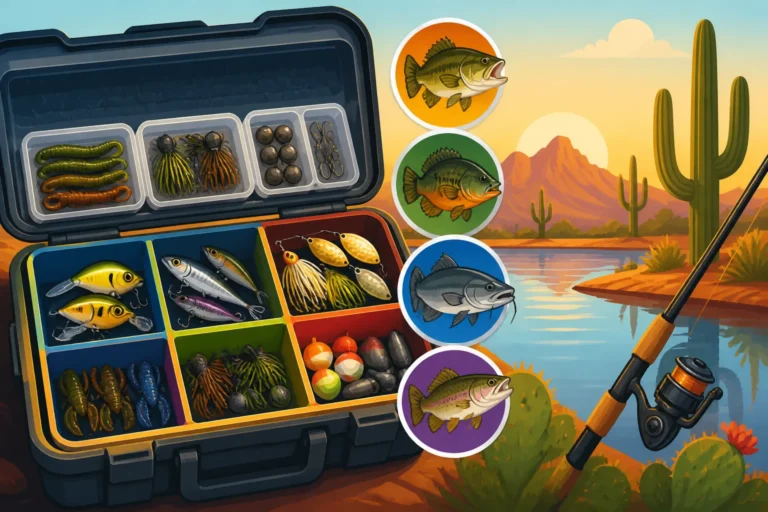
The color of your bait should match the forage in the lake and water clarity. Natural greens, browns, and baitfish patterns (like clear with silver flake) are always a good starting point. You'll find a massive array of options, colors, and brands in stores like Bass Pro Shops and online at Amazon, helping you stock your tackle box for Best Baits and Lures for Arizona Fishing.
Step-by-Step: Rigging Your Drop Shot for Success
Getting the rig tied correctly is essential for optimal performance and to prevent frustrating break-offs. It's not complicated, but it does require attention to detail.
Tying the Palomar Knot for Drop Shot
The Palomar knot is widely considered one of the strongest and most reliable knots for tying a hook to a line, especially when using braided or fluorocarbon line. It's particularly useful for drop shotting because it allows the hook to stand out horizontally from the main line, which is crucial for the bait's natural presentation.
- Double the Line: Take about 8-12 inches of your fluorocarbon leader and double it, passing the loop through the eye of your drop shot hook.
- Overhand Knot: Tie a simple overhand knot with the doubled line, making sure the hook hangs loosely from the bottom of the loop.
- Pass the Hook Through: Pull the hook itself through the large loop you just created. Ensure this loop is big enough to pass the hook through easily.
- Tighten Carefully: Moisten the line and slowly pull both ends of the main line (the tag end and the standing line) to tighten the knot firmly around the eye of the hook.
- Orient the Hook: Now, here's the critical part for drop shot: after the knot is cinched down, take the tag end that extends from the hook eye (the one that will go to your weight) and pass it back up through the hook eye from the top side. This will make your hook point stand up, perpendicular to the line, ensuring your bait presents horizontally.
- Trim: Trim the tag end that now goes up through the hook eye to leave about 1/4 inch, if desired, but the main tag end going to your weight needs to be much longer.
This simple adjustment after tying the Palomar knot is what gives the drop shot its signature horizontal bait presentation.
Attaching Your Weight and Bait
With your hook securely tied and oriented, the rest of the rig comes together quickly.
Securing the Drop Shot Weight
Take the long tag end of your fluorocarbon leader that extends from the hook eye and tie on your drop shot weight. The length of this tag end dictates how high your bait will suspend off the bottom.
- Length: A common length for the tag end (from the hook to the weight) is 6-18 inches.
- Shorter (6-10 inches): Use a shorter leader when fish are tight to the bottom, when you want your bait to occasionally touch the bottom, or when fishing sparse cover.
- Longer (12-18 inches+): Use a longer leader when fish are suspended higher off the bottom, when you're fishing over taller grass or submerged brush, or when you want the bait to be well above any potential snags.
The beauty of drop shot weights with clips is that you don't even need to tie a knot for the weight. You simply thread the tag end through the clip, and it holds firmly. This allows for quick adjustments to the length of your dropper line or to change weight sizes as conditions dictate.
Rigging Your Soft Plastic Bait
The goal is a natural, subtle presentation.
- Nose Hooking (Most Common): The most common and effective way to rig a drop shot bait is to simply nose-hook it. Pass the hook point through the very tip of the bait's nose, making sure it exits cleanly. This allows the entire body of the worm or minnow to wiggle freely. This method is best for open water or light cover.
- Wacky Rigging: For certain worms, you can wacky rig them (hooked through the middle) on a drop shot. This gives a different action, with both ends of the worm wiggling. This is less common but can be effective on very finicky fish.
- Texas Rigging (Around Heavy Cover): In instances where you are fishing particularly heavy brush or thick weeds, you can Texas rig your soft plastic on a drop shot hook. This is less common because it can impede the free movement of the bait, but it greatly reduces snags. You'd typically use a specific drop shot hook designed for Texas rigging, which has a slightly wider gap and keeper.
Once your bait is on, you're ready to fish! This setup is highly effective for Largemouth Bass Fishing Guide for Arizona and Smallmouth Bass Fishing Guide for Arizona in a variety of conditions.
Mastering Drop Shot Techniques on Arizona's Lakes
Having the right gear is only half the battle; knowing how to present your drop shot rig effectively is what truly brings results. The beauty of this technique is its simplicity, but subtle nuances can make all the difference.
Key Presentations and Retrievals
The core of drop shot fishing involves keeping the bait in one place and imparting subtle action.
The "Dead Stick" and "Shake"
- Dead Stick: Often, the most effective presentation is simply to cast your rig out, let the weight sink to the bottom, and then do absolutely nothing. Just let the bait sit there, suspended. The subtle movement of the water, or even boat movement, can be enough to give the bait a natural look. This "dead stick" approach is deadly when fish are extremely lethargic or when you need a perfectly still presentation. Keep a semi-slack line and watch for any twitch or movement.
- Subtle Shake: The classic drop shot retrieve involves letting your weight hit bottom, then reeling up any slack until your line is taut. Then, with your rod tip pointed slightly down towards the water, gently shake the rod tip. This makes the bait quiver and dance in place, while the weight stays put. Imagine a struggling baitfish or insect. After a few shakes, pause, then shake again. This is excellent for covering discrete pieces of structure like a single rock or a small brush pile.
- Short Hops/Drags: Sometimes, slowly dragging the weight a few inches across the bottom, then pausing and shaking, can trigger bites. This mimics a baitfish trying to move along the bottom. This works well on relatively clean bottom composition, like gravel or sand.
Always pay close attention to what the fish tell you. If they're hitting on the shake, keep shaking. If they prefer the dead stick, let it sit. The most important thing is to maintain constant contact with your weight and bait, feeling for any abnormality.
Adapting to Different Arizona Conditions
Arizona's diverse fishing environments, from high-desert reservoirs to urban community lakes, demand adaptability.
Clear Water and Pressured Fish
Many of Arizona's lakes, especially the larger reservoirs, boast incredible water clarity for extended periods. This means stealth is paramount.
- Lighter Line: Opt for the lighter end of your fluorocarbon leader range (6-8 lb test) to enhance invisibility.
- Natural Colors: Stick to natural bait colors like greens, browns, and clear with flake. Avoid anything too bright or flashy unless you know the fish are actively feeding on vibrant forage.
- Longer Casts: Make longer casts to keep your boat or body further away from the fish, minimizing your presence. This is where a longer rod really helps.
- Subtle Action: Lean more towards the "dead stick" or very subtle shakes. Overly aggressive action can spook wary fish in clear water.
Consider fishing early mornings or late evenings when the light is lower and fish might feel more comfortable venturing out. Our guide on How to Fish Arizona's Desert Lakes offers more insights into these challenging environments.
Deep Water and Structure Fishing
Arizona is famous for its deep, canyon-bound lakes, which often hold fish at significant depths.
- Heavier Weights: Don't be afraid to use heavier drop shot weights (3/8 oz to 1/2 oz, or even 3/4 oz) to get down quickly and maintain bottom contact in deep water or wind. Tungsten weights are especially advantageous here for enhanced feel.
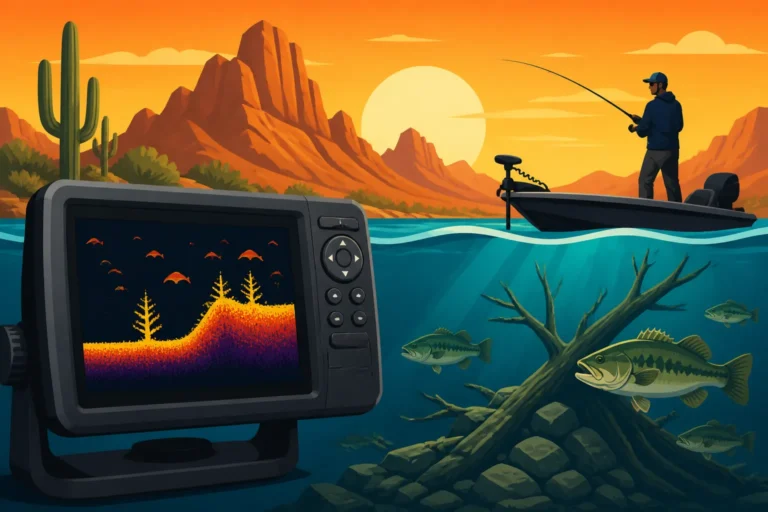
- Electronics are Key: Your fish finder becomes an indispensable tool. Use it to locate structure like humps, ledges, submerged timber, and most importantly, the fish themselves. Drop shot directly onto or just above marked fish. For detailed help, consult How to Read a Fish Finder for Structure.
- Vertical Presentation: Often, you'll be fishing almost directly beneath your boat (vertical jigging style). Use your trolling motor to hover over fish or slowly drift along contours, keeping your bait in the strike zone. This is a crucial aspect of Deep Water Structure Fishing Techniques.
- Feel the Bottom: With a good rod and tungsten weight, you should be able to discern the difference between rock, sand, and mud. Fish often relate to changes in bottom composition.
The drop shot is an incredibly versatile and effective technique for Arizona anglers. With the right setup and a commitment to subtle presentations, you'll be well-equipped to unlock consistent success on our desert lakes.
| Component | Recommendation | Why It Matters |
|---|---|---|
| Rod | 6'6" – 7'6" Spinning, Medium-Light to Medium power, Fast or Extra-Fast action | Sensitivity to feel bites, power to fight fish, tip for bait action, casting light lures |
| Reel | 2000-3000 Series Spinning, 5.0:1 – 6.2:1 gear ratio, Smooth Drag | Balanced feel, line capacity, controlled retrieve, prevents break-offs on light line |
| Mainline | 10-15 lb Braided Line | No stretch for maximum sensitivity, strong, casts far |
| Leader | 6-10 lb Fluorocarbon (4-8 ft length) | Invisible to fish, abrasion resistance, acts as shock absorber |
| Hook | Size 1 to 4 Finesse/Aberdeen or Wide Gap (matched to bait size) | Ensures natural bait presentation, clean hooksets, easy release |
| Weight | 1/8 oz to 1/2 oz Tungsten (cylinder/teardrop), with swivel/clip | Quick sink, maintains bottom contact, high sensitivity, quick changes, snag-resistant |
| Bait | 3-6" Finesse Worms, small Swimbaits/Flukes, small Creature Baits, Maki Sticks | Subtle action, natural appearance, entices wary fish |
Disclaimer
This article is for general informational purposes only and does not constitute professional advice. Laws, prices and regulations vary by location and change over time. Consult a qualified professional for guidance on your specific situation.