Best Setup for Trolling for Striped Bass
One of the biggest frustrations for anglers new to Arizona's vast reservoirs like Lake Powell or Lake Pleasant is just how overwhelming those immense bodies of water can feel. You've heard about the legendary striped bass fishing, but finding those elusive schools in such open water often feels like searching for a needle in a haystack. This comprehensive guide will break down the ideal setup for trolling for striped bass, giving you the best chance to cover water efficiently and put more of those hard-fighting fish in your boat.
Understanding Striped Bass and Their Habitat in Arizona
Striped bass are truly a unique sportfish, known for their powerful runs and schooling behavior. In Arizona, they thrive in our large, deep, warm-water impoundments. If you're looking to consistently put stripers in the boat, understanding their environment and habits is half the battle.
Where Arizona Stripers Live
When we talk about striped bass in Arizona, we're primarily looking at the mighty Colorado River chain of lakes. Lake Powell Arizona Fishing Guide is often considered the undisputed king for stripers, famous for its abundant populations and the sheer size some of these fish can reach. Lake Mead, further downstream, also holds a significant striper population, as does Lake Havasu, though techniques might vary slightly. These reservoirs offer miles upon miles of open water, deep channels, steep canyon walls, and submerged structures – all prime habitat for stripers. They are constantly on the move, chasing baitfish like threadfin shad, making them a challenging but rewarding target. These fish are not usually found in small, shallow ponds; they need that expansive, nutrient-rich environment to grow large and healthy.
Why Trolling is Effective for Stripers
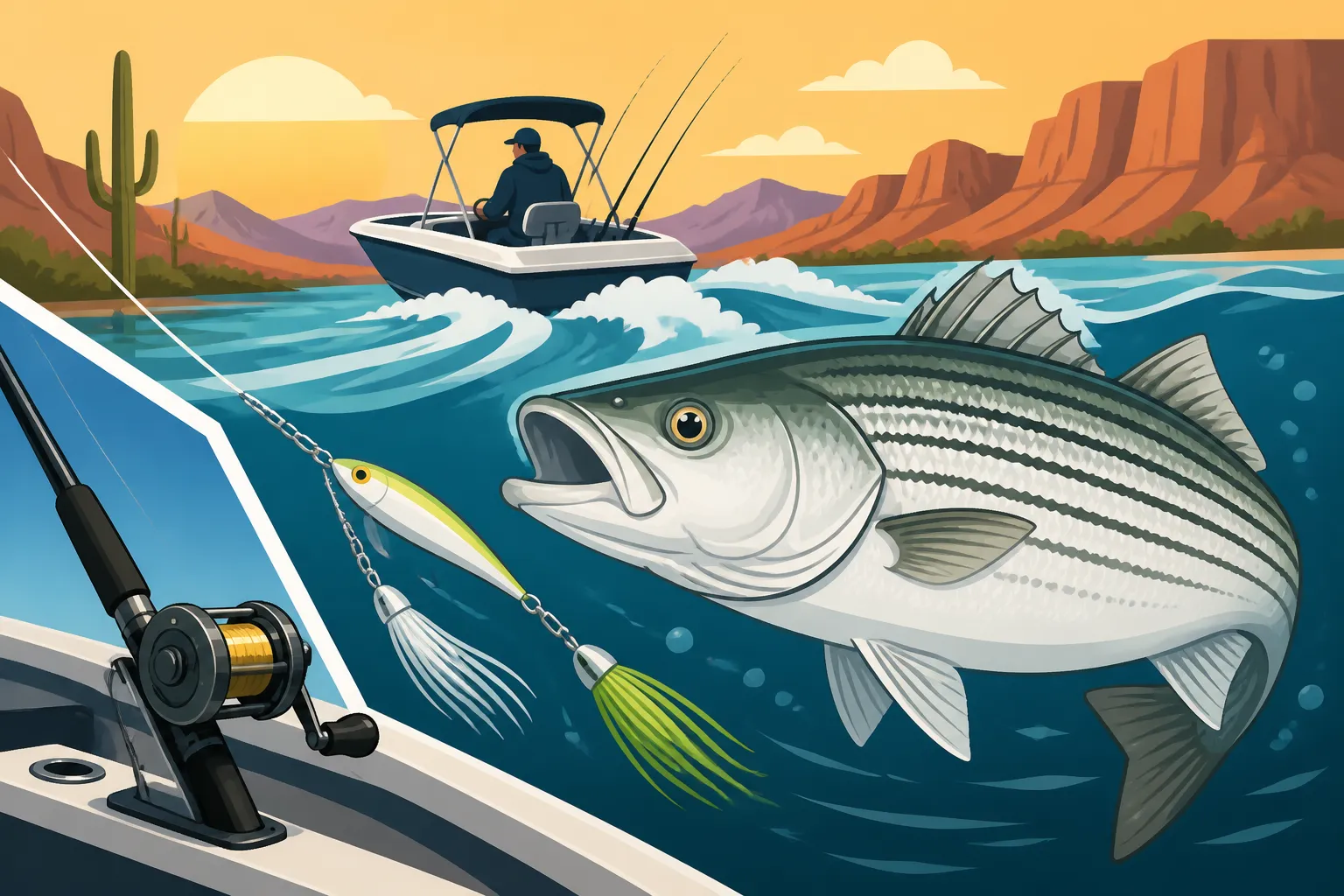
Given the vastness of these Arizona lakes and the nomadic nature of striped bass, trolling is often the most effective method to locate and catch them. Think of it this way: instead of casting to one small spot and hoping a school passes by, trolling allows you to systematically cover huge areas of water, presenting your lures to a wider range of fish. You can control your depth with precision, targeting the specific thermocline where stripers are most active, or running lures just above known submerged structures. This method is particularly effective when the fish aren't actively boiling on the surface – a common scenario during the hottest parts of the year or in deeper water. It's about taking the search-and-find mission to the fish, rather than waiting for them to come to you. You're effectively bringing your bait to their dinner table, wherever that might be at the moment.
The Essential Trolling Rod and Reel Setup
Having the right rod and reel is paramount for effective striper trolling. You need gear that can handle the sustained stress of pulling lures, the power of a hard-fighting striper, and the potential for multiple fish at once.
Choosing the Right Rod
For trolling for striped bass in Arizona, you're generally looking for a rod that offers a good balance of backbone for fighting fish and enough give in the tip to absorb the shock of lures being pulled through the water. A medium-heavy to heavy power rod, typically 6 to 8 feet long, is a fantastic choice. The longer length helps spread out multiple lines if you're running a spread, and provides better leverage when a big striper decides to run. Look for a moderate-fast action, which means the rod will bend mostly in the upper half. This action is forgiving enough to prevent hooks from pulling out when a fish strikes at speed, but still has plenty of power in the lower section to really lean into a fight. Fiberglass or composite rods are often favored for trolling due to their durability and parabolic bend under load. You don't want something too stiff, as that can make it harder to detect bites or might even rip the lure out of a striper's mouth if they just lightly mouth it. If you're looking for a good all-around option, brands like Ugly Stik or Penn often have durable, affordable trolling rods that stand up to the challenge.
Selecting the Ideal Reel
When it comes to reels for trolling stripers, conventional reels are generally preferred over spinning reels for a few key reasons. They offer superior drag systems, which is critical when a large striper makes a powerful run, and they have excellent line capacity. A good conventional reel, often in a 20-30 pound class, will give you plenty of room for heavy monofilament or braided line. Look for models with a smooth, consistent star drag or lever drag system that can handle sustained pressure without faltering. Gear ratio is less critical than with casting reels, but something in the 4:1 to 5:1 range is common, providing a good balance of retrieval speed and power. Many anglers also opt for reels with a line counter feature. This is an absolute game-changer for trolling, allowing you to precisely replicate your most successful presentations by knowing exactly how much line you have out. This consistency is key to finding and staying on fish, especially when you figure out that magic depth. Without a line counter, you're often guessing.
Line Selection
Your choice of fishing line plays a crucial role in your trolling success, influencing everything from lure depth to how well you fight a fish.
-
Monofilament: This is a popular choice for many striper trollers, especially for the main line. Mono has a good amount of stretch, which acts like a shock absorber when a fish hits a trolled lure, preventing hooks from tearing out. It also has a natural buoyancy that can be beneficial when you don't want your lure to sink too quickly. For stripers, a 20-30 pound test monofilament is a solid baseline. It's relatively inexpensive, easy to tie knots with, and widely available.
-
Fluorocarbon: While less commonly used as a main line for trolling due to its cost and stiffness, fluorocarbon is an excellent choice for leaders. Its near-invisibility underwater is a huge advantage in clear Arizona lakes, and its abrasion resistance helps against rocky structures or toothy fish. For leaders, you might step up to 30-50 pound test, depending on the size of the stripers you're targeting.
-
Braided Line: Braided line, with its no-stretch properties and thin diameter for its breaking strength, is fantastic for sensitivity and for cutting through the water to achieve greater depths with less line out. However, its lack of stretch means you'll need a rod with more give to absorb the shock of strikes. A braided main line in the 30-50 pound test range, often with a fluorocarbon or monofilament leader, gives you excellent strength and feel. It's especially useful when using planer boards or downriggers, where sensitivity to lure action is important. Keep in mind that How to Choose Line Weight for Striped Bass will depend heavily on the specific techniques you employ and the size of fish you anticipate.
Terminal Tackle and Lures for Trolling
Once your rod, reel, and line are sorted, it's time to think about what goes in the water. Terminal tackle and lures are where you really connect with the fish.
Favorite Trolling Lures for Arizona Stripers
Striped bass are aggressive predators, and they'll strike a variety of lures when trolled effectively. The key is to match the hatch (what baitfish they're eating) and fish at the right depth.
- Crankbaits: Deep-diving crankbaits are absolutely essential. Lures that can reach depths of 10-30 feet or more are critical for targeting stripers when they're holding deep or suspended. Colors that imitate threadfin shad – chrome, white, blue/silver – are perennial favorites. Experiment with different sizes, from 3 to 6 inches, to see what the fish prefer on any given day. Brands like Bomber, Rapala, and Lucky Craft offer excellent options. The vibration and flash of a crankbait are incredibly effective at attracting stripers from a distance.
- Swimbaits: Soft plastic swimbaits, rigged on a weighted jig head or as a paddle-tail swimbait, can be incredibly lifelike and enticing. These are especially effective when stripers are feeding on larger baitfish or when you need a more subtle presentation. You can vary the weight of your jig head to control depth. Best Swimbait Size for Striped Bass often mimics the local baitfish, so observe any boils or local reports to gauge size.
- Spoons: Casting spoons, especially heavy ones, can be effective when trolled at higher speeds or in conjunction with downriggers. Their erratic fluttering action is irresistible to hungry stripers. Silver, gold, and white are common colors.
- Umbrella Rigs: For a true spread, an umbrella rig simulates a school of baitfish. These multi-lure rigs can be incredibly effective, but they are heavier and create a lot of drag, requiring heavier tackle. Make sure to check regulations as some states have limits on the number of hooks allowed per rig.
Downriggers and Lead Core Line
To consistently reach the deeper depths where stripers often lurk, you'll want to employ some specialized gear for depth control.
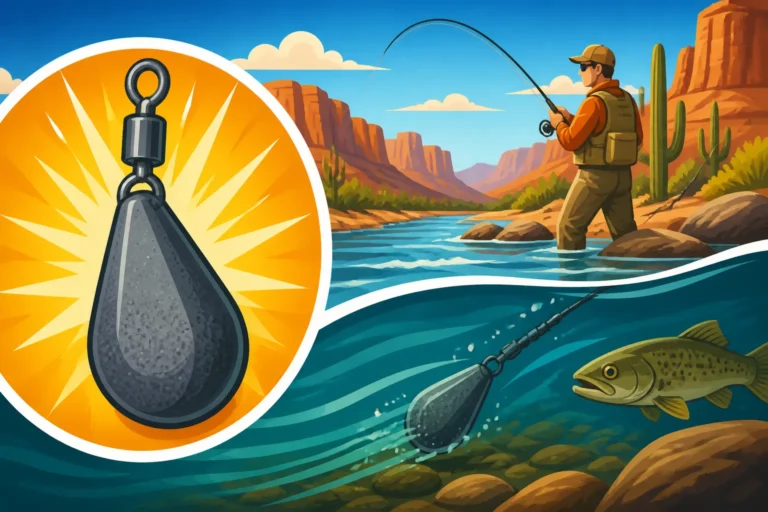
- Downriggers: These are mechanical devices that use a heavy weight (called a cannonball) to take your fishing line and lure down to a precise depth, typically secured with a release clip. When a fish strikes, the line pops free from the clip, and you fight the fish directly without the weight. Downriggers allow you to fish light lures at extreme depths without adding heavy weights directly to your line, which gives your lure a much more natural action. They are particularly useful for targeting schools suspended over deep water.
- Lead Core Line: This specialized line has a lead core wrapped in a braided sheath. The lead gives it weight, causing it to sink. Each color change (usually every 10 yards) typically indicates a certain depth at a given trolling speed. For example, you might achieve 5 feet of depth per color. Best Crankbait Depth for Deep Structure often requires these tools to get your lure in the strike zone. It's a bit of an art form to master, but incredibly effective for covering a range of depths in one pass.
Essential Accessories
Don't overlook the small but mighty accessories that complete your trolling setup.
- Leaders: As mentioned, fluorocarbon leaders are excellent for their invisibility and abrasion resistance. They create a buffer between your main line and lure, absorbing some shock and protecting your more expensive main line. Use high-quality swivels to connect your main line to your leader to prevent line twist.
- Swivels and Snaps: Invest in good ball-bearing swivels and heavy-duty snaps. These prevent line twist caused by rotating lures and allow for quick lure changes, which is vital for adapting to changing conditions.
- Planer Boards: These devices are designed to carry your fishing line out to the sides of your boat, allowing you to troll more lines simultaneously without tangles and cover an even wider swath of water. This is especially useful in open water and when stripers are spread out.
- Rod Holders: Proper rod holders are non-negotiable for trolling. You'll need sturdy, securely mounted rod holders to keep your rods in place and absorb the force of a striper strike. Make sure they can be adjusted to different angles to help spread your lines. You can find quality options at Bass Pro Shops or through online retailers like Amazon.
| Component | Recommended Features | Why it Matters for Trolling Stripers |
|---|---|---|
| Rod | 6-8 feet, Medium-Heavy to Heavy Power, Moderate-Fast Action, Fiberglass/Composite | Handles big fish, absorbs shock, casts effectively for trolling spread |
| Reel | Conventional (20-30 lb class), High Line Capacity, Smooth Drag, Line Counter | Strong drag for powerful runs, holds lots of line, precise depth control |
| Main Line | 20-30 lb Monofilament OR 30-50 lb Braided | Mono for stretch/shock absorption; Braid for depth/sensitivity |
| Leader | 30-50 lb Fluorocarbon | Near-invisible, abrasion resistant, protects main line |
| Lures | Deep-diving Crankbaits (shad patterns), Swimbaits, Spoons, Umbrella Rigs | Matches baitfish, reaches depths, mimics schools |
| Depth Control | Downriggers, Lead Core Line | Gets lures to precise depths where stripers hold |
| Accessories | Ball-bearing Swivels, Heavy Snaps, Planer Boards, Sturdy Rod Holders | Prevents line twist, quick lure changes, spreads lines, secure rods |
Boat and Electronics Considerations for Striped Bass Trolling
Your boat and its electronic systems are extensions of your trolling setup, crucial for navigation, fish finding, and maintaining optimal speed.
Ideal Boat Features
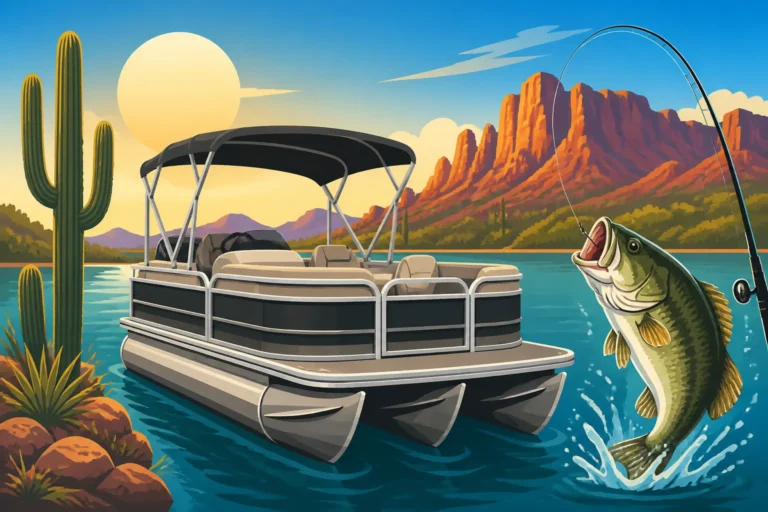
When tackling large Arizona lakes like Powell, Roosevelt, or Pleasant for striped bass, your boat plays a huge role in your comfort and success. You'll want a boat that's stable and large enough to handle potentially choppy water, especially if afternoon winds pick up. A vessel with ample deck space is critical for setting up multiple trolling rods, handling fish, and moving around comfortably. Consider boats with a deep V-hull for smooth riding in rough conditions. Storage is also important for all your tackle, coolers, and safety gear. A good 18-24 foot center console or walk-around cuddy cabin often fits the bill perfectly for serious striper trolling, offering a good balance of space, stability, and versatility for navigating big water. While smaller boats can certainly troll, they limit your ability to spread lines and handle rough conditions. Refer to a Best Boats for Arizona Lakes guide for broader considerations on vessel types.
The Role of Fish Finders and GPS
Modern electronics are invaluable for effective striper trolling. Trying to troll effectively without a good fish finder and GPS is like driving blindfolded.
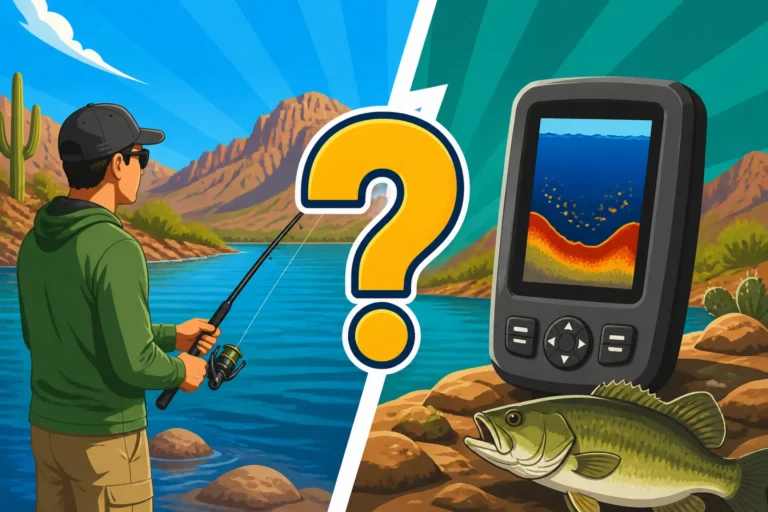
- Fish Finders (Sonar): A high-quality fish finder is your eyes beneath the surface. You'll use it to locate schools of baitfish, identify submerged structures where stripers might ambush prey, and directly mark suspended striped bass. Look for units with powerful transducers and high-resolution screens. Features like side imaging or down imaging can be incredibly helpful for spotting fish and structure away from directly under the boat, allowing you to adjust your trolling passes. Understanding How to Read a Fish Finder for Bass is a skill you'll develop, but the right equipment makes it much easier to interpret what you're seeing.
- GPS (Global Positioning System): Integrated GPS is essential for navigating vast lakes, marking successful trolling passes, and pinpointing waypoints for structure or fish sightings. You can save "tracks" of your productive trolling paths, allowing you to return to them later. It's also vital for safety, helping you navigate through canyons or back to the boat ramp, especially if weather conditions change. Many modern units combine fish finder and GPS functionalities into one display for seamless integration.
Trolling Motors and Power
Maintaining a consistent trolling speed is critical for getting your lures to run at their intended depths and for enticing strikes. Your main outboard engine can certainly be used for trolling, but sometimes a dedicated trolling motor offers more precise control.
- Electric Trolling Motors: For many anglers, especially on smaller boats, a bow-mounted electric trolling motor is a fantastic tool. It allows for very slow, precise speed control, quiet operation (which can be important for spooky fish), and hands-free steering with a remote or foot pedal. This frees you up to manage rods and lures. Ensure you have enough battery power for a full day of use.
- Kicker Motors: On larger boats, a small outboard "kicker" motor, typically 9.9 to 15 horsepower, is often used alongside the main engine for trolling. These motors are fuel-efficient and designed to run at slow speeds for extended periods, providing consistent propulsion without putting excessive hours on your larger engine.
Regardless of your setup, it's a good idea to understand Boating Safety Gear Requirements in Arizona before heading out, ensuring your vessel is properly equipped for any situation.
Trolling for striped bass in Arizona's magnificent lakes is an exhilarating experience, offering the chance to catch powerful fish in breathtaking surroundings. By assembling the right rod, reel, line, lures, and complementing them with appropriate boat and electronic gear, you'll be well on your way to mastering this productive technique. Remember, consistency in depth and speed, combined with a willingness to experiment, will lead to the most success. So get out there, enjoy the incredible waters, and tight lines!
Disclaimer
This article is for general informational purposes only and does not constitute professional advice. Laws, prices and regulations vary by location and change over time. Consult a qualified professional for guidance on your specific situation.