How to Fish During a Striper Boil
There's nothing quite like the heart-pounding rush of witnessing a striper boil erupt right before your eyes – a chaotic surface explosion of water, scales, and hungry fish. For many Arizona anglers, the frustration comes from seeing this incredible phenomenon but not knowing how to effectively capitalize on it, often watching the feeding frenzy dissipate before they can even get a lure in the water. This guide is all about equipping you with the knowledge and tactics to successfully target and catch striped bass when they are actively boiling, turning those fleeting moments of chaos into memorable catches.
Understanding the Phenomenon of a Striper Boil
Before you can effectively fish a striper boil, you need to truly understand what's happening beneath and on the surface. It's more than just fish splashing; it's a meticulously orchestrated feeding event driven by instinct and opportunity. Knowing the 'why' behind the 'what' can give you a significant advantage.
The Science Behind the Frenzy
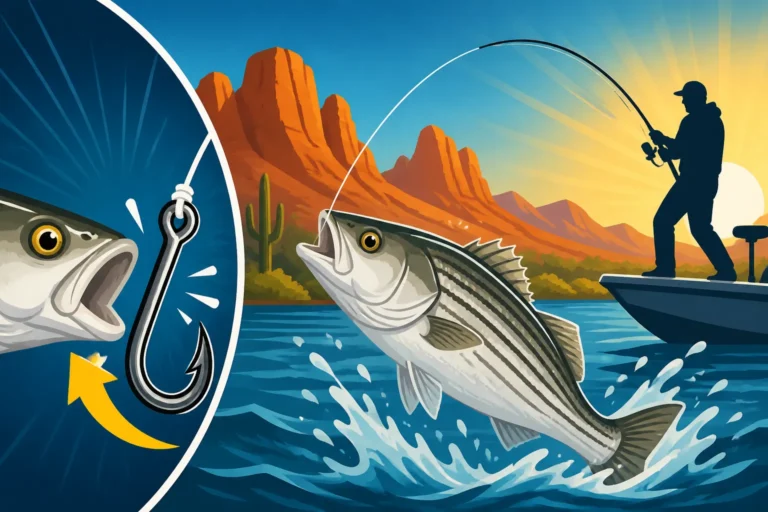
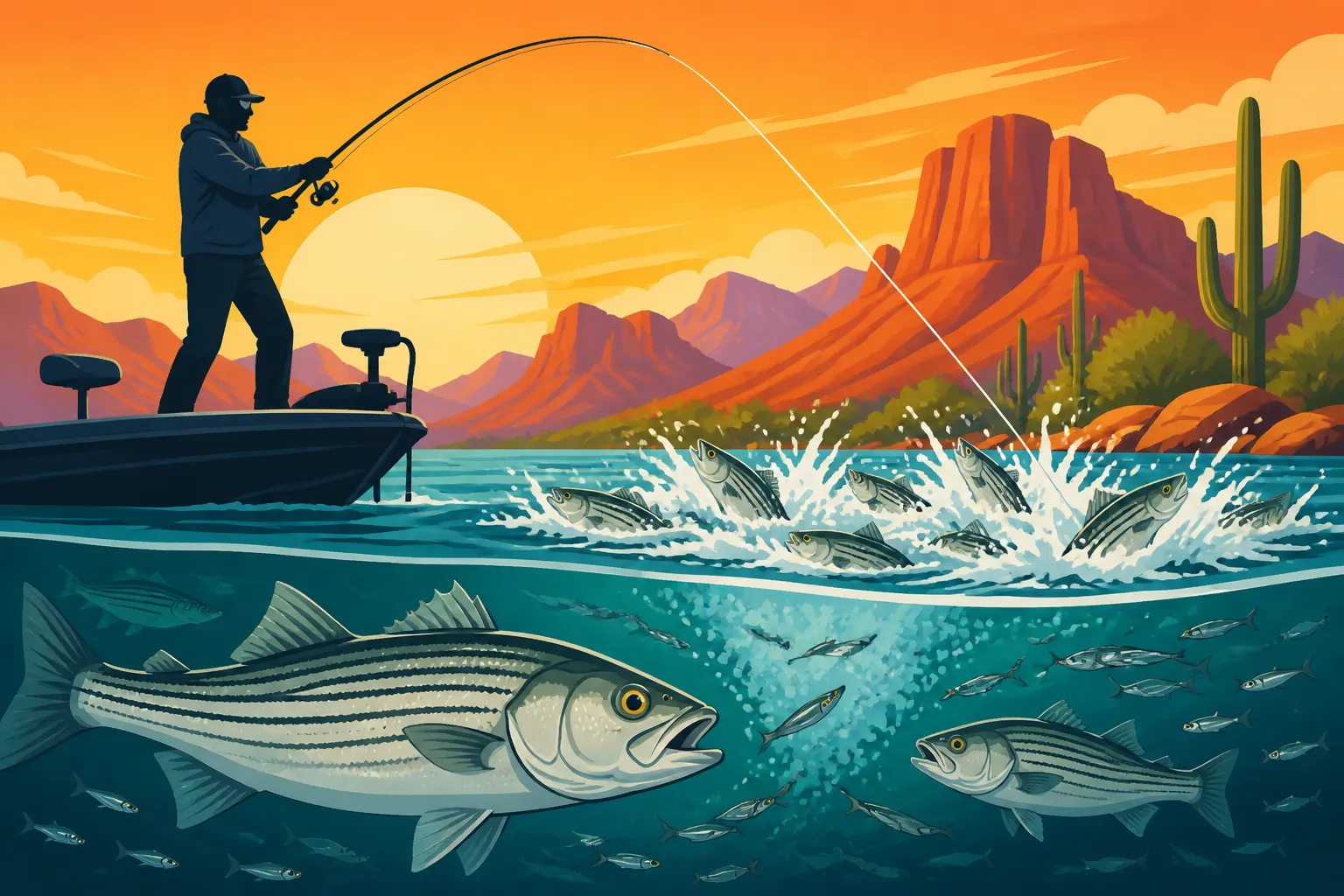
A "boil" occurs when a school of predatory striped bass aggressively herds baitfish, like threadfin shad or gizzard shad, to the surface of the water. Once the baitfish are trapped against the surface, they have nowhere to go, making them easy prey. The stripers then ambush them from below, creating the explosive, churning water that looks like the surface is literally boiling. This isn't just random splashing; it's a full-on feeding frenzy where competition is fierce, and the fish are less wary and more focused on gorging themselves.
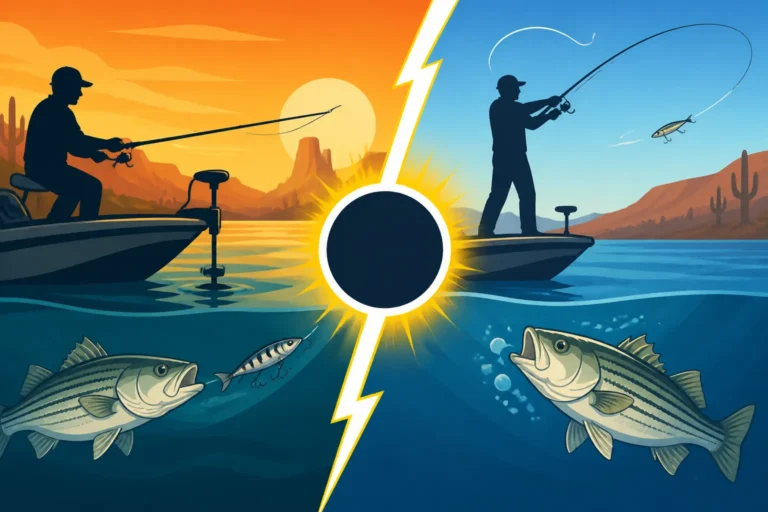
These events are often triggered by specific conditions: typically calmer waters where baitfish schools are easily cornered, and often during periods of low light like dawn or dusk, or even on overcast days. The sheer number of stripers involved in a boil can be astounding, with hundreds or even thousands of fish participating. This intense competition means they're not finicky; if your lure mimics their prey and is presented correctly, you're highly likely to get a strike. It's a short window of opportunity, though, as boils can disappear as quickly as they appear. If you want to master How to Fish for Striped Bass in Arizona, understanding these boils is crucial.
Identifying a True Boil
It's easy to mistake a few scattered fish jumping or a single fish splashing for a full-blown striper boil, especially if you're new to the experience. A true striper boil is unmistakable. You'll see widespread, continuous surface activity over a concentrated area, sometimes as large as a football field. The water will be churning violently, with baitfish often seen leaping out of the water in desperation to escape, only to be devoured by the hungry stripers. You might also spot seagulls or other predatory birds circling and diving into the melee, signaling a plentiful food source.
The sound is also a dead giveaway – a distinct slurping, splashing, and crashing noise that can carry across the water. Pay close attention to the size and scale of the disturbance. A few isolated splashes might indicate a lone striper or even a different species like largemouth bass feeding, but a widespread, violent commotion with multiple fish breaking the surface simultaneously is a classic striper boil. Understanding the Striped Bass Diet and Feeding Habits can help you recognize these tell-tale signs even faster.
Essential Gear for Capitalizing on Striper Boils
Fishing a striper boil is a fast-paced, high-adrenaline activity that demands the right equipment. You need gear that can handle powerful, hard-fighting fish, allow for quick and accurate casting, and withstand the repeated punishment of aggressive strikes. Skimping on tackle here can lead to heartbreak.
Rod and Reel Setup
For fishing striper boils, a medium-heavy to heavy action spinning or baitcasting rod, typically 6'6" to 7'6" in length, is ideal. The medium-heavy action provides the backbone needed to cast heavier lures and control strong fish, while the length aids in longer casts crucial for reaching distant boils without spooking the fish. Look for a fast or extra-fast tip, which allows for precise casting and quick hook sets. For example, a quality 7-foot medium-heavy fast-action rod from brands like Ugly Stik or St. Croix works wonderfully for this application.
Pair your rod with a robust spinning reel in the 3000-5000 series or a baitcasting reel with a good braking system and smooth drag. The reel needs to have a high retrieve speed (a gear ratio of 6.2:1 or higher for spinning, or 7.0:1 for baitcasting) to quickly work lures and keep up with fast-moving stripers. A strong, reliable drag system is non-negotiable, as you’ll be fighting powerful fish that make blistering runs. Make sure your reel has enough line capacity for these runs. You can find excellent options on Amazon that fit these criteria, often with customer reviews that attest to their performance in similar situations.
Line Selection
When it comes to line, braided line is often the top choice for striper boils due to its superior strength-to-diameter ratio, zero stretch, and excellent casting distance. A 20-30 pound test braided line is usually sufficient, allowing you to cast far and feel every subtle bump or strike. The lack of stretch means immediate hook sets, which is vital when fish are biting aggressively.
To maintain stealth and provide some abrasion resistance, tie on a 2-4 foot leader of 15-20 pound fluorocarbon. Fluorocarbon is nearly invisible underwater and has good abrasion resistance, protecting your main line from sharp fins and teeth or underwater structure. Always check your leader frequently for nicks and abrasions, especially after landing a fish, and replace it as needed. For an in-depth look at optimal line choices, consider checking out our guide on Best Line for Striped Bass.
Lure Choices: The Baitfish Imitation Game
The key to lure selection for a striper boil is simple: imitate the baitfish. Striped bass are focused on eating the threadfin or gizzard shad they've corralled. Your lures need to match the size, color, and action of these forage fish.
Here are some top lure categories:
- Topwater Plugs: These are incredibly exciting during a boil. Poppers, walkers, and stickbaits that create commotion on the surface are deadly. Think clear or white colors, mimicking fleeing baitfish. Cast these right into the thick of the action and work them aggressively.
- Swimbaits: Soft plastic swimbaits, especially those with paddle tails, are fantastic because they closely mimic the swimming action of shad. Rig them on a jig head that matches the depth the stripers are feeding (usually just below the surface in a boil). White, silver, or blueback colors are excellent choices. Many anglers prefer a realistic profile, and you can find great multi-packs on Amazon to keep you stocked.
- Spoons: Casting spoons, particularly chrome or silver ones, are great for their flash and ability to be cast long distances. They flutter on the fall, imitating a wounded baitfish, and can be retrieved quickly.
- Jigs: Bucktail jigs or soft plastic flukes rigged on jig heads can be effective, especially if the stripers are boiling just below the surface. They offer a quick, erratic action that can trigger strikes.
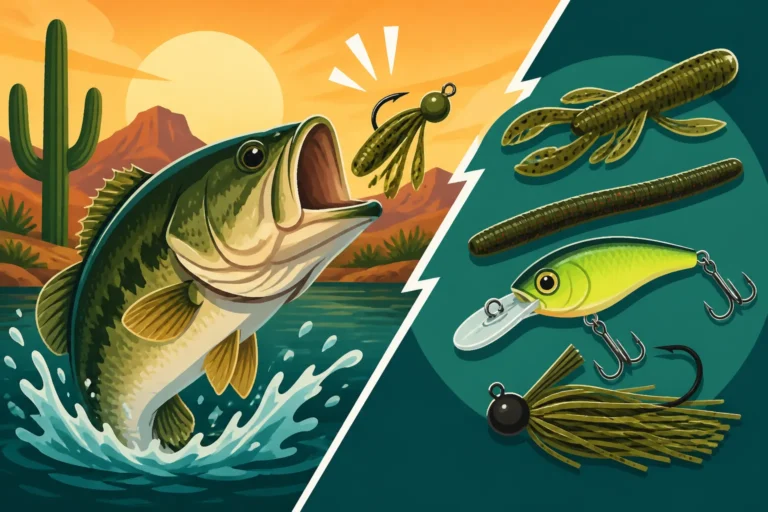
Remember, the goal is to get your lure into the chaos quickly and make it look like an easy meal. Having a variety of these in your tackle box is recommended. For more ideas, read up on Best Lures for a Bass Tackle Box, as many bass lures cross over well for stripers.
Here's a quick comparison of common lures for striper boils:
| Lure Type | Best Use Case | Pros | Cons |
|---|---|---|---|
| Topwater Plug | Aggressive surface feeders, visually exciting | High visibility, triggers explosive strikes, easy to detect bites | Can be less effective if fish are just below surface, weather-dependent |
| Paddle Tail Swimbait | Matching baitfish profile, versatile depth | Realistic action, natural look, can fish subsurface or shallow | Can get torn up quickly, requires appropriate jig head weight |
| Casting Spoon | Long casts, high flash, sinking presentation | Great for covering water, highly visible, durable | Action less natural than swimbaits, can get snagged |
| Bucktail Jig | Versatile, sinking, subtle action | Effective when stripers are slightly deeper, good for vertical jigging | Requires more finesse to impart action, can be overlooked by fish |
Techniques for Approaching and Fishing a Boil
Once you spot a boil, the clock is ticking. Your approach and the immediate execution of your cast and retrieve will make all the difference between an epic fishing experience and a missed opportunity.
Stealth and Positioning
The biggest mistake anglers make when encountering a striper boil is rushing in. While stripers in a feeding frenzy are less cautious, excessive noise or a boat barreling right into the action will quickly put them down. Always approach a boil from upwind or upcurrent, if possible, allowing your boat to drift silently into casting range. Maintain a good distance – usually 50 to 100 yards – and use your trolling motor sparingly and gently, or better yet, drift if conditions allow. If you're on shore, try to keep a low profile and avoid loud noises.
Position your boat so that the wind or current will carry your lure naturally into the boil, rather than forcing it against the elements. This natural presentation is key. If the boil is moving, try to anticipate its direction and position yourself ahead of it, letting the boil come to you, rather than chasing it directly. Remember, the goal is to get your lure into the feeding zone without disrupting the fish.
Casting Accuracy and Presentation
When a boil erupts, every cast counts. You need to be able to cast quickly and accurately. Aim your lure to land just beyond the active feeding area, allowing it to swim or splash into the boil. Landing a lure directly on top of feeding fish can sometimes spook them, especially with heavier or noisier presentations. Precision is key; you want your lure in the strike zone immediately.
Use a fast, snappy cast to get your lure out there without delay. Once your lure lands, immediately begin your retrieve. The stripers are in a feeding frenzy, so they expect fast-moving prey. Don't let your lure sit; make it look like a panicked baitfish trying to escape. Mastering casting accuracy and presentation is a skill that pays off immensely in these situations.
Retrieve Methods for Maximum Strikes
The retrieve for a striper boil is almost always fast and aggressive. These fish are competing, and they'll strike anything that looks like an easy, fleeing meal.
- Topwater: For poppers, use a "walk-the-dog" retrieve, or a series of sharp pops followed by a pause. For stickbaits, a consistent twitch-and-pause retrieve works wonders. The key is to create surface commotion that mimics struggling baitfish.
- Swim baits/Spoons: A steady, fast retrieve is usually best. You want the lure to stay just under the surface, flashing and wiggling like a fleeing shad. Experiment with occasional pauses or erratic jerks to trigger a hesitant fish. If you're using a swimbait, a rapid, consistent reel-in is often all it takes. Check out How to Fish a Swimbait for Striped Bass for more specific techniques.
- Jigs: Work jigs with a lift-and-drop or steady retrieve, ensuring they stay in the upper water column.
Don't be afraid to experiment with retrieve speeds until you find what the fish are reacting to. Often, a straight, fast retrieve is all that's needed, but a slight variation can sometimes make a huge difference.
Handling Multiple Hook-ups
One of the most exciting aspects of fishing a striper boil is the potential for multiple hook-ups, especially if you have several rods rigged and ready or are fishing with friends. If you're alone and get a fish on, keep your rod tip up and fight the fish firmly but don't rush it to the boat. Try to land it quickly, but safely. If another boil erupts nearby, sometimes it's better to secure your current catch and then immediately cast back into the new boil.
If you're with a fishing partner, it's a game of coordinated chaos. One person can cast while the other lands a fish, or you can both cast and then work together to land multiple fish. The key is communication and not tangling lines. This is where having your gear organized, perhaps in a tackle bag from Amazon, really comes in handy. Quickly releasing fish or putting them on a stringer/cooler means more time casting into the action.
Finding and Anticipating Striper Boils in Arizona
Striper boils aren't a daily occurrence, and finding them can sometimes feel like hunting for a needle in a haystack. However, understanding where and when they are most likely to happen in Arizona can dramatically increase your chances of witnessing, and fishing, one of these incredible events.
Key Arizona Lakes for Stripers
When it comes to prime locations for striper boils in Arizona, two giants stand out: Lake Powell and Lake Mead. These massive reservoirs, formed by the Colorado River, are renowned for their robust striped bass populations.
- Lake Powell: Spanning the Arizona-Utah border, Lake Powell is arguably the most famous destination for striper boils. Its vast open waters and numerous canyons provide ideal conditions for baitfish to congregate and stripers to ambush. Areas like the Wahweap Bay, Warm Creek, Padre Bay, and the San Juan arm are historically known hotspots. The sheer size of Lake Powell means covering a lot of water, but when you find a boil here, it can be truly spectacular. Our Lake Powell Arizona Fishing Guide offers more insights into this incredible fishery.
- Lake Mead: Also on the Arizona-Nevada border, Lake Mead offers similar opportunities, though perhaps with fewer consistently massive boils than Powell. Still, healthy populations of stripers are present, and boils can occur, especially in the larger open water areas and around major coves.
- Other Waters: While not as famous for boils, other parts of the Colorado River system, like Lake Havasu, can also hold good numbers of stripers, and smaller boils might occur sporadically. However, for the iconic, widespread feeding frenzies, Powell and Mead are your best bets. For a broader overview of where to fish, check out Best Fishing Lakes in Arizona.
Timing is Everything: Seasons and Conditions
Striper boils are highly seasonal and weather-dependent.
- Best Seasons: Late spring, summer, and early fall are generally the prime times for boils in Arizona. As water temperatures rise, baitfish become more active and congregate in larger schools, which in turn triggers the stripers to feed aggressively.
- Summer: This is often peak boil season. Early mornings and late evenings are especially productive, but boils can happen anytime during the day, particularly on overcast days or in canyon shade. Keep an eye on our guide for the Best Time of Year to Fish Lake Powell for more specific seasonal tips.
- Spring/Fall: Boils are less frequent but can still occur. Look for warming trends in spring and cooling trends in fall that concentrate baitfish.
- Weather Conditions: Look for calm, stable weather conditions. High winds can break up baitfish schools and make it difficult for stripers to herd them, as well as making it hard for you to spot the action. Overcast skies can extend the duration of boils, as stripers are more comfortable feeding in lower light.
Using Technology to Your Advantage
Modern technology can be a huge asset in finding and anticipating striper boils.
- Fish Finders/Sonar: A good fish finder can help you locate schools of baitfish and the larger arches of striped bass beneath them. If you see large concentrations of both, you know you're in a prime area for a boil to erupt. Many modern units, like those found on Amazon, offer side-imaging or down-imaging that gives a crystal-clear view of the underwater world. Read our guide on Best Fish Finders for Bass Fishing in Arizona (many principles apply to stripers) to learn more.
- GPS/Chartplotters: Use your GPS to mark areas where you've seen boils previously. Stripers often use the same migration routes and ambush points year after year.
- Online Forums/Reports: Keep an eye on local fishing reports and online forums. Other anglers often share recent boil sightings, giving you valuable intel on current hotspots.
For anyone specifically looking for surface action, learning How to Find Striper Boils on Lake Powell can be a game-changer. It's about combining experience, observation, and smart use of your tools.
Safety and Etiquette During a Boil
While the excitement of a striper boil is undeniable, it's crucial to prioritize safety and respect other anglers. A feeding frenzy on the water can quickly become a chaotic scene if not handled properly.
Boating Safety During a Boil
When you're rushing to a boil, it's easy to forget basic boating safety. Always maintain situational awareness.
- Speed Control: Resist the urge to gun your engine straight into a boil. Not only will you likely spook the fish, but you could create dangerous wakes for other boats or even cause a collision. Keep a safe, controlled speed and be prepared to stop or alter course.
- Lookout: Always have a designated lookout, especially if you're alone and focused on spotting fish. Watch for other boats, swimmers, and hazards like floating debris or shallow areas.
- PFDs: Ensure everyone on board is wearing a life jacket, especially during fast-paced maneuvers. It's smart practice, and mandatory for children under a certain age in Arizona. Our Boating Safety Gear Requirements in Arizona outlines these rules.
- Navigation: While focused on the boil, don't lose track of your location. Know your boat's capabilities and any local hazards.
Remember, a successful fishing trip is a safe fishing trip. The fish aren't going anywhere permanently, but accidents can have lasting consequences.
Respecting Other Anglers
Striper boils can draw a crowd, and maintaining good fishing etiquette is paramount.
- Give Space: If another boat is already fishing a boil, give them plenty of room. Don't crowd them or cut off their casting lanes. A good rule of thumb is to stay at least 100 yards away, and only approach if they invite you closer or if the boil is large enough to comfortably share.
- No High-Speed Approaches: As mentioned, approaching at high speed is not only dangerous but also incredibly rude. It creates wakes that can swamp smaller boats and spooks fish for everyone. Use your trolling motor or drift quietly.
- Share Information (Sometimes): While not required, a friendly wave or a quick chat about recent sightings can foster good camaraderie. However, don't demand information from others.
- Manage Your Wake: Be mindful of your boat's wake when leaving an area or moving past other anglers. Slow down to a no-wake speed near other boats or shore-bound anglers.
Fishing a striper boil is an unforgettable experience, but it's one best enjoyed when everyone on the water is considerate and safe. Keep these points in mind, and you'll not only have a more enjoyable time but also contribute to a positive fishing community.
Disclaimer
Please note that fishing regulations, including license requirements, bag limits, and specific rules for certain waters, are subject to change. Always consult the latest official Arizona Game and Fish Department regulations before heading out. This guide provides general information and should not be considered a substitute for official sources.