Is Trolling Better Than Casting for Striped Bass?
For many Arizona anglers, chasing striped bass is an exhilarating experience, but the age-old question often looms: should you troll or cast? It’s a common frustration, trying to decide which technique will put you on the fish when you arrive at Lake Powell or Lake Pleasant. This guide will dive deep into both trolling and casting, helping you understand when and why each method excels for these powerful, schooling predators.
Understanding Striped Bass Behavior in Arizona Lakes
Before we even talk about rods and reels, it's crucial to understand what makes striped bass tick in the unique desert environments of Arizona's lakes and rivers. Stripers are apex predators, constantly on the move, primarily chasing baitfish like shad. Their behavior dictates whether trolling or casting will be your most effective strategy.
Schooling and Foraging Patterns
Striped bass are notorious for their schooling behavior. They'll form massive groups, sometimes numbering in the hundreds or even thousands, to herd and ambush baitfish. This can lead to incredible "striper boils" where they erupt on the surface, driving shad to panic. Other times, they'll hold deeper, cruising open water or suspending over submerged structure, patiently waiting for their prey.
Understanding these patterns is key. If you're seeing boils, casting is often the immediate, exciting answer. If the fish are scattered or holding deep, covering water with a trolling setup becomes incredibly efficient. Their activity levels also fluctuate with water temperature, time of day, and even barometric pressure. Cooler months might see them deeper, while the warmer seasons, especially at dawn and dusk, can bring them to the surface.
Habitat Preferences in Desert Lakes
Arizona's striper lakes, like the vast expanses of Lake Powell or the active waters of Lake Pleasant, offer diverse habitats. Stripers love open water, especially where they can chase bait, but they'll also relate to underwater points, humps, and canyon walls. On Lake Powell, for instance, they'll often patrol the vast main channels and side canyons, following bait migration. At Lake Pleasant, you might find them chasing shad in open water or along the deeper structure of the old Agua Fria River channel.
Knowing these preferences helps you decide where to focus your efforts. If you're marking fish on your sonar over deep, open water, trolling can effectively present your lure to a wide range of depths. If you're near a promising point or submerged timber, precise casting might be the ticket to target a smaller, more defined area where stripers could be ambushing passing bait. The sheer size of these lakes means covering water is often paramount, making trolling a compelling option. For more general guidance, check out our Striped Bass Fishing Guide for Arizona.
Mastering the Art of Trolling for Arizona Stripers
Trolling is a highly effective, often overlooked, method for consistently catching striped bass, especially when they're scattered or holding deeper in the water column. It's about covering vast amounts of water and presenting your lure at a consistent depth and speed.
Benefits of Trolling for Stripers
The biggest advantage of trolling is its efficiency in covering water. Arizona's lakes are huge, and stripers are nomadic. Instead of waiting for them to come to you, trolling allows you to actively search for schools of fish. You can systematically work large areas, tracing contours, crossing open flats, or following old river channels. This is particularly valuable when fish aren't actively boiling or when you're exploring new territory.
Another major benefit is consistent depth control. With the right setup (downriggers, lead-core line, or weighted lures), you can present your bait precisely where the fish are holding, whether that's 20 feet or 60 feet down. This eliminates a lot of guesswork and allows you to target fish marked on your fish finder. Trolling also allows you to keep multiple lines in the water, increasing your chances of getting a strike, especially when fish are spread out. It's a fantastic way to locate active fish, even when you're not seeing surface activity. For those looking to upgrade their vessel, consider the Best Trolling Motors for Small Boats to enhance your trolling precision.
Trolling Gear and Setup
To effectively troll for striped bass, you'll need specific gear. A sturdy rod with a medium to heavy action and a strong baitcasting or conventional reel spooled with at least 20-30 pound monofilament or fluorocarbon, or even heavier braided line, is essential. Braided line offers less stretch and better sensitivity for detecting subtle bites, while a monofilament or fluorocarbon leader will be necessary for stealth. Many anglers use lead-core line, which sinks at a predictable rate per color change, allowing for precise depth control without extra weight.
When it comes to lures, deep-diving crankbaits that mimic shad, spoons, swimbaits, and even umbrella rigs are popular choices. The size and diving depth of your lure will depend on the target depth. You might also consider investing in a good fish finder; models available on Amazon can help you identify schools of bait and stripers, allowing you to adjust your trolling depth accordingly. Rod holders are a must to manage multiple lines, and some anglers even utilize planer boards to spread out their lines, preventing tangles and covering an even wider path.
Trolling Techniques and Strategies
Trolling isn't just about putting a lure in the water and driving around. Speed is critical; stripers often prefer a trolling speed between 2.5 and 4.5 miles per hour, but this can vary daily. Experiment with different speeds until you find what triggers bites. Pay close attention to your electronics: if you mark fish at a certain depth, adjust your lure presentation to match.
Zig-zagging or making wide turns can often trigger strikes as your lures speed up and slow down, mimicking erratic baitfish. When you get a strike, mark the spot on your GPS and circle back through that area; where there's one striper, there are often many. Consider the time of day, too. Early mornings and late evenings can be prime, but stripers will feed throughout the day when bait is present. Learning specific Trolling Techniques for Striped Bass can further refine your approach.
The Dynamic Approach of Casting for Striped Bass
Casting for striped bass is a more active, hands-on approach that shines when stripers are busting bait on the surface or holding tight to structure where precision is key. It's a thrilling way to fish, often leading to explosive strikes.
Benefits of Casting for Stripers
Casting excels when stripers are visible and active, especially during those adrenaline-pumping surface boils. When you see fish actively feeding, casting allows you to quickly get your lure into the feeding frenzy. It's also superior for targeting specific structures like rocky points, coves, or submerged brush where stripers might be ambushing bait. Unlike trolling, which is more about covering vast areas, casting is about precision and reaction.
The sheer excitement of casting to a visible school of stripers and feeling an immediate, powerful strike is hard to beat. It offers a more intimate connection to the fight, allowing you to feel every head shake and run. It's also a more accessible method for anglers fishing from shore, kayaks, or smaller boats without extensive trolling setups.
Casting Gear and Setup
For casting, a medium-heavy to heavy spinning or baitcasting rod, typically 6'6" to 7'6" in length, is ideal. Pair this with a reliable reel spooled with 20-40 pound braided line for its strength, casting distance, and sensitivity. A fluorocarbon leader of 15-30 pounds is often used to provide stealth and abrasion resistance.
Your lure selection for casting will primarily focus on surface and subsurface presentations. Topwater lures like poppers, walking baits, and stickbaits are fantastic for boils. When fish are just below the surface, chrome spoons, lipless crankbaits, and swimbaits are incredibly effective. Soft plastic swimbaits, often rigged on a heavy jig head, can be worked effectively through the middle depths. Amazon offers a vast selection of Best Lures for a Bass Tackle Box that can also be highly effective for stripers. Having a variety of lure weights is crucial to match the casting distance needed and the depth at which the fish are feeding. Our guide on Best Fishing Rods for Bass in Arizona offers some great options that double well for striper fishing.
Casting Techniques and Strategies
Successful casting for stripers often comes down to quick reactions and accurate presentations. When approaching a boil, try to cast to the edges of the school first to avoid spooking the entire group. Vary your retrieve speed; sometimes a fast, erratic retrieve mimics a fleeing baitfish, while other times a slower, more consistent retrieve will draw strikes.
If fish aren't boiling, cast your lures near structure like points, humps, or drop-offs, retrieving them through suspected holding areas. Let soft plastics or spoons sink to different depths before retrieving to probe the water column. Always be ready for a strike, as stripers can hit with incredible force. If you're fishing a specific area and not getting bites, try different lure types, colors, and retrieve speeds before moving on. For those aiming to land big ones with specific lures, our Swimbait Techniques for Striped Bass article offers useful insights.
Trolling vs. Casting: Choosing Your Strategy
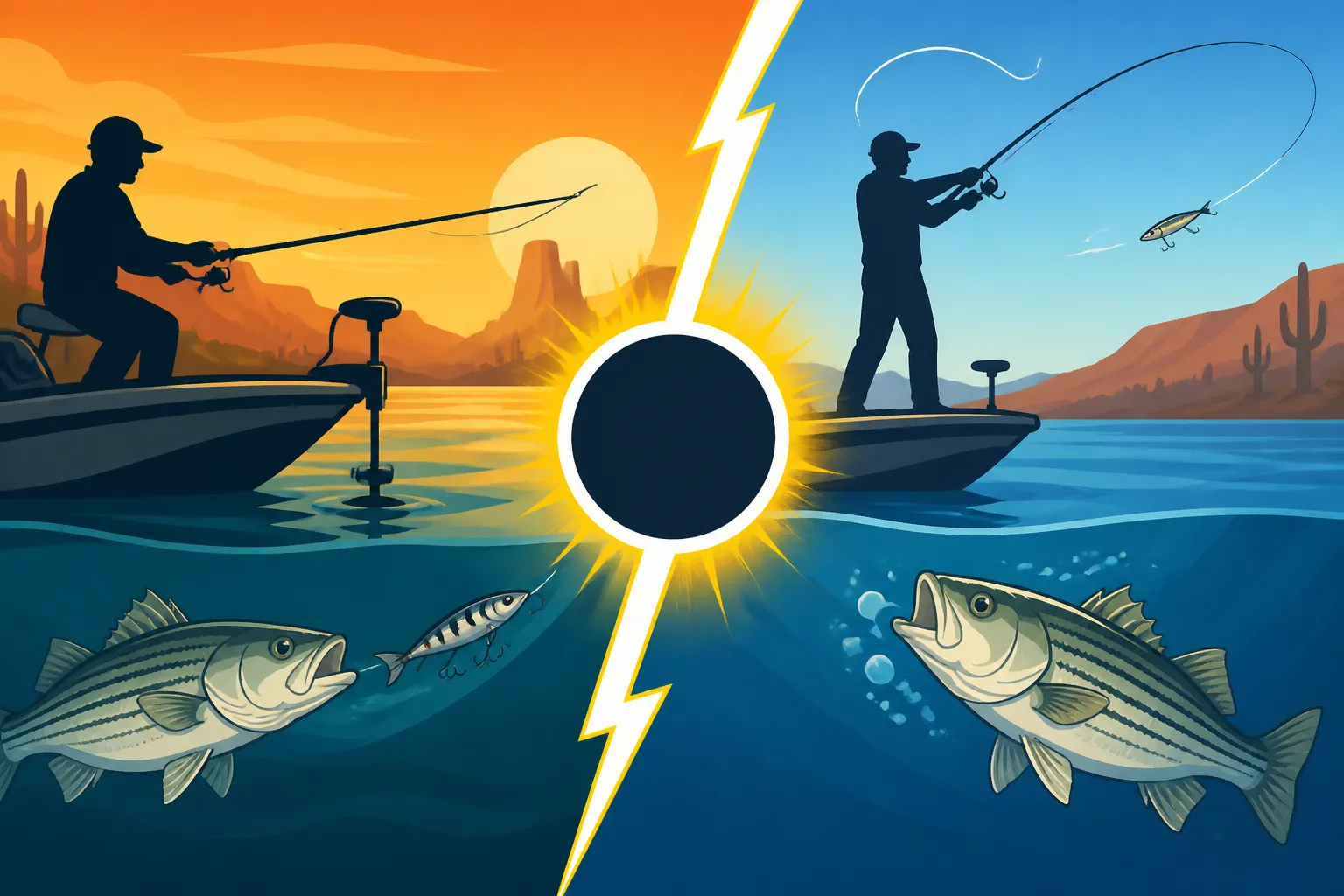
The question of whether trolling is "better" than casting isn't about one being inherently superior, but rather about choosing the right tool for the job. Each technique has its optimal conditions and advantages.
When Trolling Takes the Lead
Trolling is often the better choice when:
- Fish are scattered or holding deep: If your fish finder shows stripers spread out or suspended far below the surface, trolling allows you to cover vast areas and present lures at precise depths effectively. This is common during the hotter parts of the day or in deeper, cooler water.
- Searching for active schools: When you're on a large body of water like Lake Powell and aren't seeing surface activity, trolling is an excellent search pattern to locate concentrations of fish.
- Consistent presentation is key: For finicky stripers that want a lure at a very specific depth and speed, trolling provides that consistent presentation.
- You want to cover a lot of water with minimal effort: If you prefer a more relaxed fishing experience that still produces results, especially on vast lakes, trolling allows you to do so efficiently.
When Casting Reigns Supreme
Casting is usually the more effective technique when:
- Stripers are actively boiling: This is the classic scenario where casting topwater lures or spoons into a feeding frenzy can lead to immediate and multiple hook-ups. Knowing How to Fish During a Striper Boil is crucial here.
- Targeting specific visible structure: If you're fishing around rocky points, coves, submerged trees, or other defined structures where stripers might be ambushing bait, casting offers the precision to place your lure exactly where you want it.
- Fishing from shore or smaller craft: Without the need for extensive boat control or specialized trolling gear, casting is more accessible for many anglers.
- You prefer an active, hands-on fishing experience: The excitement of spotting a fish and making a precise cast is a huge draw for many anglers.
Here’s a quick comparison to help you decide:
| Feature/Condition | Trolling Advantages | Casting Advantages |
|---|---|---|
| Coverage Area | Excellent for covering large expanses of water, efficient search method. | Ideal for smaller, focused areas; quick reaction to visible activity. |
| Depth Control | Precise and consistent depth presentation (downriggers, lead core). | Depth controlled by lure weight, retrieve, and sink time; more variable. |
| Fish Activity Level | Effective for scattered or deep-holding fish, passive feeding. | Best for active, visible fish (boils) or ambush predators on structure. |
| Effort Level | More passive once set up, less physically demanding over time. | More active, requiring constant casting and retrieving. |
| Setup Complexity | Can require more specialized gear (rod holders, downriggers, multiple lines). | Generally simpler gear setup, accessible for shore or small boat anglers. |
| Excitement Factor | Steady action, often multiple hook-ups once a school is found. | Explosive strikes during boils, precise targeting, immediate gratification. |
Maximizing Your Catch: Combining Techniques
The truly skilled Arizona striper angler doesn't view trolling and casting as mutually exclusive. Instead, they understand how to seamlessly integrate both techniques into a single fishing trip, or even within the same hour, to maximize their success.
The Hybrid Approach: Adapt and Conquer
Imagine you're out on Lake Pleasant early in the morning. You start by trolling a few lines, covering water and searching for active schools. Suddenly, your fish finder lights up with a massive school of stripers, and you even see a few breaks on the surface, hinting at a potential boil. What do you do?
This is where adaptation comes in. You might quickly reel in one or two trolling lines and immediately grab a casting rod, launching a topwater lure into the vicinity of the surface activity. While you're casting, your remaining trolling lines continue to work the deeper water, potentially picking up fish that didn't commit to the surface frenzy. Once the boil subsides, you can resume full-scale trolling, confident that you've covered both the active and deeper-holding fish. Learning Seasonal Movement Patterns of Bass at Roosevelt Lake can give you an edge in predicting when to switch tactics.
Strategic Gear Management
To effectively combine both methods, having your gear organized and ready is key. Keep a few casting rods rigged and ready with different lure types (topwater, subsurface swimbait, spoon) on deck. This way, when a boil erupts or you spot some key structure, you can grab the appropriate rod without fumbling. Similarly, have your trolling rods set up with the correct lines and lures for your target depths.
Consider your boat layout. Can you easily access your casting rods while your trolling rods are deployed? Having a dedicated space for each setup will save precious time when fish are active. Many anglers will troll specific areas known for larger, deeper fish, like the main channel of Lake Powell, and then pull into coves or around points to cast for stripers ambushing bait in shallower water. For general information on where to find these fish, consider reading our Lake Powell Arizona Fishing Guide or Lake Pleasant Arizona Fishing Guide.
By being versatile and willing to switch tactics based on what the stripers are telling you, you'll significantly increase your chances of a successful day on the water. Don't be afraid to experiment, and always pay attention to the conditions and fish behavior. Ultimately, the "best" technique is the one that puts fish in your boat.
Disclaimer
This article is for general informational purposes only and does not constitute professional advice. Laws, prices and regulations vary by location and change over time. Consult a qualified professional for guidance on your specific situation.