How to Fish a Crankbait Around Drop-Offs
Fishing around drop-offs can feel like you're trying to find a needle in a haystack, especially when bass aren't actively schooling on the surface. It's a common frustration for many anglers in Arizona's vast and often challenging desert lakes. But here's a secret: drop-offs are absolute magnets for bass, and knowing how to effectively fish them with a crankbait can dramatically improve your success. This guide will walk you through everything you need to know to confidently tackle these underwater structures and put more fish in your boat or on the bank.
Understanding Drop-Offs and Why They're Bass Magnets
Before you even think about tying on a crankbait, you need to understand what a drop-off is and, more importantly, why fish gravitate towards them. In Arizona's desert lakes like Lake Pleasant, Roosevelt Lake, or Canyon Lake, these underwater transitions are critical for finding fish year-round. They're not just random changes in depth; they're vital fish highways and feeding grounds.
What Exactly is a Drop-Off?
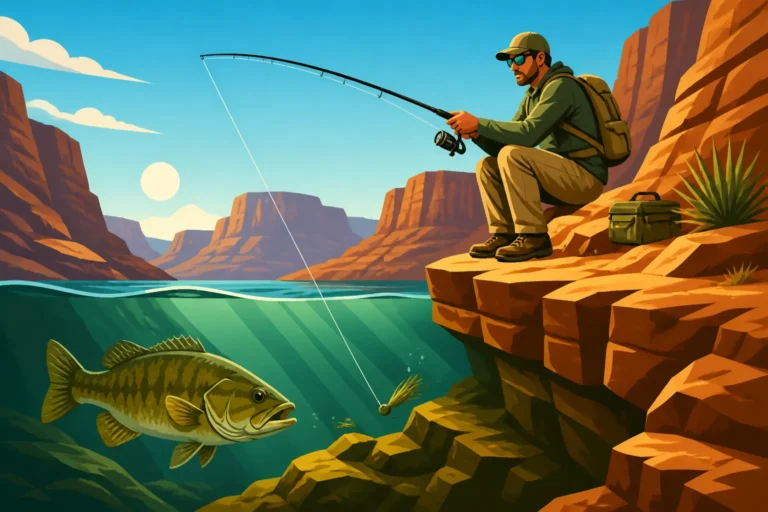
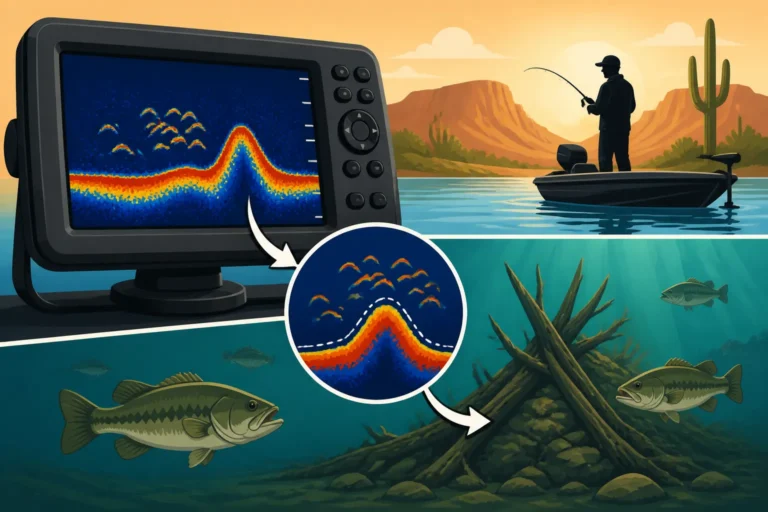
Think of a drop-off as an underwater cliff or a steep incline where the bottom depth changes dramatically over a short horizontal distance. It could be a subtle slope from 10 feet to 20 feet, or a sheer wall plunging from 5 feet to 50 feet. These can be found anywhere – along main lake points, within creek channels, around submerged islands, or even marking the edge of old riverbeds. What makes them significant is the abrupt transition. Bass, being ambush predators and temperature-sensitive creatures, use these contours for a variety of reasons, creating prime opportunities for anglers. Using a quality fish finder is absolutely essential for locating these hidden gems, and knowing how to read a fish finder for structure will give you a huge advantage.
Why Bass Love Drop-Offs in Arizona's Desert Lakes
Arizona's lakes are unique, often characterized by clear waters, extreme temperature fluctuations, and rocky, submerged structures. Drop-offs provide bass with everything they need to thrive, making them high-percentage targets for anglers.
Firstly, drop-offs offer immediate access to different depths. This means bass can quickly move deeper to find cooler, more stable temperatures during the scorching summer heat or rise shallower to feed during cooler periods. They don't have to travel far to change their environment, which conserves energy. Secondly, these structures often concentrate baitfish. Shad and other forage fish will school along these transitions, providing an easy buffet for opportunistic bass. The sudden change in depth creates current breaks and eddies, which can further concentrate bait and provide ambush points for predatory fish. Imagine a school of threadfin shad hugging the 15-foot line, only to be ambushed by a lurking largemouth from the darker, deeper water below. Thirdly, drop-offs provide excellent cover. Rocky ledges, submerged brush piles, and even old timber that has settled along these slopes offer protection from predators and bright sunlight. These are classic ambush points where bass can hide and wait for unsuspecting prey to swim by. This is especially true for species like largemouth bass, and understanding largemouth bass habitat in Arizona lakes will further highlight the importance of these structures.
Choosing the Right Crankbait for Arizona Drop-Offs
Picking the right crankbait isn't just about color; it's about understanding its diving capabilities, profile, and action in relation to the specific drop-off you're fishing. In Arizona, where lakes can range from relatively clear to somewhat stained, these choices become even more critical.
Matching Crankbait Dive Depth to the Drop-Off
The most crucial aspect of fishing a crankbait on a drop-off is ensuring your lure actually reaches the fish and interacts with the structure. This means selecting a crankbait with a diving depth appropriate for the depth of the drop-off and where the fish are holding.
- Shallow-Diving Crankbaits (0-6 feet): These are great for the very top edge of a drop-off, especially in the mornings or evenings when bass might be pushing baitfish into shallower water. Think of those aggressive squarebill crankbaits that deflect off rocks and timber. While square bills are often used for shallower cover, a well-placed cast could have it "crashing" into the upper lip of a drop-off, triggering reaction bites.
- Medium-Diving Crankbaits (6-15 feet): This is often your workhorse for many Arizona drop-offs. Lures like the Rapala DT-Series or Strike King KVD 2.5 and 3.0 crankbaits are excellent choices here. They're designed to get down quickly and stay in the target zone. If bass are holding around the 10-12 foot range along a tapering drop, a medium diver is perfect for grinding along that depth.
- Deep-Diving Crankbaits (15+ feet): When bass are pushed deep, either due to intense summer heat or cold winter temperatures, these are your go-to. Lures like the Berkley Dredger or Norman DD22 can reach impressive depths, allowing you to target fish holding on the steepest parts of the drop-off or even at its base. Remember, you want your crankbait to "tick" or "crash" into the structure. If it's swimming over the fish, you're missing opportunities. For deeper presentations, you might also consider what constitutes the best fishing rods for bass in Arizona, as a longer rod can aid in casting distance and line pick-up, crucial for deep divers.
The key is to experiment. If you know a drop-off goes from 10 to 30 feet, start with a medium diver to cover the upper and middle sections. If you're not getting bites, switch to a deep diver to explore the deeper parts.
Color and Pattern Considerations for Arizona Waters
Crankbait color can sometimes feel overwhelming, but in Arizona, a few general principles apply. The water clarity of our desert lakes can vary, and matching your lure to the local forage is often a winning strategy.
- Natural Colors for Clear Water: Lakes like Lake Powell or areas of Lake Havasu often boast incredible clarity. In these situations, natural baitfish patterns like shad, perch, or bluegill are often most effective. Colors like chrome, silver, ghost minnow, or anything with a translucent quality will typically perform well. Bass in clear water rely heavily on sight, so a realistic imitation is key.
- Brighter or More Contrasting Colors for Stained Water: If you're fishing a lake that's had recent runoff, or certain arms of Roosevelt Lake after a storm, the water might be stained. Here, colors with more contrast or brighter hues can be beneficial. Chartreuse, fire tiger, or crawfish patterns (especially in areas with a healthy crayfish population) can stand out better and attract attention. Bass in stained water often rely more on the vibration and silhouette of the lure, but a bit of color pop can certainly help them zero in.
- Crawfish Patterns: Don't underestimate crawfish patterns throughout Arizona. Crawfish are a staple diet for bass in many of our lakes, and a brown, red, or orange crankbait that mimics a crawfish scuttling along the bottom can be deadly, especially when fished aggressively to bounce off the structure.
Ultimately, having a selection of both natural and slightly brighter crankbaits is wise. Pay attention to what the baitfish look like in the lake you're fishing, and try to match that. You can find a wide variety of these specialized crankbaits on Amazon, making it easy to build out your tackle box with options for any condition.
Mastering Crankbait Presentation on Drop-Offs
Throwing a crankbait out there and reeling it back in is one thing, but truly mastering its presentation around drop-offs requires finesse, feel, and a bit of aggression. The goal isn't just to retrieve the lure; it's to make it behave like an injured baitfish or a foraging crawfish that's interacting with the structure.
The Art of the Cast and Retrieve
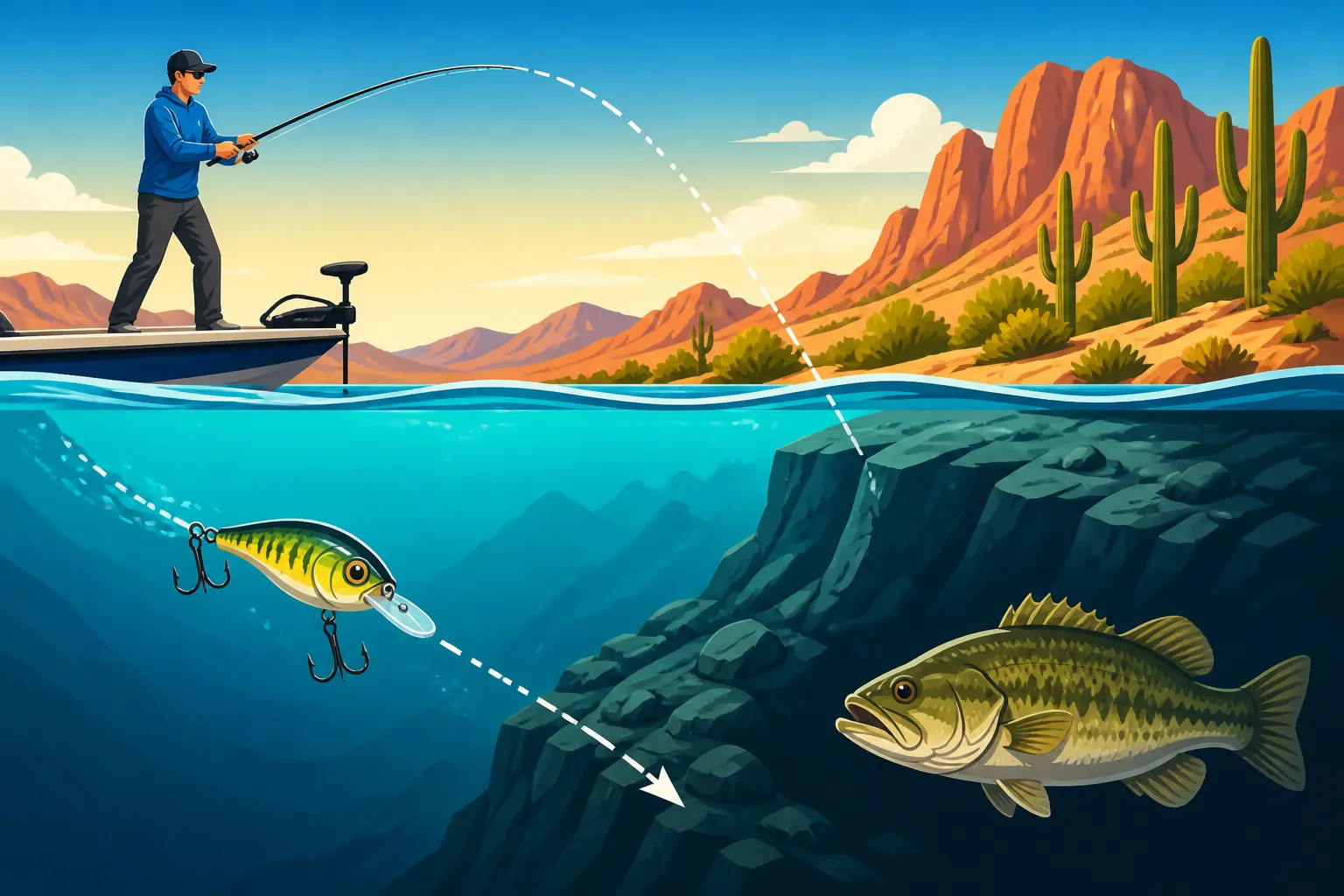
Your casting strategy for drop-offs is crucial. You want your crankbait to land in a position where it can dive down, hit the top of the drop-off, and then continue to track down its face, making contact with the bottom all the way.
- Parallel Casts: Often, the most effective cast is parallel to the drop-off. If the drop-off runs north to south, cast your lure parallel to that line. This allows the crankbait to stay in the strike zone for the longest possible time, tracing the contour. This is particularly effective when fish are actively positioned along a specific depth band.
- Perpendicular Casts: Don't completely rule out casting perpendicular (at a right angle) to the drop-off, especially if you're trying to quickly ascertain the depth or want to cover different sections rapidly. Cast over the shallow side, let it hit the top, and then pull it down the face. The angle of descent can sometimes trigger a different kind of reaction strike.
- Retrieve Speed and Pauses: Once your crankbait is in the water, the retrieve speed is key. You generally want a consistent, medium retrieve that allows the lure to reach its maximum diving depth. But the magic happens when you vary it. Speed up, slow down, add a few twitches, and most importantly, pause. A short pause can often cause the lure to slightly float or suspend, mimicking a disoriented baitfish, and often leads to a strike as the lure starts to move again. For many anglers, the most effective bass fishing techniques for Arizona lakes involve these subtle manipulations.
Remember, the aim is to get that crankbait to hit the structure. If it's not bouncing off rocks, dragging through gravel, or deflecting off submerged timber, it's likely not in the most productive part of the strike zone.
Making Contact and Triggering Strikes
Making physical contact with the underwater environment is what makes crankbait fishing on drop-offs so deadly. It's not just about the lure's action in open water; it's about the commotion it creates when it "crashes" into things.
- The "Deflection" Principle: When your crankbait hits a rock, a log, or the edge of a ledge, it will momentarily deflect or kick off in a different direction. This erratic movement often triggers a reaction strike from a bass that might not have committed to a straight retrieve. It mimics a fleeing or injured baitfish, and bass find this irresistible. You need to develop a "feel" for your lure. Pay attention to your rod tip and the vibrations through your line. When you feel that bump, give a slight pause or a quick twitch before continuing your retrieve.
- Understanding the Bite: Bites on a crankbait can be subtle or aggressive. Sometimes it's a sudden, heavy thump that nearly rips the rod out of your hand. Other times, it's a soft "mushy" feeling, or your lure might just feel "heavy" as if you've snagged vegetation. Always set the hook firmly if you feel anything out of the ordinary. The vastness of Arizona's lakes means you're often fishing in deep water, and a good hookset is paramount to landing those larger fish. For specific lure choices, consult guides on the best lures for largemouth bass in Arizona lakes.
Common Challenges and Troubleshooting for Drop-Off Crankbaiting
Let's be real, fishing crankbaits around drop-offs isn't always sunshine and trophies. Snags are inevitable, and fish moods change. Knowing how to deal with these common challenges will save you time, money, and frustration.
Avoiding Snags and Retrieving Hung Lures
One of the biggest headaches of crankbait fishing on rocky drop-offs is getting hung up. It happens to everyone, even the pros. But there are ways to minimize it and, more importantly, get your expensive lure back.
- Line Choice: Using a heavier monofilament or fluorocarbon line (12-20 lb test, depending on the lure and target species) can give you better abrasion resistance against rocks. Braided line is also excellent for its sensitivity and strength, but it can sometimes dig into submerged wood more easily. A good quality fluorocarbon line, like Seaguar InvizX, offers a great balance of sensitivity and abrasion resistance.
- Rod Position: When you feel your crankbait hit a piece of structure, sometimes a slight lift of the rod tip can help it "hop" over the obstruction rather than digging in. Conversely, if you feel it ticking the bottom too much and you're snagging, lower your rod tip to pull it slightly away from the deepest contact.
- Lure Retrievers: These are absolutely essential if you plan on deep crankbaiting. A good lure retriever, often a heavy lead weight with chains or wires, can be slid down your line to dislodge snagged lures. It's a small investment that can save you dozens of crankbaits. Products available on Amazon offer effective and affordable options for lure retrievers. When you get snagged, keep your line taut, position your boat (if you have one) directly over the snag, and send down your retriever.
- The "Slack Line" Trick: If you snag, try pointing your rod tip directly at the lure, putting a lot of slack in the line, and then quickly snapping the rod tip sideways. This can sometimes cause the lure to pop free. Repeat a few times.
It's a delicate balance. You want the lure to make contact, but not get completely embedded. It’s part of the game when you're trying to fish Arizona's desert lakes where rocky bottoms are the norm.
Adapting to Wind, Water Clarity, and Fish Mood
Arizona's weather and water conditions can change quickly, and so can the fish's mood. Being adaptable is key to consistent success.
- Wind: Wind can be your friend or your foe. A moderate chop on the water can break up the surface, making it harder for bass to see your line or you, and can stimulate feeding. In these conditions, crankbaits with a strong wobble and rattle can be particularly effective. However, heavy wind makes boat control difficult, especially when trying to stay parallel to a drop-off. If the wind is too strong, consider fishing the wind-blown side of a point or a more protected cove that still has a drop-off. You might also need to increase your retrieve speed slightly to maintain the lure's action against the current.
- Water Clarity: As mentioned earlier, water clarity dictates color choice, but it also affects retrieve speed. In extremely clear water, a slower, more deliberate retrieve with longer pauses can be more effective, giving bass more time to inspect the lure. In stained or muddy water, a faster, more erratic retrieve that generates more vibration and flash can help bass locate the lure. These distinctions are important for successful deep water structure fishing techniques.
- Fish Mood: Bass aren't always in an aggressive mood. Sometimes they want a slow, subtle presentation, and other times they want you to bang that crankbait off every piece of structure you can find. If you're not getting bites on a fast retrieve, slow it down. Experiment with different pauses, twitches, and speeds. Pay attention to the time of year too; spring bass fishing tactics in Arizona often differ greatly from summer bass fishing tactics in Arizona, or even how to fish clear water in winter. Sometimes, a subtle change in your retrieve can be the difference between an empty livewell and a banner day.
| Crankbait Type | Dive Depth Range (Approx.) | Best Application on Drop-Offs | Common Action & Sound | Ideal Water Clarity |
|---|---|---|---|---|
| Squarebill | 0-6 feet | Top edge, shallow contours, deflecting cover | Wide wobble, erratic deflection, often noisy | Stained to Clear |
| Medium Diver | 6-15 feet | Mid-range drop-offs, gradual slopes | Medium wobble, good bottom contact, subtle rattle | Clear to Stained |
| Deep Diver | 15+ feet | Steep drop-offs, deep ledges, channel edges | Tight wobble, fast dive, often loud rattle | Clear to Stained |
| Lipless Crankbait | All depths (controlled) | Vertically jigging down drop-offs, rapid falls | Tight shimmy, loud rattle, sinks quickly | Clear to Stained |
Note: Dive depths are approximate and depend on line size, retrieve speed, and rod angle.
Disclaimer
Fishing involves inherent risks. Always prioritize safety on the water. Be aware of local regulations, weather conditions, and wear appropriate safety gear. The advice provided in this guide is for informational purposes only, and individual results may vary.