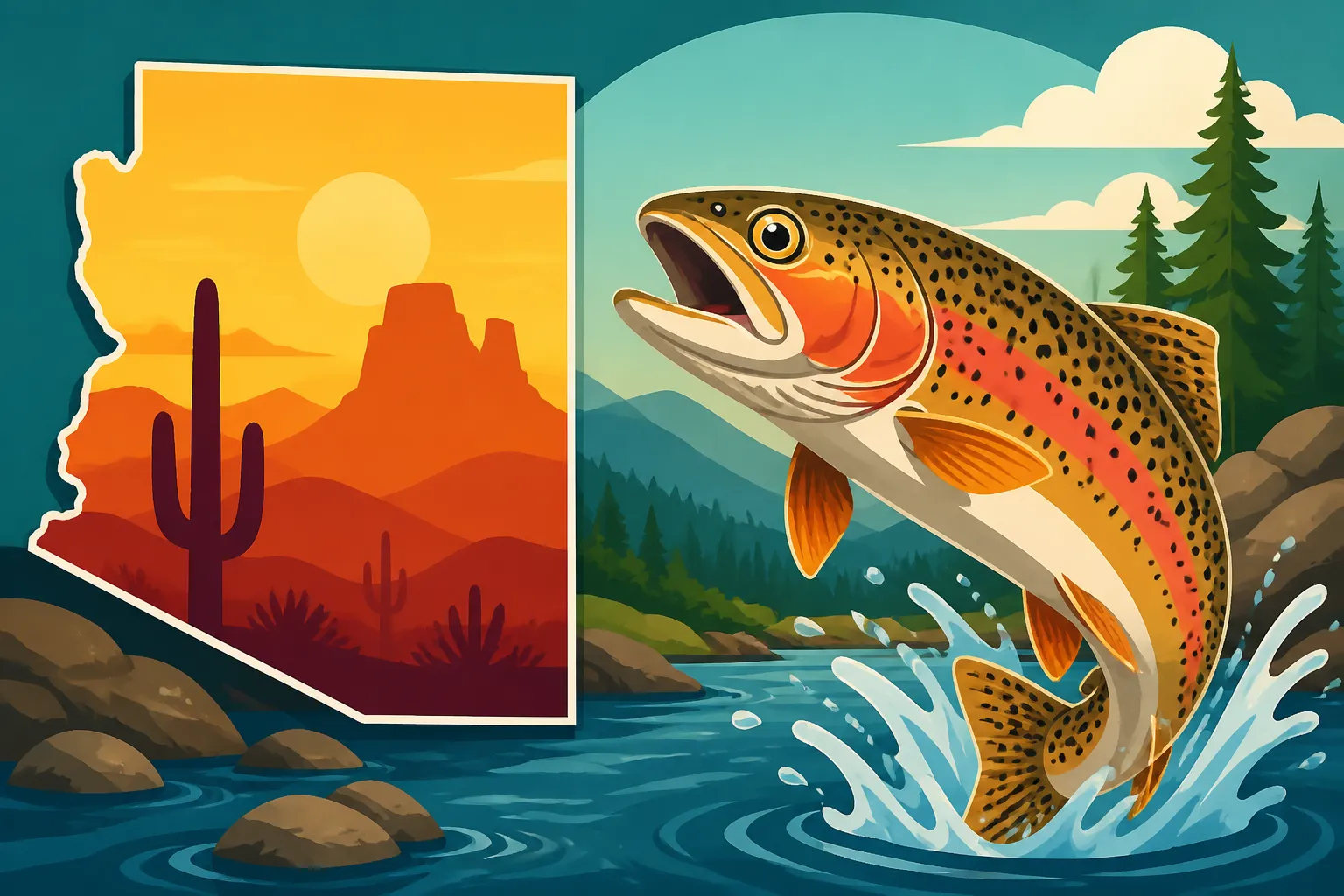
Apache Trout Range in Arizona
For many Arizona anglers, there's a certain magic in pursuing a fish that's not only beautiful but also a true native of our unique desert and mountain landscapes. The Apache trout, with its distinctive golden-yellow hue and dark spots, represents a rare and special challenge. If you've ever dreamt of casting a line in pristine mountain streams in search of this indigenous beauty, this guide will illuminate exactly where you can find these magnificent fish and how to approach fishing for them respectfully and responsibly within their protected range.
Understanding the Apache Trout's Unique Identity
The Apache trout, scientifically known as Oncorhynchus apache, isn't just another pretty fish. It's one of only two trout species native to Arizona, making it incredibly special to our state's natural heritage. Historically, these fish thrived in the high-elevation streams of the White Mountains, perfectly adapted to the cold, clear waters that cascade down from the peaks. Their survival story is one of both struggle and hope, as decades of habitat degradation, overfishing, and competition from non-native trout species pushed them to the brink of extinction.
What makes them so distinctive? For starters, their coloring is truly a sight to behold. Imagine a fish with a striking golden-yellow to brassy green body, adorned with medium-sized black spots that are usually evenly distributed over its entire body. Often, they have two black spots on each side of the pupil, sometimes described as a "mask" or "goggles," which is a key identifying feature. They typically don't grow as large as some other trout species, usually topping out around 10 to 15 inches, though trophy specimens can be larger. Finding one of these treasures in its natural habitat is an experience that resonates deeply with any angler who appreciates conservation and the beauty of Arizona's high country.
Where to Find Apache Trout: The White Mountains Stronghold
When we talk about the Apache trout's range, we're primarily talking about a very specific, high-altitude region in Eastern Arizona: the White Mountains. This isn't a fish you'll find just anywhere; its native range is restricted to the headwaters of the Little Colorado River and the Salt River drainages. Thanks to dedicated conservation efforts by the Arizona Game and Fish Department (AZGFD) and the White Mountain Apache Tribe, Apache trout populations are slowly but surely being restored in these pristine environments.
The majority of Apache trout fishing opportunities exist on tribal lands within the Fort Apache Indian Reservation, managed by the White Mountain Apache Tribe. This area boasts some of the most stunning and secluded fishing experiences Arizona has to offer. Popular streams and lakes on the reservation known to hold Apache trout include:
- West Fork of the Black River: A classic Apache trout stream, offering wild fish in a breathtaking setting.
- Shevelon Creek: Another prime location, often managed for a wild trout experience.
- Lee Valley Lake: A small, high-elevation lake often stocked with Apache trout.
- Reservation Lake: One of the larger lakes where Apache trout thrive.
- Certain smaller, designated streams: The White Mountain Apache Tribe actively manages numerous small streams for Apache trout, often on a rotational basis or with special access rules to protect the resource.
It's crucial to understand that fishing on tribal lands requires a special tribal fishing permit in addition to your Arizona Fishing License Guide. These permits come with their own set of regulations, often designed to protect the very sensitive Apache trout populations. Always check with the White Mountain Apache Game and Fish Department for the most current information on access, permit requirements, and specific stream conditions. You'll find that their commitment to preserving this species is paramount.
While the reservation is the primary stronghold, you can also find limited opportunities on federal lands, primarily within the Apache-Sitgreaves National Forests. These opportunities are often the result of reintroduction efforts in historical habitats. For instance, specific stretches of streams like the East Fork of the Black River or certain tributaries might have designated Apache trout waters. These public access areas usually require an Arizona fishing license and adherence to state regulations, which often include catch-and-release only rules for Apache trout. Always consult the latest Arizona Fishing Regulations Explained booklet or the AZGFD website before heading out.
Conservation Status and Fishing Regulations for Apache Trout
The Apache trout's story is a compelling example of conservation success, but also a stark reminder of how fragile native species can be. For many years, the Apache trout was listed as an endangered species. Thanks to a monumental, multi-agency effort spanning decades, its status has been downgraded to "threatened," a significant step forward that allows for tightly regulated fishing opportunities in certain areas. This reclassification means we can fish for them, but it comes with immense responsibility.
The primary goal of any Apache trout fishing venture should be to support their continued recovery. This means adhering strictly to catch-and-release principles in most areas, especially on federal lands. The regulations are in place to ensure that these special fish can reproduce and flourish for generations to come. When fishing for Apache trout, you'll often encounter specific tackle restrictions, such as artificial lures and flies only, and single barbless hooks. This minimizes harm to the fish, allowing them to be released unharmed.
The Importance of Catch and Release
For sensitive species like the Apache trout, catch and release isn't just a suggestion—it's often a requirement and always a best practice. The idea is to enjoy the thrill of the catch without negatively impacting the population. This means handling the fish as little as possible, keeping it in the water, and releasing it quickly. Tools like hemostats or forceps are incredibly useful for hook removal and can easily be found on Amazon.
Consider the delicate ecosystem these fish inhabit. They often live in small, cold streams where every individual fish is vital to the population's health. Taking even one fish, especially a breeding adult, can have a disproportionate impact on a recovering population. By practicing careful catch and release, you become an active participant in their conservation, ensuring that other anglers, and future generations, can also experience the joy of catching this unique Arizona native. Learn more about Catch and Release Rules for Arizona Anglers to ensure you're doing your part.
Navigating Tribal Permits and State Regulations
As mentioned, fishing for Apache trout almost always involves navigating specific regulations. If you're on the Fort Apache Indian Reservation, the White Mountain Apache Game and Fish Department sets the rules. These rules can be very detailed, specifying which streams are open, what types of bait or lures are allowed, bag limits (if any), and season dates. They often require an additional "trout stamp" or specific permit for certain waters.
For areas on National Forests or other state-managed lands, the Arizona Game and Fish Department regulations apply. While less common, there are specific streams that might be managed as "Apache Trout waters" under state jurisdiction. These state regulations are often even more restrictive, typically mandating catch-and-release only, artificial lures/flies, and single barbless hooks. It's not uncommon to see signs posted at access points detailing these special regulations. Always check the official AZGFD website for the most up-to-date information before planning your trip. A thorough review of the Arizona Fishing Season Dates and Limits will also ensure you're compliant.
Below is a table summarizing the general differences in where you'll find Apache trout and what to expect regarding regulations:
| Location Type | Primary Range | Access Requirements | Typical Regulations | Special Notes |
|---|---|---|---|---|
| Tribal Lands | Fort Apache Indian Reservation (White Mountains) | Tribal Fishing Permit + State License | Variable (Check Tribe's Regulations) | Primary stronghold, managed by White Mountain Apache Game and Fish. Regulations can change frequently. |
| Federal Lands | Apache-Sitgreaves National Forests (limited reintroduction areas) | State Fishing License | Catch-and-release, artificial lures/flies, single barbless hooks | Reintroduction efforts in historical habitat. Very strict conservation rules. |
Remember, these fish are precious, and following the rules isn't just about avoiding a fine – it's about respecting the fish and the incredible efforts made to bring them back from the brink.
Responsible Angling for Apache Trout
Catching an Apache trout is truly a bucket-list experience for many Arizona anglers. To make sure your experience is not only rewarding but also contributes positively to their future, adopting responsible angling practices is key. Given their habitat and feeding habits, fly fishing is often the most effective and least impactful method, but spin fishing with appropriate tackle can also be successful.
Gear and Techniques for Success
When targeting Apache trout, think light tackle. These fish are typically found in smaller streams and can be quite skittish.
- Fly Fishing: This is arguably the most popular and effective method. A light fly rod, such as a 2-weight to 4-weight, paired with a floating line, is ideal. For flies, think small dries like Parachute Adams, Elk Hair Caddis, or small terrestrials (ants, beetles) during warmer months. Nymphs like Hare's Ear, Pheasant Tail, or small Prince Nymphs are excellent subsurface choices. Remember, barbless hooks are usually required. You can often find a good selection of specialized fly patterns on Amazon that mimic local insect hatches.
- Spin Fishing: If you prefer spin fishing, opt for ultra-light gear. A lightweight spinning rod (5-6 feet) with 2-4 pound test line will give you the necessary sensitivity and casting ability for smaller streams. Small inline spinners (size 0 or 1), tiny spoons, or micro jigs (1/32 to 1/16 ounce) with grub tails are good choices. Again, replace treble hooks with single barbless hooks to protect the fish.
Approaching these streams quietly is essential. Apache trout spook easily, so wade carefully and keep a low profile. Look for seams, eddies, and plunge pools where trout might be holding. Often, presentations need to be precise and delicate. Best Trout Fishing Techniques for Arizona Waters will give you a broader understanding of how to approach these beautiful fish.
Minimizing Impact and Practicing Leave No Trace
Beyond the fishing technique itself, your overall impact on their delicate habitat is paramount. These high-country streams are fragile ecosystems.
- Stay on established trails: Avoid trampling riparian vegetation, which is vital for stream health and insect life.
- Pack it in, pack it out: Leave no trash behind, including discarded fishing line, which can harm wildlife. A small trash bag easily tucked into your fishing vest or backpack, which you can find on Amazon, makes this simple.
- Be mindful of water levels and temperatures: During times of extreme drought or high water temperatures, fishing can be highly stressful for trout. Consider postponing your trip if conditions are unfavorable, especially if water temperatures are consistently above 68°F (20°C).
- Respect private and tribal lands: Always know where you are fishing and if you have the proper permits and permissions. This is crucial for maintaining access to these special places.
By embracing these responsible angling practices, you're not just fishing; you're participating in the ongoing story of the Apache trout's recovery. It's a chance to connect with Arizona's natural heritage in a truly meaningful way.
Conclusion: A Journey into Arizona's High-Country Fishing Heritage
The Apache trout isn't just a fish; it's a living symbol of Arizona's unique biodiversity and the power of dedicated conservation. While its range is primarily restricted to the pristine, high-elevation streams and lakes of the White Mountains, both on the Fort Apache Indian Reservation and in limited federal forest lands, the opportunity to pursue this native species is a privilege. It demands respect for the fish, its habitat, and the strict regulations put in place by both tribal and state agencies.
Anglers seeking the Apache trout are embarking on more than just a fishing trip; they're connecting with a vital piece of Arizona's ecological past and future. By obtaining the necessary tribal permits, adhering to catch-and-release principles, utilizing light tackle with barbless hooks, and practicing impeccable Leave No Trace ethics, you become a steward of this precious resource. So, pack your gear – maybe a specialized fly rod or some ultra-light spinners you found on Amazon – prepare for a journey into the breathtaking White Mountains, and immerse yourself in the experience of seeking one of Arizona's true aquatic gems.
Disclaimer
This article is for general informational purposes only and does not constitute professional advice. Laws, prices and regulations vary by location and change over time. Consult a qualified professional for guidance on your specific situation.