Largemouth vs Smallmouth Bass Identification
It's incredibly frustrating when you're out on the water, you've just landed a fantastic bass, and then that nagging doubt creeps in: is this a largemouth or a smallmouth? Many anglers, from seasoned veterans to enthusiastic beginners in Arizona, struggle with confidently identifying these two popular sport fish. Different regulations, optimal techniques, and even preferred habitats mean knowing your catch is crucial. This comprehensive guide is here to equip you with the knowledge to tell them apart, ensuring you can fish smarter and within the rules every time.
Why Confidently Identifying Bass Species Matters
You might be thinking, "A bass is a bass, right?" Not so fast! While both largemouth and smallmouth bass are members of the sunfish family and incredibly fun to catch, they're distinct species with their own unique characteristics and, crucially, often different rules governing their harvest in Arizona. Getting it wrong isn't just a minor oversight; it can impact everything from your fishing success to staying compliant with local regulations.
Regulatory Implications and Conservation
Imagine you're fishing a beautiful Arizona lake, perhaps one of the Best Bass Fishing Lakes in Arizona, and you pull in a chunky bass. You're thrilled, but then you remember that the size limit for largemouth might be different from smallmouth in that particular body of water. Some lakes in Arizona have specific slot limits or daily possession limits that vary by species. For example, some areas might have a more restrictive limit on smallmouth bass to protect their populations, especially in waters where they aren't as prevalent as largemouth.
Misidentification could lead to inadvertently keeping an undersized fish or exceeding a bag limit for a specific species. This isn't just about avoiding a citation; it's about being a responsible angler. Understanding the differences helps in conservation efforts, ensuring that we're protecting the fish populations we love to pursue. By knowing which bass you've caught, you're better equipped to make informed decisions about catch and release, especially when dealing with Arizona Fishing Regulations Explained. This knowledge is a cornerstone of ethical angling and helps preserve the sport for future generations.
Tailoring Your Fishing Technique
Beyond regulations, knowing your target species vastly improves your fishing success. Largemouth and smallmouth bass, despite their similarities, have quite different preferences when it comes to habitat, diet, and how they react to different baits and lures. If you're consistently targeting what you think is a largemouth but it's actually smallmouth territory, you might be using the wrong approach entirely.
Think about it: a largemouth bass is often found lurking in dense cover like submerged timber, lily pads, or thick weed beds. They're ambush predators, waiting for prey to swim by. A smallmouth, on the other hand, typically prefers cooler, clearer water with rocky bottom structures, gravel, and ledges. They're more roamers, often chasing down baitfish in open water or along rocky points. If you're throwing a heavy Texas-rigged worm into shallow weeds hoping for a smallmouth, you're likely going to be disappointed. Similarly, tossing a deep-diving crankbait along a bare, sandy flat for a largemouth might not yield results. Understanding their distinct behaviors, which are heavily influenced by their physical characteristics and environment, allows you to select the Best Baits and Lures for Arizona Fishing and employ the most effective techniques, whether it's Best Bass Fishing Techniques for Arizona Lakes or specific tactics for How to Fish for Smallmouth Bass.
The Tell-Tale Jawline: A Primary Identifier
When trying to distinguish between a largemouth and a smallmouth bass, one of the most reliable and easiest features to observe is the jawline. This physical characteristic is consistently different between the two species and often provides an instant clue right when you land the fish. It’s the first thing I look for when I’m out on the water, especially if I’m in a lake like Lake Pleasant where both species can coexist.
Largemouth Bass Jaw Structure
The largemouth bass, true to its name, has a noticeably larger mouth. To confidently identify this, gently close the fish’s mouth and observe how far back the corner of its jaw extends. With a largemouth, the hinge of the jaw will extend past the rear edge of the eye. Imagine drawing a vertical line down from the back of the eye; if the jaw goes beyond that line, you're almost certainly holding a largemouth bass.
This oversized mouth is perfectly adapted for its predatory lifestyle. Largemouth bass are known for gulping down substantial prey – think large minnows, frogs, crawfish, and even small birds or rodents that fall into the water. Their expansive jaw allows them to engulf their meals whole, making them incredibly efficient ambush predators in the weedy, often murky, environments they prefer. This feature is so distinct that once you’ve seen it on a few fish, it becomes second nature to spot. This jaw structure plays a huge role in Largemouth Bass Habitat in Arizona Lakes and how they feed, often waiting in cover for an unsuspecting meal to swim by before exploding with a powerful strike.
Smallmouth Bass Jaw Structure
In stark contrast, the smallmouth bass has a more modest mouth. If you perform the same jaw-to-eye test on a smallmouth, you'll find that the hinge of its jaw typically does not extend past the middle of the eye, and often stops well before the rear edge. In some cases, it might reach the center of the eye, but very rarely will it go beyond it. This is a consistent and clear differentiator from its largemouth cousin.
While its mouth is smaller, don't underestimate the smallmouth. They are powerful, aggressive feeders that primarily consume crawfish, insects, and smaller baitfish. Their slightly smaller, more compact mouth is well-suited for rooting around rocky structures and gravel beds, where their preferred prey often hides. It allows for precision strikes in the clear, often deeper water environments they favor. This difference in jaw size is a crucial adaptation for their distinct feeding habits and habitats. If you're fishing in a place known for smallmouth, like the rocky shores of Lake Powell Arizona Fishing Guide, this jaw test is your first and best friend for identification. It’s an easy, reliable way to make an immediate distinction without having to scrutinize subtle color patterns that might vary.
Coloring and Pattern Variations
While the jawline is often the most definitive characteristic, the coloring and patterns of largemouth and smallmouth bass also offer strong clues, though these can be a bit more variable depending on the specific water body and environmental factors. Bass tend to adapt their coloration to blend in with their surroundings, so a bass from a clear, rocky lake might look quite different from one caught in a murky, vegetated pond. However, general patterns usually hold true.
Largemouth Bass Coloration
Largemouth bass typically exhibit shades of green, ranging from a vibrant olive to a darker, almost black-green on their backs and sides. Their most distinguishing pattern is a prominent dark, horizontal lateral line that runs from their gill plate all the way to their tail. This line is often composed of a series of blotches that can sometimes merge into a solid stripe, and it’s usually quite stark against their lighter belly. The belly itself is generally white or creamy, often extending up to the lower jaw.
The intensity and distinctness of these markings can vary. In clear, open water, a largemouth might appear lighter with a more muted lateral line. Conversely, a largemouth pulled from dark, tannin-stained water or heavy cover in a lake like Roosevelt Lake Arizona Fishing Guide could be very dark, almost black, with a vivid lateral line. Some largemouth may also have scattered dark spots or blotches across their body, but the primary horizontal stripe is almost always present. When purchasing tackle, it’s worth noting that many lures on Amazon, designed to imitate baitfish, often feature this prominent lateral line to appeal to largemouth bass.
Smallmouth Bass Coloration
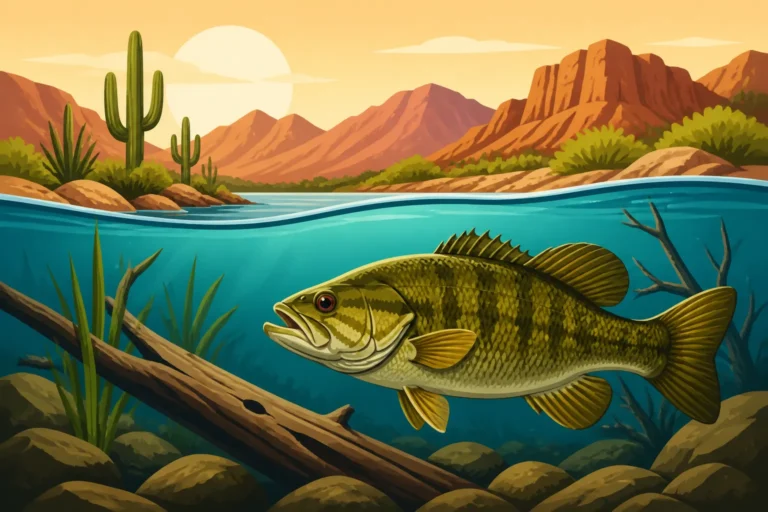
Smallmouth bass, often affectionately called "bronze backs," tend to have a more uniform, coppery-brown, or bronze coloration on their backs and sides. Instead of a distinct horizontal stripe, their sides are usually marked with dark, irregular vertical bars or blotches. These bars can sometimes be quite faint, especially in very clear water or depending on the fish's stress levels, but they are typically present to some degree. Their bellies are often a creamy white to yellow, and the coloration usually extends further up their sides than with largemouth.
The bronze or golden hue is a key visual cue for smallmouth. You'll rarely see a vibrant green smallmouth. Their eyes can also appear red or orange, adding to their distinct look. This camouflage helps them blend in with the rocky, gravelly bottoms and submerged wood they prefer. Imagine a smallmouth darting among the canyon ledges of Lake Powell – its bronzy, barred pattern would make it virtually invisible against the rock. The specific shade of brown or bronze can lighten or darken based on the water clarity and bottom composition. A smallmouth from a sand-bottomed river might be paler than one from a dark, rocky lake, but the overall bronze tone and vertical barring pattern remain consistent identifiers.
Body Shape and Fin Differences
Beyond the obvious jaw and coloration, there are more subtle, yet equally important, physical traits in the body shape and fin structure that can help you distinguish between largemouth and smallmouth bass. These characteristics relate directly to how each species swims, hunts, and thrives in its preferred environment. Pay close attention to these details, especially if you're still uncertain after checking the jaw and color.
Largemouth Body and Dorsal Fin
A largemouth bass generally has a more elongated and streamlined body compared to the smallmouth. It tends to be somewhat "taller" in body depth relative to its length, giving it a slightly more compressed, football-like appearance from the side. This body shape is ideal for rapid bursts of speed from a stationary position, allowing it to ambush prey effectively from cover.
Perhaps the most definitive fin characteristic of the largemouth is its dorsal fin. The dorsal fin, located on the fish's back, is clearly separated into two distinct parts: a spiny front section and a soft-rayed rear section. There is a deep and obvious notch between these two sections, often appearing as if the fin is almost completely split in two. You can usually lay the spiny front section flat against the back and still see a clear separation from the soft-rayed rear section. This deep division is a very reliable feature to look for, and it's something you can feel as well as see when handling the fish carefully. The overall appearance is a fish built for lurking and quick, explosive attacks in complex underwater structures.
Smallmouth Body and Dorsal Fin
The smallmouth bass, in contrast, typically boasts a more compact, robust, and torpedo-shaped body. It's generally a stockier fish for its length, giving it a powerful, muscular appearance. This aerodynamic shape is perfectly suited for navigating currents in rivers and streams, and for open-water pursuits of baitfish in deeper lakes. Smallmouth are known for their strong fighting ability, and their compact body contributes significantly to their acrobatic leaps and powerful runs.
When you examine the dorsal fin of a smallmouth, you'll notice a significant difference from the largemouth. While it also has a spiny front and a soft-rayed rear section, the notch between them is much shallower and less pronounced. It might look more like a gradual dip rather than a deep cut. In many cases, if you gently press the spiny portion down, it will appear to connect smoothly with the soft-rayed portion, creating a continuous, albeit slightly undulating, fin. This subtle yet consistent difference in the dorsal fin's appearance is an excellent secondary identifier. You might find detailed illustrations of these fin differences in specialized fishing guides or books available on Amazon, which can be super helpful for visual learners. These body and fin characteristics highlight the smallmouth's preference for more dynamic, open-water environments where sustained swimming and agility are key.
Habitat Preferences in Arizona Waters
One of the strongest indicators of whether you’re about to catch a largemouth or a smallmouth bass, even before you see the fish, is the environment you’re fishing in. These two species have distinct preferences for water type, temperature, and structure, which allows them to coexist in some Arizona lakes without directly competing for the same niches. Knowing their preferred haunts can drastically increase your chances of targeting the species you desire.
Largemouth's Preferred Haunts
In Arizona, largemouth bass are the kings of the warm, often shallower, and vegetation-rich waters. They thrive in lakes and reservoirs with extensive submerged structure and cover. Think of environments where a predator can easily ambush its prey. This includes:
- Weedy Coves and Flats: Areas with lily pads, cattails, hydrilla, or other aquatic vegetation provide excellent cover and hunting grounds.
- Submerged Timber and Brush Piles: Fallen trees, stumps, and man-made brush piles are classic largemouth hangouts.
- Rocky Points with nearby vegetation: While they like rocks, they prefer them mixed with some sort of cover.
- Murkier or Stained Water: Largemouth tolerate lower visibility better than smallmouth, often using it to their advantage for ambushing.
Good examples of quintessential largemouth bass lakes in Arizona include Roosevelt Lake Arizona Fishing Guide, Lake Pleasant Arizona Fishing Guide (especially its shallower, warmer coves), Saguaro Lake Arizona Fishing Guide, and the lower elevations of the Salt River chain. If you're out on Apache Lake casting a frog into thick mats of weeds, you're almost certainly targeting a largemouth. These areas provide the perfect blend of cover and warmer water that largemouth bass adore for both hunting and spawning. For beginners looking to get into bass fishing, starting in these types of environments can be quite rewarding, and checking out a Beginner Fishing Techniques for Arizona Desert Lakes guide might be a good idea.
Smallmouth's Rocky Retreats
Smallmouth bass, on the other hand, are creatures of cooler, clearer, and often deeper water, with a strong affinity for rocky structures. Their torpedo-shaped bodies and excellent eyesight are perfectly adapted for these environments, where they actively chase down prey rather than relying solely on ambush. You'll typically find smallmouth in:
- Rocky Points and Bluffs: Steep, rocky shorelines and underwater ledges provide ideal foraging and hiding spots.
- Gravel Beds and Rubble: Areas with smaller rocks and gravel are perfect for crawfish, a smallmouth's favorite meal.
- Deep, Clear Water: Smallmouth prefer high visibility to spot their prey and are less tolerant of murky conditions.
- Current-Washed Areas: In rivers or sections of lakes with current, smallmouth will position themselves to intercept baitfish.
The prime smallmouth bass fisheries in Arizona are places like Lake Powell Arizona Fishing Guide, particularly in its stunning canyons and clear waters, and certain sections of the Colorado River system, such as Lees Ferry where trout are the main draw but smallmouth can also be found in specific habitats. The rocky structures and cooler temperatures of these northern Arizona waters create an ideal environment for smallmouth to thrive. If you're fishing a deep, clear drop-off at Lake Powell with a jig or a tube bait, you're squarely in smallmouth territory. Their preference for these cooler, rockier climes is a defining characteristic and a strong clue to their identity before you even hook one. Understanding Smallmouth Bass Habitat in Arizona Lakes is key to a successful outing.
Quick Reference Guide: Largemouth vs Smallmouth Bass Identification
Sometimes, when you've got a fish in hand and you're trying to make a quick decision about whether to keep or release it based on regulations, you need a rapid way to compare key features. This quick reference guide, including a handy table, should help you make that call with confidence right there on the water. It consolidates all the primary differences we've discussed into an easily digestible format.
Visual Checklist for On-the-Water Identification
Before reaching for your measuring tape or checking specific Arizona Fishing Season Dates and Limits, run through this mental checklist the moment you land a bass:
- Jawline Test:
- Largemouth: Does the corner of the jaw extend past the back edge of the eye? (Think "big mouth")
- Smallmouth: Does the corner of the jaw not extend past the middle of the eye? (Think "small mouth")
- Coloration & Pattern:
- Largemouth: Is the fish generally green (olive to dark green)? Does it have a distinct, often blotchy, horizontal dark line along its side?
- Smallmouth: Is the fish generally bronze, brown, or coppery? Does it have vertical bars or blotches on its sides instead of a horizontal line?
- Dorsal Fin:
- Largemouth: Is there a deep, clear notch separating the spiny front part from the soft-rayed rear part of the dorsal fin?
- Smallmouth: Is the notch in the dorsal fin shallow and less pronounced, making it appear more continuous?
- Body Shape:
- Largemouth: Does it look a bit more elongated and slightly "taller" in body depth?
- Smallmouth: Is it more compact, robust, and torpedo-shaped?
- Habitat Hint:
- Largemouth: Did you catch it in warm, weedy, or timber-filled shallow water?
- Smallmouth: Did you catch it in cooler, clear, rocky, or current-swept water?
By quickly running through these points, you should be able to confidently identify your catch. Carrying a small, laminated card with these points, perhaps even one you print after checking product reviews on Amazon for fishing accessories, can be a real game-changer when you're still learning.
Comparison Table: Largemouth vs. Smallmouth Bass
This table provides a concise, side-by-side comparison of the key identification features:
| Feature | Largemouth Bass | Smallmouth Bass |
|---|---|---|
| Jaw Extends | Past the rear edge of the eye | Typically not past the middle of the eye |
| Primary Color | Green (olive to dark green) | Bronze, brown, or coppery |
| Body Pattern | Prominent dark horizontal lateral line (often blotchy) | Vertical bars or mottling on sides (no horizontal line) |
| Dorsal Fin | Deep, distinct notch, nearly separates the two parts | Shallow, less pronounced notch, appears more continuous |
| Body Shape | More elongated, slightly compressed | More compact, robust, torpedo-shaped |
| Preferred Habitat | Warm, shallow, weedy, heavy cover, submerged timber | Cool, clear, rocky structure, gravel, current |
| Eye Color | Usually dark | Often reddish or orange hues |
This table is a fantastic tool to quickly differentiate between the species, whether you're a beginner learning Arizona Fishing Rules for Beginners or a more experienced angler double-checking your catch.
Common Misconceptions and Local Peculiarities
Even with all the clear-cut identifiers, Mother Nature loves to throw curveballs. Sometimes, fish don't perfectly fit the textbook description, and specific local conditions or the presence of other similar species can add to the confusion. It's important to be aware of these nuances, especially when fishing in a diverse state like Arizona.
Spotted Bass vs. Largemouth: An Added Layer of Confusion
In some Arizona waters, particularly in the warmer, western parts of the state and certain reservoirs like Lake Havasu, you might encounter a third black bass species: the spotted bass (sometimes called a "spot"). These fish can be a real head-scratcher because they share characteristics with both largemouth and smallmouth. They often have a somewhat smaller mouth than a largemouth (though still extending past the eye, sometimes), and their coloration can be a mix of green and bronze with distinct rows of spots below the lateral line, giving them a "spotted" appearance.
The most reliable way to differentiate a spotted bass from a largemouth, when in doubt, is to check for a patch of teeth on the tongue. If you carefully open the fish's mouth and run your finger over its tongue (be cautious of hooks!), a spotted bass will have a small, rough patch of granular teeth on the center of its tongue. Largemouth bass do not have this patch. Smallmouth bass also lack this tongue patch, making it a key differentiator between spotted and largemouth bass. While not as common as largemouth or smallmouth in many popular Arizona fishing spots, knowing about spotted bass adds another layer to your identification skills and prevents misidentification, which could again relate to specific bag limits or slot sizes for certain species in particular areas.
Hybrids and Environmental Variability
It's also worth remembering that fish don't always read the field guides. Just like humans, there can be individual variations within a species. A largemouth in extremely clear water might appear lighter with a less defined lateral line, while a smallmouth from slightly murkier water might have fainter vertical bars. Environmental factors like diet, water clarity, light conditions, and even stress from being caught can temporarily alter a fish's coloration.
Furthermore, while rare, hybridization between black bass species can occur, though it's much less common with largemouth and smallmouth than, say, between white bass and striped bass to create a "wiper." If you catch a fish that truly seems to have an ambiguous mix of features, it's best to err on the side of caution. If regulations are stricter for one species, assume it's that species. If you plan to release, simply enjoy the catch. For the vast majority of your catches, however, sticking to the primary identifiers – especially the jawline and dorsal fin notch – will serve you incredibly well. Always consult the current Arizona Fishing Regulations Booklet Where to Find It for the most up-to-date information on species limits and rules for the specific body of water you're fishing. Being prepared with the right knowledge, and perhaps even a good pair of polarized sunglasses available on Amazon to cut glare and see patterns more clearly, will make all the difference in your Arizona fishing adventures.
Disclaimer
This article is for general informational purposes only and does not constitute professional advice. Laws, prices and regulations vary by location and change over time. Consult a qualified professional for guidance on your specific situation.