Do Crappie School Near Structure?
One of the biggest head-scratchers for new anglers, and even some seasoned folks, when targeting crappie in Arizona, is figuring out where these elusive panfish like to hang out. You've heard whispers of "structure" and "schooling," but what does that really mean when you're out on a vast desert lake like Roosevelt or Pleasant? It's not always obvious, and many a fishing trip has ended in frustration simply because crappie weren't where we expected them to be. This guide is all about cutting through that confusion, helping you understand the undeniable connection between crappie, schooling behavior, and the various structures they call home in our Arizona waters.
Understanding Crappie Behavior: The Schooling Instinct
When you're chasing crappie, one of the most fundamental things to grasp is their social nature. These aren't solitary wanderers; they're community dwellers, almost always found in groups. This schooling behavior is deeply ingrained in their survival instincts, and it dictates much of where and how you'll find them.
Why Crappie Stick Together
Imagine being a small fish in a big pond, or in our case, a big Arizona lake. There's safety in numbers, right? Crappie school primarily for protection against predators. A large group makes it harder for a bigger fish, like a striped bass or a large flathead catfish, to single out an individual. It's a classic defense mechanism. Beyond safety, schooling also plays a significant role in their feeding strategy. A larger group can more efficiently find and ambush schools of baitfish or concentrations of insects. When one crappie finds a food source, the whole school benefits. This communal approach maximizes their chances of survival and growth, especially in environments where resources might be scattered or difficult to locate.
This instinct means that if you catch one crappie, there are almost certainly more nearby. It's rarely a "one-and-done" situation. This is why when you hit a good spot, you might pull fish after fish from the same small area. Their schooling nature is a huge advantage for anglers once you figure out where the school is holding. Understanding this basic principle is your first step towards consistently finding and catching crappie, whether you're out on the Roosevelt Lake Arizona Fishing Guide or a smaller community pond.
The Role of Structure in Crappie Socializing
So, we know crappie love to school, but where do they form these schools? This is where structure comes in, and it's the second crucial piece of the puzzle. Crappie don't just school anywhere in open water; they gravitate towards anything that offers cover, shade, or ambush points. Structure provides them with a sense of security, a place to hide from predators, a sanctuary from harsh sun, and an ideal location to wait for unsuspecting prey.
Think of structure as the neighborhood where crappie families gather. It could be a submerged tree, a rocky ledge, or even a man-made fish habitat. Without structure, crappie would be exposed and vulnerable, and frankly, much harder to find for us anglers. The type of structure can vary greatly depending on the lake and even the season, but the principle remains the same: find the right structure, and you're likely to find a school of crappie. As the sun beats down on Arizona's desert lakes, shade becomes paramount. Overhanging trees, deep drop-offs, and even the shadow cast by a boat dock can be a magnet for crappie looking to escape the heat. This is especially true during the warmer months when surface temperatures can soar.
Types of Structure Crappie Love in Arizona Waters
Arizona's lakes offer a diverse range of underwater environments, and crappie have adapted to utilizing many different types of structure. Knowing what to look for and where to look for it can drastically improve your success rate.
Submerged Timber and Brush Piles
This is arguably the most classic crappie structure, and for good reason. Submerged trees, sunken logs, and intentional brush piles provide an incredible amount of cover and complexity. The branches and limbs offer countless nooks and crannies for crappie to hide, ambush baitfish, and escape larger predators.
On lakes like Alamo or the various impoundments along the Salt River, you'll often find entire forests of drowned trees or strategically placed brush piles (often marked by local anglers or fishing clubs). Crappie will suspend themselves within these branches, sometimes right in the middle, sometimes closer to the outer edges. The key is to present your bait or lure right into their living room. Fishing these areas requires patience and often results in snags, but the reward of pulling out a slab crappie from a thick brush pile is truly satisfying. You might even find some ready-made brush piles that have been dropped specifically for fish habitat. Many anglers will even create their own brush piles, sinking old Christmas trees or bundles of mesquite branches to create instant crappie magnets. For insights on fishing these particular features, check out our guide on How to Fish a Brush Pile for Crappie.
Rock Piles, Ledges, and Drop-offs
While brush is king, don't underestimate hard structure. Rocky bottom, steep ledges, and sudden drop-offs can be equally productive. Crappie will use the contours of these features to their advantage. A school might hold just off a rock pile, moving onto it to feed, or suspend along a vertical ledge at a specific depth where baitfish are concentrated.
Think of Lake Powell's canyon walls or the deep coves of Canyon Lake. Crappie will often relate to these sheer rock faces, especially where there are small ledges, cracks, or submerged boulders. Drop-offs are particularly important as they provide a quick depth change, allowing crappie to move up and down in the water column quickly to find comfortable temperatures or follow bait. These areas can be fantastic ambush points for crappie waiting for unsuspecting shad or minnows to swim by. Learning to identify these subtle changes in depth and bottom composition using your electronics is key to unlocking these spots. Sometimes, the crappie might be just a few feet away from the structure, cruising the edge, rather than being buried deep within it.
Docks, Piers, and Man-Made Cover
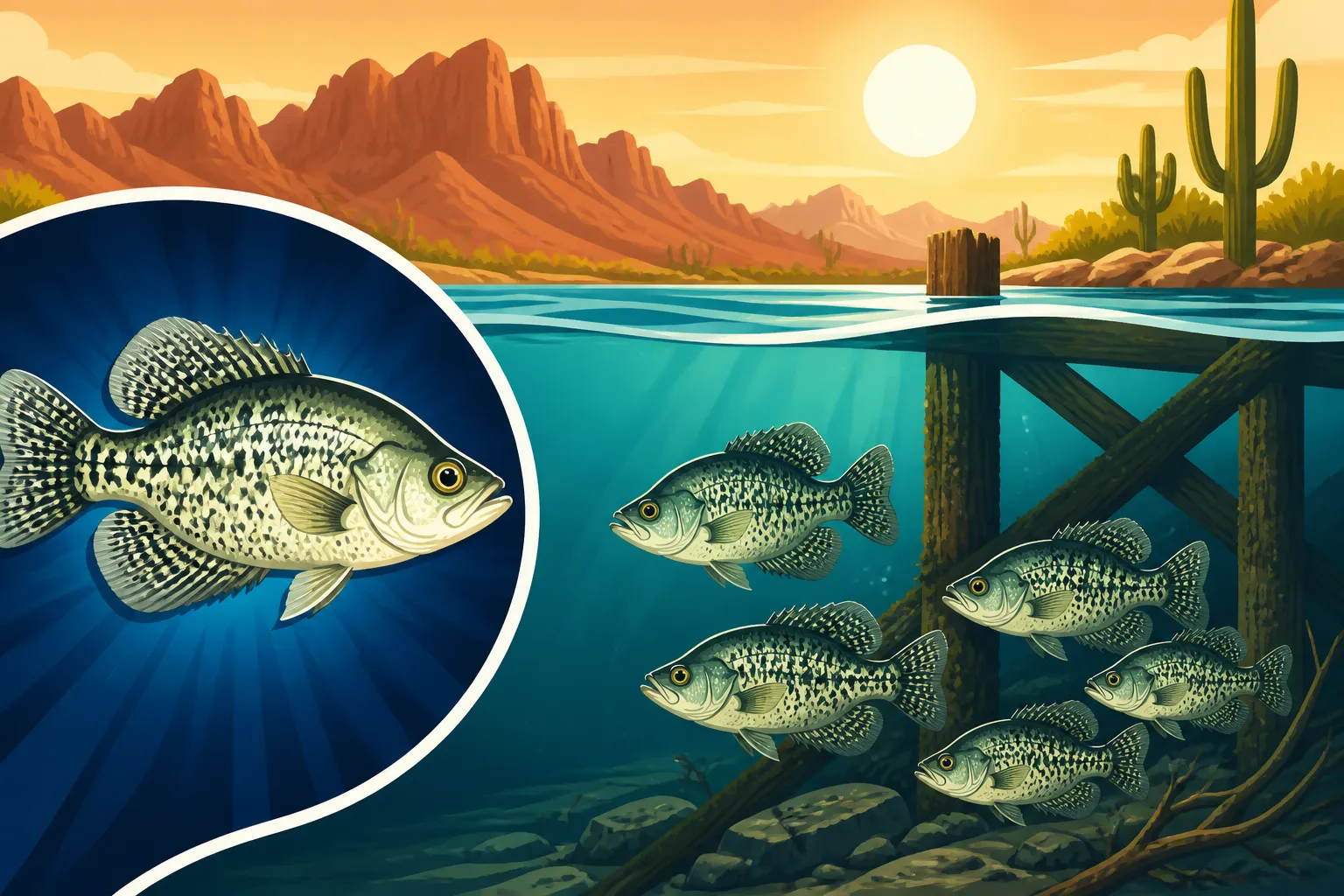
In urban and more developed lakes, human-made structures become invaluable crappie magnets. Boat docks, fishing piers, bridge pilings, and even submerged culverts all provide the shade and cover that crappie crave. The shadows cast by docks offer excellent sun protection, and the pilings themselves are perfect vertical structure.
At popular spots like Tempe Town Lake or the various community fishing lakes, docks and piers are prime targets. Crappie will often suspend directly under or around these structures, especially on sunny days. Anglers targeting these areas often use vertical presentations, dropping jigs or minnows straight down along the pilings. Bridge pilings in larger lakes, particularly those with deep water nearby, can also hold massive schools. These structures create current breaks and offer a vertical dimension that crappie can relate to throughout the day. Don't overlook old tires, concrete chunks, or other debris that might have found its way to the bottom – crappie are not picky about what kind of cover they use as long as it offers protection and food opportunities.
How to Find Crappie Schools Around Structure
Knowing that crappie school near structure is one thing; actually finding them is another. This is where a combination of technology, observation, and a bit of angler intuition comes into play. You don't have to guess blindly every time you hit the water.
Using Electronics to Locate Schools
In modern fishing, a good fish finder is your best friend for crappie fishing, especially when trying to pinpoint schools around submerged structure. Side imaging, down imaging, and traditional 2D sonar can paint a detailed picture of the underwater world.
- Side Imaging: This technology allows you to scan wide swaths of water on either side of your boat, revealing entire brush piles, rock formations, and even schools of fish holding within or around them. You can cover a lot of water quickly, identifying potential crappie hotspots without having to drive directly over them. If you're on a vast body of water, side imaging can save you hours of fruitless searching. Looking for a quality unit? There are many fantastic options available on sites like Amazon that cater to various budgets.
- Down Imaging: Once you've identified a promising area with side imaging, or if you're exploring a known spot, down imaging provides a photographic-like view directly beneath your boat. You can clearly see the structure itself – the individual branches of a sunken tree, the contours of a rock pile – and the fish holding tight to it. Crappie often appear as distinct dots or "clouds" of fish, depending on how tightly packed they are.
- 2D Sonar: The traditional sonar still has its place, especially for identifying fish arches and understanding depth. Many anglers use a combination of all three, starting wide with side imaging, then narrowing down with down imaging, and finally confirming with 2D sonar before making a cast. Learning to interpret these readings takes practice, but it's an invaluable skill for serious crappie anglers. Our guide on How to Read a Fish Finder for Bass offers some overlapping principles that can be applied to crappie.
Reading the Water and Identifying Prime Spots
Even without advanced electronics, you can still use your eyes and knowledge to find crappie. "Reading the water" is an art form developed over years of experience.
- Visible Cover: Look for anything that breaks the surface or creates shade. Overhanging trees, fallen logs near the bank, boat docks, and old pier pilings are all visible indicators of potential crappie habitat. Sometimes, a subtle ripple on the surface might indicate a submerged brush pile just beneath.
- Baitfish Activity: Where there's bait, there are usually predators. Keep an eye out for schools of shad flickering on the surface or sudden disturbances that might indicate larger fish pushing them. Crappie are opportunistic feeders, and they will follow their food source. If you see active baitfish near structure, crappie are likely close by, staging for a meal.
- Depth and Water Temperature: Crappie are sensitive to temperature and prefer certain depths. In warmer months, they'll often go deeper to find cooler, more oxygenated water. In spring, they'll move shallower to spawn. Understanding the Crappie Spawning Season Tactics and the typical depths crappie prefer in different seasons will help you target the right zones around structure. A good thermometer can be a valuable tool to confirm water temperatures at various depths, helping you narrow down the productive zone. Even a simple, inexpensive one found on Amazon can make a difference.
Fishing Techniques for Structure-Oriented Crappie
Once you've identified a promising structure holding crappie, the next step is to present your bait or lure effectively. Crappie can be finicky, so having a few techniques in your arsenal is crucial.
Vertical Jigging and Trolling
These two techniques are incredibly effective for targeting crappie holding tight to or suspending near structure.
- Vertical Jigging: This method is perfect when you've pinpointed a school directly beneath you, often with your fish finder. You drop a small jig (like a Bobby Garland, Johnson, or a similar crappie jig) or a live minnow on a hook straight down into the strike zone. The key is to keep your bait at the exact depth where the fish are holding. Gentle jigging motions, lifting and dropping the rod tip, can entice bites. This is a very precise way to fish and often requires a sensitive rod to detect the subtle "thump" of a crappie bite. For beginners, getting a sensitive rod and reel combo that transmits every nibble can be a game-changer.
- Trolling: For covering more water and searching for scattered schools around larger structures or along ledges, slow trolling is highly effective. You can deploy multiple rods with jigs, small crankbaits, or live minnows at varying depths and distances behind the boat. This allows you to present baits to crappie that might be spread out along a submerged creek channel or a long rock wall. Spider rigging, where multiple rods are fanned out from the boat, is a popular trolling method for crappie, especially in large reservoirs. The goal is to move just fast enough to give your lures action but slow enough that crappie have time to react. You can find specialized rod holders and even pre-rigged crappie trolling setups on Amazon.
Suspended Baits and Slip Bobbers
Crappie often suspend in the water column, meaning they aren't always on the bottom. Fishing for suspended crappie near structure requires different approaches.
- Suspended Baits: This involves using a technique where your bait or lure is held at a specific depth above the bottom, often right in the middle of a brush pile or along a ledge. A simple way to do this is with a weighted jig or a minnow on a bare hook, counted down to the desired depth. You can often see these suspended schools on your fish finder, and then it's just a matter of matching their depth. This is particularly effective when crappie are holding over deeper water near a vertical structure like bridge pilings or the deeper branches of a sunken tree. A longer rod can help you present your bait further from the boat without spooking the school.
- Slip Bobbers: This is a fantastic method for precisely presenting a live minnow or a jig at a set depth, particularly when crappie are suspended around visible cover like docks or shallow brush piles. A slip bobber allows the line to "slip" through the bobber stopper, letting you cast your bait out and then allowing it to sink to the pre-set depth. This is less intrusive than dropping a jig straight down on top of them and allows for a more natural presentation. Once your bait is at the desired depth, the bobber signals any bites. This technique is especially useful for targeting specific pockets of fish within a dense brush pile or under a shaded dock. Getting the right size and sensitivity of bobber is key; smaller, more sensitive bobbers detect even the lightest crappie bites. Many anglers have their favorite bobber styles, which are readily available from tackle shops or online retailers. Our How to Rig a Live Minnow for Crappie guide can help you get set up.
When you combine the crappie's natural schooling tendencies with their affinity for structure, you're well on your way to more successful fishing trips in Arizona. They almost always school, and almost always relate to some form of cover. Understanding this fundamental link is the key to unlocking consistent crappie catches.
Crappie Seasonal Movements and Structure Preferences
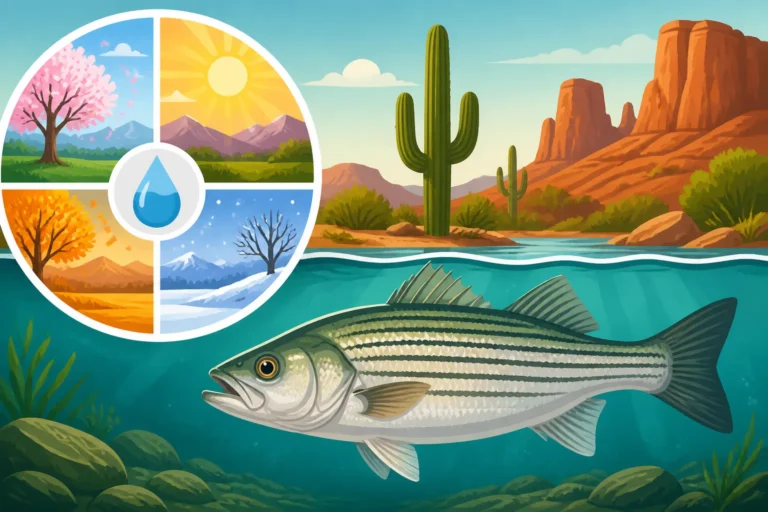
It's important to remember that crappie don't just stay put in one specific type of structure all year long. Their preferences shift with the seasons, largely driven by water temperature, spawning cycles, and baitfish movements. Understanding these patterns is crucial for consistent success.
Spring: Shallow Structure and Spawning Grounds
Ah, spring in Arizona! As water temperatures begin to rise into the 50s and 60s, crappie's thoughts turn to spawning. During this time, they will move from their deeper wintering grounds to shallower waters, typically looking for hard-bottomed areas with some form of cover. This could be submerged brush, cattails, fallen trees, or even rocky banks. They build nests in these shallower areas, often only a few feet deep, making them more accessible to bank anglers and those with smaller boats.
During the pre-spawn, crappie will stage on the edges of these shallow areas, often around deeper brush or drop-offs leading into the spawning flats. Once the water hits the ideal temperature range, they'll move fully into the shallow cover. This is often the easiest time to find and catch large numbers of crappie, as they are concentrated and aggressive. Small jigs and live minnows pitched into visible cover are highly effective. Don't forget to check out our Spawning Behavior of Crappie in Spring for more detailed tactics during this productive season. Many anglers will head to lakes like Alamo or Roosevelt during this time, specifically targeting flooded timber or dense brush in shallower coves.
Summer: Deeper Structure and Thermal Refuge
As the scorching Arizona summer sets in and surface water temperatures soar, crappie will retreat to deeper, cooler, and more oxygenated water. This doesn't mean they abandon structure; it just means they move to deeper versions of it. You'll find them concentrating on deep submerged timber, brush piles in 15-30 feet of water, deep rock ledges, channel swings, and the shaded sides of deep docks or bridge pilings.
During these hot months, crappie often suspend in the water column, rather than hugging the bottom. They might hold in the top half of a 20-foot brush pile that sits in 40 feet of water, or suspend 10-15 feet down over a 30-foot deep channel. This is where electronics become absolutely indispensable for pinpointing their exact depth. Trolling deep-diving crankbaits or vertically jigging small spoons and heavy jigs directly into these deep schools are productive techniques. Night fishing can also be highly effective in summer, as crappie will often move shallower under the cover of darkness, sometimes congregating around underwater lights that attract baitfish. Even during the day, seeking out the darkest, coolest pockets around deep structure is key.
Fall: Transitional Movements and Active Feeding
Fall is a transitional period for crappie, as water temperatures begin to cool, signaling an increase in their activity levels. They will often move out of their deep summer haunts and begin to spread out, often following baitfish schools into shallower to mid-depth ranges. This is another excellent time for crappie fishing as they actively feed, bulking up for the colder winter months.
You'll find them relating to a mix of structures during the fall. Early fall might see them still fairly deep, but as temperatures drop further, they'll often move to creek channels, brush piles, and rock structures in 10-20 feet of water. They might even move into shallower bays and coves during overcast days or in the mornings and evenings, actively chasing baitfish. This can be a great time for casting jigs and small spinnerbaits, or even slow-trolling minnows along contour lines. The crappie are often more aggressive in the fall, making them eager to strike. Keeping an eye on the local Arizona Fishing Season Dates and Limits can help you plan your fall crappie adventures.
Winter: Deep Water and Vertical Structure
Arizona's winters are often mild, but lakes can still get quite chilly. During the coldest months, crappie typically return to deeper waters, often congregating in large, dense schools around the deepest available structure. This includes deep submerged brush piles, timber, and pronounced channel edges or ledges.
They will often hold very tight to this structure, making them a challenge to locate and entice. Vertical presentations are generally most effective, slowly dropping a small jig or a live minnow right into the heart of the school. Patience is crucial, as their metabolism slows down, and bites can be very subtle. Focus on areas with stable temperatures and good cover, such as deep humps or points that drop off into the main lake basin. While slower, winter crappie can be some of the biggest and fattest, making the effort well worth it. Many anglers find that small finesse baits, sometimes tipped with a live minnow, are the ticket to enticing these cold-water crappie.
Essential Gear for Structure-Focused Crappie Angling
Having the right gear makes all the difference when you're specifically targeting crappie that are hiding in or around various structures. Precision and sensitivity are often key.
Rods, Reels, and Line for Tight Spaces
When you're pulling crappie out of dense brush or from under docks, your typical bass rod might be overkill.
- Rods: For vertical jigging or fishing around tight structure, a light to ultralight spinning rod, typically 5 to 7 feet long, is ideal. Look for a fast action tip that provides excellent sensitivity to detect those subtle crappie bites, but enough backbone to pull a fish out of cover. A good quality graphite rod will transmit every tap and bump. For trolling or spider rigging, longer, more flexible rods (8-12 feet) are often preferred, allowing for wider bait spreads and easier handling of multiple lines.
- Reels: Pair your ultralight rod with a small spinning reel (500 or 1000 series). These reels are lightweight, balance well with the rod, and offer smooth drag systems for fighting crappie without breaking light lines. A smooth drag is vital, especially when a crappie makes a run for the deepest part of a brush pile.
- Line: For crappie, light line is generally preferred. 4 to 6-pound monofilament or fluorocarbon is common. Monofilament offers a bit of stretch, which can be forgiving with sensitive crappie mouths, while fluorocarbon offers less stretch and better sensitivity, plus it's nearly invisible underwater. Some anglers prefer a very thin braided line (6-10 pound test) with a fluorocarbon leader for maximum sensitivity and strength, especially when fishing very heavy cover. This allows you to feel the structure and the bites better, and the braid can cut through lighter vegetation if you get snagged. Our Best Line for Crappie Fishing guide can help you choose.
Lures and Baits Tailored for Structure
Your tackle box for structure-focused crappie should be well-stocked with the right baits and lures.
- Jigs: Small plastic tube jigs, grub tails, and hair jigs are crappie staples. Sizes typically range from 1/32 oz to 1/8 oz, with lighter jigs for shallower, calmer water, and heavier ones for deeper, windier conditions. Carry a variety of colors, as crappie can be picky on any given day. Chartreuse, white, black, and various greens are usually good starting points. The action of the jig's tail is also important; some crappie prefer a subtle quiver, while others respond to a more aggressive flutter. Many of these excellent jigs can be found on Amazon, often in multi-packs.
- Live Bait: It's hard to beat a lively minnow for crappie, especially when they're less aggressive. Minnows can be rigged on a bare hook (size 4 or 6 light wire hook) or tipped on a jig. They provide natural scent and movement that can be irresistible. Nightcrawlers, small worms, or even tiny pieces of cut bait can also work, particularly for black crappie. Make sure to check local regulations on live bait usage.
- Small Crankbaits and Spinnerbaits: While jigs and minnows are primary, small crankbaits that dive to the crappie's depth can be excellent for trolling or casting around structure edges. Similarly, tiny inline spinnerbaits can be great for active crappie, especially in stained water where flash and vibration help. These lures cover more water and can trigger reaction strikes.
- Terminal Tackle: Don't forget essentials like split shot weights, swivels, and a good assortment of small hooks. If you're using slip bobbers, make sure you have extra bobber stops and beads. A small pair of pliers for removing hooks and cutting line is also invaluable. For a comprehensive look, see our Best Terminal Tackle for Crappie Fishing.
By understanding crappie's innate schooling behavior and their strong preference for various types of structure throughout the year, you'll be much better equipped to find them and put more fish in the boat. It's a fundamental truth in crappie fishing: if you find the right structure, you'll find the schools.
Disclaimer
This article is for general informational purposes only and does not constitute professional advice. Laws, prices and regulations vary by location and change over time. Consult a qualified professional for guidance on your specific situation.