Channel Catfish vs Flathead Catfish Identification
One of the most common head-scratchers for anglers in Arizona is telling the difference between a Channel Catfish and a Flathead Catfish. These two species are kings of our warmer waters, but they behave differently, look subtly unique, and require distinct fishing tactics. This guide will walk you through all the key identifying features, habitat preferences, and fishing strategies so you can confidently tell a Channel Cat from a Flathead and boost your success on the water.
The Basics: What Are We Looking For?
Before we dive into the nitty-gritty, let's get a general feel for these two incredible fish. Many folks think "catfish" and imagine a whiskered, bottom-dwelling creature, and while that's true for both, their personalities and appearances diverge quite a bit. Understanding these fundamental differences from the outset will help you develop an eye for distinguishing them, even from a distance.
General Appearance: A First Glance
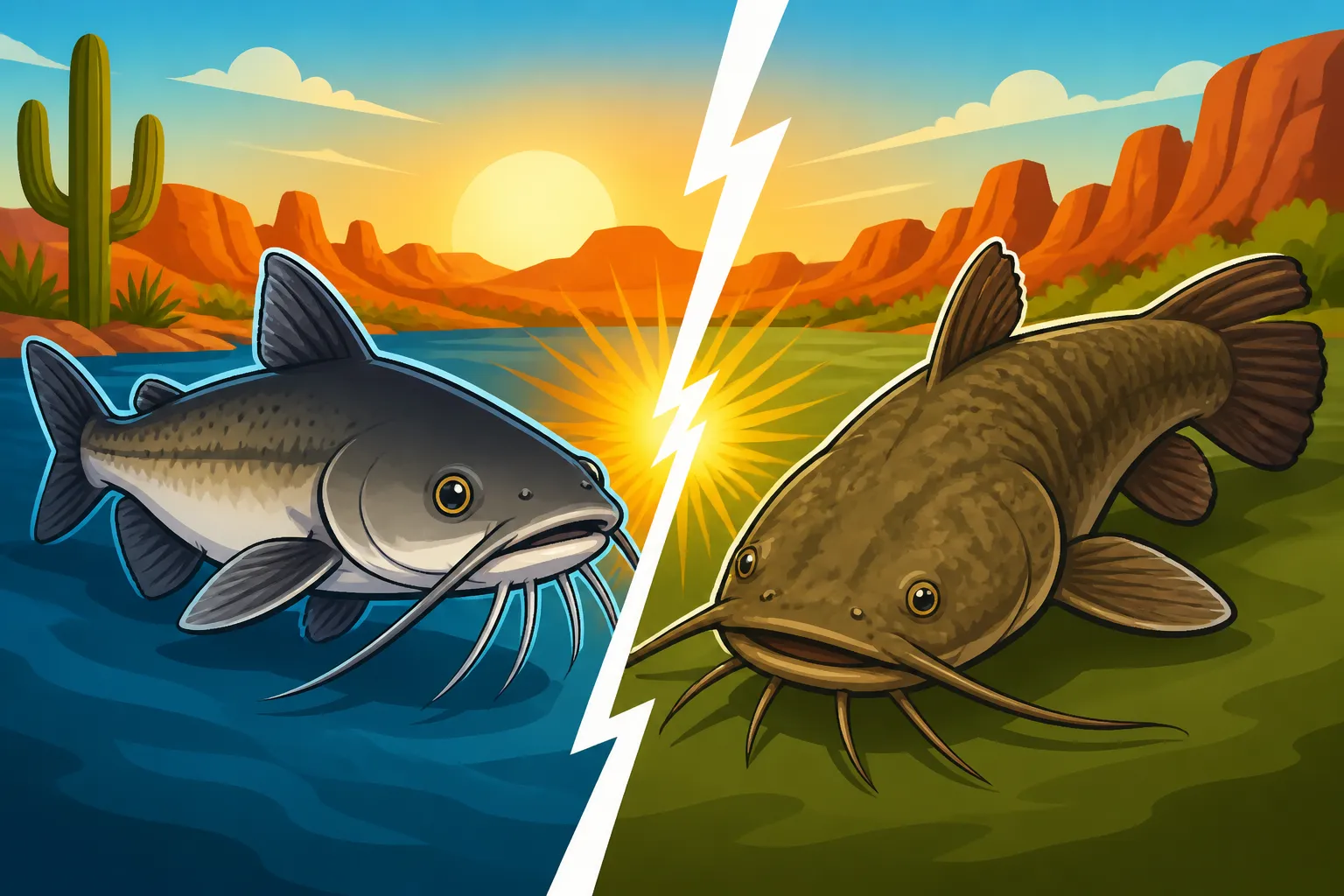
When you first pull a catfish out of the water, your brain starts processing a lot of visual cues at once. For Channel Catfish, you'll often notice a more streamlined, almost torpedo-shaped body. They tend to look a bit "cleaner" in their overall profile, often sporting those distinctive dark spots on their sides, especially when they're younger. These spots can fade as they mature, but they're a classic tell. Their overall color is usually a lighter gray or olive green, with a whitish belly. It's a look that screams "built for cruising."
Flathead Catfish, on the other hand, often present a much more robust and, well, flat-headed appearance. They are built like tanks. Their body is generally broader and more stout, particularly around the head and shoulders, tapering back towards the tail. You won't typically see those neat spots; instead, their coloration is usually a mottled brown, yellow, or olive, often with darker patches that give them a camouflaged look, perfect for hiding in cover. Imagine a grumpy, old river monster, and you're probably picturing a Flathead.
Geographic Range in Arizona: Where You'll Find Them
Knowing where each species prefers to hang out in Arizona can be a huge clue, even before you get them in the boat or on the bank. While there's overlap, their primary strongholds are somewhat distinct. Channel Catfish are incredibly adaptable and widespread across the state. You'll find them thriving in most of Arizona's warm-water lakes and rivers, from the lower Salt River chain like Saguaro Lake Arizona Fishing Guide and Canyon Lake Arizona Fishing Guide to the urban community fishing lakes right in the heart of our cities. They're often stocked in these community waters, making them a common catch for many anglers. They really don't mind a variety of conditions, as long as the water is warm enough and there's food.
Flathead Catfish, however, have a more specific preference. They are true river dwellers and prefer large, slow-moving river systems with plenty of deep holes, submerged timber, and rocky structure. Their presence is most pronounced in the larger river stretches, particularly along the Colorado River and its major impoundments like Lake Havasu, and also in major reservoirs like Lake Pleasant Arizona Fishing Guide and Roosevelt Lake Arizona Fishing Guide, especially in areas with significant riverine influence and abundant cover. You're less likely to find a Flathead in a small, regularly stocked urban pond. If you're fishing a big river with lots of snags, your chances of encountering a Flathead are much higher.
Size and Growth: Who Gets Bigger?
When it comes to bragging rights, size definitely matters in fishing, and there's a clear winner in this contest. Channel Catfish are fantastic sportfish, and they can certainly grow to respectable sizes. A Channel Cat of 5-10 pounds is a great catch, and anything over 15 pounds is usually considered a trophy in Arizona. They grow relatively quickly in favorable conditions, offering consistent action for anglers. They tend to top out around the 20-30 pound range in most Arizona waters, though bigger ones are certainly possible under ideal circumstances.
Flathead Catfish, on the other hand, are the undisputed heavyweights of the Arizona catfish world. These fish have the potential to grow to truly monstrous proportions. While a 20-pound Flathead is a common and exciting catch, they regularly push into the 40, 50, even 70+ pound range in our larger river systems. The Arizona state record for Flathead Catfish is a testament to their immense size. These fish are slow growers, taking many years to reach their maximum potential, making the pursuit of a true giant Flathead a dedicated quest for many anglers. When you hook into a really big one, there's no mistaking the sheer power of a Flathead.
Distinctive Physical Traits for Identification
Once you've got a catfish in your hands, it's time to look closely. There are a few anatomical features that serve as definitive indicators for telling these two species apart. These aren't just subtle nuances; they're clear, unmistakable markers that, once you know them, will make identification second nature.
Head Shape and Mouth: The Most Telling Features
This is arguably the most reliable way to distinguish between the two. The very name "Flathead" gives you the biggest clue! Take a good look at the fish's head from the top down. A Flathead Catfish will have a noticeably broad, flat head that appears somewhat depressed or squashed. Their eyes are relatively small and set higher on the head. More importantly, their lower jaw protrudes significantly beyond the upper jaw, giving them an almost bulldog-like underbite. This unique mouth structure is perfectly adapted for ambushing prey from below.
A Channel Catfish, conversely, has a more conical or rounded head that isn't nearly as flattened. Their eyes are typically larger and positioned more on the sides of their head. Critically, their upper jaw will either be equal in length to the lower jaw or, more commonly, slightly protrude beyond it. They have an overbite, or at least an even bite, which is a classic feature of bottom-feeding scavengers. Once you see the difference in jaw protrusion, you'll rarely confuse the two again.
Tail Fin Morphology: Forked vs. Rounded
Another definitive identifier is the shape of their tail fin. This is a characteristic that's easy to spot and rarely varies. The Channel Catfish has a deeply forked tail, much like a swallow's tail or a pair of scissors. The two lobes of the tail fin are distinct and separated by a deep V-shape. This forked tail is characteristic of fish that are built for speed and cruising in open water, allowing them to make quick maneuvers and chase down prey.
The Flathead Catfish, true to its robust nature, possesses a tail fin that is either straight (truncated) or very slightly notched, often appearing somewhat rounded or squared off. It lacks the deep fork of the Channel Cat. This solid, powerful tail is built for bursts of power and for holding their own in strong currents or when battling prey in heavy cover, not for sustained speed in open water. So, if it's deeply forked, it's a Channel; if it's blunt or slightly rounded, it's a Flathead.
Body Coloration and Markings: Subtle but Key Differences
While coloration can vary based on water clarity, diet, and age, there are general patterns that hold true. As mentioned earlier, Channel Catfish typically exhibit a lighter overall color – often olive-gray, bluish-gray, or greenish-brown on their back, fading to a silvery or white belly. Young Channel Cats are almost always adorned with distinct black spots along their sides, which usually diminish or disappear as they grow older. However, even mature Channel Cats will often retain a mottled or patchy pattern where the spots once were.
Flathead Catfish, in contrast, boast a much more mottled, often "calico" or patchwork pattern, usually in shades of yellow, brown, and olive green, with darker blotches or streaks. This coloration provides excellent camouflage against rocky bottoms, submerged logs, and muddy banks – their preferred ambush spots. They generally do not have the distinct dark spots seen on younger Channel Cats. Their belly is usually a creamy white or pale yellow, often blending less abruptly with their side coloration than a Channel Cat's. Keep in mind that a fish from muddy water might be darker than one from clear water, but the pattern remains the key.
Here's a quick comparison table:
| Feature | Channel Catfish | Flathead Catfish |
|---|---|---|
| Head Shape | More conical/rounded | Broad, distinctly flat, almost squashed |
| Lower Jaw | Equal to or slightly shorter than upper jaw | Protrudes noticeably beyond upper jaw (underbite) |
| Tail Fin | Deeply forked (V-shaped) | Straight, slightly notched, or rounded (not forked) |
| Body Shape | Streamlined, somewhat slender | Robust, stout, especially around head and shoulders |
| Coloration | Olive-gray, bluish-gray; often with dark spots | Mottled yellow, brown, olive; dark blotches/streaks |
| Typical Habitat | Widespread in lakes, rivers, community ponds | Large rivers, deep holes, heavy cover, submerged timber |
| Primary Diet | Omnivorous; scavengers and opportunistic feeders | Almost exclusively carnivorous; live fish, crayfish |
Behavior, Habitat, and Diet Differences
Knowing the physical traits is one thing, but understanding how these fish live and what they eat will not only solidify your identification skills but also dramatically improve your fishing success. Their lifestyles are as distinct as their looks.
Preferred Habitat: From Open Water to Snags
Channel Catfish are incredibly adaptable and comfortable in a wide range of environments. They thrive in both moving and still waters, from large reservoirs and rivers to smaller ponds and canals. You'll often find them cruising the open water, congregating near drop-offs, points, and channel edges, or exploring submerged humps and brush piles. They don't mind a bit of current but are equally at home in calm bays. This versatility is why they're so widely distributed and popular for Arizona anglers. You can find them in relatively clean areas, not always hugging the thickest cover.
Flathead Catfish, however, are creatures of structure and current. They are rarely found far from heavy cover – think massive submerged logjams, rocky ledges, undercut banks, and deep holes with significant current breaks. They are ambush predators that prefer to hide in these dark, protected spots, waiting for prey to swim by. If you're fishing a stretch of river with very little structure, you're less likely to find a Flathead. These fish are masters of camouflage and leverage their flat heads to wedge into tight spots, making them notoriously difficult to extract once hooked. Their preferred haunts in the Colorado River Fishing Guide in Arizona or the upper reaches of large lakes are dense and often snag-filled.
Feeding Habits: Scavengers vs. Predators
Here's where their behavior truly sets them apart, and it's key to how you'll fish for them. Channel Catfish are primarily opportunistic omnivores and scavengers. They have a keen sense of smell, which they use to locate decaying organic matter, insects, worms, crayfish, and even small fish. They are very much attracted to strong-smelling baits like stink baits, cut baits, cheese, and dough baits. They'll readily take dead or prepared baits, making them a very accessible target for many anglers. They're not particularly picky, which contributes to their widespread success.
Flathead Catfish are almost exclusively piscivorous, meaning they primarily eat other fish. They are powerful, aggressive ambush predators that prefer live prey. Their diet consists mainly of live bluegill, sunfish, carp, shad, and other small forage fish. You won't typically find a Flathead biting on a stink bait or a hot dog; they want something alive and struggling. This predatory nature dictates the type of bait and fishing techniques used – you need robust gear and lively bait to entice these formidable hunters. This is why when you're targeting trophy Flatheads, anglers often buy specialized live bait tanks, some even available on Amazon, to keep their baitfish frisky.
Behavior on the Hook: How They Fight
The way these two species fight can also give you a clue about what you've hooked. A Channel Catfish, when hooked, often puts up a spirited, erratic fight. They'll make quick runs, head shakes, and often try to roll or dive, but their runs are typically not as long or as powerful as a large Flathead's. They're fun to catch and can give a good account of themselves, but their fight is generally more about agility and quick maneuvers.
A Flathead Catfish, especially a large one, is a different beast entirely. When you hook into a big Flathead, be prepared for a long, powerful, and often stubborn battle. They use their broad, muscular bodies to stay deep, making slow, heavy runs and often trying to bury themselves back into whatever structure they came out of. It feels like you've hooked a log that suddenly comes alive. The fight is characterized by brute strength and dogged determination, often requiring stout rods and heavy lines to pry them away from cover. How to Fight a Big Flathead Catfish is a skill many dedicated anglers take pride in mastering.
Fishing Strategies for Each Species
Understanding their differences allows you to tailor your fishing approach, greatly increasing your chances of success. You wouldn't use a fly rod for a marlin, and similarly, you wouldn't use typical Channel Cat tactics for a Flathead.
Best Baits and Rigging: Tailoring Your Approach
For Channel Catfish, the world of bait is your oyster. Because they are omnivorous scavengers, they respond well to a vast array of baits. Classic choices include commercially prepared stink baits, chicken livers, hot dogs, shrimp, corn, and nightcrawlers. Cut bait, like pieces of carp, shad, or bluegill, can also be highly effective. The key is often smell and visibility. A simple bottom rig, like a slip sinker rig with a single hook, is often all you need. You'll want to use hooks appropriate for the size of the bait and the expected size of the fish, typically in the 1/0 to 4/0 range.
Flathead Catfish, given their predatory nature, demand live bait. There's no getting around it if you're serious about targeting them. Small live bluegill, sunfish, carp, or even larger minnows are prime choices. The bait needs to be lively and healthy, so a good livewell or bait bucket is essential. Rigging for Flatheads typically involves a stout circle hook (often 5/0 to 8/0 or larger, depending on bait size) through the back or lips of a live baitfish, presented on a heavy-duty slip sinker rig or a three-way swivel rig. You need gear that can withstand the powerful strike and subsequent battle. Having a variety of live baits, sometimes purchased from local tackle shops or online retailers like Amazon, can make a difference. Learn more about Best Bait for Catfish in Arizona to further refine your choices.
Optimal Locations and Times: Maximizing Your Chances
Channel Catfish can be caught throughout the day, especially during overcast conditions or early morning and late evening. Night fishing for Channel Cats is also highly productive, as they become more active in cooler temperatures and low light. Look for them in areas with moderate depth, near channel edges, submerged humps, and around any natural or artificial structure like brush piles or rip-rap. In community lakes, they'll often patrol the deeper sections or suspended near aerators.
Flathead Catfish are primarily nocturnal hunters, with peak activity occurring from dusk through the early hours of dawn. They emerge from their daytime lairs in heavy cover to forage. During the day, they'll be tucked deep into logjams, under cut banks, or in the deepest holes of a river or reservoir. To target them, you need to present your live bait directly to these ambush points. Catfish Night Fishing Techniques are almost a prerequisite for serious Flathead anglers. Focus on areas with strong current and abundant large, woody debris or rocky structure, especially river bends and deep scour holes.
Gear Considerations: Rods, Reels, and Line
For Channel Catfish, a medium-heavy to heavy action spinning or baitcasting rod, typically 7-9 feet long, paired with a reliable reel spooled with 12-20 pound monofilament or braided line, will handle most situations. You need enough backbone to cast moderate weights and control a decent-sized fish, but not so heavy that it takes all the fun out of it. Look for a rod with a sensitive tip to detect those subtle bites but enough power to set the hook firmly.
Targeting Flathead Catfish requires heavy-duty gear. Think heavy to extra-heavy action rods, often 7-10 feet long, capable of handling large sinkers and heavy lines, and designed to absorb the shock of a powerful strike and the strain of battling a giant fish out of thick cover. Baitcasting reels with a strong drag system and high line capacity are essential. Spool your reel with heavy braided line, typically 40-80 pound test, to resist abrasion from snags and provide the stopping power needed for large fish. Many anglers will also use a heavy fluorocarbon or monofilament leader, often 30-50 pounds, for stealth and additional abrasion resistance. Considering Do You Need Heavy Line for Flathead Catfish? is critical when gearing up.
Why Accurate Identification Matters
Beyond satisfying your angler's curiosity, correctly identifying your catch is crucial for several practical and ethical reasons. It's not just about knowing what you caught; it's about respecting the fish and the rules that protect them.
Bag Limits and Regulations: Staying Compliant
This is perhaps the most important reason for accurate identification. The Arizona Game and Fish Department often has different regulations for different species, including bag limits, possession limits, and sometimes even size restrictions. For example, while Channel Catfish might have a generous daily bag limit in certain waters, Flathead Catfish may have a much more restrictive limit or even specific slot limits designed to protect larger breeding fish. Imagine the headache of being stopped by a game warden and having misidentified your catch, leading to unintentional violations.
Staying informed about these regulations, which you can usually find in the annual Arizona Fishing Regulations Explained booklet, is your responsibility as an angler. Knowing the precise difference between a Channel and a Flathead ensures you're complying with the law, protecting yourself from potential fines, and contributing to the sustainable management of our fisheries. Ignorance of the law is never an excuse, especially when the information is readily available.
Culinary Differences: What Tastes Best?
Let's be honest, for many, the ultimate goal of a fishing trip is a delicious meal. And when it comes to table fare, these two catfish species offer distinctly different culinary experiences. Channel Catfish are widely regarded for their mild, flaky, white meat, especially smaller to medium-sized fish. They have a delicate flavor that takes well to various cooking methods, from frying and baking to grilling. Many consider them superior eating fish.
Flathead Catfish, particularly larger individuals, tend to have firmer, denser, and sometimes fattier meat. The flavor is often described as richer, but also potentially stronger or "fishier" than a Channel Cat, especially from older, larger specimens. While still excellent eating, some anglers prefer to release the very largest Flatheads due to their role as trophy breeders and the potential for a less appealing taste compared to younger, smaller fish. For those who do keep Flatheads, many advocate for smaller fish for the best flavor, typically those under 10-15 pounds. Understanding these differences allows you to make an informed decision about what to keep and what to release for a future catch.
Conservation and Management: Protecting Our Waters
Finally, accurate identification plays a vital role in conservation efforts. Fisheries managers rely on data collected from anglers and surveys to understand fish populations, growth rates, and overall health. Misidentification can skew this data, leading to incorrect assessments and potentially ineffective management strategies. By correctly reporting your catches (if participating in surveys) and adhering to species-specific regulations, you contribute directly to the health of Arizona's aquatic ecosystems.
Furthermore, releasing larger, older fish, especially Flatheads, allows them to continue their reproductive cycles and contribute to future generations. These older fish are crucial for maintaining genetic diversity and a healthy population structure. By knowing which species you're handling, you can make responsible decisions that support sustainable fishing practices for everyone. This mindful approach helps ensure that future generations of anglers will also have the opportunity to enjoy the thrill of catching these magnificent Arizona catfish.
Disclaimer
This article is for general informational purposes only and does not constitute professional advice. Laws, prices and regulations vary by location and change over time. Consult a qualified professional for guidance on your specific situation.