Walleye Presence in Arizona Waters
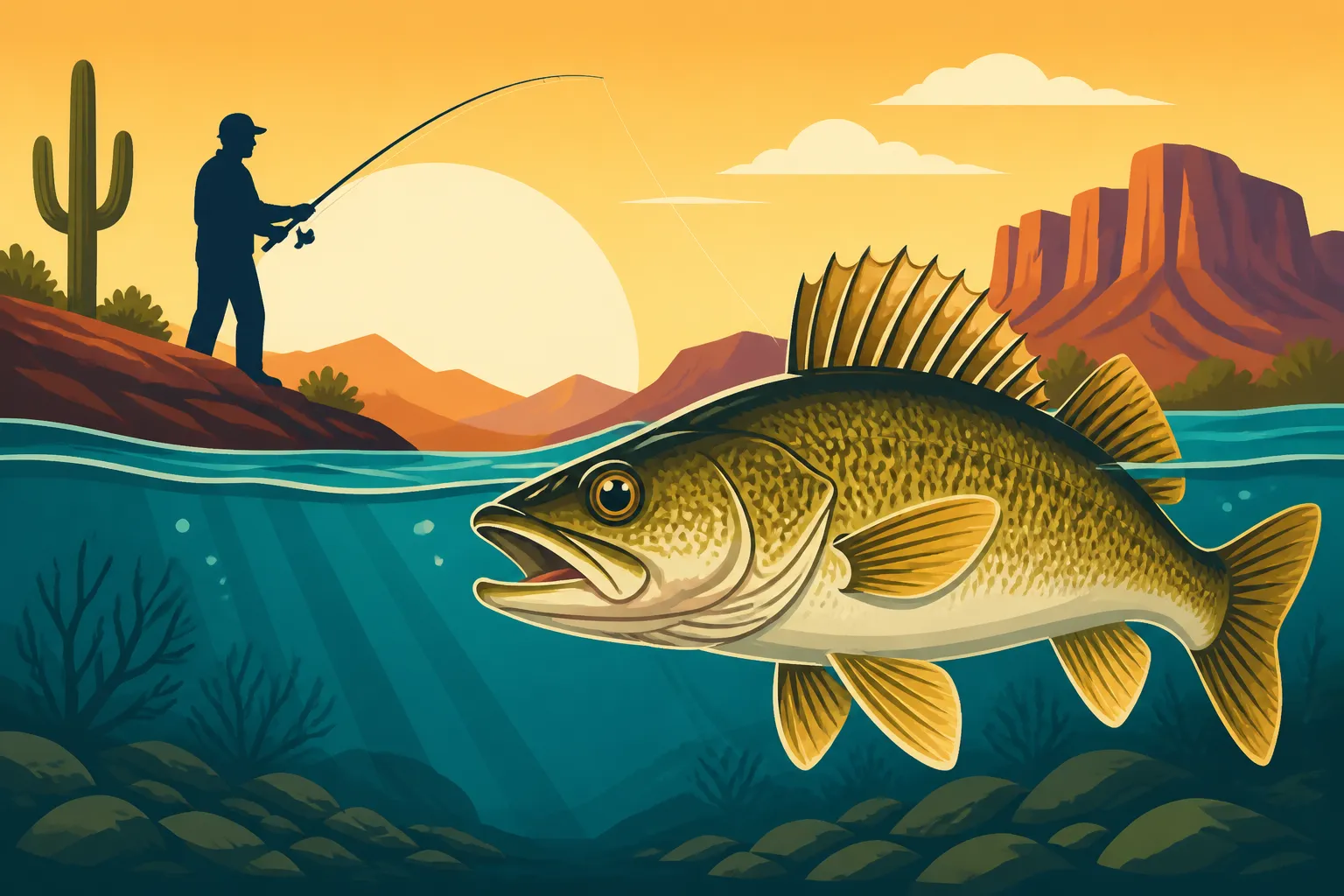
Many anglers, especially those who've fished in the Midwest or colder northern climates, often wonder about the availability of Walleye in Arizona. It's a natural question to ask, given their reputation as a fantastic table fish and a worthy sport fish. However, for those dreaming of reeling in a stringer of Walleye from a sunny Arizona lake, the reality is a bit more nuanced than you might hope. This guide will dive deep into the specific presence of Walleye in Arizona waters, explore why they aren't a common target here, and offer some fantastic alternative species that provide an equally thrilling and delicious fishing experience right in our desert state.
The Sparse Reality of Walleye in Arizona
Let's cut right to it: Walleye are not a widespread or commonly targeted sport fish in Arizona. While it might be a popular species elsewhere, our unique desert aquatic environments simply aren't suited for them, which means you won't find significant, self-sustaining populations in most of our lakes and rivers. This can be disappointing news for some, but understanding why this is the case helps set realistic expectations for fishing in the Grand Canyon State.
Current Status and Limited Occurrences
For the most part, you can consider Walleye a rarity in Arizona. There aren't any major lakes or rivers with a thriving, established Walleye fishery that would draw anglers specifically looking for them. Unlike popular species such as largemouth bass, striped bass, or trout, Walleye simply haven't found a permanent home. If you hear whispers of Walleye catches, they are usually isolated incidents, often from small, specialized stockings that didn't lead to a self-sustaining population, or perhaps in very specific, colder, deeper impoundments that closely mimic their preferred habitat. These reports are few and far between and certainly not indicative of a reliable fishery.
The Arizona Game and Fish Department (AZGFD) focuses its resources on managing and stocking species that thrive in our desert environment and provide consistent recreational opportunities. Walleye, unfortunately, don't make that cut for widespread management. It's not for lack of trying in the past, but rather a recognition of the ecological realities that make their long-term survival and reproduction challenging in Arizona.
Why the Absence? Ecological Factors
The primary reason Walleye are largely absent from Arizona's waters boils down to fundamental ecological requirements that our desert state simply struggles to meet consistently. Walleye are cool-water fish, preferring temperatures generally between 60-70 degrees Fahrenheit. Many of Arizona's larger, popular reservoirs, like Lake Pleasant or Roosevelt Lake, experience prolonged periods of much warmer water temperatures, especially in the summer. These high temperatures are incredibly stressful, if not fatal, for Walleye.
Beyond temperature, Walleye thrive in lakes and rivers with specific habitat features: clear, well-oxygenated water, often with rocky bottoms, gravel, or sand for spawning. They also prefer areas with ample forage fish, but crucially, they need cooler water during critical life stages. While some Arizona lakes have deep, clear sections, the overall thermal regime and the lack of consistent, suitable spawning habitats across a broad range of waters make it difficult for Walleye to reproduce successfully year after year to maintain a healthy population. When fish are introduced into an environment where their basic needs aren't met, they either die off, fail to reproduce, or simply don't grow to a significant size or number.
Historical Efforts and Lessons Learned
It's not as if Arizona wildlife managers never considered Walleye. In fact, there have been efforts in the past to introduce this popular game fish, driven by angler interest and a desire to diversify fishing opportunities. These attempts, while well-intentioned, largely serve as a testament to the challenges of establishing a non-native species in an unsuitable environment.
Past Stocking Programs and Their Outcomes
Back in the day, the AZGFD did experiment with stocking Walleye in a few select Arizona waters. Waters like Lake Mary near Flagstaff, some of the White Mountains lakes, and even a few of the central Arizona reservoirs saw Walleye introductions. The hope was that these fish would establish self-sustaining populations, providing a unique fishery for Arizona anglers. For a short time, some of these stockings might have produced limited fishing opportunities, with anglers occasionally catching decent-sized Walleye. However, these successes were often short-lived and never truly led to the robust, consistent fisheries seen in states like Minnesota or Wisconsin.
The reality was that even in the cooler, higher elevation lakes, the conditions weren't consistently optimal for Walleye reproduction. The fish would survive and grow for a period after stocking, but natural spawning success was negligible or non-existent. This meant that any Walleye presence was entirely dependent on continuous stocking, which is a costly and resource-intensive endeavor for a species that struggles to thrive naturally. Eventually, without self-sustaining populations, the programs were often discontinued as resources were reallocated to species that could flourish more readily in Arizona's unique climate.
Challenges of Establishing a Walleye Fishery
Establishing a successful Walleye fishery in Arizona faces multiple hurdles. As discussed, water temperature is a huge factor. Our long, hot summers push water temperatures well above what Walleye prefer, especially in the shallower, more productive areas of many reservoirs. This heat impacts their metabolism, growth, and overall survival rates. Beyond temperature, suitable spawning habitat is also critical. Walleye typically spawn over rocky, gravelly, or sandy bottoms in moving water or shallow lake margins. Many of Arizona's large reservoirs have fluctuating water levels, which can leave potential spawning areas dry or expose eggs to predation or harsh conditions.
Furthermore, competition with existing, well-established predator species like largemouth bass, smallmouth bass, and striped bass creates additional challenges. These fish are perfectly adapted to Arizona's warmer waters and often outcompete Walleye for forage and habitat. Introducing a new species requires a delicate ecological balance, and in Arizona's case, that balance just doesn't seem to favor Walleye in the long run. The lessons learned from past attempts clearly show that while the desire for a Walleye fishery might be there, the environmental conditions make it an uphill battle, making it a less efficient use of conservation and stocking efforts compared to managing our abundant and thriving warm-water and cool-water species.
Finding Your Walleye Fix: Arizona Alternatives
So, if Walleye aren't a viable option, does that mean you're out of luck for a hard-fighting, good-eating fish? Absolutely not! Arizona offers a phenomenal array of sport fish that can provide a similar thrill and culinary delight. You just need to know where to look and what to target.
Similar Fight, Different Fins: Striper and Bass
If you're looking for a powerful fight and a good meal, Arizona's striped bass and various black bass species (largemouth and smallmouth) are incredible alternatives. Striped bass, often simply called "stripers," are arguably the closest comparison to Walleye in terms of being a schooling, open-water predator that can grow to impressive sizes. Lakes like Lake Powell, Lake Pleasant, and Lake Havasu are renowned for their incredible striped bass fishing. Stripers will hit a variety of lures, from topwater plugs to deep-diving crankbaits and jigs, and they put up a tremendous fight. They're also excellent table fare, with firm, white meat. Targeting stripers often involves trolling, jigging deep, or chasing "boils" where they push baitfish to the surface – an exhilarating experience! For more in-depth information, check out our Striped Bass Fishing Guide for Arizona.
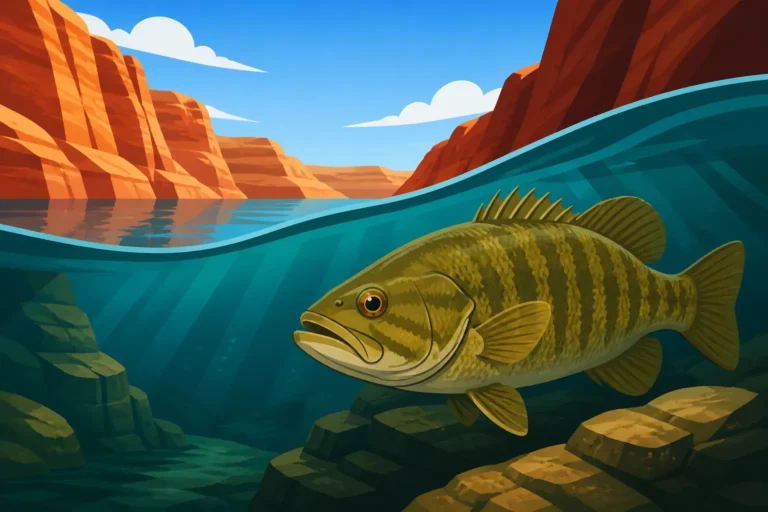
Then there are our prolific black bass. Largemouth bass are ubiquitous across Arizona's desert lakes, and they are aggressive predators that provide an unforgettable fight. They love structure – submerged timber, rock piles, and points – and will eagerly strike anything from plastic worms to spinnerbaits. Smallmouth bass, while less common than largemouths, offer an even more tenacious fight, pound-for-pound. Lake Powell is particularly famous for its incredible smallmouth fishery in the canyons. Both largemouth and smallmouth bass are fantastic to catch and can be prepared in numerous delicious ways. If you're looking for that predatory fish challenge, our bass species deliver in spades. You can learn more in our Largemouth Bass Fishing Guide for Arizona and Smallmouth Bass Fishing Guide for Arizona.
Exploring Other Predator Fish Opportunities
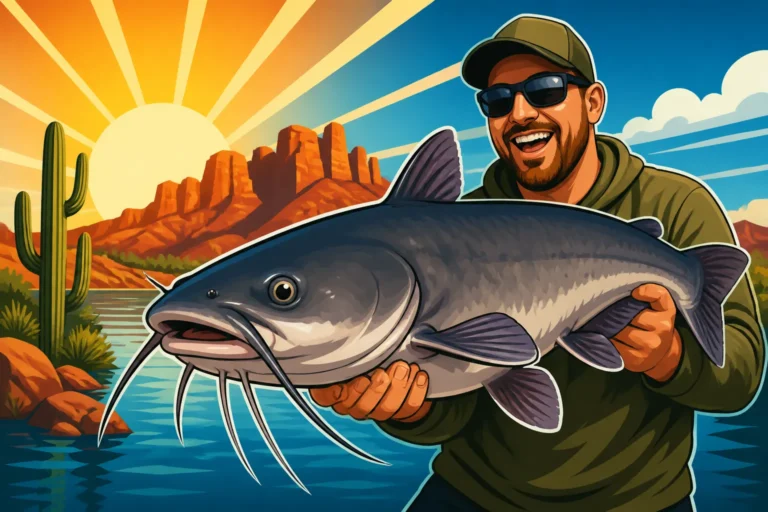
Beyond stripers and bass, Arizona has other predatory fish that can scratch that Walleye itch, especially if you're keen on table fare. Channel catfish and flathead catfish are abundant in many Arizona lakes and rivers, and they can grow to enormous sizes. While their fighting style is different from a Walleye, a big flathead can offer a monumental battle, and both species are highly prized for their mild, flaky meat. Night fishing for catfish is a popular and very effective tactic during Arizona's warmer months, offering a peaceful and often highly productive experience. Consult our Catfish Fishing Guide for Arizona for tips on how to target these bottom dwellers.
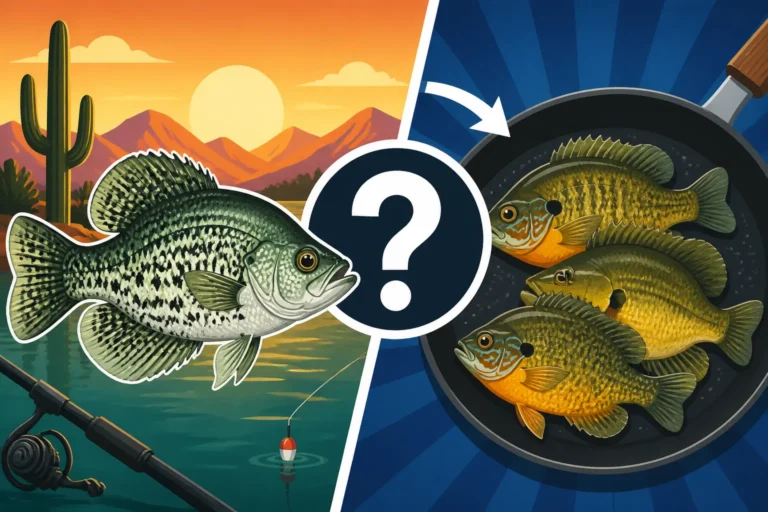
And let's not forget about crappie. While smaller, these schooling panfish are aggressive eaters and phenomenal table fare, often referred to as "paper mouths" due to their delicate bite. They can provide fast action, especially during their spring spawn. Targeting crappie with small jigs or minnows is a classic and rewarding experience, often found around brush piles or submerged timber. Roosevelt Lake and Alamo Lake are famous crappie destinations.
Walleye-Like Alternatives in Arizona Waters
| Species | Primary Habitat | Typical Size | Fight Description | Best Forage/Bait | Palatability |
|---|---|---|---|---|---|
| Striped Bass | Open water, deep reservoirs, lower rivers | 2-20 lbs (can be larger) | Strong, sustained runs, powerful | Shad, anchovies, crankbaits, jigs | Excellent |
| Largemouth Bass | Structure (brush, docks, points), cover | 1-10 lbs (can be larger) | Explosive strikes, acrobatic jumps | Shad, crawfish, plastic worms, spinnerbaits | Excellent |
| Smallmouth Bass | Rocky structure, clear water, canyon walls | 1-5 lbs (can be larger) | Hard-fighting, tenacious, deep dives | Crawfish, minnows, drop shots, tubes | Excellent |
| Channel Catfish | Bottoms of lakes, rivers, urban ponds | 1-20 lbs (can be larger) | Powerful, tugging, deep fight | Cut bait, stink bait, shrimp | Very Good |
| Flathead Catfish | Snags, deep holes, structure in rivers/lakes | 10-50+ lbs | Immense power, slow, stubborn fight | Live bait (sunfish, bluegill, carp) | Excellent |
| Crappie | Brush piles, standing timber, submerged structure | 0.5-2 lbs | Light fight, quick nibbles | Small minnows, tiny jigs, soft plastics | Excellent |
Gear and Tactics for Arizona's Apex Predators
Transitioning from the idea of Walleye to Arizona's actual sport fish means adjusting your gear and tactics slightly. The good news is that many of the fundamental principles of predator fishing apply, and the gear you might use for Walleye can often be adapted for our local species.
Rods, Reels, and Line for Desert Giants
For Arizona's hard-fighting bass and stripers, you'll want versatile and durable tackle. A medium-heavy spinning rod or baitcasting setup, typically 6'6" to 7'6" in length, will cover most situations. This power provides enough backbone to cast heavier lures and handle larger fish, while the medium action offers enough flexibility for accurate casting and feeling subtle bites. Pairing this with a reel that has a smooth drag system is crucial, especially when battling a strong striped bass or a bulldogging largemouth. You'll find a wide selection of quality rods and reels perfect for these conditions on Amazon, often with detailed reviews to help you choose.
When it comes to line, a good all-around choice for Arizona's clear desert lakes is 10-15 pound test fluorocarbon or monofilament, which offers a good balance of strength and lower visibility. For targeting larger stripers or fishing around heavy cover for bass, bumping up to 20-30 pound braided line with a fluorocarbon leader can provide superior strength and sensitivity. Remember, our fish fight hard, especially in the warm waters, so reliable gear is a must. Many anglers find it convenient to stock up on their preferred fishing lines and leaders from Amazon before a big trip.
Baits and Lures for Arizona's Hard-Fighting Fish
The desert lakes are full of hungry fish, and they respond to a wide array of baits and lures. For largemouth bass, you can't go wrong with soft plastics like Texas-rigged worms, Senkos, or creature baits fished around structure. Crankbaits, spinnerbaits, and topwater lures are also highly effective, particularly during prime feeding times in the mornings and evenings. Smallmouth bass often prefer finesse presentations, such as drop shots, shaky heads, or small jigs, especially in rocky areas. For some excellent options on a variety of bass baits, you can explore the extensive fishing section on Amazon.
When chasing striped bass, live bait such as shad or anchovies is incredibly effective, often fished on a Carolina rig or under a bobber. For artificials, consider throwing swimbaits, jerkbaits, or large spoons. Trolling with deep-diving crankbaits is also a very popular and successful method for locating schools of stripers. Catfish, on the other hand, are less particular and respond well to cut bait (like pieces of shad or chicken liver), prepared stink baits, or even hot dogs. You can find all sorts of specialized catfish baits and rigs conveniently on Amazon. No matter what you're targeting, adapting your bait and lure choice to the specific species and conditions will significantly increase your success. For further reading, our Best Baits and Lures for Arizona Fishing article offers even more detailed recommendations.
Essential Accessories for Arizona Angling
Beyond your rod and reel, having the right accessories can make or break a fishing trip in Arizona's unique environment. Sun protection is paramount: wide-brimmed hats, UV-protective clothing, and polarized sunglasses are not just recommended, they're essential. Polarized sunglasses, in particular, dramatically cut glare off the water, allowing you to see submerged structure and even cruising fish. A good cooler is also a necessity, not only for keeping your catch fresh but also for keeping your drinks and snacks cool in the desert heat. You can find many highly-rated coolers designed for outdoor adventures, along with quality polarized sunglasses, conveniently on Amazon.
Don't forget a pair of pliers for hook removal, a good stringer or livewell for keeping fish, and a landing net, especially if you're targeting larger species like stripers or flathead catfish. For shore anglers or those exploring remote areas, a sturdy fishing backpack is invaluable for carrying all your gear comfortably. Planning your essential tackle box setup for Arizona beginners should definitely include these items. While Walleye might not be swimming in our waters, the opportunities to hook into something equally exciting and delicious are abundant across Arizona's diverse and beautiful fishing landscapes.
Disclaimer
This article is for general informational purposes only and does not constitute professional advice. Laws, prices and regulations vary by location and change over time. Consult a qualified professional for guidance on your specific situation.