Growth Rate of Trout After Stocking
It’s a common question that swirls through the minds of Arizona anglers, especially after a fresh trout stocking: "How fast do these little guys actually grow?" You watch those feisty rainbows hit the water, often looking a bit pale and bewildered, and you wonder if they'll ever turn into the fat, vibrant fish you dream of catching. It's not just idle curiosity; understanding trout growth rates after stocking can really change your approach to fishing, helping you decide when and where to target these popular sportfish for the best results. This guide will dive deep into the fascinating world of post-stocking trout growth in Arizona, helping you understand the factors at play and what to realistically expect.
The Purpose of Stocking and Initial Growth
Arizona's landscape is unique, offering a surprising variety of fishing experiences from high-country streams to desert lakes. Trout, particularly rainbow trout, are a cornerstone of many fishing programs across the state, and stocking plays a crucial role in providing angling opportunities. But stocking isn't just about throwing fish in the water; there's a science and strategy behind it, directly impacting their initial growth and survival.
Why Arizona Stocks Trout
Let's be real, Arizona isn't naturally a trout paradise in most areas. Our desert environment, with its scorching summers and often sparse water, isn't ideal for wild trout populations in many places where people love to fish. This is where stocking comes in. The Arizona Game and Fish Department stocks millions of trout annually, primarily Rainbow Trout, to create "put-and-take" fisheries. This means they are stocked for the immediate gratification of anglers, providing a ready supply of fish in waters that might otherwise lack them. It's about ensuring a consistent, accessible fishing experience for everyone, from seasoned veterans to excited kids on their first outing.
While the primary goal is often quick harvest, some stockings in more suitable waters do allow for trout to grow larger and become "holdovers." However, the vast majority of stocked trout are intended to be caught relatively soon after they are released. This is especially true for the popular Community Fishing Program Rules lakes, where trout are a seasonal offering during cooler months.
The "Catchable Size" Standard
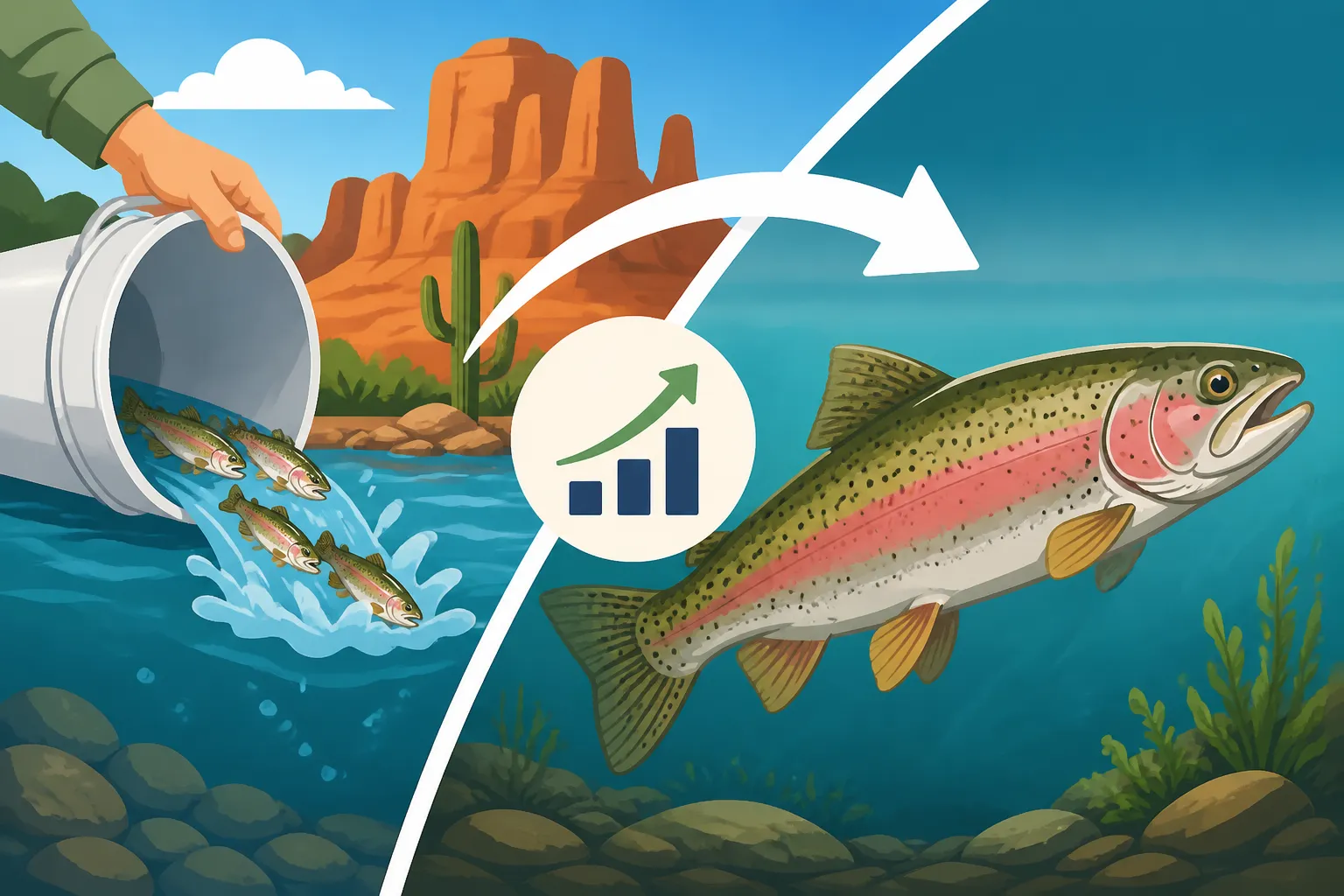
When you see trout being stocked, you'll notice they're rarely fingerlings. Most stocked trout are already of a "catchable size," typically ranging from 8 to 12 inches. This isn't by accident. Hatcheries grow them to this size before release specifically so they can be caught shortly after stocking. This immediate availability maximizes angler satisfaction and ensures the investment in raising the fish provides a quick return in recreational value.
Think about it: if they stocked tiny 2-inch trout, most wouldn't survive to a size you'd want to keep, and the immediate fishing wouldn't be as exciting. By stocking fish that are already a decent size, the department creates instant fisheries, particularly in areas like the Lower Salt River or the various urban lakes. This also means that any significant growth you observe post-stocking is often an addition to an already respectable starting size, rather than growing from scratch.
Immediate Post-Stocking Behavior and Survival
Upon release, stocked trout are often disoriented and a bit stressed. They've just been transported from a relatively controlled hatchery environment into a new, often bustling, ecosystem. This initial period is critical for their survival and adaptation. They might be slow to feed, making them easier targets for predators like birds of prey, larger fish, or even other anglers if they're not cautious.
Some trout quickly disperse and start foraging, while others tend to hang around the stocking site, which is why these areas can be so productive immediately after a stocking event. Their ability to find food, avoid predators, and adapt to the water chemistry and temperature of their new home dictates not only their survival but also their very first steps in growth. Waters with ample natural cover, good water quality, and an existing food base tend to see better initial survival and quicker acclimation for these newly introduced fish.
Factors Influencing Growth Rate in Arizona Waters
The desert state presents a unique set of challenges and opportunities for trout growth. While many factors are universal to trout, Arizona's specific conditions amplify some of them. It's a delicate balance that determines whether a stocked trout will just maintain its size or truly flourish.
Water Temperature and Oxygen Levels
This is perhaps the most critical factor for trout in Arizona. Trout are cold-water fish, ideally thriving in temperatures between 45 and 65 degrees Fahrenheit. In Arizona's high-country lakes and streams, like those in the White Mountains or near Flagstaff, these conditions are more naturally met, allowing trout to grow steadily. However, in the urban lakes and lower elevation rivers, water temperatures can soar in the summer, pushing past the survivable limits for trout.
When water gets too warm, trout become stressed. Their metabolism increases, requiring more oxygen, but warmer water holds less dissolved oxygen. This creates a double whammy: they need more oxygen but there's less available. If temperatures remain high, they stop feeding, become lethargic, and eventually die. This is why trout are seasonal in many Arizona waters – they simply cannot survive the summer heat. In cooler, well-oxygenated waters, trout can dedicate more energy to growth rather than simply struggling to survive. This is also why Do Trout Bite Better in Cold Water? is a frequently asked question, and the answer is generally yes, within their optimal range.
Food Availability and Competition
Imagine moving to a new neighborhood. If there's a grocery store on every corner, you'll eat well. If you have to trek miles and fight everyone for scraps, you won't. It's similar for stocked trout. The abundance of food sources – insects, crustaceans, small baitfish, and even discarded angler baits – directly impacts how fast they can pack on pounds.
In waters rich with natural forage, trout can grow surprisingly quickly. Lakes that support healthy populations of small shad or invertebrates provide a protein-rich diet that can fuel rapid growth. However, in heavily stocked lakes, competition can be fierce. Thousands of fish suddenly vying for the same limited food supply can lead to slower growth rates, or even weight loss if food is scarce. This is especially noticeable in smaller community ponds where the sheer volume of stocked fish might outstrip the natural food supply. Anglers often supplement this by using various baits, and for specific choices, you might find a good selection of Best Baits and Lures for Arizona Fishing at retailers like Amazon.
Genetics and Strain of Trout
Not all trout are created equal, even within the same species. There are different genetic strains of Rainbow Trout, and some are bred specifically for fast growth in hatchery environments. The trout stocked in Arizona are typically chosen for their robust nature and ability to tolerate a range of conditions, and often for their rapid growth potential in the right setting.
While they all start with a baseline growth potential, their genetic predisposition interacts with their new environment. Some strains might be more resilient to warmer water, others might be more aggressive feeders. However, once in the wild, the environmental factors often become the dominant influence on whether that genetic potential is realized. In a sense, the hatchery gives them a good head start, but Mother Nature decides how far they go.
Predation and Fishing Pressure
It's a tough world out there for a stocked trout. Once released, they become targets. Great blue herons, ospreys, raccoons, and even larger native fish are all keen to turn a plump rainbow into a meal. High predation naturally reduces the number of trout that survive long enough to grow substantially.
Then there's fishing pressure. Many stocked waters, particularly those near urban centers, experience heavy angling pressure. People show up in droves, especially after a stocking report. This means a significant percentage of stocked trout are caught within days or weeks of their release. This "put-and-take" model, while great for immediate fishing, doesn't allow many trout the chance to live long enough to become truly large "holdovers." The more remote lakes and streams with less access typically offer a better chance for trout to grow beyond their initial stocked size simply because fewer anglers are around to catch them.
Expected Growth Rates: Realism vs. Wishful Thinking
So, with all these factors at play, what's a realistic expectation for trout growth after stocking in Arizona? It’s not an exact science, as every body of water is different, but we can talk about general trends.
Short-Term Gains: The First Few Weeks
In the immediate weeks following stocking, especially in waters with good food availability and cooler temperatures, trout can definitely put on some weight and length. It's not uncommon for an 8-inch trout to gain an inch or two and fill out a bit within a month or two, becoming noticeably healthier and more vibrant than its hatchery-pale initial appearance. They adapt to their new diet of natural insects and baitfish, and this richer, more varied food source can contribute to better flesh quality and color.
However, this rapid initial gain often tapers off. Many fish are caught, and the remaining ones might face increasing competition for food as the initial abundance is consumed. If water temperatures begin to rise, particularly in spring moving into summer, their growth will slow dramatically or cease altogether. The energy they once put into growth then shifts to survival.
Long-Term Potential in Optimal Environments
For trout to truly become "trophy" size in Arizona, they typically need to survive for an extended period in highly optimal conditions, often for a year or more. This usually means:
- Perennially Cold Water: Think high-elevation lakes and streams that stay cold year-round.
- Abundant Food: Waters with rich insect hatches or healthy populations of forage fish.
- Low Predation/Pressure: Remote areas where they are less likely to be caught or eaten.
In such environments, holdover trout can add several inches and a pound or more per year. A trout that starts at 10 inches could potentially be a 15-inch, 2-pound fish in a year, and even larger if it survives longer. These are the fish that become truly wild-acting and present a significant challenge to anglers. Some of the Best Trout Fishing Spots in Arizona are those that offer these conditions, allowing for larger, more elusive fish.
Community Fishing Lakes vs. Mountain Streams
There's a stark contrast in growth potential between different types of Arizona waters.
Community Fishing Lakes: These urban and suburban ponds are fantastic for accessibility and family fun. They are frequently stocked, especially during the cooler months, with catchable-size trout. The purpose here is overwhelmingly "put-and-take." Due to warm summer temperatures and heavy fishing pressure, very few trout survive to become true holdovers that significantly grow. If you catch a fish much larger than the typical stocked size in one of these lakes, it's a rare treat, likely a remnant from an unusually good prior stocking, or perhaps a different species altogether. The emphasis is on fresh fish for frequent outings, not long-term growth. To help find these locations and understand the rules, check out articles like Trout Limit at Arizona Community Fishing Lakes.
Mountain Streams and Lakes (e.g., White Mountains, Mogollon Rim): These are where you'll find the best chance for significant trout growth. Lakes like Big Lake, Luna Lake, or streams like the East Fork of the Black River offer colder water, more natural food, and often less intense fishing pressure than urban ponds. Trout stocked here have a much better chance of surviving for months, if not years, and can grow substantially. It's in these pristine environments that you might encounter truly large Rainbows, Brown Trout, or even the native Apache Trout, which require specific conservation efforts. For targeting these fish, having reliable gear is key. Many anglers turn to online retailers like Amazon for specialized fly fishing equipment or robust spinning gear suitable for larger trout.
Maximizing Your Chances: Finding Bigger Stocked Trout
Even though many stocked trout are destined for the frying pan soon after release, there are definitely strategies you can employ to increase your odds of hooking into a larger, more mature fish. It often comes down to timing, location, and technique.
Targeting "Holdover" Trout
These are the unicorns of stocked trout fishing – fish that have survived multiple seasons and have had the opportunity to grow significantly larger than their stocked brethren. They are typically warier, smarter, and stronger than newly stocked fish.
To find holdovers, you need to think about where they might escape the initial onslaught of anglers and the harsh summer heat.
- Deeper Waters: In lakes, holdovers often retreat to deeper, cooler water during warmer months, emerging to feed in shallows during cooler periods or at dawn/dusk.
- Remote Areas: Lakes or sections of rivers that are harder to access via hiking or require a boat often harbor more holdovers simply because they see less pressure.
- Structural Cover: Submerged timber, rock piles, ledges, and thick vegetation offer protection from predators and anglers alike. These spots are crucial for survival and growth.
- Flowing Water: Streams and rivers that maintain cold temperatures and good oxygenation year-round are prime spots for trout to thrive over time. Look for deeper pools and undercut banks.
These larger fish often require more subtle approaches and different presentations, as they've likely seen every PowerBait and spinner in the book. This is where researching Best Trout Fishing Techniques for Arizona Waters can really pay off.
Gear and Techniques for Larger Fish
Catching bigger trout means adapting your setup. While light tackle is generally fine for newly stocked fish, holdovers demand a bit more.
- Rods and Reels: Consider a slightly heavier action rod (medium-light) paired with a good quality spinning reel spooled with 6-8 pound fluorocarbon or monofilament line. This provides enough backbone to handle a strong, larger fish while still being sensitive enough for subtle bites. Many reputable brands offer excellent combos, and you can often find great deals on a new Best Rod and Reel Combo for Bass that would also work for larger trout on Amazon, ensuring you have the strength needed.
- Lures and Baits: Forget the brightly colored dough baits that attract fresh stockers. Holdovers prefer more natural presentations.
- Artificial Lures: Small spoons (e.g., Kastmasters, Little Cleos), spinners (Mepps, Panther Martin), and small jerkbaits or swimbaits that imitate baitfish can be highly effective. Darker, more natural colors often work best.
- Flies: If allowed, fly fishing with nymphs, streamers, or dry flies that mimic local insect hatches is an excellent way to target educated trout.
- Natural Baits: Live worms, crickets, or even small minnows (where legal) are often irresistible to larger trout. Present them naturally, perhaps under a slip bobber or on a light bottom rig.
- Stealth: Larger trout are wary. Approach quietly, make long casts, and avoid heavy footsteps or shadows over the water. Polarized sunglasses are essential for spotting fish and underwater structure without startling them. You can find a wide selection of Best Sunglasses for Sight Fishing on Amazon, making it easier to see those elusive holdovers.
Exploring Different Water Bodies
Don't limit yourself to the most obvious stocking points. Arizona has a wealth of diverse fishing opportunities, each offering different growth potentials:
| Water Type | Typical Trout Size Post-Stocking | Growth Potential | Primary Fishing Experience |
|---|---|---|---|
| Community Fishing Lakes | 8-12 inches | Low | High frequency, family-friendly, put-and-take |
| Lower Elevation Rivers | 8-12 inches | Moderate | Seasonal opportunity, some holdovers in deeper pockets |
| High Country Lakes | 8-14 inches | High | Excellent holdover potential, seasonal but longer trout season |
| Mountain Streams | 6-12 inches (wild/stocked) | Moderate to High | Challenging, often smaller but wilder fish, requires finesse |
| Large Reservoirs (e.g., Lees Ferry) | 10-20+ inches | Very High | Trophy trout potential, year-round, technical fishing often required |
Understanding these differences helps you set realistic expectations and choose the right location for your fishing goals. If you're looking for a quick catch with the kids, a community lake after a stocking is perfect. If you're chasing that elusive 20-inch rainbow, you'll want to head to the high country or a renowned tailwater like Lees Ferry. Remember, the journey of an Arizona trout, from hatchery to your net, is a fascinating one, and appreciating their growth potential can make your fishing adventures even more rewarding.
Disclaimer
This article is for general informational purposes only and does not constitute professional advice. Laws, prices and regulations vary by location and change over time. Consult a qualified professional for guidance on your specific situation.