Bass Size Limit at Arizona Community Fishing Lakes
It can be incredibly confusing to keep track of all the different fishing regulations across Arizona, especially when you're trying to enjoy a relaxing day at one of our many popular community fishing lakes. One minute you're having a blast reeling in bass, the next you're wondering, "Wait, is this fish too small? Or too big? What's the limit here?" This guide is here to clear up that head-scratching confusion, specifically focusing on the bass size and bag limits at Arizona's community fishing waters, so you can fish with confidence and stay on the right side of the rules.
Understanding Bass Regulations in Arizona's Community Fishing Program
Let's be honest, fishing should be fun, not a legal deep dive. But knowing the rules, especially for bass, is crucial. It’s not just about avoiding a citation; it’s about responsible angling and protecting the amazing fisheries we have here in Arizona. The Arizona Game and Fish Department (AZGFD) works hard to manage our aquatic resources, and that often means tailoring rules to specific bodies of water.
Why Community Lakes Have Special Rules
Our community lakes are unique, aren't they? They're often smaller, easily accessible, and specifically managed to provide high-quality, close-to-home fishing opportunities for everyone, from kids casting their first line to seasoned anglers looking for a quick fix. Because these lakes are heavily stocked and receive a lot of fishing pressure, the AZGFD implements specific rules designed to balance fishing enjoyment with sustainable populations. It's a delicate dance, ensuring there are enough fish for everyone to catch while allowing some to grow to trophy size and maintain healthy breeding populations. These rules can be different from the statewide regulations you might find on massive reservoirs like Lake Pleasant or Roosevelt Lake.
Think about it: a small urban pond, constantly stocked with trout in winter and catfish in summer, and home to a thriving population of bass, needs a different management approach than a vast, wild lake in the backcountry. The goal for community lakes is often to create a "put-and-take" fishery for species like trout and catfish, while managing bass to maintain a healthy predator base that keeps panfish in check and offers a good fight for anglers. This specific management means the "general rules" often don't apply, leading to the need for clear guidance on topics like Arizona Community Fishing Program Rules.
General Bass Regulations Statewide vs. Community Lakes
When you look at the broader picture of Arizona Fishing Regulations Explained, you’ll notice that statewide bass regulations, particularly for largemouth and smallmouth bass, often include specific slot limits or minimum size requirements, along with daily bag limits. For instance, some lakes might have a 13-inch minimum size for largemouth, or a slot limit where you can only keep fish under a certain size or over another, but not in between. These rules are usually tailored to the specific ecological conditions of those larger, more natural systems.
However, for our beloved community fishing lakes, the rules are often simplified but no less important. The emphasis is typically on harvest for some species and managing the existing bass populations to keep them healthy. While you might expect complex size restrictions, the community lake rules can be surprisingly straightforward for bass, though they sometimes differ from the broader state guidelines. Always double-check the specific regulations for the lake you plan to visit, which are usually available on the AZGFD website or at local license dealers. Knowing the specific rules for your chosen spot is key to a stress-free fishing experience.
Specific Bass Size and Bag Limits at Community Lakes
Now, let's get down to the nitty-gritty: what are the actual numbers you need to remember for bass at these popular spots? This is where many anglers get tripped up, and it's completely understandable. The rules are designed to protect the bass populations in these smaller, more accessible fisheries.
Largemouth Bass Regulations
For the largemouth bass, which are a cornerstone of many community lake fisheries, the Arizona Game and Fish Department (AZGFD) typically has a pretty consistent regulation across most Community Fishing Program waters. Generally, for largemouth bass in Arizona Community Fishing Lakes, there is no minimum size limit, but a daily bag limit of two bass.
Let's unpack that a bit. "No minimum size limit" means that if you catch a largemouth bass, regardless of its length, you could technically keep it, as long as you stay within your daily bag limit. This differs significantly from many larger reservoirs where you might have a strict 13-inch or 16-inch minimum. The rationale here is often to allow for some harvest, especially of smaller bass, to prevent overpopulation and to encourage growth of the remaining fish, while also providing anglers with the opportunity to take home a couple of fish for dinner.
However, the "daily bag limit of two bass" is critical. This means you can only keep two largemouth bass per day. Once you've kept two, any additional largemouth bass you catch must be immediately and carefully released. This helps manage the overall population, ensuring that these smaller, high-pressure fisheries don't get depleted too quickly. It’s a good idea to have a tape measure handy (a simple retractable one you can pick up from Amazon works perfectly) if you're ever in doubt about the species or if you're fishing a body of water with more complex regulations. It's always best to be prepared!
It's also worth noting that while there's no minimum size, practicing catch and release for larger, breeding-size bass is a fantastic way to contribute to the health of the fishery. Many anglers enjoy the thrill of catching a big one, snapping a photo, and then carefully returning it to the water. For more on this, check out our guide on Catch and Release Rules for Arizona Anglers.
Smallmouth Bass and Other Bass Species
While largemouth bass are the most commonly found and regulated bass species in Arizona's Community Fishing Program, you might occasionally encounter smallmouth bass or other bass species like spotted bass, especially in lakes that are part of river systems or larger connected waterways, or if the lake has been stocked with them. However, smallmouth bass are far less common in the typical urban community pond setting compared to largemouth bass.
When it comes to smallmouth bass, the regulations in community lakes typically mirror those for largemouth bass: a daily bag limit of two, with no minimum size restriction. It's rare to find specific size limits for smallmouth bass unique to community lakes because their populations are generally not as prominent or targeted in these specific waters. For more detailed information on specific bass species, you might want to read our dedicated guides like Largemouth Bass Fishing Guide for Arizona or Smallmouth Bass Fishing Guide for Arizona.
The key takeaway here is consistency. Unless otherwise specified on the AZGFD's current regulations (which you should always check before heading out), assume the "two bass per day, no minimum size" rule applies to any bass species you encounter in a community lake. This includes any other black bass species, which are often grouped together in regulations for simplicity in these specific urban programs.
Here’s a quick reference table for common bass regulations in Arizona:
| Bass Species | Location Type | Daily Bag Limit | Minimum Size Limit | Notes |
|---|---|---|---|---|
| Largemouth Bass | Community Fishing Lakes | 2 | None | Supports harvest while maintaining population. |
| Smallmouth Bass | Community Fishing Lakes | 2 | None | Less common, but usually same rules as Largemouth. |
| Largemouth Bass | General Statewide Lakes (Example) | 6 | Often 13 inches or 16 inches | Varies greatly by specific lake; check regulations booklet. |
| Smallmouth Bass | General Statewide Lakes (Example) | 6 | Often 13 inches | Varies greatly by specific lake; check regulations booklet. |
Note: Always consult the current Arizona Game and Fish Department fishing regulations booklet for the most up-to-date and specific rules for your chosen fishing location.
Navigating the Arizona Game and Fish Department Regulations
Even with simplified rules for community lakes, sometimes finding that specific information can feel like hunting for a needle in a haystack. But trust me, the AZGFD does a great job of making this information accessible if you know where to look. Staying informed is your best defense against accidental violations and helps ensure you’re contributing positively to Arizona’s fisheries.
Finding Up-to-Date Information
The absolute best and most reliable source for current fishing regulations in Arizona is the Arizona Game and Fish Department's official website. They publish an annual fishing regulations booklet, usually available as a downloadable PDF, that covers all statewide and special regulations, including those for the Community Fishing Program. You can also pick up a physical copy at most license dealers, like your local sporting goods store or even some Walmarts. This booklet is your bible for all things regulation-related.
Beyond the annual booklet, the AZGFD website often has dedicated pages for the Community Fishing Program, which might include specific updates, stocking schedules, and any temporary rule changes. It’s always a good habit to quickly check these resources before you head out, especially if it’s been a while since your last trip or if you’re trying a new lake. This proactive approach helps you avoid any surprises, like a sudden change in bag limits or new restrictions that might have been implemented. Don't rely solely on what you heard from a buddy; verify the information yourself! For quick reference, many anglers keep the digital copy of the regulations on their phone for easy access while on the water.
Common Misconceptions and How to Avoid Them
One of the biggest misconceptions anglers have is assuming that regulations are universal across all waters. As we've discussed, this is absolutely not the case. The rules for a giant lake like Lake Powell, known for its monster stripers and smallmouth, are going to be vastly different from a small urban pond like Chaparral Park Lake in Scottsdale. Another common mistake is thinking "catch and release only" means no license is needed – that's a definite no-go! You still need a valid Arizona Fishing License Guide to fish, even if you plan to throw every fish back.
To avoid these pitfalls, cultivate a habit of regular checking. Before each season, or even before a trip to a new lake, take five minutes to review the relevant sections of the AZGFD regulations. If you're unsure about a specific rule, don't hesitate to contact the AZGFD directly. They have biologists and enforcement officers who are happy to clarify questions. Remember, ignorance of the law is not an excuse. Carrying a small, waterproof regulations summary or having the digital version on your phone is also a smart move. It's better to be overly prepared than to face potential fines or, worse, inadvertently harm a fishery. Sometimes, simple tools like a fishing knot guide or a quick-reference fish identification chart, which you can easily find on Amazon, can also help clear up confusion while you're out there.
Practical Tips for Responsible Bass Fishing in Community Waters
Fishing in community lakes is a fantastic experience, offering accessible fun for anglers of all ages and skill levels. To ensure these resources remain vibrant for years to come, responsible angling practices, especially when it comes to measuring and handling fish, are absolutely essential.
Measuring Your Catch Accurately
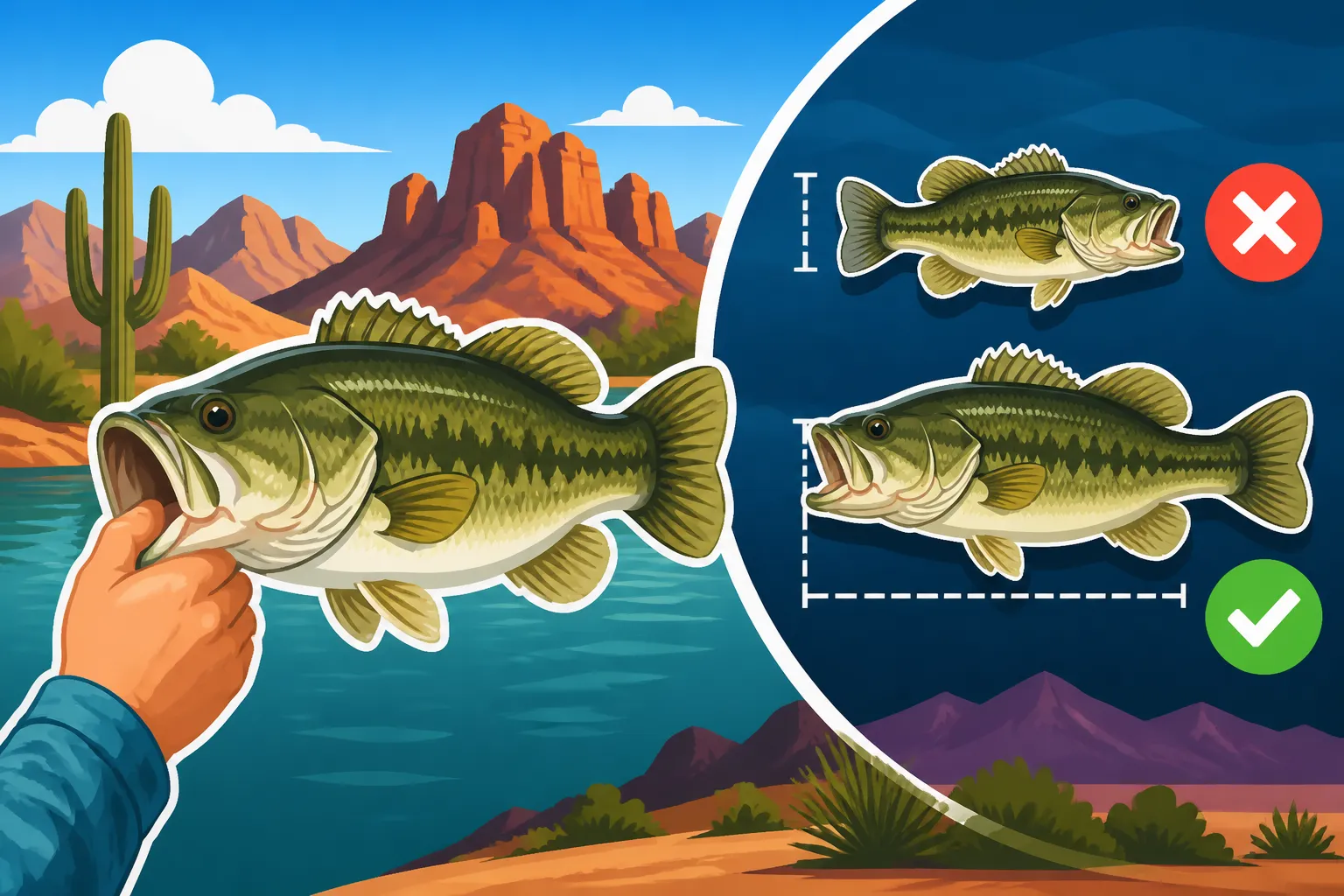
When you're dealing with size limits (even if the bass in community lakes typically don't have a minimum size, other species might, and it's a good habit to practice), accurate measurement is key. The standard for measuring fish is from the tip of the jaw (with the mouth closed) to the tip of the tail (with the tail compressed). It might sound picky, but those fractions of an inch can make a difference in legal compliance.
Here are some tips for accurate measurement:
- Use a reliable measuring device: A rigid ruler or a soft, flexible measuring tape specifically designed for fish can be incredibly helpful. You can find these at most tackle shops or online retailers like Amazon. Avoid using cloth measuring tapes that can stretch.
- Lay the fish flat: Gently lay the fish on its side on a flat, wet surface. This minimizes stress on the fish and helps get an accurate reading.
- Close the mouth and compress the tail: Make sure the fish's mouth is closed and the tail fin is gently squeezed together (compressed) to get the longest possible measurement.
- Wet your hands and the measuring device: Always wet your hands before handling a fish to protect its slime coat, which is vital for its health. Do the same for your measuring board or tape.
- Take a photo for reference: If you're concerned about an exact measurement, take a quick photo of the fish on the measuring device. This can be helpful if you need to double-check later, although it's always best to make the decision to keep or release on the spot.
Even without a minimum size limit for bass in community lakes, practicing accurate measurement for all your catches instills good habits that will serve you well when you fish other waters with stricter rules, like when pursuing big trout in the White Mountains or trophy bass in a large reservoir.
Best Practices for Catch and Release
Even if you plan to keep your two bass from a community lake, you'll likely catch more than that. And for those fish you intend to release, doing so properly is crucial for their survival and the health of the fishery. Community lakes are often heavily fished, so every healthy release contributes to a better fishing experience for everyone.
Here are some guidelines for successful catch and release:
- Land fish quickly: Don't play the fish to exhaustion, especially in warm water. Bring it in as quickly as possible to minimize stress.
- Use appropriate tackle: Fishing with gear that's too light can prolong the fight and exhaust the fish, making successful release less likely. Our Essential Tackle Box Setup for Arizona Beginners guide can help you pick the right gear.
- Handle with wet hands: As mentioned before, always wet your hands thoroughly before touching a fish. Dry hands can remove the protective slime coat, leaving the fish vulnerable to disease.
- Keep the fish in the water as much as possible: Try to unhook the fish while it's still in the water, especially if you're not keeping it. If you need to remove it from the water for a quick photo, do so quickly and gently.
- Use barbless hooks or de-barb your hooks: This makes hook removal much easier and less damaging to the fish. A good pair of fishing pliers, often found in a Fishing Gear Checklist for Desert Lakes, is indispensable for quick hook removal.
- Support the fish properly: If holding the fish for a photo, support its body horizontally. Never hold a fish vertically by the jaw if it's a larger fish, as this can cause internal damage.
- Revive tired fish: If a fish seems sluggish before release, hold it gently in the water, facing into the current (if any), and gently move it back and forth to force water over its gills until it swims away under its own power.
By following these practices, you're not just being a responsible angler; you're actively contributing to the sustainability of the excellent fishing opportunities Arizona's community lakes provide. Happy fishing, and remember to always respect the regulations!
Disclaimer
Please note that fishing regulations are subject to change by the Arizona Game and Fish Department. While every effort has been made to provide accurate and up-to-date information, it is the angler's responsibility to consult the current official Arizona Fishing Regulations booklet and any emergency orders before heading out. This guide is for informational purposes only and should not be considered a substitute for the official regulations.