Is Live Bait Better Than Lures for Catfish?
One of the age-old debates among Arizona anglers, especially when it comes to chasing those whiskered wonders, is whether live bait truly reigns supreme over artificial lures. It’s a question that can spark lively discussions at boat ramps and tackle shops, and honestly, it’s not always a simple "yes" or "no" answer. Many of us have felt the frustration of a slow day, wondering if we chose the wrong approach. This guide is here to unravel that mystery, exploring the strengths of both live bait and lures when you're targeting catfish in our beautiful desert waters.
The Undeniable Advantage of Live Bait for Catfish
Let's be real, when it comes to drawing in a hungry catfish, especially some of our bigger, more predatory species like flatheads, live bait often feels like cheating. There’s something inherently appealing about a natural, struggling meal that a piece of plastic just can't quite replicate. The scent, the movement, the undeniable realism – these are all huge draws for catfish, which rely heavily on their sense of smell and lateral line to hunt.
The Irresistible Scent and Motion
Catfish are primarily scavengers and opportunistic predators, and their olfactory senses are legendary. They can detect the presence of food, even in murky water or low light conditions, from an incredible distance. A live minnow, a squirming worm, or a fresh cut bait (which we'll group with live bait for its natural origins) releases a powerful scent trail that's like a dinner bell ringing across the lake or river bottom. This is particularly true for species like the Channel Catfish, which are keen on strong odors.
Beyond scent, the natural, erratic movements of live bait are a huge trigger. A shiner darting nervously, a bluegill struggling on a hook, or a crayfish trying to bury itself – these are all distress signals that predatory catfish are hardwired to notice. This natural presentation requires minimal effort from the angler; the bait does most of the work. You might be fishing a quiet cove on Bartlett Lake, and that frantic movement from your bait could be the very thing that calls in a cruising flathead.
Popular Live Bait Choices for Arizona Catfish
Arizona anglers have a few go-to choices for live bait, each with its own benefits:
- Worms (Nightcrawlers, Red Wigglers): The classic. Easy to find, relatively inexpensive, and universally loved by Channel Catfish and smaller flatheads. They emit a strong scent and writhe enticingly.
- Live Minnows/Shad: Often the top choice for predatory catfish, especially Flathead Catfish. A lively shiner, bluegill, or threadfin shad (where legal and available) perfectly mimics the natural forage of these big cats. Make sure to check the specific Live Bait Rules for Arizona Lakes and Minnow Bait Legality in Arizona before you head out, as regulations can vary.
- Crayfish: A natural delicacy for many Arizona fish, including catfish. When hooked correctly, a live crayfish scuttling along the bottom can be irresistible.
- Cut Bait: While not "live" in the strictest sense, cut bait (like pieces of carp, shad, or even mackerel) leverages the powerful scent factor. It’s particularly effective for Channel Catfish and can be a good alternative if live minnows are hard to come by. The key is freshness and a good "bleed" to maximize scent dispersion. You can learn more about finding the right sustenance in our Best Bait for Catfish in Arizona guide.
The primary frustration with live bait often revolves around its acquisition and maintenance. Keeping minnows alive and lively requires a good aerator and proper care, which can be a hassle, especially on a long, hot Arizona fishing trip. It also means more stops and less spontaneity, as you can't just throw a bag of worms in your tackle box and forget about it for weeks.
The Modern Appeal and Versatility of Lures for Catfish
While live bait holds a special place in the hearts of many catfishermen, the world of artificial lures has come a long way. Modern lures offer incredible versatility, convenience, and, in the right hands, can be incredibly effective for enticing catfish, particularly the more active and aggressive ones.
Engineered Attraction: Sound, Vibration, and Sight
Lures are designed to appeal to a catfish's other senses: sound, vibration, and even sight. Many crankbaits and jigs have rattles that mimic the sounds of struggling prey, while their wobbling action sends out vibrations through the water, much like a fish moving erratically. While catfish aren't known for their eyesight in the same way a bass is, bright colors and contrasting patterns can definitely get their attention, especially in clearer waters or during daylight hours.
The biggest advantage of lures is their reusability and ease of transport. You can carry a diverse array of lures in a compact tackle box, ready for any situation, without worrying about keeping them alive or fresh. This means less mess, less fuss, and more time actually fishing. Many anglers find it empowering to "work" a lure, using different retrieves and actions to try and trigger a strike, rather than passively waiting for a bite.
Effective Lure Types for Arizona Catfish
While not all lures are created equal for catfish, several types have proven their worth:
- Jigs (with soft plastics): A jig head paired with a grub, worm, or creature bait can be deadly. Tip it with a bit of prepared bait or a piece of shrimp for added scent. The key is to fish them slowly along the bottom, mimicking an easy meal. This technique is similar to some Jig Fishing Techniques for Bass, just applied to a different species and structure.
- Crankbaits: Deep-diving crankbaits that mimic shad or crawfish can be excellent for active catfish, especially when trolling or casting in areas where catfish are feeding aggressively on baitfish. Their strong vibration and flash can draw strikes.
- Scented Soft Plastics: Many soft plastic lures are now infused with powerful scents like garlic, anises, or fish extracts. These can combine the visual and tactile appeal of a lure with a strong olfactory draw, bridging the gap between artificial and natural. You can find a wide variety of these on platforms like Amazon, making it easy to experiment with different smells and textures.
- Spinnerbaits/Chatterbaits: While more commonly associated with bass, smaller spinnerbaits or chatterbaits can sometimes provoke a reaction strike from aggressive catfish, especially Channel Cats, if fished through active schools of baitfish.
The main challenge with lures is that they demand more from the angler. You need to know how to "work" the lure, to impart the right action and retrieve speed to make it look appealing. If you just cast it out and reel it straight in, you're unlikely to have much success. This requires practice, patience, and a good understanding of what catfish are feeding on and how they behave in different conditions.
When to Choose Which: Matching Bait to Arizona Conditions
So, is live bait better than lures for catfish? The truth is, it depends entirely on the situation. There are times when live bait is undeniably superior, and other times when a well-chosen lure can outfish it. The smart angler knows when to switch tactics.
Situational Advantages: Live Bait
Live bait tends to shine brightest in these scenarios:
- Targeting Flathead Catfish: These big, powerful fish have a strong preference for live, struggling prey. If you're specifically after a trophy flathead in a river like the Colorado or a large reservoir like Roosevelt Lake, a live bluegill or large shad is almost always your best bet. Our Channel Catfish vs Flathead Catfish Identification guide can help you understand their differences and preferences.
- Slow or Finicky Bite: When fish are lethargic, perhaps due to cold fronts or post-spawn inactivity, the natural scent and subtle movements of live bait can often coax a strike when lures are ignored.
- Murky or Deep Water, Night Fishing: Catfish rely less on sight in these conditions. The strong scent and vibrations of live bait are crucial for them to locate your offering. For serious night fishing, you'll want to review our Catfish Night Fishing Techniques and How to Fish for Catfish at Night articles.
- Beginner Anglers: For those just starting out, live bait often simplifies the fishing process. Cast it out, let the bait do its work, and wait for the bite. This can be less intimidating than learning various lure retrieve techniques.
Situational Advantages: Lures
Lures come into their own when:
- Active or Aggressive Catfish: If you find catfish actively schooling and feeding on baitfish (often indicated by surface commotion or fish finder readings), a crankbait or a jig worked aggressively can sometimes trigger more bites because you can cover water faster and imitate fleeing bait.
- Covering Lots of Water: Trolling with crankbaits or casting and retrieving jigs allows you to explore larger areas quickly, searching for active fish. This is difficult to do efficiently with live bait, which often requires a more stationary approach.
- Cleanliness and Convenience: For anglers who dislike the mess and fuss of live bait, or who are making a quick trip to a local community lake, lures offer a clean, ready-to-use alternative. It’s also easier to purchase a wide variety of lures online through retailers like Amazon and have them ready in your Essential Tackle Box Setup for Arizona Beginners.
- Specific Imitations: If catfish are keying in on a very specific type of forage (e.g., small crawfish after a rain), a lure that perfectly mimics that prey can be highly effective.
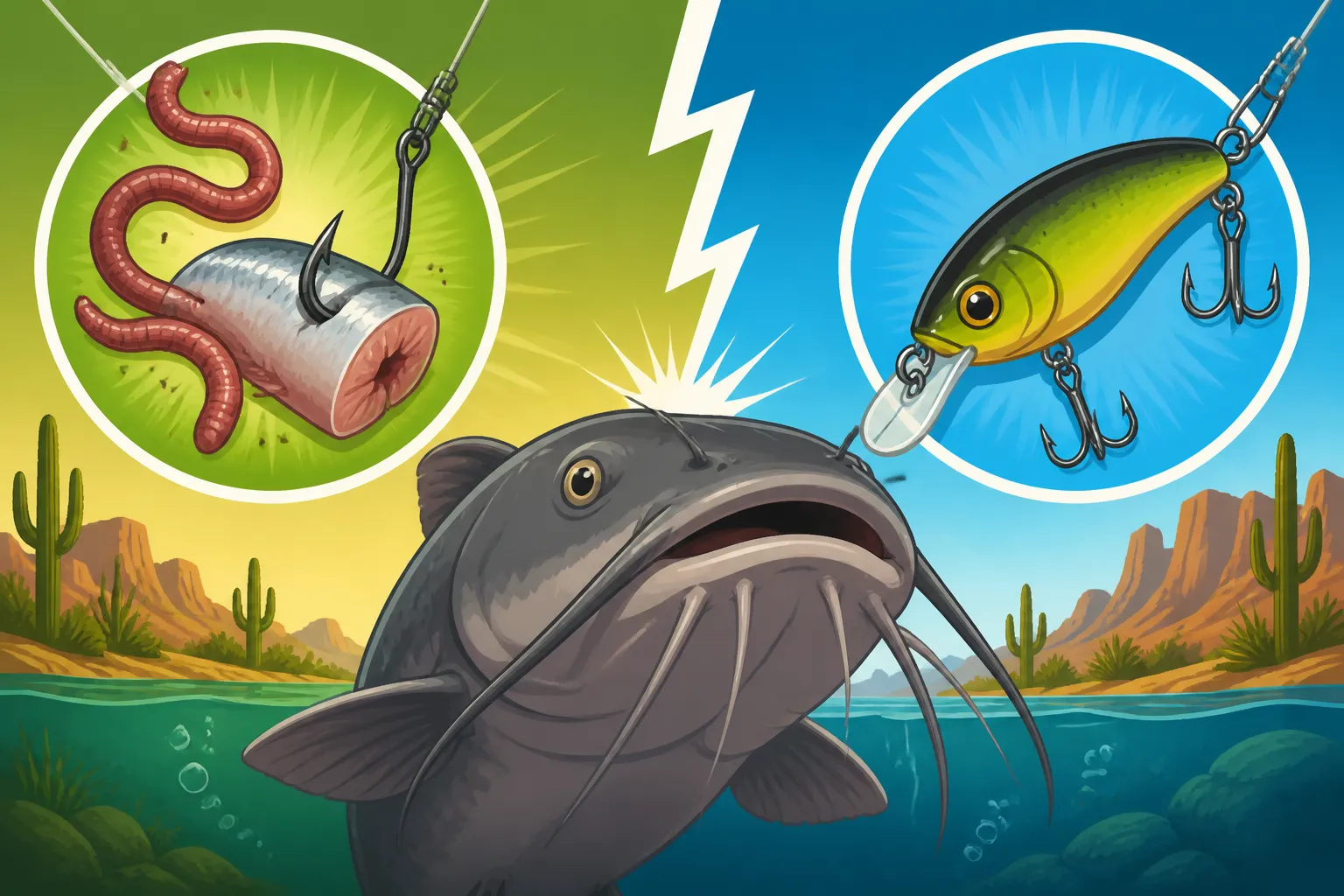
Here's a quick comparison to help you decide:
| Feature | Live Bait (Worms, Minnows, Cut Bait) | Artificial Lures (Jigs, Crankbaits, Soft Plastics) |
|---|---|---|
| Scent | High (natural, potent, disperses widely) | Low to Moderate (synthetic, some scented versions, requires additives) |
| Movement | High (natural, erratic, self-propelling) | Low to High (requires angler to impart action, can be very realistic) |
| Realism | Excellent (it IS real food) | Moderate to High (visual, tactile, auditory imitation) |
| Convenience | Low (requires acquisition, storage, can be messy) | High (reusable, easy to store, clean, no perishability) |
| Cost | Variable (can be cheap for worms, pricey for minnows, ongoing supply) | Variable (initial purchase can range from cheap to expensive, long-lasting) |
| Skill Required | Low for bait presentation, high for finding/keeping bait | High for effective presentation and lure selection |
| Targeting | Excellent for Flatheads, good for Channel Cats, often less selective | Good for active Channel Cats, limited for Flatheads, more selective for target depth |
Maximizing Your Chances: Tips for Both Bait Types
No matter which path you choose – the classic appeal of live bait or the modern edge of lures – success in Arizona catfish fishing comes down to technique, preparation, and understanding your quarry.
Tips for Fishing with Live Bait
Even with the "natural advantage," proper rigging and presentation can make a world of difference:
- Keep it Lively: For minnows and bluegill, use a simple hook through the lips or back, avoiding the spine, to allow maximum movement. A good hook choice is critical. For worms, threading them onto the hook can make them last longer and appear more natural.
- Use the Right Gear: Catfish are strong, so you'll want sturdy hooks and line. Our Best Line for Catfish Fishing guide can help you pick the right braid or monofilament, and you should consider a heavier setup if you're targeting those big flatheads, as discussed in Do You Need Heavy Line for Flathead Catfish.
- Go Where They Are: Catfish often relate to structure – submerged trees, rock piles, ledges, or deep holes. Presenting your live bait in these areas, perhaps using a simple bottom rig, will significantly increase your odds. For techniques, check out Bottom Fishing Techniques for Catfish.
- Patience is Key: Sometimes it takes time for a catfish to find and commit to a live bait. Don't be too quick to reel in, especially if you know fish are in the area.
Tips for Fishing with Lures
Making lures effective for catfish requires a more active approach:
- Add Scent: This is probably the single most important tip for making lures work for catfish. Apply a generous amount of scent attractant to your soft plastics, jigs, or even crankbaits. Reapply frequently. Many good scents are available from tackle shops and online retailers like Amazon.
- Slow and Low: Catfish are often bottom feeders. Work your lures slowly, maintaining bottom contact, especially with jigs and soft plastics. Bumping off rocks or dragging through silt can create enticing puffs of sediment.
- Vary Your Retrieve: Don't just reel at one speed. Try lifting and dropping jigs, pausing crankbaits, or varying your retrieve speed to see what triggers a strike. Experimentation is crucial.
- Target Active Fish: Lures are generally more effective when catfish are in an active feeding mode. If you're on a lake like Lake Pleasant and see signs of feeding activity, that's your cue to try a lure.
Ultimately, the choice between live bait and lures often comes down to personal preference, the specific species of catfish you're after, and the conditions you're fishing in. Both have their merits, and a truly versatile angler will have both options ready in their tackle arsenal. The most important thing is to get out there and enjoy the incredible Arizona fishing opportunities! Remember to always stay updated on the latest Arizona Fishing Regulations Explained before your trip.
Disclaimer
This article is for general informational purposes only and does not constitute professional advice. Laws, prices and regulations vary by location and change over time. Consult a qualified professional for guidance on your specific situation.