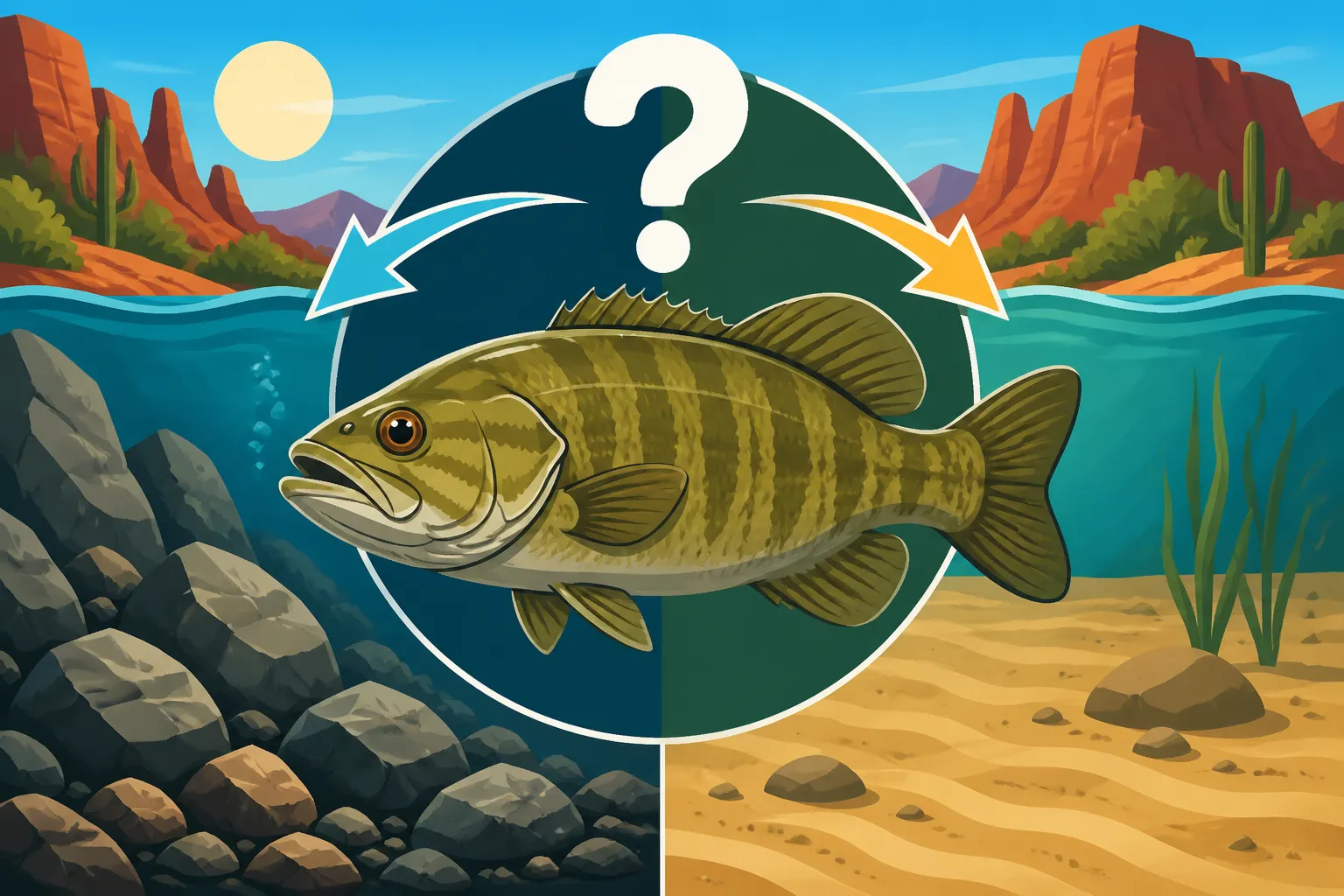
Do Smallmouth Bass Prefer Rocky or Sandy Structure?
It's a question many of us anglers ponder when we're out on the vast, sparkling waters of Arizona's lakes, especially when targeting those feisty smallmouth bass: "Am I wasting my time on this sandy flat, or should I be hugging those rocky points?" The truth is, figuring out where these clever fish hang out can feel like solving a puzzle, and it directly impacts whether you're bringing in a trophy or just enjoying the scenery. This guide is here to shed some light on the structural preferences of smallmouth bass, helping you understand their habits and, more importantly, put more fish in your boat or on the bank.
Understanding Smallmouth Bass Habitat Preferences
Smallmouth bass are incredible creatures, known for their powerful fights and their often-elusive nature. Unlike their largemouth cousins, who often prefer thick vegetation and murky waters, smallmouth have a distinct taste for cleaner, clearer water and specific types of bottom structure. This preference isn't just about aesthetics; it's deeply tied to their survival, feeding habits, and spawning rituals. In Arizona's unique desert lake environments, understanding these preferences becomes even more crucial.
Why Structure Matters to Smallmouth
When you think about it, fish are just like us in one fundamental way: they need food, shelter, and a comfortable place to live. For smallmouth bass, different types of underwater structure provide these essentials. Structure acts as an ambush point, a hiding spot from predators, a sanctuary from harsh sunlight or strong currents, and often, a home for the baitfish and crustaceans they love to eat. Without good structure, a smallmouth might as well be swimming in an empty swimming pool – exposed and vulnerable. That's why dedicated anglers spend so much time studying bathymetric maps and using their fish finders to locate those key underwater features.
Arizona's Unique Smallmouth Environments
Arizona might be a desert state, but our lakes, particularly places like Lake Powell, Lake Mead, and Roosevelt Lake, offer incredible smallmouth fishing opportunities. These reservoirs are often characterized by their steep canyon walls, clear waters, and dramatic underwater topography. This makes them prime real estate for smallmouth bass, but it also means that understanding the nuances of rock versus sand is vital. You're not typically dealing with weed beds here, but rather a world of submerged rock, gravel, and occasional sandy pockets carved out by ancient rivers. The clearer water also means fish can be more wary, making presentation and accurate structural identification all the more important.
The Allure of Rocky Structure for Smallmouth Bass
Let's cut to the chase: if you're looking for smallmouth bass, rock is usually your best friend. From small gravel banks to massive boulder fields and sheer cliff faces, rocky structure provides everything a smallmouth could want and need. This is particularly true in Arizona's reservoirs, where rock dominates the underwater landscape.
Rocky Points and Boulder Fields
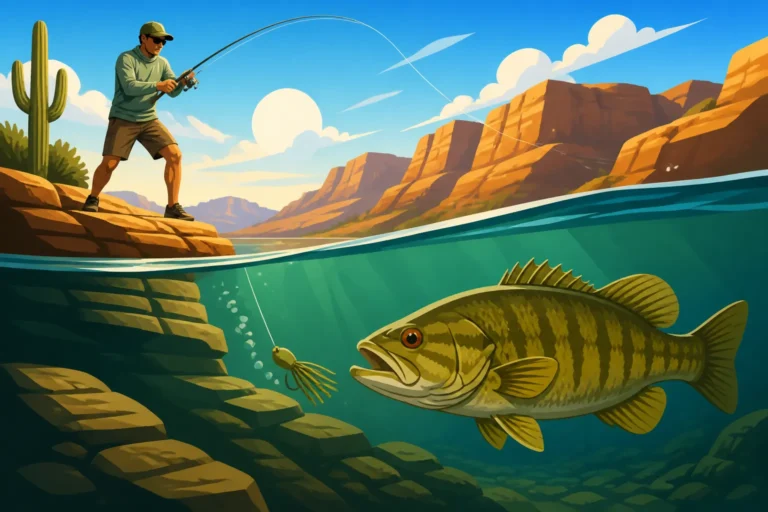
Imagine a submerged mountain range. That's often what you're dealing with in many of our Arizona lakes. Rocky points that extend out into the main lake or a canyon arm are absolute magnets for smallmouth. These points act like underwater highways, funneling baitfish past hungry bass waiting in ambush. The irregular surfaces of boulders create countless nooks and crannies, offering protection from predators and current, as well as prime locations for crayfish – a smallmouth delicacy.
When fishing these areas, I'll often start by casting parallel to the point, working my way around it, and then moving to cast directly over the deeper water off the tip. You'll find smallmouth often patrol the edges where the shallow rock meets the deeper drop-off. Using a drop shot technique for smallmouth bass can be incredibly effective here, allowing you to present a bait precisely in front of fish holding tight to the structure. Don't forget to check out our comprehensive guide on smallmouth bass fishing guide for Arizona for even more tips on tackling these tough fighters.
Cliff Walls and Steep Bluffs
Our Arizona lakes, especially places like Lake Powell with its iconic red rock canyons, are famous for their sheer cliff walls that plunge deep into the water. These aren't just scenic; they're fantastic smallmouth habitat. The vertical rock faces provide constant shade throughout the day, which is a huge advantage during our scorching Arizona summers. They also offer direct access to deep water, meaning bass don't have far to go to find cooler temperatures or escape pressure.
Fishing these walls requires a different approach. Often, the fish will suspend at various depths, or they'll be tucked into small ledges and caves that are hard to spot from the surface. Techniques like working a jig or a tube bait along the face, letting it flutter down like a wounded baitfish, can be deadly. Pay attention to any current seams or irregularities in the rock, as these can concentrate fish. The canyon ledge fishing techniques article offers excellent insights into how to master these challenging yet rewarding spots.
Rubble, Gravel, and Transition Areas
Not all rock is created equal, and smallmouth appreciate the variety. Rubble areas, which are essentially collections of smaller rocks and gravel, are fantastic for smallmouth, especially during spawning season. These areas often warm up faster in the spring, providing ideal nesting sites. They also hold an abundance of insects and smaller aquatic life that bass feed on.
The real key here is finding transition areas – where one type of structure meets another. For instance, a gravel flat that transitions into a larger boulder field, or where a rocky point finally gives way to a sandy bottom. These edges are where smallmouth often lurk, waiting for unsuspecting prey to pass by. A quality fish finder, like those you can find on Amazon, can be invaluable for identifying these subtle changes in bottom composition. Understanding the smallmouth bass habitat in Arizona lakes will further enhance your ability to pinpoint these critical areas.
The Role of Sandy Structure for Smallmouth Bass
While rocky areas are generally the primary draw, dismissing sandy structure entirely would be a mistake. Smallmouth bass can, and do, utilize sandy flats, especially under certain conditions or in particular situations. It's less common to find them exclusively on sand, but transitional zones are always worth exploring.
Sandy Flats Adjacent to Rock
You'll rarely find smallmouth in the middle of a vast, featureless sandy expanse. However, if that sandy flat is right next to a prominent rocky point, a steep drop-off, or a submerged hump, it becomes much more interesting. These areas serve as feeding grounds where baitfish might congregate, or where bass might chase down prey before retreating to the safety of the rocks.
During low light conditions, such as early morning or late evening, or on overcast days, smallmouth might venture further onto these sandy flats to hunt. They use the contrast of the lighter bottom to spot darker prey more easily. When fishing these areas, consider covering water quickly with search baits like crankbaits or swimbaits that imitate common baitfish.
Sparse Cover and Subtle Irregularities
Even seemingly barren sandy areas can hold fish if you know what to look for. Sometimes, a few isolated rocks, a small patch of sparse vegetation (if present in your lake), or even a subtle depression in the sand can be enough to attract a smallmouth. These small irregularities offer just enough cover to break up their silhouette and provide an ambush point.
Using your electronics to spot these subtle features is key. What might look like a flat sandy bottom to the naked eye could reveal a small, fish-holding anomaly on your fish finder screen. These are often overlooked spots by other anglers, making them potentially rewarding targets for those willing to pay attention to the details.
Baitfish Schools on Sandy Bottoms
Sometimes, smallmouth bass will follow schools of baitfish, regardless of the bottom composition. If threadfin shad or other small forage species are schooling over a sandy flat, especially near a main lake channel or a deeper creek bed, you can bet that smallmouth won't be far behind. These situations often lead to exciting "boils" or surface activity, where bass aggressively feed on the baitfish.
In these scenarios, the structural preference takes a back seat to the food source. However, even then, the smallmouth will typically be pushing the baitfish towards a nearby rocky drop-off or point where they can be more easily cornered. Lures that mimic these baitfish, like a small swimbait or a jerkbait, are excellent choices. Many anglers find great success stocking up on these versatile lures from retailers like Amazon, ensuring they have a good selection for various conditions.
Comparative Analysis: Rocky vs. Sandy Structure
To truly understand smallmouth preferences, let's break down the advantages and disadvantages of each type of structure in an Arizona fishing context.
| Feature / Preference | Rocky Structure (Boulders, Rubble, Cliffs) | Sandy Structure (Flats, Gradual Slopes) |
|---|---|---|
| Cover & Ambush | Excellent. Numerous crevices, shadows, and breaks. | Poor. Limited natural hiding spots. |
| Forage | Often high in crayfish, insects, and baitfish. | Can attract baitfish schools, but less diverse bottom fauna. |
| Temperature | Provides thermal refuge in summer (shade, depth). Warms in spring (shallow rock). | Warms and cools faster, offering less thermal stability. |
| Current | Breaks current, creating feeding lanes and resting areas. | Offers less resistance, more exposed to current. |
| Spawning | Primary spawning grounds (gravel, small rock). | Less preferred, generally too exposed. |
| Predator Avoidance | High. Many places to hide from eagles, ospreys, larger fish. | Low. Fish are more vulnerable. |
| Year-Round Use | Heavily utilized year-round by smallmouth. | More seasonal use, often tied to baitfish movement or specific conditions. |
| Visibility | Often found in clear water environments favored by smallmouth. | Can be found in various water clarities, but less preferred in clear, open areas. |
This table clearly illustrates why rocky structure is overwhelmingly preferred by smallmouth bass. It offers a combination of protection, food, and thermal stability that sandy areas simply cannot match on a consistent basis. However, the table also highlights that sandy areas, particularly when associated with baitfish, can play a role.
When to Look for Smallmouth in Different Structures
The time of year, day, and even the weather can influence where smallmouth bass choose to hold, making structure preference a dynamic rather than static rule.
Spring: Spawning and Pre-Spawn Activity
Ah, spring! This is when smallmouth begin to shake off the winter chill and get active. During the pre-spawn period, they'll often be found congregating on main lake points and rocky secondary points, especially those that have a mix of larger rocks and gravel. These areas warm up faster and provide easy access to deeper water if a cold front pushes through. They're feeding heavily, building energy for the spawn.
Once spawning begins, typically when water temperatures are just right, smallmouth will move onto shallower gravelly flats or protected coves with rock bottoms. These are their nesting sites, and they'll aggressively guard their beds. During this time, you might find them in as little as 3-5 feet of water. Using polarized sunglasses to spot beds can be a game-changer, allowing you to cast accurately to visible fish.
Summer: Heat, Depth, and Feeding Frenzies
Arizona summers are no joke, and smallmouth bass know it. As water temperatures soar, they'll retreat to deeper, cooler water. This often means hugging those steep cliff walls, sitting on deep rocky ledges, or relating to submerged humps and rock piles in deeper parts of the lake. Shade becomes incredibly important, so look for areas where canyons cast long shadows throughout the day.
However, don't forget those early morning and late evening bites! That's when smallmouth might move shallower onto those rocky points or even chase baitfish onto sandy flats if the conditions are right. This is also when you might encounter those exciting "striper boils" where multiple species, including smallmouth, aggressively attack bait on the surface. Understanding Arizona fishing seasons explained will give you a broader perspective on year-round strategies.
Fall: The Migration to Feeding Grounds
As temperatures begin to drop in the fall, smallmouth bass often go on a major feeding binge, bulking up for the leaner winter months. They'll typically be found back on those main lake rocky points, humps, and channel swings. Baitfish also start to congregate in these areas, making them prime targets.
This can be a fantastic time for both numbers and size. Smallmouth are less lethargic than in summer and often more aggressive. They might roam more widely, making covering water with reaction baits like crankbaits or spinnerbaits highly effective. Remember to check out our list of best bass fishing lakes in Arizona to plan your fall excursions.
Winter: Deep and Slow
Winter fishing in Arizona can still be productive for smallmouth, though the bite often slows down considerably. Smallmouth will typically move to the deepest, most stable water they can find, often relating to steep drops, submerged timber (if present), or large rock piles in the main lake basin. They'll be lethargic and less willing to chase, so a slow, subtle presentation is usually best.
Think finesse techniques: drop shots, jigs, and slow-rolled shaky heads are your friends here. Target specific pieces of structure that show up on your fish finder, and be prepared to spend more time enticing a bite. The good news is that when you do hook up, it's often a quality fish.
Practical Tips for Identifying and Fishing Structure
Now that we've covered the what and the why, let's talk about the how. Identifying and effectively fishing smallmouth structure requires a combination of knowledge, technology, and patience.
Using Electronics to Your Advantage
A good fish finder is arguably the most valuable tool an angler can have for identifying structure, especially in Arizona's deep, clear lakes. Modern units with side imaging and down imaging capabilities can literally paint a picture of the underwater world. You can spot rocky transitions, individual boulders, submerged trees, and even schools of baitfish holding over certain bottom types.
When scouting an area, pay close attention to changes in bottom hardness indicated by your fish finder. Harder returns usually mean rock, while softer, murkier returns often indicate sand or mud. Mark promising spots with your GPS, and don't be afraid to circle back and explore them thoroughly. Many high-quality fish finders are available through retailers like Amazon, offering a range of features to suit any budget and skill level.
Reading the Water and Topography
Even without a fancy fish finder, you can learn a lot about underwater structure by observing the shoreline. If you see steep, rocky cliffs on land, it's a good bet that same topography continues underwater. Similarly, if there's a gradual, sandy bank, the bottom likely mirrors that for some distance.
Look for points, coves, and changes in the shoreline. A point that extends far out into the lake often has a corresponding underwater finger that's a smallmouth magnet. Wind-blown points can also be excellent, as wave action often pushes baitfish towards these areas. Learning how to read the water is a skill that develops over time, but it's one of the most rewarding aspects of becoming a seasoned angler.
Experiment with Lure Selection and Presentation
Once you've identified a promising piece of structure, the next step is to present your lure effectively. For rocky areas, lures that mimic crayfish, like jigs with craw trailers or tubes, are often deadly. Hard baits like crankbaits designed to deflect off rocks can also trigger reaction strikes. For deeper rock, a how to fish a jig for winter bass approach can work well.
If you're exploring sandy areas, particularly those adjacent to rock or where baitfish are schooling, consider swimbaits, jerkbaits, or even topwater lures during low-light conditions. The key is to experiment with different presentations – varying your retrieve speed, pausing your lure, or trying different depths – until you figure out what the fish want on that particular day. Always check the Arizona Fishing Regulations Explained to ensure your chosen techniques and baits comply with local rules.
Stay Mobile and Adaptable
Smallmouth bass are constantly on the move, driven by factors like water temperature, baitfish availability, and fishing pressure. Don't get stuck on one spot for too long if it's not producing. If you find smallmouth on a particular type of rocky point in one area, look for similar features elsewhere on the lake. If the bite is tough, consider switching from aggressive reaction baits to more subtle finesse presentations.
Remember that fishing is a continuous learning process. Every time you're on the water, you're gathering information that will make you a better angler. Pay attention to where you catch fish, what they were doing, and what the surrounding structure looked like. This cumulative knowledge is what truly makes a difference. For even more detailed guidance, consider diving into the Arizona fishing license guide to ensure you're always properly equipped and legal on the water.
Conclusion
So, do smallmouth bass prefer rocky or sandy structure in Arizona? The answer, overwhelmingly, leans towards rocky. Rocky points, boulder fields, and steep cliff walls provide the ideal combination of cover, ambush points, and forage that smallmouth bass thrive on. These areas offer the thermal stability and protection from predators that these fish need to survive and prosper in our desert environments.
However, never completely discount sandy areas, especially when they feature subtle irregularities or are adjacent to prime rocky habitat. These transitional zones, or sandy flats that hold active baitfish schools, can certainly produce, particularly during specific times of day or seasons. By understanding these preferences, utilizing your electronics, reading the water, and remaining adaptable, you'll be well on your way to consistently finding and catching these hard-fighting Arizona smallmouth. Happy fishing, fellow anglers!
Disclaimer
This article is for general informational purposes only and does not constitute professional advice. Laws, prices and regulations vary by location and change over time. Consult a qualified professional for guidance on your specific situation.