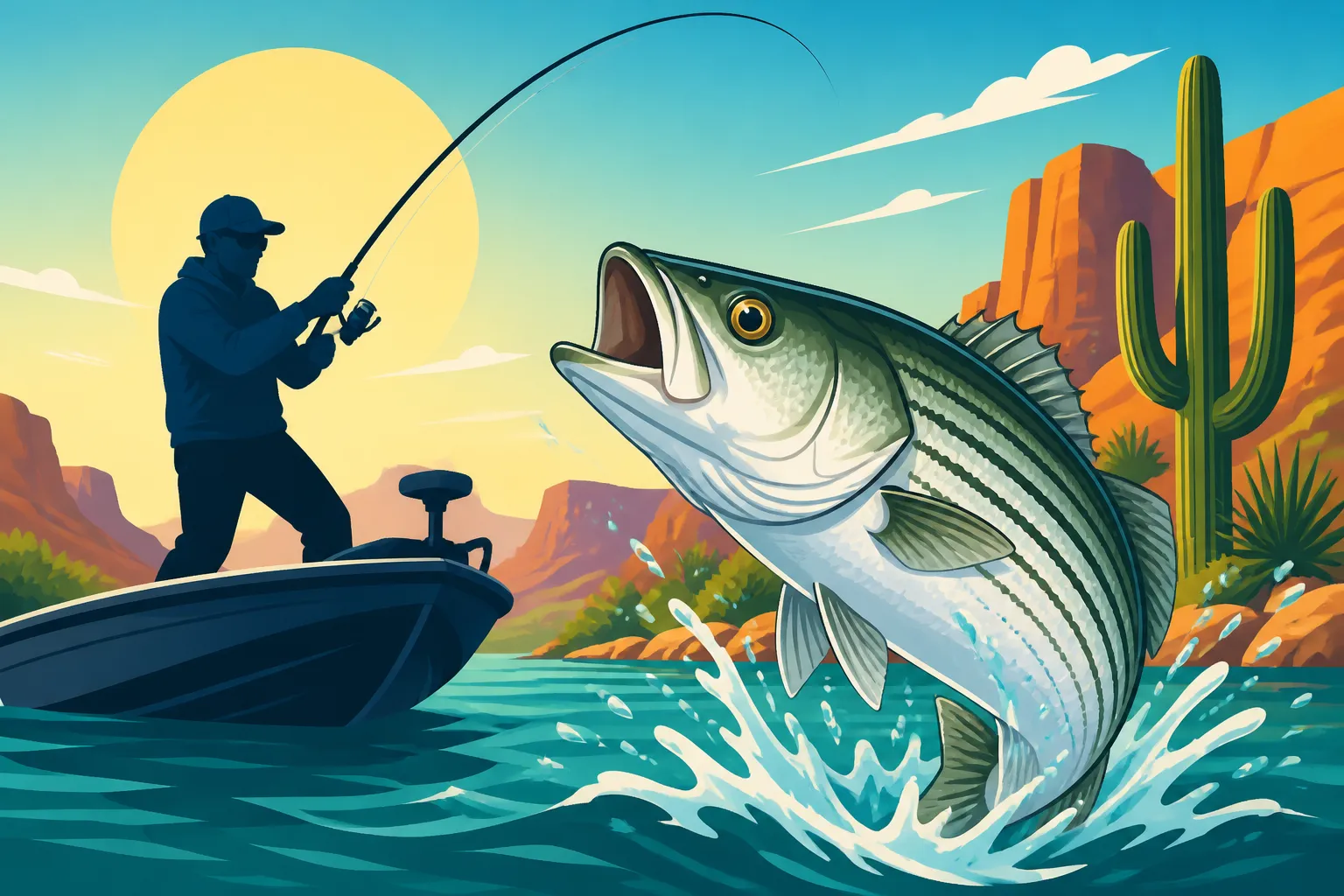
Striped Bass Fishing Guide for Arizona
There's nothing quite like the thrill of a striped bass hitting your line in the vast, open waters of Arizona's desert lakes. Many anglers come here expecting to chase largemouth or trout, only to discover the explosive power and sheer size of a striper. However, these fish can be elusive, often requiring different tactics than your typical bass fishing trip. This comprehensive guide is designed to demystify striped bass fishing in Arizona, helping you understand their habits, find their haunts, and equip yourself with the right gear and techniques to land these magnificent fighters.
Understanding Arizona's Striped Bass
Striped bass, often simply called "stripers," are truly incredible fish, especially in a landlocked desert environment like Arizona. They bring a whole new dimension to sport fishing here, offering a challenging yet incredibly rewarding experience for those willing to learn their ways. It's easy to get frustrated when you hear stories of massive boils on the surface only to find calm waters yourself, but understanding what makes these fish tick is the first step to consistent success.
What Makes Stripers Unique in the Desert?
Unlike their ocean-dwelling brethren, the striped bass in Arizona's reservoirs are landlocked, meaning they complete their entire life cycle within fresh water. This doesn't diminish their fighting spirit one bit; if anything, the clear, vast waters of lakes like Powell and Mead allow them to grow to impressive sizes, fueled by abundant baitfish populations. They are true apex predators, constantly on the move, schooling in massive numbers, and actively hunting down shad and other forage. Their schooling behavior is a huge part of their allure – one minute the lake can seem dead, the next you're in the middle of a "boil" with hundreds of stripers crashing the surface, creating an unforgettable spectacle. This aggressive feeding behavior makes them a blast to target, but it also means you need to be adaptable and ready to chase the action.
Another unique aspect of Arizona's landlocked stripers is their resilience to the extreme temperatures. While other fish might become lethargic in the scorching summer heat or the deep chill of winter, stripers adapt. They simply move to the depths where temperatures are more stable, or they become more active during cooler parts of the day. This adaptability means there's virtually no "off-season" for striped bass fishing, though your techniques will certainly need to change with the seasons. They're a hardy species, providing year-round angling opportunities if you know where and how to look for them.
Where Did Arizona's Stripers Come From?
The presence of striped bass in Arizona is a testament to successful fisheries management and the power of stocking programs. Originally native to the Atlantic Ocean and Gulf of Mexico, these anadromous fish (meaning they migrate from saltwater to spawn in freshwater) were first introduced to inland reservoirs in the mid-20th century. The goal was to create a new sport fishery and to help control burgeoning populations of prolific baitfish, like gizzard and threadfin shad, which often overpopulated lakes. The first successful landlocked striped bass fishery was established in the Santee-Cooper lakes in South Carolina in the 1950s, proving that these fish could thrive and reproduce without access to the ocean.
Following this success, Arizona began its own stocking programs, primarily in the vast Colorado River system lakes like Lake Powell and Lake Mead. The environment proved to be ideal. The immense size of these reservoirs, coupled with ample forage, allowed the stripers to not only survive but also flourish and establish naturally reproducing populations. Today, these self-sustaining populations are the backbone of Arizona's incredible striped bass fishery, providing countless hours of angling pleasure for residents and visitors alike. It's a fantastic example of how carefully planned introductions can create world-class fishing opportunities in unexpected places.
Identifying Striped Bass vs. Other Arizona Bass
For new anglers, or even those familiar with other bass species, distinguishing a striped bass from a largemouth or smallmouth can sometimes be tricky, especially with smaller fish. However, there are a few key characteristics that will help you confidently identify a striper when you pull it from the water. Knowing your catch is crucial not only for bragging rights but also for adhering to specific regulations, as bag limits and size restrictions can differ between species.
The most distinctive feature of a striped bass is its prominent, unbroken horizontal stripes running along its body, from behind the gills to the tail. These stripes are typically dark and clearly defined against a silvery-white to olive-green body. While other bass like white bass (which also have stripes) or even some largemouth can have faint, broken lateral lines, the striper's stripes are usually much more pronounced and continuous. For a deeper dive, check out our guide on Striped Bass vs White Bass Identification. Additionally, stripers generally have a more streamlined, torpedo-shaped body compared to the bulkier, deeper-bodied largemouth bass. Their two dorsal fins are usually separate, not joined at the base like those of a largemouth.
Here’s a quick comparison table to help differentiate:
| Feature | Striped Bass | Largemouth Bass | Smallmouth Bass | White Bass |
|---|---|---|---|---|
| Body Shape | Streamlined, torpedo-like | Stocky, deep-bodied | More streamlined than largemouth, robust | Similar to striper, but smaller |
| Stripes | 7-8 prominent, unbroken horizontal stripes | Irregular dark lateral band (often broken) | 8-16 vertical bars, sometimes faint | 5-7 faint, broken horizontal stripes |
| Mouth | Upper jaw extends to middle of eye | Upper jaw extends past the eye | Upper jaw extends to middle of eye | Upper jaw extends to middle of eye |
| Dorsal Fins | Two separate dorsal fins | Joined dorsal fins | Joined dorsal fins | Two separate dorsal fins |
| Overall Color | Silvery-white to olive-green | Green to olive with dark blotches | Bronze to brown with dark bars | Silvery with light olive-green back |
Prime Striped Bass Waters in Arizona
Arizona might be a desert state, but it boasts some truly world-class striped bass fisheries, primarily thanks to the mighty Colorado River system. These massive reservoirs offer incredible opportunities to hook into powerful stripers, but each body of water has its own nuances, depths, and preferred techniques. Knowing where to focus your efforts can make all the difference between a slow day and an epic one.
Lake Powell: The Striped Bass Mecca
If there's one place in Arizona that defines striped bass fishing, it's Lake Powell. Spanning parts of Arizona and Utah, this colossal reservoir, carved by the Colorado River, is legendary for its striper population. The sheer size of the lake, with its thousands of miles of convoluted shoreline, deep canyons, and vast open water, provides an ideal habitat for stripers to thrive and grow to impressive sizes. It’s not uncommon for anglers to target fish in the 5-10 pound range, with much larger trophies always a possibility. For an in-depth look at this incredible fishery, consult our Lake Powell Arizona Fishing Guide.
Anglers often head to Lake Powell specifically for the chance to witness a "striper boil." These spectacular events occur when schools of striped bass force immense schools of shad to the surface, creating a feeding frenzy that churns the water. These boils can pop up anywhere, from secluded coves to wide-open main channels, and can last from a few minutes to an hour or more. When a boil erupts, it's a frantic dash to get your lure into the chaos. Beyond boils, Lake Powell offers incredible trolling opportunities in the main channels and along submerged canyon walls, as well as deep-water jigging for schools of suspended fish. The Wahweap, Antelope Point, and Bullfrog areas are popular starting points, but exploring the vast side canyons and major arms like Padre Bay or the San Juan River arm can yield incredible results, especially as fish follow bait.
Lake Mead: A Major Striped Bass Fishery
Just downstream from Lake Powell, Lake Mead offers another formidable striped bass fishery that draws anglers from all over. While perhaps not as famous for the surface boils as Powell, Lake Mead is known for producing consistent numbers of quality stripers, and often some truly massive trophy fish. This vast reservoir, formed by the Hoover Dam, also offers deep, clear waters and abundant forage, making it a prime location for these hard-fighting fish. The challenge at Lake Mead can sometimes be its immense size and exposed nature, meaning wind can be a significant factor.
Successful striper fishing on Lake Mead often involves a combination of techniques. Trolling large crankbaits or swimbaits across deep flats, submerged humps, and along channel edges is a highly effective method. Anglers also find success by anchoring on points or over structure and fishing with cut bait or live bait, particularly anchovies or shad, especially during cooler months when stripers hold deeper. The areas around Boulder Basin, Hemenway Harbor, and the Overton Arm are popular spots, but like Powell, finding the bait is key to finding the stripers. Watching your fish finder for schools of shad and the tell-tale arches of predatory fish nearby will significantly increase your odds.
The Colorado River: Connecting the Fisheries
The Colorado River itself, both upstream and downstream from these major reservoirs, also offers unique opportunities for striped bass. While not always boasting the same sheer numbers as the lakes, the river can hold impressive fish, especially in areas with deeper pools, eddies, and good cover. The stretch below Hoover Dam, often referred to as the Black Canyon, can provide excellent fishing, though access can be limited and often requires a boat. This section of the river is known for its cold, clear water, and stripers here can be particularly robust.
Further downstream, as the Colorado River snakes through Arizona on its way to the Gulf of California, various impoundments and stretches of slower-moving water can hold stripers. These riverine stripers often behave a bit differently than their lake counterparts, sometimes being more spread out and less prone to massive boils. Look for them in areas where current breaks or deep holes provide ambush points, or where tributaries bring in new nutrients and baitfish. Fishing with cut bait, large jigs, or even bottom-bounced swimbaits can be productive in these river sections. Our comprehensive Colorado River Fishing Guide in Arizona offers more insights into this incredible waterway.
Other Potential Striper Spots
While Lake Powell and Lake Mead are the undisputed kings of Arizona striped bass, there are a few other, smaller impoundments and river sections where you might encounter these impressive fish. These tend to be less consistent and often hold smaller populations, but they can offer a pleasant surprise for anglers not specifically targeting stripers. For instance, sometimes stripers are stocked or naturally migrate into certain parts of the Lower Colorado River or its associated canals and smaller lakes like Lake Havasu.
These secondary locations often see stripers that are either stragglers from larger populations or part of smaller, localized stockings. Anglers fishing for other species like largemouth bass or catfish might stumble upon them. In these areas, the techniques for catching stripers often overlap with those for other predatory fish: casting lures like crankbaits or swimbaits, or using cut bait on the bottom. Always remember to check local regulations, as rules can vary between different bodies of water, even for the same species. It's a good idea to research specific lake reports if you're venturing to one of these lesser-known spots, as conditions and populations can fluctuate.
Essential Gear for Arizona Striped Bass
Having the right gear is paramount when targeting striped bass in Arizona. These fish are powerful, aggressive, and often found in open, deep waters, which means your everyday bass setup might not always cut it. Investing in suitable rods, reels, line, and terminal tackle will not only increase your chances of landing these strong fighters but also make the experience far more enjoyable and prevent lost fish and broken gear—a common frustration for unprepared anglers.
Rods, Reels, and Line: Building Your Setup
When it comes to rods, think power and sensitivity. A medium-heavy to heavy action spinning or baitcasting rod, typically 7 to 8 feet long, is ideal. This length provides good casting distance for reaching boils and enough leverage to fight a large, powerful fish. A longer rod also helps absorb the shock of a striper's powerful runs. For specific recommendations, check out our guide on the Best Rod for Striped Bass. The rod should have a fast to moderate-fast tip for detecting subtle bites, transitioning into a strong backbone for muscling in big fish from deep water or heavy current. Brands like Ugly Stik or Penn often offer durable and powerful options that can stand up to the abuse of striper fishing.
Pair your robust rod with a high-capacity spinning or baitcasting reel. For spinning reels, a 4000 to 6000 size is a good starting point, while baitcasting reels should be capable of holding a substantial amount of line, often in the 300 series or larger. The key is line capacity, as stripers can make long, powerful runs, especially when hooked in open water. Look for a reel with a smooth, reliable drag system, as this will be your best friend when battling a surging striper. A high retrieve ratio (e.g., 6.4:1 or higher for baitcasters, or a good IPT – inches per turn – for spinning reels) is also beneficial for quickly reeling in slack or retrieving lures when stripers are on a fast bite.
Line choice is critical. Braided line is a favorite among experienced striper anglers for its incredible strength, minimal stretch, and excellent sensitivity. A 30 to 50 lb test braided line is a versatile choice, allowing you to cast heavy lures and withstand powerful strikes. Because braid is visible in clear water, it's almost always a good idea to tie on a fluorocarbon leader of 15 to 25 lb test. Fluorocarbon is nearly invisible underwater, offers good abrasion resistance, and provides a bit of stretch for shock absorption. For more general advice on fishing line, our Best Line for Bass Fishing article has useful insights that can be adapted for stripers. For terminal tackle, heavy-duty swivels, strong snap swivels, and robust hooks (like 4/0 to 6/0 circle hooks for bait fishing, or strong treble hooks on lures) are non-negotiable. Don't skimp on these components, as a weak link will almost certainly result in a lost trophy.
Lures and Baits: What Stripers Can't Resist
Striped bass are opportunistic predators, and their diet primarily consists of shad in Arizona's lakes. Therefore, your lure and bait selection should mimic these forage fish as closely as possible in terms of size, profile, and action. Having a versatile tackle box ready for different scenarios is key to success.
Topwater lures are absolutely essential for capitalizing on those thrilling surface boils. Poppers, walk-the-dog baits, and chuggers in chrome, white, or shad patterns (4-6 inches long) can elicit explosive strikes when stripers are feeding on the surface. When the fish are just below the surface or in a dying boil, long casting spoons (like a Kastmaster or similar spoon) or lipless crankbaits can be incredibly effective. These allow for long casts and can be retrieved quickly through the feeding zone. Soft plastic swimbaits, either weighted or rigged on a swimbait head, are also fantastic imitations of shad and can be fished at various depths. These are often fished on a steady retrieve, mimicking a fleeing baitfish.
For deeper water, or when stripers are suspended, vertical jigging spoons (like a Hopkins or similar metal jig) or heavy bucktail jigs are go-to options. These can be dropped directly into schools of fish you've located on your fish finder and jigged aggressively. Trolling is another highly effective method, especially on large, open lakes like Powell and Mead. For trolling, large diving crankbaits (often 6-10 inches long), umbrella rigs (which mimic a school of baitfish), or oversized swimbaits are excellent choices. Many anglers find success with lures in shad colors, chrome, blue/silver, or white. When it comes to natural bait, fresh or frozen anchovies are a tried-and-true favorite for stripers, particularly when fished on the bottom or suspended under a bobber. Other effective baits include cut shad, threadfin shad, or even live minnows, depending on local regulations and availability. Remember, stripers have voracious appetites, so don't be afraid to go big with your bait and lure selections. Our guide on Striped Bass Diet and Feeding Habits can help you select the most effective presentations.
Navigational and Safety Gear
Given the vastness and often remote nature of Arizona's striper waters, having proper navigational and safety gear is not just recommended, it's absolutely essential. These lakes can be deceptively challenging, with sudden weather changes, hidden submerged structures, and immense distances between amenities. Prioritizing safety ensures that your fishing adventure remains enjoyable and free from unnecessary risks.
A reliable boat is almost a necessity for serious striped bass fishing on lakes like Powell and Mead, as bank access is often limited, and the best fishing spots are far from shore. Even if you're not in a full-fledged bass boat, a sturdy aluminum boat, a pontoon, or a larger fishing kayak (equipped with a trolling motor for covering distance) can get you to where the fish are. For any motorized vessel, ensuring you have up-to-date boat registration and all required safety equipment is non-negotiable. This includes personal flotation devices (PFDs) for everyone on board, a fire extinguisher, a horn or whistle, navigation lights (if operating at dawn, dusk, or night), and an emergency signaling device like flares or a mirror. Refer to our Boating Safety Gear Requirements in Arizona for a complete checklist.
Beyond the legal requirements, practical navigational tools are crucial. A high-quality fish finder/chartplotter combo is invaluable. It not only helps you locate schools of baitfish and stripers but also provides detailed mapping of the lake, showing depth contours, submerged canyons, and even popular waypoints. Brands like Lowrance, Humminbird, and Garmin offer excellent units that can drastically improve your success. Always carry a reliable GPS device, whether it's integrated into your fish finder or a separate handheld unit, and know how to use it. Cellular service can be spotty or nonexistent in many areas of these vast lakes, so relying solely on your phone for navigation is a gamble. A VHF radio is also a smart addition for emergency communication, especially if you're venturing far from shore. Finally, due to the intense Arizona sun, don't forget sun protection essentials: wide-brimmed hats, long-sleeved UPF clothing, sunscreen, and polarized sunglasses are a must. Always carry plenty of water and snacks to stay hydrated and energized during long days on the water.
Top Techniques for Catching Arizona Stripers
Catching striped bass consistently in Arizona requires a diverse approach, as these fish are constantly on the move and their behavior can change rapidly with the conditions. Relying on a single technique might work occasionally, but true success comes from understanding multiple presentations and knowing when to deploy each one. From covering vast expanses of water to targeting explosive surface feeds, having an arsenal of methods will keep you in the action.
Trolling: Covering Water Effectively
Trolling is perhaps one of the most consistent methods for catching striped bass on Arizona's large reservoirs, especially when surface activity is minimal or when you're searching for schools of fish. This technique involves dragging lures behind a moving boat, allowing you to cover vast amounts of water and present your bait to fish at various depths. The key to successful trolling lies in selecting the right lures, maintaining the correct speed, and understanding the depth at which the fish are holding. Our Trolling Techniques for Striped Bass guide provides even more detail.
When trolling, you'll want to use large, deep-diving crankbaits that mimic the local shad population. Lures that run anywhere from 15 to 40 feet deep are common, depending on the depth where stripers are suspended. Umbrella rigs, which consist of a central line with multiple wire arms holding smaller lures or swimbaits, are also incredibly effective as they simulate a small school of baitfish. These are often trolled with a heavy lead core line or downriggers to get them to the desired depth. Maintain a trolling speed typically between 2 to 4 miles per hour, but experiment to find what the fish prefer on any given day. Watch your fish finder closely for schools of bait and the larger arches of stripers; once you identify a productive depth, try to keep your lures in that zone. Trolling along main lake channels, submerged points, humps, and the edges of canyon walls are prime areas to target.
Casting to Boils and Surface Action
The most exhilarating and often visual way to catch striped bass in Arizona is by casting to surface boils. As mentioned, these occur when large schools of stripers force baitfish, usually threadfin shad, to the surface. The water erupts in a frantic, splashing display as the stripers feed aggressively. Spotting a boil is like hitting the jackpot, but getting there quickly and making the right cast is crucial. This is where a high-speed boat and a keen eye come into play.
When you see a boil, approach it cautiously from upwind if possible, keeping your distance to avoid spooking the fish. Once in casting range, fire a long cast with a topwater lure (like a Chug Bug, Zara Spook, or popper) or a fast-sinking spoon directly into the commotion. The key is to get your lure into the feeding zone as quickly as possible. A fast retrieve is often necessary to mimic fleeing baitfish. Don't be surprised if you get an immediate, explosive strike. Boils can be short-lived, so maximizing your casting opportunities while the frenzy lasts is vital. Have multiple rods rigged and ready to go for different lure types to adapt quickly. This method is incredibly addictive, and once you experience a full-blown striper boil, you'll understand why anglers eagerly scan the horizon for signs of surface activity. For detailed strategies, check out our How to Fish During a Striper Boil article.
Deep Water Jigging and Live Bait Rigs
When stripers aren't actively boiling or responding to trolled presentations, they're often holding in deeper water, sometimes suspended over structure or congregated around schools of baitfish. This is where deep water jigging and live bait rigs become incredibly effective, particularly during the hotter summer months or the colder winter periods when fish seek more stable temperatures. A quality fish finder is indispensable for these techniques, allowing you to pinpoint the exact depth and location of the fish.
For deep water jigging, heavy metal spoons (like a Hopkins Shorty or similar flutter spoon), blade baits, or heavy bucktail jigs are excellent choices. Once you locate a school of stripers on your electronics, position your boat directly over them. Drop your lure down to the depth where the fish are holding, then use a vertical jigging motion—a sharp lift of the rod tip followed by a controlled fall—to entice strikes. Stripers will often hit the lure on the fall. It's a very active form of fishing that requires constant attention to your rod tip and line, as bites can sometimes be subtle, even at depth. Our guide on How to Fish Deep Structure in Summer Heat offers relevant tips for this scenario.
Live bait rigs are another highly productive option for deep-water stripers. Fresh or frozen anchovies, gizzard shad, or threadfin shad (where legal) fished on a simple drop-shot rig or a three-way swivel rig can be deadly. Using a heavy sinker to get the bait down quickly to the desired depth, you can drift over suspected areas or anchor on a promising spot. Circle hooks (4/0 to 6/0) are often preferred for bait fishing as they tend to hook fish in the corner of the mouth, reducing gut hooking and making release easier. Pay close attention to your rod; stripers can take the bait with a subtle tap or a sudden, aggressive pull.
Night Fishing for Stripers
Night fishing for striped bass, especially in the warm Arizona months, can be an incredibly productive and often more comfortable way to target these fish. As the intense desert sun dips below the horizon, stripers often move into shallower waters or become more active, feeding under the cover of darkness. The absence of boat traffic and direct sunlight can make for a peaceful, yet thrilling, fishing experience.
One of the most popular and effective night fishing techniques involves using submersible lights. By lowering a green or white submersible light into the water from your boat, you can attract plankton, which in turn attracts baitfish like shad. Where the baitfish go, the stripers will follow. Once a good school of baitfish has gathered around your light, you can cast jigs, soft plastic swimbaits, or even live bait (like anchovies) into the edges of the light's glow. Stripers will often lurk just outside the brightest part of the light, ambushing unsuspecting bait. Pay attention to your fish finder to see the activity below.
Another effective night fishing tactic, particularly around full moons, is casting large topwater lures or subsurface walk-the-dog baits along rocky points, submerged humps, or main lake flats. The silhouettes of these lures against the moonlight can be irresistible to cruising stripers. Slow-rolling spinnerbaits or large plastic worms can also produce bites. Always prioritize safety when night fishing; ensure all navigation lights are working, carry extra lights (headlamps, spotlights), and be acutely aware of your surroundings. Familiarize yourself with the area during daylight hours before attempting to navigate it in the dark.
Seasonal Strategies for Striped Bass Success
Striped bass, like most fish, are highly influenced by environmental factors such as water temperature, light penetration, and baitfish availability. This means that a technique that works wonders in spring might be completely ineffective in summer or winter. Understanding their seasonal movements and adapting your strategy accordingly is a hallmark of a successful Arizona striper angler. It’s about being observant and flexible.
Spring: Spawning Runs and Aggressive Feeds
Spring in Arizona, typically from March through May, is a prime time for striped bass fishing. As water temperatures begin to rise from their winter lows, stripers become increasingly active, moving into shallower areas to feed heavily in preparation for their spawning rituals. While landlocked stripers don't migrate to saltwater like their ocean counterparts, they still undertake "spawning runs" up major river arms or larger creeks, seeking moving water to deposit their eggs.
During this period, you can often find large schools of stripers congregated in the upper reaches of river arms, like the San Juan River arm on Lake Powell or the Overton Arm on Lake Mead. Casting swimbaits, jerkbaits, or lipless crankbaits into these areas can be incredibly productive. Trolling is also highly effective along the main channels leading into these spawning grounds, as fish move back and forth. Surface boils can start to become more frequent as baitfish become more active. Look for warmer water pockets, as stripers will gravitate towards these areas. Early mornings and late afternoons are often the most productive times, but daytime activity can also be strong. This is a time of aggressive feeding, so don't be afraid to use larger, more erratic presentations.
Summer: Deep Water and Morning Boils
Summer in Arizona means scorching temperatures, and while it might be uncomfortable for anglers, it certainly doesn't mean the end of striper fishing. Striped bass are resilient, and they adapt by seeking out cooler, more stable water temperatures in the deeper parts of the lakes. This often means moving to depths of 30 to 80 feet, or even deeper, during the hottest parts of the day.
Despite the deep-water retreat, early mornings (just before sunrise) and late evenings can bring spectacular surface boils, especially on Lake Powell. As the sun rises and temperatures climb, these boils will typically shut down, and the fish will quickly retreat to deeper water. The strategy here is to be on the water before dawn, ready to chase any surface activity. Once the boils cease, switch to deep water techniques. Vertical jigging with heavy metal spoons, drop-shotting live or cut bait, or slow-trolling deep-diving crankbaits along main lake channels and submerged structure are the most effective methods. Night fishing also becomes a highly productive and enjoyable option during the summer, as stripers move shallower under the cover of darkness. Remember to prioritize sun protection and hydration during summer trips.
Fall: Voracious Feeding Frenzies
Fall is often considered by many experienced anglers to be the absolute best time for striped bass fishing in Arizona. As air and water temperatures begin to cool, baitfish move into shallower coves and creek arms, and the stripers follow, entering a pre-winter feeding frenzy. They are trying to bulk up for the colder months ahead, making them incredibly aggressive and willing to chase down a wide variety of lures.
This season is characterized by widespread and prolonged surface boils, sometimes lasting for hours in different parts of the lake. Boils can be massive and frantic, offering incredible topwater action. Aside from boils, stripers will cruise points, humps, and flats, actively ambushing schools of shad. Casting swimbaits, jerkbaits, and topwater lures becomes extremely effective. Trolling large crankbaits or umbrella rigs along main lake points and in larger bays also produces excellent results as fish are constantly on the move, searching for food. The cooling water reinvigorates the stripers, making them strong fighters and highly cooperative. Don't be surprised to find fish from shallow coves out to deep channel bends, as they chase bait through varied terrain.
Winter: Slow and Steady Deep-Water Action
Winter fishing for striped bass in Arizona can be challenging, but it can also yield some of the largest fish if you're patient and persistent. As water temperatures drop to their annual lows, stripers become more lethargic and tend to school tightly in deep water, often suspending over structure or in the deepest parts of the main lake channels. Their metabolism slows down, meaning they don't need to feed as frequently or aggressively.
The key to winter success is slowing down your presentation. Trolling at very slow speeds (1-2 mph) with deep-diving crankbaits or umbrella rigs can be effective, especially if you can keep your lures directly in front of the suspended schools. Vertical jigging with smaller, more subtle spoons or blade baits, directly into tightly packed schools you've marked on your fish finder, is another go-to strategy. Live or cut bait, presented slowly on the bottom or suspended in the water column, can also entice strikes from less active fish. Focus on main lake basins, deep channel swings, and areas with significant submerged structure. While the bites may be fewer and farther between, the fish you do catch can often be larger, as the big, older stripers are often less active and harder to target during other seasons. Patience is a virtue in winter striper fishing.
Reading the Water and Understanding Striper Behavior
To consistently catch striped bass in Arizona, it’s not enough to just cast a line; you need to become a detective on the water. Stripers are highly nomadic and keenly attuned to their environment, especially the presence of their primary food source: baitfish. Learning to "read the water" – observing surface activity, interpreting your electronics, and understanding how environmental factors influence fish movement – is what separates the occasional lucky catch from consistent success.
Locating Baitfish: The Key to Finding Stripers
If you want to find striped bass, you absolutely must find the baitfish. Stripers are apex predators that are constantly following and herding schools of shad. Without baitfish, there won't be stripers. This fundamental principle should guide your entire fishing strategy on lakes like Powell and Mead. Often, anglers get frustrated fishing in seemingly "good" spots only to find nothing, simply because the bait has moved on.
Start your search by looking for visual signs of baitfish on the surface. Small flickers, nervous ripples, or even birds diving and feeding can indicate the presence of shad. Gulls, terns, and even some wading birds will often follow and feed on baitfish that stripers have pushed to the surface. If you see birds congregating or diving, head that way! Secondly, your fish finder is your most important tool. Spend time idling over promising areas like main lake points, humps, and channel bends, scanning for large, dense clouds of baitfish. These will often appear as dark, amorphous blobs on your screen. Once you locate a school of bait, look for larger, arch-shaped marks hovering around or just below them—these are your stripers. Pay attention to the depth at which the bait is holding, as this will dictate your lure presentation. Baitfish move with the seasons and even throughout the day, so this search is a constant part of the striper fishing game.
Understanding Water Temperature and Depth
Water temperature is a critical factor influencing striped bass behavior, dictating their comfort levels, metabolism, and ultimately, their location in the water column. Unlike many freshwater fish, stripers have a relatively narrow preferred temperature range for optimal activity, generally between 60 and 70 degrees Fahrenheit. However, in Arizona's extreme climate, they will adapt to much warmer or colder conditions by seeking out specific depths.
In summer, when surface temperatures can soar into the 80s or even 90s, stripers will retreat to the thermocline—a layer of water where the temperature changes rapidly—or deeper, where the water is cooler and more stable. This is why you often find them suspended 30 to 80 feet down, even in lakes hundreds of feet deep. Conversely, in winter, when surface temperatures drop, stripers will seek out the warmest available water, often in the deepest parts of the lake where water is slightly warmer and more stable, or occasionally in shallow areas on sunny, calm days that warm up quickly. Knowing the prevailing water temperatures and understanding how they create thermal stratification (different temperature layers) will help you pinpoint the depth zones where stripers are most likely to be active and comfortable. Always keep an eye on your fish finder's temperature gauge and look for areas where the water column offers the most favorable conditions.
Interpreting Fish Finder Readings
A modern fish finder is an indispensable piece of equipment for any serious striped bass angler in Arizona. It acts as your underwater eyes, revealing the unseen world beneath your boat. However, simply having a fish finder isn't enough; you need to understand how to interpret its readings to locate both baitfish and stripers effectively. This skill takes practice, but it's incredibly rewarding.
When scanning with your fish finder, first and foremost, look for those dense clouds or "balls" of baitfish. These will often appear as speckled, irregular masses on your screen. The size and density of these bait balls are a strong indicator of where stripers might be lurking. Next, look for larger, more defined arches or individual marks, usually suspended around, above, or below these bait schools. These are your stripers. The higher and more defined the arch, the larger the fish usually is. Pay attention to the depth at which these arches appear. Are they tight to the bottom? Suspended in the middle of the water column? Are they actively chasing bait? This information will tell you how deep to present your lures or bait.
Additionally, learn to identify structure on your fish finder. Submerged points, humps, old creek channels, and even standing timber will show up on your screen. Stripers often relate to these features, using them as ambush points or resting areas. Understanding the bottom composition (hard bottom vs. soft bottom) can also provide clues. Many fish finders also offer side imaging or down imaging capabilities, which provide incredibly detailed, photographic-like views of the underwater world, allowing you to see schools of fish or structure off to the sides or directly below your boat with much greater clarity. Investing time in learning your unit's features and practicing interpretation will drastically improve your striper fishing success.
Conservation and Regulations for Arizona Stripers
Fishing for striped bass in Arizona is an incredible privilege, and with that comes the responsibility of understanding and adhering to local conservation efforts and regulations. The Arizona Game and Fish Department (AZGFD) sets specific rules to ensure the long-term health and sustainability of these popular fisheries. Knowing these regulations before you hit the water is not just about avoiding fines; it's about being a responsible angler and contributing to the future of the sport.
Arizona's Striper Bag and Possession Limits
Unlike some native fish species in Arizona that have very restrictive limits or are catch-and-release only, striped bass often have generous bag and possession limits. This is largely because stripers, while a highly valued sport fish, are also non-native and can put significant predation pressure on native fish populations and sometimes even their own numbers if left unchecked. Therefore, AZGFD generally encourages harvest of striped bass, especially smaller fish, to help manage the ecosystem.
For most of Arizona's prime striper waters, like Lake Powell and Lake Mead, the daily bag limit for striped bass is typically 10 fish, with no size limit. However, it is absolutely critical to verify the current regulations directly from the Arizona Game and Fish Department's official fishing regulations booklet or website before each fishing trip. Regulations can change, and specific rules might apply to certain bodies of water or sections of the Colorado River. For instance, sometimes certain areas might have different rules, or a specific permit, like an Arizona Fishing License Guide, is required. Always check the latest edition of the regulations, as it's the angler's responsibility to know and follow the rules. Ignoring the limits can result in significant fines and penalties, and more importantly, can negatively impact the fishery. For general information on limits, see our Fishing Bag and Possession Limits Explained guide.
Handling and Releasing Striped Bass
Even with generous bag limits, practicing proper fish handling techniques, especially if you plan to release fish, is crucial for their survival. While stripers are hardy, mishandling can still lead to injury or delayed mortality. The goal is to minimize stress and physical damage to the fish.
If you intend to release a striped bass, try to keep it in the water as much as possible. Use a large, knotless rubberized landing net to bring the fish aboard, as this material is gentler on their scales and slime coat than traditional nylon nets. Avoid dragging the fish onto dry land or boat decks. Handle the fish gently with wet hands to protect its slime coat, which is a vital defense against disease. If you need to measure or photograph the fish, do so quickly and efficiently, keeping it horizontally supported. If the fish is deeply hooked, consider cutting the line as close to the hook as possible rather than attempting to rip out the hook, as this often causes more internal damage. Barbless hooks can also make for easier and less damaging releases. For fish you plan to keep, dispatch them quickly and humanely, and store them on ice to preserve their quality.
Responsible Angling Practices
Responsible angling goes beyond just following bag limits and handling fish properly; it encompasses a broader respect for the environment and fellow anglers. This is particularly important in Arizona's high-traffic and fragile desert ecosystems. Leaving no trace is a fundamental principle. Pack out everything you pack in, including all fishing line, bait containers, and any trash. Litter not only pollutes the beautiful landscape but can also be harmful to wildlife.
Be mindful of other anglers and boaters. On busy waters like Lake Powell, respecting personal space and maintaining safe boating distances is crucial. Avoid cutting off other boats, especially those that are trolling or actively fishing a spot. When approaching a boil, do so carefully and quietly. Remember that a lot of quality gear, from rods to reels, can be found on online marketplaces like Amazon, making it easier for new anglers to get into the sport. Finally, educate yourself about any local advisories regarding water quality or consumption limits, though these are less common for stripers. By practicing responsible angling, you help ensure that Arizona's fantastic striped bass fisheries remain healthy and enjoyable for generations to come.
Disclaimer
This article is for general informational purposes only and does not constitute professional advice. Laws, prices and regulations vary by location and change over time. Consult a qualified professional for guidance on your specific situation.